by Heidi Reid | Aug 31, 2026 | Buzz, September 2026
The hemp industry isn’t out of the woods yet.
A billion-dollar industry just bought itself a few more months of legality. On Aug. 4, hundreds of protestors swarmed the legislative building in opposition to a regulatory hemp bill—legislation that would ban almost all THC-infused drinks, gummies and other products in the state. Despite support from law enforcement, lawmakers ultimately backed away from a vote, delaying the issue until after the November election.
And the stakes stretch far beyond gummies. The hemp industry has quietly become a major economic player in NC, meaning a ban would have a detrimental impact on the entire state—not just users. Read: In NC, hemp accounts for a $3.2 billion industry employing upward of 16K residents. “There’s no plan B,” Reilly Dunn, owner of popular local THC bev biz Groovewagon, told RM. “The alternative is do something about it or bust. I have four kids, and if this ban goes through, it’s gonna be bad.”
Undoubtedly, the stalled bill is a big win for the hemp industry (and for democracy)—for now—but THC businesses aren’t out of the woods just yet: The state bill isn’t entirely dead, and the Nov. 12 deadline for a potential federal ban also looms. So what’s next for the NC hemp industry?
“It took a village of hemp advocates and organizations working together to successfully stall a bill that would have shut down North Carolina’s consumable hemp industry,” says Lisa Parker, executive director of the North Carolina Craft Brewers Guild. Though the NC vote is delayed, the House made it clear this is an issue they will be revisiting.
“Folks recognize the current state of our law is not tenable,” says House Speaker Destin Hall (R-Caldwell). “There are basically no rules. Things being sold that shouldn’t be. Things being sold to kids that shouldn’t be sold. The question is what to do about it.”
The NC House may not have to revisit the matter at all if the federal ban goes into effect as currently planned. “Uncertainty remains,” emphasizes Parker, noting that while the industry is grateful to escape the effects of the NC regulatory bill—for now—work still needs to be done on the federal level.
But hemp-related businesses could still be thrown a lifeline. A bipartisan-supported stopgap spending bill making its way through the Senate* would delay the prohibition on most THC products until Dec. 11. If passed, the bill could buy the industry just shy of a month—time advocates hope will be enough to continue lobbying for permanent regulations and age limits, measures the industry says it has long supported.
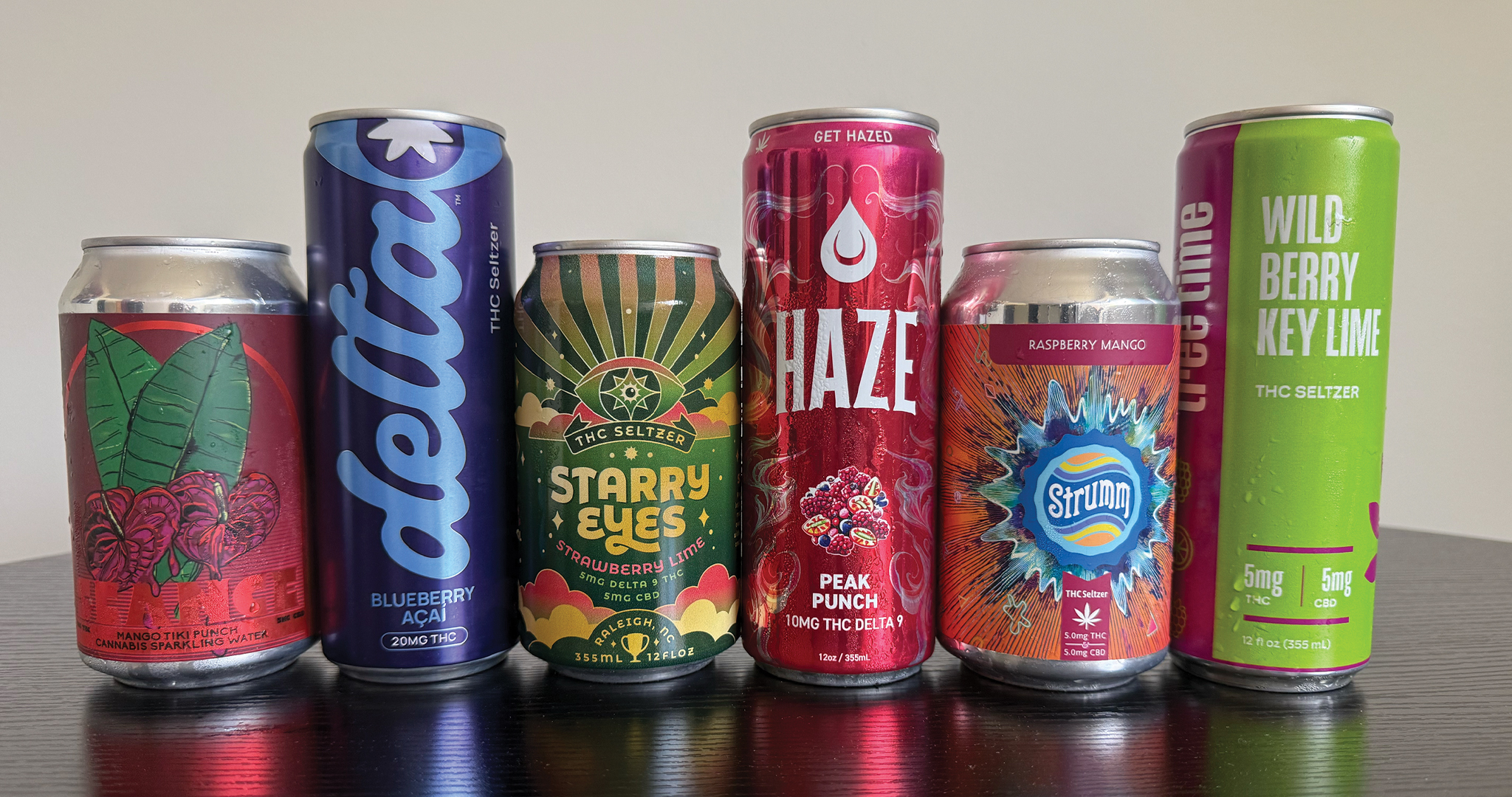
“Everybody’s on the same page about protecting children, but you can’t do that by just banning the entire thing,” says Adrian Larrea, co-founder of Raleigh-based THC bev co. HAZE. “We all know that Prohibition didn’t work. We should follow in the footsteps of alcohol and tobacco to protect children.”
Larrea maintains the industry is full of “good actors” doing proper testing and enforcing safety regulations—and he wants those practices to become the standard. “If you start to take that away from entrepreneurs and people who are working hard, you will end up handing it over to the black market.”
Come November, lawmakers at both the state and federal levels will once again help decide the future of North Carolina’s
hemp industry.
*As of press time
Hemp Industry: BTN
- 16,149 NC jobs
- $702.5M in NC wages
- Raleigh Dispensaries: 29
- NC produced 19% of U.S. hemp in 2023
- $87 million in sales tax revenue
- 2,197 estimated NC stores selling hemp products

by Heidi Reid | Feb 4, 2026 | Buzz, February 2026
Will the hemp industry go up in smoke?
Hemp has quietly become big business in Raleigh. Skyrocketing in popularity over the past few years, THC- and CBD-derived products are now commonplace in restaurants, bars and grocery stores. But that boom could come to a crashing halt as soon as Nov. 12—potentially toppling a multibillion-dollar industry—thanks to last-minute language slipped into a highly publicized, must-pass federal spending bill to reopen the government.
Effectively eliminating most hemp products on shelves today, the ban outlaws any product containing more than 0.4 milligrams of THC per package—a trace amount found in nearly all hemp goods. Read: not just beverages and gummies, but full-spectrum CBD products including joint-pain remedies and antiseizure treatments. In practice, the law would all but oust 99% of hemp products in today’s market (barring any delay or reversal).
Having ballooned into a $28B industry in the U.S. employing 300,000 people, the market traces its rapid rise to the 2018 Farm Bill, which defined hemp-derived cannabis products as goods containing no more than 0.3% delta-9 THC by dry weight—not by milligrams. That distinction created a loophole allowing products with psychoactive and pharmacological effects to remain technically legal.
For business owners, manufacturers and farmers who invested in this framework, there may be no viable way to reformulate and yield the same desired buzz. The new law targets the “weight-based” definition outright, and the allowed 0.4 milligrams of THC isn’t enough to produce any kind of psychoactive effect, notes Reilly Dunn, owner of popular local THC bev biz Groovewagon. “There is no plan B,” he tells RM. “The alternative is do something about it or bust. I have four kids and if this ban goes through, it’s gonna be bad.”
Efforts to undo—or at least delay—the ban are underway, and the U.S. Hemp Roundtable’s General Counsel Jonathan Miller is “cautiously optimistic. … We’re trying to get an extension of that moratorium,” Miller tells RM. “There’s a lot of work that needs to be done to develop a regulatory framework to replace the ban.”
Many industry advocates note the lack of regulation initially fueled the crackdown—primary bill sponsor Sen. Mitch McConnell cited concerns about children accessing “appealing snack and candy-like products in familiar packaging.”
Adds Trophy Brewing co-owner Les Stewart: “The failure of states to actually achieve legislative controls around these products resulted in a lot of motivation around the ban—including NC, which failed to regulate as recently as last year.”
Ultimately, the legislation was a temporary fix—Congress must pass another funding bill at the end of January, creating what industry advocates see as a critical window for change. Bipartisan efforts are underway, with lawmakers from Nancy Mace (R-SC) to Ron Wyden (D-OR) introducing bills to preserve the industry.
Despite the looming fallout, Dunn welcomes the broader conversation the ban sparked. “We’re optimistic about all of this energy,” he emphasizes. “We want to harness that so folks are not only worried about it, but are showing up and doing something about it.” The clock is ticking, but, for now, the hemp industry isn’t flying the white flag yet.
*As of press time


