Mask and relax your way through winter at Raleigh’s new award-winning skin care clinic Skin Pharm via vast holistic individualized trending treatments like Botox, filler, PRP and photo facials, microneedling, and beyond. You glow, girls (and boys)! @skin_pharm
Comin’ in hot, strength-training and fitness studio Heat is dropping a new location near Raleigh Iron Works—so you can sweat it out in a group or personal training class, or sign up for nutrition coaching. Get fired up! @heatraleigh
Ooh la la! Prepare to up your beauty game because Chanel Fragrance and Beauty is slated to open in North Hills’ Main District early this year, complete with the latest in skin care, makeup and more. @chanel.beauty
Take it from Millie the dog, kindness is cool! Follow the pup as she embarks on a new journey of belonging and love in the inspiring and beautifully illustrated children’s tale Bucket of Kindness by Raleigh Magazine’s EIC Melissa Howsam. amazon.com
In *bricking* news: You can now get your Lego fix at Bricks & Minifigs’ upcoming DTR locale via carefully cultivated new and used products that’ll impress even the biggest Lego lover. Snap to it! @bricksandminifigsofficial
Staycation all I ever wanted! … Recoup and recover after the holidays via The Westin Raleigh-Durham Airport’s Wellness Retreat Package, feat. an overnight stay in a heavenly bed, credit toward a nutritional brekky and late checkout (!) for optimal relaxation. Ahh! Jan. 8–March 15, @westinraleighdurham
Calling all green thumbs. Garden center Fifth Season Gardening just sprouted its second Triangle location, offering all things green—from houseplants to growing products and decor. Plant on! @5s_raleigh
Getting dirty in the garden has never felt so clean.
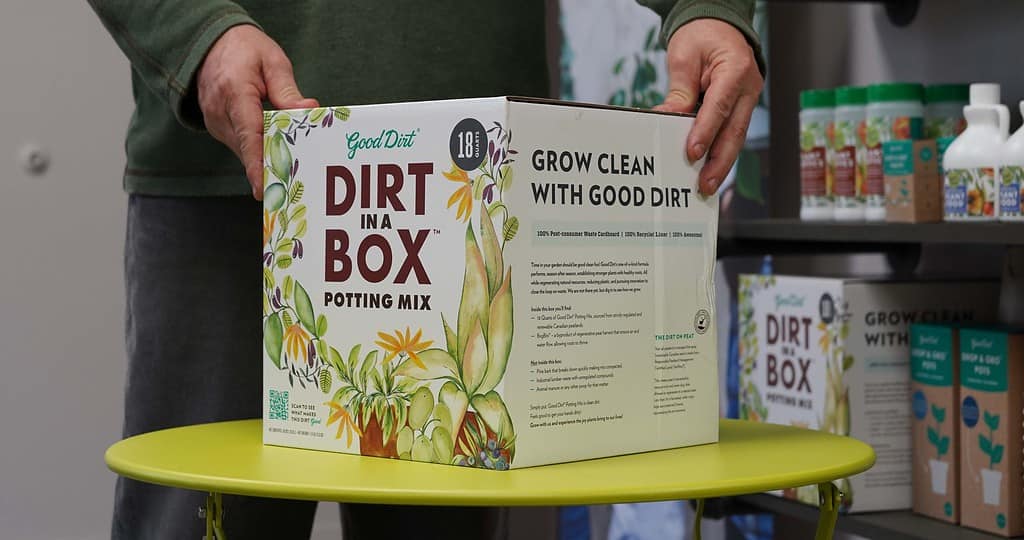
We’ve all grown up hearing the phrase “a little dirt never hurt” (thanks, Dad), and the words ring truer than ever with Good Dirt’s new Dirt in a Box. Just in time for spring planting, the Raleigh-based garden supplies biz has released its proprietary potting mix in sustainable (and totally chic) packaging made entirely from post-consumer waste materials.
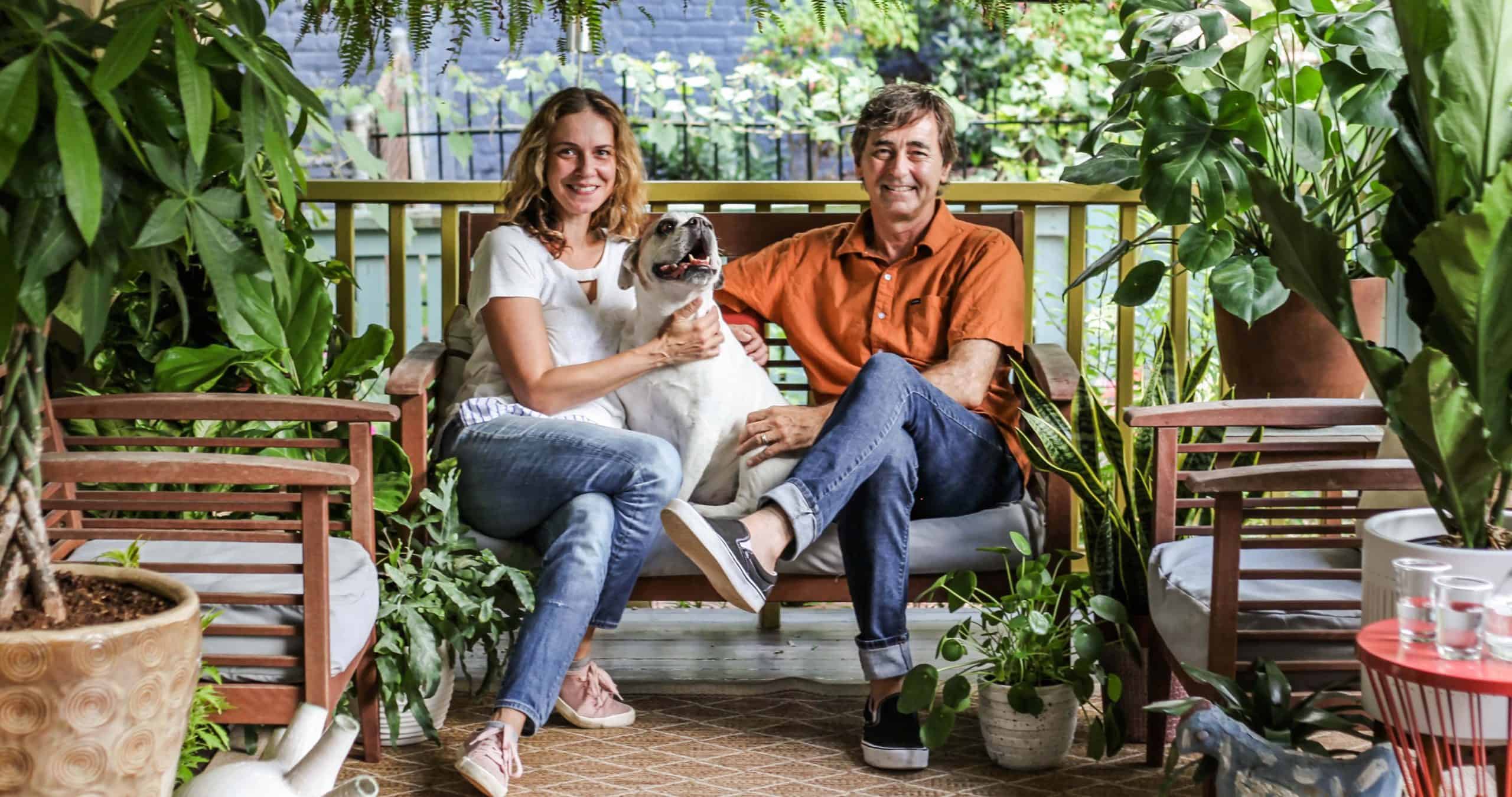
In keeping with their mission of simple, successful and sustainable, founders Al and Suzy Newsom decided to say “see ya” to virgin plastic in their packaging and create an industry-disrupting alternative that would be as Earth-friendly as their one-of-a-kind potting mix.
“One of the things we were always talking about was that we’re working in a zero-waste manufacturing facility; we’re doing all the things we can for what’s in the product to be sustainable, chemical-free, and vegan- and nut-free—but then there’s the plastic,” says Suzy, whose marketing background complements her husband’s lifelong career in horticulture. “So, we did a ton of research and came up with what we kept calling Dirt in a Box. … But it had to be more than a box because anybody can ship dirt in cardboard. It had to be a box that was sustainable, a box that was a compostable, a box that you can use in your garden and would suppress weeds.”
In addition to constructing the box from 100% post-consumer waste, Al notes the company uses local resources whenever possible, driving a circular economy that ensures sustainable growth and keeps the company’s carbon footprint low. “We’re not perfect, but we strive to be,” he says.
Did we mention the box is also gorgeous? Featuring a lively watercolor print by Seattle artist Sarah Simon (@themintgardener), the elevated packaging speaks to the Newsoms’ own appreciation for art (they are avid collectors and heavily involved in Raleigh’s creative scene) and is a far cry from the industrial-looking garden products carried at most big-box stores. “We really wanted to bring the human element to all of our products,” Al shares.
In short, Dirt in a Box doesn’t harm the environment, looks fabulous on a shelf and can be renewed once empty (take Raleigh City Farm’s lead and lay out the corrugate as mulch). What’s not to love? And the good news is Good Dirt continues to innovate, thrive and grow, both here in Raleigh and beyond. “The collaboration with different people is a huge gratification for us,” says Al of the local community. Adds Suzy, “In general, I believe plant people are the best people.” Select Target stores, Grove Collaborative and getgooddirt.com
Raleigh is getting its first hydroponic community garden.
A local restaurateur and his father are soon going to be able to increase food production in one area of Raleigh from 500 to 32,000 pounds (!)—and they don’t even have to use any dirt to do so. Enter Raleigh’s first indoor year-round vertical hydroponic community garden, which breaks ground today, Dec. 20.
A partnership between DTR-headquartered Green Blue Marketplace, founded by Oak City Fish and Chips owner Isaac B. Horton IV and his father, Dr. Isaac B. Horton III; and Passage Home, which works to break the cycle of poverty in Wake County, the Green Blue Community Garden will provide affordable, healthy, nutrient-rich food for all communities in Raleigh.
“This partnership will provide more than just an interesting new way to grow food,” says Raleigh Mayor Mary-Ann Baldwin, “it will bring opportunities that will have a far-reaching impact on people’s lives—starting in Southeast Raleigh.”
The garden comes after the Green Blue Marketplace—nee 2021—developed an ag and health tech platform to produce toxic-free, nutrient-fresh and secure food following six years of research in hydroponics, health and wellness.
Research done by the Hortons found that key nutrients in fruits and vegetables can leave the plant in only three days. By producing hydroponic food right here in Raleigh, the community garden will provide the community with the most nutrient-dense fresh produce before the nutrient index is compromised.
“This is a major advance in nutrition and food security for people in Raleigh,” says Dr. Philip Brown, past president of the North Carolina Medical Society. “I look forward to scaling across NC as we use the objective of fresh food as medicine to create new levels of health in our state.” And this is just the beginning of Raleigh becoming a Green (Blue) City.
WEB EXCLUSIVEJoin Rise Against Hunger’s fight to end world hunger through its second annual virtual Garden Club.
Get ready to flex your green thumb and pot it like it’s hot—for a good cause to boot! Rise Against Hunger’s Garden Club is back in its second year—right in line with the start of spring and this gorgeous weather… just begging you to get outside.
Besides being a great excuse to play in the sun and get your hands dirty, the virtual Garden Club also lets you give back to those facing hunger. A minimum $50 donation to register supports Rise Against Hunger’s efforts to empower at-risk communities around the world through the continuation of sustainable agriculture programs, which have served as one of the nonprofit’s key response efforts during the pandemic, as part of its Empowering Communities pathway.
Rise Against Hunger’s Empowering Communities project in Senegal
Kids receiving their meals in Venezuela
Rise Against Hunger has several other initiatives to end hunger throughout the world, but The Garden Club digs up an easy way to get meals to those who have suffered during the pandemic,so gardening gurus can plant seeds of hope across the community—literally and figuratively.
“I’m so excited to have this Garden Club be an opportunity for people—whether they’re experienced gardeners or beginners—to get involved with ending hunger for the second year in a row,” says Elizabeth Bradford, Rise Against Hunger’s garden club instructor. “No matter where you are, you can play a part in addressing this critical global issue.”
Once registering for the garden club, you’ll receive an exclusive gardening kit featuring gloves, seeds and more in the hopes of growing a wonderful vegetable garden you can relish all season long. You’ll also get access to tips and tutorial videos from Bradford herself. The club is open to anyone and everyone, no matter their gardening skill level… so you can bloom where you’re planted. Registration available now through April 30, act.riseagainsthunger.org/give/286878/#!/donation/checkout
Choosing an herb or herb palate for a dish is a lot like choosing a tie, an opportunity to give your look some nuance and personality. Think wearing a pastel tie to a spring wedding or deciding to top a roast chicken on buttery mashed potatoes with some freshly chopped chives.
It’s also an opportunity for failure: you shouldn’t put Italian basil on a taco just like you shouldn’t wear a striped tie with a striped shirt or a tie with little airplanes on it to the funeral of a guy who died in a skydiving accident.
Point is, choosing an herb palate is an important opportunity to complete the flavor profile of a dish. And while I’ll sometimes go without a necktie, I rarely exclude herbs in my cooking.
Since you choose the herb based on the dish and not vice versa, it pays to have options at hand. But this spontaneity presents a problem: Herbs are best in their fresh form and fresh herbs are perishable.
In these warmer months, instead of stocking your fridge with a variety of fresh herbs to use in a moment’s notice, stock them in your garden.
Growing Herbs
I use the word “garden” loosely—you don’t need gardening gloves and a floppy hat to be a gardener. All you need for an herb garden is six hours or more of direct sunlight.
My garden, according to my girlfriend, Lauren, is an “excessive” number of potted herbs that I “obsessively” arrange and rearrange in the yard. For renters like me, it’s hard to beat the affordability, durability and mobility of plastic pots.
If you have a big sunny spot for a garden bed and feel ambitious, ask a green-thumbed neighbor or an expert at a garden center or nursery about what soil to buy or how to condition the soil in your yard for gardening. Find someone who seems invested in your success.
Herbs need space. If you’re planting in a bed, give your herbs plenty of room to grow. If you’re unsure about the mature size of a plant, ask someone or look it up.
What to Grow
It might sound obvious but start by growing the herbs you anticipate using. If you don’t remember the last time you used thyme, go with rosemary. Contrarily, if you love thyme, growing more than one variety can be rewarding: I have found that lemon thyme excels in lighter applications with seafood, poultry and potatoes, where standard thyme remains my preference for rich sauces and stews.
Dr. Catherine Browne—owner of Ageless Herbs out of Hamptonville and a generous font of botanical knowledge, urges us to consider a plant’s nature in addition to its flavor when choosing between varieties. For example, Browne suggests growing Italian oregano over Greek, whose aggressive roots are more readily restricted by the pot resulting in a shorter and less productive plant than the Italian variety.
Some herbs—like dill and cilantro—simply won’t grow well in our hot climate.
If you love dill and want to keep it in your arsenal, it holds well in the fridge when wrapped in damp paper towels and stored in a Ziploc bag. Or, try using the juice from a pickle jar to add some fresh dill flavor in a pinch.
Unlike most other garden and herb stores, Archer Lodge Herb Farm owners John and Deva King don’t sell dill and cilantro. Their reason: “Once you remove integrity, you can sell people anything that there’s a market for,” says John. “I could sell you cilantro,” he continues, “but it won’t last very long.” Archer Lodge grows herbs in Clayton and sells them at Raleigh’s State Farmers Market.
Fortunately, not all is lost for cilantro lovers. Archer Lodge sells Vietnamese coriander, which, despite looking completely different from cilantro, tastes remarkably similar. I’m growing it for the second year in a row and I use it all the time in Latin and Asian cooking.
When shopping for herbs, I recommend starting with plants instead of seeds, and, generally speaking, the bigger the plant the better. If you buy a tiny plant and then use most of it, it will take 2 to 3 weeks for it to bounce back and become usable again. Larger plants have more to offer and recover more quickly.
Unless you want it murdering all of your other plants and taking over your yard, mint should be grown in its own container.
Tending your Garden
Go on social media and you’ll see cat parents, dog parents, actual baby parents, and, in this time of quarantine and crisis gardening, people like me—plant parents. Once you have chosen your herbs and potted or planted them in a spacious environment with plenty of sunlight, it’s easy to be a good plant dad (or mom).
Your first responsibility is to water them but pay attention; you can thoroughly water two similarly sized herbs in identical pots and the next day, one could be dry and one could be damp. Watering the plants usually doesn’t mean watering all the plants—only the ones that need it. Put your finger about an inch deep in the soil, and if it feels damp, leave it alone. If it’s dry, water it thoroughly—never partially water a plant, this encourages shallow root growth.
Next, you are responsible for weeding your pots and garden beds. Weeds compete with your plants for water and nutrients and should be plucked immediately.
Your last responsibility: use your herbs! Counter-intuitively, trimming your herbs habitually encourages them to grow more, so don’t feel like you’re using them up—they like it.
Not all herbs should be cut the same way, so look up each plant online. Parsley, for example, grows from the inside out like a fountain, so it’s best to harvest the outer stems. Basil can be clipped back about halfway down any stem, as long as you cut right above a leaf joint.
Always harvest with scissors. Pulling and tearing signals to the plant that it’s being eaten by insects, while clipping tells it to grow more.
Rules For Growing Herbs In Pots
1. Any type of pot will do as long as it has holes in the bottom for drainage. Keep in mind that clay pots are porous, so they dry out much faster than plastic.
2. With some exceptions, herbs grow rapidly, so they need at least a 12-inch pot. “Think about how miserable you’d be if your shoes were too small,” says Deva King of Archer Lodge Herb Farm. “You can’t expect your herbs to be happy in that situation either.”
3. Only use potting soil—do not put topsoil, garden soil, or yard dirt in your pots. Organic potting soils work great, as do most of the name brands. Do not use potting soil with “moisture control”—they will hold too much moisture and drown your plants.
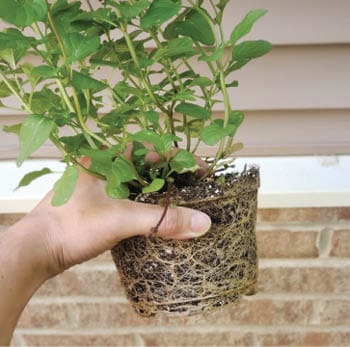
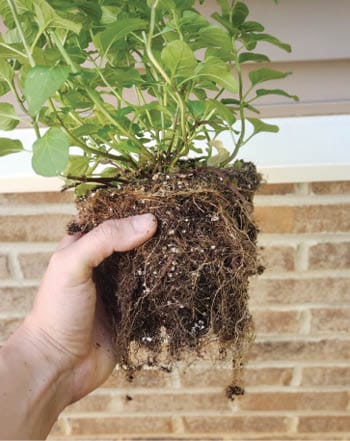
4. Loosen the ball of roots when re-potting a plant to encourage outward growth. (See photos above.)
5. Do not pack the soil into the pot—put it around the plant with your hand, then lightly tap the pot to settle the contents.
6. Water your plants immediately after potting them. This will help set the soil and gives immediate relief to the distressed roots.
Sachet
If you want flavor but don’t feel like tediously picking herbs like thyme, use butcher’s twine to tie the herbs in a little bundle. In restaurants we call this a sachet and it can be added early in the cooking process and removed whenever you’re satisfied with the imparted flavor.
Chiffonade (pronounced shiff-oh-nod) is a classic French cutting technique translating literally to “little ribbons” most commonly applied to basil. To do it, stack the leaves upside down on a cutting board, roll them up, and slice through very thinly with a sharp knife.
Chiffonade
In this series, local chef Bobby McFarland offers tips on how to cook like the pros. Currently the lead culinary consultant at The Kitchen Raleigh, McFarland loves eating pomegranate, cheese and all things pork. His culinary hero is Alton Brown.