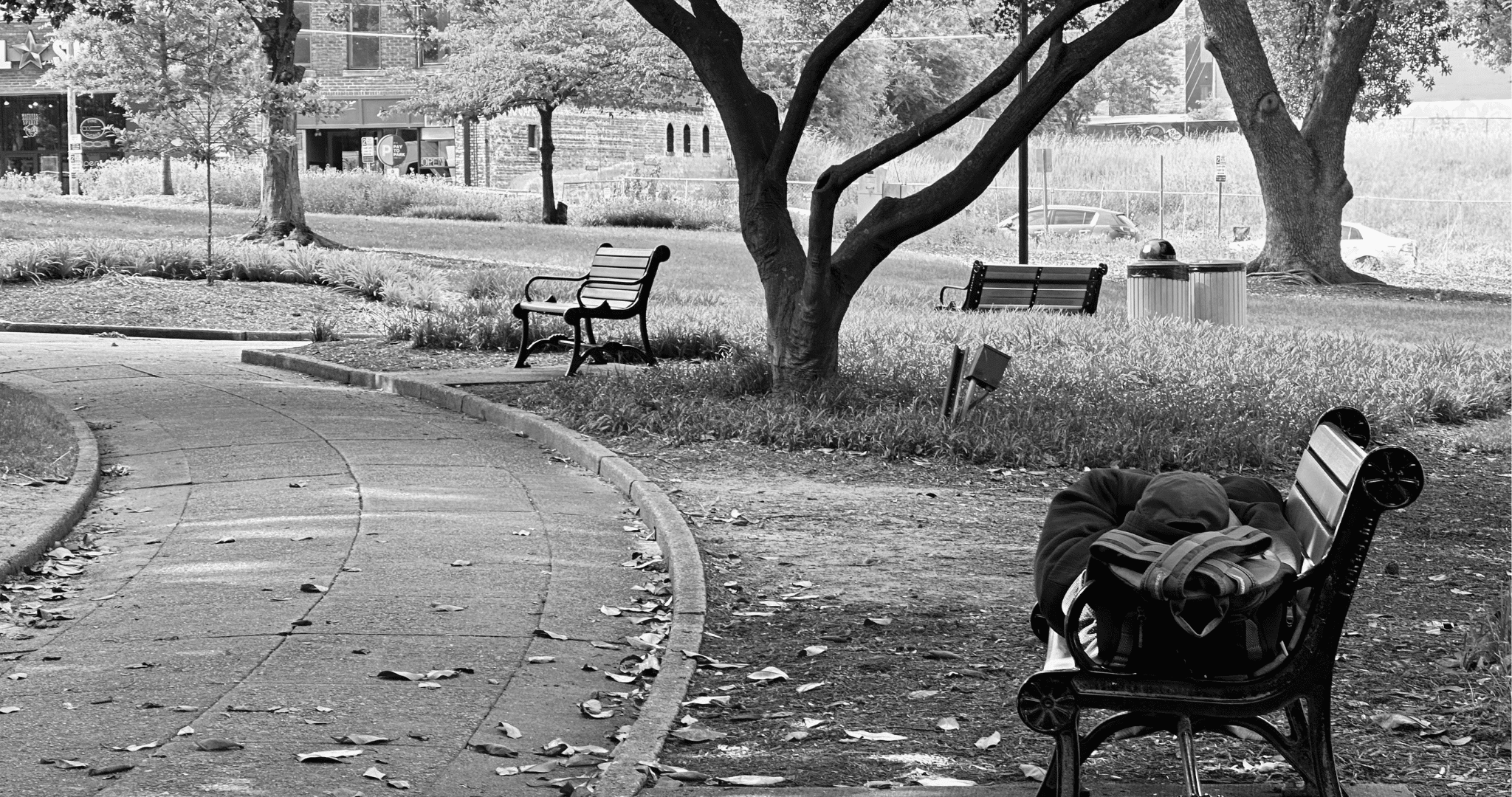
North Carolina’s homelessness numbers are in, and, news flash: They aren’t good. According to a study by SmileHub, NC’s homelessness crisis is among the worst in the country, recently ranked No. 46. It’s not a pretty picture for the well-being of our state.
Enter RM’s Give Raleigh campaign. Alongside TowneBank/Towne Insurance, the bold 40-day initiative shines a light on housing vulnerability by partnering with the Cooper Charitable Foundation to secure safe, stable homes for neighbors in need via seven local nonprofits.
We can continue transforming lives across Wake County, one stable home at a time—and thanks to TowneBank/Towne Insurance’s generous match of the first $10,000, every single dollar you give has double the impact.
See the stats solidifying NC’s urgent need to improve, and give whatever you can, even $10—because every dollar counts, and because no one should have to wonder where they’ll sleep tonight. Through Nov. 10, giveraleigh.com
Overall Rank: 46th
32nd: Share of unsheltered homeless individuals
32nd: Year-round beds per homeless person
21st: Food insecurity rate
47th: Minimum-wage hours to afford a studio apartment
29th: Share of homeless individuals under the age of 18
Homeless is a housing problem—and one local initiative is looking to fix it.
Since 2020, unsheltered homelessness in Wake County has doubled, a result of factors such as rising housing costs. But the city is taking steps to reduce the hundreds of people living in camps outdoors across Raleigh and the surrounding area. In addition to CASA’s recently opened King’s Ridge housing community for those who are unable to qualify for conventional housing, last year, City Council approved a pilot program dubbed Bringing Neighbors Home that aims to further help solve homelessness.
With an MO to invest in solutions rather than management tools, the initiative provides direct housing assistance in the form of financial subsidies to help people living in camps to move into permanent housing—along with case management and access to supportive services. It’s a win for taxpayers as well, as, according to the program, managing homelessness costs more than providing housing.
At a City Council meeting earlier this month, Raleigh Housing and Neighborhoods Director Emila Sutton provided an update on the initiative: In January, 51 people living in a homeless camp at Dix Park enrolled in Bringing Neighbors Home. Now, the camp is closed, and its members are either already in housing or working on it with the help of a case manager.
“If scaled, the approach demonstrated through the pilot would get Raleigh to what we call functional zero for unsheltered homelessness, which means that homelessness is rare, brief and nonrecurring,” Sutton told the Council.
Enrollees also receive support in areas like health care, mental health and employment through community partners. Two families were even reunited with their kids.
So what’s next for the program? The team is partnering with Downtown Raleigh Alliance and local police to identify and enroll five households experiencing homelessness in Downtown Raleigh this month. The steering committee—a group of 48 businesses and community partners—has also drafted a final plan for the program going forward.
Sutton said the plan will help them identify what resources they need to get to functional zero, and several council members have already voiced their support. To wit, the pilot is also budgeting toward repairing city-owned rental units and other affordable housing options to offer safe and stable housing for those in need.
“We would love to see a continuation of this program baked into the budget,” said Councilor Megan Patton. “Well, I’ll speak for myself; I would love to see that.”