Raleigh is getting its first hydroponic community garden.
A local restaurateur and his father are soon going to be able to increase food production in one area of Raleigh from 500 to 32,000 pounds (!)—and they don’t even have to use any dirt to do so. Enter Raleigh’s first indoor year-round vertical hydroponic community garden, which breaks ground today, Dec. 20.
A partnership between DTR-headquartered Green Blue Marketplace, founded by Oak City Fish and Chips owner Isaac B. Horton IV and his father, Dr. Isaac B. Horton III; and Passage Home, which works to break the cycle of poverty in Wake County, the Green Blue Community Garden will provide affordable, healthy, nutrient-rich food for all communities in Raleigh.
“This partnership will provide more than just an interesting new way to grow food,” says Raleigh Mayor Mary-Ann Baldwin, “it will bring opportunities that will have a far-reaching impact on people’s lives—starting in Southeast Raleigh.”
The garden comes after the Green Blue Marketplace—nee 2021—developed an ag and health tech platform to produce toxic-free, nutrient-fresh and secure food following six years of research in hydroponics, health and wellness.
Research done by the Hortons found that key nutrients in fruits and vegetables can leave the plant in only three days. By producing hydroponic food right here in Raleigh, the community garden will provide the community with the most nutrient-dense fresh produce before the nutrient index is compromised.
“This is a major advance in nutrition and food security for people in Raleigh,” says Dr. Philip Brown, past president of the North Carolina Medical Society. “I look forward to scaling across NC as we use the objective of fresh food as medicine to create new levels of health in our state.” And this is just the beginning of Raleigh becoming a Green (Blue) City.
“We feature many of our local farmers in a variety of ways throughout the year, but we believed this was a unique way to feature the many young, beginning and small producers that we also serve,” says Cape Fear Farm Credit Senior VP of Marketing and Financial Services Janna Bass.
Adds The Produce Box Director of Membership Laurel Bandiero: “Purchases of this box will not only benefit food insecurity affecting the Cape Fear area, but will support The Produce Box’s larger mission to support all the farms we work with and all the crops we’re able to purchase as our membership expands within and throughout the Triangle.”
Each produce box is chock-full of sweet locally grown and sourced products farmers based in counties near the Triangle—from Johnston to Sampson—including pumpkins, pork sausage and yellow squash. Inside you’ll also find an insert that tells a brief story about the local farmers, so you can understand where exactly your food came from. (We love to see it!)
And not only can you feed yourself and your fam with the box, you can also help feed a family in need. With every Young, Beginning and Small Farmer Box purchased, Cape Fear Farm Credit and AgCarolina Farm Credit will match their support by purchasing additional produce boxes to distribute to areas in the east challenged by lack of food.
The boxes will be available for purchase exclusively on Sept. 16 through The Produce Box. The best part? They’ll be hand-delivered straight to your doorstep—so you’ll save yourself a trip to the grocery store to boot (!). Supporting fresh surely does bring out the best.
Help your Triangle neighbors out this April via Global Volunteer Month.
They say not all heroes wear capes—but volunteers are definitely a saving grace. If you’re looking to do some good yourself, Global Volunteer Month is this month and there are a plethora of local volunteer opps to take advantage of throughout April—and beyond. Here, we give you some ways you can make a difference in our fair city while helping make a positive impact on the community. A win-win!
These shoes were made for walking—to defeat ALS! Sign up to participate in the walk (April 15) as an individual or with a team, or donate to the cause. All fundraising for the event will help provide education, support groups and access to care for those living with ALS. Walk on!
For those with a green thumb or a genuine love for nature, check out Raleigh City Farm’s weekly Wine + Weeds volunteer opp. Not only will you be contributing to the farm’s growth (literally and figuratively) by mulching, weeding, harvesting and distributing produce, but you’ll also get to raise a compostable glass of wine to a job well done. We’ll cheers to that.
WEB EXCLUSIVE Having struggled with food insecurity himself, Marcus Harris—a bestselling poet, author, playwright, filmmaker, volunteer, philanthropist, activist and founder of The Marcus Harris Foundation—knew that something had to be done to help the more than 35 million people struggling with food insecurity throughout the country, a number that only amplified when the COVID-19 pandemic hit.
One day last year, Harris had read about a free grocery story that country music singer Brad Paisley and his wife had started in Nashville, Tennessee. People who are struggling financially can shop at the store for free for up to a year while they get help to get back on track. Harris loved the idea and immediately set out to recreate something similar here in Raleigh.
After meeting with his board, Harris decided to slowly work his way up to the grocery store model by first doing a free food distribution service in Southeast Raleigh—which he dubbed Neighborfood Express—that would provide him with crucial experience and connections, and help those who had the most need first. “We went through a lot of research to find out where there weren’t free food distribution hubs and we kept being pointed to Southeast Raleigh, where they have a lot of food insecure people,” Harris says. The six low-income neighborhoods he’s focusing on in Southeast Raleigh are considered food deserts, meaning they reside a significant distance from the nearest supermarket or grocery store.
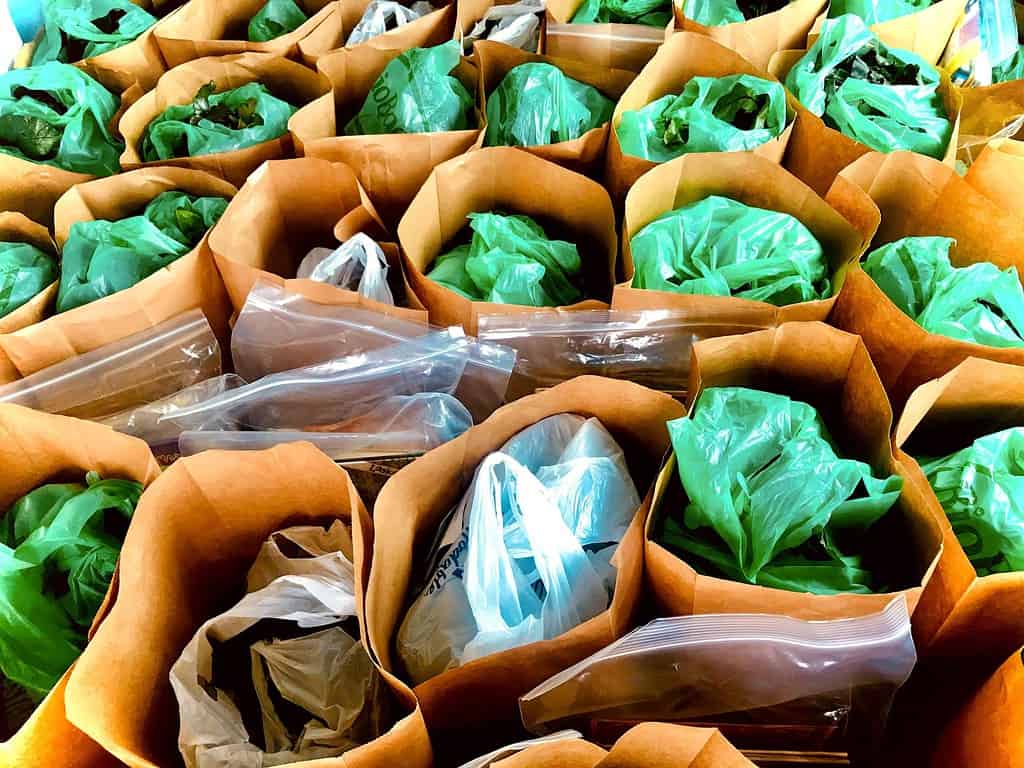
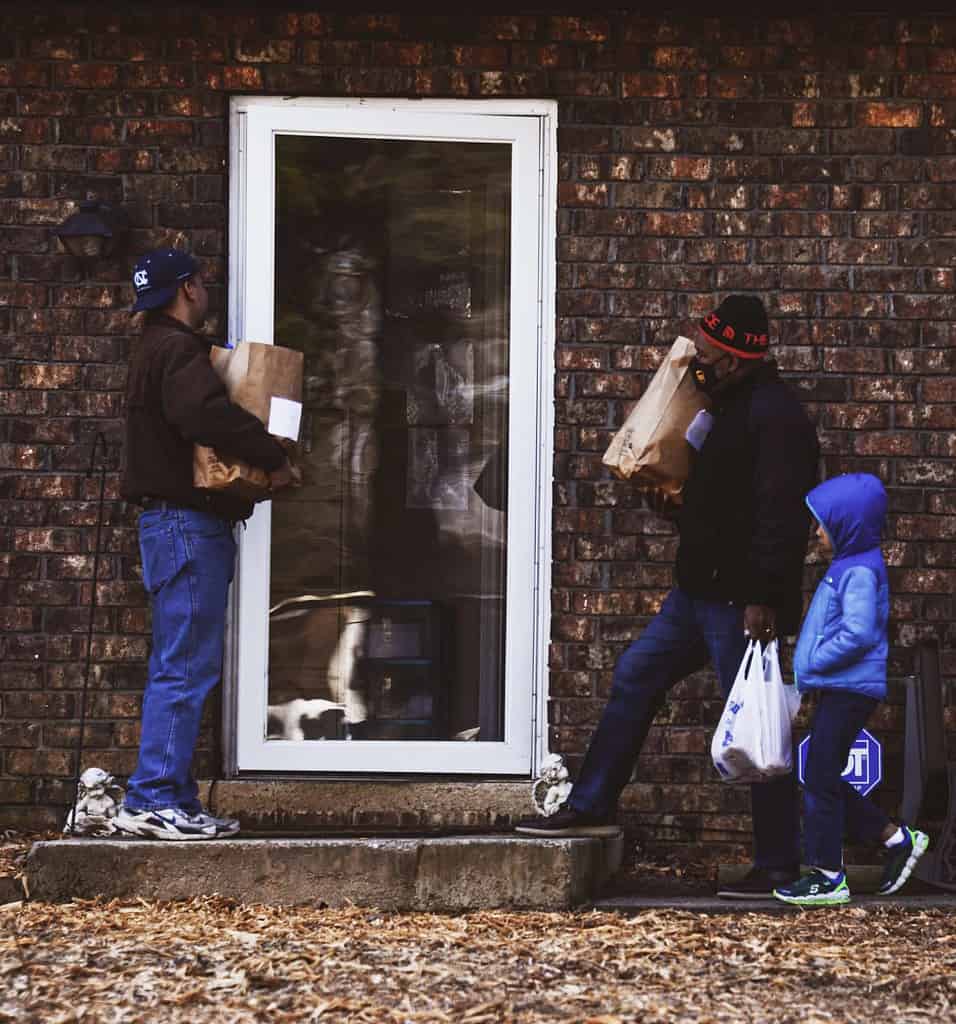
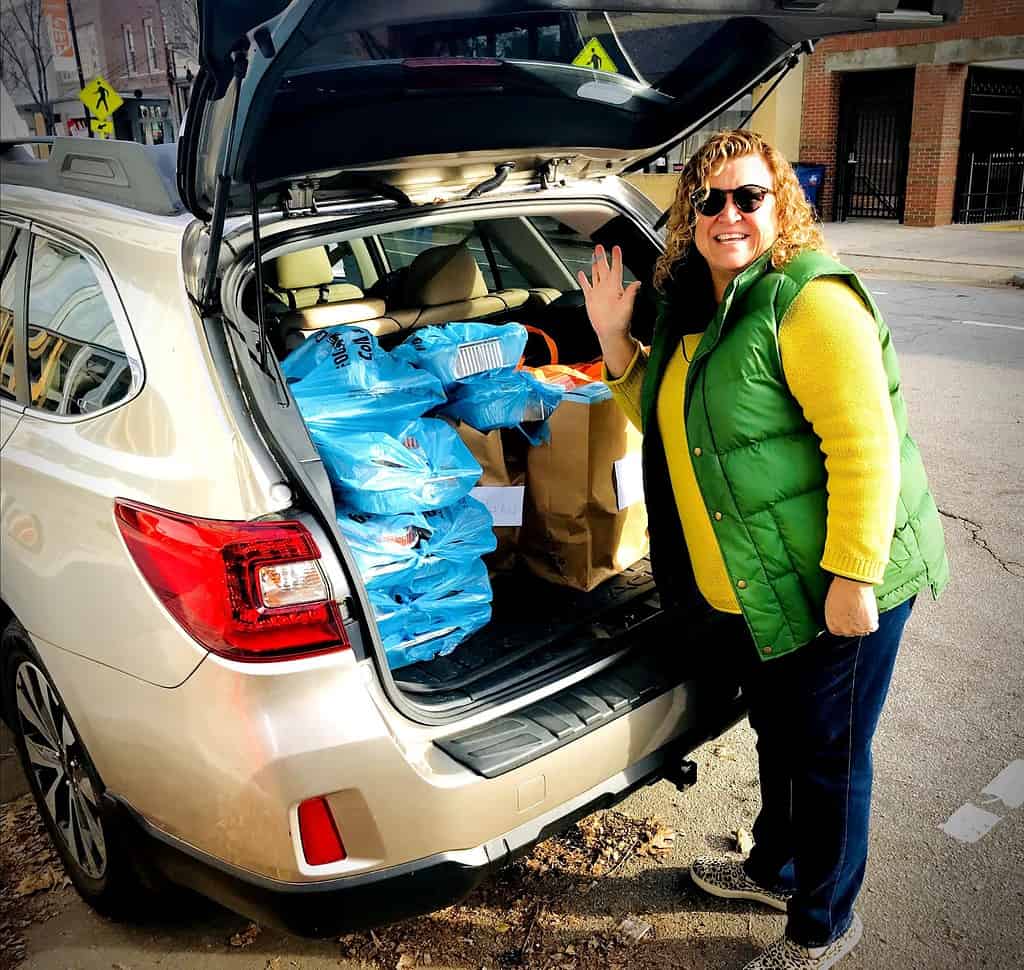
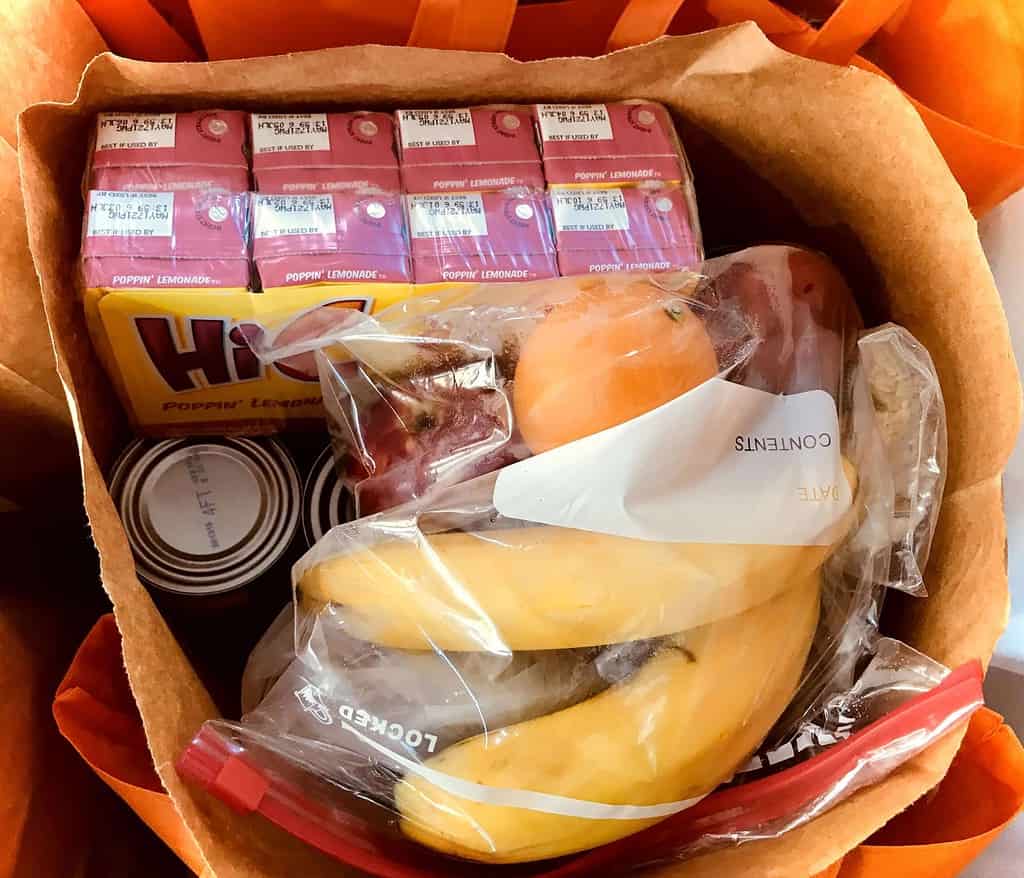
Each week, Harris sources 5 to 10 pounds of fresh produce from local farmers, 20 to 25 pounds of healthy groceries (including meats, fruits and non-perishable items), and 100 to 200 pounds of surplus food through a partnership with Olive Garden, as well as essential supplies like baby wipes and creams, for him and a group of volunteers to drop off to Southeast Raleigh families in need.
Since starting Neighborfood Express in November 2020—just before Thanksgiving—Harris has distributed over 2,500 meals, 11,148 pounds of free food and 1,005 kids’ books through a partnership with Wake Up and Read.
Harris’ first-year goal for Neighborfood Express is to distribute at least 50,000 pounds of free healthy groceries, as well as essential supplies, eliminating hunger for nearly 5,000 Southeast Raleigh residents. Additionally, he’s already started developing plans for the free grocery store, which he hopes to open by 2024 or 2025.
“Ever since launching our efforts in November, we’ve made tremendous progress in accomplishing our goal of ending hunger for thousands of food insecure kids and families,” Harris says.
Support Harris in helping to eliminate hunger in the lives of thousands of kids and families by donating by making a donation. Any amount helps!
North Carolina is the 10th-largest state and, according to a recent study, the 8th-hungriest, with nearly 16 percent of its households experiencing food insecurity. Here in Wake County, one in seven residents struggles with hunger; that’s a total of 142,000 people, and about 56,000 students in Wake County schools, who are at risk of not knowing where their next meal is coming from. We spoke with Jessica Holmes, Chair of the Wake County Board of Commissioners, about local efforts to ensure everyone in our community is getting enough healthy food.
What are the unique challenges Wake County faces around food access and food insecurity?
Because of the high growth and excitement about all that Wake has to offer, people don’t realize that around 10 percent of the population lives in poverty, and upward mobility is a significant challenge. We tend to focus on the bright, shiny objects and the benefits and privileges of our community and don’t always talk about lesser known issues like food insecurity and affordable housing. The reality is, a lot of people in certain areas of the county don’t get to enjoy the same quality of life that other people move here for.
Last fall, the Board of Commissioners passed a comprehensive plan, “Moving Beyond Hunger,” to help address food access issues. Tell us about the plan.
The goal is to ensure that everyone has access to enough affordable food. [The plan] focuses on five strategies that are the backbone of the approach: first is ensuring food access, because we have designated food deserts in Wake where people don’t have access to healthy, fresh food. Second, the goal is to communicate and educate, including on cooking and food preparation. Third, to develop a sustainable food supply. Fourth, to build economic opportunities that relate to supporting our farmers and ensuring the availability of fresh local produce. Lastly, the goal is to create food networks with our community partners.
The plan includes continuing commitments to programs that were already in place in Wake County public schools. Tell us about those.
It includes a commitment to universal school breakfast, where students are provided with breakfast regardless of their incomes, because we realized we don’t want to distinguish between children who can pay and who cannot pay. We also have county-funded school pantries and programs like Backpack Buddies that provide food on the weekends, and a robust summer food service program. In the 2016-2017 fiscal year, 116 of our schools had a dedicated food resource.
What can individuals or groups do to help provide access to healthy food for Wake residents?
Support organizations like the Inter Faith Food Shuttle and the Food Bank of Central and Eastern North Carolina that are doing the ground work. It can be with financial donations and/or by donating food. People can contact the administrations of any of our food pantries across Wake County to figure out how they can support them, whether it’s purchasing toiletries and other items for students, in addition to donating food items. Churches, or any civic group, can sponsor pantries, or host a food drive, or connect with a pantry that’s already in place. Also, they can just talk about it. People don’t realize it’s a problem here, and one of the first steps in addressing any problem is acknowledging that we have one.
You’ve been an advocate for food access since you were first elected to the Board of Commissioners in 2014. Why is this issue so important to you?
Schools are really where it started, acknowledging children being hungry. The concept of keeping food pantries in schools came from the epiphany that, not only are children hungry but their families are hungry. We wanted to give them the opportunity to go grocery shopping in a dignified way, where we weren’t just handing them food boxes that were already prepared. Then, the realization that on weekends and holidays and summer breaks, our reach wasn’t far enough. It became a broader conversation about how do we feed our greater community. Also, it was just the realization of how many people in Wake County live in poverty. It’s not something a lot of elected officials talk about, but having grown up on free and reduced-price lunch, I was able to relate to the students that may struggle. That personal experience made it a personal platform issue for me.