Form Furniture debuts office products for the future at Interior Elements
By Kelsie Barton
When, where and how we work has transformed drastically in our post-COVID world. (WFH, WFO, WFA… who can keep up?). And no one is more aware of the shift than Jonathan Johnson, CEO and founder of Form Furniture.
“I believe the time is right to offer a new company that is more in step with how office work and design is changing—and, critically, is more in step with the generations and professionals affecting those decisions,” says Johnson. “After working in all sides of the design industry for over 20 years, now is the time to offer something more simple, more authentic, more beautiful and at better prices.”
Enter Form, a line of modern furniture for both home and office that champions effortless style, comfort and truly affordable luxury. Johnson and his team launched the company in fall 2023, partnering with Interior Elements as the exclusive dealer partner throughout most of the Southeast, including Raleigh.
“Raleigh is a huge focus for us as it has such a growing business landscape and thriving community,” Johnson shares. “Not only are we thrilled to work with Interior Elements, but we get to work with their team and their customers all over the South, including both North and South Carolina.”
The collab with the fellow industry leader known for delivering remarkable workplace interiors resulted from Johnson’s hometown connection. “They started in Birmingham, which is where I’m from and worked earlier in my career,” the design pro reveals. “Watching Interior Elements grow and thrive was always inspiring to me.”
When he began developing Form, Johnson wanted to ensure he was not making decisions in a silo, so he called his friends at Interior Elements for their perspective. “Their support and feedback were invaluable to me and naturally turned into a larger conversation for the future of our relationship,” he says.
As expected, that relationship has only continued to blossom. “Our team is excited to work with Jonathan and his team,” adds Merritt Atkins, a Raleigh native who works in market development for Interior Elements. “[Johnson] said, ‘Furniture doesn’t have to be hard’—and he’s right, it should be an enjoyable experience for designers and clients. At Interior Elements, our mission is to provide an exceptional client experience while making a difference in the world around us. Form fits right in with that mission.”
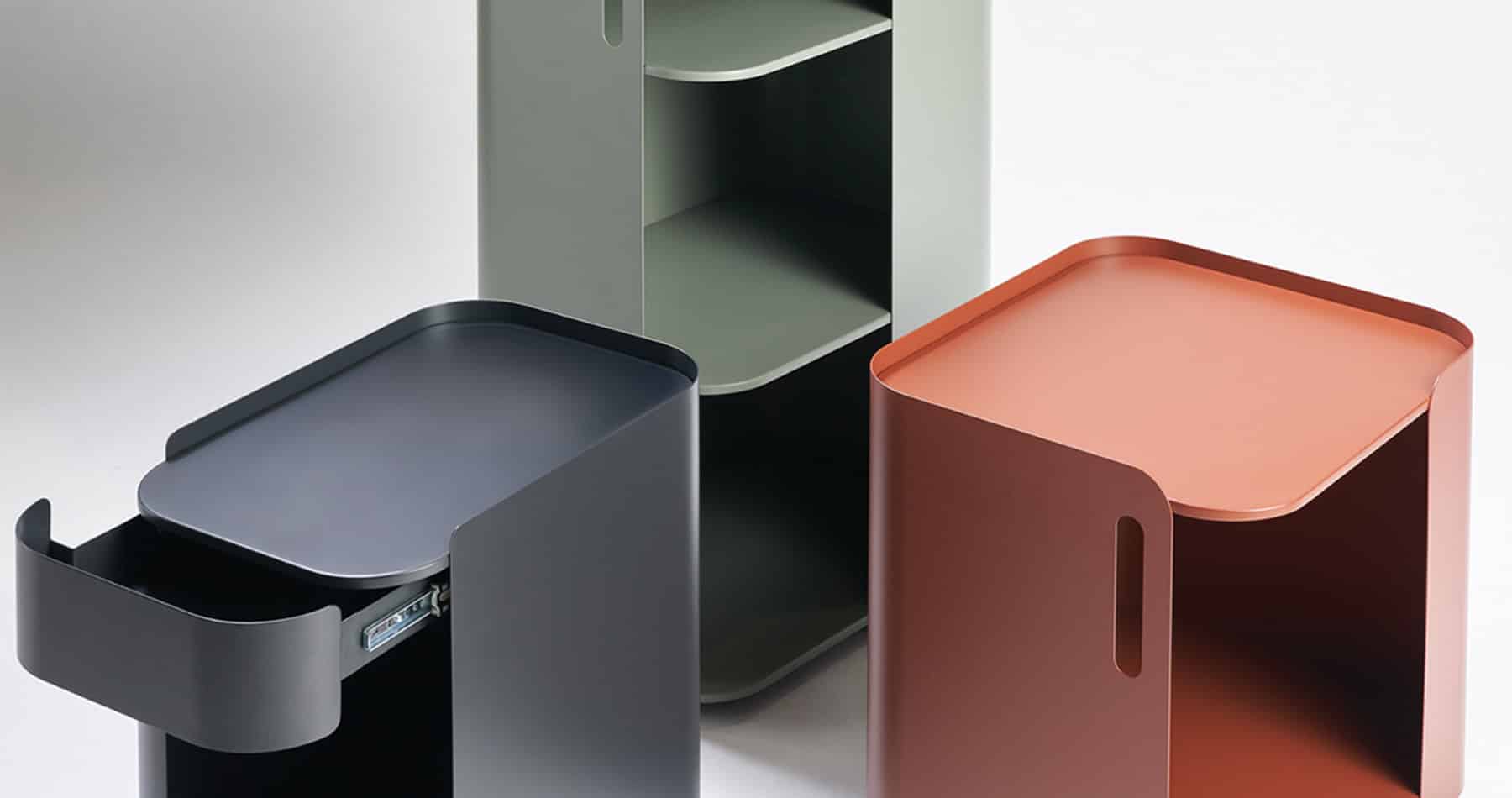
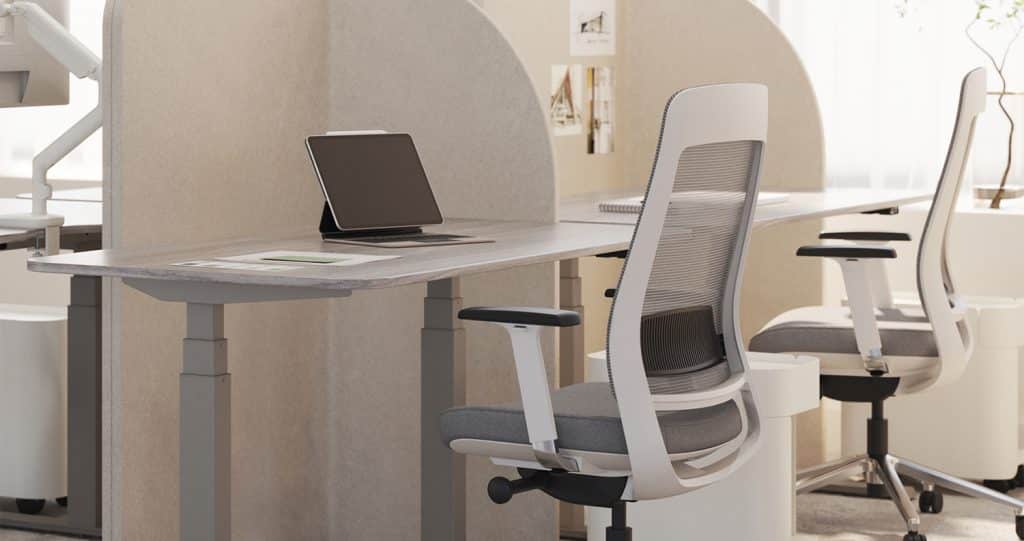
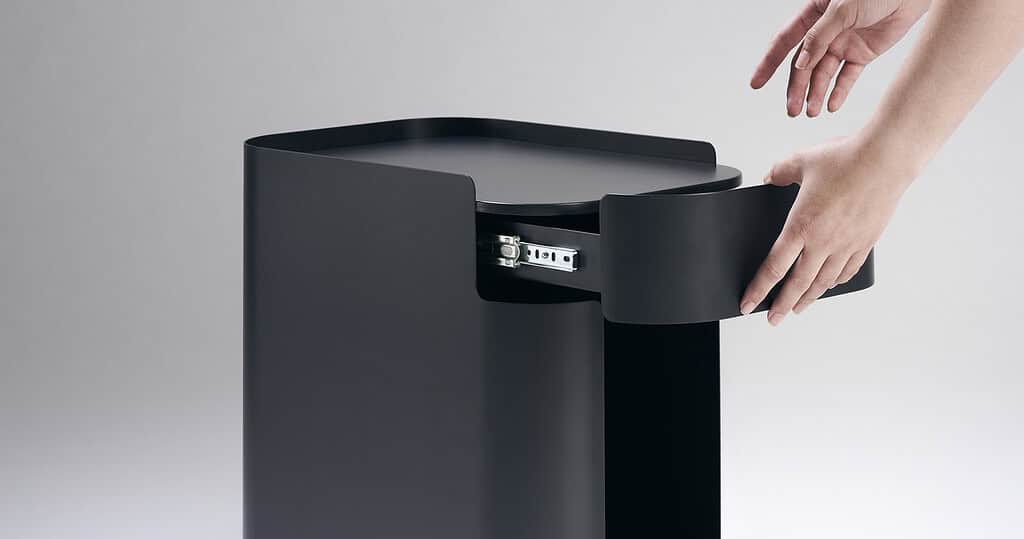
As such, Raleighites can now find Form’s sleek, adaptable high-quality products locally at Interior Elements’ Hillsborough Street locale—think the attractive and oh-so comfortable On Board conference chair, or the Stash cart, which serves as a stunningly simple and spacious storage solution. “I really wanted to include storage pieces in our line that are fresh but familiar—and not too trendy,” says Johnson of the Stash series, his personal favorite. “They are simple, with clean lines, minimal materials and are incredibly versatile. These designs will stand the test of time—and at a great price.”
As Form expands its distribution and business partners across the country (“I’m even in talks with some NC-based manufacturers for our new collections,” hints Johnson), the company will remain on the cutting-edge of workplace design through its philosophy of “furniture made simple.”
As a consumer and designer myself, I want quality, beauty and simplicity at a price I can afford,” he maintains. “Clients and designers who are working in the contract/commercial space want the same thing.”
If you build it—they will come. An inside look at Raleigh Mag’s inspired new DTR digs—and how it serves as inspo for a dynamic space people want to be in.
How do you create an office people want to work and spend time in? It’s the postpandemic-era billion-dollar question—and precisely what Publisher Gina Stephens set out to answer with Raleigh Mag’s new office digs.
Moving is difficult—full stop. Add to that the emotional aspect of relocating your behemoth multimedia company out of its fledgling office where it was born and grew, plus the pressures of navigating an era when work culture has drastically transformed and businesses are desperate to—and perplexed about how to—entice employees out of their preference for remote work. Not to mention innumerable contractors who tell you you don’t want—or can’t have—what you know you want. So goes the origin story of Raleigh Mag’s move.
But then, those contractors don’t know Stephens at all. RM’s founder, publisher and sole proprietor all but invented persistence. “Creating an office space our team—as well as clients, sources and the public—could and would want to be in or drop in and see us was precisely the goal,” she says of her vision for an office as dynamic as the magazine itself—that also truly grasps both Raleigh’s roots and her future. “I wanted a space to inspire creativity and collaboration that simultaneously functions as a cool spot to entertain, host cover-release happy hours, tape a podcast, etc.”
Beyond functionality, Stephens sought a space that showcases RM as the voice of Raleigh, at once reflecting our edgy, relevant MO while—like the content itself—staying versatile and having room for signage (!). Naturally, that space had to be in the heart of Downtown—and couldn’t be tucked away on the 12th floor of some shiny new skyscraper. It had to feel like Raleigh and be rooted in Raleigh—ground level and accessible for a boots-on-the-ground team. And, like RM, it had to be approachable—the kind of place you walk by and stop in. Essentially, your go-to city concierge.
After months of feeling like the perfect space might not exist and more viewings than worth counting, Stephens’ visit to frequent RM partner Niall Hanley (of Hibernian Hospitality Group fame) in his Harrington Street office proved fateful.
“You guys are everywhere,” the Morgan Street Food Hall owner told Stephens from his office in the same building . … “Everywhere except in a Downtown office I envision,” she jibed back, adding “I just can’t find a commercial Realtor who doesn’t insist what I want is the wrong thing.”
Hanley of course queried about what she was looking for. “Open, interesting, dynamic, ground-level, signage space,” she explained—to which he responded by showing her the available adjacent office space across the lobby. At the time it was “full of crap,” he joked, but it had the bones and Stephens had the vision—and the rest, as they say, is history.
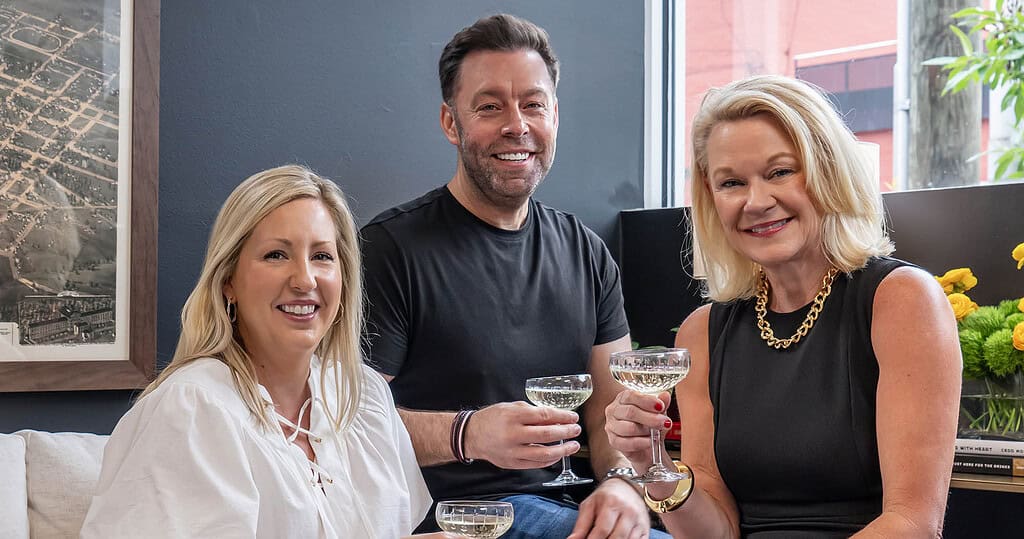
Callie Collins Rhyne, Ryan Riek and Gina Stephens
Bringing the Vision to Life
Inspired by Barringer Construction, whose local office stimulated a return to work while “reflecting what they do as a company,” says Stephens, she turned to Market Leader Brian DiDiano, who intro’d her to Callie Collins Rhyne, crackerjack interior designer and owner of eponymous Collins Finishes & Furnishings.
Having worked with Barringer on various projects, Collins Rhyne teamed up with RM Creative Director Liz Reed Comella to brilliantly bring Stephens’ vision of a versatile, modern and inviting space to life—and at warp speed.
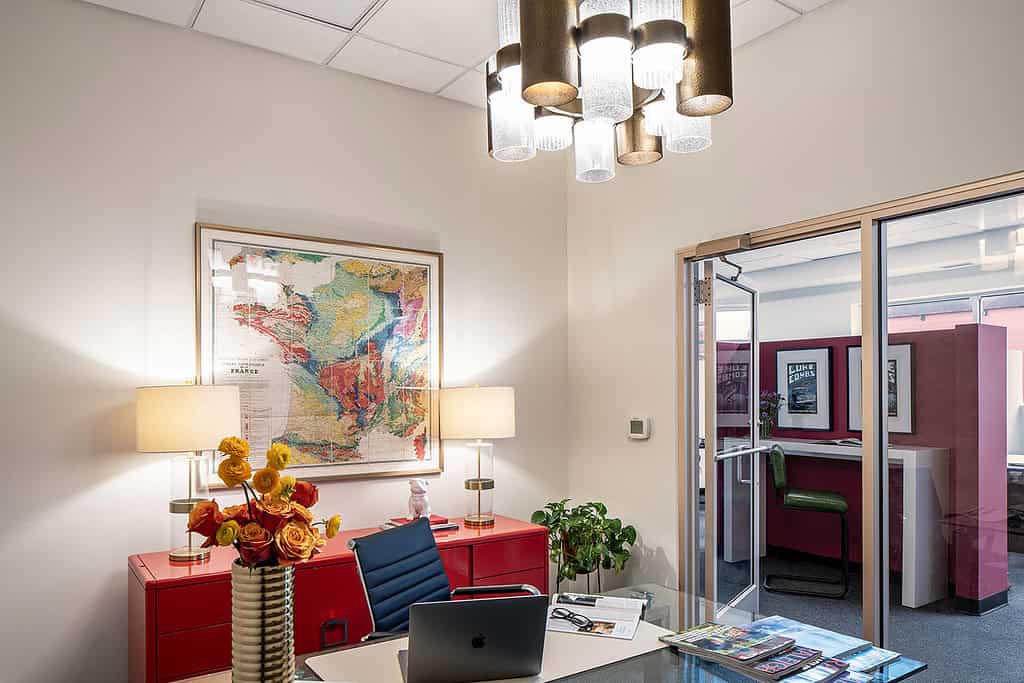
“I immediately understood the draw of the space,” says Collins Rhyne of the then buttercream-yellow area lit by fluorescent lights “that zapped all creativity.” Her approach? To think outside the box. “I tried to turn a lot of the existing spaces on their head during our initial meeting; for example, the conference room was oppressive, but when thought of as an office, it allows for critical heads-down work to occur without distraction. That freed up space to create the lounge.”
Collins Rhyne also worked with Comella on a vision to dedicate space to the magazine’s creative team so they could lean into the messiness of creativity, but not have to clean up if an event was taking place or passersby dropped in. “Taking the time to understand how each team worked helped to dedicate appropriate space for each function and still be flexible,” says Collins Rhyne.
In terms of structure, the existing space was one long hallway, she notes. “I wanted to be intentional about breaking up the space—making you stop and appreciate each area.”
Beyond the long hallway, there was also “adequate square footage, tons of natural light and a client with a clear brand,” she adds. “I was able to draw inspiration from the existing Raleigh Magazine brand, instead of the challenge I face with some clients, which is the new space needs to help develop a new brand.”
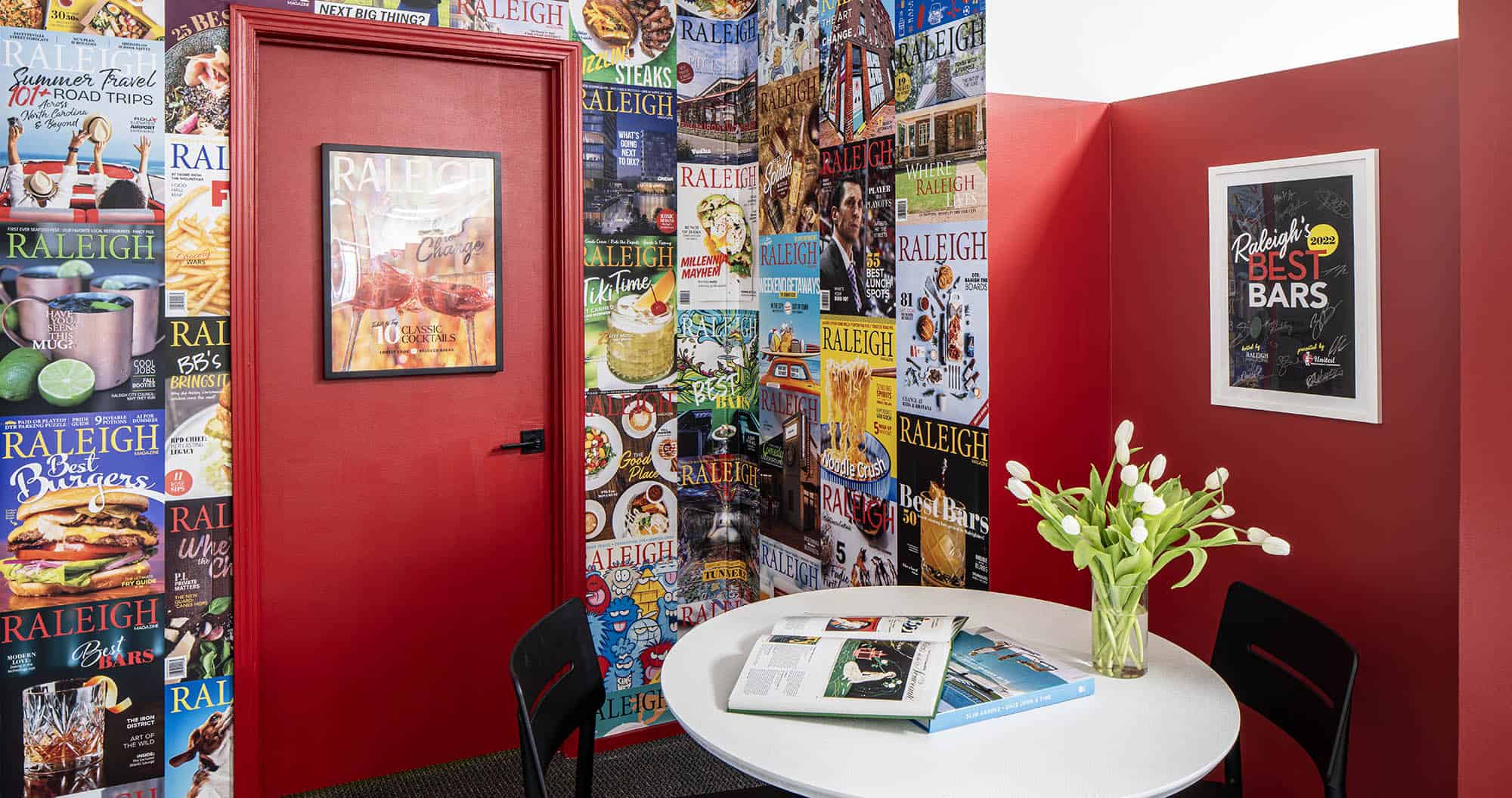
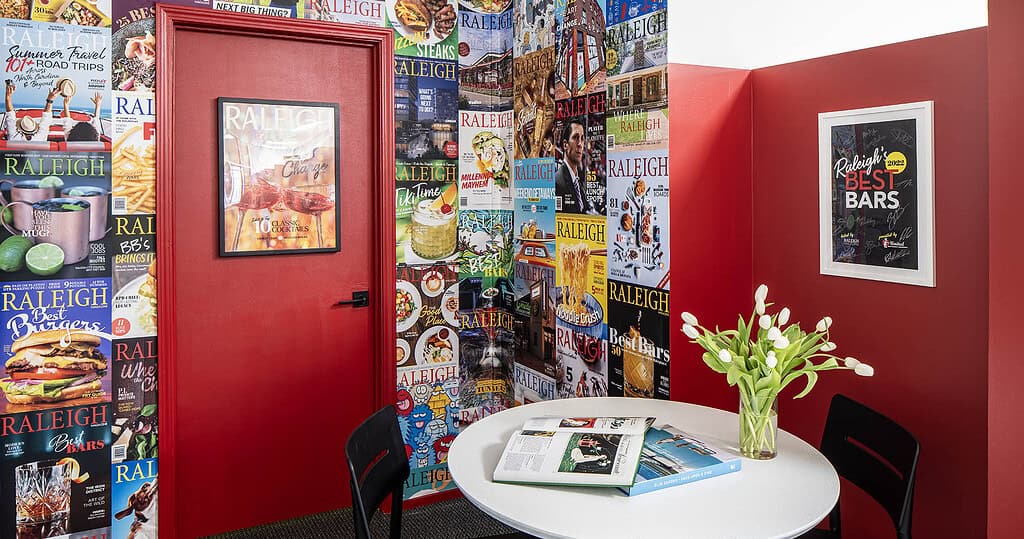
“It’s inspiring and really gets the creative juices flowing,” muses Collins Rhyne. “But it also challenged me to make design decisions that would transcend the current issue.” As such, the space is intentionally flexible, mostly via its furnishings, while keeping the basics core to the brand—like the brilliant wallcovering fashioned from some of RM’s top covers dreamt up by Collins Rhyne and designed by Comella, or the accent paint using the mag’s brand color palette.
That brand, and its inherent mercurial nature—ever-oscillating via a new podcast each week, daily social posts and web stories, three weekly newsletters, and 10 print issues a year—is something Stephens particularly aimed to lean into. “The magazine world is fast-paced,” echoes Collins Rhyne. “And since there’s a [print] deadline every month, the office needed to ramp up and cool down. I wanted to create a variety of spaces to support the team regardless of where they were in the production phase.”
Beyond that support, Collins Rhyne was also tasked with creating a hub that entices RM’s finest to ditch the couch or kitchen table to drive Downtown—which is really about being engaging in a way you can’t be at home, she says. Sure, the RM team is already on-site five days a week—sans some variation of team-dependent creative hybrid days—but Stephens still wanted us to want to come to work… and not feel chained to a desk.
“I have a pretty good idea of how people are working—or not working—from home,” says Collins Rhyne, “so I used that perspective to create a dynamic office.” Her goal? For an RM reader who’s never seen our office to “immediately know where they were without seeing a logo on the door,” she muses in retrospect. Essentially, the physical needed to be a direct extension of the RM brand.
“We didn’t just use the brand’s palette,” says Stephens of the colors you see cast throughout, “but also blended old history and new concepts, and kept a slight edge to things. The space needed to be interesting, but not distracting to work in. I think we achieved that balance.”
Ultimately, says Collins Rhyne, “we were able to deliver a final project without moving any walls or replacing any flooring, which helped keep us on schedule—and budget—but also meant every single detail had to matter.”
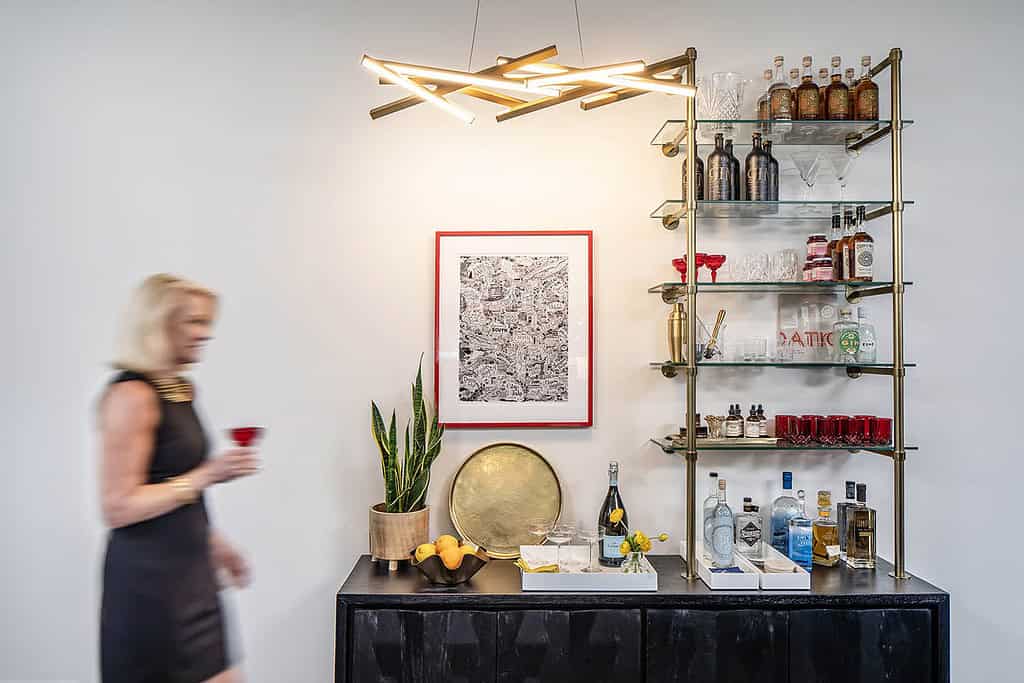
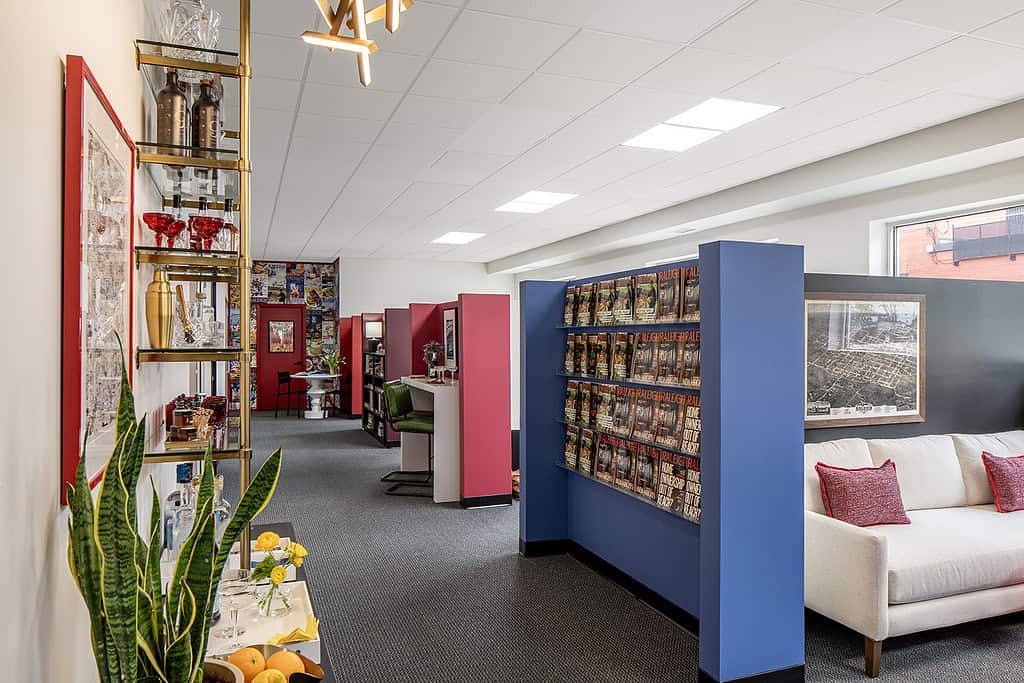
LIGHT WAC Lighting, Trig Modern; ART Illustrated & handlettered map, Bethany Faulkner; MEDIA CONSOLE West Elm SHELVES Floor shelves, repurposed by Collins Rhyne, Pottery Barn STATE SPIRITS + MIXERS Crude Bitters, Outer Banks Distilling, Sutler’s Spirit Co., Cook’s Mill Whiskey, Young Hearts Distilling, Durham Distillery, Blue Shark Vodka, Adictivo Tequila, Great Wagon Road Distilling, Fainting Goat Spirits, Chemist Spirits, Hackney Distillery, The Exchange honey
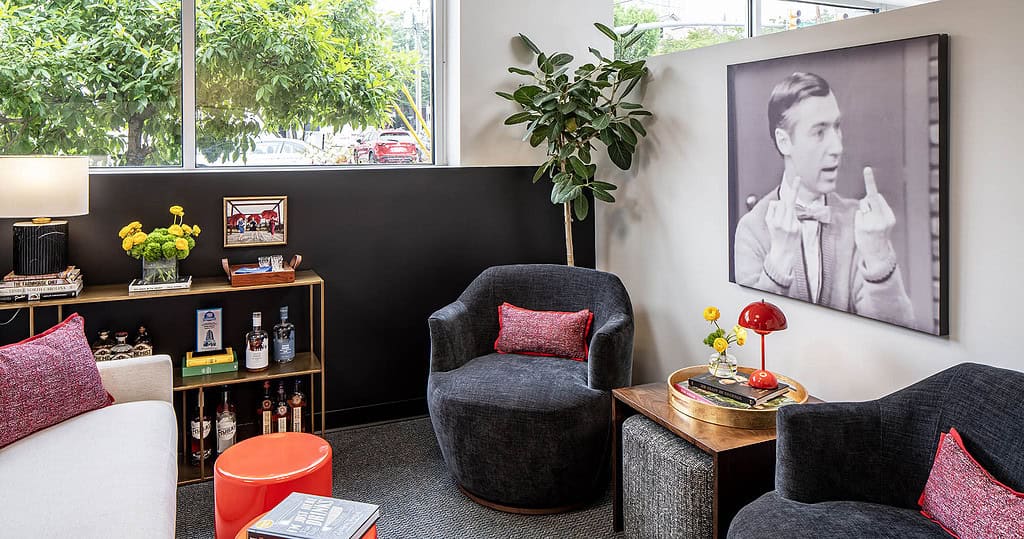
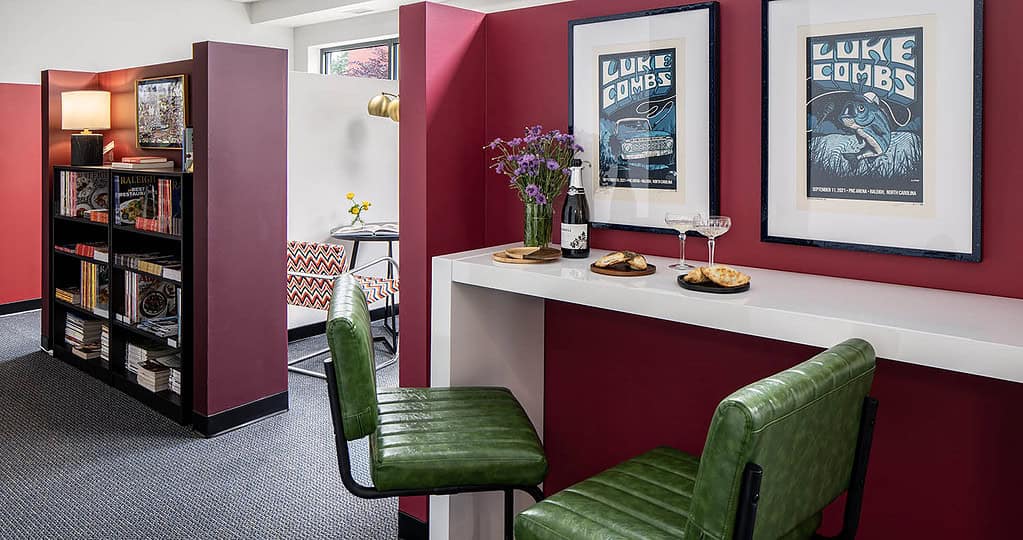
WALNUT TABLE Custom, Trig Modern; TOUCH TABLE LAMP Ameico, Trig Modern; MISTER ROGERS ART Gifted, Jason Howard, formerly from now-defunct The Atlantic Lounge
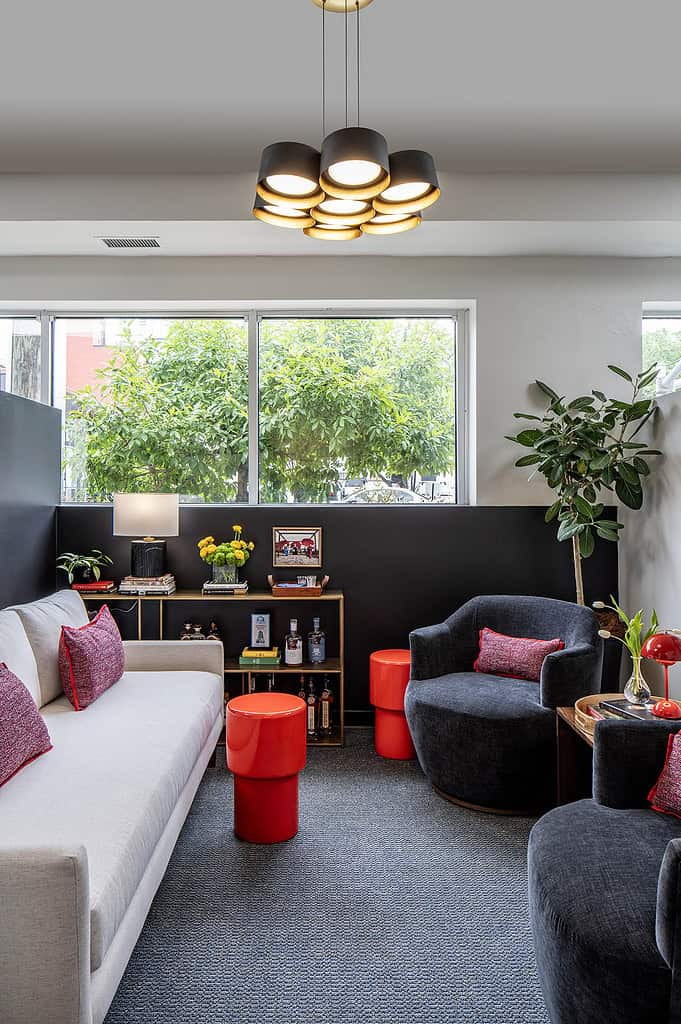
OFFICE CHANDELIER Modern Forms, Trig Modern; RED CREDENZA Vintage, lacquered by Rail & Stile
CUSTOM WALLPAPER Conceptual idea by Collins Rhyne, designed by Liz Reed Comella, Southport Graphics
SO INVITING: Beyond brand identity and inviting environs, Stephens wanted the DTR digs to break down that fourth wall—that impenetrable space between media and the public. An open-door policy, if you will.
Devil’s in the Details
An accelerated project eight weeks from start to finish, the revamp and relocation was both fast-paced and small-scale in Raleigh’s current commercial climate. “That’s just a tough combination,” says Collins Rhyne, who nods to past relationships as the ultimate advantage.
Raleigh’s Trig Modern served as one such “awesome partner,” who Collins Rhyne and Stephens tapped to achieve the vision. Finding high-quality, on-brand, stylish pieces on a tight deadline isn’t exactly standard. But solving problems is precisely what Trig hangs its hat on, says owner Ryan Riek, whose background is in hospitality (think former owner of Taste, The Oak, etc.).
The whole premise of Trig is “to bring the fun back to shopping,” Riek says of the now mod furniture shop-meets-wine bar he acquired and reimagined. “We bought it because we wanted to bring the fun back to quality furniture—furniture you can sit on and experience that you don’t have to wait forever for, with access to local, international… all the access you want.”
While the truncated timeframe isn’t typical, “a lot of that comes down to good relationships,” echoes Riek of Collins Rhyne’s hot take. That, and clear vision. Collins Rhyne was able to detail specifics—like shape, colorway, a black-and-white theme—“so for her it was just finding a scalable piece that would fit in the space, which made it easier to narrow down and solve the problem,” he says.
From there, Riek was able to find the optimal pieces in 24 hours—and deliver them well under the standard turnaround. Certainly, the more time you have, the more options you have, he admits—not unlike buying a wedding dress, or anything really, adds Comella. But Trig also sells off-the-floor and prides itself in working with all kinds of timelines as part of that problem-solving.
Furnishing RM’s physical brand realization is a full-circle moment for Riek. “Gina was there in the beginning when we first got JMR [Kitchens] up and running,” he reminisces. “We all started about the same time. And I happen to be in an industry now where I can assist.”
To create an inviting, multimodal space, the furnishings were critical. Beyond the lounge furniture and trio of lights Trig sourced, every accouterment Collins Rhyne implemented is multifunctional. The bar cart doubles as a magazine stand; touch-down tables can serve as bar tops during events. Even the lounge itself dupes as a dynamic space for team collab, a living-room feel to work in, or even a space to host a happy hour.
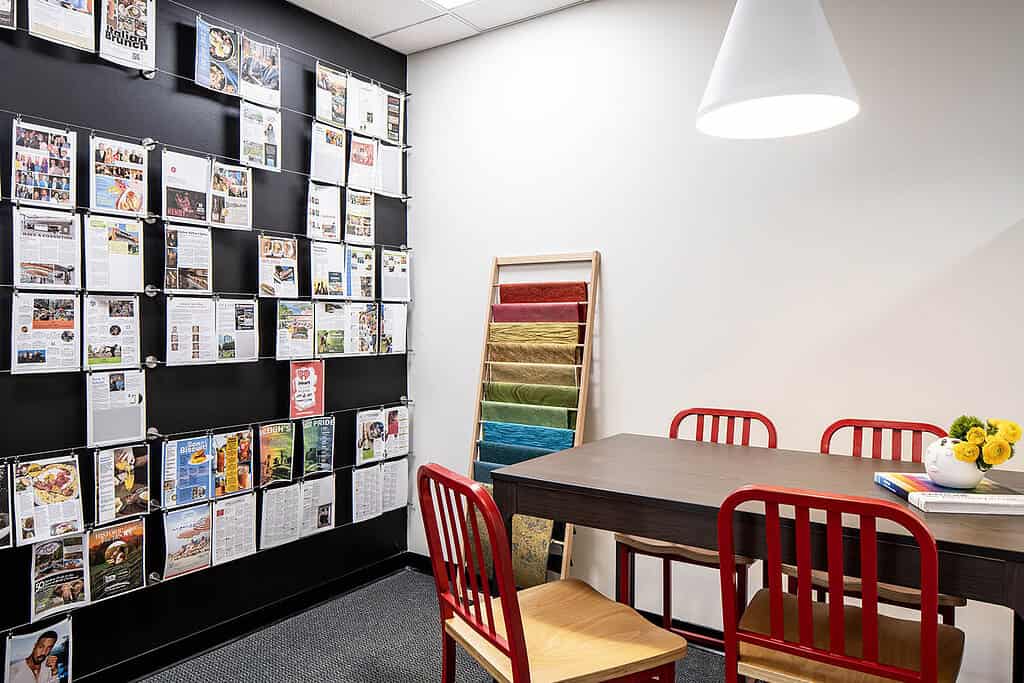
And for a team who has watched the city we love grow into not just a best place to live, but a beacon of the South—who has witnessed firsthand and in-depth her progress, setbacks, wins and losses, and told her stories—Raleigh relics naturally are requisite. Case in point: All of the art is historic or collected—making it timeless, notes Collins Rhyne—like the infamous black-and-white of Mister Rogers seemingly flipping two middle fingers (he was actually counting) that formerly hung in now-defunct The Atlantic Lounge (shoutout owner Jason Howard). Not to mention current and past RM covers—time capsules in their own right—displayed across floating shelves.
Doubling Down on Downtown
At a time when downtowns across the States are having to take a hard look at how to survive, and so many people are questioning DTR’s viability, “we’re doubling down on Downtown,” says Stephens, whose second Raleigh-launched magazine will turn 9 years old in September.
The seasoned publisher is also one of the brains behind Raleigh’s MidtownMagazine, which she co-launched in 2007 before going on to mastermind and establish RM—to inform, entertain and enlighten, to cover what matters and share the stories of our city, inside and out.
“We’re excited to be part of Downtown and be able to interact more directly. We tucked our heads down and worked hard to be the voice of Raleigh,” she says. “We always wanted to be located in DTR—in the heart of Raleigh—in an inviting place with a lot of flexibility… a place people want to work in, even on a Friday afternoon” (where incidentally I am, by choice, as she tells me this on the phone on her way to a meeting when I call her to chat over this feature—again).
And, yes, right now we’re all basking in the good feels of building a place that exudes our personality—like the way a teen swoons the first time they hang posters or gets free license to paint their room. It’s the ultimate self-identity, free expression win. But, real talk: “Building a business is hard,” says Stephens. “Don’t let anyone tell you it’s not. It’s just not for the faint of heart. … I opened up an office in Central Raleigh and planned to move in a year—two tops, then put my head down and 8.5 years later, we were still there. The walls we said we’d paint were still yellow.”
At the time, Stephens opened RM’s initial office as sole proprietor—and single mom to four kids—with just two staff members: Editor Christa Gala and Creative Director Caitlin Harrison. “This magazine is one of my babies,” says Stephens. “I gave birth there (figuratively, of course).” … Now, if it happens in Raleigh, you hear it here first. That goal to take you inside the issues, events and flavors that matter most to our city is one we realize on the daily, and “I wanted the space to reflect that—to really fit us.”
The Unveiling
“We’re so pumped to finally be able to showcase this,” says Comella. Now as we invite community partners, readers, followers, etc. in to interact, Stephens also looks to soon open the RM office up to the public one Saturday a month so Raleighites and visitors alike can come hang and have a beer with us, grab some mag copies or ask for hot takes on where to go to lunch (read: less tour guides, more insiders dishing trusted news, honest reviews and exclusive buzz).
Already though, the energy is electric. Our first day in the office, a few of Got to Be NC’s team stopped in for a chat in the lounge. “It’s so nice to have people stop in—and see people passing by,” says Stephens. “It’s a warm, fuzzy moment sitting in this chair in our new lounge, and this is exactly what I envisioned—those kinds of conversations and somebody just dropping in to see us.”
It’s no doubt a dream—and design—realized for a collective who eats, sleeps and breathes Raleigh. “The location could not be better,” maintains Collins Rhyne, “and I love that you can engage with the brand at street level night or day. It feels approachable and interesting—like any good magazine.”
And to do it all Downtown in this space, Stephens says teary-eyed, “I believe in DTR and in Raleigh. There’s absolutely nothing wrong with North Raleigh roots—it’s what made us. But I wanted us to be in the heart of Raleigh’s core. And here we are.”
The WorkBetterLab is created with individual and collaborative work in mind, offering comfort, control and privacy. Raleigh is the latest city to gain this creative coworking space, joining the ranks of Toronto, Edmonton, Vancouver, Philly, Nashville, Northwest Arkansas and Austin, with more locales in the works.
“Leading organizations across vertical markets realize they can’t bring people back to the same workplace they left—the space has to be compelling and worthy of their employees’ commute,” says Susan Lewis, architecture and design manager for Steelcase. “The WorkBetterLab is an inspiring example of how the hybrid office goes beyond a destination for collaboration. It’s a place where people can do their best work together and alone.”
“Highwoods is in the work-placemaking business,” adds Skip Hill, senior vice president and Raleigh market leader at Highwoods Properties. “Our goal is to create exceptional, people-focused environments where our customers can thrive in a compelling and commuteworthy workplace. Partnering with Steelcase and Storr on this project is another step in the direction of innovation and a better customer experience, and we are excited to be a part of bringing the WorkBetterLab to Fayetteville Street.” Interested in leveling up your office experience? Nab a slot in this appointment only highly anticipated space by filling out its online form. … Ready to get to work?