How far would you be willing to drive for a place to relax and reset? For many people with disabilities and their families, that answer could range from hours to days. And while Airbnb and other short-term rental platforms boast a plethora of overnight lodging ops, a problem persists: They aren’t accessible to all.
Called to action by this need, Lorraine Woodward—a mother with muscular dystrophy whose two sons also have MD—has spent the last few years on a personally fueled mission to change this reality.
After locating a property at Carolina Beach in 2014, Woodward transitioned the home into an accessible short-term rental where more than 400 families, primarily including a person with disabilities, have since visited. “Traveling was really hard,” she reflects. “We couldn’t find anywhere that met our family’s needs—[until] we found our beach place.”
But the need persisted for more than one temporary inclusive oasis. … Enter Becoming rentABLE. Launched in 2021, the organization operates as a listing platform offering 1,000+ accessible short-term rentals that can be filtered depending on need—from cognitive to physical.
“We are the only global company taking on this task in the short-term rental industry,” explains the founder. “And we are the only company really pushing the needle forward in [terms of] expanding what it means to have accessible short-term housing.”
So, what qualifies a stay spot as accessible? It depends—there are a ream of aspects, from sensory (noise machines, muted color schemes, blackout curtains) to safety (secondary locks, anchored TVs, electrical outlet covers) that must be accounted for in each rental listed on the site. And it isn’t a one-size-fits-all approach—see the platform’s 43 individual accessibility mobility and 20 cognitive filters. Some lodging spots lean into wheelchair accessibility, while others might be better for those with Alzheimer’s or brain injury.
According to Woodward, there are ~1.5 million short-term rentals countrywide—with less than 1% deemed accessible. And with 24% of the population having a known disability—not to mention the aging boomer crowd—the need for inclusive lodging to accommodate myriad needs is expected to continue to skyrocket.
But Woodward isn’t stopping at homes. She’s also hard at work widening the inclusive nature of the travel industry, from teaming up with Expedia this spring to school the public to hosting an inclusion summit later this year. To boot, the locally owned North American-based platform has plans to go fully global by early 2025.
“It’s crazy this is where we are with accessible properties—because the need is enormous,” notes the changemaking Raleighite. But the accessible renting biz is certainly rising to the challenge. becomingrentable.com
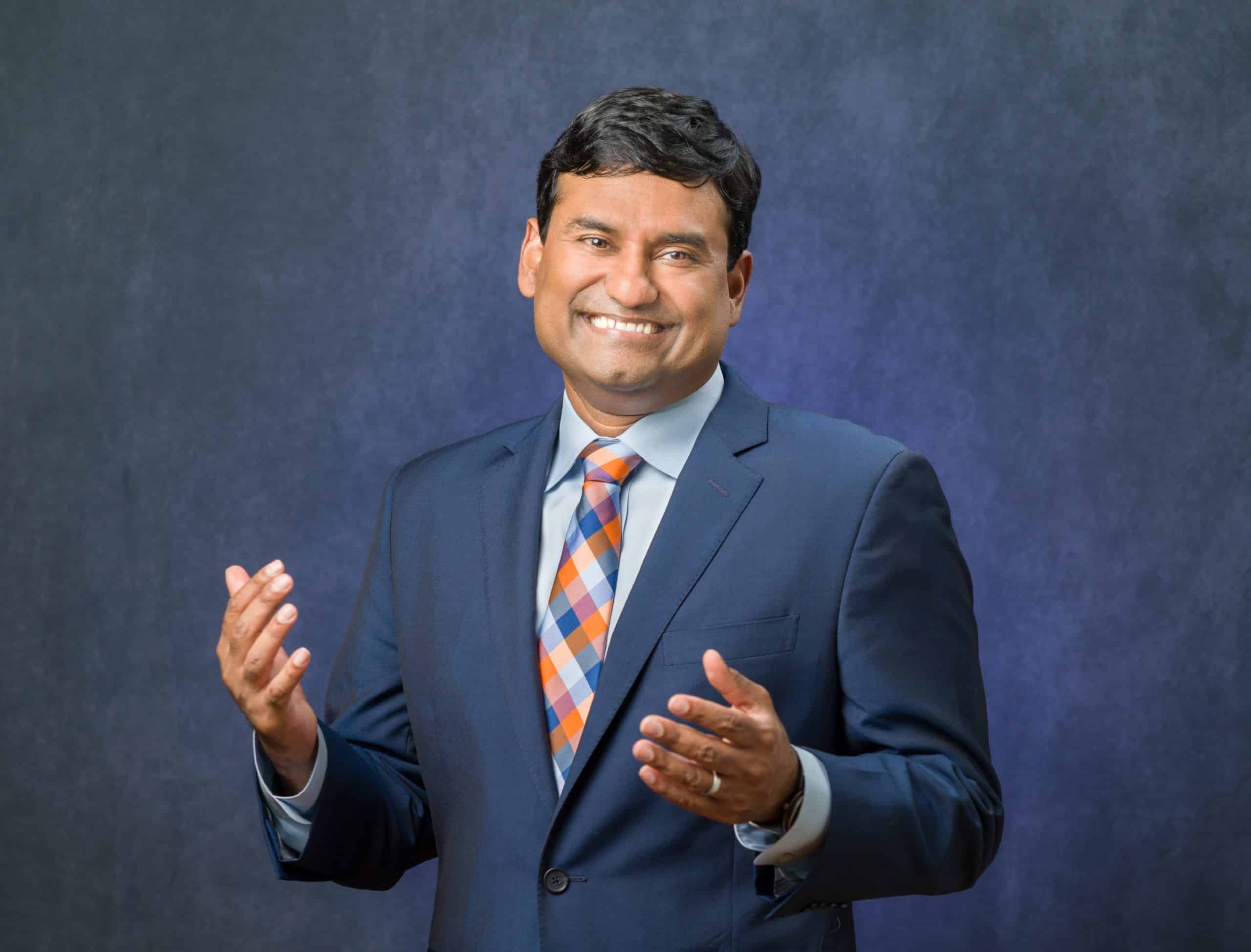
Ablr CEO and co-founder John Samuel chats about his new memoir, finding his way back home to the Triangle and the power of acceptance.
After being diagnosed with a degenerative eye disease while in college, John Samuel’s life as he knew it—and the future he had always imagined for himself—quite literally began to vanish. Faced with mounting obstacles and limited opportunities here in the Triangle, the Cary native felt his only choice was to move away. What followed was a 12-year journey around the world that forced him to slowly confront his new reality and, ultimately, embrace life with a disability in order to achieve his dreams.
Fast-forward to today and Samuel is back in his hometown with a mission to help others who are on the same difficult path. As the co-founder and CEO of Ablr, Samuel focuses on helping companies remove barriers for all people with disabilities, fostering a culture of empathy and inclusivity. “I can’t be more grateful to be able to come back home to the best place in the world to live and raise my kids and build a company like Ablr, which is helping to make sure that no one else feels like they don’t belong here,” he shares. “And I can’t be more happy that Raleigh and the Triangle have embraced me with open arms!”
Why did you feel you had to move away from the Triangle area?
After graduating from NC State, my sight had deteriorated to the point it wasn’t safe for me to drive anymore—and I didn’t think anyone who was blind could live here—so I ended up leaving the Triangle for roughly 12 years. I eventually found my way home in 2017, and I couldn’t be happier to be back and raise my kids near their grandparents in the same place I grew up!
What compelled you to write this memoir?
Ever since I got back home to the Triangle and started working in disability inclusion and accessibility work, I’ve had the honor of being invited to share my story on various podcasts and speaking engagements. Through this, I realized the power of storytelling and how, by being vulnerable and sharing my own experiences of losing my sight, I was able to break down stigmas and humanize what disability means. And, for me, I personally enjoy reading memoirs and thought that sharing my story this way could reach a whole new audience.
How would you describe your experience writing the book?
It was much more involved than I ever thought! I used to write lots of blogs for my company and guest articles for different publications so I thought it would be similar, but I found it much more difficult. I had to shift my writing style from ‘telling’ to ‘showing.’
How did you make the book more accessible to others?
In addition to releasing the book in a physical format, I offer it as an audiobook as well. I reached out to my friend Jason Gillikin, who founded a local podcast production company called Earfluence, to help bring this to life. And when it came to the reading of the book—I knew it would be nearly impossible for me to do it myself because I can no longer read written text—I reached out to my friend Sean Maroney for his assistance. Sean was previously a news anchor and often emcees events around town, so I thought he would be great to lend his voice for my story. He didn’t disappoint—he rocked it!
Along your journey you have overcome seemingly insurmountable obstacles to ultimately embrace your circumstance and help others do the same. What was the pivotal moment that changed your outlook and paved the way for you to find happiness, love and success?
It’s hard to single out one moment, but rather I think it’s a combination of moments. The first one came while I was climbing Mount Kilimanjaro. The guides who were taking my friend Stephen Jeffress and me up didn’t think I was going to be able to do it with my limited sight. However, over the next several days we spent together, we built a new level of understanding and figured out how best to work together to achieve our joint goal of summiting the mountain. This is an example of what I call ‘proximity builds empathy,’ the belief that the more we spend time and listen to people with different experiences ultimately leads to greater understanding and empathy.
That moment was soon followed by my meeting Dr. Liesl Riddle, [then] the associate dean at George Washington School of Business, who encouraged me to be open about my failing sight. For years I had kept my visual impairment a secret from others because I was ashamed and embarrassed. Once I did start talking about it in my personal life, I was finally able to be my authentic self and was able to open up my heart and find love.
In retrospect it’s these two moments, which took place in a matter of a few months, that showed me the power of being vulnerable and sharing my story, and how that could break down barriers both in my personal life and also professionally.
What about your story do you think will resonate most with readers, both sighted and nonsighted?
What comes to mind is resilience. My journey shows a life that includes failure and challenges, which I think everyone can resonate with, and I hope that people take away how important it is to be resilient in these moments. In my case, that was continuing my education even after I failed college. Being open to moving halfway around the globe when my hometown wasn’t accessible for me. And teaching myself to be blind when my sight started to fail me.
Not everyone will be able to resonate with losing their sight, but they might be going through some other loss in their life, which is altering the way they move forward. That’s why I believe my journey might be unique, but my story isn’t—and that’s what people will be able to resonate with. And with resilience, we can find love, confidence and a sense of belonging, which are things everyone wants, no matter if you have a disability or not.
If readers take away one lesson from reading your book, what do you hope it will be?
We all go through stuff in our life, sighted or not. For me it might seem my visual impairment was that challenge, but rather I believe it was the acceptance of it. I did everything in my power to resist my diagnosis and hide the fact I was losing my sight. Eventually, keeping this bottled up inside wore me out. And when I finally embraced my disability, I experienced greater success and happiness than I could have ever imagined! I hope people take away the power of acceptance and what is possible when you stop resisting and embrace life’s challenges.
Ablr opens companies’ eyes to accessibility and inclusion.
While the U.S. is celebrating National Disability Employment Awareness Month this October with the theme Disability: Part of the Equity Equation, North Carolinians Mike Iannelli and John Samuel have taken the importance of equity a bit further by making it part of their life’s work.
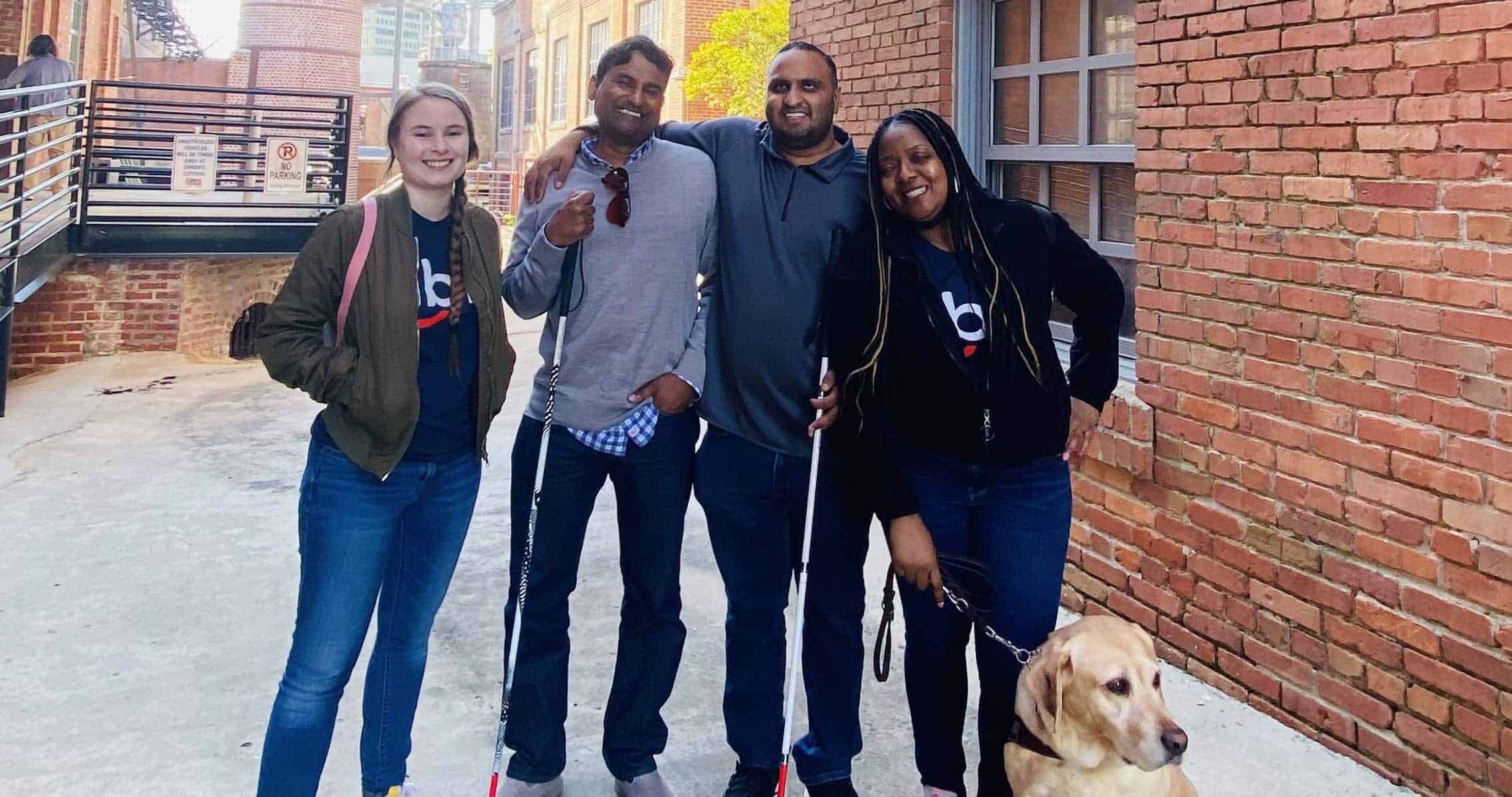
Back in 2020, the duo launched Ablr (pronounced Ay-bler), a disability inclusion and digital accessibility company based in Durham that works to level the playing field and create opportunities for those with visual impairments and other disabilities. And to say they’ve been successful is an understatement.
“John and I had the opportunity to build Ablr in about 90 days,” says Iannelli. “We built a website; we built the name; we colored it; we did everything—and we launched a business with basically no real accounts, no clients… just a few team members and a mission.” Fast-forward to today, and the company has 65 clients, a strong team and a growing brand.
Iannelli and Samuel first crossed paths in 2019 at Bull City-based LCI, a manufacturing, distribution, wholesale and retail company—one of the largest employers of the blind in the U.S. It was a meeting Iannelli can only describe as “divine intervention.”
Iannelli, who then worked for Raleigh-based marketing agency Walk West, was asked by his boss to visit LCI. At the time, he was in a dark place in his life and could barely get out of bed.
Samuel had been working for LCI for just over two years and took Iannelli on a tour of the facility. He had moved from DC to his home state of NC, but prior to that, he thought his career was over, as he’d been diagnosed with a degenerative eye condition in college and the private equity crowdfunding business he had been working for had folded.
With Samuel looking to increase accessibility for the visually impaired and Iannelli yearning to do something that mattered, they soon realized that Ablr was their answer.
Today, Ablr focuses on three things: eliminating the digital divide, changing people’s mindsets on disabilities and creating pathways for employment.
To help close the divide, Ablr works with companies and organizations to ensure their websites and mobile applications can be used by those with disabilities. Right now, more than 90% of online content is inaccessible to those with visual, cognitive and auditory impairments, according to Iannelli.
As for changing mindsets, Ablr provides an online Disability Inclusion Training for employers, where they learn about things like etiquette and terminology—fundamentals Iannelli says are missing in society today.
And in terms of creating job opportunities, Ablr helps companies support their current employees with disabilities, as well as prepare to onboard new hires.
“I believe this is sort of a business transformation from the inside out,” says Iannelli. “We are saying, ‘Wait a minute. You’ve never considered an entire group of people, an entire community in your entire existence before, ever.’ Now, this opens the door for massive opportunity.”
Since its launch, Ablr has worked with businesses and organizations in the education, retail, finance, government and health care sectors, and will continue to try to add to its client base. Plus, Ablr recently received a contract with the State of North Carolina to provide a workforce development program for the Division of Services for the Blind in order to train people to become digital accessibility testers and enter the workforce.
“We really think the Ablr brand can really represent much more than just one segment,” he says. “This is just the beginning.” ablr360.com
WEB EXCLUSIVE 321 Coffee just announced a partnership with Pendo that will create 10 new jobs for individuals with IDDs.
This week we’re celebrating a major win for inclusion in Raleigh, as local fave 321 Coffee just announced a new partnership with Pendo to open a second brick-and-mortar in the City of Oaks.
This new location will service Pendo employees on the 19th floor of the new Raleigh Crossing tower in DTR beginning in early 2022. Featuring unique Pendo-inspired specialty drinks, 321 Coffee’s newest location will open up employment opportunities for up to 10 more individuals with intellectual and developmental disabilities.
321 Coffee’s mission is all about inclusion. “Eighty percent of adults with IDD are unemployed, and we’re on a mission to change that,” says Lindsay Wrege, co-founder and CEO of 321 Coffee. “I’m proud of how 321 Coffee has been able to successfully create jobs and employ individuals with disabilities in our company. As we expand, we want to help other companies like Pendo employ people with disabilities into their workforce and culture. This is how we can truly scale our impact and create systemic change toward workforce inclusion.”
Wrege and 321 Coffee’s ultimate goal? To expand operations to other locations and employ over 100 individuals with IDD.
“We are excited about the opportunity to take our partnership with Pendo to the next level,” adds Wrege. “It’s my hope that the collaboration between 321 Coffee and Pendo serves as a catalyst for other companies to spark creative partnerships and recognize opportunities to make an impact in their industries. Whether with us or other diverse suppliers, there is a lot of good that can happen when a company creates a win-win partnership.” It’s also a brew-tiful thing for local coffee lovers.