



Modern Mexican
Approachability, affordability and accessibility—and flavorful homegrown dishes—are at the forefront of Katsuji Tanabe’s new restaurant, a’Verde Cocina & Tequila Library.
Katsuji Tanabe wants to transport you to his hometown. His forthcoming Cary restaurant a’Verde Cocina & Tequila Library, a partnership with LM Restaurants (Carolina Ale House, Taverna Agora, Vidrio and more), will introduce the Triangle to dishes that could be found at his childhood family table in Mexico City, as well as the kind of energized and creative cooking happening at the city’s best restaurants today.

“If you were to go to Mexico City right now and you were to go to a cool restaurant in the middle of the city, you’ll find something similar,” Tanabe told Raleigh Magazine in a sit-down interview. “It’s a restaurant you could open in LA, in Chicago, in New York—in Mexico City.”
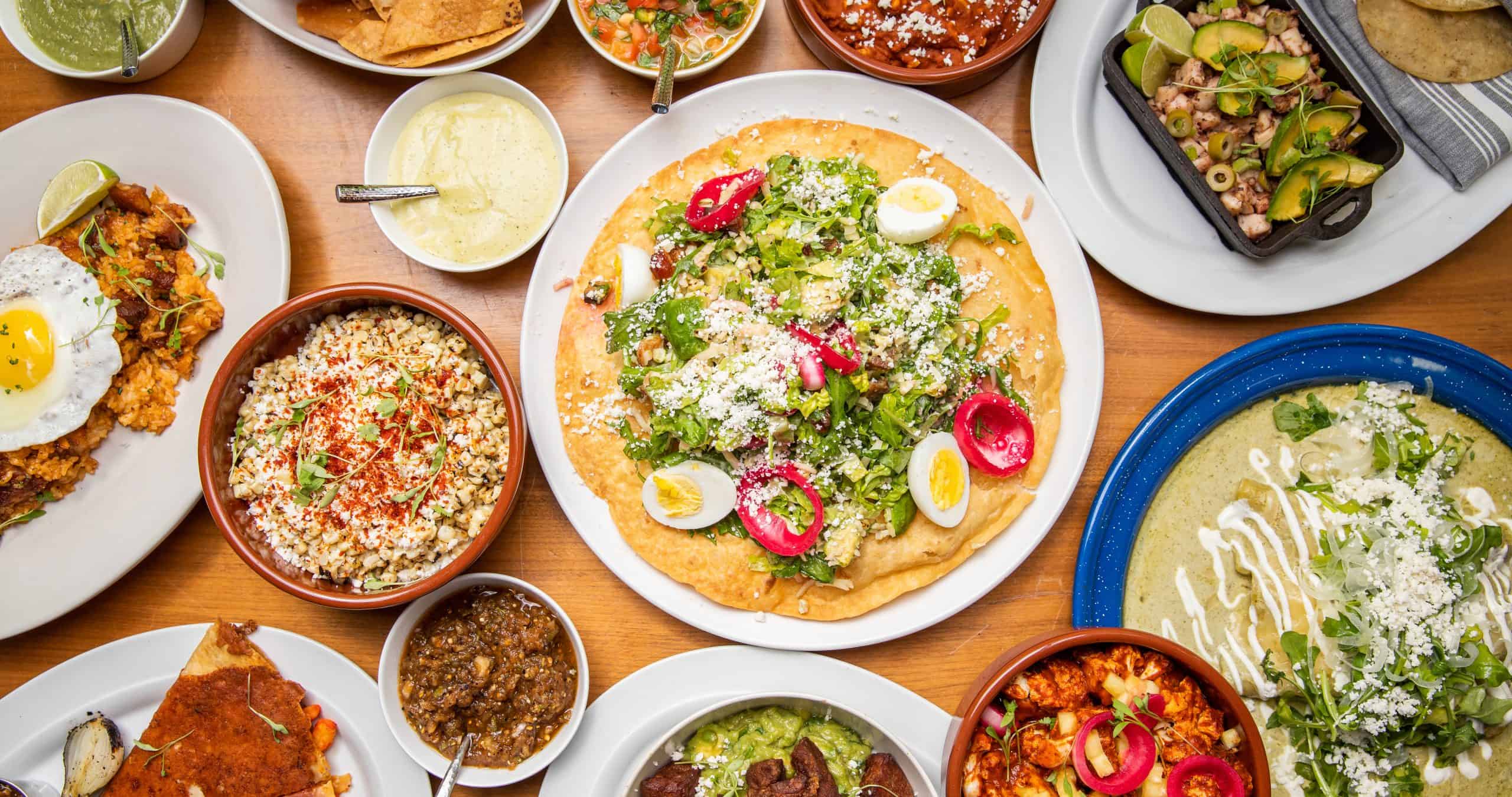
Tanabe—a Chopped champ and one of the premier Mexican chefs in the U.S.—has been working as the culinary innovator for LM Restaurants since his debut Raleigh restaurant, High Horse, closed in July 2020. Now, he’s going back to his roots, tapping into the family recipes he grew up eating in Mexico’s capital (think an adobo fried rice with crispy pork belly, topped with a cracked egg like his dad used to make on Sundays) to curate the affordable menu at a’Verde, which is slated to open in Crossroads in the former Wild Wings location in late summer/early fall. The refried black bean recipe that his Japanese father used to impress the family of Tanabe’s Mexican mother also makes an appearance.
a’Verde diverges from most Mexican restaurants in the Triangle in several ways, including a dearth of rice, beans or cheese. Instead, Tanabe will rely on vegetables and seafood in particular—akin to what’s happening at the best restaurants in Mexico City, he said—with strong umami and acidic flavors. Japanese ingredients may not grace the menu itself, but fish sauce, soy sauce and miso will be workhorses behind the scenes in Tanabe’s kitchen, used to create layers of flavor.
Additionally, a’Verde will nixtamalize its own corn for tortillas, and dried chiles will be added to the masa to give it a reddish hue. The dishes will be infused with modern takes, including cubed and deep-fried steak for a delightfully satisfying build-your-own taco dish (pictured above).
“I remember the first time I heard of it in Mexico, I was like, ‘Don’t order it, it’s stupid; why would you deep-fry a ribeye steak?’” he said. “And then I ordered it in a taco and was like, ‘Oh, shit.’ I still feel a little dirty for deep-frying a steak, but there’s no flour or nothing; it’s just straight into the deep fryer. It doesn’t make sense until you eat it.”
The tender cochinita pibil—a Yucatán-style marinated pork dish—and the savory enchilada verde are among Tanabe’s personal favorites here, and rightly so. But the ribeye taco is just as mouthwatering as he makes it sound, and the bingeworthy corn esquites are a must-order. The same is true for the punchy and bright cauliflower al pastor. a’Verde aims to be upscale yet approachable, so it’s a good thing entrees like the massive shrimp quesadilla pull their weight.
We’re fortunate that LM Restaurants snapped Tanabe up before he could leave town because we’re going to need to get our hands on those tacos (and, well, everything else) ASAP.
