A New Reign

A New Reign

Kings’ new ownership will continue the legacy Cheetie Kumar and Paul Siler built Downtown over two decades.

Downtown Raleigh’s cherished music venue Kings is entering an exciting new chapter, as owners Cheetie Kumar and Paul Siler have sold the space to industry friends Josh Novicki, Herbie Abernethy and Alan Novicki. Before you stress, the trio maintains they will keep the soul of Kings alive—in addition to ramping up programming to include comedy, art openings and community-oriented fundraisers. See? A win-win!

“I played many shows at Kings and saw many legendary acts grace the stage, so we’re psyched to jump in,” says Novicki. “Paul, Cheetie and the entire crew built a legacy in Downtown Raleigh with a history of respectability and expertise that attracted high-caliber artists to the city.”  

Kumar and Siler met the new owners two decades ago when they were touring with their band, The Cherry Valence. Abernethy is the lead singer of Valient Thorr and co-owns a trio of bars and restaurants with Josh Novicki—including Hot For Pizza and Cobra Cabana in Richmond, and The Sandspur in Carolina Beach—where they often host shows. Meanwhile, Alan Novicki, Josh’s brother, managed Raleigh’s Lincoln Theatre. Collectively, their goal with Kings is to ensure bands planning tours don’t overlook Raleigh. 

“We’re excited about the possibility of becoming part of a bigger network on the East Coast that ushers in touring bands, events, plays, benefits, parties, art openings, etc., that will travel to Raleigh… because they know Kings is back and better than ever!” says Abernethy. “Building that network in tandem with our other locations will be a key to the future success of the venue.” 

Kings is the second space of the three-level building on West Martin Street that Kumar and Siler have slowly been selling off to new owners to focus on the operations of their recently bowed Ajja restaurant in Five Points. Neptunes Parlour sold last year, and Garland is currently transitioning into NA bar Umbrella Dry Bar. Siler looks forward to seeing Kings and the whole building back at its full potential.

“As much as we loved our location Downtown, we felt it was time to pass the baton and put our energies elsewhere,” Siler adds. “The original concept of Kings was that there would be a properly run venue by active musicians who could be proud of our city’s place to play. It’s exciting to us that this vision will continue.” Get ready to—continue—rocking on!

Red Hat Reno

Red Hat Reno

WEB EXCLUSIVE One of Raleigh’s fave music venues debuts widespread improvements, just in time for summer concerts.

This summer is all about living it up—and making up for lost time—so it’s no surprise concerts are on the top of everyone’s summer bucket list. And being right in the heart of Downtown Raleigh, Red Hat Amphitheater is perfect for dancing the night away to your fave bands coming through town. To prep for the venue’s summer lineup, Red Hat has been undergoing new improvements for a better concert experience that surely won’t fall flat.

For starters, the venue got a fresh coat of paint and updated signage. And ladies especially will rejoice at the additional bathroom stalls added—no more long lines! Additionally, in an effort to create a safe and inclusive environment for all, Red Hat now has designated gender-neutral bathrooms.

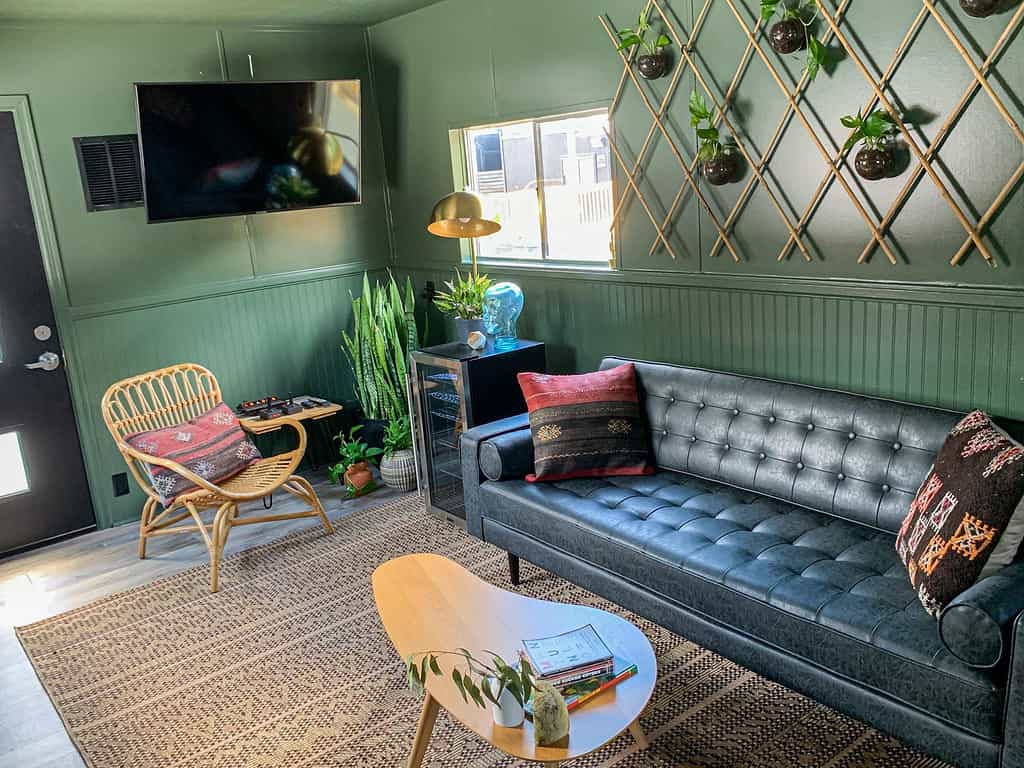
Speaking of safe, Red Hat’s decking has been redone with a new anti-slip, anti-rot, environmentally friendly material. Talk about a win-win for both concertgoers and the environment. And we can’t forget to mention the seat upgrades. The venue has swapped out its seats for something a little more breathable—hallelujah!—and that contours to your back for ultimate comfort. Don’t worry, Red Hat didn’t forget about the musicians; the green room has also completely been updated with natural greenery, a gas fire pit, games, an arcade system and even an Atari! We can’t think of a more fun way to get amped for a concert.

With upcoming shows like Louis the Child, Lindsey Sterling and Lord Huron, Downtown will be buzzing with concertgoers again and Red Hat is ready to welcome everyone. Check out the venue’s full concert line up on the venue’s website. This upgraded experience is sure to make the summer of ’21 unforgettable!

Getting Down Down East

Getting Down Down East

WEB EXCLUSIVE Wilmington’s newest addition, the Riverfront Park Amphitheater, is leveling up the city’s nightlife.

We just found another reason to visit Wilmington this summer, as if we really needed one. Live Nation is bringing its first ever coastal outdoor venue to Wilmy’s riverfront. The venue, called Riverfront Park Amphitheater, is part of a multimillion-dollar 6.6-acre city park complete with fountains, walks, boardwalks, greenspace and of course beautiful river views. 

“We can’t wait to bring incredible live entertainment to this one-of-a-kind coastal venue in Wilmington, and we know the experience at Riverfront Park Amphitheater will be hard to top,” says Grant Lyman of Live Nation Carolinas.

The amphitheater features rooftop VIP areas, state-of-the-art sound, event lighting and large-screen image amplification, plus plenty of places to buy bevs and bites. The 7,200-capacity venue offers both lawn and seated options, and will be perfect for dancing through the summer nights. 

The venue already has a few shows booked like Widespread Panic (July 16–18), Train (Aug. 10), Glass Animals (Sept. 5) and Brett Eldrege (Oct. 14)! Details and more concert drops can be found on the amphitheater’s Facebook. Said Wilmington mayor Bill Saffo, “Wilmington’s Riverfront Park offers an amazing opportunity for residents and visitors alike to experience the biggest names in entertainment at a venue unlike any other.”  

Stay tuned for more summer activities and reasons to visit Wilmington in the July/August edition of Raleigh Magazine!

Twenty Years of Kings

Twenty Years of Kings

The much loved club celebrates two decades in downtown Raleigh.

When Paul Siler and Cheetie Kumar toured with their band, The Cherry Valence, two decades ago, the couple was unhappy with the selection of places to play in Raleigh. Siler’s solution was to open Kings, a music venue run by musicians, that’s become beloved by artists and their fans alike. It’s also one that, through investment and innovation, is still going strong after 20 years on the scene. 

“We were touring a lot and it was frustrating not having a venue that felt like a ‘home base,’” says Siler, who married Kumar four years after the original Kings opened. “A place that we’d want out-of-town bands to come and play and a place that we’d feel comfortable in ourselves.”

Siler wasn’t the only one that felt that way. So he, along with Steve Popson and Ben Barwick, touring musicians in the bands Polvo and Ashley Stove, started looking for a space. They soon found one, a small room on South McDowell Street. 

From the outset, Kings was unique.

“Steve had previously owned an ’80s arcade game business on Hillsborough Street called the Blue Bassoon,” Siler explains. “The deal was, part of the building would have old arcades and a pool table and the back part would have a venue area.”

By July of 1999, Kings was open seven days a week.

More like a bar with shows than a concert hall, Siler and his partners began to realize that there were too many nights for bands to be able to fill. They had to get creative. They began to see Kings as a warehouse with proper permits—a de facto community event space.

“Variety definitely kept us open,” Siler says. “There are only so many bands that people will come and see. So we had game shows like the Hollywood Squares, The Gong Show, Family Feud. We had comedy nights, techno parties, dog shows, drag shows, occasional political events and fundraisers.”

Cheetie Kumar and Paul Siler at Kings | Photo by RDP3 Photography

In 2007, the space Kings called home was torn down to build a Wake County parking deck just steps from the Raleigh Convention Center. The venue needed to relocate. It took nearly three years, but Siler and Kumar signed a lease in 2010 for the space at 14 West Martin Street, which was a five and dime store from the late 1960s through the 1990s. The space had also formerly served as a bar, retail, and then a pizza shop, with bars called Lizzie’s, and then Alibi, occupying the basement. 

“The space that we really wanted is the one that we ended up in,” Siler says. “There was room for a venue, room for a bar and a restaurant space. [Cheetie] felt like she could run a restaurant and put a menu together that would be interesting.”

Kumar thought she could offer an interesting food concept that would work in downtown Raleigh based on her talents for cooking and her background growing up in India, and then in New York City, and then relocating to the South. All of that, combined with the touring she and Siler had done, gave Kumar insights into how to make a restaurant different than others in Raleigh. She called the restaurant Garland. 

Garland has evolved over the years, morphing from offering strictly street food—it originally opened selling elevated snacks out of a take-out window—to casual fine dining, with Kumar racking up multiple James Beard Award nominations. 

Now, 20 years on, Kings sits above Garland, with dance-friendly dive bar Neptunes nestled below. As a smaller space, Neptunes has been able to fill a void for events that might draw fewer people than Kings. Neptunes, too, is going in a new direction, with interior renovations and an expanded drinks list.

“We’d always had DJs, but we started having other things there occasionally: jazz nights, comedy, rock shows, that were more intimate,” Siler says. “We hope that people will enjoy it as a cozy spot after work, before dinner, or an after dinner spot with excellent cocktails, a good beer list, great music playing and lovely snacks.” 

Neptunes
Neptunes

Soon, Neptunes will open at 5 p.m., with a snack menu from Kumar featuring masala popcorn, chile peanuts, soft cheeses, pickles and jerky.

While Kings, Neptunes and Garland are all very much their own spaces, they feed off of each other and help each other prosper, Siler says. 

“Often, people come to Garland and then find out about the other two and go the same night, or they come back,” Siler says. Two years ago, he and Kumar bought out their other partners. 

“Neptunes is often used as a waiting spot for Garland, which is a great way for people to find out about it,” Siler continues. “Each has a very separate identity, but you don’t have to go far at all to get to the next place.”

Like Kings, downtown Raleigh’s identity will grow and change in the coming years and getting to the next place quickly will be key. As for the storied club/restaurant/dive bar complex—here’s to another 20 years.

Vinyl Revival

Vinyl Revival

For many in Raleigh, enjoying vinyl is about sharing music—and experiences—with family, friends, fans and the community at large.

When Jed and Stacy Gant find a few free moments at home, they listen to music on vinyl.

The downtown Raleigh residents and their two children, Nora, 6, and Oliver, 10, pick out a record from the couple’s collection of around 1,200. Each family member chooses a song to play from the others’ selected albums. The kids set the records on the turntable and position the needle; the parents talk to them about the bands, the songs, the essential album art.

“It’s connecting the dots to music history almost,” Jed Gant says of the tradition his family created, dubbed ‘Record Surprise.’ “Usually my kids run around and go crazy listening to the music. The other night, we got disco ball lights and outfits and danced around to the Rolling Stones, just acting goofy. They’re enjoying the music. We try not to make it too serious but I want them to learn and understand a little at the same time.”

Some love to collect it. Some love it for the visual art, or the old-school sound, or the physicality of putting it on and watching it spin. Some see it as another way to support their favorite bands, like buying the T-shirts and merch, and some just like to kick back with it on a Sunday morning. And many love it because, unlike streaming songs on your phone and listening through your ear buds, vinyl is an experience you can share with others.

Whatever the various reasons, the resurgence of records is in full-swing in the digital age—vinyl is on track to outsell CDs for the first time since 1986, Rolling Stone Magazine reports—and nowhere is that more apparent than here in Raleigh.

Last month during Hopscotch weekend, the unofficial kickoff to the city’s annual, month-long celebration of all things art and music, The Pour House owner Adam Lindstaedt announced the newest addition to the city’s robust record retail scene.

Lindstaedt is transforming the second floor of the venerable downtown music hall into a record shop. Open seven days a week and to be run—in true family business style—by his wife, Lacie, the shop will stock around 10,000 titles and will persist as an open space overlooking the Pour House performance stage, meaning patrons can watch bands set up and run sound check while they browse. When the shop closes in the evening, it will moonlight as a full-service bar; records will be locked into storage bins that will double as tables and you’ll still be able to watch your favorite bands and artists perform from an elevated vantage point (just with nicer, remodeled bathrooms).

“There’s not a really good hangout spot for the music community to gather outside of shows,” Lindstaedt says of his vision for the new space. “When I was growing up, I hung out at record stores all the time. I met people there, started bands and developed friendships. It’s an easy way to be somewhere where you know like-minded people will show up, talk about music, talk about beer, learn something new.”

The Pour House Record Shop is expected to open October 19.

The Pour House Record Shop is expected to open October 19.

Sales of vinyl have increased steadily since around 2006, right around the time that the listening experience began shifting away from CDs to digital and online streaming. Music and consumer experts can debate all the factors driving the resurgence of vinyl, but for many folks in the Triangle, records as a medium for music never really left.

“We’ve always sold records,” says Enoch Marchant, who co-owns the two-decades-old Nice Price Books on Hillsborough Street (and Nice Price Jr. in Oakwood) with business partner Brian Shaw. “I started buying records in high school. For the young kids, the new generation, most people forget they never even owned CDs or music on any physical format. Now, if you stack up a record next to a CD, the record compares very favorably.”

“There’s something more artistic about vinyl,” says Gant. “I used to collect CDs. A lot of people took them out of their plastic cases because they felt cheap. [CDs] are not as tangible, you have to go through a layer of plastic to get to the album art. And they’re delicate. My kid could throw one on the ground, slide on it once, and it’s done. There’s a sturdy nature to records.”

There’s also fun to be had in shopping around for music on vinyl in thrift stores, rifling through dollar bins, searching for rare finds and collecting. Gant belongs to a record club called Vinyl Me Please, which sends subscribers three new albums per month. If you don’t like an album, you can swap it through the club’s website or trade it in at one of the local stores. And though you don’t have to buy rare, expensive albums to enjoy vinyl—listening to something janky can be enjoyable for the nostalgia factor alone—some collectors delight in finding limited edition copies of albums modern music labels press and put out.

“The days of going into a record store and it being all dudes in their 60s are done,” says Lindstaedt. “You go to any shop around town now and you see people in their teens, 20s and 30s, men, women. People of all walks of life are getting into it.”

Young artists, too, have a growing appreciation for the perks of releasing their music on vinyl.

Triangle-based artist Dallas Casper—whose self-described “indie alternative” project Apparitions of Myself released its fifth album, “Lucid Dreaming,” last month—decided to forego the streaming services and instead released 100 copies of the album on vinyl, exclusively, for the first six months. The artist, whose offstage name is Justin Eyster, says releasing initially on vinyl made more sense to him from an economic and marketing standpoint.

“I spent years and thousands of dollars on this record, so it wold be great to recoup some of that investment,” says Eyster, who, in the past, paid fees of around $50 apiece to list his albums on streaming services like Spotify, Apple Music and Google Play (they pay artists roughly 0.006 cents per stream). “With streaming, I didn’t even recoup the cost from listing on the digital services, let alone the recording costs, mixing, mastering, travel, graphic design, equipment. So to me, streaming is like giving it away for free.”

Catch Dallas Casper and Apparitions of Myself’s “Lucid Dreaming” release party at The Pour House October 8.

Catch Dallas Casper and Apparitions of Myself’s “Lucid Dreaming” release party at The Pour House October 8.

From a marketing standpoint, too, Eyster says vinyl is useful. A record that people can hold in their hands makes a big impression for an indie artist, he says, and helps make it easier to “cut through the noise” of what’s available online.

“Everyone’s on streaming, you go to shows and people are practically begging you to look up their album on Spotify,” Eyster says. “It takes a lot of effort and upfront investment to have vinyl made and it shows that you’re serious. I want to cater to the people who are paying attention to me and put my album on the preferred format for people embracing my music.”

Though vinyl has its to-varying-degrees devotees, it’s clearly not for everyone. Vinyl takes up space, isn’t really mobile and can be inconvenient. But music lovers agree, there’s a place for vinyl, and there’s a place for streaming, and neither is inherently better in how we choose to enjoy music these days. Like most commodities we consume, it’s intensely personal.

“We could debate the merits of streaming services all day long, but with vinyl, it’s more of a commitment to, ‘Yeah, I like that music, I’m going to make sure I have a copy,’” says Lindstaedt. “Anything you can take away, and look at outside the clutter of a phone or computer, is more.”

“We’ve probably gotten close to the peak of what [the vinyl trend] is going to be,” says Nice Price owner Marchant. “We’ve added lots of new vinyl buyers. I don’t know if we’ll add more, but we’ll hold on to a much bigger chunk than we had 10 years ago. People will want to be part of that process still. You can listen to a record at your house all day long, or in your car, or on Spotify, and have no interaction with anyone else about it. But I think people like to be a part of it, in some sense. That’s just a guess.”

And likely a good one.


The Scoop on Vinyl

Like any new hobby, getting into record collecting can be a little intimidating. We asked Enoch Marchant, co-owner of Raleigh’s Nice Price Books, to demystify vinyl for us novices. Here’s his advice.

Make sure record collecting is something you actually want to do. First, try and listen at someone else’s house. Records are not for everyone. Not everyone enjoys the process. Try it out before you spend hundreds of dollars on a turntable and records.

If you try out music on vinyl and you’re a fan…

Invest in a quality turntable. If you can avoid it, don’t get the Crosley turntable with the built-in speakers. They have a needle that will eventually wear out and destroy your records. [Nice Price] stocks Audio Technica. They’re ubiquitous and good. There’s also You Turn out of Boston. For a few hundred bucks, you can get a a turntable with speakers and a receiver, a great sounding thing that’s reliable and you can listen to anything on. If you’re going to spend any kind of money on records, you might as well get a turntable that won’t tear them up.

But don’t spend a fortune on records—at least, not at first. Buy dollar records, cheap records, I would certainly start in the dollar bin. Part of the fun is discovery and finding music you didn’t know existed. Wait a second before you buy a $100 record. Lots of albums are still being re-issued; there may be ones that, right now, there are only $100 copies. But the label is going to put out a copy for $20 soon.

What’s the deal with the different sizes? Normally a turntable’s platter is 12 1/4 inches, just a little bigger than a normal record. A 12-inch vinyl LP (Long Playing) spins at 33 1⁄3 rpm (rotations per minute). 45s (the 7-inch records) run at a speed of 45 rotations per minute. They’re like singles and hold less than five minutes of music. They’re mainly just collectibles today.

Any other advice?

Start slow. You’ll find where you want to be after a while. Records hold value a little bit so if you’ve listened to something enough and don’t feel married to it, you can sell it or trade it in for something else.

Don’t go on message boards too much. For every new record, there’s someone on a message board who says, “It sounds great, it’s perfect, go buy it” and one who says “It’s utter trash.” There are too many voices in the room about that stuff.

There are no guilty pleasures as far as music is concerned. Get whatever record you want. Don’t feel beholden to the “50 Albums You Need to Hear” lists. Those are fine, but if you like something other people think is whack, you should still get it.