Pour one out for COVID—and pour it up for NC’s bars.
The NCBar and Tavern Association cheers the recent Appeals Court ruling as NC’s private bars and taverns finally have cause to celebrate. A long time coming, the court ruled the “science and data” put forth by the governor did not support forcing private bars to remain shuttered for an entire year because, as the state argued, they were “more likely to spread COVID,” while 6,000+ restaurant bars, wineries, breweries and hotel bars were allowed to reopen.
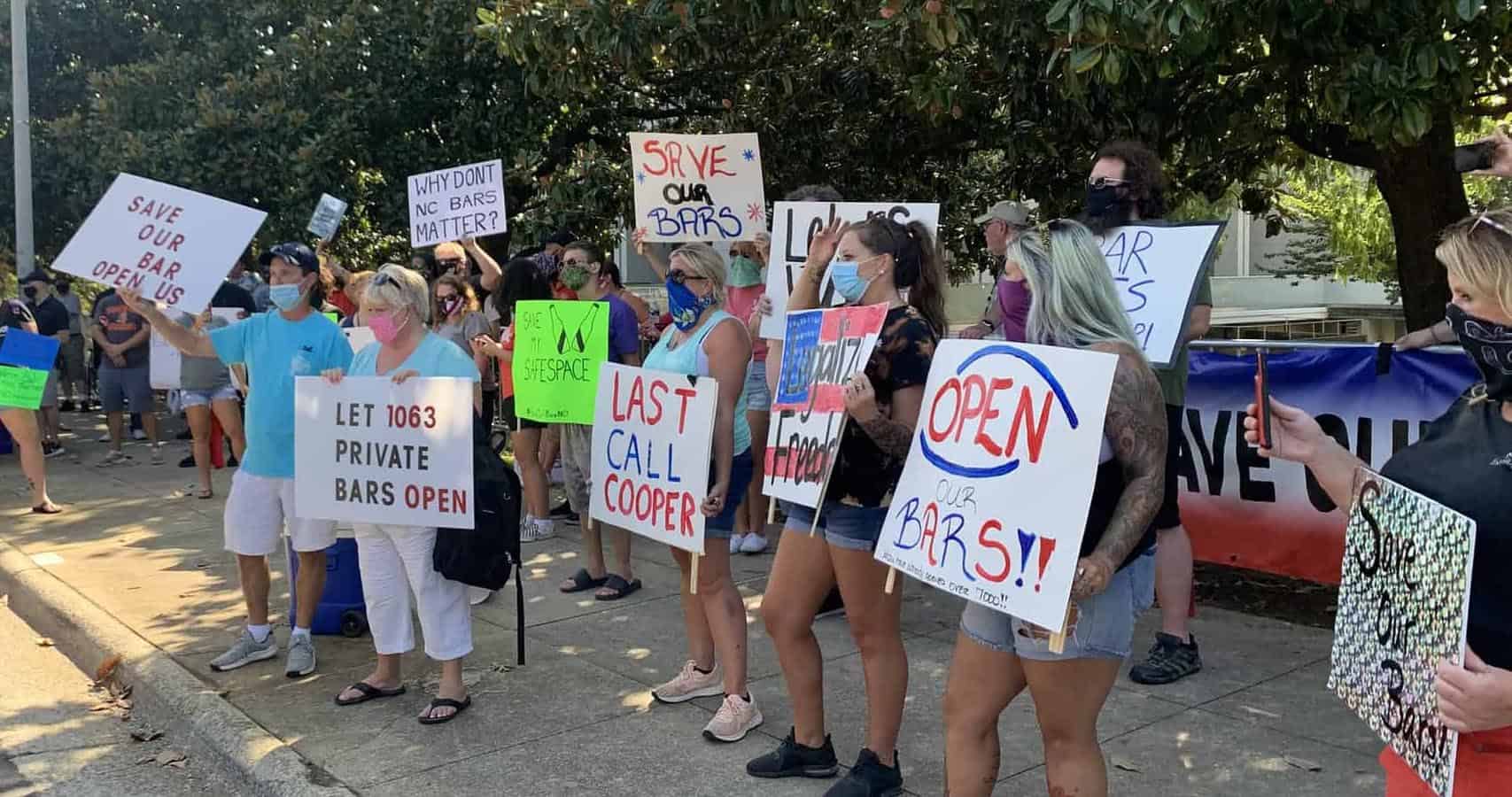
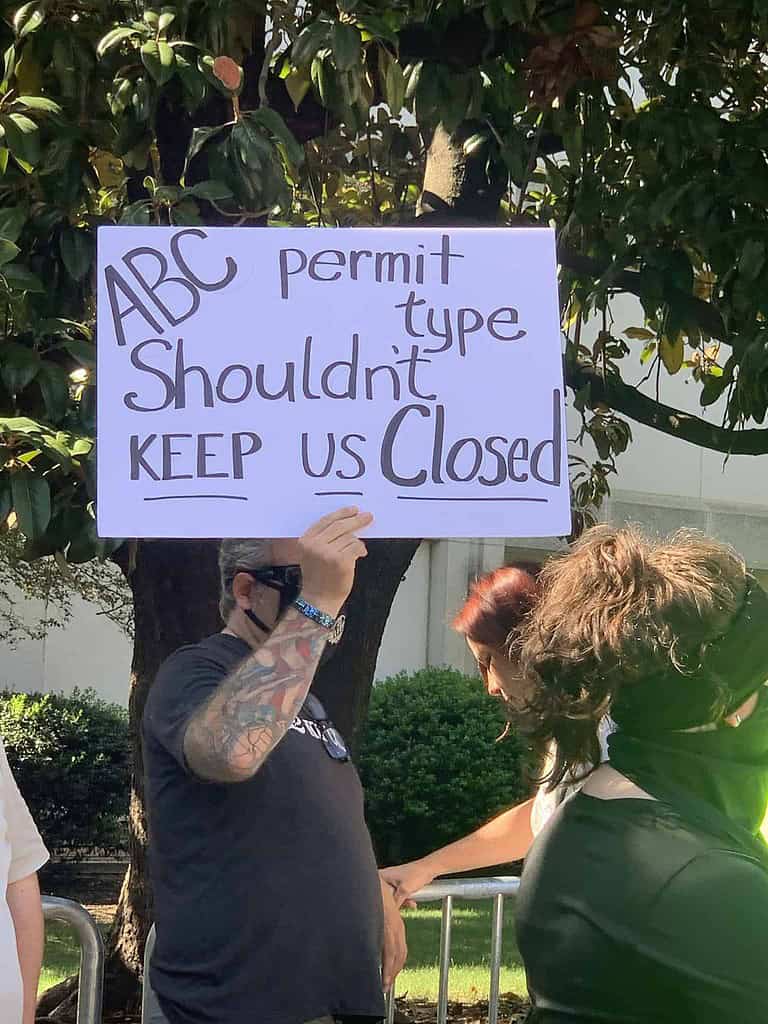
At the time, private bars had no protection—or association—like that of their restaurant/hospitality peers. Enter longtime bar owner Zack Medford—aka “Mayor Medford” for his vast efforts—who began a bar association and was a driving force to galvanize the movement locally, lobbying for bars and taverns, and organizing electrifying rallies.
“North Carolina’s Constitution provides for equal treatment under the law, and we didn’t receive it. … Bar owners paid that terrible price, and we are still a long way from ever recovering.”
—Zack Medford, NCBATA President
Fast-forward to June 4, 2020, NCBATA filed a lawsuit on behalf of the 185 businesses to reopen under the same rules as restaurant bars. Of those 185, 168 remained in the case during the appeal.
“It’s a bittersweet victory,” says NCBATA President Zack Medford. “We are celebrating the win, but I just wish it never would’ve been necessary to involve the courts in the first place.” If Gov. Cooper had reopened private bars and taverns alongside restaurant bars, breweries and hotel bars, “then many bars like Coglin’s Raleigh and Isaac Hunter’s Tavern might still be around,” he mourns. “Instead, hundreds of small business owners across the state lost their life savings, their bars and their way of life because the governor deemed it safe to drink a beer sitting at a restaurant’s bar, but unsafe to drink that same beer sitting at a tavern.”
As for what’s next, the case will return to trial court, where Medford hopes damages are afforded to the state’s private bar owners. “While the court can’t go back in time and give bars the same opportunity the governor gave restaurants, the court can asseses monetary damages for these small businesses owners,” he maintains. “For many of us, it will be too little too late—but these operators at least deserve some kind of financial relief from the state.” Let’s hope the cause for cheers continues.
Three trailblazing leaders make it their mission to restore DTR.
Not all heroes wear capes. Enter Downtown Raleigh Alliance CEO and President Bill King, Shop Local Raleigh executive director Jennifer Martin, and North Carolina Bar and Tavern Association founder and myriad bar owner Zack Medford—three hometown heroes who have made it their MO to save DTR—or die trying, so to speak.
As businesses were forced to survive by any means necessary over the last year, these three local luminaries have championed that effort, looming large and mighty over a Downtown that will rise from the ashes like a phoenix—each of them making their indelible mark on its resuscitation and breathing life back into those sacred grounds.
Now, as they help dig Downtown out of the rubble (and boards!) that was 2020, they’re filled with hope for the future—and for a thriving DTR.
A Spring Awakening
Nearly all notable changes to Downtown businesses and restaurants in 2020 have been born out of King’s ideas—alongside his DRA team.
With the support of Duke Energy, DRA created the Duke Energy Storefront Revitalization Grant, which has helped 97 storefront businesses—all locally owned—adjust to operating during the pandemic. With $375,000 in grants, they’ve worked together to help restaurants and other businesses not only survive, but thrive. Retail establishments have built online stores; restaurants have created takeout windows; and dine-in options have moved outdoors with the help of heaters, pedlets, tables and chairs.
To boot, King, as a fierce advocate for DTR businesses, helped materialize the modified Downtown Raleigh Restaurant Week this past October—with the goal of having Raleighites safely “Dine Out Downtown”—no doubt a success, as plans are already in the works to bring it back this spring (yes, please!).
DRA has also recruited pop-up stores to fill empty storefronts to both help entrepreneurs establish a foothold in the market and to draw visitors back as well. One such success story is Black Friday Market, a co-op DTR retail space for Black-owned small businesses. While many business owners found 2020 brought challenges that were nearly insurmountable, innovative concepts like Black Friday Market inspire hope that perhaps now is the perfect time to move forward with a dream.
After all, spring is an ever-apt time for a reawakening. “Spring always offers hope for new beginnings and, this year, more than ever,” King says. “With hope of widespread vaccines being more available, I think we’ll find that people will be ready to come back to Downtown. The second half of 2021 will look and feel a lot different, and that gives us something to look forward to.” Hope springs eternal, indeed.
When asked where he finds his inspiration to help so many, King humbly shares, “I care deeply about these folks. These are people, not just businesses; they’re entrepreneurs who have worked so hard to build up their dreams, and I feel a responsibility to do everything I can to help.”
Jennifer Martin
On With the Show
The brightest rainbows often follow the darkest storms, and Martin says that even with the challenges that 2020 presented, “there is always something good; we just have to find it.” Fingers crossed!
Learning how to pivot and adapt to the many challenges that the pandemic created, Martin and her Shop Local team found ways to help Downtown businesses by producing new strategies for safely and successfully holding events. Brewgaloo, for example, North Carolina’s largest craft beer festival, was held via five drive-through events in 2020—a drastic change from the typically huge crowds that descend on Downtown each year to sip and socialize, but also a smart pivot that mitigated simply canceling—while still giving local brewers the opportunity to sell their products and make new customers.
Beyond Brewgaloo, Martin set her sights on saving some fa-la-la fun. Typically a huge draw, the Raleigh Christmas Parade sees tens of thousands of people lining the streets—but, shocker, 2020 was anything but typical. Rescuing and revamping the beloved event in an effort to highlight and celebrate locally owned businesses, Martin pivoted the parade to virtual for the first time in its 76-year run. And while the look and feel of such reimagined events are certainly different, businesses still get a chance to connect with people.
Today, Martin most looks forward to DTR hosting events again—which will not only bring people together, but will have an enormous impact on our local economy.
When asked what she feels will save Downtown, Martin muses: “Saving it will be all of us shopping, eating, visiting and pitching in to help one another. Without that, Downtown will still be ‘Downtown’—it’ll just look very different and not have the local charm that we all love.”
Zack Medford
A Beacon for Raleigh Bars
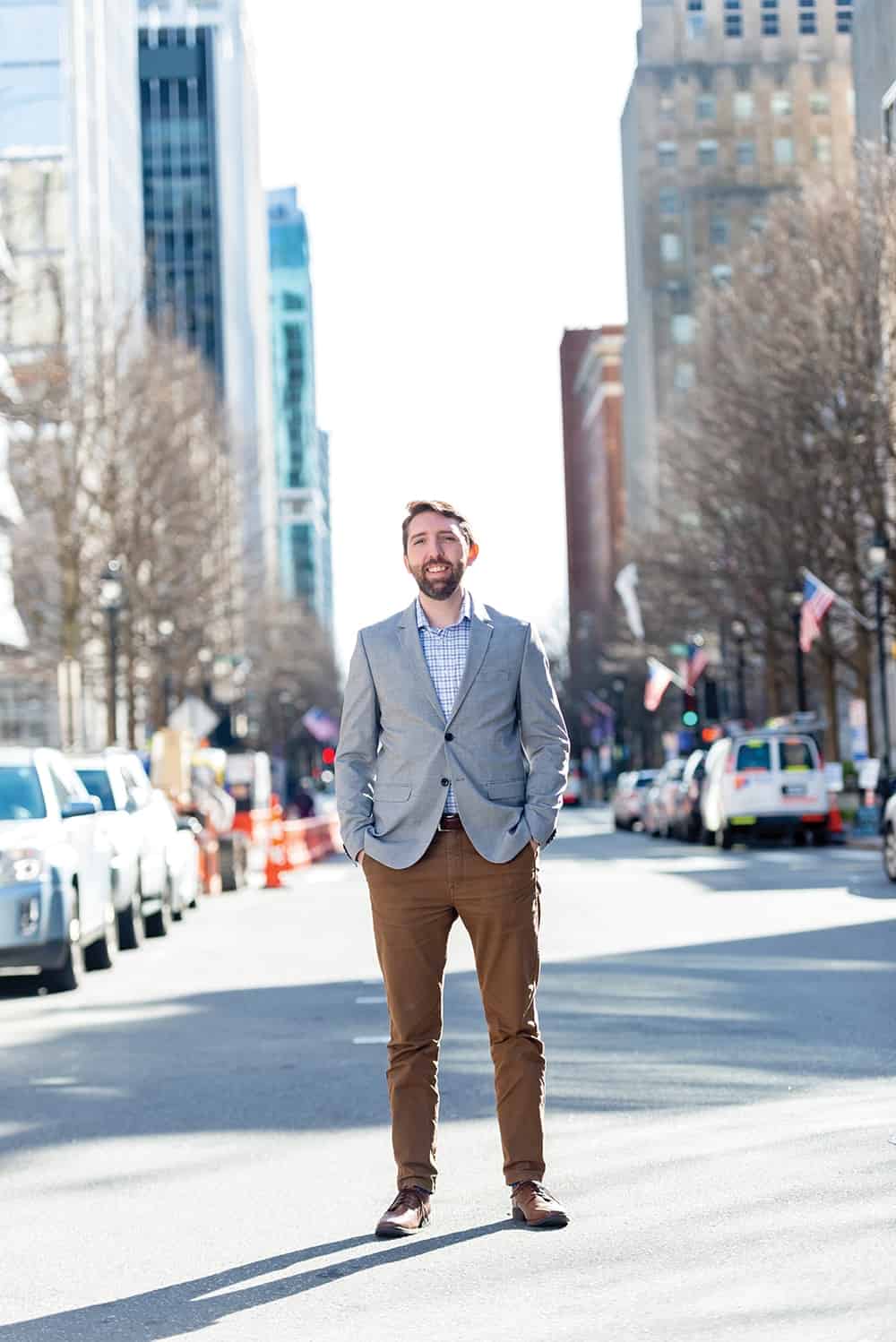
As co-owner of several beloved watering holes, plus tour company The Great Raleigh Trolley, Medford (affectionately dubbed “Mayor Medford”) is a notable changemaker, family man and friend to all in the Raleigh community—his name synonymous with championing community efforts, charity events and boundless philanthropy initiatives—and much more. As bars were forced to abruptly close last spring, Medford became the leading voice in lobbying state and local government (and you’ve no doubt seen his face splashed across the screen fighting the good fight).
In true “Mayor Medford” fashion, he formed the North Carolina Bar and Tavern Association (NCBATA), a group that advocates on behalf of more than 1,000 bars across the state and works tirelessly for fellow business owners to have the right to reopen safely—enabling thousands of employees to return to work and bars to resume serving customers following the same safety protocols as restaurant bars.
To get us back on track, Medford advises to “focus on the people and businesses that play an active role in making Raleigh such a special place.” And if anyone can help get us there, it’s Zack Medford. He feels encouraged by his cohorts in the campaign to lessen restrictions on businesses during this time and encourages the community to support them.
Although he is known to not have the same amount of trust in elected officials, Medford has complete faith in fellow entrepreneurs and leaders like King and Martin.
“Raleigh’s creative small business owners are the heart and soul of this city,” Medford says. “I think our community is ready to embrace the art, culture and vibrancy that brought them here in the first place.” Preach on.
A new lobbying group serves the interests of the state’s bars, taverns and nightclub owners.
Shock and disappointment.
That was the reaction from bar, tavern and nightclub owners all over Raleigh who learned their businesses would not be able to reopen in Gov. Roy Cooper’s phase two lifting of COVID-19 restrictions in North Carolina on May 22. Meanwhile, restaurants, breweries, wineries and distilleries all got the green light.
Zack Medford, who co-owns the bottle shop Paddy O’Beers, Isaac Hunter’s Tavern, the retro nightclub Coglin’s and several bars in Wilmington, was among the many expecting to be operational again but, fully a month after other businesses were allowed to reopen, bars and taverns were still ordered closed.
“Ultimately, there are plenty of restaurants that function more like bars, and plenty of bars that function more like restaurants, and we think the only thing we can do is get fair treatment across the board,” Medford says.
To help achieve that goal, Medford established the North Carolina Bar and Tavern Association, a nonprofit organization similar to the North Carolina Restaurant and Lodging Association that lobbies exclusively for nightclubs, taverns and bars. Medford is president of the association’s board and the group now counts more than 200 bars and nightclubs from across the state as members.
Zack Medford
“Up until now, bars really have not had a seat at the table,” Medford says. “We had not participated on anything with the NCRLA up until the governor made the [phase two] announcement. [The NCRLA] is an ally, but, ultimately, the vast majority of its membership is restaurants and hotels. So if there is a deal on the table to be made that helps restaurants and hotels, but is maybe not so great for bars, then it’s the NCRLA’s duty to make that deal. That’s why we need to be in those discussions going forward.”
Concurrent with legislation passed in the North Carolina General Assembly to reopen bars across the state—which Cooper has twice vetoed—NCBATA filed a lawsuit against the Cooper administration seeking to reopen under the same rules as restaurants and breweries. NCBATA crowdsourced nearly $20,500 to cover legal fees and attorney Mike Tadych from the Raleigh-based firm Stevens Martin Vaughn & Tadych filed the suit on behalf of more than 50 bar owners early last month, asking that they be allowed to open under phase two at half capacity.
In a hearing on June 19, Tadych argued that allowing bars to reopen would mean they could join 85 percent of North Carolina’s bar industry that has already been allowed to reopen so far.
“We’re not asking for special treatment, we’re not asking to open the floodgates,” Tadych said. “These businesses have been dead in the water for 94 days, with zero income to fight through this.”
But Amar Majmundar, the attorney defending Cooper’s order, cited a memo from NC DHHS Secretary Mandy Cohen positing that people behave differently in bars than they do in restaurants, spending longer periods of time in a confined space where they’re often close together, singing, dancing and yelling to be heard over music and other noise.
During the hearing, Majmundar emphasized that COVID-19 still remained a public health threat with numbers of cases and hospitalizations in the state still climbing throughout June.
“In the face of the pandemic, lives are at stake,” Majmundar said. “In the face of that grim reality, the governor is not only permitted, but is obligated, to the best of his ability, to protect the public health.”
Following the hearing, judge James Gale was expected to rule on the lawsuit a few days after Raleigh Magazine went to press.