Some call them the best years of their lives. Some call them the hardest. Some, especially more recently, call them the most expensive and they come out with a hefty pile of debts. No matter what you call them, for those who attend, the college years are memorable. College is an experience that can lead to a lifelong career, not to mention lifelong friendships, and now, despite the climbing costs of higher education, more and more people are going to college.
NC State is one of those universities that students from all over the United States—and other countries—really want to get into. In 2017, NC State was ranked by Money Magazine as the best college for your money in North Carolina and No. 8 in value among public universities by U.S. News & World Report; the Wolfpack has many reasons to be proud. We talked to NC State alumni from decades past about their college experiences, as well as incoming freshmen, to see how the celebrated university, and college life in general, have changed.
Climbing Cost
When Michael Lowder enrolled at NC State in the 1970s, his tuition cost, roughly, a mere $250 per semester—a staggeringly low fee compared to the tuition rates for this year’s freshmen, which ranged from $4,550 for full-time, in-state undergraduates to $14,609 for those from out of state. “The price of going to school [now] is just outrageous,” Lowder, now Executive Director of Artspolsure, says. Presumably, the increased cost of tuition boils down to higher demand for degrees and the competition that comes with it. This year, more than 30,000 students applied to NC State, while fewer than half were admitted. Freshman Cole Stewart was one of the lucky few to be accepted. An in-state student who’s lived in Raleigh for 18 years, Stewart says he estimates his bill this year, all told, is in the neighborhood of $25,000, including tuition, room and board and an on-campus meal plan.
Freshman Cole Stewart in his dorm room in Sullivan Residence Hall
While tuition rates and other fees continue to skyrocket, it’s possible that textbook costs have actually decreased thanks to online resources we have available to us now that our predecessors lacked. Whereas before, students could only buy textbooks from the campus store at whatever prices it charged, now, students can rent books, buy used copies on Amazon or find e-book versions for significantly less money.
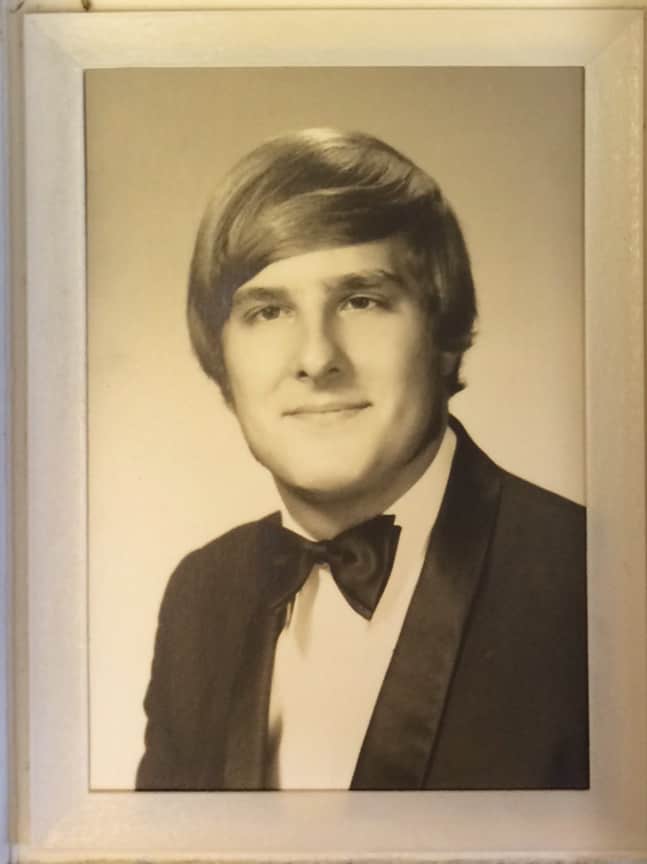
Michael Lowder, Class of 1977
College Life
While technology can certainly have its downsides, it’s also a vital asset to today’s college students. Stewart relies on his iPhone to navigate campus and utilizes several NC State-provided apps—including TransLoc for taking the bus to Centennial Campus, where most of his engineering classes are held—and to buy food. “All my classes [on Centennial] are pretty early in the morning, so I can just order something from the main campus and by the time I’m over there, I can walk in, pick it up and go to class. It’s really nice,” he says. Meanwhile, Christine Johnson, who graduated from NC State in 1997, remembers the FedEx-Kinkos on Hillsborough Street as being the only place you could go to use the computer in the middle of the night (dorms didn’t have their own computers and the computer labs closed in the evenings; now, D.H. Hill library is open 24/7). Technology has also impacted classes and curriculums. Nowadays, students can take many of their classes online and courses for subjects like design, engineering and architecture have changed due to enhanced programming and resources. Nonetheless, class sizes remain pretty much the same, with introductory courses taking place in massive lecture halls with anywhere from 100 to 300 students, while major-focused classes count between 10 and 30 students. Outside of class, joining clubs and extracurriculars, including the Greek system, are as popular as ever, though there are now even more fraternities and sororities than there once were.
Dorm Living
One thing nearly all of the alumni we spoke to say they missed out on the most was having air conditioning in their dorm rooms. Johnson, who lived in Bowen Hall during her freshman year and Welch Hall during her sophomore year, recalls putting a fan blowing indoors in one window and another blowing outdoors in a second window to keep her room cool. “I don’t know how we survived,” she says. Both Bowen and Welch were women-only dorms; Welch is now the only all-female residence hall on campus. When Tom Stafford was working towards his master’s degree at NC State from 1964 to 1966, he says the campus was largely all male. Aside from air conditioning, many of NC State’s dorms have been renovated in past years to include suite-style living, lounges with TVs and markets. “The living conditions for students today are extraordinary,” Stafford, the university’s former Vice Chancellor of Student Affairs for 30 years, says. “I would say that they’re very lucky and very spoiled.”
Banks Talley and Tom Stafford
Eating on campus has also become something of a luxury, with three dining halls available, plus a food court, various restaurants, cafes and convenience stores. In the past, NC State offered only one dining hall for students to purchase meals. Both Stewart and fellow freshman Nixon Kramer say they opted for the Everyday Plan—at $2,095 per semester, it’s the most popular student dining option, consisting of unlimited dining hall swipes and 12 meal credits per week. So far, Stewart has yet to use all 12 meal credits in one week. “It sounds like it wouldn’t be that much, but I find it pretty hard to use all the meal credits,” he says. While Stewart says the food at the dining hall is pretty good, smoothies are his go-to option, along with Chick-fil-A from the Atrium food court beside D.H. Hill Library. For Johnson, her freshman year consisted of a lot of cereal for dinner, along with Taco Bell, which once had a location in the Talley Student Union. “I don’t remember anything outstanding,” she says of campus dining. “Everything is much nicer now than it used to be.”
Annika Pratt and Nixon Kramer pose in the Free Expression Tunnel
Campus Changes
NC State’s campus has also seen big changes over the years, especially with the development of Centennial. Before it was established in 1984, the Centennial property consisted of woods where Lowder and his friends would go hiking. During Johnson’s time at NC State in the mid-’90s, Centennial campus consisted only of the College of Textiles. Now, Centennial also houses the College of Engineering as well as student apartments, research centers, corporate buildings, dining facilities and the world-class Hunt Library. “I still get lost over there,” Lowder says. The Main Campus has undergone several changes of its own. Talley Student Union underwent renovations beginning in the summer of 2011 and is now the central hub for student life, with the additions of a campus bookstore, market, lounge areas and several offices, cafes and eateries. During Lowder’s college days, the student union was located in a wing off of D.H. Hill Library. Another significant improvement to Main Campus is Reynolds Coliseum, which reopened in 2016 with a renovated exterior, basketball court and the new NC State Athletic Hall of Fame. The Wolfpack men’s basketball team returned to the stadium in the spring of 2016, although most of this year’s games will continue to be played at PNC Arena.
Christine Johnson, Class of 1997
Both Johnson and Laura Bunn, who also graduated from NC State in 1997 and is now the Triangle market president at Capital Bank, say they have fond memories of attending basketball games at Reynolds in the mid-’90s. Johnson recalls camping in tents overnight in order to secure tickets to games the next morning. “Basketball games at Reynolds were awesome,” she says.
The Social Side
For many, the social aspect of college is equally as important as the academics. While NC State’s and Raleigh’s social scene has definitely changed, students, then and now, find fun ways to spend time with their friends outside of class. For Lowder, in the mid-’70s, it was all about hitting up the bars on Hillsborough Street, the main drag for students venturing off of campus. Lowder says he frequented Players’ Retreat—still a popular spot among students and alums for grabbing drinks today—the now-shuttered Western Lanes bowling alley and Sadlacks, a hangout formerly located in the Aloft space that was known for its live music and outdoor patio. During Marc Primanti’s time at State in the mid-’90s, he frequented local spots including The Cantina, a bar called Five-O, Colorado’s and The Big Bad Wolf—one of his favorite bars on Hillsborough Street—all of which are now closed. Attending sporting events in the past was as popular a pastime as it is today and students are still instilled with the same levels of Wolfpack pride. Stewart attended his first Wolfpack football game earlier this season and says he enjoyed soaking up all the school spirit in the student section.
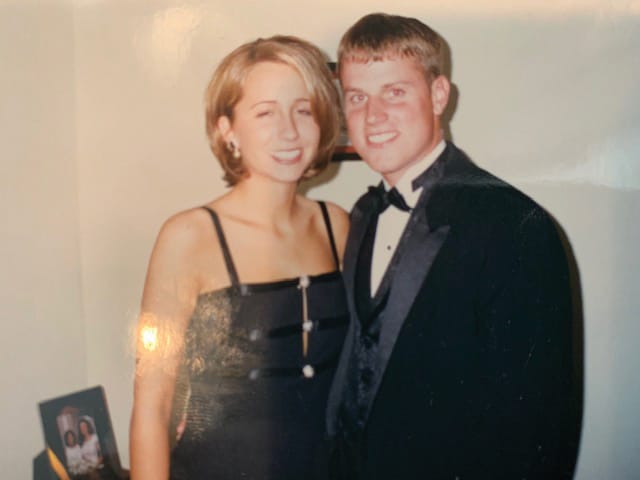
Marc Primanti with girlfriend (now wife) Julie (Sherrill) Primanti
Despite lacking luxurious dorm rooms, state-of-the-art facilities and diverse dining options, the NC State alumni we spoke to looked back at their college days with fondness. Several still keep in touch with their college friends, watch football games at Carter Finley, drop by campus or grab beers at their old stomping grounds. They attribute their time at NC State to where they are in their lives and careers today. “I like to say, I spent seven of the best years of my life at NC State,” says Lowder, who taught on campus after he graduated. And while costs have risen in recent years with all the new campus amenities, and the fierce admissions competition, there’s a lot that this year’s freshmen have to be excited about. Both Kramer and Stewart are looking forward to joining clubs, supporting the Wolfpack at football games and ultimately earning degrees. Stewart says he already knows his way around both Centennial and Main Campuses and intends to keep his air conditioning bottomed out until summer is over.
Catering to the tastes of the NC State football team.
College football players are foodies by default—the average NC State player eats anywhere from five to eight times a day. But players certainly aren’t eating whatever they want all the time. Instead, they follow a nutritious diet that Diana Nguyen, the director of sports nutrition for NC State Athletics, prescribes for each individual player as well as for the athletes that make up all 23 other NC State sports teams.
For the football team, Nguyen, who received her sports nutrition degree from Virginia Tech, customizes nutrition plans for each player following a one-on-one meeting in her office where she discerns what their dietary needs are. She considers the players’ schedules, their weight histories and body compositions, their goals and their activity levels and uses that information to recommend appropriate levels of carbohydrates, protein and fat intake. Nguyen also takes players’ on-field positions into account before making recommendations. For wide receivers, running backs and safeties, for instance, Nguyen prescribes a higher carbohydrate diet to give them the energy they need to run more routes than the defensive or offensive linemen.
Nguyen says getting to know the athletes on a personal level is important, too, and she tries to catch up with players while they’re having a meal in the dining hall. “Having a conversation with them while they’re actually eating helps to build my relationship with them and understand what they do and don’t like,” Nguyen says.
While dietary needs vary from player to player, Nguyen says general guidelines are pretty straightforward. She advises athletes to reduce their fast food intake, especially fried foods, incorporate more fresh fruits and veggies and to drink plenty of water to prevent heat illnesses. “The ultimate goal with nutrition and performance is to keep them on the field — to keep them productive, to keep them out of injury,” Nguyen says.
On an ideal day, players start with a hydration drink and a snack before they train. Afterwards, they get a recovery drink and breakfast at Wendell Murphy Football Center. Players eat lunch on their own time between classes and Nguyen recommends they eat one or two snacks in the afternoon, as well as one after dinner—preferably a snack with some protein to complement their training. Players eat dinner at NC State’s Case Dining Hall, which is reserved for those on the student athlete meal plan.
Nguyen has collaborated with Matt Hodges, the NC State athletics program’s head chef, to curate menus at both Murphy and Case that are tailored for the athletes. One or two fresh vegetables are always available at breakfast, lunch and dinner, along with lean proteins, high-quality, complex carbohydrates and healthy fats so athletes can create well-rounded meals.
Breakfast may involve the standard eggs, bacon, oatmeal or breakfast sandwich with a rotation of French toast, waffles or pancakes. At lunch, the same combination of colorful fruits and veggies, proteins and carbohydrates are incorporated with pastas, rice dishes, sandwiches and wraps. Dinner at Case includes options catered to athletes with all kinds of taste preferences and dietary restrictions. Hodges, who takes health needs as well as socioeconomic histories and allergens into account when creating dishes for individual players, provides a mixed menu of comfort food and a broad variety of fresh vegetables, pastas (a team favorite) and lean proteins. Though the team’s diet consists mostly of the standard “meat and potatoes,” Hodges says he tries to introduce diverse options. But “safe” items—pasta, burgers, grilled chicken—are generally always available.
“We try to keep it appealing to them, keep it exciting, but familiar most of the way,” Nguyen says.
NC State football head coach Dave Doeren
And, while football players are certainly tempted by a Howling Cow milkshake every once in a while, Nguyen says they’re pretty good about sticking to her nutrition plans overall, and when they do have a milkshake, they’re honest with her about it. “It’s about finding a healthy balance and just showing them that it’s okay to be human and it’s okay to have that stuff,” Nguyen says. “But the majority of the time they do follow the recommendations that I give them because they are motivated.”
So is it the tasty shrimp scampi, soy glazed chicken drumsticks or baked chicken parmesan dishes at the team’s disposal that clinches Wolfpack wins? They’re certainly a factor.
“Nutrition plays a huge role in our preparation and performance and is integral in our ability to develop players,” says NC State football head coach Dave Doeren. “Diana and her staff do a great job educating our players on proper nutrition and making sure our training table provides meals that are enjoyable, but also beneficial.”
Researchers at NC State’s vet school are advancing medicine across the species.
Ed and Ingrid Carney’s rescued German shepherd, Liesel, loves Jeep rides. During one of those rides to the beach, 5-year-old Liesel jumped out of the Jeep and into the sand. She winced and the Carneys noticed her favoring one leg as she walked. Knowing something was wrong, the couple took her to Dr. Warren Gintis, their veterinarian at Swift Creek Animal Hospital in Raleigh.
After a few X-rays, Gintis broke the news that Liesel’s hip was beginning to go bad.
“Given that she was young and reasonably fit, he suggested now would be a good time for a hip replacement,” says Ed Carney, who was referred to Dr. Simon Roe at North Carolina State Veterinary Hospital. “Dr. Roe and the entire staff bent over backwards to make sure that we felt comfortable that we’d get the best care on the planet.”
Roe and his team performed a total replacement of Liesel’s left hip, eliminating her joint pain.
“She had surgery late December and we’re already out doing five mile walks,” says Ed Carney. “She’s the reason I lost 33 pounds! Instead of having a hobbled German shepherd, we’re going to have a dog that’s happy and healthy and is able to have a productive and pain-free life.”
Liesel is just one of more than 182,000 animals that have been helped at North Carolina State Veterinary Hospital since its inception in 1983. One of the highest rated regional academic veterinary medical complexes in the country, the hospital has three medical centers, plus satellite and field operations, with more than 34,000 cases examined, diagnosed, and treated each year.
The Hospital
Photo by John Joyner/NC State Veterinary Medicine
“The best way to describe our hospital is that it’s like the Mayo Clinic of veterinary medicine,” says Dr. Steve Marks, clinical professor of internal and emergency medicine and the associate dean and director of medical services. “We have a specialty hospital that sees about 35,000 patients a year and it’s a teaching hospital.”
The hospital partners with veterinarians in the community for animal referrals, just like it did with Swift Creek Animal Hospital and Liesel. The process is similar to the human one. If you went to your general practitioner and they thought you were ill, they would send you to a specialist for further examination.
“If they find a lump and they think it’s cancer, they send you to us,” says Marks. “We can do almost any diagnostic and therapeutic procedure you can find in human medicine. We have all the bells and whistles. We can offer what a local vet might not be able to offer.”
The hospital has an ER for emergencies and off-hours, just like a human hospital. If your dog was hit by a car, for example, you could come straight there. Otherwise you would need a referral from your personal veterinarian to be seen. While no one hopes for an illness in their animal, it is nice to know that you and your pet have the resources if needed.
“We’re a state-of-the-art hospital,” says Marks. “We have more specialists in our hospital than any hospital in the country. There are other specialty hospitals in the area, but they aren’t attached to a university.”
The College
College of Veterinary Medicine at NC State
The NC State College of Veterinary Medicine (CVM) was the state’s first and only place to study veterinary medicine when it was established in 1978. Now, it boasts 585 faculty and staff members, three departments—Clinical Sciences, Molecular Biomedical, and Population Health and Pathobiology—and an 80-acre farm that serves as the Teaching Animal Unit (TAU). The TAU helps students practice animal husbandry, production management and routine procedures used in livestock production.
Students come into the school with an undergraduate degree in a basic science discipline. Since the school only accepts a class size of 100 each year, with 80 accepted in-state and 20 from outside of North Carolina, competition for admission is tough.
The first three years are primarily pre-clinical years in class and lab training. In the fourth year, students can work in the hospital, which is a mix of teaching and using the hospital as a teaching center. They interact with patients under the supervision of a specialist.
Through interaction, students bridge compassion and science and learn how to provide owners with compassionate medical care while also pushing forward medical innovation.
“We are training veterinarians and veterinary scientists,” says Marks. “It allows us to push the science forward.”
The Research
The university is what makes this hospital unique. At CVM, it’s not only the animals that are being helped. Through education and research, students and staff work to improve the state of medicine for animals as well as humans.
“We’re doing medicine better tomorrow than we’re doing today,” says Dr. Kathryn Meurs, associate dean for research and graduate studies. “We do everything from cancer research to eye research to swine virus research to cell division research and more.”
Ranked the No. 4 College of Veterinary Medicine in the nation by U.S. News and World Report, the CVM houses one of two national centers for the Food Animal Residue Avoidance Databank, which keeps drug residues out of public food supplies.
“I think that what makes the College of Veterinary Medicine unique is this concept that everybody is involved in research,” says Meurs. “Everything we do can provide information that can advance the way we do things.”
The research is broad. Some of it is lab, some is clinical, some benefits animal disease study and some will go on to benefit human disease. Almost all of it is translational research—if you’re doing it in a lab, you want to apply it to a patient somewhere.
“The other aspect where we stand out is this very strong link to biomedical or medical care,” says Meurs. “Some of that really is at the bench. It might be years before it’s going to move to the clinic, but the goal is that these are the things that change healthcare.”
Research is funded through government programs, industry partners, nonprofits or through foundations like the American Heart Association. An experiment that makes discoveries at the cellular level might be funded by the National Science Foundation, while something that’s production animal focused, like how to better vaccinate, might be funded by the U.S. Department of Agriculture.
Current research runs the gamut from eye lesions in sea turtles to treatment approaches for canine vertebral osteosarcoma, the most common bone tumor in dogs.
A Clinical Trial
Photo by Nathan Latil/NC State Veterinary Medicine
Ruth Baker’s 10-year-old Pembroke Welsh Corgi, Alex, is nothing short of a champion. In fact, he’s won a grand championship, a masters in agility, and even a Utility Dog Excellent UDX in obedience, a difficult feat, all with his owner by his side.
With such an active dog, Baker was heartbroken when Alex was diagnosed with canine degenerative myelopathy (DM), a neurodegenerative disease parallel to amyotrophic lateral sclerosis (ALS), or Lou Gehrig’s disease, in humans.
“I’m an old person, almost 80,” says Baker. “It’s amazing that I can get out there and run and do agility with my dog. Now I see my best friend have this problem of no longer being able to walk. He hasn’t walked for months.”
Baker and Alex recently entered a clinical trial at NC State that is working to slow down the progression of DM in dogs through a steady dose of a gene-silencer. Since DM is a progressive and fatal disease that affects older dogs, there is no current treatment or cure, just like ALS. By slowing down the disease’s progression, researchers could provide more time.
For Alex, who is also a licensed therapy dog who would visit hospitals, Alzheimer’s patients, and schools, Baker sees this trial as his final way to give back.
“We felt like this was his last contribution to the human world,” Baker says. “And we’re hoping to help human ALS victims as well.”
Photo by John Joyner/NC State Veterinary Medicine
It Affects Humans Too
Doberman pinschers unfortunately are susceptible to a fatal genetic heart disorder common in their breed, called dilated cardiomyopathy. Basically, the heart muscle’s ability to contract is affected, leading to heart failure or sudden death. Humans who suffer from the same disease also have a grim outcome, with the only current treatment being a total heart transplant. After discovering that human and Doberman cases are caused by the same gene, researchers can test therapies on the dogs on shorter timescales, possibly leading to new and effective human treatment.
Global Health
By merging existing education with global health research, CVM’s new Global Health program has created a multinational effort to combat global health problems. The recipients of the 2019 travel awards are research projects in South Africa, the Galápagos and Senegal.
Pretoria, South Africa— Anthony Blikslager, professor of equine surgery, and Mathew Gerard, professor of anatomy, are working to increase survival rates of injured southern white rhinoceros poached for their horns.
Genovesa Island in the Galápagos— Greg Lewbart, professor of aquatic animal medicine, is studying tourist-induced stress in seabirds, comparing stress hormones in red-footed boobies nestling close to popular tourist areas with those living in quieter parts of the island.
Dakar, Senegal— Research assistant professor Shivaramu Keelara Veerappa aims to stem the tide of infectious diseases transmitted by mosquitoes, including malaria, Zika and yellow fever.
*Information provided by NC State University’s Veterinary Medicine News
Photo by John Joyner/NC State Veterinary Medicine
fyi. . .
Alex’s trial is not the only clinical trial at NC State. Here are some other projects in the works shaping the future of medicine:
Treatment of Large Skin Tumors in Horses Using High Frequency Irreversible Electroporation
What that means: Through a clinical trial, researchers will use electrical pulses to destroy tumor cells and help chemotherapy penetrate surviving cells. By using high frequency irreversible electroporation, researchers hope to eliminate muscle contractions that are associated with traditional electroporation.
Treating Hypoxia via Tumorally Directed Oxygen for Improving Radiation Therapy
What that means: Dogs diagnosed with soft tissue sarcoma will get oxygen delivered to their tumor tissue during radiation treatment, hopefully increasing tumor response.
*Information provided by NC State Veterinary Medicine
In September, 29 large, uncontained wildfires raged in the United States. And, if that isn’t scary enough, a new structure fire occurs somewhere every 66 seconds.
The men and women who fight these fires face danger from all sides, from flames, heat stress and falling debris to chemicals and airborne toxins that can cause cancer. But in Raleigh, a research center works closely with firefighters to improve their gear and extend their lives.
In a test chamber at the NC State College of Textiles, researchers watch as a column of flames engulfs a life-sized mannequin. In a nearby lab, a firefighter puts new turnout gear through its paces; outside, a high-temperature smoker turns up the heat on thermal protective gear. This is the Textile Protection and Comfort Center, or TPACC: A facility designed to save lives by furthering the science of protective clothing.
Photo by Marc Hall
“The research at NC State on structure firefighter gear is very important,” says Gregory Bridges, battalion chief for the Raleigh Fire Department. “[It] has and will continue to protect and save lives.”
TPACC’s research has led to the development of fire- and heat-resistant fabrics for firefighters, surgical gowns to shield medical workers from biological threats and turnout gear that protects first responders against carcinogens.
“We really listen to firefighters,” says Dr. Roger Barker, TPACC’s director. “We don’t just sit in our lab and come up with things we think will be great. …We say, ‘What do you want? What are your conditions?’ All of our projects begin that way.”
Students work in the TPACC, Textile Protection And Comfort Center. Photo by Marc Hall
Mannequins
TPACC labs are fitted out with a family of research mannequins that mimic the human body: PyroMan, a life-sized mannequin subjected to intense heat and open flames; SweatMan, a sweating mannequin with human-like skin that measures clothing’s resistance to sweat evaporation and cooling in motion; and the Man-in-Simulant Test Lab, a sweating, walking and breathing mannequin system to evaluate how first responder gear protects against harmful chemical and biological agents. Researchers use RadHand and
PyroHands to measure the efficacy of firefighter gloves, PyroHead to test the safety of first responder helmets as well as a small wind tunnel and a range of other sophisticated instruments.
Building a Better Fire Shelter
Wildland firefighters face dangerous, unpredictable conditions. Fires can shift suddenly, trapping first responders in an inferno, so they carry a last line of defense known as the fire shelter, a portable, tent-like structure made of fiberglass and silica fabrics with an aluminized outer shell. It doesn’t provide cover for long, however. Traditional shelters can withstand temperatures of up to 2,000 degrees, but fail after about 30 seconds.
With a grant from the Federal Emergency Management Agency (FEMA), TPACC set out to build a better fire shelter. Engineers created the stainless steel PyroDome in a test chamber, which allowed them to blast sample fire shelters, creating the intense conditions of a wildland burn.
“What we found was that the fire was creating such a turbulent, violent physical situation that it was literally tearing the aluminized layer off the fire shelter,” Barker says. “When that happens, it catastrophically fails.”
The team of university staff and student researchers engineered a shelter that could withstand conditions for twice as long, buying firefighters a minute or more.
“There is no such thing as fireproof, but what we’re trying to do is buy time,” Barker says. “A matter of seconds can be enough time for them to escape with their life.”
Photo by Becky Kirkland
Protecting the Protectors
“Traditionally, firefighters have worn smoke and soot as a badge of honor; the saltier the gear, the better,” says Dr. Bryan Ormond, an assistant professor at TPACC. “That was the mentality. The problem was, that stuff has been killing them. They have elevated risks of many types of cancers compared to the general population: testicular cancer, multiple myeloma, non-Hodgkin’s lymphoma, brain cancer and more.”
Firefighters’ turnout gear is similar nationwide: long trousers and coat with reflective strips, boots with handles, a helmet. They dress for emergencies in a flash—a combination of muscle memory and strategic placement—so any changes to their ensemble need to be seamless.
“Firefighters are very traditional,” says Ormond, who has also worked to create national standards for firefighter gear. “If they don’t like something, they are not going to wear it and it is not going to protect anybody.”
The team launched multiple research projects to address first responder occupational illnesses, especially dermal exposure to toxins in soot and smoke. They developed new gear to protect firefighters’ skin at the wrist, waist and ankles, places often left exposed by traditional ensembles, and a hood to protect the vulnerable skin around the neck and head. Raleigh firefighters tested each iteration of gear.
“The current testing … will help limit exposures to deadly carcinogens,” Bridges says. “Limiting this exposure will make a difference in the health of all firefighters.”
Improvements to I-440 are needed, but the impacts will be significant.
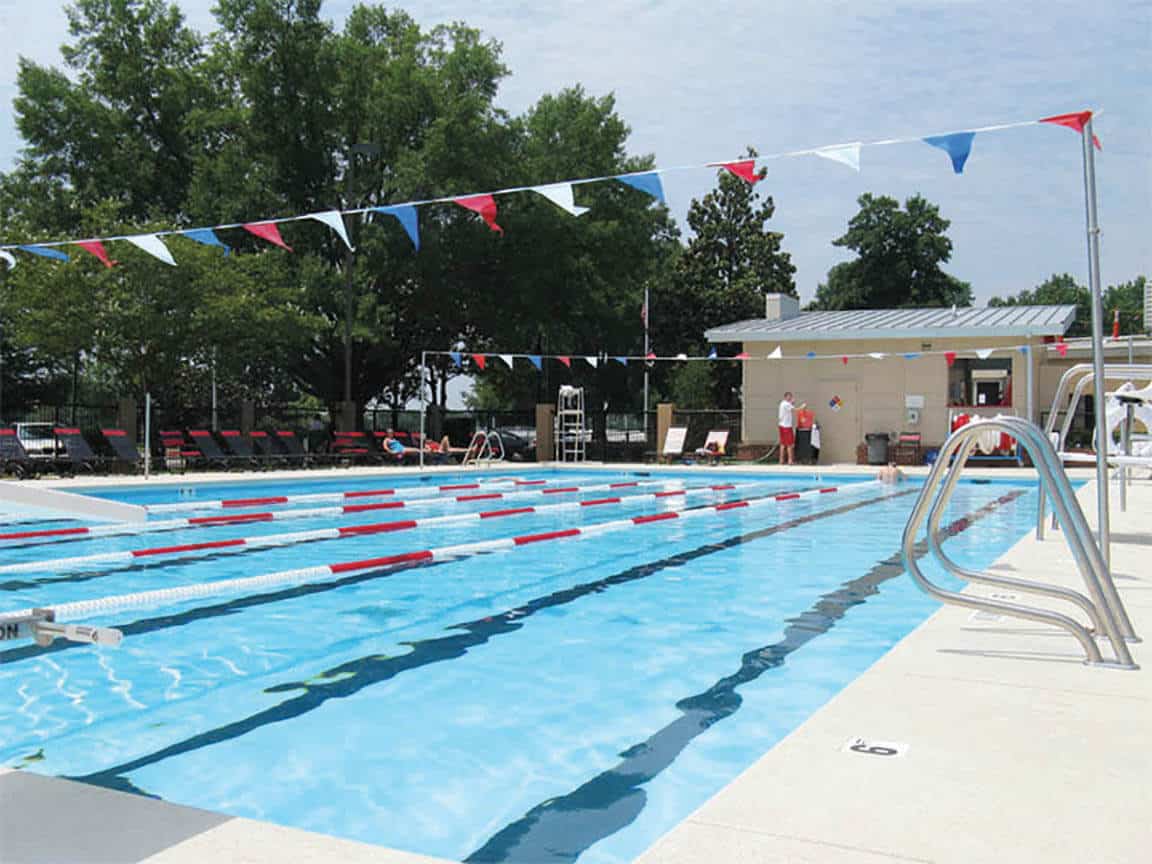
On a sunny, windy day last month, a lone golfer drives a ball onto the green on a nine-hole, Par-3 golf course. A few hundred feet away, players from a U.S. Tennis Association league lob balls back and forth. The swimming pools situated between the golf course and eight tennis courts stand empty in March, but it’s easy to imagine kids slipping down the twisty red waterslide come summertime.
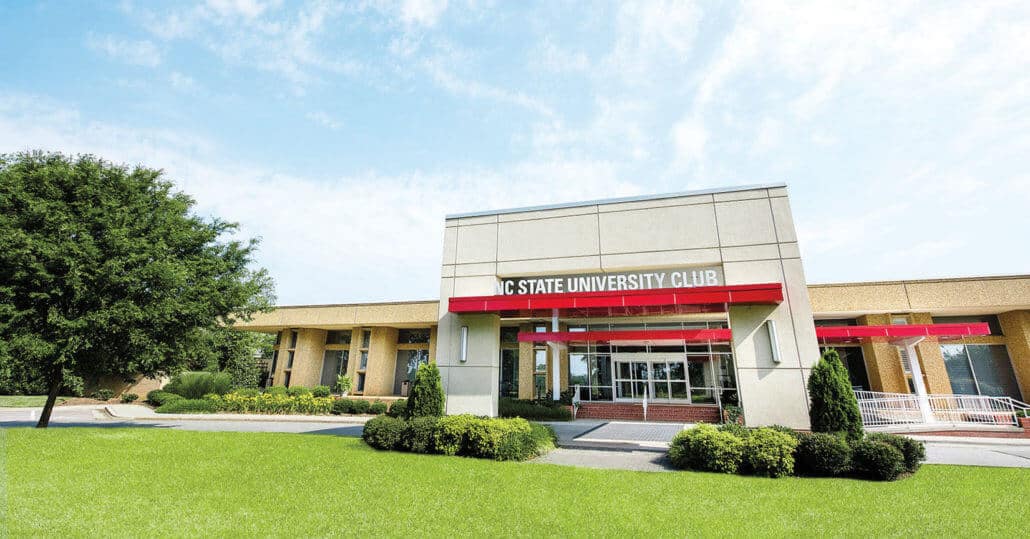
In a few years, it’s likely that the recreational facilities at the NC State University Club, located since 1961 on Hillsborough Street just down the road from the exit off of Interstate 440, will look dramatically different. As part of planned improvements to a stretch of the Beltline north of Wade Avenue to Walnut Street in Cary, including widening the road from four to six lanes, the club stands to lose up to a quarter of its 46 acres to eminent domain. As currently planned, the project takes up half of the club’s tennis courts, as well as most of an adjacent parking lot, rendering the swimming pools untenably close to future traffic.
“Our goal is to have a reconfigured footprint before [the N.C. Department of Transportation] touches the property, so there’s no interruption of service to our members and guests,” says James Ivankovich, the club’s general manager. “There is going to be some movement of different amenities. How extensive that is isn’t known at this point, but we’re working through every possible scenario.”
The I-440 widening package, projected to cost $475 million, will improve a stretch of highway built in the 1960s that can tally up to 90,000 vehicles per day. Parts of the highway rack up crashes at a rate three times the state average due to short acceleration and deceleration ramps, drivers having to merge in the fast lane, bottleneck congestion and other issues.
Though the improvements—which include replacing bridges, upgrading interchanges and physically lowering Blue Ridge Road to be situated underneath a railway—are needed, the impact is significant. Dozens of businesses and residents will be displaced and major entities, including Meredith College, NC State University and the University Club will lose large swathes of property. NCDOT-hosted public meetings beginning last summer have brought out hundreds of concerned stakeholders.
“We definitely understand that the widening needs to happen,” says Kristi Eaves-McLennan, the executive director of marketing at Meredith College. The women’s college is currently slated to lose roughly 10 acres of land, and the project will impact apartment residences on campus as well as athletics practice fields. “[The land] is a planned future growth site, where some of the ground is more level and we need to think about the long term. Hundreds of Meredith constituents have made their voices heard about this project, writing in their opinions and going to meetings, saying how much they value the Meredith campus and its importance to the community.”
At NC State, Associate Vice Chancellor Jeff Bandini, who manages the university’s real estate portfolio, says the project will affect “buildable acreage” on the Centennial Biomedical Campus, a storage building on Ligon Street, the Biomedical Campus’s short-game golf practice facility and a maintenance building located on its northeastern corner. The university doesn’t have a current estimate for the amount of acreage affected by the project due to recent adjustments in the project’s design.
NC State University Club
“We are meeting with stakeholders and talking to different groups all the time,” says Steve Abbott, a spokesman for NCDOT. The department has been able to change the plan from preliminary stages to reduce its physical footprint and mitigate some of the impacts to property owners. Stakeholders say DOT officials have been open to listening and responsive to their concerns.
In July, the department will hear presentations from four different design-build contractors and later this summer will award final planning and construction of the project to the highest-scoring bidder. NCDOT will then be in a position to discuss compensation with all of the entities affected by the project, and construction is on track to begin in spring or early summer of next year.
“The biggest thing for us, other than compensation, is timing of the project,” says NC State’s Bandini. “We need significant lead time to move people and replace our short-course facility. So from a facilities perspective, as a large entity we need a lot of time to plan and relocate folks. We’re asking not to start the project with our property.”
Ivankovich says the University Club is in the same boat. It’s sending out surveys to its more than 900 members to get their input on how they want to see the property reconfigured—and hopefully improved—and the club will look to hire an architect once it knows more about the final design.
“A lot of this is about being vocal, letting the DOT and the different agencies governing this process know the impacts and the personal stories this could cause havoc with,” Ivankovich says. “From the DOT’s standpoint, they’re doing their jobs, but there is a people side to this that’s important, and maybe there are better ways to think about it and alternatives that haven’t been considered.”
If all goes well, the I-440 improvements will make the highway safer and less congested by 2025. The improvements will also fit neatly with the county’s 10-year, $2.3 billion transit plan, which will see Wake County and the City of Raleigh working with NCDOT on Bus Rapid Transit along the Western Boulevard corridor.
“We’re working together to make sure what we’re doing on the highway side doesn’t hurt what we do on the future transit side,” says Joey Hopkins, Division Engineer for the state highway division covering Wake County.
“We want to reach a deal with the stakeholders, offer relocation help; there are all kinds of things we can do,” adds Abbott, the DOT spokesman. “We know we’re inconveniencing people by taking property, and we want to make them feel alright about it. We want to reach a deal, and if we can’t, it goes to the courts.”
That’s an outcome that all the parties, at the moment, appear to be working hard to avoid.
“A lot of this is about being vocal, letting the DOT and the different agencies governing this process know the impacts and the personal stories this could cause havoc with.” — James Ivankovich