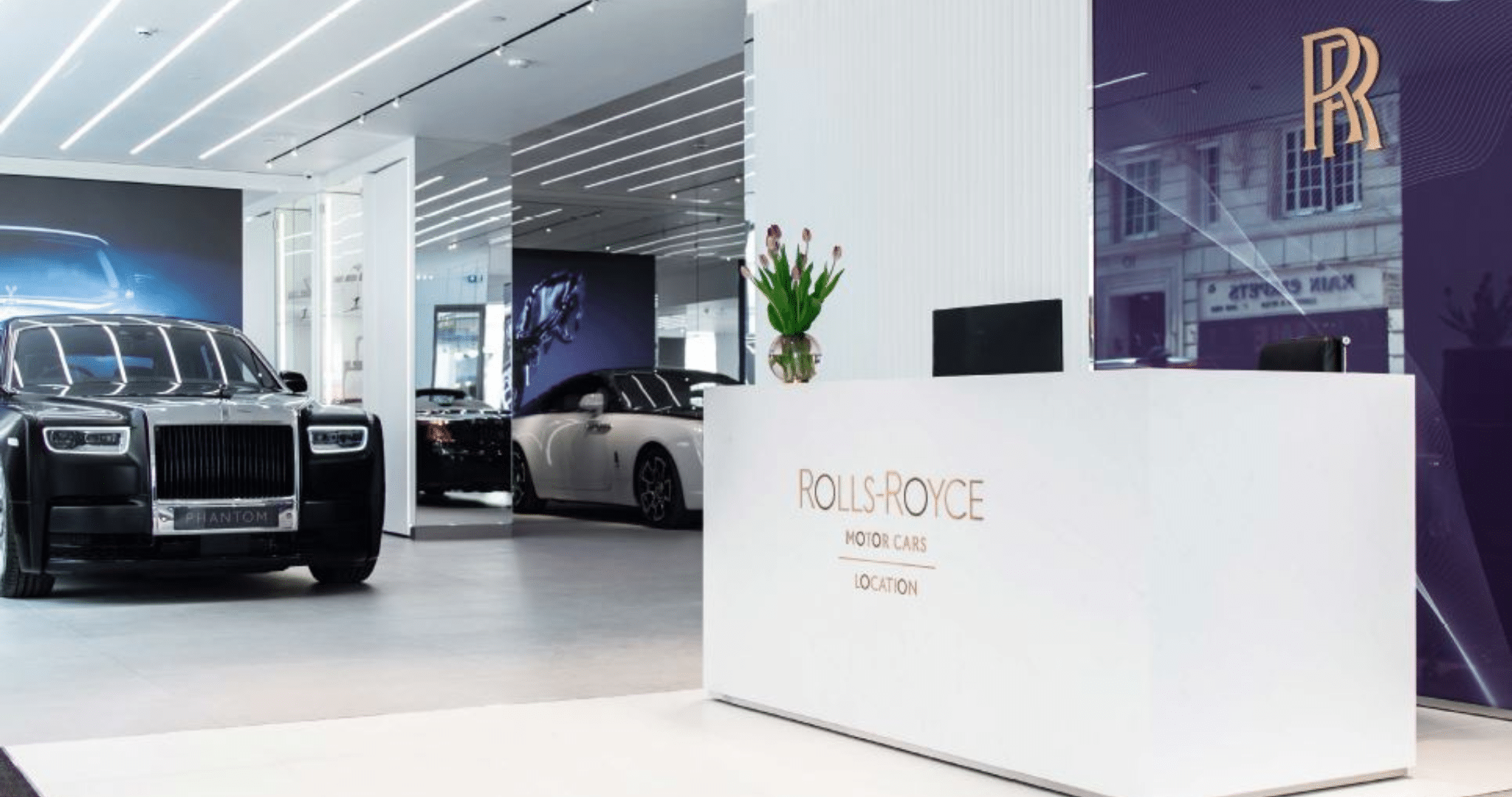
Once a city of startups and sweet tea, Raleigh is now parking itself squarely in the lane of ultra luxury. And, by spring, Capital Boulevard will welcome a brand-new exclusive bespoke Rolls-Royce dealership—one of only two freestanding in the world—the other in Dubai. That’s right: Dubai and Raleigh.
It’s a “look ma, we made it” moment of the grandest scale. The Cap City is no longer a small market, it’s a global one—and, clearly, people here aren’t afraid to dream big anymore.
Ehsan Khani would know. The Iranian-born self-made business mogul arrived in Raleigh in 1987 with only $4K in his pocket. Speaking zero English, he started from scratch, enrolled at Wake Tech and built his empire brick by brick. “I’ve been everywhere in the world,” says the Westgate Auto Group dealer/principal. “And where I come from, this opportunity we have here—to become the 1%—doesn’t exist anywhere else.”
Fast-forward, and he now owns multiple dealerships, Westgate Wine, plus a million square feet in real estate holdings. And, until Charlotte’s rolled out in May, he has been the only Rolls dealer/principal in the state since 2018—and soon, will roll out the country’s first-ever Rolls-Royce-only signature showroom.
It’s the realization of “if you can see it, you can be it”—precisely what’s defining the local luxury shift. And it isn’t about Old Raleigh money or transplants. In fact, explains Khani, today’s buyers are more localized, self-made and visible.
Post-pandemic, the “life’s too short” mentality played a heavy hand, as did the brand’s premiere Ghost daily-driver and Cullinan SUV, both playing pivotal roles in skewing the demographic younger—a tilt accelerated thanks to social media’s democratization and celebration of luxury, which lit a fire under would-be Rolls enthusiasts in real time, adds GM Tony Enderle, noting clients now clock in a full decade younger on average. “Success now is not to be looked down upon—it’s to be strived for,” he says. “‘Old money’ isn’t as attracted to the Rolls-Royce experience—because it’s showy—whereas social media has made success visible. What once felt unattainable now feels possible—there’s just nothing you can’t achieve,” adds Enderle, nodding to entrepreneurs, influencers and the like.
Two such 20-something influencer spouses just bought a pair of Rolls after only two years in the digital spotlight. Call it the modern luxury shift from the Warren Buffett Cadi-driving wealth to the Zuckerbergs, Bezoses and Musks who don’t handcuff wealth enjoyment—success as content, aspiration as lifestyle.
Rolls-Royce Motor Company
And the Raleigh market is catching that current in real time—even savvy kids. Enderle invites them to sit in a Rolls, pad of paper in hand, and write down their goals. “There’s no place better to dream than in a Rolls-Royce,” he says. “It’s ‘I am. I will. do,’” adds Khani.
But it’s not all youth-based aspiration. Local entrepreneurs and developers who’ve helped turn the Triangle into a luxury ZIP code are also driving the market. “Real estate equals wealth,” he says of the $10M homes now starting to dot the area. Echoed in their clientele roster, consider the 34-year-old self-made rental-real-estate savant who now teaches others how he made it, or the 55-year-old Hickory woman who fulfilled a lifelong dream this summer. “We mostly see people who have aspired to greatness,” says Khani of the ~95% local clients who grew up supporting the community.
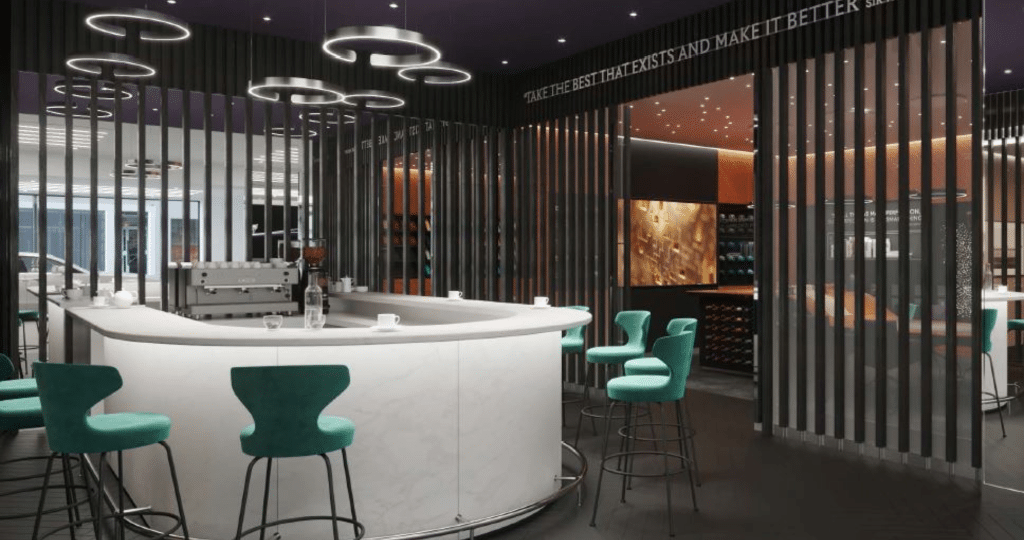
When the new tech-driven jewel-box dealership opens, it won’t look like your typical car lot. Beyond the automatically opening RR Pantheon Grille doors revealing the Spirit of Ecstasy, you’ll move through curated spaces from reception and seating areas to the speakeasy-esque lounge pouring Champagne and cappuccinos to four artfully lit demo spaces showcasing the Ghost, Spectre, Phantom and Cullinan. And, of course, there’s the Atelier customization lounge, where patrons can craft their dream machine from some 84,000 possible combos.
“This isn’t a car lot—it’s a gallery,” says Khani. “It’s an experience. Every inch has to meet Rolls-Royce’s standards,” echoing the brand’s MO: “Take the best that exists and make it better.”
Which is exactly what Khani has done since acquiring the brand. Clocking in at a cool $350,000 to start, most dealerships sell just three to four a year. Khani sells upward of 30. Already outpacing expectations—and quadrupling sales under his watch—the new dealership expects to further drive demand for its bespoke builds, starting around $350,000 each. But the number isn’t really the point. What’s striking is that Raleigh can now sustain that level of luxury.
There are only 35 authorized Rolls-Royce dealers in the U.S., says Enderle. Not every city qualifies—especially for one of the largest in the U.S. and only the world’s second freestanding dealership. The fact that Raleigh does? That says everything about where we’re headed.
And that’s really the story. A city once defined by potential is now living it—in drive, in design and in daring. Rolls-Royce didn’t just choose Raleigh because it’s growing. They chose it because it’s arrived. Because, clearly, if you build it, they will come.
“I came here with $4,000 in my pocket. But step by step, build by build, it grows. … Here, you can work hard and set goals—and put yourself into an ’I am, I will, I do’ mindset, and it will come.” —EHSAN KHANI
By the Numbers
133 Authorized Rolls-Royce dealers in the world 35 Authorized dealers in the U.S. 2 Exclusive freestanding dealerships in the world 1 Exclusive dealership in Dubai 1 Exclusive dealership in Raleigh
Precautions for Raleigh’s party district are on the mind for many.
On the heels of a car being weaponized to murder and maim dozens on New Year’s Eve in New Orleans, precautions for Raleigh’s own party district are now front of mind.
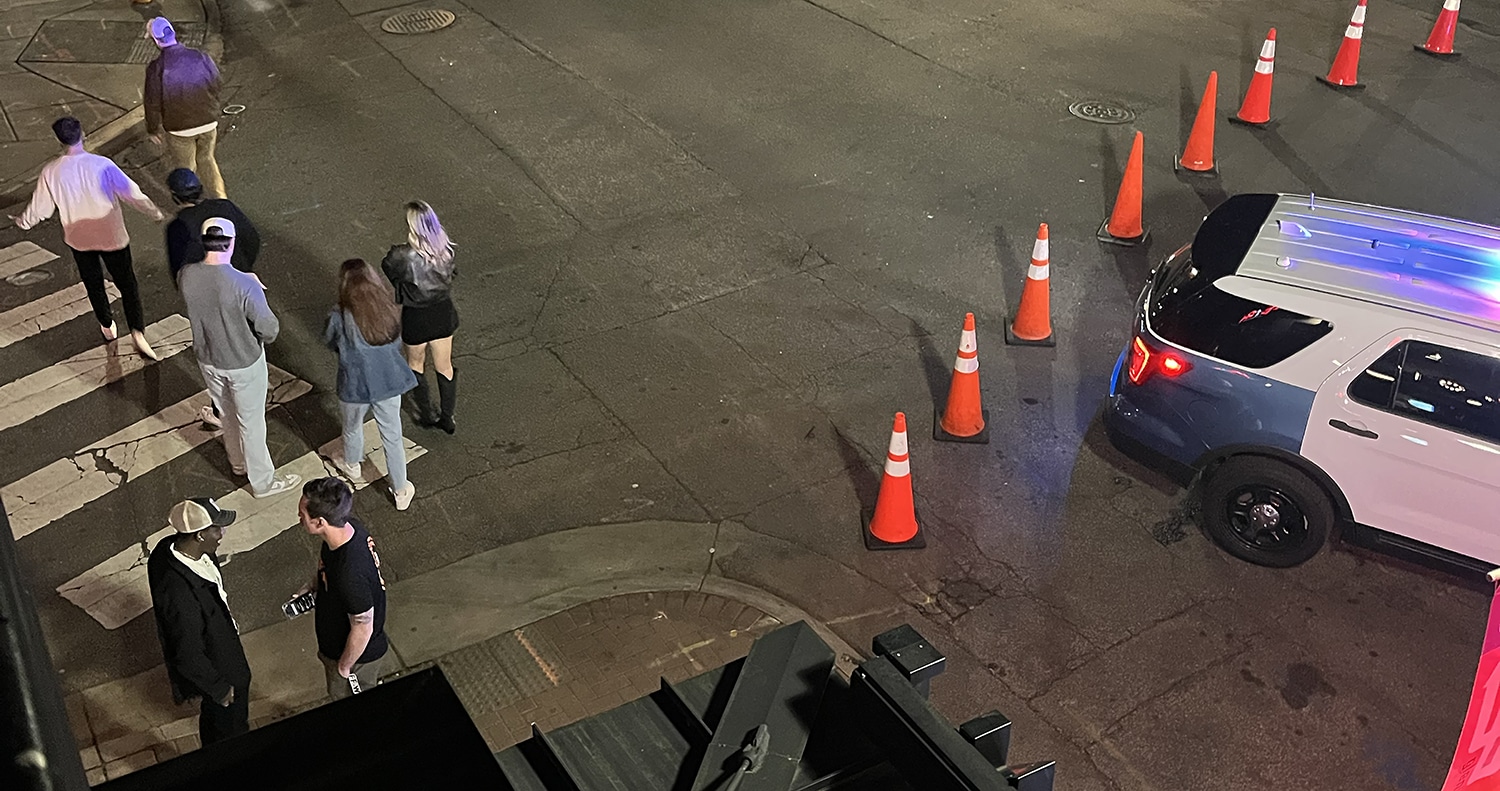
It’s something that caused outgoing Raleigh Police Chief Estella Patterson pause from day one. “When I arrived here, I would go down to Glenwood South and the hairs on the back of my neck would stand up,” she shares. “I was like, this is an incident getting ready to happen—a tragedy will happen down here if we don’t put in some controls.”
She describes the chaotic scene: traffic everywhere, pedestrians overflowing into the street, cruising cars. … “At any moment, somebody could’ve fired shots—anything could happen—and there’s nowhere for people to go. The egress is horrible, and emerging vehicles wouldn’t be able to get into Glenwood South. It was a complete mess.”
To add to the chaos, she recalls escalating district stabbings and noise complaints. “By October 2021, I made the decision in speaking with the city manager to pull officers and assign them to Glenwood South.” And they’re still there three-plus years later. Upping the ante, she says parking-deck patrols, traffic-pattern changes and cars with blue lights have had a huge impact on preventing cruising and crime. While the police presence has all but returned the party district to a protected playground (complete with plenty of noise drama), having to keep officers there every weekend is taxing on RPD.
Regarding any public pushback, she protests: “To those who think the increase is too much police presence, I say, our officers, while there, are not enforcing. We’re not out trying to search and violate people’s rights in any way. Officers are there for presence, for visibility, so people can feel safe. To have conversations with patrons… and to help the area—not to make it a police state where we’re arresting.”
Think establishing the Raleigh Police Department Foundation; successfully recruiting seven Academy classes of at least 50 that all but erased the officer deficit (projected zero by this July) and created a pipeline to help with retirement falloff; turning around an Entertainment District headed for imminent disaster; and steadily reviving the pervasive perception of the dangers of DTR post-pandemic and the murder of George Floyd.
Now, as she prepares to vacate her seat, Raleigh Magazine sat down with the head of RPD to ask what she thinks the top priorities are for Raleigh’s next chief to carry the momentum forward. For starters, full capacity is critical. “Even though we are closing in on our vacancies, we don’t have enough officers for Raleigh and the growth,” she remarks, explaining that a city this size should have 1,000 officers, whereas our current allocation sits at 800.
“I think for the next chief coming in, that will be the work he or she will have to do—fill the vacancies and start asking for more officers,” she expresses, outlining her own would-be plan to request 50 additional officers per year over the next four years for a total of 200—a 25% total increase. “Council is on board with that. We have been talking about that. They know that’s coming.”
To help with retention and recruitment, Patterson also points to police pay as a priority. Beyond cost of living, fairness and employee wellness, it’s about righting the anomaly of Raleigh’s compensation among surrounding and similarly sized municipalities. “Every time we get a pay increase,” she laments, “other agencies around us get increases as well, and it pushes us back to the bottom. We can do so much better as a city. Public safety should be the No. 1 concern—and the residents of Raleigh should support that. Our City Council and our city manager should support that.”
Encouraging the next chief to keep fighting the good fight for fair pay, she adds: “We worked hard for three years fighting for pay. Every single year we got pay bumps. Last year, we didn’t get the 15% we wanted, but we got 10%.”
To continue Raleigh’s upward public safety trajectory, Patterson suggests myriad measures, including more cameras in crime-rampant parking decks and increasing visibility of Downtown patrols—think extending bike patrols, private security and Downtown Ambassadors. “I think it’s helpful to have all hands on deck,” she says. “As many security elements as you can have… that’s more eyes and ears, and it just makes people feel safer when they know people are watching and are aware of what’s going on around them. You wouldn’t want to take away those resources you already have, because, again, we need more officers throughout the city. Period.”
As for the who—perhaps forget flirting with enticing some distant big-city PO. When prompted, Patterson agrees a hire from within could be advantageous. We don’t have to look far to find top talent primed to take the position.
Standout Raleigh Police Deputy Chief of Operations Rico Boyce has spent his entire 25-year law enforcement career in Raleigh, from rookie to second in command—and is thus deeply familiar with our city’s people, needs and trajectory. Accelerating across multiple divisions and through the ranks, Boyce is a clear leader lauded for prioritizing both his department and community commitment.
When we asked Patterson about her take on Boyce as Raleigh’s potential highest-ranking officer, she was candid that he is under consideration and thinks he’s interested in the post. “I think he’s primed to take the reins and move us forward as an organization,” she says. “I believe he has the support of the city—and that’s somebody I would support.”
As she reflects on her time in Raleigh, we asked Patterson what she is most proud of, and she admits it’s hard to name just one. She nods to reducing the vacancy rate: “I think that’s just phenomenal,” she shares. The outgoing Raleigh Police Chief is also “super proud” of acquiring community support to stand up the Foundation. “People can get behind something like that,” she says, “and I’m extremely, extremely proud of that—and the people who support the police.”
She also spends some time reflecting on her focus on employee wellness—making “a difficult profession less difficult on families and officers,” she says, nodding to RPD’s wellness unit, which will offer an outside consultant to work directly with RPD. “Our employees work 12-hour shifts. It’s a very long day for them. They have families, children, a lot going on. So we try to put some things in place so they know they’re supported within the police department.”
While her public approval rating is positive—insiders double down on how well revered Patterson is on the force. Perhaps, most of all, it’s because she cares. “I’ve always been a chief who’s out front,” she reflects. “I’m here with our personnel. … They need to know they are and always will be supported. I really tried to do that as chief and put things in place to recognize outstanding employees and the work they’re doing—really pushing a team environment.” In fact, she shares, RPD’s 2024 mantra was “team together.”
Patterson expects her replacement may be named by her March 1 departure date, saying, “I think we have a strong team, and they will continue the great things we have done here in Raleigh. The future of RPD is bright.”