Raleigh is one of the safest cities in the nation—full stop. But zoom in, and that reality starts to splinter.
Because over a 10-day stretch this April, a cluster of violent crimes cut across the city—from DTR to North Raleigh to the northeast and southeast corridors—turning what is statistically rare into something that felt anything but. A knife fight on Fayetteville Street, multiple shootings, a homicide—different neighborhoods, same throughline: escalation.
And that’s the tension city leaders are now confronting head-on. Following the surge, Raleigh Police Chief Rico Boyce stepped to the mic with a message that cut through the usual talking points: Rankings don’t reassure people who just watched violence unfold in real time. “Recent incidents have impacted the sense of security in our community,” he said. “And that is not acceptable.”
He’s right—and the data backs him up in a complicated way. According to first-quarter figures released by RPD, overall crime is down compared to this time last year—a continuation of a broader trend that consistently places Raleigh among the safest large cities and state capitals in the country.
Raleigh is safe on paper. April challenged that in practice. Because here’s the catch: Numbers don’t always tell the full story. They measure volume—not impact. And they don’t capture clustering, visibility or how quickly a handful of high-profile incidents can reshape perception.
A single shooting in a North Raleigh grocery lot is a statistic. When it’s one of three in a week—across all sects of the city—it risks being a pattern people can feel. That distinction matters. Because public safety isn’t just about long-term trends. It’s about whether people feel secure walking to their car, leaving the bar or letting a night stretch a little longer.
Boyce acknowledged as much, all but directly stating that clusters like this can be a slippery slope if left unchecked. His focus now: making sure April reads as an anomaly—not a preview.
Already this year, RPD has removed 474 illegally possessed guns from the streets—a figure the department points to as both progress and proof of the scale of the issue. Next steps are more targeted.
Downtown and nightlife corridors are getting increased attention, with expanded partnerships between the police, Alcohol Law Enforcement and Wake County ABC, including heavier presence where foot traffic—and risk—runs highest: bars, clubs, transportation hubs and key hospitality zones.
At the same time, the department is doubling down on prevention, working with small businesses, youth organizations and community groups to interrupt problems before they escalate. Because, as Boyce put it bluntly: “Policing alone cannot solve this challenge. … We are part of this community, just as this community is part of us.”
Translation: This only works if everyone’s in it and invested. Which brings the ask back to residents—especially as the city heads into high-traffic summer months. Stay alert, he implores—and if you see something, say something. Call 911 when something feels like it’s turning. Those moments, the ones that seem small, are often where escalation begins.
“Violence escalates from moments that could have been interrupted,” he says. “That call could be the difference between prevention and tragedy.”
The numbers may be trending in the right direction. But right now, Raleigh is being reminded of something less quantifiable—and more immediate. Safety isn’t just a measure. It’s felt. Promises Boyce: “When we stand together, we are stronger and more effective.”
Behind the scenes, private dollars are shaping how prepared Raleigh really is.
Stella Patterson may have stepped down as Raleigh’s police chief—but her legacy is still at work.
Because here’s the reality: When you call 911, you expect someone to show up ready—trained, equipped and operating with the best tools available. And while city budgets cover the essentials, they don’t stretch far enough to fund what’s next.
That gap is where the Raleigh Police Department Foundation comes in. Inspired by Charlotte’s, Patterson introduced the foundation with a simple premise: to “make Raleigh the safest city in the nation” by bringing in private-sector dollars to help fill what public funding can’t.
Fueled by corporate donors such as First Citizens Bank and TowneBank, along with board support from local business leaders like Mike Smith of Kane Realty Corporation and Larry Barbour of North State Bank, it directs private dollars toward equipment, technology and support the city budget doesn’t cover. And it’s not just big-name backers—everyday Raleighites can step in too, putting real dollars behind it.
“It gives people a way to put their money where their mouth is on public safety,” said Patterson. “They’re funding projects we wouldn’t have been able to do within our budget.”
And that investment isn’t abstract—it’s tangible, immediate and, in some cases, life-saving. In one recent road rage incident, two officers were shot—one in the head and alive today thanks to a specialized ballistic helmet funded by the foundation, not the city budget. It’s the difference between response and outcome.
That’s the through-line—not upgrades, but tools that change outcomes. Think high-tech gear like drones, night-vision optics, advanced camera systems, plus less visible pieces like K-9 support, mounted patrol horses, specialized bikes and officer wellness initiatives—including the department’s emotional support dog, Teddy.
It’s not just a list of equipment—it’s about readiness, about whether the person responding to a call has what they need in that moment. That impact also reaches beyond officers. In the wake of tragedy, the foundation has stepped in to support both responders and residents—from meal donations in Hedingham to youth programs and crisis-response support—quietly reinforcing where public safety and community trust actually meet.
And the need is only growing. At the foundation’s first major public-facing event this spring at North Ridge Country Club, Chief Rico Boyce emphasized the same point: Expectations for public safety continue to rise, even as budgets remain finite.
Which leaves Raleigh, like many cities, at a crossroads. Because while tax dollars fund the baseline, the question is what it takes to go beyond it—not just to respond, but to be truly prepared. Increasingly, that answer is coming from outside City Hall—or, as Patterson put it, from a community “putting its money where its mouth is” when it comes to safety.
All hail Raleigh’s annual fest of fumbles—where we don’t deck the halls, we drag the disasters. Our Dropped Acorns are back to roast the wildest lapses in judgement, public faceplants, bureaucratic belly flops and “who approved this” moments. Think of it as the Fall of Fame: cringe, comedy and civic commentary. Call it accountability, call it holiday catharsis—just know the hits (and misses) keep coming. Grab some popcorn and your bev of choice for a front-row seat to the carnage.
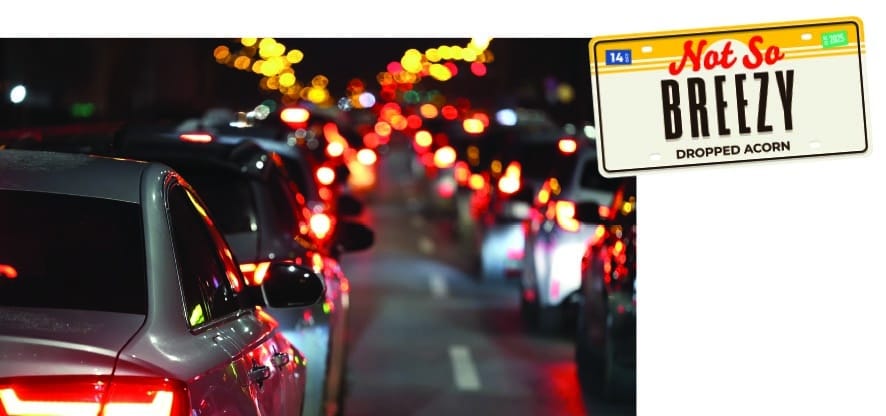
Chris Brown didn’t just perform—he detonated Raleigh. Forget gridlock, this was a full-blown traffic apocalypse. The pre-NC State Fair chaos—er, concert—at Carter-Finley sent every major artery into cardiac arrest, leaving commuters stranded for hours and fans rolling in just in time to hear the last few beats (if they even made it in at all). What we really needed was a command center and a collective group therapy sesh. It’s giving less “Go Crazy,” more Go Nowhere… basically a crash course in what not to do.
Photo By Alexander Lukatskiy
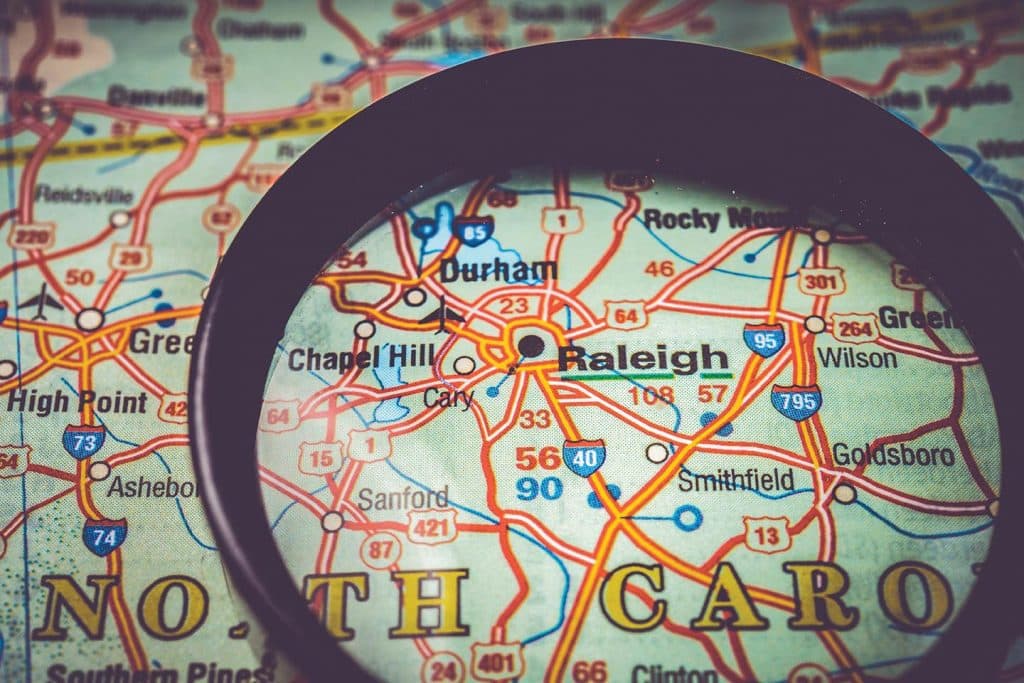
Bad Call We played at the airport?! Bless his heart. ESPN’s announcer sent NC State fans into orbit after repeatedly referring to the Carter-Finley matchup against GA Tech as happening in “Raleigh-Durham.” (Sir, that’s an airport, not a city.) Naturally, local meteorologist Wes Hohenstein and Reddit’s finest were quick to call foul—two separate towns, two separate teams and two separate counties… one collective eye roll. It’s giving major geography offside. Someone toss ESPN a map—or a penalty flag for a regional fumble.
The words “do you know who my father is?!” definitely echoed through the halls more than once. NC State’s frat bros are back at it proving that when life hands them privilege, they’d rather chase cheap booze and housing violations. Shocked to discover that actions actually do have consequences, Delta Sigma Phi got the boot from their house after racking up two back-to-back student conduct cases. And in a devastating blow to their storied legacy, the university tossed them off campus until 2027. At least they’re staying on brand?
It’s the ultimate “you had one job” IRL. Teaching kids isn’t always the easiest gig—but not leaving them locked inside school alone should be pretty simple. … Or so you’d think. A 10-year-old with special needs (who normally rides a specialized van home) was left stranded at Joyner Magnet Elementary School long after class let out. One panicked FaceTime to his mother later, and staff claimed the child was simply “missed” after “laying down for a nap.” Another win for the age-old question: If you have your eyes closed, can others still see you? In this case, apparently not.
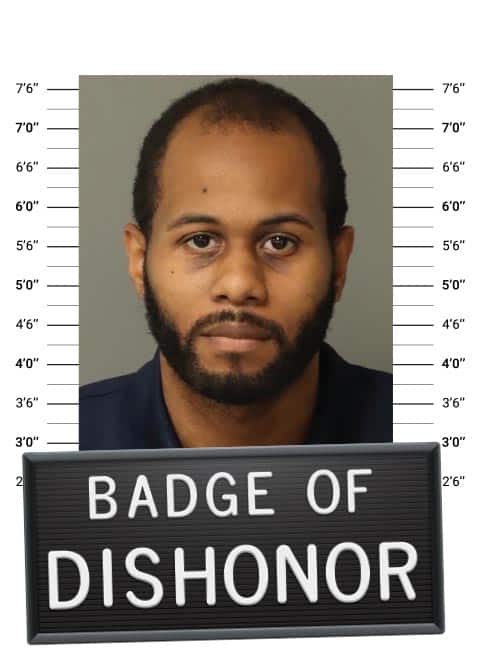
When a city cop gets cuffed for allegedly coercing a crash victim into “favors” to dodge a DWI, the only thing getting served is irony. Five counts of soliciting prostitution later, now-terminated RPD officer Tremale Cogdell’s credibility has officially gone up in smoke. Guess blue lights weren’t the only thing flashing.
Area schools kicked off August by… melting. Turns out no one thought to check the HVACs welcoming back thousands of sweaty students into what was basically a citywide sauna. Between the busted air, record heat and zero chill (literally), it’s giving “urban heat island” meets “oversight island”—because nothing says back to school like (heat) exhaustion and hindsight.
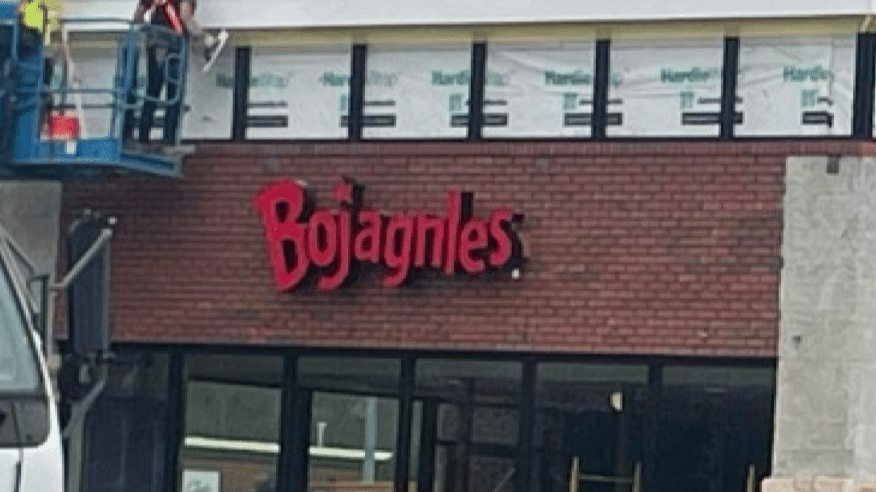
Bojangled Up! It’s Bo(tched) time?! Knightdale’s new Bojangles fumbled the bag—and the alphabet—with its shiny new sign proudly declaring “Bojagnles,” serving up a hot batch of embarrassment. The internet clucked accordingly—because nothing goes better with fried chicken than a good typo roast. Moral of the story: Maybe add a side of grammar to the menu next to the gravy. Bless their hearts… and their spellcheck.
Meet The Robinsons
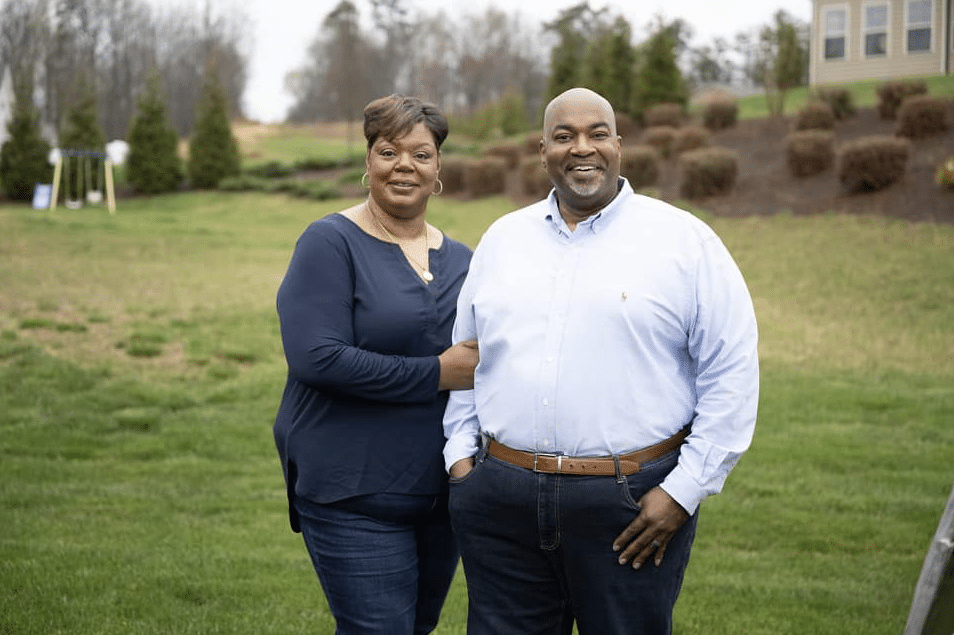
Because one Robinson scandal is never enough. While gubernatorial hopeful Mark Robinson keeps his controversial greatest-hits reel alive (see: that digital footprint), his wife Yolanda Hill is putting up her own numbers. Her now-defunct nonprofit Balanced Nutrition racked up over $101K in questionable payments and, after an investigation, DHHS told her to pay it back. Twice. Spoiler: still no check. Instead, Yolanda has pulled a full ghost act—leaving taxpayers out the cash and the couple’s reputation even messier. But, hey, between alleged embezzlement and pro-Nazi commentary, maybe returning taxpayer dollars just didn’t make it onto their family calendar.
Chip Happens Ruffling some feathers and bringing new meaning to crunch at a potato chip shop and gym, two people plowed a car into both businesses on Hillsborough Street and fled the scene—ditching their mangled ride in the process. The crash blew a hole through the street-facing brick and metal wall of Carolina Kettle and barreled into the back wall of local gym Goff Performance, bagging some serious damage. Clearly they were feeling a little more “grate—might dip later” and a little less “all that and a bag of chips.”
Remember the shipping container bar at Peace & Glenwood—the one that’s had more promised groundbreakings and name changes than “the artist formerly known as Prince.” … The Yard. Embargo. You get the point. The “visionary” blueprint by Local Icon Hospitality and CityPlat that’s been promising to “revolutionize” the local bar scene for, what, almost four years now still boasts nothing but a graveyard of glossy renderings to show for it. At this point, it seems the only thing they’re actually shipping is empty promises. Who knew turning an old inspection station into a shipping container bar would involve so much heavy lifting—and apparently require infinite planning stages and zero actual construction. On the bright side, at least we’re treated to fresh renderings on the reg… like some kind of high-concept art exhibit titled What Could’ve Been. The real question is: What are they covering?
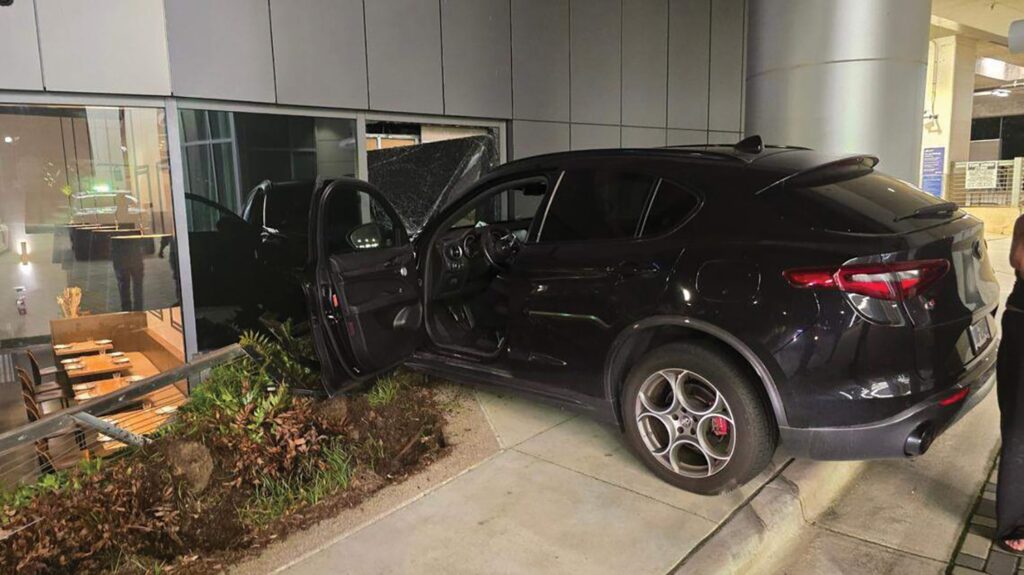
Fast & Fettuccine What would you do for a bowl of pasta? One 55YO Raleigh woman took it way too far, crashing her car straight into Cucciolo Terrazza after-hours this summer and mangling the kitchen, gas line and everyone’s appetite in the process. The North Hills Italian haven was forced to close for a few days while she picked up a DWI—and the pieces of her pride. The real noodle scratcher? How she managed to get her car perpendicular to the road leading up to the parking deck. … Guess the pasta wasn’t the only thing spiraling.
*RALEIG* TAKES FLIGHT
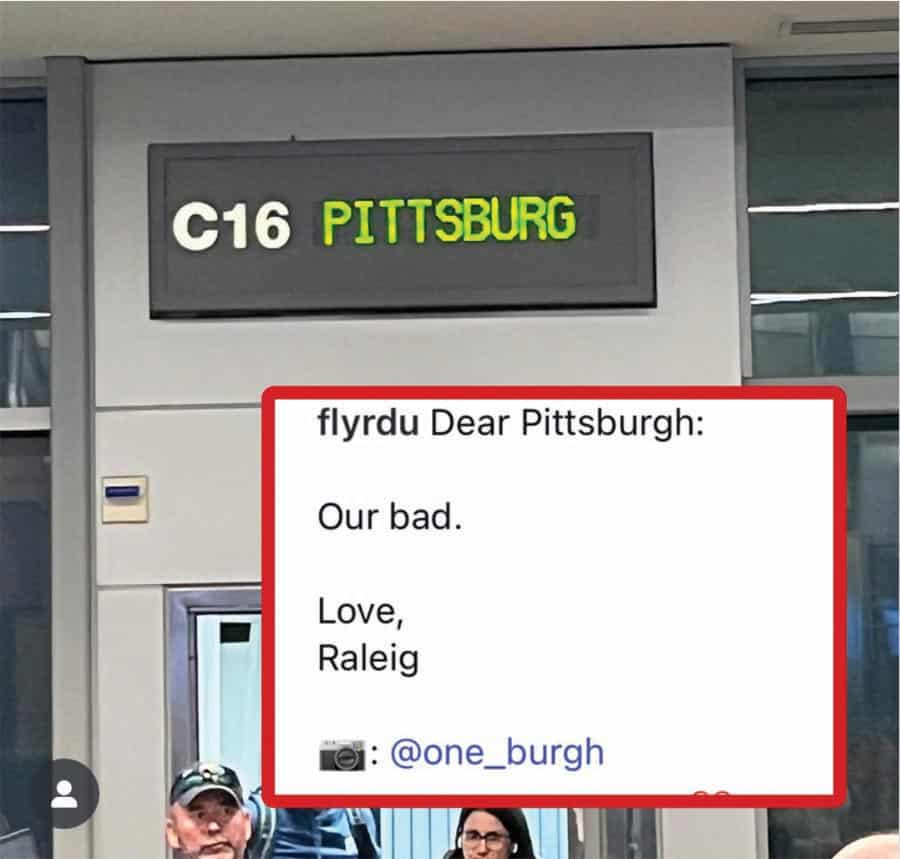
Who can afford an “h” in this economy? Clearly not RDU. The airport’s now-viral gate C16 typo to Pittsburg (no “h”) had the internet in stitches. RDU doubled down with a cheeky social media apology (“Dear Pittsburgh: Our bad. Love, Raleig)—racking up likes faster than a budget flight sale. Maybe we blame the government shutdown—no paychecks, no proofreaders? Either way, it’s just peak Raleigh energy—and we love to see it.
Photo By Ak studio and photography
Linguistics Buff ICYMI: Inappropriate—or just slightly unhinged—commentary is basically the new norm for local leaders and politicians (see also: Kristi Noem’s chapter on killing puppies). Jumping aboard the ~intrusive-thought train~ was Wake County Schools board member Sam Hershey, who made national headlines after slamming “mediocre white men” in a rant against DEI critics. Good intentions? Probably. Right time or place? We’d say, probably not.
Wiped Out Economy Ah, NC politicians—always ready to dust off a bad idea. This spring, Republicans floated the so-called “Women’s Safety and Protection Act,” a bathroom bill remix that instantly gave everyone in the state flashbacks to 2016’s economic disaster. Remember that? The OG bathroom bill tanked $3.76 billion in business—PayPal bailed, concerts canned, the NCAA ghosted us. Apparently, some lawmakers forgot. But here’s the plot twist: This time, most reps weren’t biting. The bill snagged only a few sponsors before being quietly shoved into committee to collect dust. Translation: NC’s economy lives to see another day—and we all dodged another self-inflicted mess.
Precautions for Raleigh’s party district are on the mind for many.
On the heels of a car being weaponized to murder and maim dozens on New Year’s Eve in New Orleans, precautions for Raleigh’s own party district are now front of mind.
It’s something that caused outgoing Raleigh Police Chief Estella Patterson pause from day one. “When I arrived here, I would go down to Glenwood South and the hairs on the back of my neck would stand up,” she shares. “I was like, this is an incident getting ready to happen—a tragedy will happen down here if we don’t put in some controls.”
She describes the chaotic scene: traffic everywhere, pedestrians overflowing into the street, cruising cars. … “At any moment, somebody could’ve fired shots—anything could happen—and there’s nowhere for people to go. The egress is horrible, and emerging vehicles wouldn’t be able to get into Glenwood South. It was a complete mess.”
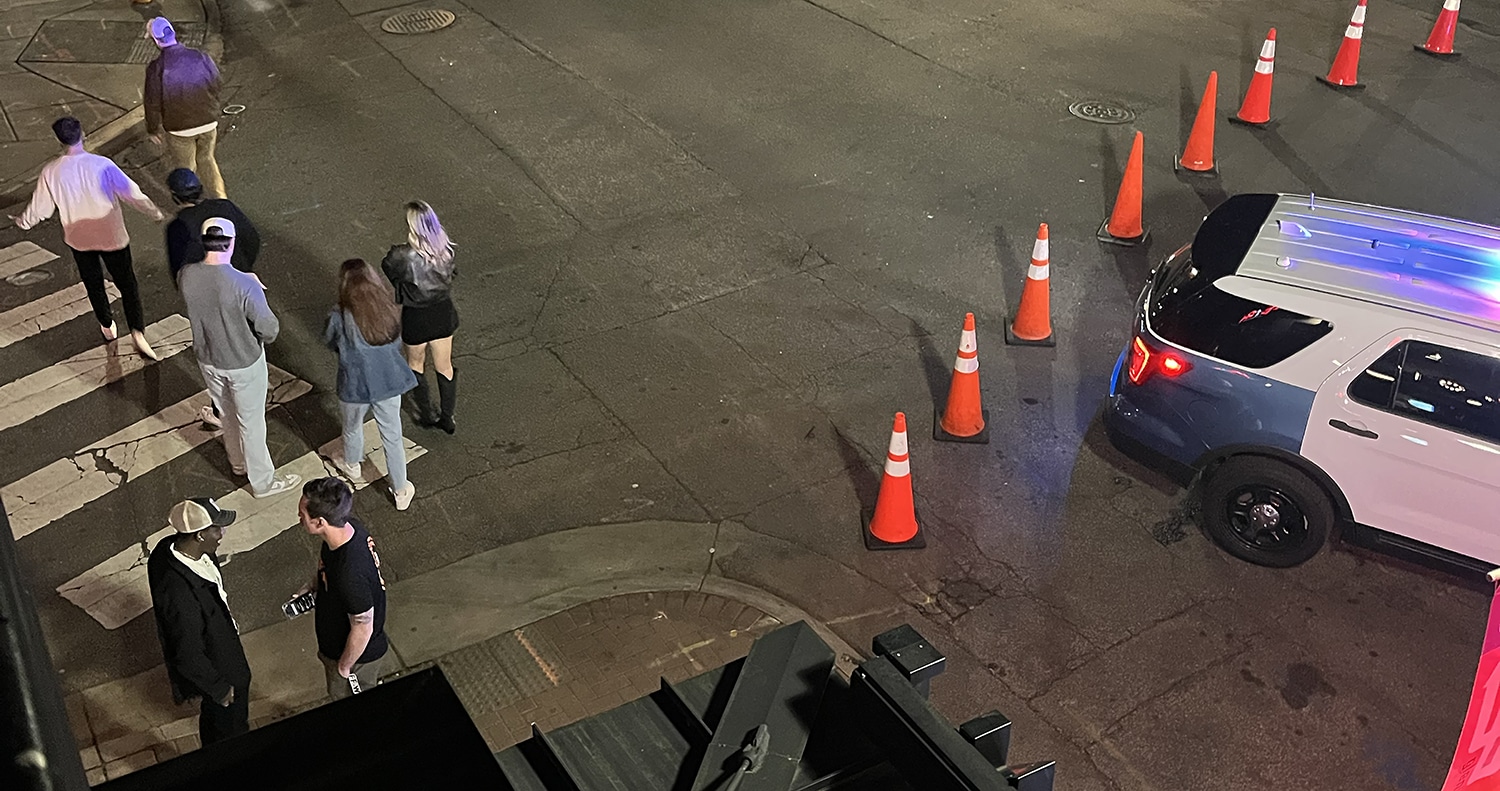
To add to the chaos, she recalls escalating district stabbings and noise complaints. “By October 2021, I made the decision in speaking with the city manager to pull officers and assign them to Glenwood South.” And they’re still there three-plus years later. Upping the ante, she says parking-deck patrols, traffic-pattern changes and cars with blue lights have had a huge impact on preventing cruising and crime. While the police presence has all but returned the party district to a protected playground (complete with plenty of noise drama), having to keep officers there every weekend is taxing on RPD.
Regarding any public pushback, she protests: “To those who think the increase is too much police presence, I say, our officers, while there, are not enforcing. We’re not out trying to search and violate people’s rights in any way. Officers are there for presence, for visibility, so people can feel safe. To have conversations with patrons… and to help the area—not to make it a police state where we’re arresting.”
Think establishing the Raleigh Police Department Foundation; successfully recruiting seven Academy classes of at least 50 that all but erased the officer deficit (projected zero by this July) and created a pipeline to help with retirement falloff; turning around an Entertainment District headed for imminent disaster; and steadily reviving the pervasive perception of the dangers of DTR post-pandemic and the murder of George Floyd.
Now, as she prepares to vacate her seat, Raleigh Magazine sat down with the head of RPD to ask what she thinks the top priorities are for Raleigh’s next chief to carry the momentum forward. For starters, full capacity is critical. “Even though we are closing in on our vacancies, we don’t have enough officers for Raleigh and the growth,” she remarks, explaining that a city this size should have 1,000 officers, whereas our current allocation sits at 800.
“I think for the next chief coming in, that will be the work he or she will have to do—fill the vacancies and start asking for more officers,” she expresses, outlining her own would-be plan to request 50 additional officers per year over the next four years for a total of 200—a 25% total increase. “Council is on board with that. We have been talking about that. They know that’s coming.”
To help with retention and recruitment, Patterson also points to police pay as a priority. Beyond cost of living, fairness and employee wellness, it’s about righting the anomaly of Raleigh’s compensation among surrounding and similarly sized municipalities. “Every time we get a pay increase,” she laments, “other agencies around us get increases as well, and it pushes us back to the bottom. We can do so much better as a city. Public safety should be the No. 1 concern—and the residents of Raleigh should support that. Our City Council and our city manager should support that.”
Encouraging the next chief to keep fighting the good fight for fair pay, she adds: “We worked hard for three years fighting for pay. Every single year we got pay bumps. Last year, we didn’t get the 15% we wanted, but we got 10%.”
To continue Raleigh’s upward public safety trajectory, Patterson suggests myriad measures, including more cameras in crime-rampant parking decks and increasing visibility of Downtown patrols—think extending bike patrols, private security and Downtown Ambassadors. “I think it’s helpful to have all hands on deck,” she says. “As many security elements as you can have… that’s more eyes and ears, and it just makes people feel safer when they know people are watching and are aware of what’s going on around them. You wouldn’t want to take away those resources you already have, because, again, we need more officers throughout the city. Period.”
As for the who—perhaps forget flirting with enticing some distant big-city PO. When prompted, Patterson agrees a hire from within could be advantageous. We don’t have to look far to find top talent primed to take the position.
Standout Raleigh Police Deputy Chief of Operations Rico Boyce has spent his entire 25-year law enforcement career in Raleigh, from rookie to second in command—and is thus deeply familiar with our city’s people, needs and trajectory. Accelerating across multiple divisions and through the ranks, Boyce is a clear leader lauded for prioritizing both his department and community commitment.
When we asked Patterson about her take on Boyce as Raleigh’s potential highest-ranking officer, she was candid that he is under consideration and thinks he’s interested in the post. “I think he’s primed to take the reins and move us forward as an organization,” she says. “I believe he has the support of the city—and that’s somebody I would support.”
As she reflects on her time in Raleigh, we asked Patterson what she is most proud of, and she admits it’s hard to name just one. She nods to reducing the vacancy rate: “I think that’s just phenomenal,” she shares. The outgoing Raleigh Police Chief is also “super proud” of acquiring community support to stand up the Foundation. “People can get behind something like that,” she says, “and I’m extremely, extremely proud of that—and the people who support the police.”
She also spends some time reflecting on her focus on employee wellness—making “a difficult profession less difficult on families and officers,” she says, nodding to RPD’s wellness unit, which will offer an outside consultant to work directly with RPD. “Our employees work 12-hour shifts. It’s a very long day for them. They have families, children, a lot going on. So we try to put some things in place so they know they’re supported within the police department.”
While her public approval rating is positive—insiders double down on how well revered Patterson is on the force. Perhaps, most of all, it’s because she cares. “I’ve always been a chief who’s out front,” she reflects. “I’m here with our personnel. … They need to know they are and always will be supported. I really tried to do that as chief and put things in place to recognize outstanding employees and the work they’re doing—really pushing a team environment.” In fact, she shares, RPD’s 2024 mantra was “team together.”
Patterson expects her replacement may be named by her March 1 departure date, saying, “I think we have a strong team, and they will continue the great things we have done here in Raleigh. The future of RPD is bright.”