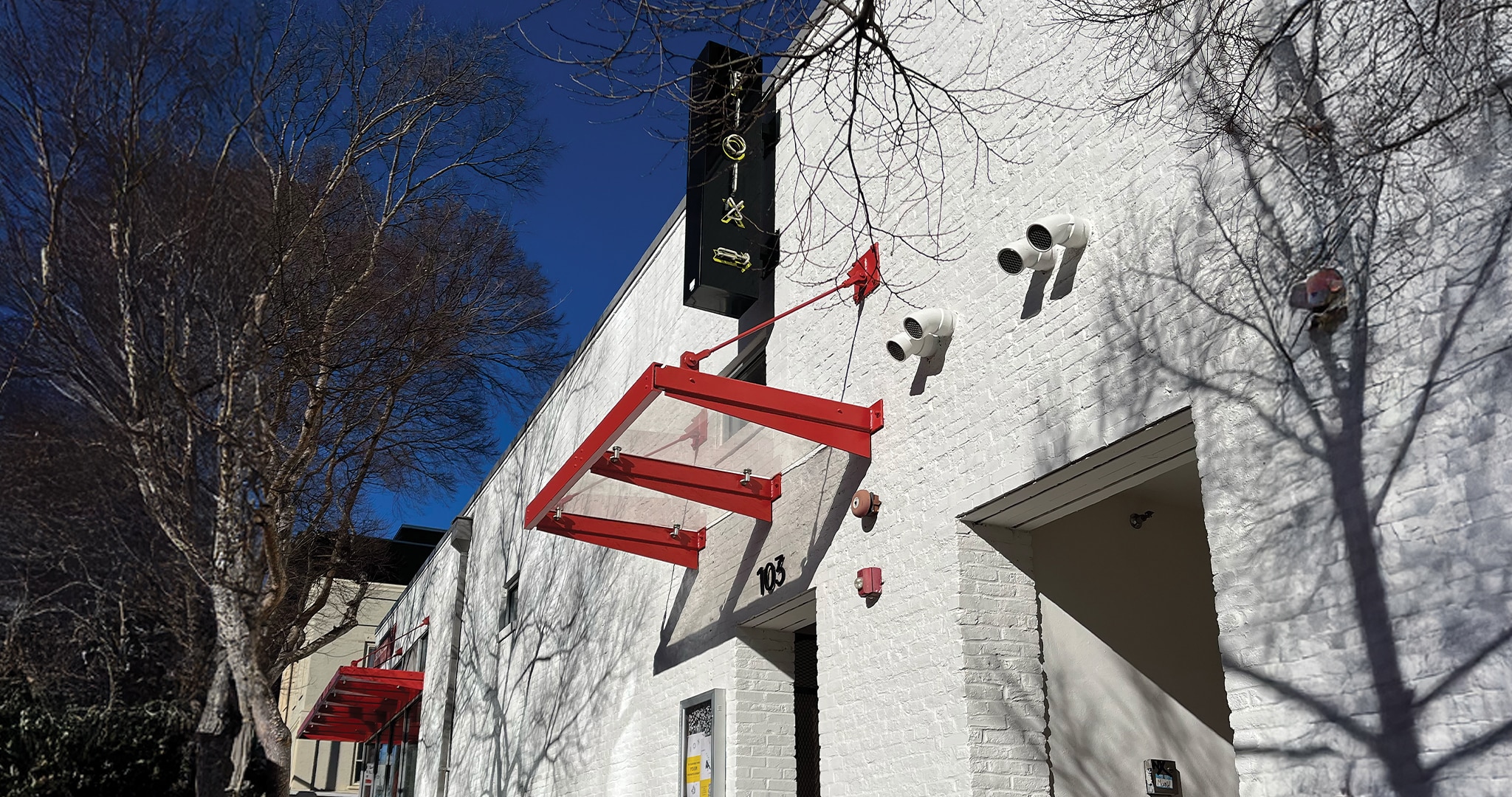
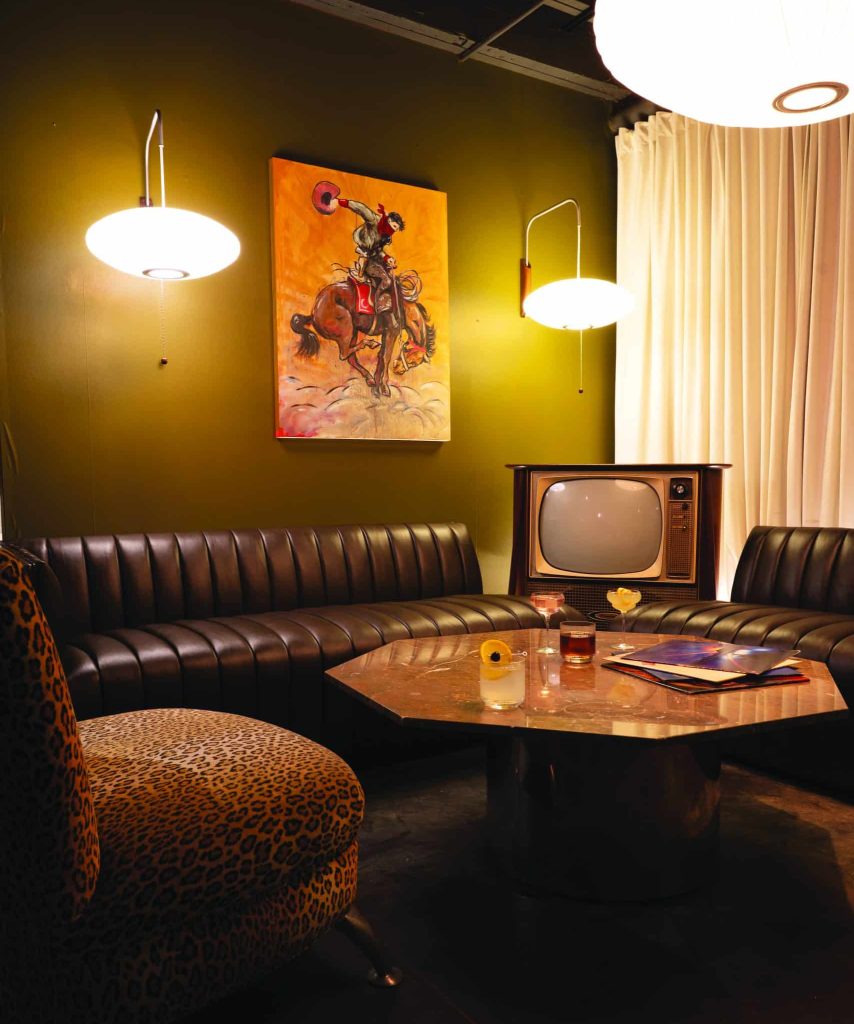
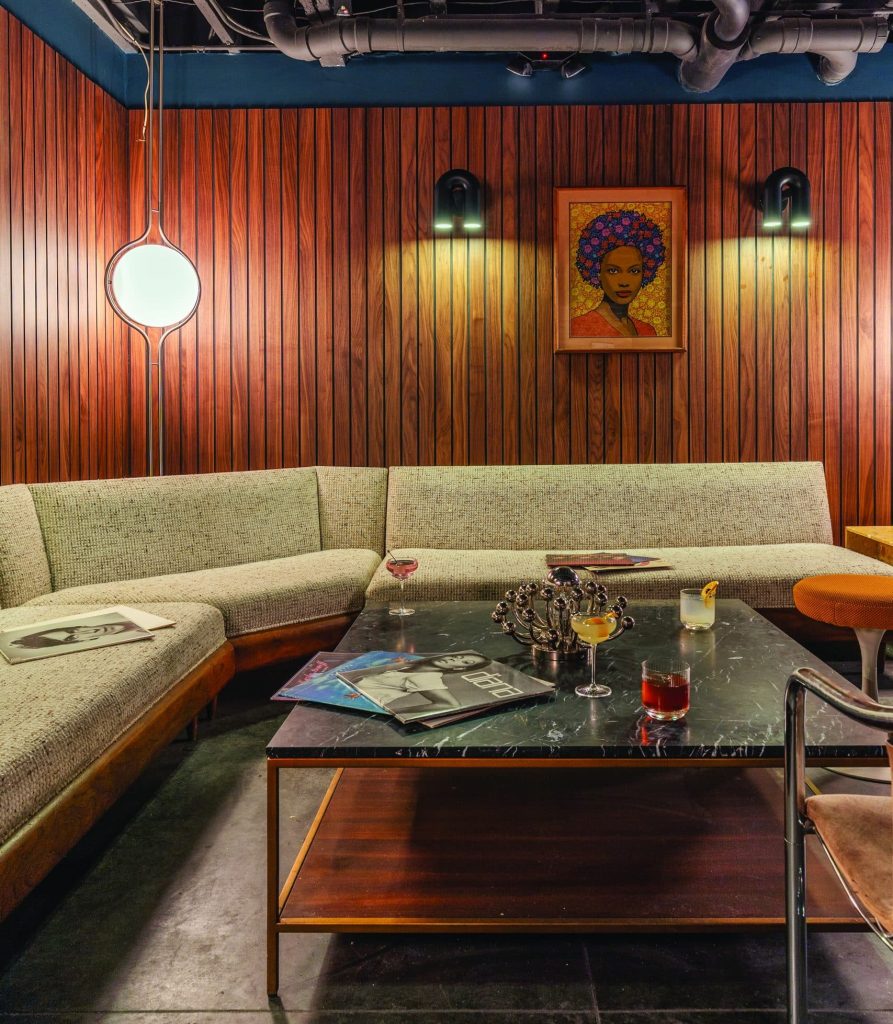
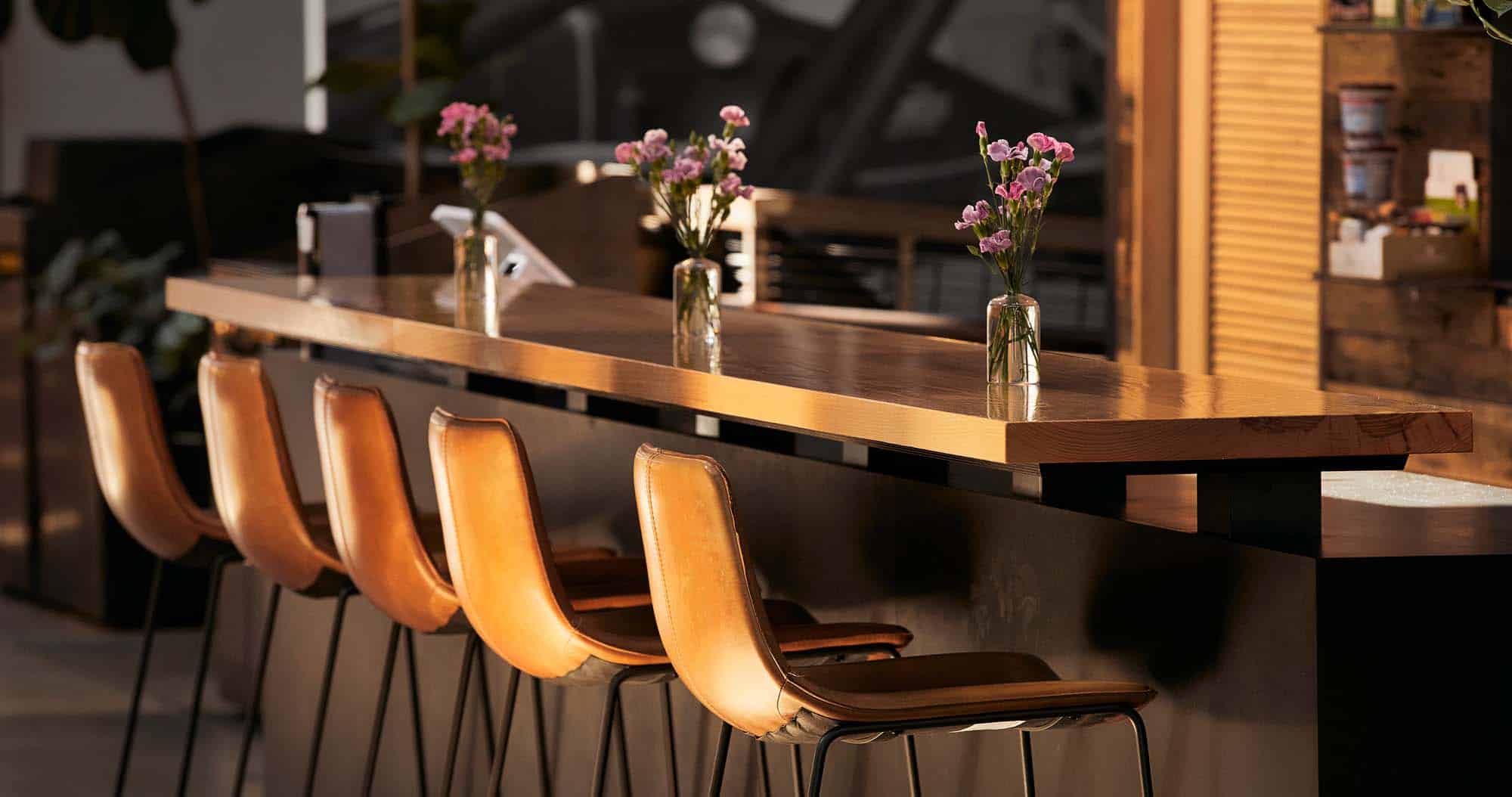
Piggybacking off of Capulet’s almost-immediate success, Rosebud will carve out its own lane: a sophisticated midcentury-mod cocktail haven drawing inspo from Japanese culture and ethos, while honoring classic cocktails, multigenerational nostalgia and quality service. Layer in a hi-fi sound system and weekly vinyl DJs, and the mix lands as a distinctive cohesive space tuned to a rhythm Raleigh hasn’t quite heard before.
“Having the opportunity to respect what Ashley [Christensen] and all the great bartenders, including Zack, have done here—keeping what they did well and putting our own new spin on it—it’s really cool to have,” says Shanahan. “This was one of five bars before—now it’s one of 500, it seems.”
Writing a new chapter in local F&B lore, the bar will focus on classic cocktails crafted to perfection—no frills, no smoke and mirrors. “The precision is going to make us different,” maintains Shanahan. Leaning further into Asian influence, an omakase flight will anchor the menu, spotlighting three bevs (one of which may be NA or low-proof) curated ahead of time by the bar team and rotating monthly.
A nod to Orson Welles’ Citizen Kane, “Rosebud,” like Capulet, also reflects the local hospitality entrepreneurs’ background in filmmaking and love of cinema while diving deeper into the film’s central theme of nostalgia. That throughline comes to life in retro furniture sourced from Shanahan’s vast 10-year collection, an extensive vinyl selection, layered decor and even the Japanese denim workwear-inspired employee uniforms.
“If Peregrine is like an art gallery and Capulet is a sexy museum, then Rosebud is an analog archive vault,” emphasizes Shanahan. “It’s a very Americanized version of Japanese ethos—still rooted in respect, where everything is an homage.”
Photo by Sean Junqueira
While certain aspects of Rosebud will echo Fox’s iconic past, the basement bar will be almost unrecognizable upon completion—more cinematic set piece than neighborhood watering hole. The exposed brick walls will be covered with wood paneling and cream curtains; the OG black leather booths have been traded out for five different “living rooms” (separated seating areas with a couch, two chairs and a coffee table); and the bar is getting a glow-up from Raleigh Reclaimed, including a black marble bartop. A larger living room, curtain and neon rose will frame the front entrance, lending the space a moody, almost Xanadu-like glow.
Born and bred Raleighites, Shanahan and Opperman’s resurrection of a Downtown icon reflects their hope for DTR’s continued growth. “I’ve seen the ebbs and flows of DTR since I was a kid—and I don’t think you just can give up on a place that you’ve grown up loving and has shaped you,” says Opperman. “Creating new, exciting concepts around Raleigh is really important. That creative energy existed once here—and it’s dying to come back.”
Rooted in Raleigh’s past but built for now, Rosebud carries the city’s creative cocktail spirit forward—pouring something it didn’t know it was missing. @rosebudraleigh
“We’ll never abandon Downtown Raleigh or Raleigh in general—we just have so much hope for it. Now we’re hoping to create something that will bring people back Downtown.” —Robby Opperman
Foundation’s latest release is hyperlocal, super creative and boasts major flavor.
Leave it to Foundation to launch a whiskey with literal roots in Raleigh. To toast the grand opening of Gipson Play Plaza at Dix Park, the iconic underground bar just unveiled Dix Whiskey—a bourbon so local, it was aged via a tree that once stood in the park itself.
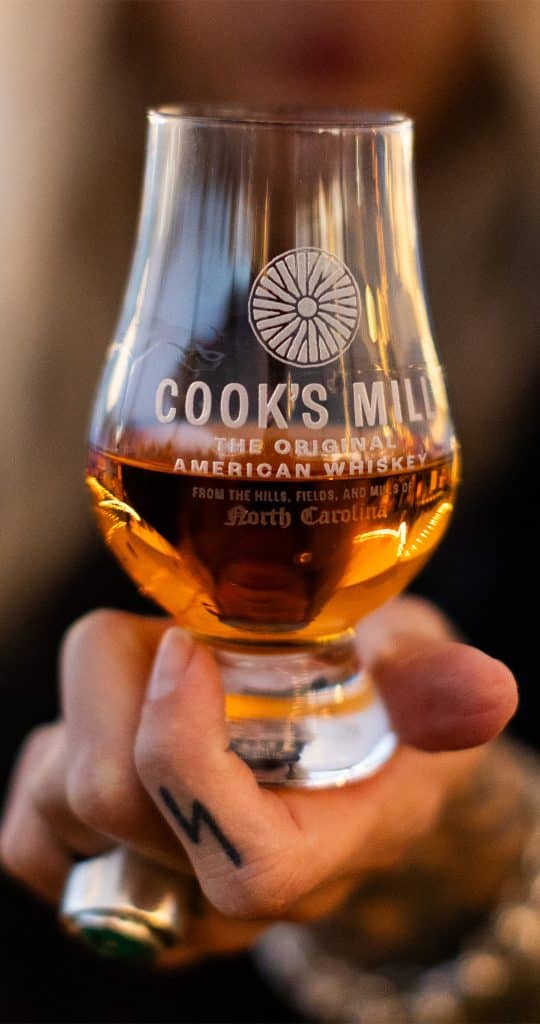
Photo courtesy of Cook’s Mill
“We’ve had this idea for a long time… getting some local oak trees and finding a way to age whiskey,” recalls Foundation owner Kyle Hankin. That vision finally came to life thanks to a wild little invention called the Squarrel—a steel structure that acts like a customizable aging barrel. “You can change what the wood is, you can change the char… total flexibility,” describes Hankin.
When the city removed several trees during construction, Hankin and his team seized the moment. They teamed up with custom furniture makerRaleigh Reclaimed to turn salvaged white oak into staves for the Squarrel, giving the whiskey a hyperlocal finish no other spirit can claim.
But they didn’t stop there. To fill the barrel, they tapped Cook’s Mill, an NC-based distillery that uses heritage corn developed with help from NC State’s College of Agriculture and Life Sciences. “All the grain that’s in Cook’s Mill is made in North Carolina and grown in North Carolina,” notes Hankin. “As far as bourbon goes, it’s as local as it gets.”
Flavorwise, Dix Whiskey hits in all the right ways. “A little more vanilla, a little more caramel… still has a really nice kind of spicy finish, maybe even a bit of red berry,” says Hankin. At Foundation, you can get it neat, on the rocks or in rotating house cocktails like an old-fashioned.
And as for feel-good points? You’ll get those too, as a portion of the proceeds from all sales are going toward the Dix Park Conservancy. So whether you’re a whiskey nerd, a park lover or just thirsty for something fresh, this is one small pour for man, one giant sip for Raleighkind.
Elevating local spaces with sustainable wood creations
These days it seems like the impeccable craftsmanship of Raleigh Reclaimed can be spotted just about anywhere, from the sleek sycamore dining tables at Brewery Bhavana to the chic railway-inspired accents inside The Line Downtown Apartments (a custom oak flipboard cabinet to welcome residents? Genius).
The family-run furniture business has quite literally helped our city rediscover its roots by repurposing local trees into thoughtfully designed creations for a wide range of residential and commercial clients.
What started by reclaiming wood from old structures such as tobacco barns and textile mills has evolved over time to include reclaiming freshly sawn or fallen trees, especially as co-owners Billy Keck and Melody Ray learned more about what was happening to many of the large trees in our area.
“We incorporated this idea of urban salvage back in 2013,” explains the business-savvy Ray, whose background as a business litigation attorney perfectly complements Keck’s engineering experience and heart for craftsmanship. “We invested in a sawmill, as well as kilns, and began diverting trees that were otherwise going to end up in local landfills to our facility, where we would cut them and dry them and take them all the way to finished furniture.”
Today, urban salvage makes up the bulk of Raleigh Reclaimed’s projects and has cemented its reputation as a champion of local sustainable design. But beyond being environmentally friendly, urban salvage lumber also tells a story.
“I think, for us, it really is about helping folks have a tie to their sense of place or to the land,” says Ray. “We have clients who, on the residential side, will have an individual tree that came down in their yard that we’re putting back into their home.” She adds that their team “tracks every tree that comes in and follows it through its process with us,” noting doing so provides clients with a connection to a truly unique piece.
Although Raleigh Reclaimed celebrates the traditions and techniques of the past, the innovative business is very much focused on the future and showcasing the breadth of what can be made using urban salvage. “There’s so much need for it,” says Keck of their bespoke character-rich pieces. “To have a space like this where you have 50 employees building nothing but custom projects every single day… that didn’t really exist before us inside the city limits of Raleigh.”
With projects in the pipeline at North Hills, Raleigh Iron Works, Dix Park and more, it’s clear there’s no shortage of clients interested in collaborating with the design-forward duo and their team.
“Anytime you can partner with skilled, passionate, local craftspeople working with real materials, your project is better for it,” says Kane Realty Corporation Director of Design Josie Reeves, who has worked closely with Keck and Ray on several developments, including the aforementioned The Line in Smoky Hollow and One North Hills. “The contributions of Raleigh Reclaimed across our projects have added soul, story, texture and patina,” which is a critical layer in working in new construction especially, she adds.
“To me, it’s so rewarding and fun and challenging too because each one of our clients has their own vision and our job is to help them execute that,” adds Ray. “And to take this incredibly talented, curated team of people we have and help execute a client’s vision, and have that be unique every time and every space, is what’s so exciting for me.” raleighreclaimed.com