As momentum builds on New Bern Avenue with Raleigh’s first Bus Rapid Transit (BRT) line and an influx of recently bowed businesses, a new development from the City of Raleigh will be a huge game changer for the area.
Over a year after the city bought the old DMV HQ on New Bern Avenue in Southeast Raleigh, city staff recently completed an intensive public engagement process for the future of the 5.88-acre property—with community ideas including affordable housing, indoor and outdoor community gathering spaces, the incorporation of local food (whether a commissary kitchen, co-op or food hall), retail, public art and installations that incorporate the history of the area, and overall accessibility.
“This site can hopefully become a hub for the surrounding neighborhood,” emphasizes City of Raleigh Deputy Director of Planning & Development and Urban Projects Ken Bowers—while acting as a connector to DTR as it continues to push out from the city’s core.
The DMV site in particular was attractive to the city for this project due to its location on Raleigh’s first Bus Rapid Transit line. “We wanted to make sure lower-income households were able to access the improved transit that’s going to be provided,” says Bowers. Not to mention “this part of East Raleigh has historically been affordable because market rates, sales prices and rents were lower than other parts of the city.”
Now, the site is undergoing a market and design study to gauge what’s possible: how much can actually be built, what types of projects make financial and physical sense, and where rents might land. That work wraps in November, after which the city will seek development proposals—aiming to pick a developer by Q3 2026. Bowers adds the current four-story zoning will likely have to change to meet community demands.
“The city doesn’t often have a large site like this that we can reposition to redevelop to achieve some community priorities and policy goals,” he explains. “If this is successful, we hope it can be a model for sites elsewhere in the city.”
Shop, sweat and flex your way through a new class of retail + fitness spots.
Vintage Labrador
Sniff out some truly unique vintage and architectural salvage finds at Jersey-based Vintage Labrador’s relocated NC location in Five Points East, with treats and treasures from furniture and architectural accents to art and garden decor. @vintage_labrador
All that glitters… makes a great addition to your ’fit. Popping up at Boxyard RTP’s PopBox September through March is The Luster Lab, an experiential jewelry bar by Latina-owned NC-based Bezalel and Co. serving permanent jewelry, custom charms, engraving and more. @thelusterlab
Two wheels are better than four! The Bike Library’s permanent bike shop + cafe is now officially rolled out at Platform apartments offering coffee, pastries and pedals aplenty. @the.bike.library
Getting steamy on Raleigh’s West End, Asheville-based Sauna House is set to make its plunge near Homebody Yoga and The Bike Library this fall—pairing sauna and cold plunge to power muscle recovery and fire up circulation. @sauna_house
Ready, set, glam. Moxie Salon’s new Ridgewood Shopping Center locale is here to cover all your beauty needs—from blowouts and full hair services to makeup, tanning, lashes and brow lifts. @moxieraleighridgewoodnc
Labubu hunting? Look no further. Asian lifestyle store Ebisu is slinging popular Japanese-made goodies and snacks on Hillsborough Street—plus stationery, household goods, figurines and the like. @ebisu_raleigh
Hot on the heels of the 2023 Raleigh Westin, Cary-based CMC Hotels is now booking Hive House—a 45-suite boutique marrying sleek extended-stay comfort with design-forward flair. Exactly what *suite* dreams are made of. @hivehousecary
Through this contract, Darkhouse will conduct an analysis of the current state of the fire department, as well as develop a master plan to improve apparatus and response times, with the goal to forecast trends as the city expands—not only in terms of boundaries, but as the population density in certain areas increases.
“We want to have a third party come in and evaluate the fire department as it stands right now,” emphasizes RFD Division Chief Patrick Marks. “We want to make sure we are exercising the best practice on our deployment model—[with the] right fire stations and apparatus in the right places to do the best we can with what we have.”
Visualizing the fire safety situation, the city developed maps using analysis software to highlight areas on par with the minimum qualifications met in green, and areas lacking in apparatus and staffing marked in orange and red. (Note: Every district has at least one red area needing attention—namely Six Forks Road, along with Northwest and Southeast Raleigh).
Analysis is slated to wrap up within at least a year in hopes of having City Council approve the report before next year’s city budget is finalized to then implement those recommendations.
WEB EXCLUSIVE Having struggled with food insecurity himself, Marcus Harris—a bestselling poet, author, playwright, filmmaker, volunteer, philanthropist, activist and founder of The Marcus Harris Foundation—knew that something had to be done to help the more than 35 million people struggling with food insecurity throughout the country, a number that only amplified when the COVID-19 pandemic hit.
One day last year, Harris had read about a free grocery story that country music singer Brad Paisley and his wife had started in Nashville, Tennessee. People who are struggling financially can shop at the store for free for up to a year while they get help to get back on track. Harris loved the idea and immediately set out to recreate something similar here in Raleigh.
After meeting with his board, Harris decided to slowly work his way up to the grocery store model by first doing a free food distribution service in Southeast Raleigh—which he dubbed Neighborfood Express—that would provide him with crucial experience and connections, and help those who had the most need first. “We went through a lot of research to find out where there weren’t free food distribution hubs and we kept being pointed to Southeast Raleigh, where they have a lot of food insecure people,” Harris says. The six low-income neighborhoods he’s focusing on in Southeast Raleigh are considered food deserts, meaning they reside a significant distance from the nearest supermarket or grocery store.
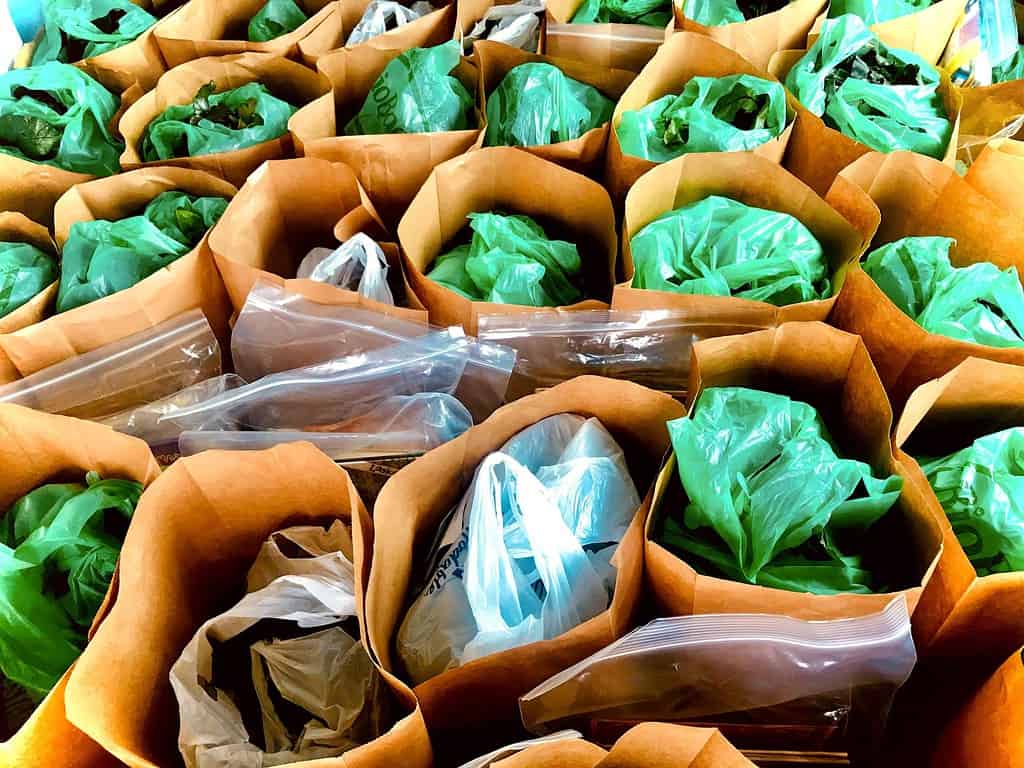
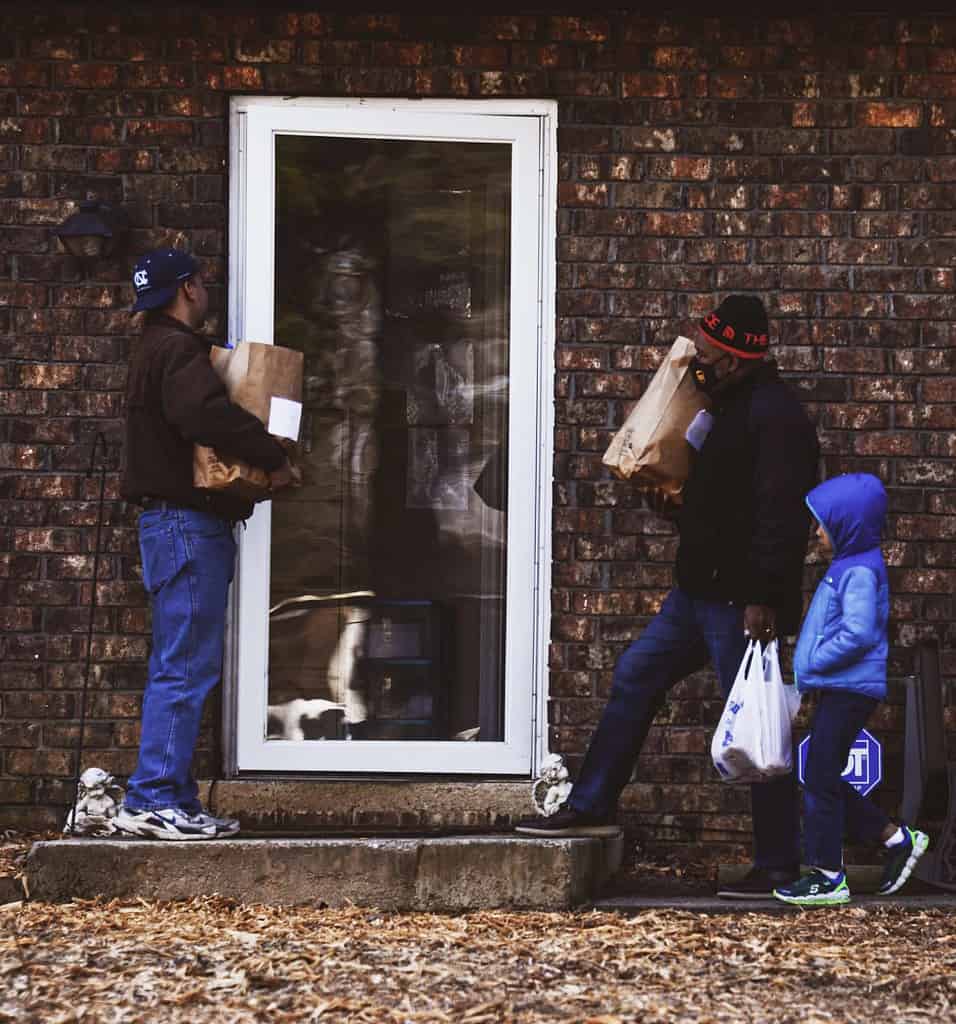
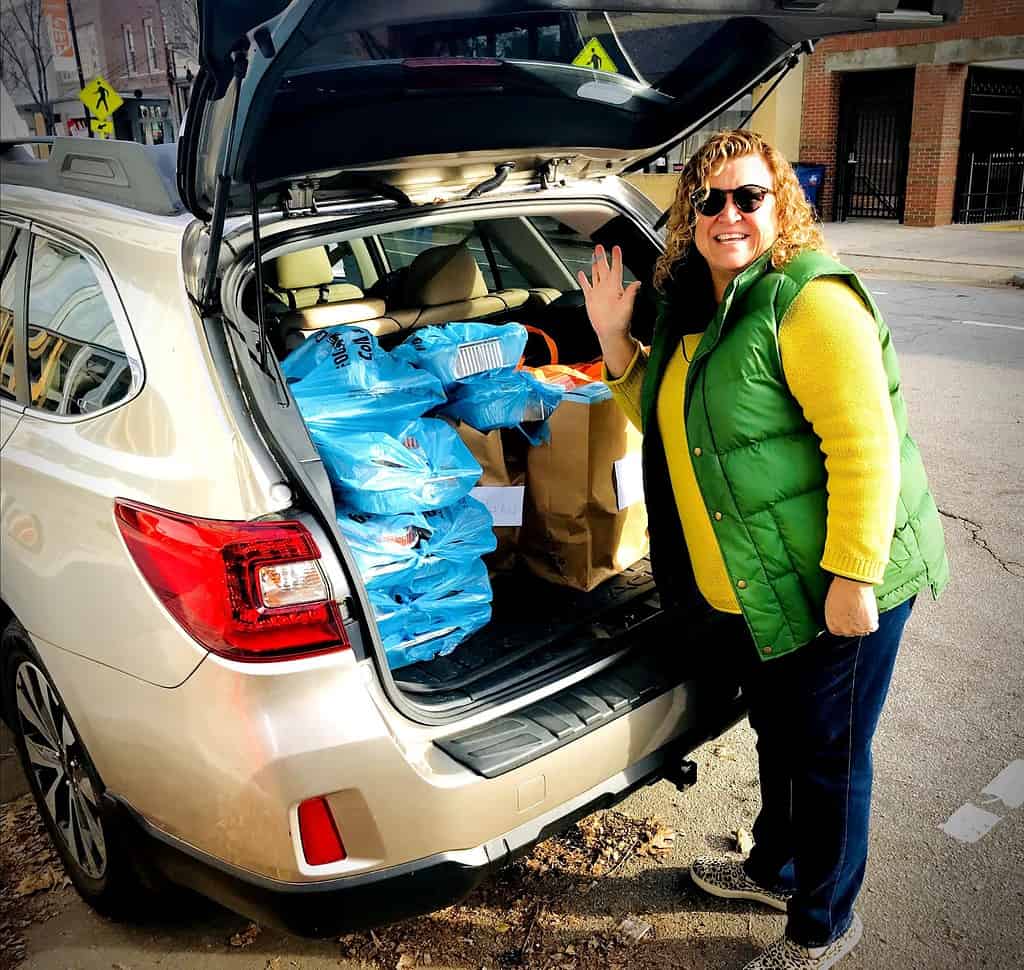
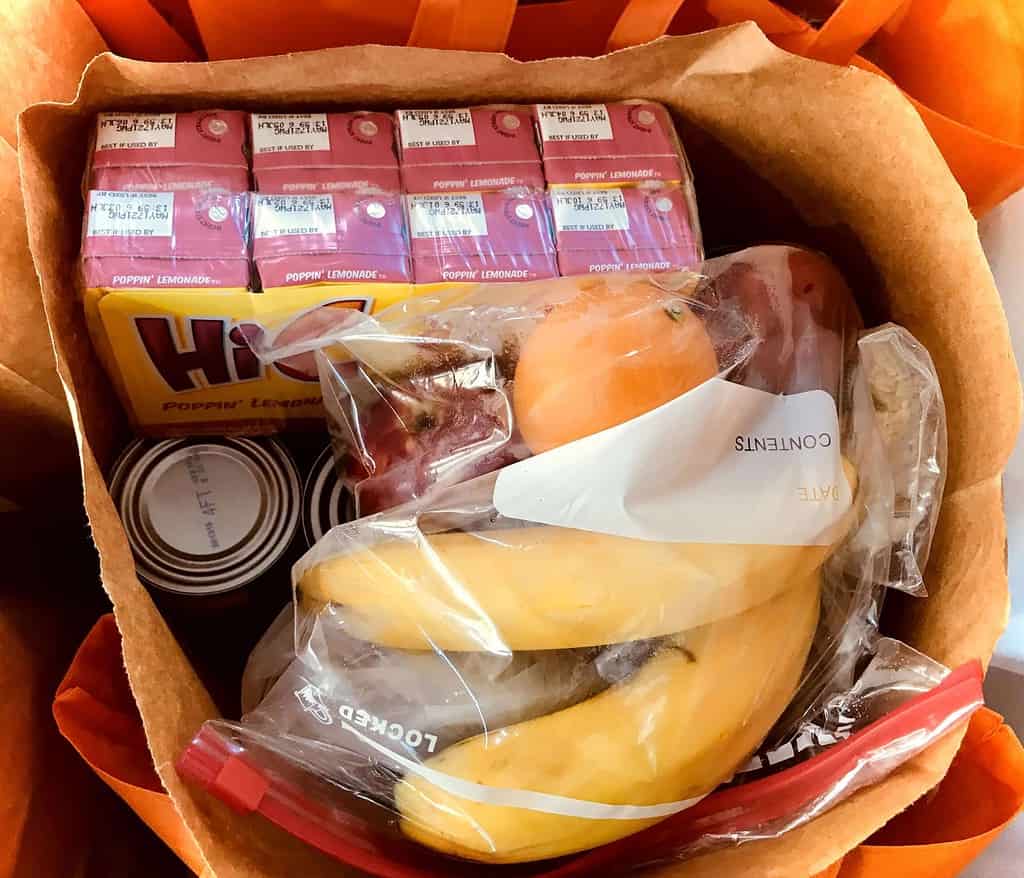
Each week, Harris sources 5 to 10 pounds of fresh produce from local farmers, 20 to 25 pounds of healthy groceries (including meats, fruits and non-perishable items), and 100 to 200 pounds of surplus food through a partnership with Olive Garden, as well as essential supplies like baby wipes and creams, for him and a group of volunteers to drop off to Southeast Raleigh families in need.
Since starting Neighborfood Express in November 2020—just before Thanksgiving—Harris has distributed over 2,500 meals, 11,148 pounds of free food and 1,005 kids’ books through a partnership with Wake Up and Read.
Harris’ first-year goal for Neighborfood Express is to distribute at least 50,000 pounds of free healthy groceries, as well as essential supplies, eliminating hunger for nearly 5,000 Southeast Raleigh residents. Additionally, he’s already started developing plans for the free grocery store, which he hopes to open by 2024 or 2025.
“Ever since launching our efforts in November, we’ve made tremendous progress in accomplishing our goal of ending hunger for thousands of food insecure kids and families,” Harris says.
Support Harris in helping to eliminate hunger in the lives of thousands of kids and families by donating by making a donation. Any amount helps!
When most of us think of fitness, we focus on the body. But the wellness of our minds and the strength of our relationships to our communities play a big role in our overall health. Nathan Williams and Brit Guerin will integrate all three components in Current Wellness, a center for physical and mental health in southeast Raleigh that’s set to open early next year.
“There is a lot of fitness that is concentrated on your body and there is a lot of pressure put on people to be fit,” Guerin says. “It’s also important to treat ourselves well mentally as well as physically.”
Current Wellness will offer a movement studio, a teaching kitchen for food education and a co-working space for counselors as well as other wellness practitioners.
“We’re calling it a movement studio intentionally,” Guerin says. “We don’t want to be like some of the things that mainstream fitness promotes. We won’t apply pressure to body image and body size. We’re not going to have mirrors. It’s about healing and being supportive to our bodies. It’s more similar to a yoga studio, but we’ll also offer functional fitness.”
Williams co-owns the company with his wife Brit, who has a background in fitness and mental health counseling. Together, they hope to establish a place for the community to come together and simply feel good.
“We live in southeast Raleigh and we really love the community, from newcomers to people who have lived in southeast Raleigh their whole lives,” Williams says. “We’re trying to make a business that’s inclusive for all of those people in that part of town, which is underserved for wellness services. Wellness is something that everybody needs and creates a connection between newcomers.”
Uplifting with Upfit
Brit and Nathan were able to bring their business to southeast Raleigh with the help of the city’s Building Upfit Grant, created to help small businesses and commercial property owners with improvements, renovations or additions to the interior of their commercial property. The program’s goal is to support a thriving and equitable economy through a strong small business ecosystem and investment in economic development priority areas.
Rafael Baptista, a strategic planning analyst for the city of Raleigh, says the grant is an important part of the city’s strategy for achieving long term, equitable economic development.
“Some of the desired outcomes of the grant include activating vacant properties in Raleigh, helping small businesses grow and expand and fostering small business investment in our economic development areas,” Baptista says. “The city is constantly assessing its small business support program to ensure that we are providing the appropriate incentives to small businesses.”
To date, 49 Raleigh businesses have received the Building Upfit Grant since its inception in 2016, representing a diverse set of industries and areas in the city.
Growing Community
For Williams and Guerin, they aren’t just opening a business—they’re joining a community.
“This is a vibrant community with really rich cultural history that has, at times, been overlooked,” Williams says. “Until recently, people haven’t treated southeast Raleigh as a destination. There have been people living here for years that know how great it is.”
While the brick and mortar component to Current Wellness isn’t yet complete, Brit and Nathan are already active nearby with pop-ups at Transfer Co. Food Hall, Dorothea Dix Park and Moore Square. They’ve held everything from a yoga and strength training class to demonstrations on how to cook healthy, local seafood from the Carolina coast.
“We want to engage with the community and collaborate with our neighbors,” Williams says. “We want to let people know what we’re about. From a bird’s eye view, people might not understand what we are, but we feel like we’re very different. As part of growth in an area that’s being gentrified, we’re being very conscious and we don’t want to be another business that pushes people out.”