Here’s what to know—and do—about the microscopic, diarrhea-causing parasite.
As one Raleighite warned online: “It’s official: watery, explosive diarrhea has hit the Raleigh area.”
That resident is referring to cyclosporiasis—the illness that’s on everyone’s tongue right now. Like bird flu and measles, it’s not new on the contractable-disease roster. But what is new is the multistate outbreak that’s causing some consumers to shun summer produce.
According to the CDC, 1,645 domestically-acquired cases have been confirmed across the country.* And while North Carolinians are faring better than our Midwest neighbors in Michigan—who are experiencing the brunt of the outbreak—things are pretty, well, crappy around these parts.
As of July 20, Wake County was bearing the brunt of North Carolina’s outbreak, accounting for 295 of the state’s 307 confirmed cases and five of its 14 hospitalizations—helping propel NC to No. 3 in the nation for reported cases.
WakeMed Urgent Care Medical Director Dr. Christopher Chao, who has been practicing medicine in the Triangle for 20-plus years, doesn’t recall seeing cyclosporiasis in his clinics before this summer—even during the past two years, when the case numbers saw a similar spike.
But by July 13, that had changed. “I had eight patients come in asking for diarrhea Cyclospora testing,” he shares. “I tested about a third of them, and I know one of them was negative and one of them was positive. But prior to this week, I was four for four.”
Dr. Chao says that Cyclospora, the microscopic parasite that gives the illness its name, causes one hallmark symptom: “persistent, multiple bouts of watery diarrhea, lasting 10 to 12 days or longer.” Others include stomach cramps, bloating, nausea and more.
In the U.S., Cyclospora typically gets around via infected food or water. Historic culprits include fresh herbs, berries and leafy veggies—all key players in most people’s diet. Bagged, precut greens can also carry it—which has turned out to be the source of a recently identified five-state cluster, per the CDC. However, in NC, the exact source is still unknown.*
So, does that mean it’s time to avoid the produce aisle like the plague—literally?
Dr. Chao, along with Dr. Ryan Lamb, medical director of UNC Health REX’s emergency department, share the same answer: No. At least, not for most.
Why? Dr. Lamb points to the non-lethal nature of cyclosporiasis. “It doesn’t tend to be invasive or cause severe infections,” he explains. “It’s just going to chronically deplete you of the nutrients and the volume you need, and so when that keeps happening, you get sicker. But when you see people being admitted, it’s usually going to be as a result of them having some other condition.”
For those immunocompromised people, Dr. Chao gets skipping on the salad mixes or other high-risk produce. But to others, he simply suggests the “common, basic precautions”—like keeping your food refrigerated, aggressively washing produce and cooking meals to the appropriate internal temperature.
“It’s a very low incidence of people that have this illness,” Dr. Lamb points out—read: 295 confirmed cases in Wake County compared to the 1.26 million people living here.* Though now might be a good time, he says, to check out a local farmers market, where he believes cases are less likely to be coming from. And if you do start to experience that watery, explosive diarrhea: “we can take care of you if you get sick, and you’ll be fine.”
The potential WakeMed-Atrium merger is on hold—but the questions and concerns it raises aren’t.
By Emily O’Brien + Heidi Reid
Raleigh’s largest nonprofit healthcare system may be entering a new chapter. In early May, WakeMed announced a move to merge with the state’s largest healthcare system, Atrium Health. If approved, the proposed partnership will reshape local healthcare in Wake County—but whether patients ultimately benefit remains a matter of debate.
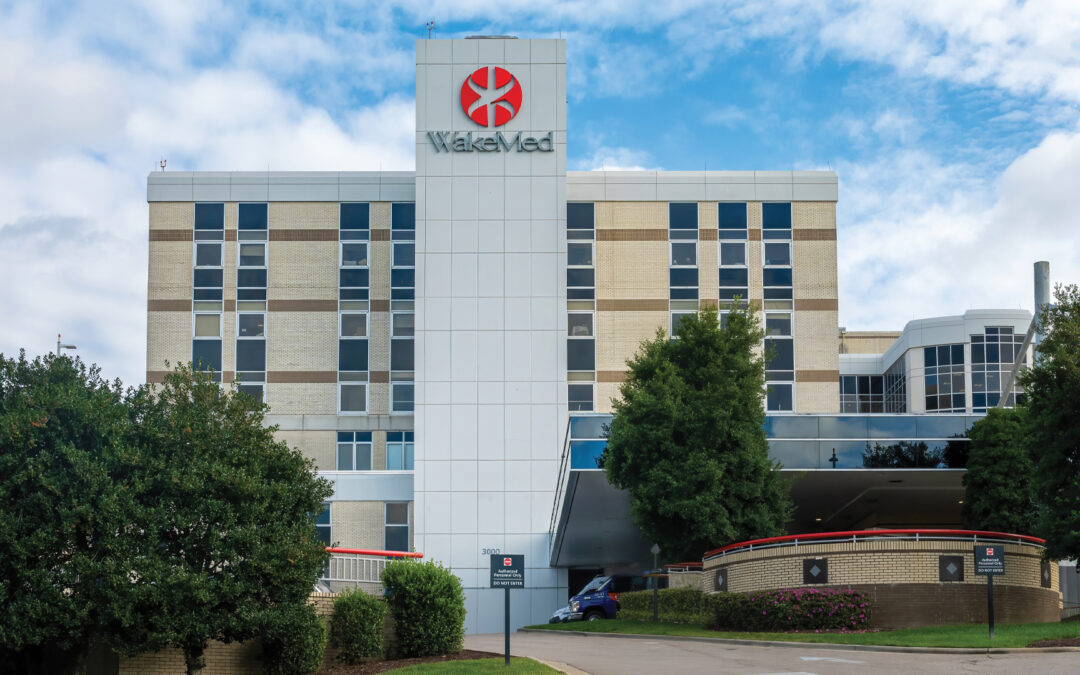
For many Raleighites, WakeMed is a lifeline. It’s where emergencies land and specialists are tapped for diagnoses and lifesaving care. And as the county’s only Level I Trauma Center, it’s long been a medical mainstay.
But as details of the proposal emerge, those who rely on the institution—and those employed by it—are trying to parse what it could actually mean for their well-being.
WakeMed says the merger would expand specialty care, behavioral health services and enhanced treatment options, while also establishing the state’s largest virtual care network. Unanimously approved by WakeMed’s board after a three-year evaluation, the merger was expected to be approved by Wake County Commissioners just three days (and less than 10 business hours) after the initial announcement.
But county commissioners weren’t convinced, delaying a vote for 90 days—until at least August—to allow for additional review and community input before moving forward.
NC Treasurer Brad Briner argued the proposal would drive up already-high healthcare costs and offer little return for Wake County, while State Auditor Dave Boliek raised concerns about the deal’s transparency and pace.
“The people of Wake County and stakeholders who are affected by this move deserve to have more than a weekend to voice their opinions on a hospital takeover of this scale,” Boliek said in his call to delay the vote.
Photo by Wileydoc/shutterstock.com
State health execs note Atrium is currently charging 15% to 40% more than WakeMed for the same services. If WakeMed opts to raise its rates to similar levels post-merger, every NCer on the State Health Plan would see an increased cost of yearly premiums—up to $132 more.
While both WakeMed and Atrium Health maintain no immediate changes are planned for insurance acceptance and in-network status, care or coverage, patients are still raising red flags: Will insurance still be accepted? Will appointments become harder to get? Will costs actually rise?
A long-time WakeMed patient told RM she learned of the proposal through news reports. “I’m concerned about whether or not they’ll still take my insurance, and how much I’ll have to pay per visit going forward,” she stresses.
Meanwhile, WakeMed President and CEO Donald Gintzig dismissed concerns about rising costs and maintained the merger would lead to better quality care. “This is not about getting bigger for bigger’s sake,” he tells RM. The comments echoed broader messaging at several public forums held in late May to address concerns and increase transparency.
The merger reflects a growing reality for WakeMed. In one of the nation’s fastest-growing regions, expanding services may be necessary to keep up with demand.
To WakeMed, the partnership is less a business transaction and more a strategy for keeping up with that explosive growth. “Do I think WakeMed will survive in the future [without this merger]? Yes,” admits Gintzig. “But I can see a world where it doesn’t thrive—and that’s really what this is about.”
Though Gintzig said the org is fiscally sound, the healthcare landscape has changed over WakeMed’s 65 years. “Without combining resources with a like-minded organization, WakeMed will face greater challenges alongside a significantly extended timeline for growth and expansion, making independence unsustainable,” he maintains.
The proposed partnership includes a reported $2 billion investment in Wake County and increased charity-care eligibility from 300% to 400% of the federal poverty level. Read: Families of four earning less than $100K annually could qualify for free care.
Additionally, the merger will maintain WakeMed’s influence amid Medicaid cuts and local competition, Gintzig adds. And in more immediate concerns, the hospital’s main campus on New Bern Avenue needs at least $1B in redevelopment.
Thanks to the promised perks, some staff members back the partnership. WakeMed ENT physician and director of head and neck surgery Dr. Michael Ferguson says he wouldn’t work for an institution that wouldn’t allow him to care for his patients in a way he sees fit. “I have confidence Atrium will allow all WakeMed physicians to continue to thrive just as we have for the past 65 years,” he stresses.
Independent research of similar mergers yields mixed reviews: Some markets saw expanded services, but others experienced increased pricing as competition narrowed —with no change or decrease in care quality. Similarly, contention took over Wilmington in 2021 as commissioners approved the sale of the county hospital to Novant Health.
Years later, locals still note a decrease in care quality—and blame the deal. “Did they do a case study of Wilmington and Novant?”one NCer commented on a WakeMed merger post. “Spoiler alert. It’s not going well here.”
Amid the controversy, the changes patients have been asking for are still not definitive—the possibility of easier specialist access, decreased wait times or lower costs remains uncertain.
For now, the answers many patients want most—whether care will become more accessible, more affordable or simply remain the same—are still unclear.
If county commissioners decline to approve, Gintzig says, WakeMed would abide by their decision, but the impact would eventually be felt. “It’ll be alright,” he says. “It just won’t thrive as much. And that’s a shame.” For now, the merger remains on hold—and so do many of the answers Wake County patients are waiting for.
King’s Ridge takes a step toward ending homelessness in Raleigh.
Raleigh is one step closer to solving homelessness. It’s an epidemic on the rise—including on the very streets we all walk every day. In fact, according to the Wake County Point in Time Count, ~1,000 individuals are currently experiencing homelessness on any given night—a 200% increase since 2020.
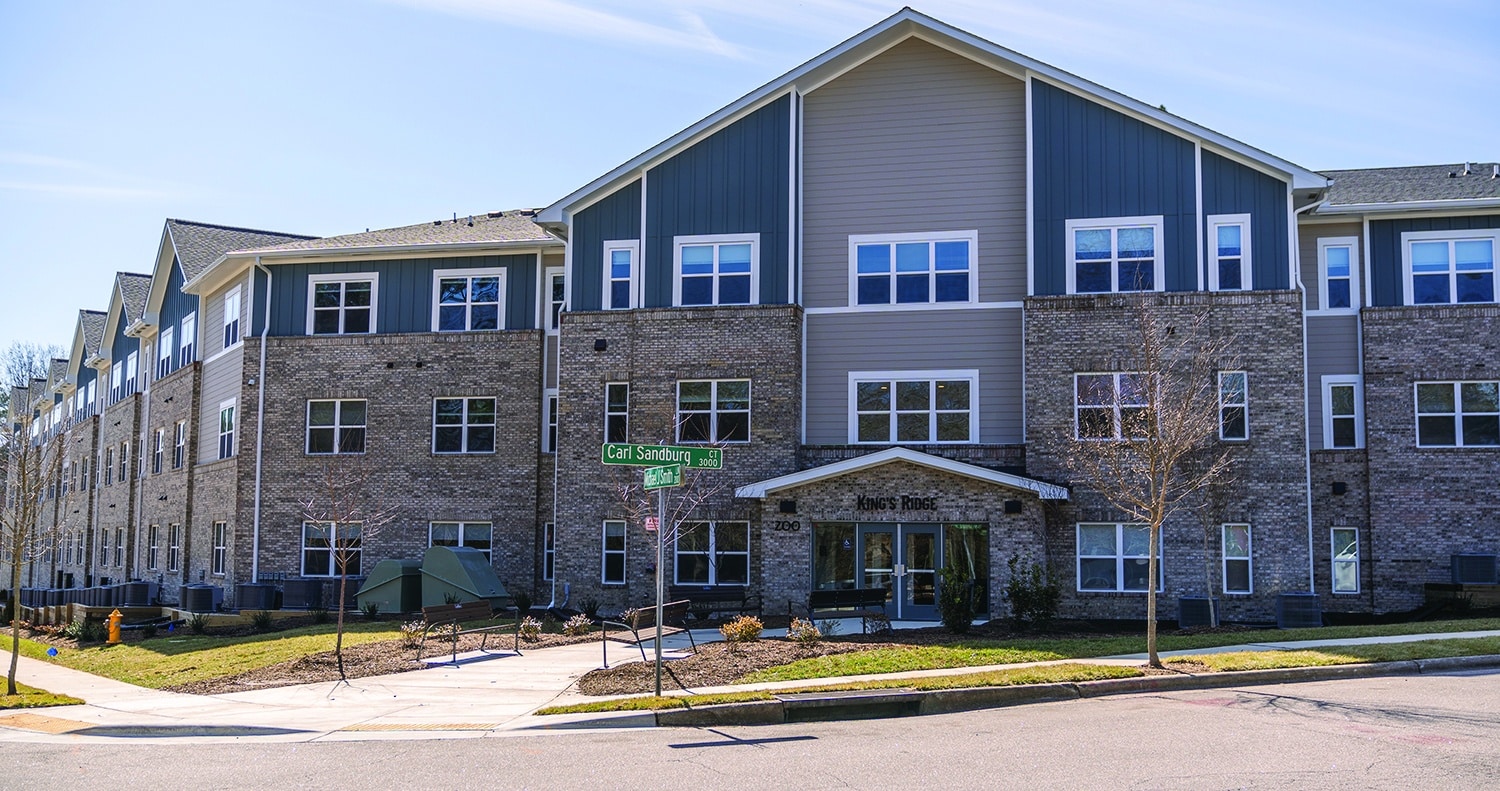
Now, a cutting-edge concept has made an immediate 15% dent in those stats. Expected to take ~148 people off the street, the freshly debuted King’s Ridge serves up 100 one-, two- and three-bedroom units designated and designed for individuals and families who have a history of homelessness and insufficient credit to qualify for conventional housing.
Chronically homeless people make up: 33% of ER visits costing $44K a year/person
Permanent housing reduces: Health care costs by 59% ER costs by 61% Hospitalizations by 77%
Named for the late former CASA CEO and affordable housing champion Debra King, the Triangle-based affordable housing nonprofit’s most ambitious project to date has already assigned all units in collaboration with street outreach and shelter providers. “We went to the folks that did this work every day to give us our residents,” explains King’s Ridge Director Erin Yates of the community’s efforts to ensure a true focus on Raleigh’s most vulnerable. “We wanted to make sure they follow a housing-first model—meaning there are no requirements before you move in. You don’t take a class or have to be part of a program.” In short, the housing complex meets residents where they are—all of them are able to move in exactly as they are.
While King’s Ridge isn’t free, residents only pay one-third of their monthly income for rent each month and can renew yearly. According to housing affordability devotee and former Mayor Mary-Ann Baldwin, the largest barrier for the homeless isn’t affording rent—at least 60% of Raleigh’s homeless population have jobs. The real barrier is the ability to put down a security deposit plus first and last month’s rent.
But the monumental project wasn’t realized overnight. It’s been seven years since Molly Painter—now chair of the King’s Ridge Campaign Leadership Committee—picked up Kathy Izard’s The Hundred Story Home. Upon learning of Charlotte’s housing for the homeless, Painter resolved Raleigh could and would achieve the same. A whopping $23 million later—raised in partnership with CASA—the East Raleigh project broke ground in 2022.
“It feels like home,” Painter tells RM—“which is exactly how we want it to feel. The community said yes [and] was very generous—the county was very generous. … Individuals and corporations came together to make it happen.”
Now, locals are finally beginning to move in. One resident who, after a car accident, was rendered unable to work and experienced homelessness, moved into King’s Ridge last in February. “[The resident] said after a couple nights’ sleep, ‘I realized there is a word I’ve never used for myself: I feel calm,’” shares Yates.
While similar housing-first models have been around for decades, they’re new to Raleigh, emphasizes Yates—and she hopes to show the model gives long-term stability for the homeless. “We’ve already had conversations with folks in Asheville, Greensboro and Wilmington,” she adds.
Baldwin, who, during her mayoral tenure, advocated for $10 million for King’s Ridge from the city—and now continues her passion for the cause as executive director of the Cooper Charitable Foundation—is also eager to see how the project inspires other cities’ affordable housing options. “People were like ‘Oh, [$10 million] is a lot of money,’ but so is treating homeless people in emergency rooms—that costs more money than sheltering,” observes Baldwin, noting, too, it is far less expensive than providing health care to people living on the streets. In short, providing shelter isn’t just the compassionate thing to do—it’s also the best financial move for the city.
Baldwin’s backing stems from King Ridge’s wraparound on-site supportive services for residents. “A home and the services they need to stay sheltered—that is what really sold me,” she reveals.
Two medical clinics, case managers and ample community space will supply the necessary tools to heal. To boot, the complex is ideally situated near WakeMed’s Raleigh campus, Wake County’s health services building and the future bus rapid transit line.
Mirroring other conventional apartments, King’s Ridge residents have full control of their schedules and can come and go as they please. The model recognizes the prominence of housing as the first step in handling other challenges—and the apartment’s services will help tackle these lingering obstacles. Backed by the community and aligned with a housing-first mindset, King’s Ridge is setting the bar—and taking a large stride toward ending homelessness.
Upcoming Affordable Housing Projects
Hope Village at Method: Under construction Housing and support for Raleigh youth aging out of foster care located in the Method neighborhood
Maple Ridge Apartments: Construction slated for 2025 146 affordable units with 30 units in NW Raleigh for those with disabilities or who are experiencing homelessness
Strickland Apartments : Construction slated for 2025 148 affordable units with 30 units off Strickland Road for those with disabilities or who are experiencing homelessness
Moore Square Apartments: Construction slated for 2025 160 affordable rental units with 32 units in DTR for those with disabilities or experiencing homelessness
Collaboration and big-picture thinking produce a proposed new district.
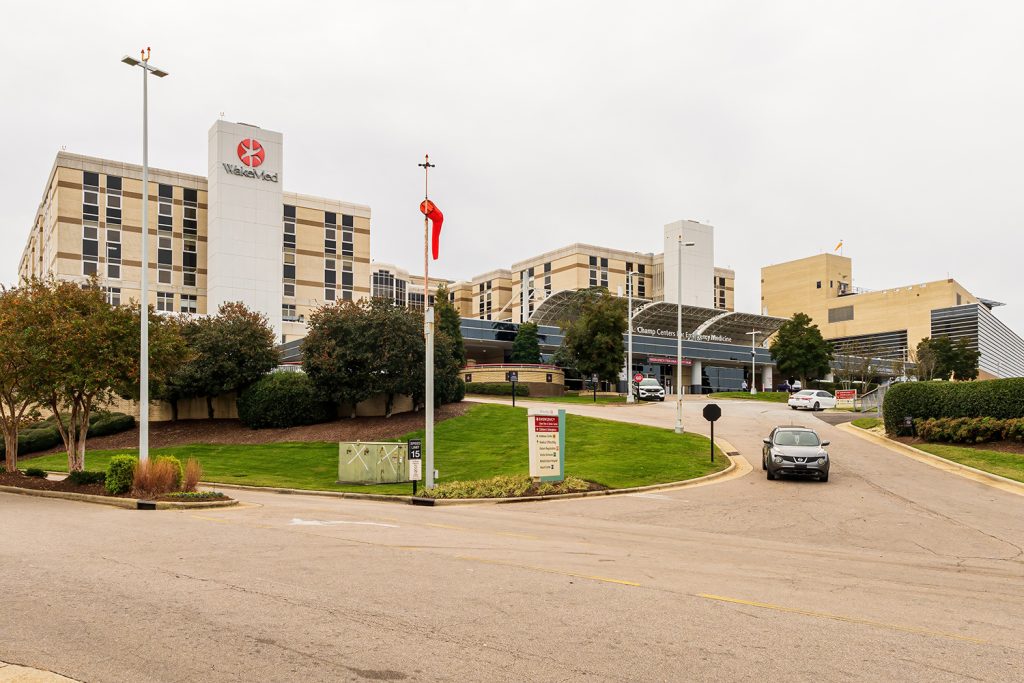
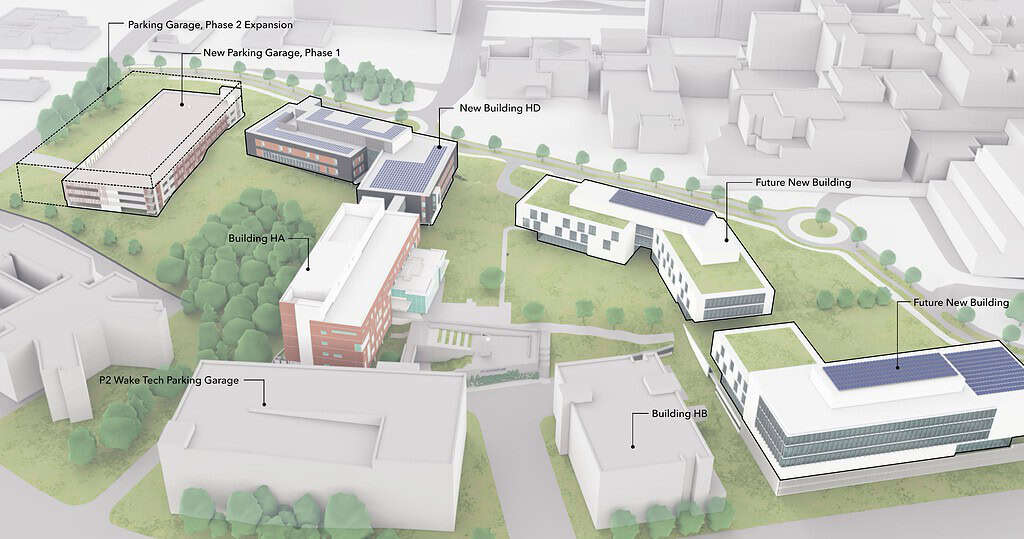
If you’ve seen Yellowstone, you know property ownership and inheritance dealings can turn ugly quick. But when Wake County, WakeMed and Wake Tech VIPs assembled to discuss the future of the area surrounding WakeMed’s campus off New Bern Avenue in Southeast Raleigh—where each institution owns a portion of land—there was no contention. Instead, the three parties decided to throw out property lines and work together to create a health and education district that would benefit everyone.
A remarkable unprecedented move spawning a major impact on Raleigh for years to come, the project will be transformational not just for Southeast Raleigh, but for the entire New Bern Avenue corridor—aka “the gateway right into Downtown,” says Tom Cavender, WakeMed’s VP of facilities and construction. Think green space, pedestrian- and bike-friendly paths, and a quad-like feel augmenting the area and adding to the bus rapid transit construction already underway.
“The synergy that will come from this collaborative effort will reach far beyond the borders of these three institutions to impact the entire community in a very positive way,” says former Wake County Commissioner Sig Hutchinson—“from affordable housing to active lifestyles to creating healthy communities to health care services to educational opportunities.”
According to Cavender, what spurred the project was “essentially a confluence of energy between Wake Tech, WakeMed and Wake County… a situation where the sun, stars and moon all aligned.” In short, Wake County received bond money to build a replacement public health center at New Bern Avenue and Sunnybrook Road—nearly adjacent to both WakeMed and Wake Tech—at the same time Wake Tech and WakeMed were collaborating on long-term plans.
So Cavender called Jeff Carter and Mark Forestieri, his Wake Tech and Wake County counterparts, respectively, and said, “What if we just sat around a table… and thought through a way we can better utilize what we have available to us? It’s a great public-private partnership.”
They gathered key players from each org, and “we said, ‘Peel all your allegiances away: What’s best for all of us when we look at this massive 135 acres of land we have between us?’” Cavender recalls. Everyone was on board—and the idea for a health and education district was born.
“It truly was this notion of an opportunity for everybody to win, and I think that’s what’s going to happen,” says Wake Tech President Dr. Scott Ralls. “Health care needs from our area are going to continue to grow because we’re growing—and we’re growing older at the same time. … We’re the largest higher-ed provider of health care in Wake County and one of the largest in the region, so that’s a key expansion area for us.”
While WakeMed will inherit adjacent land from Wake County for replacement facilities, Wake Tech will gain significant acreage from WakeMed on the Falstaff Road side to achieve its desired growth. “Right now we’re investing $121 million in the initial expansion for our education part of the campus, so it’s going to mean some big opportunities for Wake County and for the future,” reveals Dr. Ralls.
According to Cavender, the entire district is currently in the rezoning stage and will most likely go to City Council for approval by the end of 2024. If it passes, we could be seeing cranes in the sky by this time next year. The rest is still unwritten because, as Hutchinson points out: “These three institutions erased the property lines and redrew them so each institution would benefit from what they needed versus what they owned. Nothing like this has ever been done before.”
Cavender notes the trio served as the “key component to get this thing off the ground and rolling.” But now he’s hopeful more of WakeMed’s partners and developers willing to invest in the area with speculative incubator buildings will want to join the district.
“We’re being very judicious and purposeful in our thinking,” says Cavender, nodding to child abuse prevention nonprofit SAFEchild’s 20,000-square-foot facility on the campus as an initial partnership to pave the way for further such community collaboration. He also hopes it will serve as a magnet to draw people to the school and to businesses in the area.
“I’ve never seen anything like it,” says Hutchinson. “There is such tremendous leadership in all three of these institutions, and I just continue to be amazed at what they can deliver as a model for not only North Carolina, but also for the rest of the country.”
Wake Tech Phase 1 Plans
New parking garage
Cutting-edge 106,000-square-foot addition to its Perry Health Sciences Campus—approximately half of which will be a simulated hospital
Expansion of the nursing program and imaging program
Imaging program will boast a partnership with Siemens, making it one of the most high-tech training centers in the nation.
Two additional building sites available to support Wake Tech’s long-term future growth
Suzanne Tarry bags up self-care goodies for essential and community workers.
Suzanne Tarry’s mission is simple: care for those who care for us. After hearing about the long shifts nurses, doctors and other essential workers were pulling last year, she felt compelled to help while her flower business, Dragonfly Designs, was put on the backburner due to postponed or canceled weddings.
Knowing that a little #selfcare goes a long way (like many of us, after a long day she enjoys soaking in a bathtub), she created Olive Tree Blessing Bags, a nonprofit that delivers bags filled with luxury personal care items to essential and community workers. The bags, which are tailored to both gals and guys, contain a thank-you note and everything from bath bombs to chocolate to hand cream.
“… I don’t know how to feed 1,000 people,” says Tarry. “I don’t know how to find housing for somebody that is living under a bridge. I don’t know how to administer medicines and solve somebody’s issues, but I can sure as heck support the people that do.” And there’s almost nothing chocolate can’t fix if you ask us.
Suzanne Terry
The nonprofit has delivered over 3,000 bags and counting to WakeMed facilities’ COVID and ER nurses, the Boys and Girls Club of Wake County and Raleigh Rescue Mission, among other homeless shelters, food banks and more.
But Tarry couldn’t stay away from the flower-arranging business for long. Olive Tree Weddings, a flower event company with the tagline “Blooms With a Blessing,” will officially launch in July with 100% of the proceeds going toward Olive Tree Blessing Bags. To her knowledge, the nonprofit—which combines her love for flower arrangement and serving others—is the first of its kind in North Carolina.
Tarry, who assembles bags and flower arrangements in her dining room on top of an old piano (or while doing laps around her dining room table, which is often covered with flowers), didn’t originally set out to have a career in flower-arranging, however. After doctors found a tumor the size of her heart in her chest when she was 19, she took a hiatus from school and changed courses careerwise, earning a business degree and then working for a retail and a wholesale florist.
“I didn’t want to do anything that is going to be that stressful or cause that much stress or unhappiness,” Tarry reflects. “I just want to do flowers.”
She hopes Olive Tree Blessing Bags and Olive Tree Weddings will continue to bless—and pamper—essential and community workers once the pandemic has been long gone, touching the lives of those who give up so much for all of us each and every day.
“Heroes are not made out of COVID,” says Tarry. “Heroes are made from self-sacrifice.” Donate, sponsor or volunteer: olivetreeblessings.com