by Alison Hill | Apr 15, 2019 | April 2019, Retreat, Stuff
Excess stuff causes stress. It’s true—whether psychological or physical, clutter is chaotic and creates more work and hassle.
It also takes up space and costs time and money. More than 10 percent of households rent storage units for extra belongings, which can cost up to $1,000 a year. And only 15 percent of homes with garages actually have a car parked inside. The rest of us use them as storerooms.
When you’re getting ready to move, it really hits home just how much accumulates over the years. So please, don’t take it with you! Instead, carry out a ruthless purge.
My globetrotting, house-sitting friends stored everything they owned in a couple of suitcases. I envied their freedom and the ease of dealing with just a few choice items. In fact, when I immigrated to the U.S. from Wales, I was forced to fit everything I needed into one big suitcase and two large expandable bags, including clothes, shoes, accessories, three favorite Stephen King hardback novels, two pairs of knee-high boots and a riding hat!
What happened?
Of course, now we have a child, so toys—masses of toys!—have been added to the pile. Do stuffed animals reproduce overnight? We seem to have hundreds of them. And our 6-year-old daughter is adamant that none of it goes. That’s a whole other challenge!
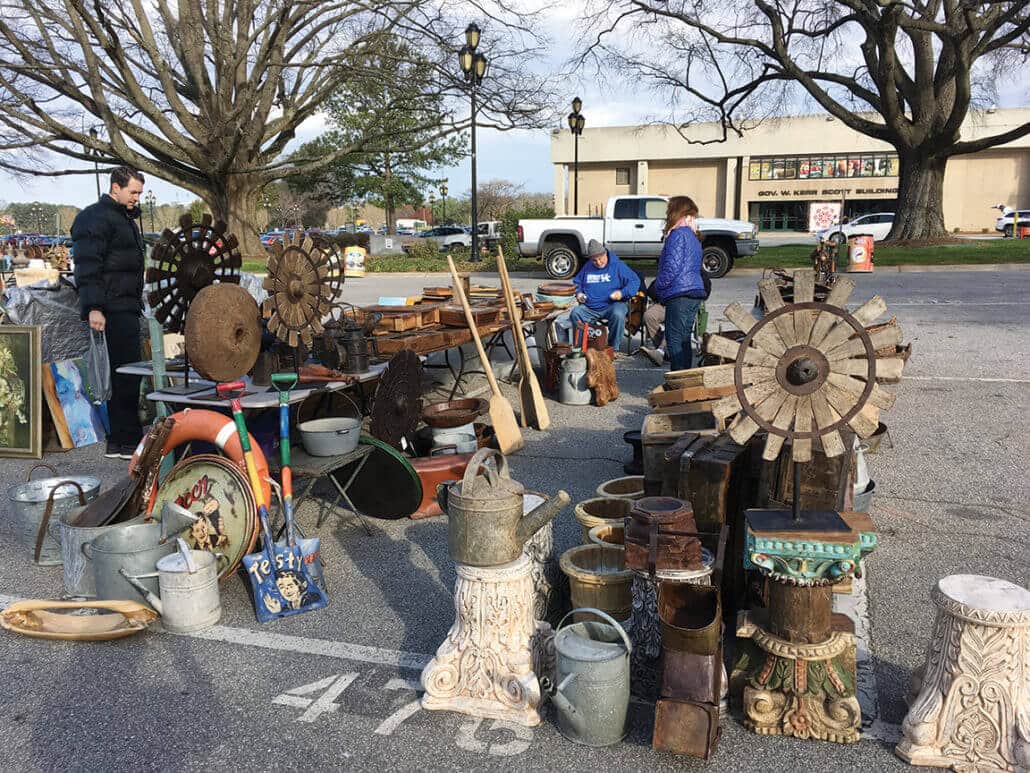
We’ve just moved from the Triangle area to Asheville and I wish I’d planned it differently, even though at the time I thought I was doing well. We sold countless items—a dining table, grandfather clock, outdoor patio set, side tables, knick-knacks, decor and toys on Craigslist, Facebook Marketplace, at the flea market and at two garage sales. We drove three carloads to the thrift store and a pickup load to the junkyard. But somehow we still ended up with too much.
Half a U-Haul of junk is stocked high in the garage of our new rental in stacks of unopened mystery boxes. I get heart palpitations just looking at it.
How did we manage to lug so much unwanted, unnecessary and obviously unused stuff with us? Talk about carrying excess baggage! We’re planning on buying a condo with possibly no garage, so we really need to downsize. But it’s so hard letting go …
If you’re like me, you may need some guidance. Parting with your belongings, especially if they’re sentimental is hard. But when I heard of the ‘KonMari’ method, I had that quintessential “eureka” moment.
By now, most Americans have likely heard of Marie Kondo, a Japanese organizing consultant and bestselling author. She helps people get rid of clutter through her unique “KonMari” method and many Americans are embracing the minimalist lifestyle she promotes. With the debut of the Netflix show “Tidying Up With Marie Kondo” in January, homes are tidier, garages are emptying and thrift store shelves are brimming with treasures. And soon, I will be able to see the floor of our garage.
Kondo divides stuff that needs sorting into five categories—clothing, books, papers, komono (miscellaneous items) and mementos (items with sentimental value.) The key is to evaluate your belongings one category at a time, taking each item, holding it in your hands and asking yourself “does this spark joy?” If it does, then keep it and organize it. If it doesn’t, thank it and then simply let it go.
What I like about this method, and maybe why other purging attempts have failed, is the question: “Does this spark joy?” In the past my question has been: “Do I need this?” Which can lead to excuses, such as, “Well, maybe in the future I will need it,” and so it goes into the “keep” pile. “Does it spark joy?” is more definitive. It either does or it doesn’t, and if not, why keep it?
With yet another move looming, a motivating factor for me now is of a more practical nature: How much room will this anthology of American Literature take up in a box? And how heavy will said box be to lift? And where will I put it?
Before boxing up all your belongings and hauling truck loads of stuff across town, the state or the country, re-evaluate what you own and apply a method such as Marie Kondo’s. Having fewer possessions literally and figuratively lightens your load. I loved my house when we’d moved half of our stuff out and into the garage of the new rental. I helped stage it for sale, and the few carefully chosen décor pieces were striking in a minimalist setting; the place looked bigger, clean and tidy. I could breathe easier and relax. And the house sold in four days.
To give yourself plenty of time, start weeks or maybe even months before you plan on moving. An emptier house looks and stages better, sells faster and is easier to keep clean and tidy!
And then, of course, there’s the biggest reward of all—there’s less stuff to pack, haul and then unpack in the new place.
Happy purging!

by Alison Hill | Sep 14, 2018 | Polish, September 2018, Stuff
We’ve all been there. Trawling through clearance racks at end-of-season sales, dazzled by shiny must-have accessories, lured in by 50 percent-off price tags.
That bright yellow handbag is too good a deal to pass up! It would be a sin not to grab it, right?
Back home, without the aid of fancy displays and accent lighting, the thrill of the buy evaporates. And stripped of its pretty tissue packaging, the item you were so eager to have now seems kind of lame. Regret starts seeping in – ‘Why did I buy this?’
But it was on sale…
At one time my closet was brimming with such impulse buys, but after purchasing pink cropped skinny jeans last summer, I’ve finally learned my lesson. At home I realized my preschooler had an identical pair. So it’s best to stick with what you know and what works for you. And as for jeans, blue, black and white only for yours truly from now on. I’ll leave the pink ones for toddlers.
Of course the guilt is compounded if you just splurged on a high-ticket item. You can always return it, but why waste precious time.
So here are five ways you can curb the urge to splurge and avoid buyer’s remorse:
1. Plan your shopping trip carefully. What items do you really need right now? Scrutinize your closet and see what basics you could use and what can be a ‘treat’ item. Do you need a new dress for a formal event, like a wedding for example? If so, decide beforehand on styles and colors you’d like to try, and check if you also need accessories and shoes. Know your wardrobe before you leave the house so you’re sure everything you buy will match what you already own. Take photos on your phone if it helps, then you won’t second-guess yourself. And make sure you buy it because you really like it, not because it’s the latest trend or fashion and your friend Marlene has one. And speaking of BFF’s – take a practical, sensible girlfriend with you (lure her in with the promise of lunch), someone who will give you honest feedback and stop you from veering off course.
2. Have a strict budget for the week, month, or even year if you can plan that far ahead. If you find it hard to stick to a set amount, take only cash and leave the credit cards at home to avoid any spontaneous splurging. It’s amazing how we think twice about purchases when we have to budget and pay cash.
3. Avoid buying things just because they’re super cheap and on sale. It doesn’t save you money in the long run especially if you never wear or use it. We all have the ‘results’ hanging forlornly in our closets, abandoned, unworn items, pristine with tags, the stuff that ends up on eBay!
4. With outerwear, boots and shoes, less is definitely more, and when you have less you can spend a little more on quality items that will last. Stick to classics that will never go out of style. Knee-high boots in black or brown, either heels or flats (or one of each if you can afford it!), and every woman should own a pair of stylish black pumps and a pair of black or brown flats. This also applies to a good winter wool coat that will last for years, a go-to, versatile bag (one for daytime, one for evening), and everyone’s must-have closet favorite – a trusty LBD!
5. For every item you buy—get rid of something in your closet, especially if it’s something you never wear. Not only will this free up space for those newbies, it will help reinforce what clothes you really like and what styles suit you best. What are your favorite outfits? What feels comfortable? What do you feel good wearing?
Sales are great when you plan ahead and snag a real bargain. But it’s only a good deal if you need it, will wear/use it, and you love it!
Happy shopping!
by Alison Hill | Aug 31, 2018 | Buzz, September 2018
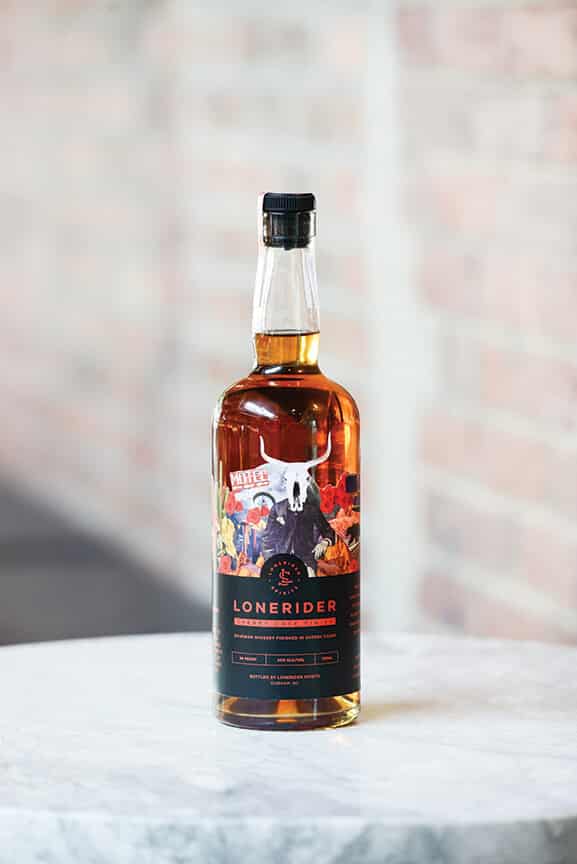
Lonerider Sherry Cask Finish Whiskey
You’ll find them lounging on the sunny patio at Whiskey Kitchen, perched up at the bar at the cavelike Foundation or tucked away behind the bookcase at The Green Light, knocking back a drink or two.
It’s no coincidence that, as Raleigh’s millennial population grows, so does its population of cocktail bars. In fact, in recent years, imbibers under 35 have shown a clear preference for spirits and mixed drinks over beer, with beer comprising just 43 percent of alcohol consumed by young drinkers in 2016, down from 65 percent in 2006, according to a study by Anheuser-Busch InBev, owner of Budweiser.
With this market trend in mind, Raleigh’s Lonerider Brewing Company just launched its sister brand, Lonerider Spirits, and releases its debut, a sherry cask finished bourbon whiskey, this month. Bottled at a distiller in Durham, the whiskey will be available in North Carolina ABC stores, bars, restaurants and, eventually, in eight other states.
“We saw the spirit market at the same place we saw the beer market almost 10 years ago,” explains Lonerider’s CEO, Sumit Vohra, a well-known local entrepreneur who quit the tech industry to pursue his beer-making dream. “We know that it’s going to grow at the same rate, and we have the opportunity to become a part of that.”
Lonerider has been brewing Ales for Outlaws since 2009 and boasts an impressive portfolio of award-winning beers. With the rapidly emerging national trend toward craft spirits, branching out seemed a logical step for the popular local brand.
So why did they choose to make a whiskey first?
“It’s very simple,” says Vohra. “We like it. We’ve always enjoyed the complexity of the flavors. Whiskey is a passion; we appreciate the art of whiskey. It’s a spirit of time and the spirit of drinking slowly.”
Chris Mielke, president of Lonerider Spirits and a former blogger for Southern Distilling News visited 50 distilleries nationwide while researching the process and the market.
“People are starting to appreciate the complexity [of whiskey],” Mielke says. “There’s so many variations, so much you can do with whiskey, we enjoy it and wanted to create something that stands out.”
And just as consumer tastes are changing, so is the stuffy image sometimes associated with whiskey. Like the surge in popularity of craft beer over big name beer brands, the younger crowd’s gravitation toward spirits is adding a trendy, cool edge to the whole sipping experience. And, as with beer, millennials prefer not to drink their father’s whiskey or bourbon. But their dads might just want to taste some of theirs.
“There’s also a big movement of women who drink whiskey,” adds Mielke. “There’s still more men right now, but it’s amazing, it’s not 70/30 anymore; it’s 60/40.”
With the Lonerider brand already well established, Vohra and Mielke are confident the new products will have a broad appeal.
“We’re trying to use the same resources as the brewery, and we’re giving the same level of dedication to bringing spirits onto the market,” Vohra says. “Our team already understands the ethos of the brand, the soul of the brand as I like to call it. It’s something we can replicate and sell whiskey with as well.”
And there will be a crossover between beer and spirits, with plans to create additional, unique whiskies from several Lonerider beer recipes.
“In the future we’ll use some of our beers in the product,” Mielke says. “We can make a great tasting whiskey out of Sweet Josie Brown Ale or Shotgun Betty, for example.”
But the first spirit to hit shelves will be the bourbon whiskey finished in sherry casks.

Sumit Vohra. Photograph by Josh Manning.
“You can go through all different ways to make a good bourbon,” Mielke explains. “We’re trying to ‘add to the conversation’ with our own little nuance, put a little bit of a spin on it.”
“You have to make the product great,” Vohra adds. “It’s the Lonerider way. If you don’t have the best liquor in the bottle, then really, what are you selling?”
Speaking of bottles, Lonerider will carry on the maverick look and feel that’s become its visual trademark with the packaging, shape, size and even the label on the whiskey bottles.
“Is the image of whiskey changing? Yes, and this is our attempt to change some of that im-age, too,” says Vohra. “Most bottles look about the same. Iconic bottles are few and far between. In our research, we didn’t see anyone that was stepping out of the norm.”
So Lonerider Spirits did just that with a clear glass, long-necked, simple but stylish design, and a wacky label that will get people talking and definitely keep them looking. Vohra expresses his love for Spaghetti Westerns throughout the brand, in the Hideout—Lonerider’s Wild West themed taproom in Raleigh—and, in the names of all Lonerider’s beers. The label of the new whiskey bottle is no exception to this tradition.
“This is our imagining of the new West,” explains Vohra. “People are going to look at it, and they’ll find something different each time.”
It’s a colorful and eclectic montage of iconic western images—a biker cruising a deserted highway, a bald eagle perched on an old TV set, a UFO, a Saguaro cactus, a grizzly bear…and if you look again, you’re sure to find more.
“We’re planning on every label to be different, to keep it fresh,” says Mielke. “They might become collectibles, and we may do special releases.”
“We may even put clues in there,” Vohra adds.
This bring us to the most important question: What does the bourbon whiskey taste like? Lonerider utilizes some intriguing notes, such as waffle cone and cacao in the body, with leather on the finish.
“But you’ll just have to try it for yourself and find out,” Vohra suggests. “There is an assumption of what whiskey should be and how it should be consumed, who should consume it and what time it should be consumed. We’re going to break that tradition, break that mold. We’re going to do it our way. I think you will enjoy it – and, whether you agree with us or not, I think you will appreciate it.”
Lonerider Sherry Cask Finish will be on shelves this September.

by Alison Hill | Jul 16, 2018 | Buzz, July 2018 / August 2018
Fall is fast approaching and it’s one of the best times to celebrate the culture and vibrancy of our wonderful city. September is packed with festivals, and this year, as always, there’s an exciting lineup of educational and entertaining events right here in our backyard. From bluegrass, bikes and bugs, to art, pirates, technology and food, there’s something to suit every taste.
Through the collaborative efforts of the Raleigh M.A.I.N Events campaign, now in its sixth consecutive year, more than 20 events come under one umbrella, making it easier for locals and visitors alike to find information and plan their outings. Music, Arts, Innovation and Noise (M.A.I.N.) are the common threads connecting the cultural festivities and family friendly activities that take place around downtown Raleigh almost every day in September.
“People just don’t realize how many choices they have in the space of one month,” says Jonathan Freeze, the marketing and communications director at the Greater Raleigh Convention and Visitors Bureau and co-chair of Raleigh M.A.I.N Events. “Our goal is to draw more people to our city and encourage them to visit more than one event.”
The informal, grassroots initiative kicked off six years ago at a Raleigh Innovation Summit, when festival organizers recognized the need for collaboration and better promotional efforts since there was so much going on in September. Event organizers felt that such a wealth of cultural festivities deserved more attention, so they created Raleigh M.A.I.N. Events to help spread the word and plan more efficiently.
The organizers meet several times a year and assist each other through sharing ideas, resources and information (such as how to apply for a permit), cross-promoting events, growing attendance and crossover audiences, and discussing planning logistics, such as avoiding overlap. Any event that meets the following criteria can be involved: it must be held in Raleigh in September, it has to be an annual event and it has to incorporate Music, Art, Innovation and Noise.
The campaign has grown from an initial 8-10 festivals to more than 20 this year, with the addition of four new events, including The City of Oaks Pirate Fest at the North Carolina Museum of History. Visitors can meet Captain Blackbeard and learn more about the history of pirates in North Carolina at this free, family-friendly festival. There’s also a costume contest, re-enactions, music, food and crafts.
The best news is that 80 – 90 percent of the Raleigh M.A.I.N events are free. Some, such as La Fiesta del Pueblo and the African American Cultural Festival of Raleigh and Wake County, provide amazing opportunities to get a taste of different cultures. The more adventurous (and brave) can taste bugs—yes, bugs!—that are on the menu at BugFest.
“I am impressed every year with how these mostly-volunteer organizers, who are already working so hard to put on their mostly free festivals and events, stretch even further together in collaborating for Raleigh’s greater good,” says Freeze. “It benefits everyone’s quality of life to have such a rich collection of annual events happening here.”
For a full list of events, times and dates visit raleighmainevents.com.
Tentative list of 2018 events:
> 9/11 Day of Service
> The African American Cultural Festival of Raleigh and Wake County
> BugFest
> Capital City Bikefest
> CED Tech Venture Conference
> City of Oaks Pirate Fest*
> Groove in the Garden
> Hopscotch Music Festival
> IBMA’s World of Bluegrass
> La Fiesta del Pueblo
> Marbles Makers Mash-Up
> NC Open Pass Civic Camp
> NC Pride at Night*
> Raleigh Symphony Orchestra Fall Pops Concert*
> SPARKcon
*New in 2018

by Alison Hill | May 1, 2018 | May 2018, Retreat, Stuff
Camaraderie abounds at Raleigh’s venerable Flea Market.
It’s 8 a.m. on a chilly Saturday, and the Raleigh Flea Market is already hopping. A small city of tents and stalls has sprouted up overnight at the N.C. State Fairgrounds. Vendors have been setting up since dawn, and serious pickers scour hundreds of booths for deals. So far, I’ve spotted caribou antlers, a 5-foot tall metal flamingo and a miniature totem pole.
“This is shopping the way it’s meant to be,” says Marshall Stewart, who manages the popular indoor-outdoor market his father started with six tables and just a handful of vendors, back in 1971. Now, the market spans six buildings and several acres, drawing some 800 vendors and thousands of visitors every weekend. “Box stores are indifferent,” Stewart says. “Here, you get to meet the owner, sales clerk and treasurer.”
And where else can you find such a mishmash of the bizarre and ordinary?
Colorful hand-knits mingle with creepy dolls. Knowledgeable merchants sell with flair and personality. You can comfortably haggle over a tuba one minute, and get a bargain on some mid-century chairs the next. Indoors and out, there’s a variety of new and old, from antiques and jewelry, to custom-made furniture. And the market’s yard sale area is brimming with bargains.
With its friendly people and an upbeat vibe, the Raleigh Flea Market is classed among the best. It’s ranked No. 9 on the 2018 Top 20 list compiled by FleaMarketInsiders.com—the go-to online resource for the world’s best flea markets. It’s also been featured in USA Today’s Travel 10 Best, and it made CNN’s Top 10 picks, too. More than just a place to buy and sell, for many, it’s become a community—and for both rookie seekers and seasoned collectors, it can be an education.
“The flea market is a touchable, viable museum,” says Alisha Ramsey, the most glamorous flea buff you’ll ever meet with her long blonde hair and a quick smile. “Vendors are happy to share the provenance of an item.”
Ramsey and her husband, Steve Pender, are dedicated pickers, often selling here themselves. “This is my church at the weekend,” Ramsey says. “Everybody knows us here. We go to fleas all over, and Raleigh wins, hands down, personality- wise.”
As her husband examines an industrial table, Ramsey explains the ropes. “If you don’t get here early, when the sun breaks, you’ll see an item you want and it’s just been sold,” she says. She’s talking to me, but all the while, her trained eyes are scanning nearby booths.
Ramsey found her best treasure here—she met Pender two years ago at spot #440, while perusing 1930’s Art Deco magazines. They hit it off instantly and together are the ultimate flea market junkies, reselling around 80 percent of what they buy and keeping the rest. What are the weirdest things they’ve found here? “A fossilized whale bone mask from Alaska, and Steve bought a piece of the Berlin wall,” Ramsey says with a laugh.
A huge vintage Coca-Cola sign lords over retired plumber-turned-antiques dealer Billy Markham’s booth. “Every item I sell has a history and comes with a guarantee,” Markham says. “I’m one of the last true pickers. I go as far as Texas and Canada and knock on people’s doors, asking them to sell me their stuff.” He shows me a pair of authentic snowshoes he picked up in Maine. “My stuff is fresh from someone’s house. This is the first time it’s being offered back to people in 30 or 40 years.”
“People line up at 6 a.m. for my stuff,” says Christopher “Toph” Scheid, a retired Wall Street broker, who now sells furniture and antiques in the yard sale section. “They often arrive before I do,” he laughs. “I love the camaraderie among vendors here; we network, help each other out. “
New Yorker Joe Spitzfaden, who has been selling here for a decade, agrees. “Vendors are like family,” he says. “We take care of each other. I like the atmosphere, it’s the hunt—you find cool stuff that’s not in a store. And there’s an art to buying and selling.” Spitzfaden’s friend, Jimmy Leake, pipes in from the next booth. “Yeah, I buy junk and I sell antiques,” he jokes.
I come across something that looks like a missile, the drop tank of a single-engine F-104 aircraft, according to its owner, John Blanton. “I just feng shui it out and people dig through it, ” Blanton says of his wares, including antiques, furniture, crockery and macabre tokens, that are scattered haphazardly on the ground. “People like to buy bones and mummified animals,” he tells me, shrugging his shoulders.
It’s noon. Ramsey and Pender are done shopping, their trunk full of treasures, and Ramsey is tired out—with good reason: the couple is expecting a baby girl this summer. “She’ll be here with us every weekend, and have her own booth by the time she’s 5,” Ramsey says, clutching her growing tummy and the soon-to-be newest member of the Raleigh Flea Market family.
“I describe it as ‘esprit de corps,’ says Stewart, the manager, of the fellowship that all the flea market’s loyal pickers and vendors share. “We’re a collection of families, pulling the same wagon.”
The Raleigh Flea Market is open year-round, every Saturday and Sunday from 9 a.m. to 6 p.m. except during the State Fair in October. ■
(more…)