



Salt…Like A Chef
The printer screeched. “Order in—rigatoni,” said Jeff Seizer, turning his head to me at the beginning of the dinner rush in our shoebox Manhattan kitchen. It was 2014, years before Jeff and I moved to Raleigh to open Royale downtown and one of my first nights cooking professionally, having just transitioned from culinary enthusiast to hopeful young line cook.
“Rigatoni—yes, chef!”
“Don’t call me chef,” Jeff said, smiling, patting my shoulder. “It’s just cooking.”
“Cool.” I breathed, feigning relaxation.
I went to work.
A ladle and a half of tomato-sausage ragu into a sauté pan. Medium flame. Get it hot. Drop a pint of par-cooked rigatoni noodles into a pasta basket. Boil for 30 seconds or less. Dump the pasta into sauce. Butter. Grated cheese. Basil. Salt. Toss, toss, toss to combine.
The sauce tightened up as the cheese disappeared into the noodles, and the basil flecked green through the glossy orange of the buttery ragu.
“Finally,” I thought. This one looked perfect.
Jeff appeared over my shoulder and scooped a noodle with a spoon. I did the same.
“It’s good,” he said, shrugging and reaching into my pint of kosher salt. I stepped aside and watched him release what looked like an irresponsible amount of salt into the pan, which he was flipping effortlessly with a few flicks of the wrist.
“Now it’s excellent,” Jeff said. “Taste it.”
When I saw how much salt Jeff put in that pasta, I expected it to be salty. It was not. It was, to use Jeff’s word, “excellent.” The tomato flavor was brighter, the sausage tasted richer, the basil—fresher. The salt didn’t change the flavor of the dish; it amplified the flavors that were already there.
I learned my most important lesson about cooking in one of my first days on the line: if you make something that looks great but just tastes average, it probably needs more salt.
Tips for salting like a pro at home:
Disclaimer: These are tips for salting like a pro, not salting for a healthy lifestyle. I would not recommend cooking like this every day, just as I would not recommend eating out at restaurants every day.
1. Use the right salt
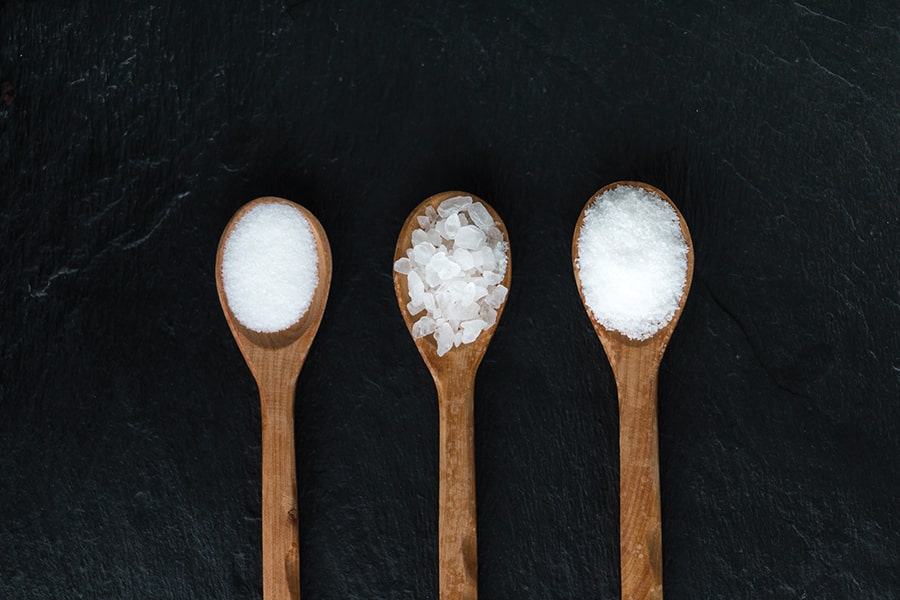
Salt’s purpose is to make food taste more like itself, so we want our go-to cooking salt to be flavorless. Standard table salt is not flavorless as it contains iodine and anti-clumping agents such as calcium silicate. While iodine is a necessary nutrient initially added to salt in the 1920s to stave off thyroid problems, most of us nowadays ingest plenty of it in our normal diets. (Also, table salt makes water cloudy, and something about boiling pasta or vegetables in cloudy water grosses me out).
While there are plenty of additive free kosher and sea salts to choose from, Diamond Crystal Kosher Salt is king in my kitchen. Unlike most other salts which are pebble-shaped, ranging from fine to coarse, Diamond Crystal salt is flat and flaky. This makes it stick to food better, dissolve quickly and pinch easily to carry in your fingertips. I love this stuff so much that I keep a pint of it in my car, just in case.
2. Salt as you go
If you’ve ever watched “Chopped” on the Food Network, you’ve no doubt heard Alex Guarnachelli praise a contestant for building “layers of flavor” despite the limited timeframe; these winning cooks likely add salt mindfully, at each stage of the cooking process.
When making a sauce or a stew, add salt in increments throughout the cooking process and taste as you go. Salt while you sweat the onions, salt when you add bigger vegetables or proteins, salt when you add liquid, salt to taste at the end. As long as you taste as you go, you don’t have to worry about over-salting.
3. Salt by hand, and salt from 8-12 inches above
Unless you’re baking or brining (which requires salt to be measured), use your fingers to salt food. With practice, you’ll be able to taste a sauce or a soup and know by feel how big of a pinch of salt it needs.
Also, since salt spreads out as it falls, applying from 8-12 inches above assures not only even distribution, but also a bit of visual panache for your guests.
4. Invest in a nice finishing salt
Even if you season while you cook, you’ll sometimes want to give your food a boost of salt on the plate. Think, for example, how a hunk of prime rib that has only been seasoned on the outside might need additional salt on the center of the slice.
Instead of sprinkling kosher salt on each slice or putting out a standard salt shaker for your guests, consider one of the many boutique salts on the market. While the industry-standard finishing salt is a flaky British sea salt called Maldon, there are plenty of fun, unique salts on the market to play with. If you’re a proud North Carolina locavore, check out the sea salt from Hatteras Salt Works.

In this new series, local chef Bobby McFarland offers tips on how to cook like the pros. Currently the lead culinary consultant at The Kitchen Raleigh, McFarland loves eating pomegranate, cheese and all things pork. His culinary hero is Alton Brown.


