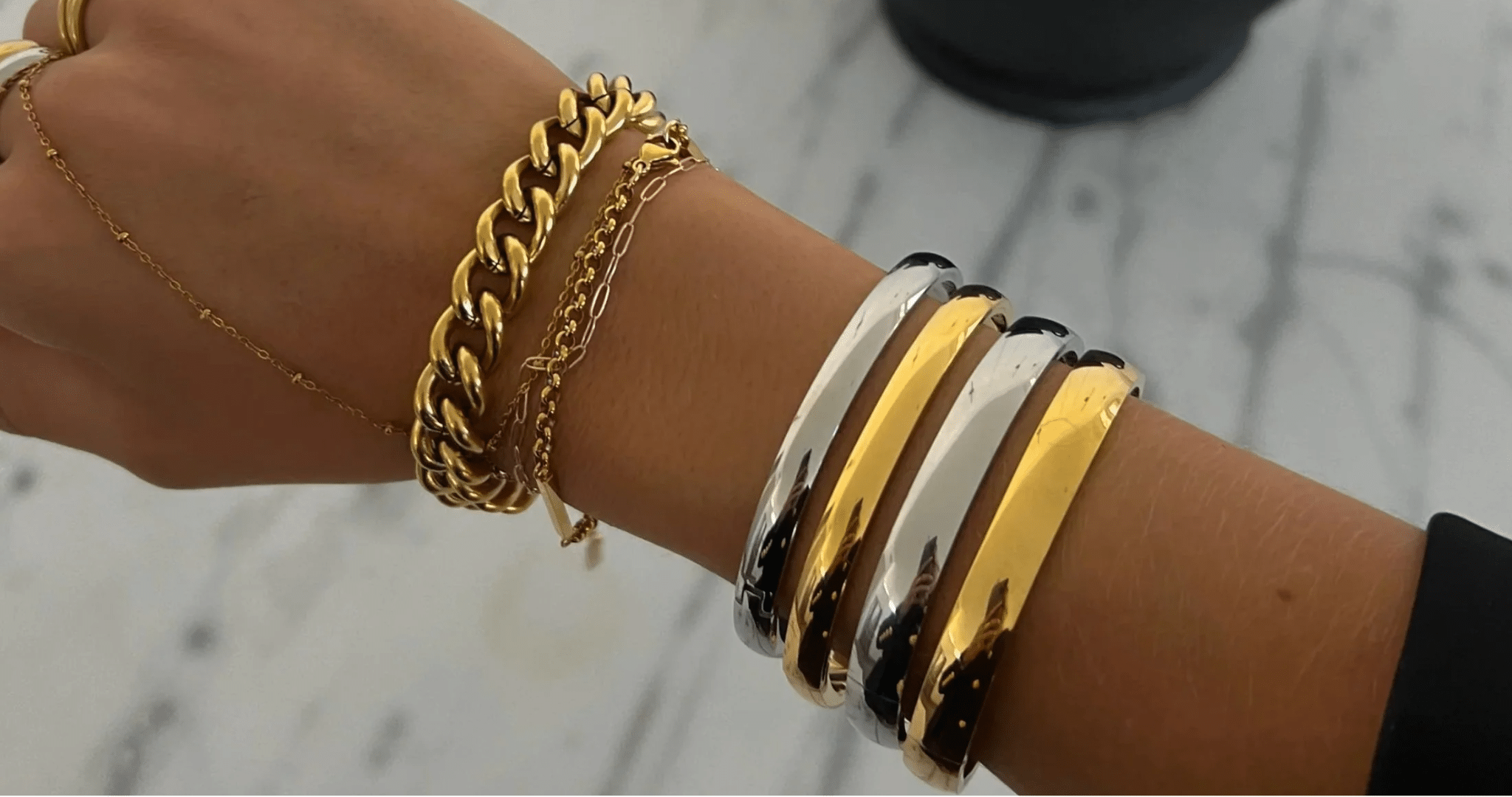
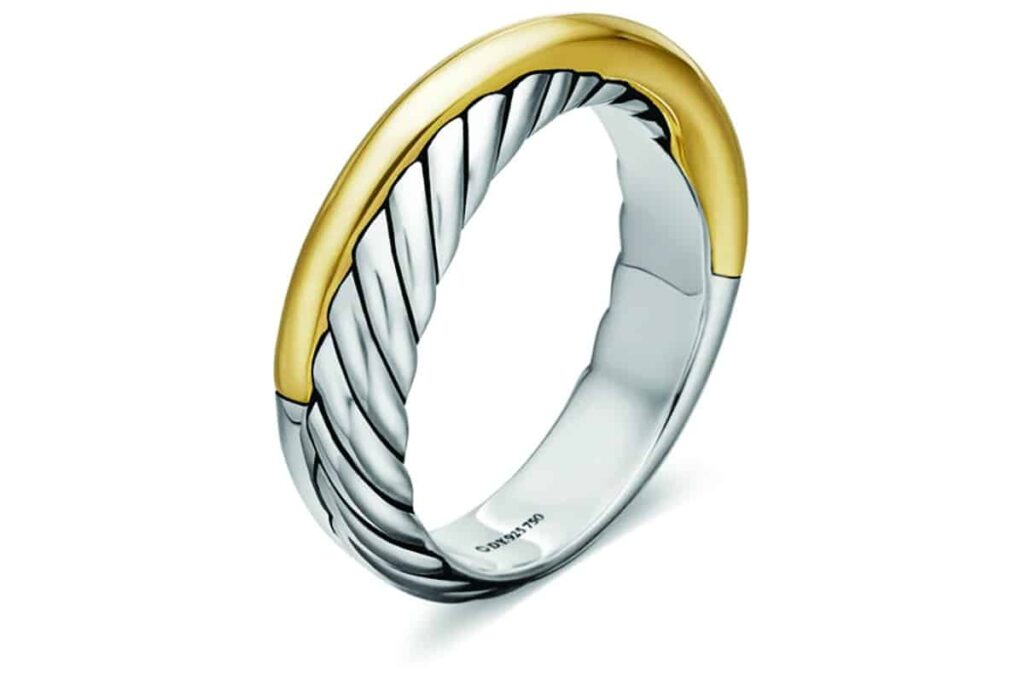
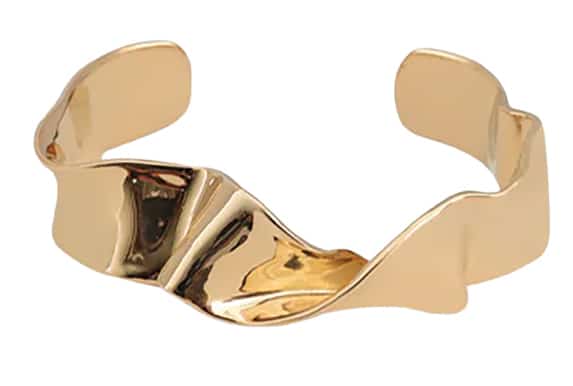
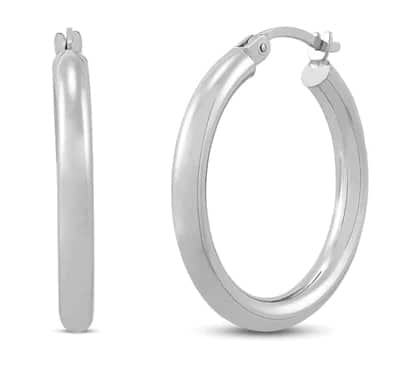
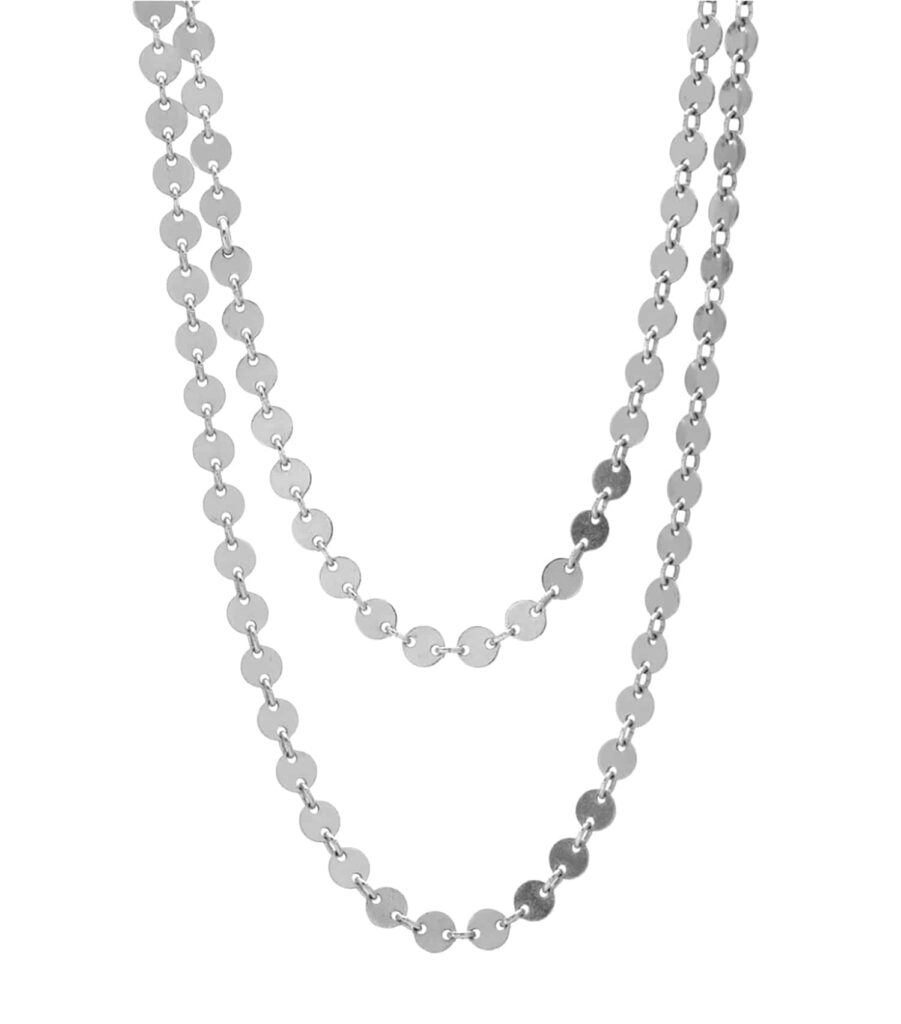
Refusing to pick a side is in. Mixing silver and gold jewelry—once considered a fashion faux pas—has reemerged as one of the season’s easiest styling plays, spotted across NY Fashion Week runways and on the wrists, necks and fingers of street-style regs. The old “rule” about picking a single metal? Consider it officially retired.
Don’t overthink it—the appeal is in the effortlessness. Done right, the look is chic yet low maintenance. Start small with your go-to tone as a base (gold for warmer skin tones, silver for cooler) and layer in the opposite as contrast.
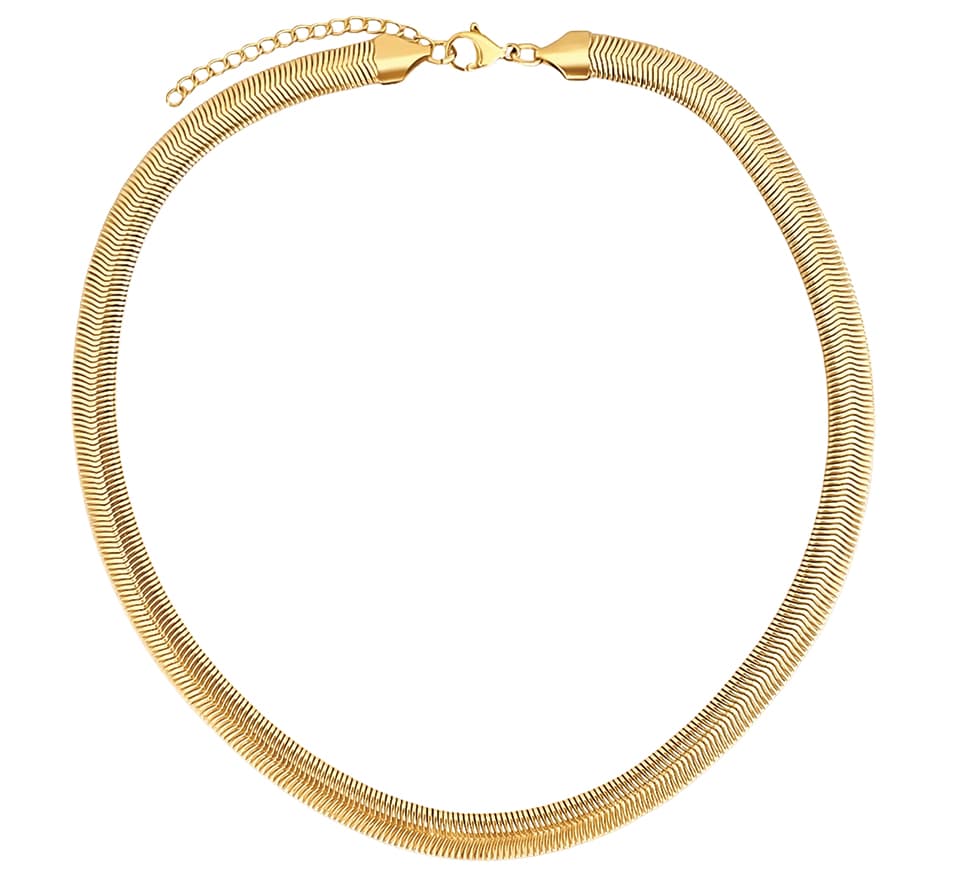
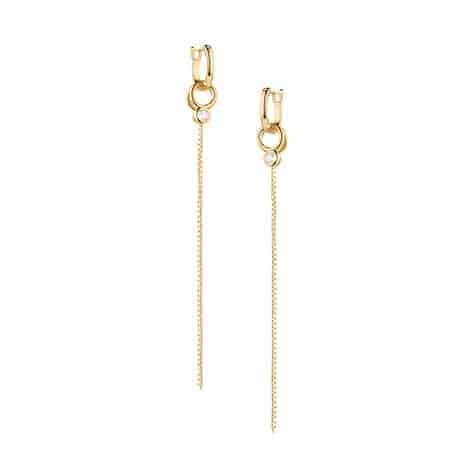
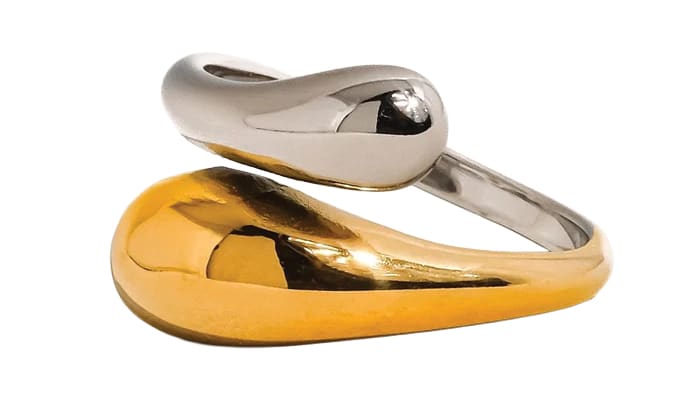
The key is balance. Try throwing on a shorter silver chain with your usual gold necklace-and-earring pairing, stack a single gold band among your everyday silver rings, or mix hoop finishes across each ear. For a more structured approach, block the metals: gold at the fingers, silver at the neck and ears—or vice versa. The repetition yields a cohesive look while still delivering dimension. For something bolder, lean into a full stacked moment with as many mixed-metal necklaces and rings as you fancy.
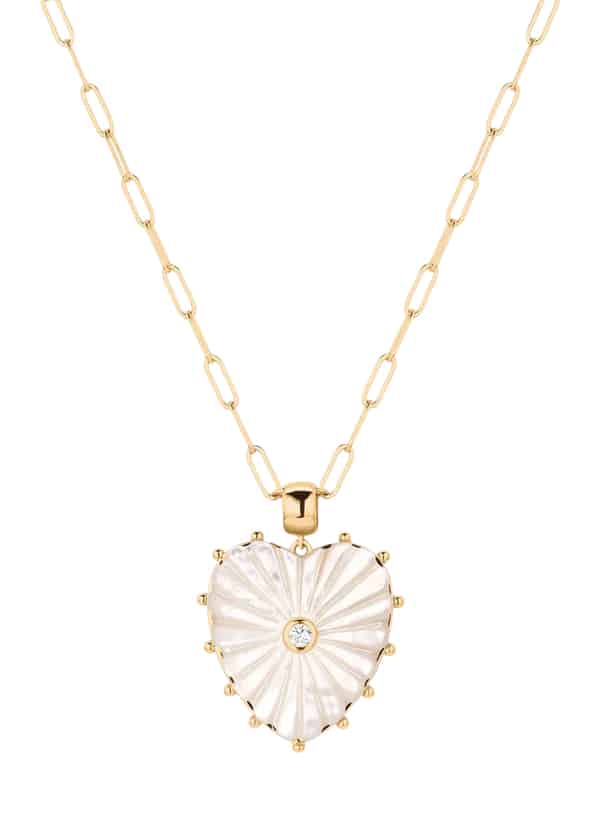
One jewelry “house rule” worth keeping? Wear it like it’s second nature for a more mod, warm-meets-cool sitch that feels unforced. Mixed metals work best when they feel lived in—not labored. The goal isn’t symmetry; it’s rhythm. A little warmth, a little cool, all in sync. Find multitoned inspo locally for your arsenal—er, jewelry box—here.
Ticketmaster is already infamous for making it anything but easy to secure concert tickets—but now a new price-surging policy is drawing fresh scrutiny from frustrated fans.
Welcome to the world of dynamic pricing, where customers pay different prices for the same tickets depending on demand. In short: Mediocre seats can suddenly cost hundreds more, based on popularity, availability and where you fall in the queue.
While Ticketmaster allows the feature, artists ultimately choose whether to opt in, decide how many tickets sell before dynamic pricing kicks in—and set a ceiling for how high prices can climb. The system mirrors basic supply and demand—in this case leaving fans to foot the bill.
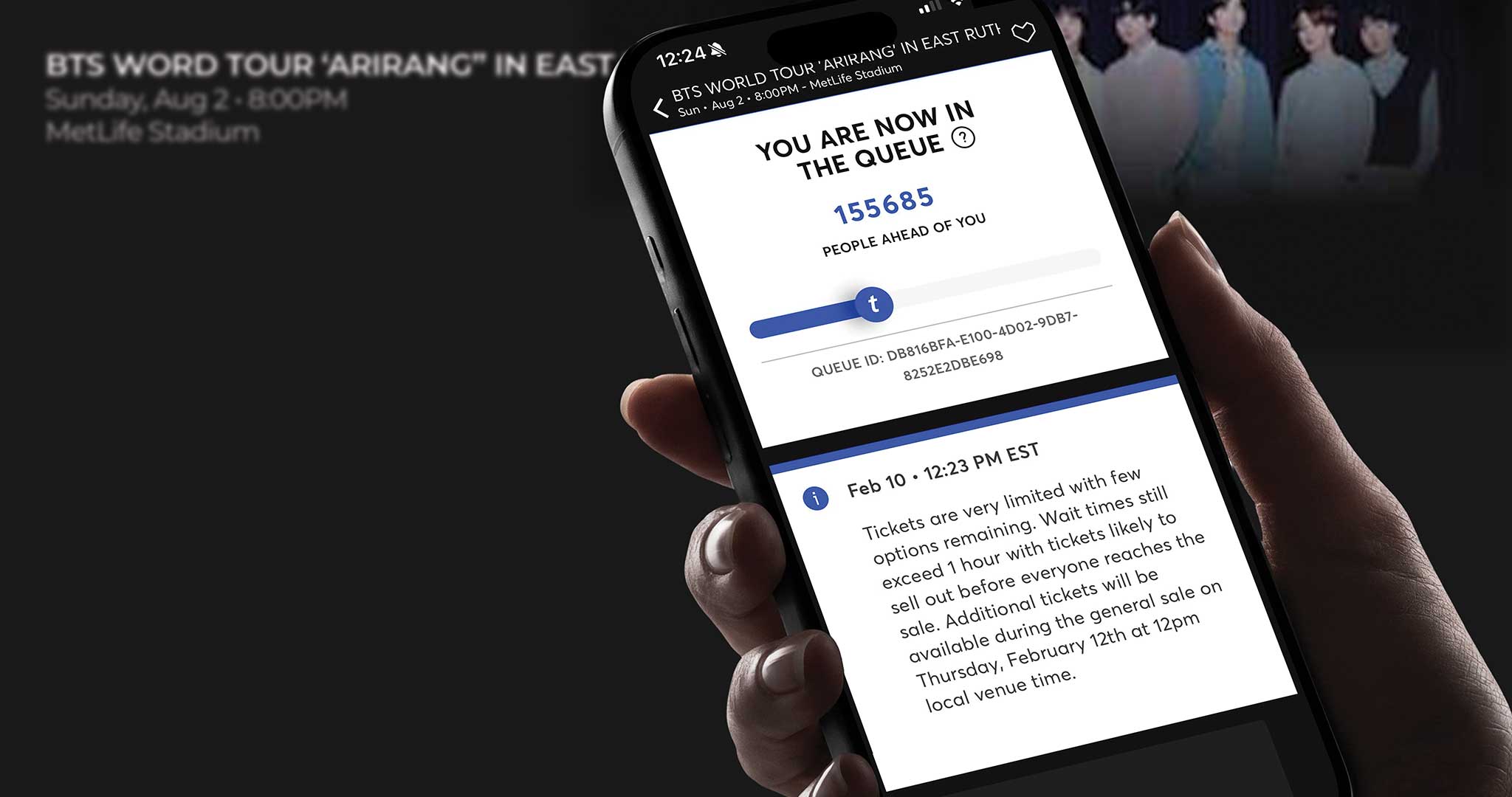
One Raleighite secured VIP BTS tickets for ~$600 after taking the day off of work to sit in the queue. “That’s actually great for VIP, and we’re super close to the stage,” she says. “Last time, they were almost $1,000 apiece, so this was a much better deal.” BTS opted out of dynamic pricing, she notes, and while the queue was still long, fans noticed a major difference in ultimate cost.
It’s a fight for fanbases across the board, not just mega popstars’ fandoms like that of BTS or Taylor Swift. And not every artist follows suit. When Noah Kahan tickets went on sale for his July show at Carter-Finley, Raleigh fans fought through queues of thousands, only to encounter jaw-dropping prices. The show quickly sold out, and resales now range from $340 to upward of $2K.
The pricing confusion came as a shock to some fans. While dynamic pricing was said to be off, fans report paying very different prices for very comparable seats. Kahan attempted to avoid a ticketing frenzy by opting into Ticketmaster’s Face Value Ticket Exchange, where tickets can’t legally be resold above their original price and are nontransferable. Still, listings appeared on resale sites like StubHub, SeatGeek and Vivid Seats—leading some to question whether those tickets were legitimate or simply workarounds by scalpers.
“I tried to get legit Noah tickets and was denied,” a local tells RM of her ultimate resort to StubHub. “I’m not even sure they will work. I would have physically waited in line for these tickets—and preferred that over buying scalped. I hate being part of the problem, but I hated missing Noah Kahan more. What can I say, shit’s a dumpster fire.”
Ticketmaster maintains that artists control dynamic pricing and the model reflects real-time demand—arguing the system helps prevent scalpers from capturing most of the profit. Critics, however, say it simply shifts sky-high resale prices straight to fans. But every time the familiar ticketing outcry arises from a fanbase, the artist blames Ticketmaster. So the cycle continues, until policies change—or fans give up.
Other artists are experimenting with ways to protect fans. For his upcoming hometown Fayetteville show, NC-native rapper J. Cole limited early access to fans within a 30-mile radius—giving locals first dibs.
Still, the broader pricing problem remains. Dynamic pricing has quietly become standard across major tours, and it isn’t limited to music—similar demand-based models are now common for sports tickets, flights and even short-term rentals.
For concertgoers, the result is simple: The race to buy tickets is getting faster, pricier and far less predictable.
Pretend Presale To get a presale code, fans often just click on a link or enter their email on an artist’s site. In practice, that means nearly everyone gets access—turning the “presale” into just another ~sale.~ Miss the sign-up window, though, and you may already be out of luck.
By 9am, it’s coffee. By 9pm, it’s a glass of wine—and the best part? You never even have to leave your seat.
The day-to-night cafe has entered the chat in Raleigh, blurring the line between neighborhood coffee shop and go-to wine bar. One minute, you’re sipping espresso and answering emails; a few hours later, the same table holds a glass of natural wine and a savory small plate.
With long hours and a lowkey feel, these cafes look nothing like the typical coffee shop. While Americans tend to fuel up in a rush, other cultures across the globe take the time to sip and savor—treating cafes less like pit stops and more like a “third place” to spend the day rather than just grab a lukewarm to-go order.
Vino
The concept isn’t new globally, but it’s gaining traction stateside—and Raleigh is catching on. Locally, that energy is showing up at spots like Cuya, Vino, and Gussie’s + Foxhole. Fresh coffee and homemade pastries anchor the early day; by evening, wine, cocktails, and savory snacks or dinner plates take hold—all in spaces that beckon you to stay awhile.
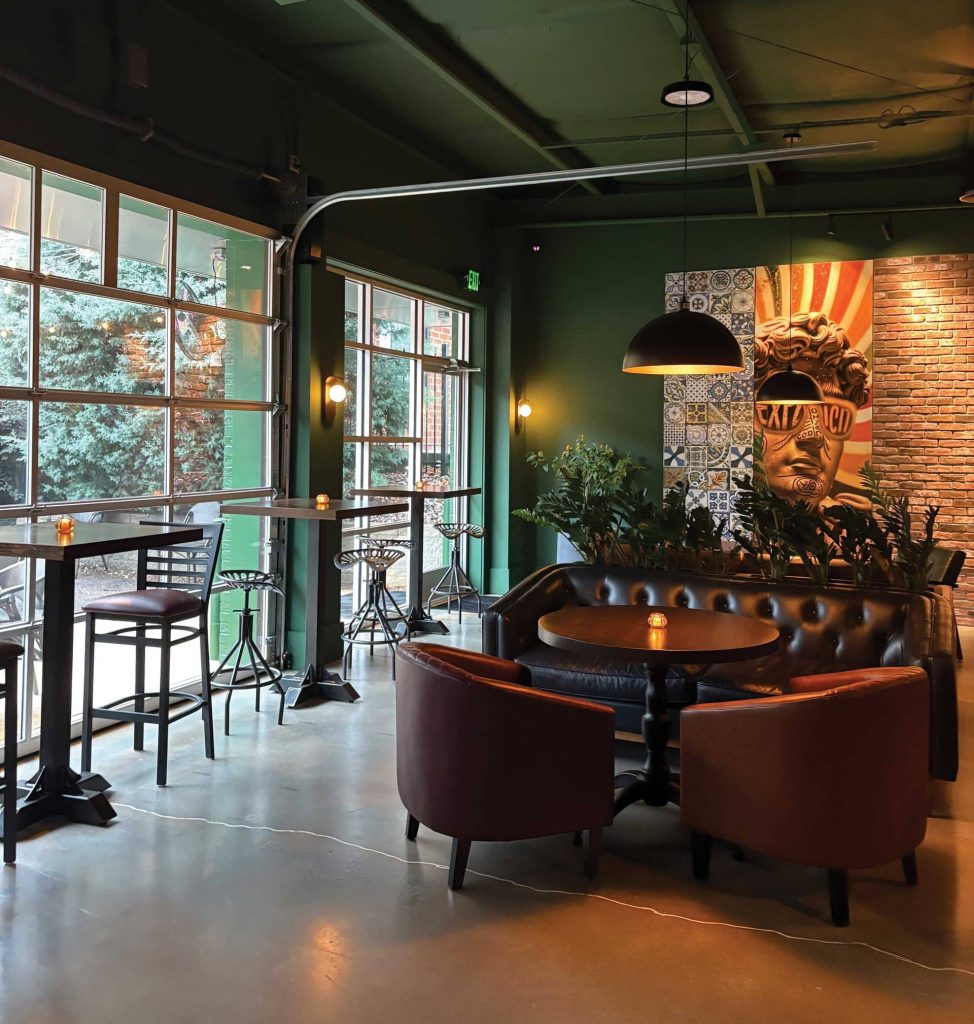
“When you come in, you’re going to get a delicious fresh espresso and good wine,” says Andrew Butenko, co-owner of joint coffee shop/wine bar Vino. The space leans into that stay-awhile vibe via cozy couches and moody corners that work just as well for slow morning coffee as they do for laid-back wine nights.
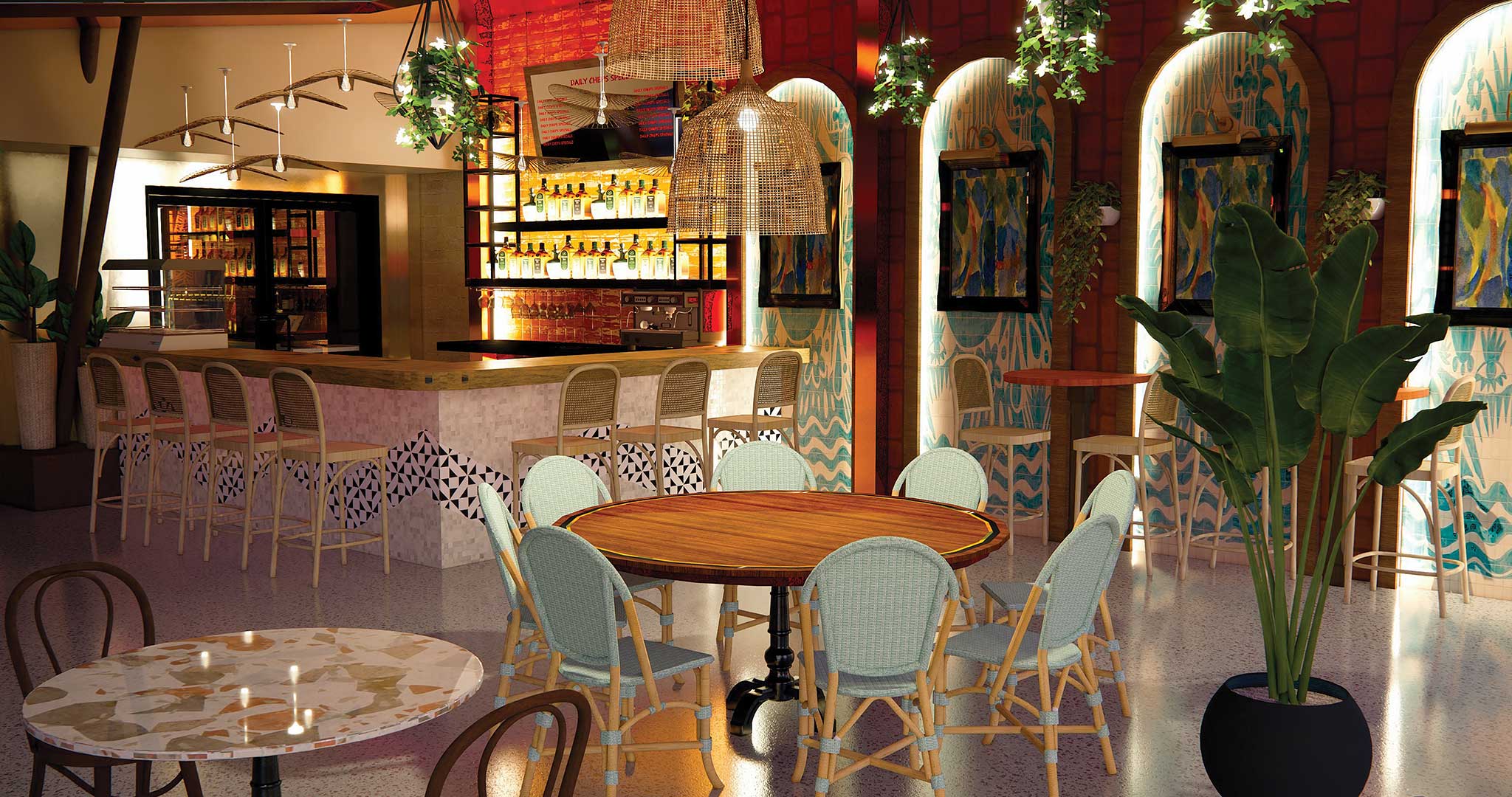
Cuya owner Charlie Ibarra and executive chef Kevin Ruiz are leaning even further into that public living room-esque culture, revamping the Glenwood South restaurant’s patio with retractable glass roofing and adding a dedicated coffee bar as part of the upcoming Cuya Cafe.
“We go to cafes all the time… during the day to work,” maintains Ruiz, a Puerto Rico native. “For us, it makes sense. Coffee is a big part of our culture”—adding, as Bad Bunny famously croons: “Por la mañana, café; por la tarde, ron.” Read: coffee in the morning, rum in the afternoon.
And in Raleigh’s growing all-day cafe wave, you can increasingly find both under the same roof. The momentum reflects a broader cultural shift, says Butenko—one where Americans are indulging in more worldly habits, slowing down and straying from the common stereotype of always being on the go.
“This generation is more cautious about what they eat and drink,” he acknowledges. “They’re looking for a place where there is no TV, no drama—just good wine.” And, increasingly, good coffee to boot.
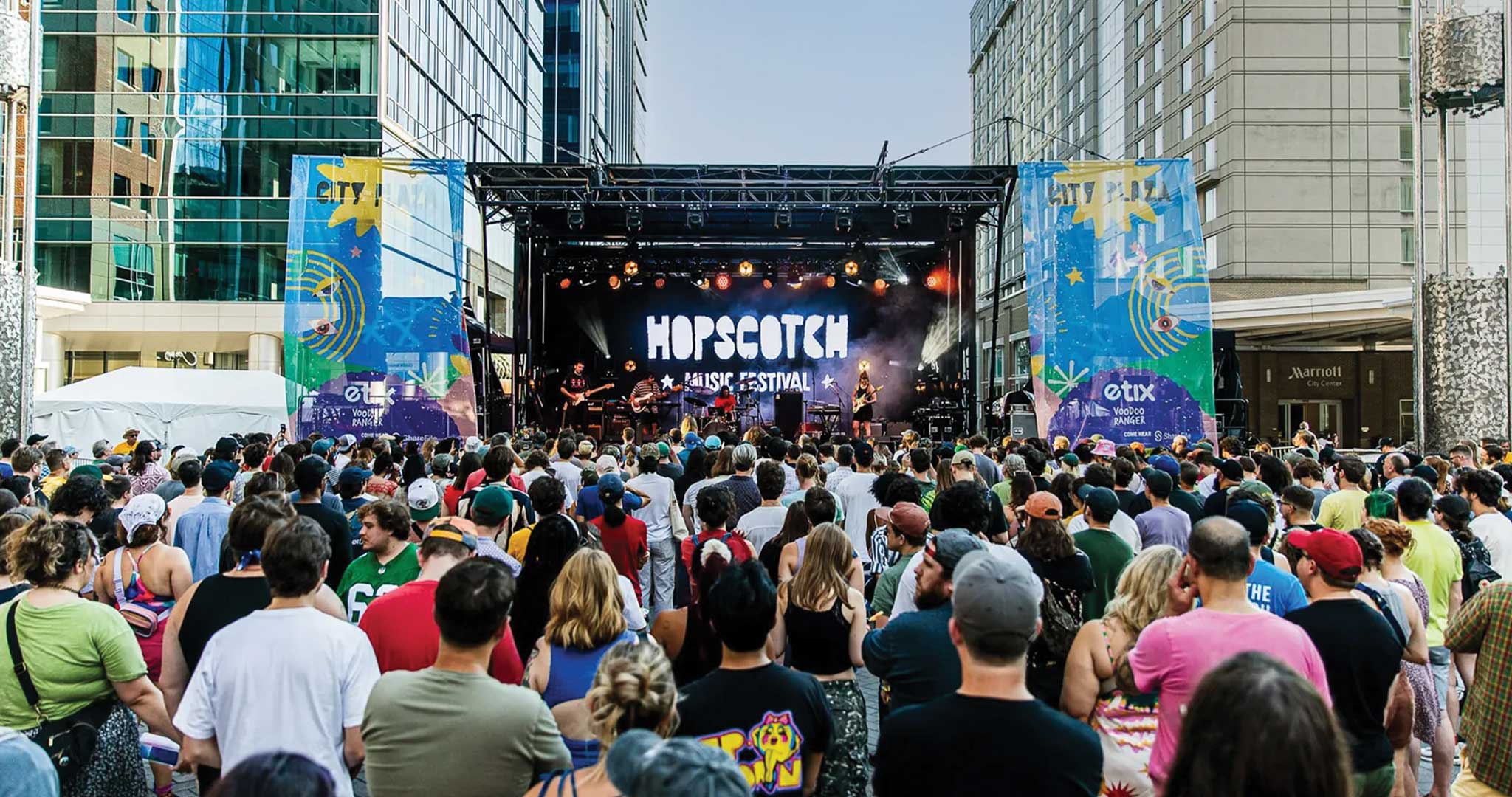
This was originally going to be a very different story. For months, rumors ran rampant that Raleigh’s flagship indie music fest Hopscotch Music Festival might not return—met with radio silence from organizers.
Sources told RM the fest’s owners, local ticketing company Etix, were undecided about its 2026 run and were unresponsive to repeated requests to comment. Typically tickets are available in early December, but sales still hadn’t launched. With less than six months to go before its typical September mic drop, there was no confirmation in sight. Then, on March 13, Raleigh got its answer: Hopscotch is back for 2026. And the collective sigh of relief wasn’t irrational.
In recent years, Raleigh has watched major festivals come and go. Dreamville announced its fifth year would be its last. While IBMA Bluegrass Live! was never intended to be permanent, the city submitted a new contract and the fest declined to renew, ending its Raleigh run. Despite their departures, the impact of both still ripples through Raleigh—and their finales weren’t tied to a lack of support.
After IBMA Bluegrass Live! organizers opted to “try something new,” former collaborator PineCone quickly launched the parallel Raleigh Wide Open fest without missing a beat. And while the City of Raleigh promised a successor to Dreamville’s fifth and final—with J. Cole‘s “hands all over it”—they have yet to deliver, though sources suggest a 2027 spring fest is up for consideration.
But even when departures aren’t spurred by a lack of community, the pattern raises a bigger question: Can Raleigh sustain a music festival long-term?
The answer is complicated. For starters, this isn’t just a Raleigh problem. “If Hopscotch goes away, it won’t be alone,” says Dave Rose, founder of Deep South Entertainment and an informal advisor during the early years of Hopscotch. Across the country, festivals are facing rising costs, tighter margins and increasingly high-risk economics.
While festivals are a labor of love, says PineCone Executive Director David Brower, they’re also famously “a good way to lose money very slowly.” Unlike a venue or brick-and-mortar business, festivals reset every year—raising and spending millions in a matter of months.
“In reality, you’re starting from square one every single year,” says Brower. “You raise all the money you need, then spend all the money you got.” From artist fees (which often spike for festival appearances) to temporary infrastructure—stages, sound, security, bathrooms—and the staff to keep things on track, the costs stack up fast.
While fests offer more bang for your buck than a single concert, betting on audiences to show up for a full lineup—not just one headliner—is a far riskier play. Add in premium artist pricing, says Rose—and the likelihood they won’t return to the same market for a year unless the demand is sky high—and margins tighten quickly.
Rodney Boles
As Brower puts it, “festivals curate a village that only lasts for three days, and then work the entire next year to create the community again.”
In Raleigh, some say those challenges are compounded locally. A former longtime Hopscotch employee told RM that permitting and policing costs have increased—off-duty police officers starting at $35/hour, with additional charges for structures and pyrotechnics—while city support has allegedly become less consistent, adding pressure to an already precarious model.
Still, the payoff can be massive. “We don’t have many events Downtown that use our storefront businesses as event spaces—but Hopscotch does,” remarks DRA President Bill King. “A lot of businesses do really well.” Thanks to its unique format, Hopscotch draws ~25,000 people annually, funneling foot traffic directly into Downtown locales in a way few events can.
“It’s our biggest weekend of the year by far,” says Slim’s owner Bill Johnson. “This festival is unique because it pushes people inside the bars—we pretty much have a full house from noon till 2am.”
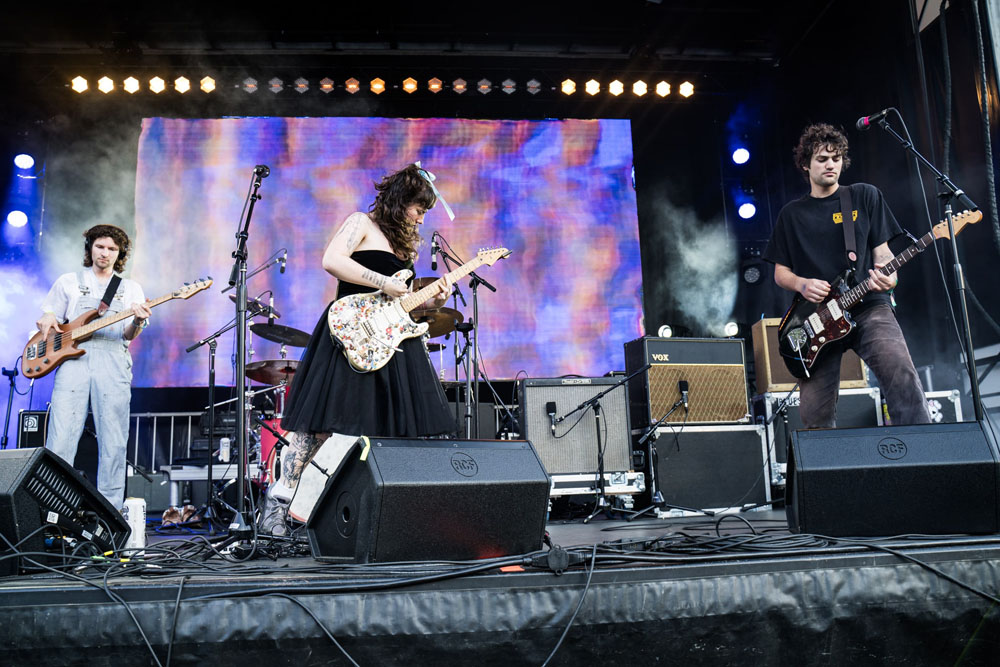
But beyond economics, there’s cultural capital. “It’s not exactly a Top 40 festival,” says King, nodding to the cool factor. “Headliners tend to be more indie, and it’s a nice blend of out-of-market and in-market shows.” For more than a decade, Hopscotch has been scouting and booking indie acts just before their big break—elevating NC artists and cementing its place as a defining part of Raleigh’s music identity. Which is why the stakes feel so high.
“We are above average as compared to the rest of the country, but we could still do better to nurture festivals,” Rose maintains.
The bottom line: Raleigh needs to nurture events like Hopscotch—for its own sake. Festivals don’t just happen. They require sustained investment and coordination—plus the community needs to show out and secure tickets. And while Raleigh has proven it can host fests, keeping them is the real challenge.
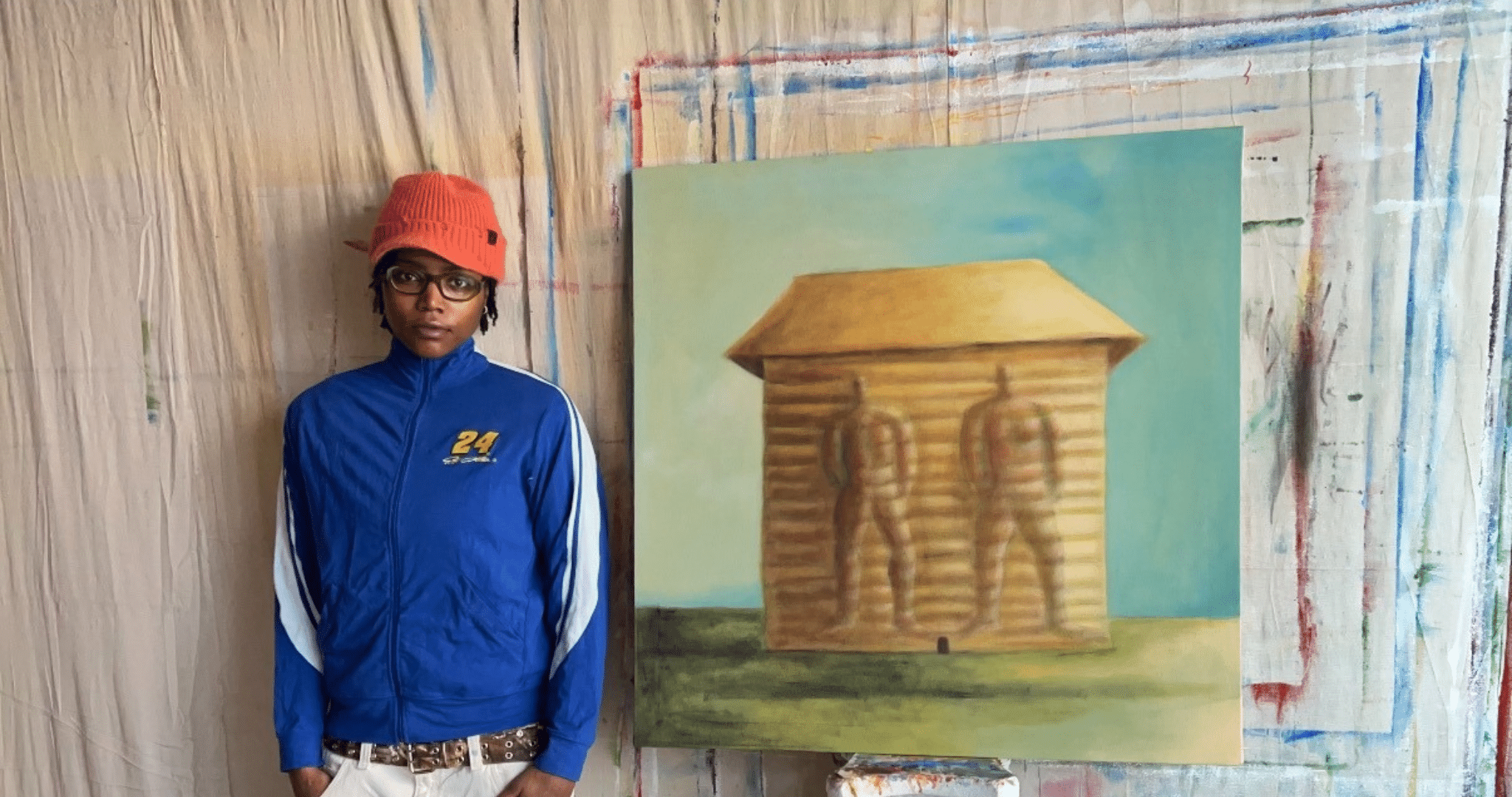
The Raleigh Iron Works mainstay is decked out with four of Camp’s original works—Zzz, On Foe Nem, Uncovering a Path Once Hidden, and Untitled—alongside a print of her piece Unequivocal through June 11, bringing a thought-provoking and vibrant backdrop to your next wine excursion.
Camp’s work is more than just eye candy: She paints a picture of the American South invoking questions—and possibly answers if you look—about her experience growing up as a seventh generation Black American. Works in the exhibition touch on past and present and the relationship between Black people and leisure—with sci-fi elements etched in.
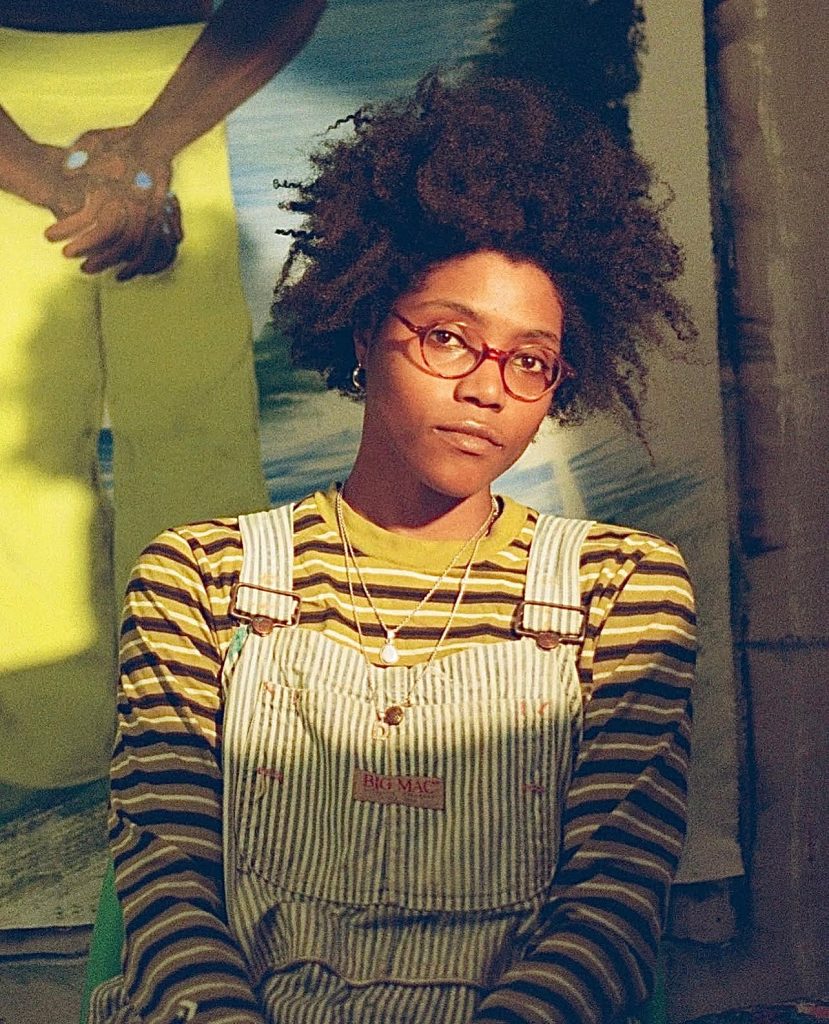
“Being able to represent my lineage as an artistic people and show forth my heritage is really cool—it’s one of the things that impacts my artist statement,” Camp told RM. We chatted the Tennessee artist up on her inspo, DVD collection and celebrity recognition.
Your overarching mission? My goal is to enlighten the world with color and my sense of spirituality. I really feel like art is a church. Art is like a spiritual place that I go to, and I feel like it’s my purpose to share that feeling with the world.
Telltale sign a painting is complete? I paint the eyes last. When the eyes are looking at me and it makes me feel something, then I can put my brush down. It just depends how I’m feeling—I can do a painting in an hour and one in six months. I’ve even taken breaks from paintings and then came back to them three years later.
Any artist or medium with heavy influence on your work? I have about 300 or 400 DVDs I watch. My favorite right now is Toys with Robin Williams. I watch while I work, and I usually watch them with the sound off. I’ll play some music, and then there’s even days where I work in silence, truth be told.
Is a wine bar showcase a norm? Not really. This is actually my first time doing it at a wine bar; other than that, I mostly show in art spaces. Right now, I have an exhibition coming up at the Frist Art Museum in Nashville, so that’s most of my artwork. I’m an artist for the people, I really show my artwork anywhere. There’s no bounds where I’ll show my artwork—I’ll show my art in a Walmart.
Tell me about your recognition from Tyler, the Creator and SZA. I received recognition from them and a few others. Tyler, the Creator reached out to me, gave me props and told me I’m on the right track. It was really special, because I’m not really a clout chaser, but Tyler was nice. I do like his music and I grew up listening to him, so that’s really cool. Through June 11, @stpierrewine