by Heidi Reid | Jul 15, 2026 | Arts & Culture, July/August 2026
Death Cab for Cutie returns to their roots.
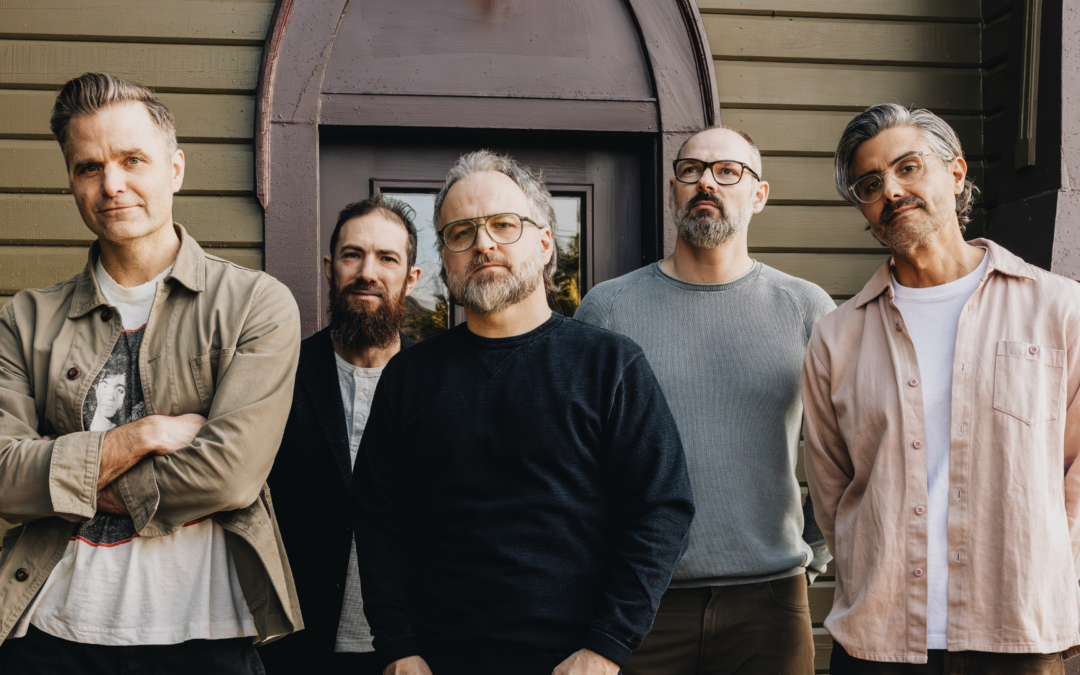
After three decades as a band, musicians often slip into conformity and make music that’s comfortable, easy or lucrative. Washington-founded rock band Death Cab for Cutie almost fell into the same trap—but the group’s new record, I Built You a Tower, broke the pattern and revived the soul-sucking indie-rock sound that won them fame to begin with.
Now, Death Cab is heading to Walnut Creek July 22 with indie-pop girly Japanese Breakfast and a new setlist in tow.
I Built You a Tower—Death Cab’s first album in four years and guitarist Dave Depper’s third album with the group—was recorded faster than any of their previous records. “If the material is good, then it’s beneficial to not ‘overegg the pudding,’ as the British would say,” maintains Depper.
Rather than overthinking, Death Cab took the opportunity to just do, resulting in a return of their clean—but not overproduced—sound that bolstered them to the status of indie figureheads. And, parallel to earlier albums like Transatlanticism and Narrow Stairs, sorrow takes center stage.
“It’s an emotional song cycle for Ben [Gibbard],” Depper tells RM of DCFC’s frontman. “I think some of his albums are more thematically unified than other ones, and this one has a very strong through line with all of its songs, which is to its benefit.”
Cathartic and melancholy, I Built You a Tower wasn’t always meant to have the rush of sorrow it serves the listener. Death Cab wrote together and demoed around 90 tracks before the 11 final selects came out of the woodwork. “I’m not exaggerating—there really were that many,” Depper emphasizes. “A lot of them didn’t have anything to do with that topic. … Songs just started selecting each other and a cohesive body made itself known.”
The new record also serves as a looking glass for change, as the group recently switched labels. After spending two decades with Atlantic (the label behind ABBA and Zeppelin), Death Cab opted for indie label ANTI‐ Records, known to represent smaller artists with cult followings—including NC-based MJ Lenderman—and many with the same succinct sorrow in their songs. And Death Cab for Cutie seems to fit right in. After all, they know a thing or two about wearing their hearts on their sleeves. livenation.com
by Heidi Reid | Jul 14, 2026 | Arts & Culture, July/August 2026
Raleigh Mag chats with the indie-sleeze era icon.
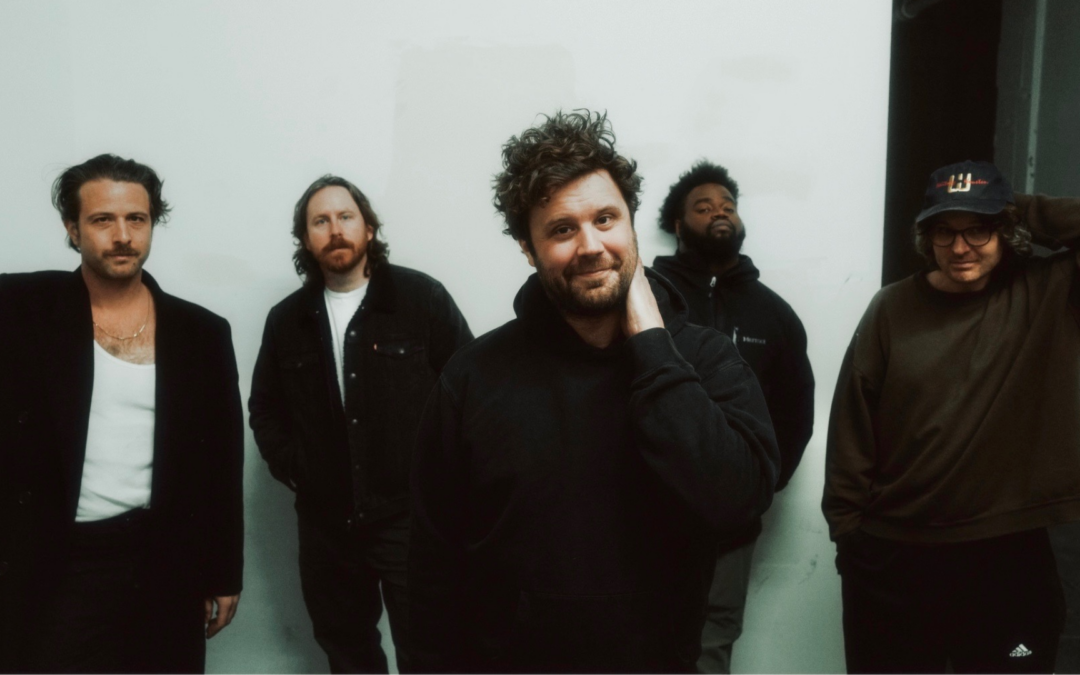
When Passion Pit’s Michael Angelakos began turning out music for profit, he was barely old enough to buy a pack of American Spirits. The first of the band’s songs were written during the frontman’s time at Emerson College, and almost immediately, “people were wanting me to make music to make them money, and it was working,” he says.
While graduating college in a successful band lives in the dreams of plenty of students-turned-musicians, it’s not always glitz and glamour. Despite immense commercial success in the early 2010s—particularly with the track “Sleepyhead”—the indie-synth band has endured their share of mental health struggles, tour cancellations and hiatuses over the past ~15 years.
Now, Passion Pit is making a highly anticipated return with their Pretty Penny tour—including a Raleigh stop at The Ritz July 31—and Angelakos confirms new music is coming out soon, following almost a decade since their last record.
“The truth of the matter was, I didn’t have any ambitions or ideas,” Angelakos explains of the lull in Passion Pit records. “That’s a really scary thing to suddenly be without a vision when your entire life is basically coming up with [music]. … I hid from things for a while, then I started seeing the world differently.”
A new perspective was exactly the kick-start Passion Pit needed. First, Angelakos had a sense of direction, then he decided he wanted to tour, and, finally, he knew it was time to make another record. Five to six brand-new tracks make an appearance at every tour stop, and the audiences’ reception to the new music is just as enthusiastic as it was in 2009.
Angelakos tells RM he has a gut feeling about Passion Pit’s new music—the same feeling he had while working on the group’s acclaimed track “Sleepyhead.” The Northeast native says the popular song’s success wasn’t entirely a surprise to him, but the cultural impact and endurance was.
The breakout hit sampled “Óró Mó Bháidín” by Mary O’Hara, originally released in 1958. Angelakos already had the makings of the song in his head when he found the Irish folk song in a bargain bin at a record shop in Cambridge, Massachusetts. “I listened to it, and I lost my mind,” Angelakos reminisces. “It’s a very old song, ancient even, and it’s basically ‘Row, Row, Row Your Boat’ in Gaelic.”
Widely considered one of the greatest traditional vocalists in Ireland, 91-year-old O’Hara sold Angelakos the rights for just $100. “She was really cool, and I’m happy to share publishing with her—she made my career,” he maintains.
Now entering a new era, Passion Pit’s July 31 Ritz stop allows fans to hear those synthy-indie tunes inspired by centuries past firsthand—and perhaps witness another historical moment in the making. livenation.com

by Heidi Reid | Jul 7, 2026 | Buzz, July/August 2026
Teen takeovers are spreading across the country. Here’s what Raleigh should know.
Teen takeovers have made their way to Raleigh. Over Fourth of July weekend, gatherings in Brier Creek and Glenwood South involving fights, firearms and large crowds left nine people shot and dozens arrested. An estimated 3,000 teens showed up to Brier Creek and about 5,000 to Glenwood South.
About half of the teens weren’t local to Raleigh—and the phenomenon isn’t local either. Teen takeovers are large gatherings organized primarily through social media, often drawing hundreds—sometimes thousands—of teenagers to public places like malls, parks and entertainment districts. While many begin as meetups, cities across the country—including Atlanta, Chicago, Detroit and DC—have increasingly seen these takeovers devolve into fights, vandalism and gun violence.
Elsewhere over the holiday weekend, teen takeovers prompted violence, arrests and even death in Charlotte, Pensacola, St. Louis, Tampa, Charleston and more.
Nineteen out of the 28 arrested at Charlotte’s Fourth of July celebration were juveniles, including a 12-year-old, while a viral video from North Charleston’s teen takeover shows the assault of a female police officer. In Pensacola, the takeover resulted in one dead and six injured.
So how did we get here? Social media—including Instagram and Snapchat—is used to organize and promote such takeovers. Flyers—often AI-generated—explicitly stating “no guns, no masks” circulate, and organizers often withhold the exact location or time until the last minute to delay police response. Despite that “suggestion,” takeovers across the country grow increasingly more violent—and law enforcement officials across the country are on edge.
In cities like Detroit and Chicago, teen takeovers have become common during the summer months, and ~six years later, the problem remains unsolved—raising questions about whether Raleigh could see another. And according to the Chicago government, stopping takeovers is more complicated than just passing an ordinance.
But many Raleigh residents and business owners believe an ordinance—such as a curfew for minors—is the first step toward preventing similar incidents. “What should have been a typical weekend for residents, visitors and local businesses instead became a night marked by disorder and multiple shootings that affected our entire Downtown community,” emphasizes Niall Hanley, owner of Hibernian Irish Pub on Glenwood Avenue.
“Clearly Raleigh is not exempt from the incidents of youth violence occurring across the country,” says Mayor Janet Cowell in a written statement. “We need to talk with the youth, their parents, schools and the broader community to understand the root causes and to better coordinate strategies.”
Supporters argue implementing a curfew could ease the burden on police resources and surrounding businesses. “We believe it’s time for city leaders to have an honest conversation about common sense public safety measures, including a nighttime curfew for anyone under 21 in bar and entertainment districts,” maintains Hanley. Brenda Gibson of the RPD Foundation agrees: “It may be hard to enforce, but it’s a good place to start,” she tells RM.
Despite nearly 300 officers being on duty the night of the 4th and into the 5th, it took three hours to bring the Glenwood South situation under control—with the help of the Knightdale Police Department, Zebulon Police Department, Cary Police Department, Wake County Sheriff’s Office and the North Carolina State Highway Patrol. (RPD Chief Boyce will address City Council and answer questions from the press today.)
Youth advocates argue the takeovers are a symptom of a larger social issue: The lack of third spaces designated for teenagers. Takeover organizers in other cities maintain they are simply looking for a sense of community and a place to go, despite violence and unrest being a common end result.
Whether driven by a need for community or social media momentum, cities that have experienced repeated teen takeovers continue searching for solutions—leaving Raleigh officials to determine how they’ll respond if another gathering materializes.
by Heidi Reid | Jun 30, 2026 | Buzz, July/August 2026
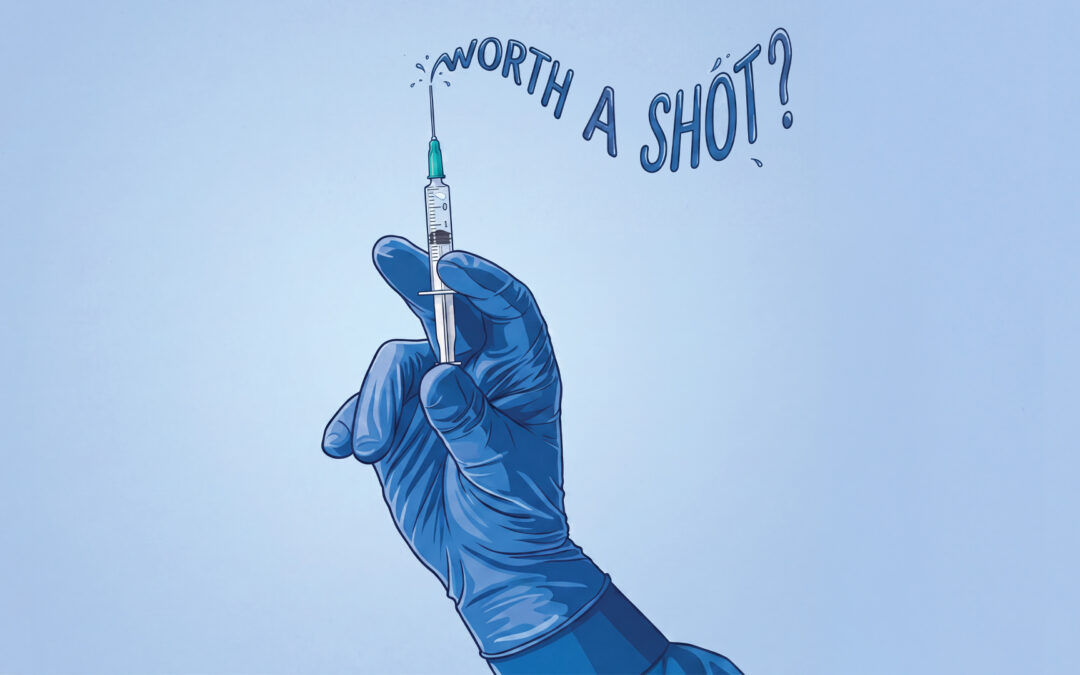
The thin ideal is back—with a prescription. As GLP-1 drugs surge in popularity, Raleigh weighs the promises, pressures and cultural fallout of the Ozempic era.
“Nothing tastes as good as skinny feels,” waif era supermodel Kate Moss told Women’s Wear Daily in 2009—and it seems the world is starting to adopt her mantra again.
Not that it ever left. But for much of the 2010s, the cultural conversation appeared to shift, when “slim thick” builds and body positivity became trendy, backed by curvy ambassadors like Lizzo and Meghan Trainor. Now, the pendulum is swinging back—with hollow eyes, visible rib cages and borderline emaciation once again taking over runways, magazines and movie screens.
Case in point: The famously curvy Kardashians have gotten significantly smaller, while other already-slender stars like Alexa Demie and Natalia Dyer have grown concerningly thin—with The Telegraph even offering a haunting comparison of Ariana Grande to Karen Carpenter.
While the super-skinny endemic of the ’90s and early aughts was oft associated with restrictive dieting, dangerous weight-loss drugs and, in some circles, actual substance abuse, this time, the pursuit of thinness comes with a prescription: GLP-1s. Even body-positivity stars Meghan Trainor and Lizzo have confirmed they hopped on the bandwagon.
Not new as much as arguably en vogue, injectable GLP-1s have long been a part of Hollywood grooming rituals—even when Ozempic and the likes were prohibitively expensive, scarcely available and far from common.
Now, GLP-1 is the word on everyone’s lips, minds and screens, trickling down from magazines and movies to the fridges and cabinets of your mailman, your kid’s rec soccer coach and everyone in between.
Despite being ranked 27th for obesity in the nation, North Carolina ranks 8th for weight-loss obsession. And residents are buying in: According to a source from DHHS, the number of NC residents taking the drug is skyrocketing, with national polling suggesting ~1 in 8 adults now take a GLP-1 medication—which could translate to more than 1 million NCers.
Sure, weight-loss drugs and diet trends are nothing new: The Grapefruit Diet, Atkins, Weight Watchers and similar fads have been making rounds for over a century. So what gave GLP-1s such a grip?
Dr. Laurel Carter of Wake Internal Medicine Consultants lends her thoughts: “All other weight-loss drugs have been sh*t. You can be nervous as hell on Phentermine and have your heart beating out of your chest; you can be pooping yourself on Orlistat; or you can be on Fen-Phen—which literally kills you.”
GLP-1s, by contrast, tackle the problem differently. In laymen’s terms, they mimic peptides in the stomach and slow digestion, explains Carter, who says she prescribes them regularly. “It makes patients feel fuller for longer and stimulates satiety,” she adds, noting it also works on the brain’s reward pathways, dialing down the urge to binge and the pleasure response tied to food.
While there are some caveats, it’s clear why GLP-1s are a standout compared to weight-loss trends of years past: “It’s a great drug,” maintains Carter. That said, as with any treatment perceived as an artificial path to beauty, GLP-1s continue to attract plenty of side-eye and stigma despite the number of public-facing Americans who’ve taken advantage of the drug—whether they’ve admitted it or not.
That criticism comes from several directions—some questioning the long-term research or ease of access, particularly for people who are already a healthy weight, and others arguing that use amounts to “cheating” or reflects a lack of willpower.
“If your thyroid didn’t work, you wouldn’t think taking Levothyroxine is cheating,” Carter pushes back. “If you have a sinus infection, you’re not ‘cheating’ by taking antibiotics. It’s modern medicine—and we can improve lives. Obesity is the No. 1 modifiable risk factor. You have to get it under control, period.”
The alternative, Carter argues, is gambling with a host of preventable health complications later in life like kidney disease, kidney failure, heart attack or stroke. “For my patient who is 250 pounds, this can help them live longer,” she maintains. “This could add 10 years to their life.”
The promise is significant. So are the questions. Plausible risks fuel the concern—and the stigma. Some patients say GLP-1s have robbed them of not just their drive for food, but their desire for everything—sex, social interaction and so on. Common side effects include nausea, vomiting, diarrhea and constipation—and then there’s “Ozempic face,” the internet’s nickname for the hollowed-out look some users experience after significant weight loss.
Yet Carter maintains most of her patients actually have a renewed zest for life thanks to newfound confidence—“they can walk up the stairs and pick up their grandkids,” she says. And despite the laundry list of potential risks, the benefits still outweigh them. Desperately needing to lose weight and not taking the drug is “cutting off your nose to spite your face,” she tells RM.
The catch? For most patients, the weight comes back once the medication stops. “Whatever is in [a person] that causes that intense drive for food is still there,” says Carter. “It’s like going off blood pressure medicine, and then saying, ‘Oh, my God, I have high blood pressure again.’” Once started, it’s a lifetime commitment.
The prospect of taking a medication indefinitely is precisely why many providers don’t view GLP-1s as a great idea for anyone who doesn’t need to drop weight for health reasons—or hasn’t exhausted all other options if they do. Yet shifting beauty standards paired with increasing access to GLP-1s (wellness brands like Hers and Hims now offer options sans the traditional doctor’s visit) have piqued the interest of those who are not the target demographic—but are still willing to fork over big bucks for fast weight loss.
“For somebody who’s smaller,” adds Carter, “it’s not worth it.” Losing weight to live is one thing, but the Kate Moss mindset is another: The end goal is to be healthy, not a society-approved shape.
As a quick glance at any runway or magazine will tell you, beauty standards, like everything else, are cyclical. Health, ideally, is not.
The 52-year-old designer who’s cycled through diets, workout plans and weight-loss strategies, in her own words:
GLP-1 + timeline: Zepbound, four months
Your why? I’d been trying to lose weight for two years. After having my thyroid removed in 2021, I gained about 40 pounds. Then came perimenopause, adding an entirely new set of challenges. I did everything I was told would help: I went to a dietician and was doing Weight Watchers. I tracked my meals, got 10,000 steps a day, did strength training three times a week and still couldn’t lose weight at all—not even a pound. Despite my efforts, the scale never budged. Several doctors told me that losing weight would be an uphill battle and that I might need to accept this as my new normal. I was frustrated, discouraged and exhausted.
Any difficulty with access? Wegovy was approved to help people with cardiovascular risk, and I had heart failure—so I was supposed to be a prime candidate. My insurance company said no, not until I hit the diabetic stage. I went through a website to get [Zepbound] myself after seeing ads on TikTok about how you can just pay out of pocket for it. Two months and three more pounds later, my doctor was like, ‘If you’re just going to pay out of pocket for it, let me prescribe it to you, and that way we know you’re getting a real dose.’
Status report? I’ve lost 20 pounds in four months. It’s a slow loss—I’ll go a week with no loss and then the next week lose a pound and a half. But with all my frustration, I don’t care as long as I see the numbers going down.
Any surprises? In the first couple of months, the biggest thing I noticed was I didn’t hurt anymore. Before, I’d get up every morning and walk like a 75-year-old woman who had a hip-replacement surgery. All of a sudden, I was just hopping out of bed and going on my walks—plus my fingers weren’t swelling up and my knees didn’t hurt. When I took my socks off, I didn’t have that ring around my ankle. My doctor said it makes a huge difference for inflammation—and that can be a factor for not being able to lose weight.
Tell or don’t tell? I have no problem telling anyone, ‘Oh, yeah, I went on the shot.’ But it’s probably not something I’ll post on social media for the world to know because people are so judgmental about it.
Side effects? I’ve not had the nausea or constipation issues that people complain about. I used to struggle with social anxiety because I hated the way I looked. Now, I actually look forward to going out. My clothes fit the way I want them to; I’m able to wear what I want; and I feel comfortable and confident.
The 50-year-old marketing agency owner who saw it work for his wife and gave it a whirl, in his own words:
GLP-1 + timeline: Wegovy, six months
Your why? My wife started it and had great success, and I’d been thinking about it. I wasn’t obese to the point insurance would cover it, but I am a better weight now, and I need to go back to my doctor and talk about what to do next.
Any difficulty with access? It was easy. My doctor knew what I wanted to achieve out of it and made sure I wasn’t aiming for 130 pounds or anything unhealthy. He was in agreement in my case—165 pounds is my healthy weight, and he’s been unsuccessfully trying to convince me to do anything else, so he was on my side for this.
Status report: It works really well. I’ve lost 30 pounds and have zero complaints.
Any surprises? This may be part of having lost the weight, but I’ve got a good bit more energy. I also don’t feel quite as food-driven. It’s not that my portions are smaller, it’s more so that in-between snack or craving, like the candy bar in the checkout line at the grocery store.
Tell or don’t tell? It depends. My mom’s approaching 80, and I don’t want to have that conversation. My close friends all know and if somebody asks me point-blank, I wouldn’t lie to them. I was at my heaviest at 190 pounds, so I wasn’t really fat, and I feel a little bit guilty for not exercising first. There are all kinds of things I could have done and probably lost the weight the hard way, instead of just moving through [to GLP-1s]. I feel like I cheated to a degree, and that’s probably a good reason not to have that conversation constantly.
Side effects: When I change dosages, it affects my appetite, and I don’t feel great for a day or so—but I get past that pretty quickly. I didn’t really go out before, but now I drink less—I won’t have that second drink. The positives definitely outweigh any negatives.
The 43-year-old reporter who gave GLP-1s a shot in 2023 and wasn’t impressed, in his own words:
GLP-1 + timeline: Wegovy, for about a month in late 2023
Your why? Probably the same as everybody—I wanted to lose weight, and I’ve always struggled. I’ve done all different kinds of diets: Jenny Craig—that was a disaster; Nutrisystem, a huge success until I got off it. I believe what doctors and dieticians say is you need to have a long-term plan. It can’t just be a dependency on one kind of diet—or in this case, medication. I’ve been very successful with some, not so much with others.
Any difficulty with access? I went to the doctor in late summer 2023. At the time, the new hot thing was GLPs-1s—and everybody was scrambling to get them. My doctor made it happen—but then I had to wait [months]. I [finally] got a call from the pharmacy at WakeMed. The woman said, ‘Hey, your prescription’s ready—you better come get it now.’ It sounded like there were people waiting, so I turned around and raced down the Beltline to the hospital. I couldn’t even find a parking spot, so I put my hazards on and found a back entrance. I was going after this stuff like it was gold.
Status report? It made no difference whatsoever. It didn’t change my appetite, my food cravings—or anything. When I started, you had to take it in increments—your first four weeks at a certain level, the second four at a different level—but you’d have to have each prescribed. And it was impossible to even find. Just because you could get on Level 1 didn’t mean you were going to be able to find Level 2. It created a bit of angst, but I wanted to see how it would work. Then, I felt exactly the same as before I started it—but I know it’s worked for others.
Any surprises? The scarcity. Not even long-term, but short-term, there was that worry: Is there going to be availability for the next highest dose? Any pharmacy I called, the answer was a fast no—they didn’t have it. But everything is different now, and I would never tell someone to not at least try it.
Tell or don’t tell? I told a few people because if I’m doing something, I’m not embarrassed by it. I’ve had plastic surgery, and I’ve told my friends. We laugh about it—it’s 2026, everybody’s doing some kind of maintenance or making some kind of change. It’s no big deal.
Side effects? Almost no reaction whatsoever. It didn’t change my appetite—it didn’t change anything. It was just there.
The 34-year-old consultant manager whose 20-year battle with weight loss finally met its match, in her own words:
GLP-1 + timeline: Wegovy, three years (now on maintenance dose)
Your why? I was taken to Weight Watchers by my mom for the first time when I was 13. I was never not trying to lose weight, and I tried pretty much everything—it seeped into every aspect of my life. There would be times where I didn’t want to go out because I didn’t like what I was wearing, I had gained weight, or didn’t want to eat in front of other people. It was mentally draining. I would be really good about dieting and exercising for three months and then I wouldn’t—because life happens. And guess what? You can’t not eat. I cannot tell you how much more freedom I have now.
Status report? I lost over 60 pounds in 10 months—and you can pry GLP-1s out of my cold dead hands. It’s revolutionized my life and opened up so many doors for me that I never would have let myself experience because I was fat. I was definitely a binge eater and it’s completely transformed the way I interact with food. I no longer think about what my next meal is going to be all the time. I also started to feel good about myself and what I was wearing. I started wanting to date more and put myself out there more because I felt comfortable. It hasn’t completely removed all of my body image struggles—I grew up in the times of six-packs in Cosmo and Special K commercials and I’m never gonna get away from that. I have to find the balance, but the drug has been extremely empowering. I feel like I’m finally in control of my relationship with food.
Any surprises? I never thought I would reach a point where food would ever repulse me. I just could not mentally wrap my head around not wanting to eat. I would force myself to eat and was still quite repulsed by a lot of food.
Any pauses? I stopped taking it to climb a mountain—I needed to be able to process as much food as possible for energy—and to freeze my eggs. It continues to work in terms of maintenance, but I could definitely tell that my eating habits were coming back.
Tell or don’t tell? There are people who I was honest with because they knew my struggle, like my boyfriend and best friends. I got a couple of comments like, ‘Oh my gosh, she looks so great. What’d you do to lose weight?’ I would say I stopped drinking and trained to climb a mountain. I wasn’t not telling the truth, I just wasn’t telling the full truth.
Side effects? I would say the biggest one was probably the fatigue. When I first started on the higher doses I had to force myself to eat. That’s not the case anymore on the maintenance dose—I can eat a whole plate of food now.
Thinking of Trying GLP-1s?
Here’s what you need to know.
- Most patients regain the weight if they stop.
- For this reason, doctors generally don’t recommend stopping the treatment, confirms Dr. Carter—meaning once you’re on it, you’re on it for good.
- You may have to force yourself to eat.
- “I could hardly eat a bite,” Dr. David A. Kessler writes in his book Diet, Drugs, and Dopamine: The New Science of Achieving a Healthy Weight. “I almost had to fake eating altogether.” Echoing that sentiment, the local 34-year-old consultant manager who’s found success on GLP-1s went as far as to say she never thought she’d reach a point where food would repulse her. “I would get physically sick and just couldn’t mentally wrap my head around never wanting to eat.”
- They’re safer than previous generations of weight-loss drugs—but not risk-free.
- Common side effects run the gamut from nausea and diarrhea to other digestive issues—and researchers are also eyeing rare but serious complications like acute pancreatitis and musculoskeletal disorders.
- They’re not meant for everyone.
- Initially, when shortages dominated the headlines, access was limited. Today, online providers and wellness brands make the Rx easier to obtain than ever: no insurance or in-person visits required.
- Losing weight doesn’t guarantee satisfaction.
- “People who’ve been on Wegovy for a year or so will come to me and say, ‘Well, now I’m plateauing. What else can we do?’” says Dr. Diana Thiara. “But for some people, there’s this idea of how they want to look. They’re disappointed.” On top of that, GLP-1s can cause gauntness, sunken cheeks and wrinkles—or as the internet dubs it, “Ozempic face.”
- It’s not just a weight-loss drug.
- Originally developed as a diabetes-turned-weight-loss drug, GLP-1s are now being studied for benefits that extend well beyond the scale. Research has shown reductions in heart attacks, strokes and cardiovascular disease, while emerging data points to potential improvements in everything from sleep apnea and kidney disease to inflammation and autoimmune conditions. In other words: What started as a weight-loss craze may ultimately be remembered as something much bigger.