WEB EXCLUSIVE When the Paycheck Protection Program (PPP) launched with an initial allotment of $349 billion on April 3, local business owners were hopeful they’d be able to get some economic relief.
But the funds ran out in just two weeks and many small businesses in Raleigh that applied for PPP loans haven’t seen a dime.
“Our business evaporated the day the stay at home order came in place,” says Andrew Ullom, the owner of Union Special Bread in Gateway Plaza. “We are lucky we make bread. Our navigation through the PPP process has been not un-stressful but maybe easier [for us] because we have the discretion of coming to work.”
Union Special Bread
Congress is expected to pass a bill today that will allocate more funding for a small business loan program and local business owners say they are hopeful their applications for relief will be accepted on the second round.
Still, many were dismayed to learn that large restaurant chains, including Shake Shack (189 locations, 8,000 employees, $595 million in revenue last year), Ruth’s Chris Steakhouse (150 locations, 5,7400 employees, $468 million in revenue last year) and Potbelly Sandwich Shop (400+ locations, $409 million in revenue last year) received millions in PPP loans.
A provision in the PPP rules—lobbied for by the National Restaurant Association—made an exception for restaurants and hotels to apply, regardless of their number of employees; Shake Shack announced it was returning the loan after the company found another source of funding.
“You’re basically talking about the volume of loan requests coming into the SBA being a 44,000-percent increase over what they normally process,” Hancock explains. “It’s a new program and [currently there are] loose rules. It’s easy to be critical but the government was trying to help out businesses before they go under. So lawmakers erred on the side of making requirements looser than they would have if they had thought through how to make it more targeted. They were focused on the speed of getting the funds out there.”
For some local small businesses, which bank they used to handle their PPP loan application also seemed to make a difference.
The Flourish Market owner Emily Sexton
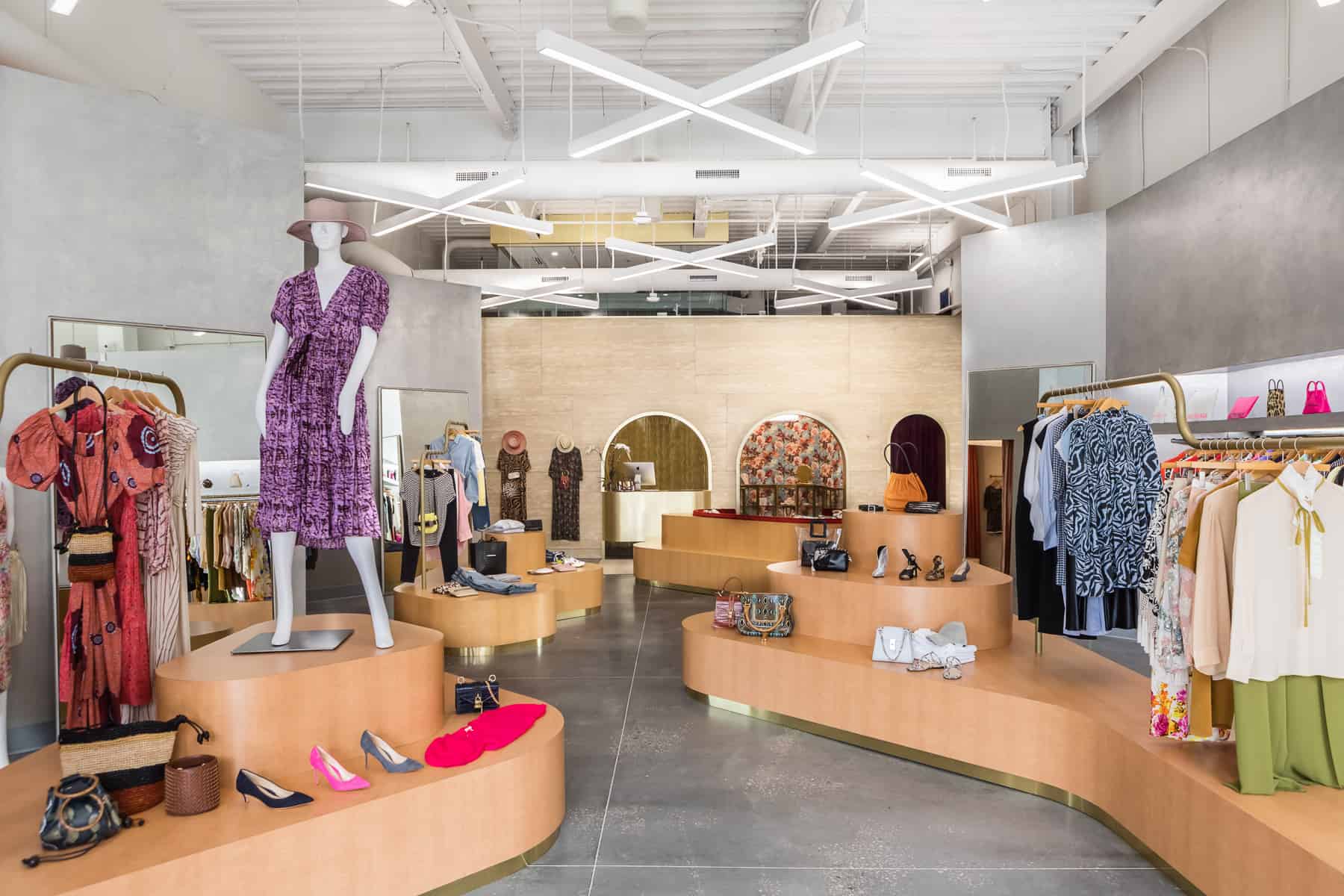
Emily Sexton, owner of the downtown Raleigh boutique The Flourish Market, says she has banked with Wells Fargo for 16 years. She says she never took out a loan or a line of credit, has an excellent credit score and pays for everything related to her businesses with cash. Sexton says she submitted her PPP application through the bank “within minutes of it going live.”
“I got one email back from [Wells Fargo] and then the same email every couple of days consistently saying to apply to somewhere else, they don’t know if they will be able to get to everyone, they are focused on businesses with less than 50 employees and nonprofits,” Sexton says. “I don’t know a single person or nonprofit that has been approved by Wells Fargo.”
Sexton’s friend, Sepi Saidi, the founder of Raleigh-based SEPI Engineering, sits on the board of directors of Dogwood State Bank, a community bank with four locations in North Carolina including one in Raleigh. She suggested Sexton try applying through them.
“I got in touch and the banker literally emailed me at 11 p.m. on a Friday night a week and a half ago,” Sexton says. “Then they told me my PPP application was approved on the Monday morning. So, I will spend the rest of my life saying ‘go local.’ I wish I had learned that earlier but, thankfully, I was very lucky this local bank took me under their wings and helped me out.”
Hancock says she, too, has heard that PPP loan applications submitted by smaller banks seem to be getting approved more quickly than those submitted through the larger banks.
“It looks like, as loans are getting granted, the banks in the best position are ones that already know the SBA rules,” Hancock says. “The community banks, ones that really focus on small business loans and have a well-oiled process to move them through to the SBA may have an edge. They already focus on small businesses and they know how the SBA works.”
The good news is, once the loans are approved, businesses who receive them are funded quickly. Ullom, the owner of Union Special, says he is hopeful his business will receive funding in the second round.
“We have been assured our application still stands, so we don’t have to go through the process again,” Ullom says. “We knew this could be an opportunity for us. We’re not holding our breath but, luckily, the PPP loan will not make or break us. Certainly, it would make getting through this a lot easier.”
Another lucky thing for Raleigh businesses?
This week, Raleigh’s city council approved a $1 million fund for small businesses to apply for economic relief. Businesses with 49 employees or fewer that have seen a 25 percent or more reduction in revenue due to COVID-19 can apply for up to $10,000 in relief.
The Carolina Small Business Development Fund will receive $850,000 to administer loans and Wake Tech will receive the rest of the money to administer to to businesses with fewer than 14 employees. Additionally, the mayor and council members are encouraging private sector donors to match the funding.
It’s possible, too, that if the coronavirus shutdown drags on, Congress could fund even more rounds of PPP loans.
“It’s a very fluid situation,” says Hancock. “It depends on, one, how much demand is not met and then on how much longer the current situation goes on. But I do think at some point [lawmakers] will tighten the loan requirements.”
In the meantime, support local small businesses to help them stay afloat; many of them are depending on it.
Please support Raleigh’s local retailers—nearly all are currently operating through their websites and offering curbside pickup and/or local delivery.
WEB EXCLUSIVE Plenty of locally owned businesses that rely on foot traffic have had to get creative during the coronavirus shutdown but none more so than Raleigh’s independently owned retailers. From running promotions to taking their sales almost totally online to offering new products and services, Raleigh retailers are finding ways to stay afloat while they can’t connect with their customers in person.
Offering New Products and Services
Emily Sexton owns the Flourish Market—a boutique that partners with national and international brands which provide jobs and fair wages to artisans in vulnerable communities—in downtown’s Warehouse District. Sexton went straight to her customers to find out what they wanted to buy at a time when the shop’s traditional staples—think colorful, flowy Easter dresses and statement earrings—weren’t in as high demand as they would be under normal circumstances.
“I called about 15 of our longtime customers and we held virtual roundtables over Zoom, meetings for people who wanted to help,” Sexton explains. “We figured out people just needed an easy way to gift others with things. With Amazon on delayed timelines and people wanting to support small businesses, they wanted something $30 or under to send to friends and workers on the front lines. Just little bits of encouragement.”
So Sexton and her team created gift bundles for kids and adults, packed with two to four fun, witty or inspirational small gifts, priced at $29.99 apiece.
“We had a hundred sell out overnight and we brought back 300, and they sold out in a few hours,” Sexton says. “We released 300 more, and we have sold more than half, and we’re releasing even more this week.”
Sexton says the gift set sales have allowed her to keep paying her staff and to send thousands of dollars in new orders to the groups the store partners with that are in need of financial provisions right now.
“Our customers are always right,” Sexton says.
Lisa Kaufman, founder of the North Hills boutique Scout and Molly’s, similarly leaned in to her client base. Kaufman says she reached out to individual customers personally and offered to send them boxes of clothes to try on. In the last week, she shipped out 125 boxes to clients for free.
“It’s a try-before-you-buy,” Kaufman explained in a text message to Raleigh Magazine. “They can try on and send back what they don’t want and then pay for what works. It’s been really fun for the clients to get surprises in the mail. Getting dressed makes everyone feel better.”
Going Virtual
Many local brick and mortar retailers have had to shift their sales models from in-person to online.
Chuck Millsaps, vice president of the North Carolina-based specialty retailer Great Outdoor Provision Co., says he has seen a rise in interest in boating and kayaking since the shutdown. He has been fulfilling orders for the company’s nine stores through its Cameron Village headquarters.
“If I’m isolated and can’t go to work, I want to enjoy time by myself on the lake and go fishing,” Millsaps says. “Our brick and mortar sales model was a high service, very intimate sales situation where we’re helping people in and out of boats, sizing paddles and giving instructions on features and how to paddle the boats.”
Now, customers can consult web tutorials on the company’s website, order online and pick up kayaks and accessories–as well as anything else they want to order–during the store’s curbside pick up hours.
“Our pivot has been to make resources available in a contactless manner,” Millsaps says.
Ashley Webb, owner of the North Hills designer label boutique Vermillion, is doing more online to reach her customers as well, including coordinating website exhibitions of designer collections with the shop’s Instagram stories and email blasts to customers.
North Hills boutique Vermillion’s recently remodeled interior. Photo credit: @catnguyenphoto Design by Hobgood Architects and interior by La Maison
This Friday, Vermillion will feature a virtual trunk show with a fine jewelry partner and soon, one with designer Natalie Martin’s dresses. Though Vermillion featured all of its inventory online previously, Webb says most of her sales generally happened in the store. Now, more sales are taking place through the website and Webb says she has had to think ahead to how she’ll promote future collections with social distancing.
“For the next brainstorming session with my team, I want to figure out how to do a trunk show for pre- order for our fall collections,” Webb says.
As with the Flourish Market, Webb says she has been able to keep her core staff working their same number of hours and on the payroll, though many are working from home and balancing work with taking care of kids.
“Our hours have changed but everyone is still working as hard as ever,” Webb says. “I am also realizing we are not as reliant on traffic as I thought. Really, it is these relationships with our clients we have had that has been our support system. Shutting down was not an option for us. People are still shopping and we are just trying to get more creative while still abiding by the rules.”
Gift Cards, Promotions and Online Stores
Some local boutiques, including Uniquities and Copper Penny that didn’t previously feature their clothes online, are now selling items through their websites or through Facebook shops.
Copper Penny is offering a 20 to 30 percent discount on items storewide and Uniquities has a large number of items on sale as well. To coincide with its 15th anniversary this year, Vermillion is offering a 15 percent discount on its spring collection.
As with local restaurants and salons, the gift card has played a major role for Raleigh stores, too.
“We never had a digital gift card before but figured out how to create one and launched that 10 days ago and our customers have been wonderful,” says Millsaps from the Great Outdoor Provision Company. “Now is a gift giving period with Mothers Day, graduations, Father’s Day coming up. Gifting is taking on new shapes and forms and we’re hoping people can use [gift cards] to buy from our online site and in stores when we’re allowed to re-open.”
If you’re looking for gifts, now more than ever it’s important to support local businesses instead of buying from large chains or ordering on Amazon.
“We have had a wonderful community rallying around local businesses for years,” Millsaps says. “We miss our fellow merchants. All of us do what we do because we have a passion for it and for our customers and neighbors and we hope to get back to it soon, in as safe a way as possible.”
WEB EXCLUSIVE Last week, the North Carolina Association of ABC Boards adopted a measure to allow bars and restaurants to sell unopened bottles of alcohol back to ABC stores.
The bottle buy back, which the state’s 170 local ABC boards may opt in to on a board by board basis, could provide some relief for bars and restaurants that have not been allowed to sell liquor on their premises since March when Gov. Cooper ordered all bars, restaurant dining rooms and patios to close.
So far, more than a dozen local ABC boards, including those operating in Durham, Mecklenburg and Wake Counties, have opted to allow bars and restaurants to sell their bottles back.
In Wake County, businesses can make an appointment to return any unopened, ABC-stamped bottles of liquor bought after January 1 of this year for the original sales price minus the mixed beverage tax paid on the bottle.
So far in Wake, around 20 local businesses have taken advantage of the measure since the commission started buying back bottles on April 6, says Ike Wheeler, the general manager of Wake County ABC. Businesses have until the end of the month to return their bottles.
“Most bars and restaurants have responded positively and really appreciate [this initiative],” Wheeler says. “Some of the bigger companies, I doubt they will bring any bottles because they can withstand this, they know this will pass over. But some smaller bars and restaurants who may operate their books month to month or every 60 days, they want to generate some funds.”
“I’m a firm believer that it’s not the general with the biggest army who wins but the one with most options, so the fact [the Association of ABC Boards] is giving us options helps,” says Kevin Barrett, who co-owns the downtown cocktail bar Dram and Draught.
Just before the shutdown, Barrett says he and Dram co-owner Drew Schenck purchased a $2500 bottle of Macallan Scotch whiskey aged 25 years; they may sell that bottle back to the ABC, Barrett says, but likely not much else.
“Our opened bottle had one serving left and we planned out and bought another bottle,” Barrett explains. “It hasn’t been opened, so to return it and get it a couple months after reopening makes perfect sense now. It helps but for us, a bar that is 100 percent planning to reopen whenever the day comes, it does not make much sense right now to sell back well stuff or our basic inventory.”
Wheeler says after they’re accounted for, all returned bottles are sanitized and then go back into the ABC stores’ inventory to be resold.
“During this time of crisis, all North Carolinians must do what we can to help our friends and neighbors in need,” said Miles Davis, president of the NC Association of ABC Boards, in a statement. Guy Zander, chairman at the NC ABC Commission, has also voiced his support for the idea of buy backs, according to a spokesman.
WEB EXCLUSIVE From those suffering with illness and worrying about transmitting it to others, to small businesses having to close their doors and lay off employees, to front line and essential workers—and to everyone just staying at home—the coronavirus pandemic has been physically and mentally challenging for us all. But on the bright side, we live in a region where researchers, thought leaders and students at our world-class universities are all contributing their knowledge and know-how, work that can help us stay sane, stay solvent and even help to save lives.
NCState’s Poole College of Management’s Poole Business Guide
The Poole Business Guide is an online resource for students, community members, small businesses and industry partners to help them navigate this period of confusion and uncertainty. With content, including articles and videos, created by Poole College faculty members, researchers and thought leaders, anyone can use the guide to learn more about topics such as management and communications during a crisis, taking out small business loans, the CARES stimulus package, supply chain issues and more.
“We’re really trying to put out actionable suggestions on what should be done to deal with different types of issues,” says Frank Buckless, dean of the Poole College of Management. “This is very rough on our small businesses and we are trying to be a resource and help them be resilient and be able to survive this.”
Buckless says Poole College had a thought leadership database in the works for a while but that the COVID-19 pandemic was a push to “figure out how we get our faculty’s research into the mainstream quicker.” The guide, which is adding content daily, will eventually be integrated, organized and searchable by discipline, a comprehensive resource for students and the community once the pandemic subsides and life returns to normal.
“We are trying to be part of the solution of helping us get through this,” Buckless says. “NC State, at our core, we are the ‘think and do’ university.”
NC State’s Online Arts and Mental Wellness Initiative
Last spring, Arts NC State and the university’s counseling center hosted its first Flourish Festival to unite the themes of mental health and creative expression. While the coronavirus pandemic meant the event had to be cancelled this year, Arts NC State’s Flourish initiative has gone digital to celebrate the arts and wellness in spite of social distancing. Check out the database of online experiential arts resources for the community including craft projects, museum tours, dance, music and theatre performances, all from your home. Resources are added regularly and will help to keep you from going stir-crazy.
NC State’s Nonwovens Institute’s Mask Filters for Healthcare Workers
Researchers at NC State’s Nonwovens Institute (NWI) are helping to address the critical shortage of face masks for front line workers, producing a new mask filter material that can filter virus and bacteria particles without having to be used in conjunction with a traditional meltblown filtration layer.
The NWI team, led by Behnam Pourdeyhimi, NC State’s Wilson College of Textiles associate dean for industry research and extension, created a new material, composed of two polymers combined to make a single strong, bulky fabric, that can filter with similar effectiveness as materials that are currently used to manufacture mask filters.
“Because of the COVID-19 crisis, we took the spunbond technology and created a new generation of unique filters that have excellent filtering capability and can potentially be reused after cleaning with peroxide, or potentially alcohol solution,” Pourdeyhimi said in an NC State news release. “Because these materials are strong, unlike classical meltblown filters, they can also be cut and sewn by traditional techniques.”
A production line at NWI has started manufacturing 2,000 meters of the spunbond material per hour, with the potential to create some 20,000 meters of spunbond material in a day. NC State is in talks with industrial partners to manufacture masks with the new material and the university has ordered machines, arriving next month, that will allow NWI to produce surgical masks in its Centennial Campus facilities.
Duke Student’s Coronavirus Contact Tracing App
Along with a lack of testing, one of the major contributing factors to coronavirus’s rapid spread across the U.S. has been the ineffectiveness in the process of tracing contact between people infected with the virus and everyone else that they have interacted with.
Duke student Shehzan Maredia and his team developed ContainIt, an app that can alert users who potentially have had contact with self-reported carriers of COVID-19, using location services that start storing data as soon as users download the app on their phones.
“We send a message saying you might have been exposed and we tell you from there, if you start to show symptoms, contact your physician,” Maredia, a computer science and mathematics major, explains. Maredia did not develop the app as part of any of his coursework at Duke.
“Getting a notification by no means means that you’re infected or are going to test positive for COVID-19,” Maredia continues. “It just means you might be at risk and if you start to show symptoms, contact your primary healthcare physician and take any necessary precautions.”
The app could replace inefficient, non-automated contract tracing processes that exist currently, by which healthcare professionals spend significant time working with infected individuals to retrace their steps before they tested positive (and after, if they didn’t self isolate after testing).
“We would like to work with the bigger healthcare organizations to help make this app readily available and to have them work with us on the process,” Maredia says. “That would be ideal and that’s what we’re really trying to accomplish right now.”
The ContainIt team is adding developers currently to help broaden the app’s scope and make it as secure as possible. The app does not store personal identifying information, Maredia says, and there is no personal privacy risk.
ContainIt could be available to download in the next week or so.
“This project has great potential to help mitigate the spread of COVID-19,” says Erik Yan, another ContainIt team member. “My grandfather, who is 98, lives in King County [in Washington state] which is known for its COVID-related deaths among the elderly. I’m constantly worried about him, who he has been near and how I could better help him. This app solves those issues. It can bring peace of mind not only for me, but my friends and family alike.”
Photo by Mary Lide Parker/UNC Research
UNC Researchers Work to Develop COVID-19 Treatment
Epidemiology professor Ralph Baric and his team of virologists, working with colleagues at Vanderbilt and Emory Universities, published research at the beginning of the month that found that, taken as a preventive treatment 12 to 24 hours after infection, EIDD-2801 was shown to reduce the degree of lung damage and weight loss in mice.
Unlike other intravenous COVID-19 treatments currently available, EIDD-2801 can be taken as a pill and absorbed to travel to the lungs.
Scientists expect to begin clinical trials in humans later this spring and say they believe the window of opportunity for treatment in humans is likely longer than in mice, as the period between coronavirus disease onset and death in humans is longer. In addition to making treatment easier, the EIDD-2801 pill may be beneficial in treating less ill patients or as prophylaxis, as in a nursing home scenario where many people have been exposed but are not yet sick.
“This new drug not only has high potential for treating COVID-19 patients, but also appears effective for the treatment of other serious coronavirus infections,” said Baric in a UNC new release.
WEB EXCLUSIVE Experience beautiful landscapes from across North Carolina from the same place you’ve likely been for most of these last few weeks—your home.
Kieran Moreira, a Raleigh-based filmmaker, released his latest short film, “Gill,” on YouTube earlier this afternoon. Shot all across the state, the 10-minute film features actor Caitlin Wells in the role of a headstrong scientist test piloting a malfunctioning teleportation suit while bickering with her only lifeline.
Moreira, the film’s writer and director, says he approached “Gill” with the goal of telling “a compelling story while showcasing the various landscapes of his home state.”
Moreira, an NC State alum who, in his day job works as a filmmaker for Red Hat’s internal creative agency, has worked on several other short films as a writer, director, editor and producer, including “Merit Badges” (2019), “Harbinger” (2014), and “The Weaver” (2012).