WEB EXCLUSIVE After months of business closings, mask mandates, quarantining and social distancing, good news looks to be on the horizon for North Carolinians dealing with the coronavirus pandemic. Although universities in the state have been struggling with recent outbreaks, key metrics have been good enough to warrant reopening of gyms, museums and playgrounds and the number of new daily cases, hospitalizations and the percent positive test rates are falling. Here’s where the state, Raleigh and Wake County are with COVID-19 today.
Key Metrics Are Improving
While nearly 180,000 people have tested positive for COVID-19 in North Carolina, the numbers of new cases daily have been dropping–today, just 716 new cases were reported. Daily hospitalization numbers have been dropping steadily as well, and have remained below 1,000 since August 20 after peaking in July. On Monday, NC DHHS reported a 5.6 percent positive testing rate, close to health officials’ goal of 5 percent positive or below (today’s rate is slightly higher, at 6.2 percent); the percent positive test rate had remained below 7.7 percent since August 31. College students account for 16 percent of all new cases in the state.
While there was a sharp decline in the number of hospitalizations reported Monday, state officials warned the data could be incomplete citing “continued technical and submission issues with hospital systems’ data,” exacerbated by the holiday weekend. Hospitalization numbers are likely higher than reported but the state’s overall recovery rate is high, around 88 percent.
On Friday, Gov. Roy Cooper signed a bipartisan $1 billion COVID relief bill with provisions for $335 stimulus checks for North Carolina parents to offset costs of remote learning, a $50 boost in unemployment benefits, $72 million in funding for PPE, $10 million for broadband internet connectivity, $6 million for food banks plus a $100 incentive for poll workers on Election Day. Some Democrats criticized the bill for again failing to expand Medicaid. The bill also sets a Dec. 30 deadline for the state to allocate federal CARES Act funds.
Two COVID Clusters at Raleigh Childcare Facilities
A state report released Friday found two outbreaks at childcare centers in Wake County. At the Goddard School of Holly Springs, four staff members and eight children tested positive for COVID-19, while at Kreepers and Crawlers Daycare in southeast Raleigh, four staff members and six children tested positive.
Free Testing this Weekend
Make an appointment to get tested this Thursday, Friday or Saturday, for free in the parking deck of the Sunnybrook building at 2925 Holston Lane in east Raleigh.
The bond package, which could add an average $25 each year to Raleigh residents’ property tax bill, is broken down into five elements, or “buckets,” as proposed by the city’s Affordable Housing Bond Advisory Committee:
First, some definitions and explainers.
Transit-Oriented Site Acquisition: Money the city proposes to spend buying (or banking) land along planned future transit corridors, with the goal of building affordable housing on that land in the future.
Public-Private Partnerships: The city’s share of funding that will go towards providing permanent supportive housing for chronically homeless people and other projects in partnership with local housing nonprofits. $10 million (50 units) will go to permanent supportive housing for very low income, chronically homeless individuals; $10 million will be allocated to nonprofit partners to create or preserve small scale projects where not less than one third of total units serve very low income residents (those who make less than 30 percent of the area median income, or 30 percent AMI), and $8 million-plus will go to regulatory incentives for new rental development where not less than 20 percent of the units are affordable at 60 percent AMI for no fewer than 30 years (voluntary inclusion model) or for the development of “missing middle” affordable homeownership opportunities.
Low Income Housing Tax Credit (LIHTC) Gap Financing: Funds that supplement housing for very low income residents in the form of rental assistance (such as public housing assistance from the Raleigh Housing Authority and federal Section 8 vouchers) as well as money for first-time homebuyers. Residents who use this assistance pay up to 30 percent of their household income to rent and utilities.
City of Raleigh
Owner Occupied Home Rehabilitation: Money that will assist long term residents located near transit investments and in gentrifying neighborhoods so they can remain in their homes and age in place.
Down Payment Assistance: Money that will help low to moderate income households buy new homes located near transit improvements.
Click here to see how the funding proposals break down in more detail.
In total, city staff estimates the bond could fund a total of 3,261 affordable housing units over five years. This includes building new units, providing money to existing homeowners to repair or rehabilitate their homes and assistance to first-time homebuyers.
Larry Jarvis, the city’s Housing and Neighborhoods director, admits the units projection is a conservative estimate but “one that shows the diverse income groups served.” Rental units for very low income residents, for instance, don’t generate enough rental income to cover operating expenses for landlords, so units for 30 percent AMI residents have to be mixed with units for higher income residents in oder for projects to be sustainable.
Jarvis says two of the buckets—public-private partnerships and LIHTC gap financing— will support very low income (30 percent AMI) residents. Jarvis’s staff proposes increasing the city-assumed per unit gap financing for rental unit tax credit projects from a five-year average of $20,213 per year to an average $35,000 per year.
“The subsidy required to do that will be more than we have had in the past, and it will result in fewer total units, but we think it is a good balance,” Jarvis said in a presentation to the Raleigh City Council on Tuesday.
While some residents have expressed concerns that the bond doesn’t do enough to assist very low income residents, Jarvis says land banking along transit corridors could present opportunities to create more units for very low income residents in the future.
Council member Jonathan Melton agrees with this view.
“We’ve seen in some other cities that, as they have implemented big transit projects, the land around those projects gets bought up very quickly by market rate developers, so folks who are able to live near new transit routes can probably afford a car and the people who are dependent on frequent reliable transit get pushed out,” said Melton. “So it’s important for us to allocate money for that transit oriented site acquisition.”
WEB EXCLUSIVE As COVID-19 metrics in North Carolina begin to stabilize, Governor Roy Cooper announced that the state will move into a “Safer at Home” phase 2.5 reopening, starting at 5 p.m. this Friday.
Some businesses that were ordered closed for the past several months, such as gyms, museums and aquariums, will be allowed to open at reduced capacity; others, including bars, nightclubs, movie theaters and indoor entertainment venues, must remain closed. The cap on indoor gatherings will be allowed to increase to 25 and outdoor gatherings will be capped at 50. Capacity limits at restaurants and personal care service providers, such as hair and nail salons, will continue to be in effect.
“We have continued to see statewide numbers stabilize,” Cooper said in a press conference this afternoon. “We are encouraged but cautious. Stability isn’t victory; the forest isn’t as thick, but we’re not yet out of the woods.”
Businesses allowed to open
Gyms, dance/yoga/gymnastics studios, skating rinks, bowling alleys and all other athletics facilities, at 30 percent capacity
Museums and aquariums, at 50 percent capacity
Outdoor playgrounds, with social distancing; children ages 5 years and older will be required to wear masks.
Businesses that must remain closed
Bars and nightclubs
Movie theaters
Indoor entertainment venues
NC DHHS Secretary Many Cohen noted that, while four key metrics including the number of lab confirmed COVID cases, the percent positive test rate, people arriving at emergency departments with COVID-like symptoms and the number of hospitalizations are stabilizing, the number of daily cases reported per day is still too high. The state is aiming for a less- than-5 percent positive test rate, and today, it’s still around 7 percent.
“June and July saw the highest levels of transmission and new cases, and then hospitalizations, but thanks to hardworking North Carolinians wearing face coverings, we saw trends stabilize and move down,” Cohen said. “In mid-August there were outbreaks at colleges and universities but the overall metrics show signs of stability. Your hard work is having an impact but we must keep working together to continue the progress.”
Cohen encouraged North Carolinians to continue to practice the three Ws: wear a face covering, wash your hands and wait six feet apart from others. She also encouraged the public to get flu shots with the approaching flu season.
“The unfortunate truth is the pandemic is not yet over,” said Cooper. “We are all forced to live alongside the virus but we all can take actions to protect our community, reignite economy and get back to the things we love.”
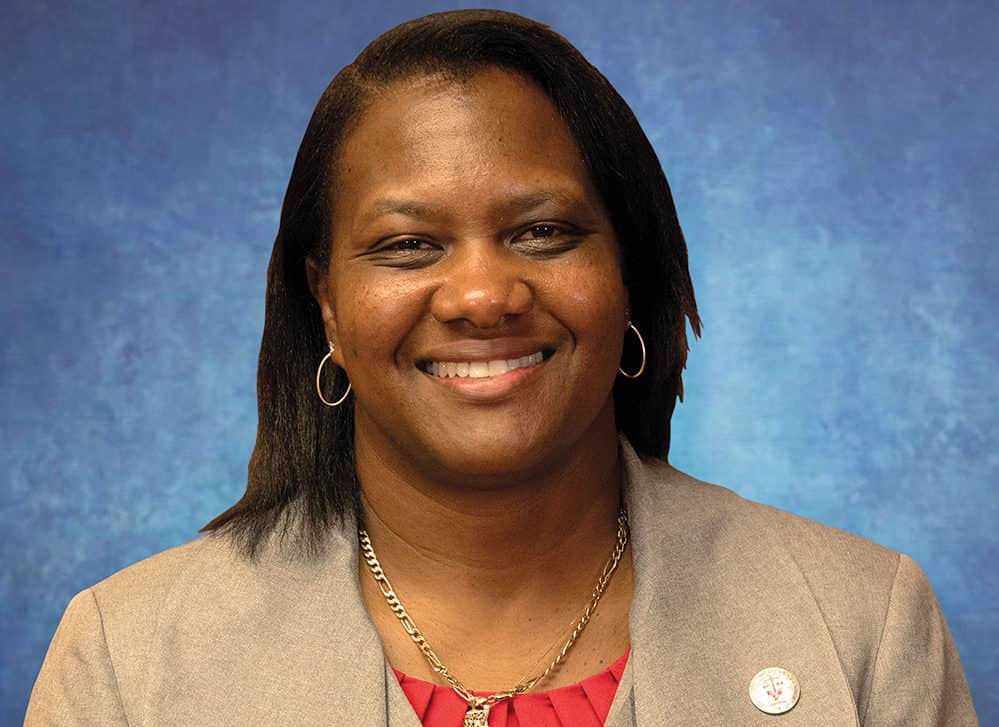
Raleigh’s City Council selected Stormie Forte from a pool of more than 50 applicants, and five finalists, to replace Saige Martin as the city’s District D representative after Martin stepped down due to sexual misconduct allegations. Forte, a Raleigh native, attorney and the first Black woman to serve on the council, was sworn into office in July. We spoke to Forte about District D, which covers southwest Raleigh including parts of downtown, and how she plans to tackle some of the biggest issues currently facing the city.
What is the most important issue in District D currently?
Development. District D has probably the most development projects in the works, and likely the most prospective projects. There is a lot going on.
Downtown South is one large project that’s proposed. It has its supporters but some residents worry about impacts on nearby neighborhoods, including gentrification, and on the environment. What are your thoughts?
With these large developments, the more engagement the city tries to have with residents, as well as with the folks who want to make contributions in the form of development, the better. There are ongoing conversations related to how to deal with traffic issues and how to deal with some of the surrounding communities. Looking at what the viability is going to be for the surrounding communities and surrounding neighborhoods will be very important.
You’ve spoken about building bridges between the city government and residents. Why is there a need to do that and what are the best ways to achieve it?
A lot of folks are protective of the community and the current composition of their neighborhood in terms of types of housing and felt they could share concerns through the CACs [local citizen advisory groups]. Now, they feel they are not necessarily being heard. Groups continue to meet as neighborhood associations and I have attended those meetings virtually and answered questions. Residents have invited me to walk the neighborhoods with them. Then, there are folks who have projects and want to talk about that they want to do, so I talk with them as well. I want to hear all sides and be aware of information from city staff. I intend to make decisions and vote based on information from everyone. I will not be able make everyone happy but I want to create a good balance. I will review everything that comes to the council table on a case by case basis and do what I feel is in the best interest of the district and the city.
What do you hope will come out of the community engagement study that consultant Mickey Fearn is currently conducting?
Transparency, making sure the taxpayers and citizens feel processes are inclusive and their voices are heard. I hope the outcome will be one where you would have more participation by folks who are not currently engaged in what is happening.
How do you think the council should address policing? Your predecessor was vocal about defunding the police. You personally have suggested creating an ombudsman program for police accountability.
There is a challenge in folks understanding what the meaning of “defunding” the police is. For some, the perception is the police department would be disbanded. That is not what activists and grassroots folks are advocating for. It is more along the lines of the reallocation of resources and talking to folks in the community. Police officers don’t want to be social workers, they don’t want to be psychologists, and the overwhelming majority of officers believe it is their mission to protect and serve. So, if there is a mechanism to give the police department some relief through setting up new channels to respond to different types of situations, I would be supportive. I would support a resource for the community to report things they felt needed to be addressed in the police department and also a mechanism for folks within the department—law enforcement officers, administrative staff or whomever—where, if there are things they want brought to the attention of city leadership without feeling repercussions, they would have a way.
You’ve floated the idea of using smaller city buses on less frequented routes rather than having large buses drive around empty. What are your other thoughts on tackling Raleigh transit?
My position is evolving but thinking about, ‘How do we make it more enticing to use public transportation to get to different places within the Triangle?’ Is there a way to make it easier to get from place to place? If you want to be able to attract an Amazon or Apple headquarters, having a good inventory of affordable housing, as well as a great transportation system, will attract business. You don’t necessarily want large buses moving through the city at non-peak hours, so if we can get smaller buses and shorter routes in place, have more express routes, that will help make sure people get from point A to point B more efficiently and be more attractive to people who utilize the buses.
What will you be looking for in city manager candidates?
Someone with a good amount of experience dealing with a municipality the size of Raleigh, or maybe larger, and with the challenges we will be facing. There is an affordable housing bond being proposed, so experience with expanding housing in the area. Certainly the challenges with the community as it relates to dealing with the police department. We need a person who has the skillset to navigate the city’s challenges but also to guide the city through opportunities.
Q & A by Jane Porter; edited for length and clarity.
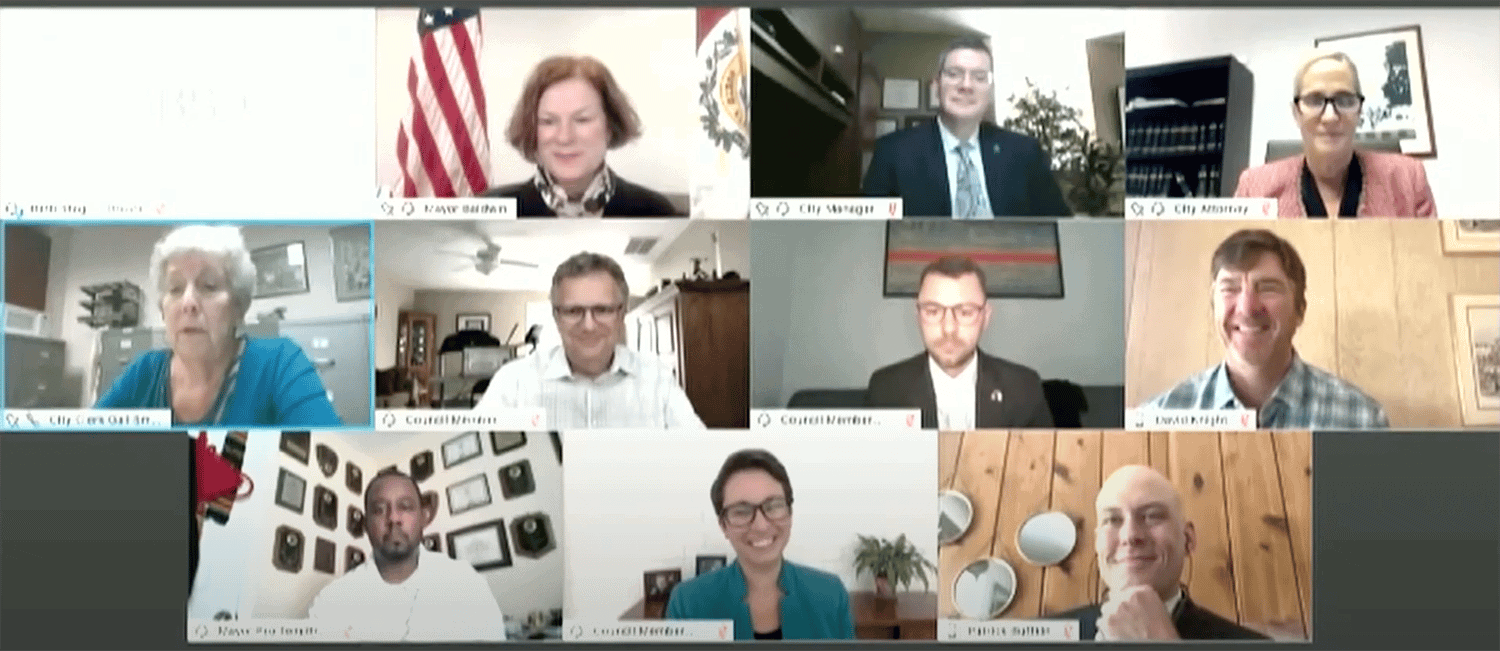
Note: The council held two special meetings in June and July to address Council member Saige Martin’s resignation in late June and to appoint Council member Stormie Forte to represent District D and serve out the remainder of Martin’s term. August 18 was Forte’s first regular meeting.
Council voted to allocate $300,000 to the Downtown Raleigh Alliance to assist in efforts to reactivate downtown following the coronavirus shutdown and civil unrest.
Council approved sending a letter, written by Council member Jonathan Melton, to state lawmakers asking them to grant the city’s police review/advisory board additional oversight authority, including investigatory and disciplinary powers. (Advisory board members were appointed in June and sworn in and trained in August).
Council voted unanimously to designate June 19, or Juneteenth, an official, paid holiday for city employees.
During its evening meeting, the council voted to authorize an $81 million affordable housing bond to appear on the November ballot.
Council voted 6-1 to allow residents to build and rent accessory dwelling units (ADUs), or backyard cottages, on their property, following years of debate. Council member David Cox voted against. Council also voted to allow cottage courts (inward-facing smaller homes) in most residential zoning districts citywide and reduced minimum parking requirements downtown, along transit corridors and for multi-unit residential projects.
August 18 Meeting
The council received an update on downtown’s public safety and economic recovery.
Raleigh police chief Cassandra Deck-Brown presented information on a new unit within the police department to address homelessness and mental health.
Council approved a new definition of micromobility, which covers transit options including electric scooters, in the city code and gave city staff the authority to approve new contracts with micromobility companies. Expect to see more options from electric scooter companies in Raleigh soon.
Council voted to cancel all city events through the end of 2020 due to the COVID-19 pandemic and will only consider allowing permits for special events for groups of 25 people or fewer. The council will hold virtual meetings through the end of the year and city staff will explore ways to make large city events, such as the New Year’s Eve celebration, virtual.
The council announced the Carolina Panthers will donate $150,000 towards building an NFL Play 60 course as part of a new playground and amenities at Barwell Road Park in southeast Raleigh. The total cost of the project is $600,000.