NC voters have their biggest chance ever this election to finally put an end to partisan and racial gerrymandering.
This 2020 election cycle could spell the end for one of the worst political legacies that has persisted for decades in the Old North State: racial and partisan gerrymandering.
But for redistricting reform to become a reality for the state’s legislative and congressional districts, which will be redrawn next year based on data collected in the 2020 Census, voters must elect candidates committed to ending the practice that allows lawmakers to select their voters instead of voters choosing their lawmakers.
“People who are seeking your vote should be willing to let you, the voter, know where they stand on [redistricting],” says Bob Phillips, the executive director of Common Cause North Carolina, a nonpartisan nonprofit that works to create ethical and open government through ensuring fair political districts, expanding voting rights and election integrity, and reducing money’s influence in our elections. “How these lines are drawn is probably the most important issue to be decided in a decade.”
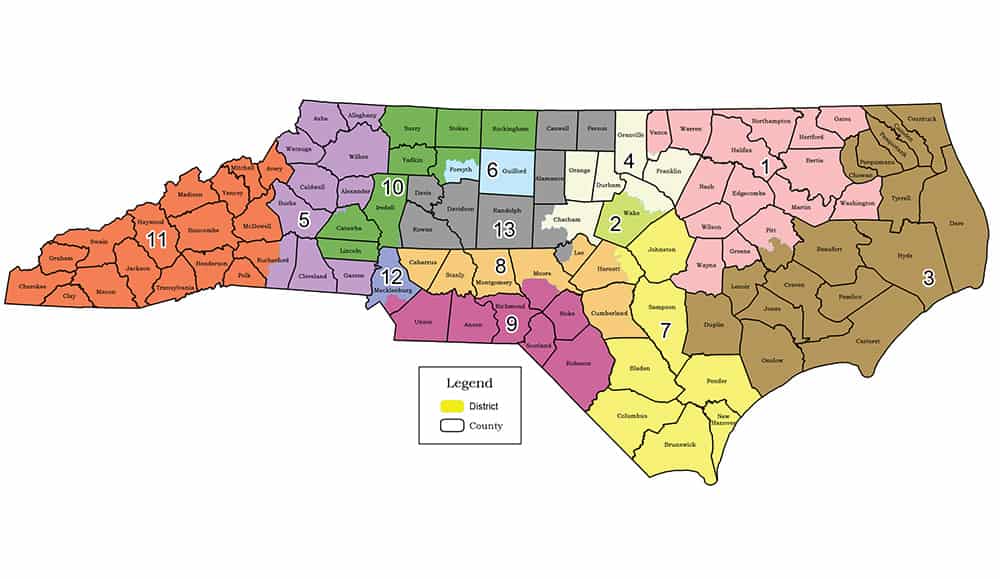
Although North Carolina isn’t the only state that has struggled, it is probably best known, nationally, for its problems with gerrymandering due to multiple lawsuits in the last decade seeking to redraw district lines based on racial and partisan imbalances.
When Republicans swept the state legislature in 2010, lawmakers packed minorities into districts that favored a heavy Republican majority in Congress and gave the party a supermajority in the state legislature for four years of the last 10. Democrats benefitted from gerrymandering in the state for decades before, these lawmakers reasoned; now that they were in power, they felt like it was their turn.
The districts stifled electoral competition, minimized accountability and gave rise to laws like HB2, the 2016 so-called “bathroom bill” that opponents argued discriminated against transgender people. Gerrymandering also disenfranchised Black and Hispanic voters in a state where minorities make up about a third of the total population.
Phillips says, unlike in 2010, it’s not clear to lawmakers this year which party has the best chance of holding power in 2021, so it’s in both parties’ interest to commit to bipartisan redistricting reform now.
“I am hearing from people, from both sides, that there seems to be this growing cloud of uncertainty,” Phillips says. “So lawmakers hopefully feel that they need to get on board this train of reform, because if their party wins, at least there’s a system in the long run that serves everybody best. If their party loses, at least it protects the party from not being gerrymandered again into irrelevance.”
While Phillips says he doesn’t think there will be any movement on redistricting reform when the legislature reconvenes in Raleigh this month, he hopes that, next year, no matter who is in power, lawmakers will engage a neutral third party to draw fair maps for the next decade.
Voters who care about ending gerrymandering should ask state legislative candidates themselves if they support “meaningful redistricting reform, first and foremost,” Phillips says, before they go to vote this fall.
“I am hopeful we are at a time, with racial justice, the call and the reckoning that’s going on, that people understand citizens’ voices do matter and they can force decision-makers to confront big issues,” Phillips says. “Everything is incremental but I feel more optimistic than I ever have that there is an opportunity for North Carolina to actually address this issue in a meaningful way.”
If you’re planning to vote to end gerrymandering this election, you have to be registered first. National Voter Registration Day falls on the fourth Tuesday of every September; since 2012, more than 3 million people have been registered to vote on this nonpartisan civic holiday that celebrates democracy.
In North Carolina, if you are a U.S. citizen of at least 18 years old, there are lots of different ways to register to vote. You can apply to register to vote online through the NC DMV website, you can fill out the North Carolina Voter Registration form at your local elections board office or send it through the mail, or you can register and vote on the same day at sites across the county during the early voting period from October 15–31 (bring your driver’s license or ID and proof of residence). You MUST register to vote BEFORE Election Day on November 3. For more information, check out Wake County’s Board of Elections website at wakegov.com/elections.
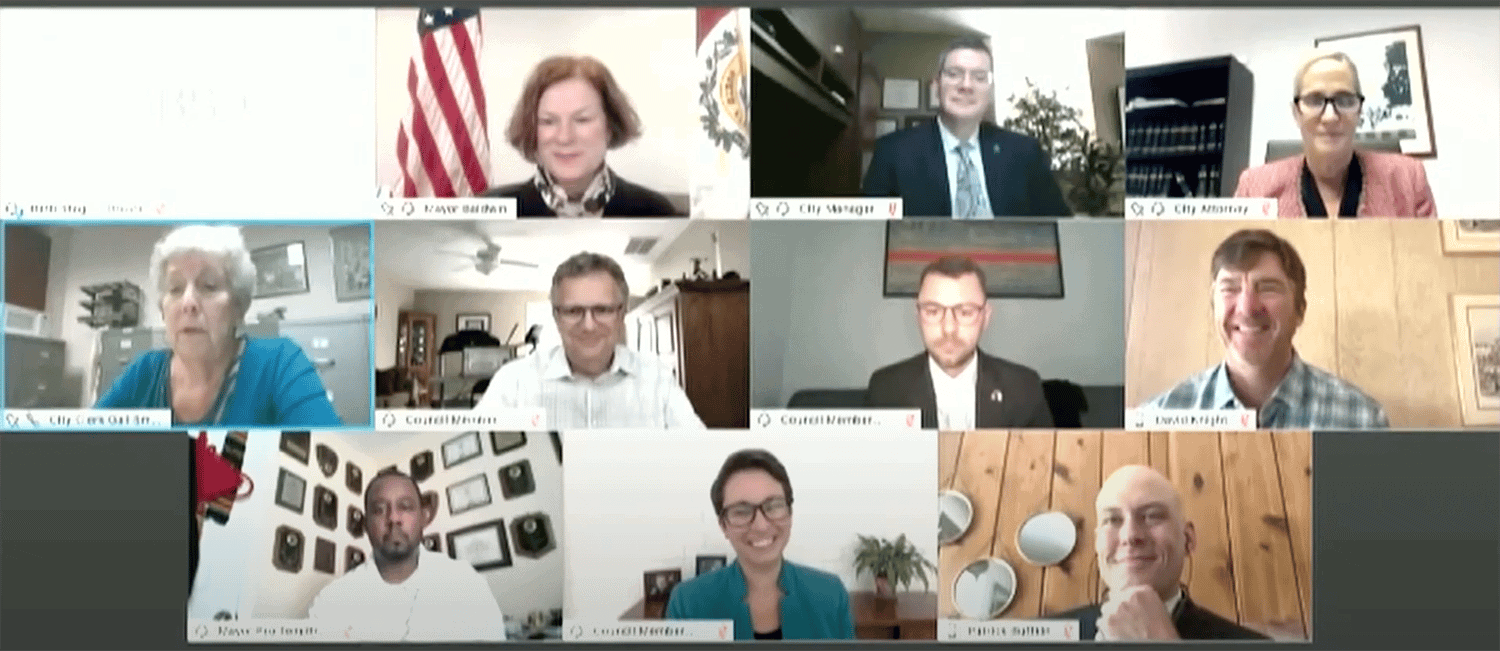
Note: The council held two special meetings in June and July to address Council member Saige Martin’s resignation in late June and to appoint Council member Stormie Forte to represent District D and serve out the remainder of Martin’s term. August 18 was Forte’s first regular meeting.
Council voted to allocate $300,000 to the Downtown Raleigh Alliance to assist in efforts to reactivate downtown following the coronavirus shutdown and civil unrest.
Council approved sending a letter, written by Council member Jonathan Melton, to state lawmakers asking them to grant the city’s police review/advisory board additional oversight authority, including investigatory and disciplinary powers. (Advisory board members were appointed in June and sworn in and trained in August).
Council voted unanimously to designate June 19, or Juneteenth, an official, paid holiday for city employees.
During its evening meeting, the council voted to authorize an $81 million affordable housing bond to appear on the November ballot.
Council voted 6-1 to allow residents to build and rent accessory dwelling units (ADUs), or backyard cottages, on their property, following years of debate. Council member David Cox voted against. Council also voted to allow cottage courts (inward-facing smaller homes) in most residential zoning districts citywide and reduced minimum parking requirements downtown, along transit corridors and for multi-unit residential projects.
August 18 Meeting
The council received an update on downtown’s public safety and economic recovery.
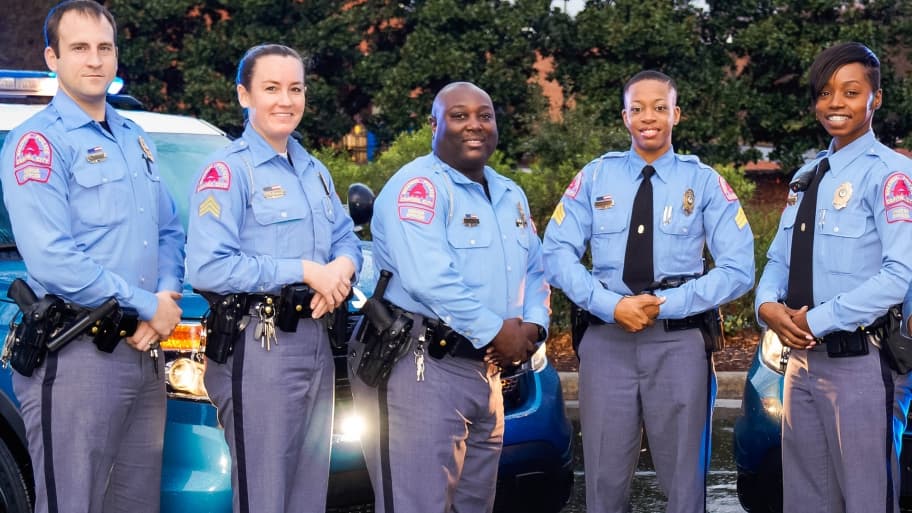
Raleigh police chief Cassandra Deck-Brown presented information on a new unit within the police department to address homelessness and mental health.
Council approved a new definition of micromobility, which covers transit options including electric scooters, in the city code and gave city staff the authority to approve new contracts with micromobility companies. Expect to see more options from electric scooter companies in Raleigh soon.
Council voted to cancel all city events through the end of 2020 due to the COVID-19 pandemic and will only consider allowing permits for special events for groups of 25 people or fewer. The council will hold virtual meetings through the end of the year and city staff will explore ways to make large city events, such as the New Year’s Eve celebration, virtual.
The council announced the Carolina Panthers will donate $150,000 towards building an NFL Play 60 course as part of a new playground and amenities at Barwell Road Park in southeast Raleigh. The total cost of the project is $600,000.
WEB EXCLUSIVE The September issue of Raleigh Magazine—our annual food and best restaurants issue—will be on stands around town and delivered to your doors and mailboxes in just a few days! If you can’t wait until then, here’s a quick look at some of the stories we have in store.
Sign For the Times
If you’ve watched Gov. Cooper’s televised COVID briefings, you’ve probably seen his face—and his hands. Meet Lee Williamson, the administration’s American Sign Language interpreter who has been signing the governor’s news conferences since the pandemic outbreak in March. Having grown up as a hearing child of deaf parents, Williamson shares his path to a career as a sign language interpreter and offers some insights on what it takes to communicate emergency messages to residents in the state who are deaf and hard of hearing.
Can the Classic American Cheeseburger Save Local Restaurants?
From Postmaster in Cary’s GOV’T CHEESEBURGER to Vidrio’s new gourmet burger offerings from celebrity chef Katsuji Tanabe, foodie writer Jenn Rice digs in to how the humble burger just might come to the rescue of local restaurants suffering slow-downs during the pandemic. Who doesn’t love the comfort of a classic burger during difficult times?
Gonza Tacos y Tequila
Where the Chefs Eat
Eating out—whether via curbside pickup, delivery or in a restaurant’s dining room—has given Raleighites a continued sense of comfort and normalcy in a weird, socially-distanced new way of life. There’s nothing like a greasy burger, loaded taco or spicy curry to bring a smile to our faces and a warmth to our tummies. We figured for this issue, it made sense to bring back one of our most popular features in which local chefs share their favorite paces to dine when they’re not on the clock. We’ve got some great under-the-radar recommendations for you to try!
The Art of Hope
In lieu of our annual fall arts and entertainment guide, we take a look at what some local artists and arts organizations are doing to try adapt in an environment of cancelled seasons, socially distanced rehearsals and virtual events replacing real-life performances, exhibits and shows. We spoke with folks from Raleigh-based Carolina Ballet, the North Carolina Museum of Art, NC Theatre and more to find out what local artists, and the organizations that support them, are doing to get by.
WEB EXCLUSIVERaleigh is one of a few dozen cities in the country with a pay-what-you can cafe. But for A Place at the Table’s model to work, it needs strong support from Raleighites who can afford to buy meals for themselves and who can give a little extra to help cover the costs of meals for those who can’t pay.
“Since COVID, our model has totally flipped,” says Maggie Kane, A Place at the Table’s founder and executive director. Kane says before the pandemic, the cafe served around 60 to 70 meals at no cost each day; now, it’s serving 250 to 300 a day. Before, 70 percent of the cafe’s diners paid for their meals (either the full cost or on a sliding scale); now, 20 percent of diners pay something toward their meals, and 80 percent pay nothing.
Photograph by Stacey Sprenz
“We have just seen a larger amount of folks who are hungry,” says Kane. “We are trying to figure out how to best serve people but keep our mission and good food for all, regardless of means.”
To that end, A Place at the Table has reduced the number of days and hours that it’s open each week, dropping from eight hour days, six days a week to six hour days, five days a week (Wednesday through Sunday, from 8 a.m. to 1 p.m.). The cafe’s dining room hasn’t yet reopened but customers can order food curbside to take away or they can call ahead and have their meals delivered to them as they pull up in their cars. Kane says A Place at the Table is working on implementing an online ordering system where diners can pay what they can, virtually and equitably.
“We’re working as well as we can [with the adjusted operations] but we do need a way to get more paying customers,” Kane says. She adds that she doesn’t think fewer people are paying for meals, but many more people who need help right now are turning to A Place at the Table. Also, fewer people are visiting downtown, as offices and other businesses remain closed.
A Place at the Table recently expanded into the space next door to its original location on Hargett Street and rolled out a new to go menu.
“The food is good, there’s enough to go around and there are easy ways to order and have your food ready,” Kane says. “Check us out on social media and just come and see us.”
Check out our “Know How to Go” from March 2018 for more information.
WEB EXCLUSIVE At a city council meeting this afternoon, Raleigh police chief Cassandra Deck-Brown introduced a proposal to form a new unit within the police department called ACORNS, aimed at assisting residents dealing with homelessness and mental health issues. The unit, an acronym for Addressing Crises through Outreach, Referrals, Networking, and Service, has the mission “to connect with individuals in crisis and provide them with the resources needed to meet their individual goals,” according to a Powerpoint document presented to the council.
During the meeting, the police chief elaborated on the purpose of the new unit, explaining that it has been in the works for Raleigh since before the racial unrest that occurred nationally following George Floyd’s killing and even before the outbreak of the coronavirus pandemic that has been compounding issues of homelessness in cities across the country. In devising the unit, police officials studied programs across the country, including CAHOOTS in Eugene, Oregon, that work to address homelessness and mental health issues. Ultimately, Deck-Brown says, the unit’s goal is to collaborate with local community stakeholders, including nonprofits, faith-based groups, social workers, healthcare workers, criminal justice reform advocates and others already working to address homelessness and mental health issues in Raleigh.
“This team is designed to understand the need to foster growth, patience, relationships and understanding while recognizing the process itself can take time,” Deck-Brown told the council. “With this approach, the ACORNS team can assist individuals with growing together, standing strong and collectively weathering the storm.”
ACORNS would use a variety of methods to assist residents in crisis, according to Deck-Brown, including outreach, education, on-call field services, investigation and intervention. For instance, trained social workers could soon accompany law enforcement officers in responding to calls. The ACORNS team would be comprised of a supervising sergeant, a detective, three social workers and three law enforcement officers.
The unit, funded through the police department, has already garnered opposition among activists advocating for police reform who say any mental health services the city provides should be separate from the police department.
“It has been estimated that people suffering from mental health issues are 16 times more likely to be killed by police officers due to first responders being unaware of their condition,” said activist and former mayoral candidate Zainab Baloch in a public comment at this afternoon’s meeting prior to Deck-Brown’s presentation. “The police should not respond to any mental health situations.”
Council member Jonathan Melton said he would like to see more social workers added to the team, while Council member David Cox said he thinks the Raleigh community would like to see a program where mental health responders and social workers operate in partnership with police officers but, ultimately, act independently from the police department. Mayor Mary-Ann Baldwin called ACORNS a “first step” and said she looks forward to learning more.
See slides from the Deck-Brown’s presentation to the council here.