WEB EXCLUSIVE Colleges are open, students are back on campuses across the Triangle and it looks like the ACC plans to move forward with football season. But with the number of cases topping 140,000 in the state, and daily hospitalization reports still up over 1,000, the coronavirus pandemic rages on.
Here’s where the state and Wake County are with COVID-19 today.
Which Masks Work Best?
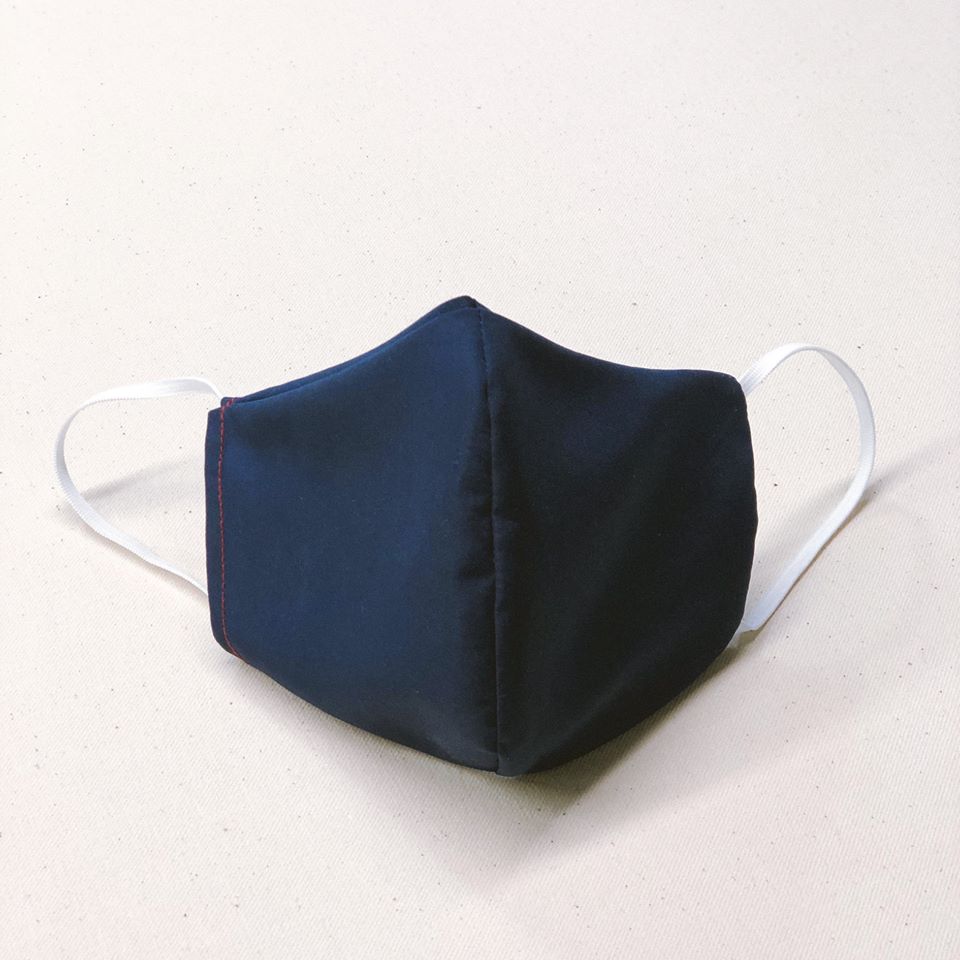
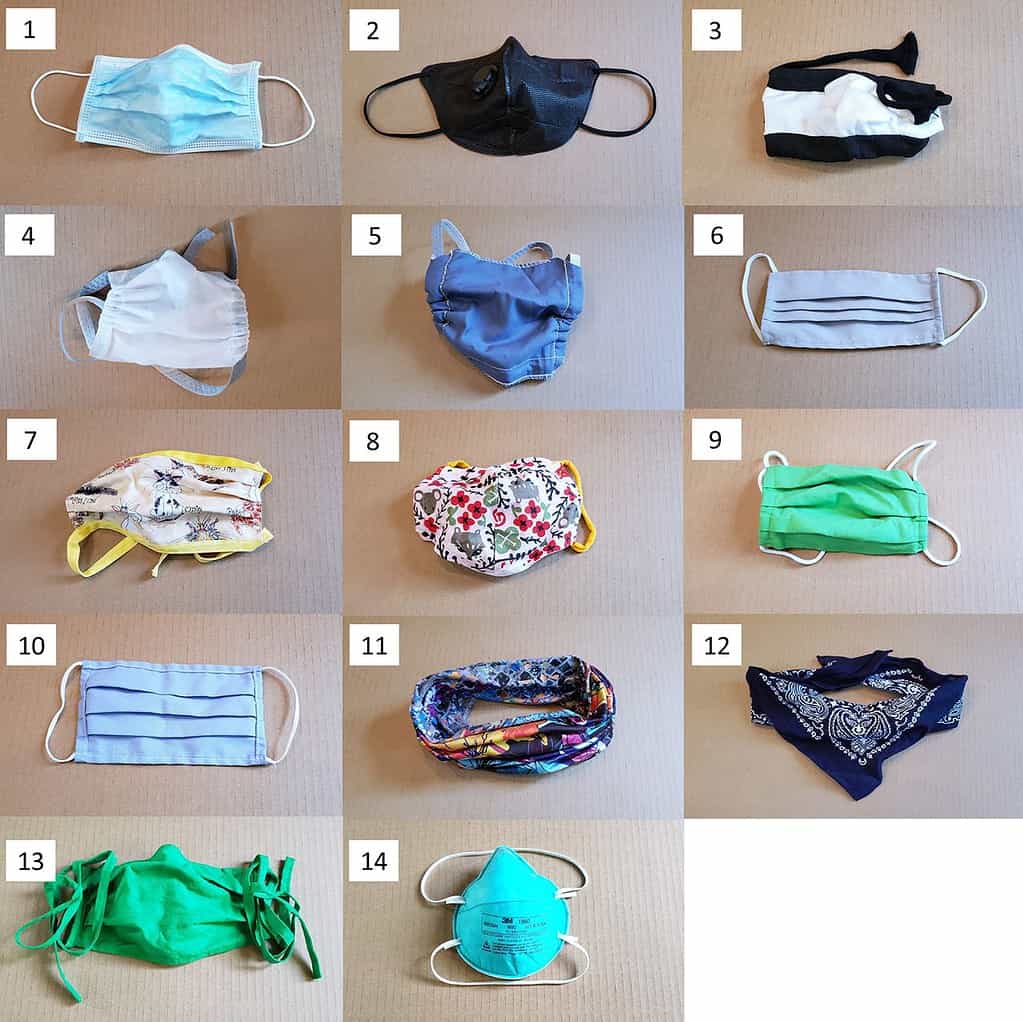
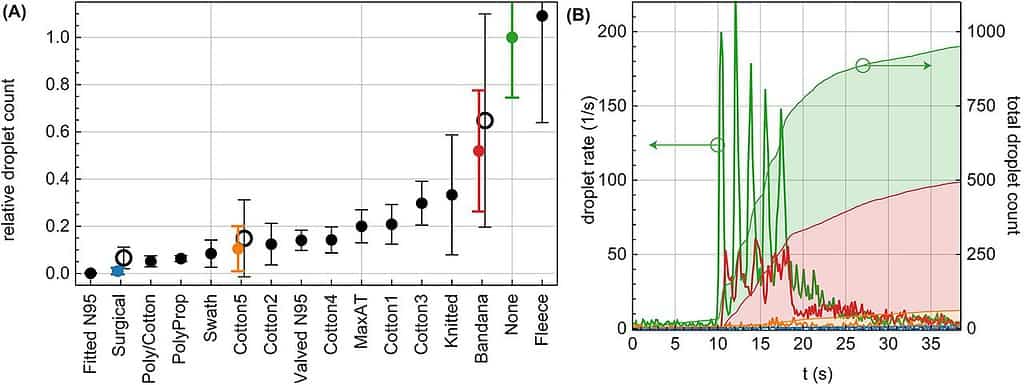
Researchers at Duke’s medical school published a study last week on the types of masks and face coverings that work best at preventing transmission of the coronavirus. Working wth the university’s physics department, the team tested 15 types of masks, ranging from surgical to homemade to the neck-covering “gaiter” masks, with the goal of helping the Durham-based nonprofit Cover Durham choose the most effective masks to provide for free to people who needed them.
Photo credit: Emma Fischer, Duke University
According to the study, the most effective masks at preventing virus droplets from getting into the air from people speaking are the fitted N95 masks without exhalation valves (Image 14), while disposable surgical masks took the No. 2 spot (Image 1). Two-layer polypropylene apron masks (Image 4) and the cotton-polypropylene-cotton masks (Image 5) were next effective. The gaiter neck masks (Image 11) were found to be worse than wearing no mask at all, the researchers wrote, due to their tendency to “disperse the largest droplets into a multitude of smaller droplets.”
How North Carolina Will Use Federal COVID Relief + Unemployment Funds
Gov. Roy Cooper said he will use $95.6 million in virus relief funds allocated to North Carolina in the federal CARES Act to help students across the state most impacted by COVID-19. The funds will go towards hiring more school nurses, counselors, social workers and psychologists; to academic programs for at-risk K-12 students and for tuition assistance for students pursuing higher education.
“Learning during a pandemic is an unprecedented challenge for students and staff, whether in the classroom or remotely,” the governor said in a statement. “This funding should help protect the physical and mental health at schools, and help bridge the gap for students with unique learning needs.”
Additionally, Cooper announced the state is applying for funds to supplement its unemployment insurance payments with federal money redirected from FEMA disaster relief. Under President Donald Trump’s proposal, states can apply for up to $400 a week for unemployment that’s paid in addition to the state’s weekly unemployment payments.
A Glitch in Test Count Reporting
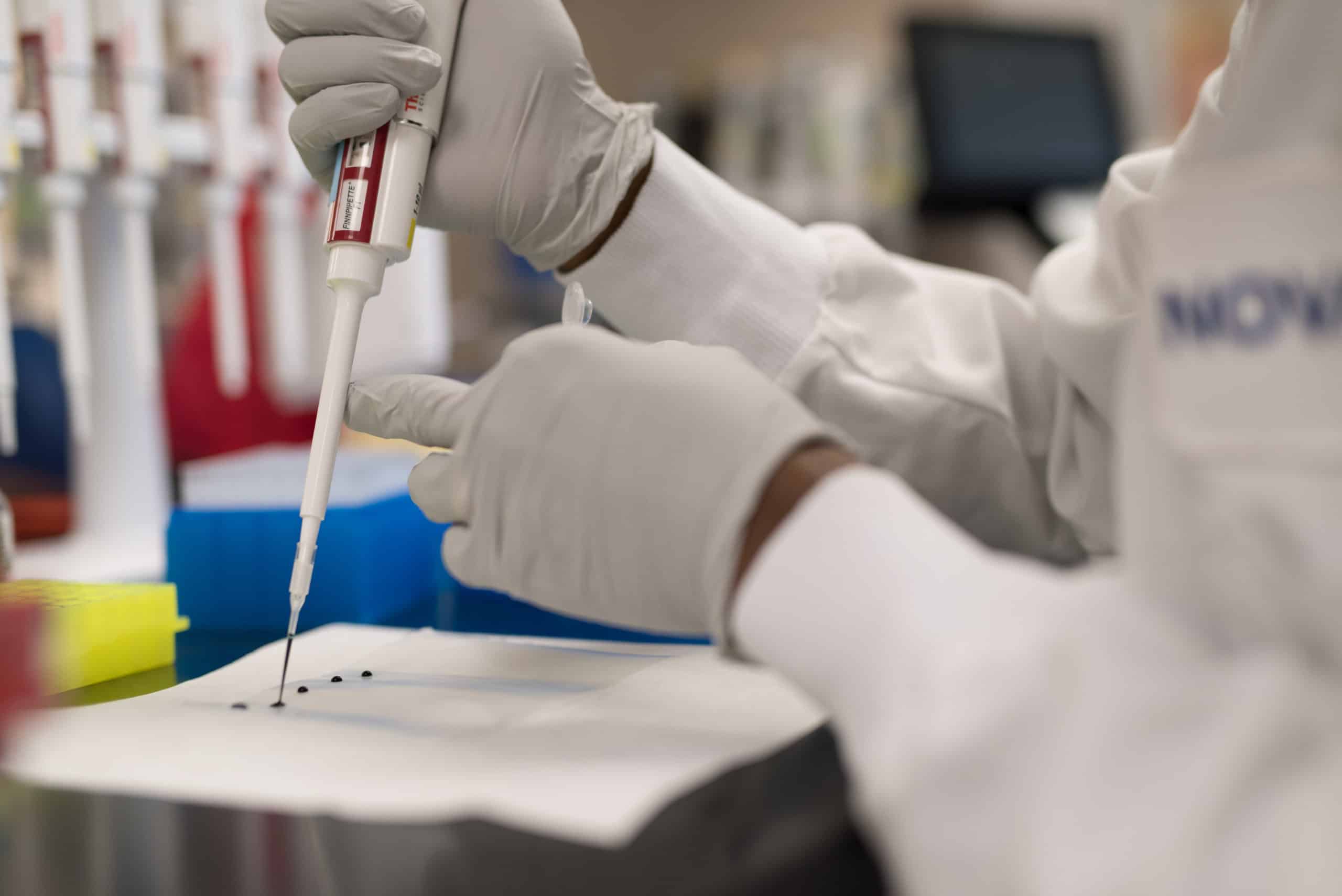
The total number of daily and cumulative COVID-19 tests reported to be completed earlier this week was inaccurate, according to a statement from the NC Department of Health and Human Services. Due to errors in data reporting from LabCorp, DHHS officials now report 1,823,283 COVID-19 tests have been completed statewide, or 221,500 fewer tests than the health department reported previously. The misreporting did not affect key metrics such as the accuracy of case count totals in the state. Read more here.
North Carolina Has the 20th Highest Number of COVID Cases in Children
According to a national study, more children in North Carolina account for the total share of COVID-19 cases than they do in other states. Of the state’s 139,061 reported cases, children ages 0-17 account for 11 percent of all cases—or more than 15,000 cases—where demographic data is available. Nationally, children comprise 8.8 percent of the total number of cases. In North Carolina, the number of cases in children rose over the summer, but those under 18 who do contract the virus seem largely to be spared the most severe effects of the disease.
ACC Football Will Likely Go Forward
Though the Big Ten, PAC-12, MAC and Mountain West conferences have canceled (or postponed) their football seasons, ACC athletics directors and presidents say they are committed to going forward with their season. Last week, the ACC announced an amended schedule, with the first games kicking off the week of September 7. On Tuesday, the ACC released a statement saying it will “continue to make decisions based on medical advice … and do so in a way that appropriately coincides with our universities’ academic missions.”
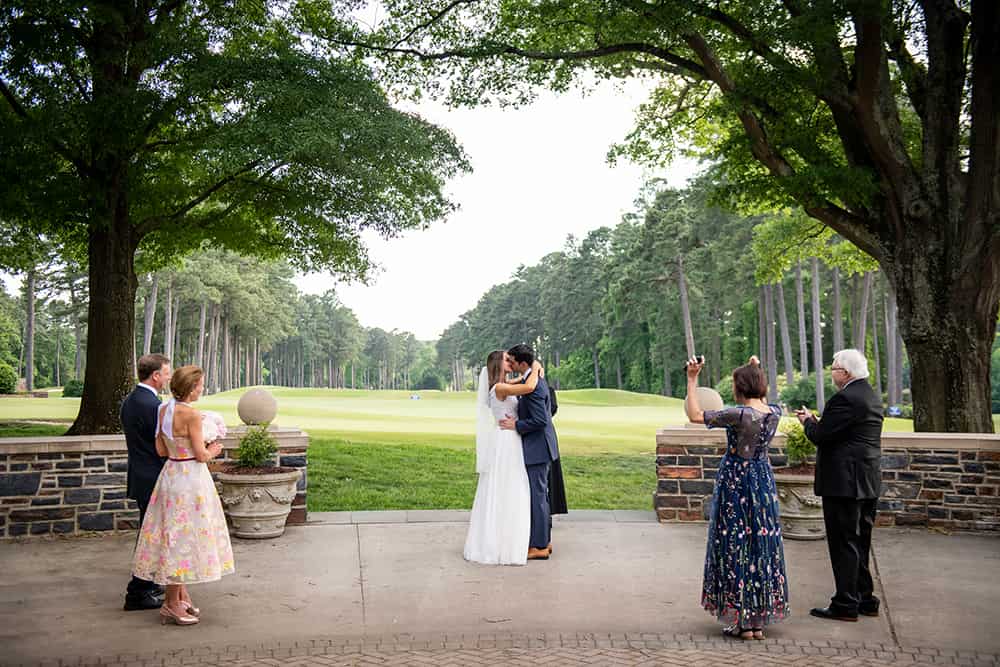
WEB EXCLUSIVE Most of us find it easy to empathize with brides and grooms whose wedding plans have been upended due to the coronavirus pandemic. But we should spare a thought, too, for the wedding vendors—venue hosts, florists, photographers, caterers, DJs, wedding planners—whose (mostly small) businesses are being laid to waste by an almost total loss of revenue.
“I don’t know if any other industry has been as decimated as much as the special events industry,” says Dean Ogan, owner of Raleigh-based Rocky Top Catering, which provides food and bar service options at weddings, special events and corporate functions across the Triangle. “It is hard to make it.”
Gov. Cooper’s stay at home orders in March shut down weddings immediately, until May, when gatherings were allowed but capped in phase 2 at 25 people outdoors and 10 people inside. Vendors had hoped that, as the summer and traditional wedding season months rolled on, they’d see some relief. But rising COVID case numbers and limited reopenings meant many couples decided to postpone their weddings or even cancel them outright.
“I estimate we have about a 75 percent reschedule rate and about 25 percent outright cancellation rate,” says Ogan. “And the events that we do in phase 3, if we get them, are going to be much, much smaller than anticipated.”
With 2020 largely a wash for vendors, maintaining cash flow has been a major challenge. And with some weddings being postponed until as late as next year, many will spend 2021 playing catch up on already-negotiated contracts rather than generating new business.
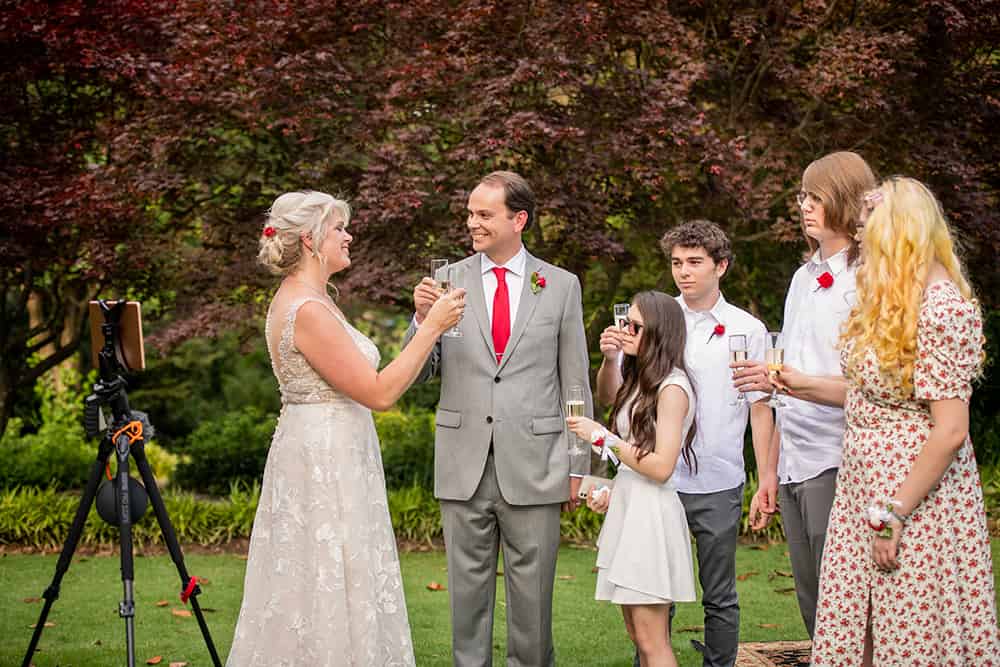
Photograph by f8 Photo Studios
“[With rescheduling], the final payments are going to be delayed by anything from a couple of months to a year, so that’s a complete loss of revenue for this year,” says Nathan Morris, the owner of wedding videography company Oak City Films. “So, next year, since we only have so many people that can service these weddings on any given day, those dates are being taken up by weddings from this year. In effect, it has split our revenues, for two years, in half.”
For couples, the pandemonium of the pandemic has clearly been disappointing; some, vendors say, who have decided to cancel events outright have insisted on being refunded their retainer fees for services which, contractually, are spelled out to be non-refundable, no matter the circumstances.
“Ultimately, we have to be able to keep the business running, up until the date that we’re contracted to be there, keep all the overhead expenses going, keep the equipment up,” says Morris. “Even if [a couple] chooses to cancel, there were other people who asked about that date, and we couldn’t do it and had to turn that business away. So we lost money there as well. The wedding industry is one of the most misunderstood on the planet. Frankly, there are no big businesses in the wedding industry. Most are small, mom and pop and maybe one other person type operations, and contractors.”
Cara Powell, the owner of f8 Photo Studios, says in one extreme case, a couple reported her business to the state attorney general’s office for not returning a non-refundable retainer for a canceled event.
“You’re asking us to return this non-refundable retainer that we have already spent, in most cases, on business expenses,” says Powell. “There is a perception that, because of our lifestyle, and looking glamorous in some sense, people assume we are are balling. But actually, there are not a lot of rich vendors. A lot live paycheck to paycheck and it is feast or famine.”
With little to no official enforcement of phase 2 mandates, such as limits on gatherings, there are also vendors who choose to operate at will, creating an uneven playing field for vendors who want to follow the rules, feel they have to due to their own health concerns and don’t want the liability of participating in events where they could put others at risk. This creates an environment, vendors say, where they fear being blacklisted by venue hosts, clients or other vendors for expressing an unwillingness to participate in certain events where they have concerns over safety.
“There are venues blatantly defying the governor’s mandate,” says Powell. “They’re basically interpreting it to what serves their narrative. Places are saying they are a private club so do not have to follow the rules, so it’s a difficult position. The wedding industry is a top-down hierarchy, where venues are the head of the pack and a lot of people don’t feel like they have a voice to speak up.”
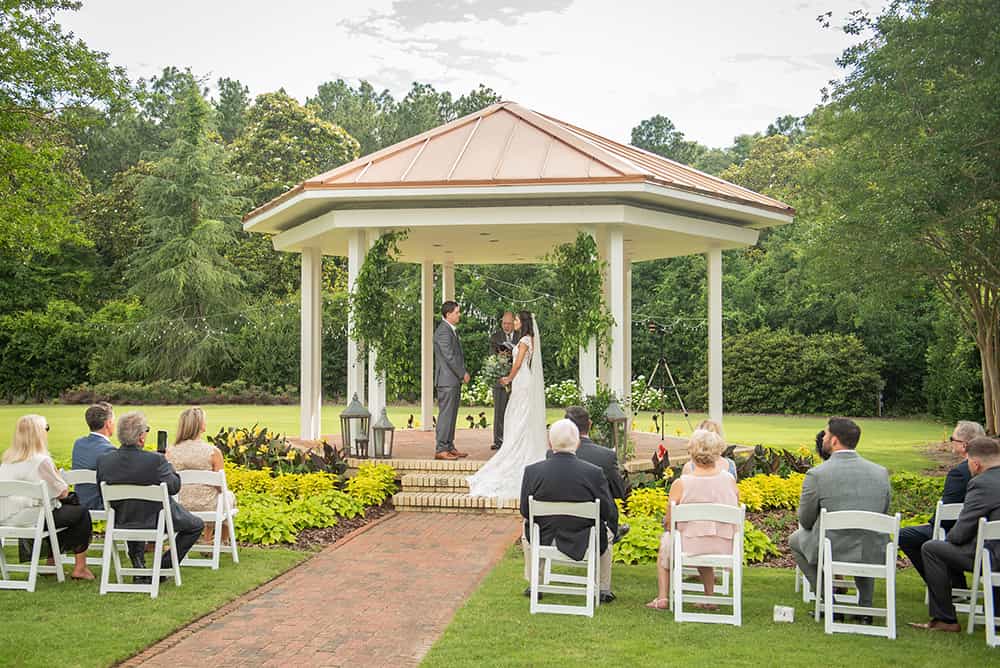
Photograph by f8 Photo Studios
“This is a referral-centric business,” says Morris. “There are complications and negative consequences that fall on us immediately if we choose not to participate [in certain events]. It is something we have to keep in mind and it is troublesome.”
But both Morris and Powell say the majority of their clients have been gracious, patient and understanding.
Morris says, in order for wedding vendors to survive, couples will need to extend that grace to them in the coming year, to educate themselves on the governor’s mandates, to take the rules seriously and to streamline communications with vendors, as they’ll be overwhelmed once things return to something resembling normal again.
According to Ogan, if wedding venues are allowed in phase 3 to operate as restaurants do—at 50 percent capacity, with guests wearing masks except for when they’re eating—businesses will have a better shot at surviving the pandemic.
“Instead of a traditional wedding, we want to offer brides the opportunity to get married and have a reception that includes a nice dinner, speeches, the first dance, father-daughter, mother-son dances, and stop there,” Ogan says. “The thing we have to get through to people is that the vision they may have had for their wedding will be different.”
Notably, the vendors Raleigh Magazine spoke to for this story have been able to adapt during this period and expect to stay afloat. Oak City Films has pivoted to live streaming wedding ceremonies and renting out equipment to households to host socially distanced movie nights in their backyards. Rocky Top has partnered with nonprofits such as Inter-Faith Food Shuttle and World Central Kitchen to provide meals for communities in need and Powell says she had begun paring down her photography business before the pandemic took hold in order to move forward with plans to open a wedding venue in a historic property in Apex next year.
All say they are optimistic about the future, grateful for flexibility from their employees and for support from their understanding clients.
“Yes, sales are down this year,” Morris says. “It is frustrating but the good news is, this will end, we will be back to normal. Once we get past a little bit of scheduling voodoo next year, we will still be here. [Our team] has done a great job of rolling with punches and my job has been to make sure they can still work and stick with me into the future.”
WEB EXCLUSIVE Hurricane Isaias has come and gone and it’s a beautiful day—read not too hot—in Raleigh. It’s the perfect day, actually, to enjoy a socially distanced meal or a drink outdoors at one of the restaurants participating in the City of Raleigh’s temporary outdoor seating extension initiative, whereby restaurants owners are allowed to spread out tables into public streets, parking lots and right-of-ways so customers can enjoy more space, more safely. Though there are some storms in the forecast in the upcoming week, temperatures in the high 80s will still be much cooler than they have been recently. So here’s who’s offering expanded outdoor dining options in Raleigh currently, and who could be soon.
If you’re looking to eat out downtown, check out this by-district list of which restaurants are currently offering outdoor dining from the Downtown Raleigh Alliance.
WEB EXCLUSIVE If you’re missing the local culture with Raleigh museums closed due to the pandemic, here’s your chance to take some in—and to learn a little history in the meantime—from the comfort of your living room.
Built in 1858, the 6,000 square-foot Italianate-style home is a National and Historic Raleigh Landmark that’s seen several different owners and lots of changes over the centuries. Montfort Hall was originally commissioned for William Montfort Boylan, the son of the prominent Raleigh businessman and wealthy landowner William Boylan. The younger Boylan selected the British architect William Percival to design the home and Boylan owned it until 1899, when the mansion was sold and the land surrounding it was subdivided to form the Boylan Heights neighborhood.
In the meantime, the mansion has served as various residences and a church but was in a state of disrepair when the Shepherds, longtime Boylan Heights residents, bought it.
As you tune in to the program this evening, enjoy your drink of choice or try the Montfort Mango Lemonade, specially created by guest bartender Zenon Nunez for this event. Cocktail ingredients include vodka, lime juice, mango juice, lemonade and lemons and limes for garnish.
Learn how to make the Montfort Mango Lemonade here. To learn about the history, current state and future plans for Montfort Hall, register for the History + Highballs program, hosted over Zoom, here.
WEB EXCLUSIVE With more than 10,000 confirmed cases, Wake County is still very much in the midst of the coronavirus pandemic but are there are some reasons for optimism. Yesterday, President Trump visited an RTP plant that’s working on manufacturing a coronavirus vaccine that could be ready by the end of the year. Additionally, more than 92,000 people in North Carolina have recovered from the virus.
Here’s where the state and Wake County are with COVID-19 today.
Hospitalization Cases Peak, But More than 90,000 Have Recovered from COVID
The number of confirmed coronavirus cases in the state tops 116,000 and the number of new patients in the state being hospitalized with the disease has tracked above 1,000 since July 4. Today, the number of hospital cases in North Carolina hit a new record high, according to data from the NC Department of Health and Human Services, with 1,244 cases, up from Thursday’s previous record of 1,228 cases. But on the bright side, 92,302 people in North Carolina are presumed to be recovered from symptoms from COVID-19. DHHS reports nearly 1.7 million coronavirus tests completed with a percent positive rate hovering around 7 percent. Wake County is currently reporting 10,289 cases of the virus, or about 94 cases per 10,000 residents. The county has reported 115 deaths so far.
A Potential (Locally Produced) Vaccine
President Donald Trump visited the Fujifilm Diosynth Biotechnologies plant in Morrisville yesterday to tout a potential vaccine that’s being manufactured for coronavirus. The Maryland-based biotechnology company Novavax received a $1.6 billion grant from the federal government to develop, manufacture and deliver 100 million doses of the candidate vaccine, NVX-CoV2373, as early as December 2020 in a joint effort with the U.S. government known as Operation Warp Speed. Production on the first batch of the vaccine candidate is already underway at the plant.
“The pandemic has caused an unprecedented public health crisis, making it more important than ever that industry, government and funding entities join forces to defeat the novel coronavirus together,” said Stanley C. Erck, president and CEO of Novavax, in a statement. “We are honored to partner with Operation Warp Speed to move our vaccine candidate forward with extraordinary urgency in the quest to provide vital protection to our nation’s population. We are grateful to the U.S. government for its confidence in our technology platform, and are working tirelessly to develop and produce a vaccine for this global health crisis.”
The vaccine candidate is in the the first phase of a clinical trials, and is expected to progress into the second phase next month and the final phase this fall. It works by replicating the “spike protein” of the coronavirus which triggers an immune response in people exposed to the protein. Diosynth will mass produce the spike protein for the vaccine.
“We will achieve victory over the virus by unleashing America’s scientific genius,” Trump said in remarks yesterday before touring the facility. “We’ve shaved years off the time to develop a vaccine. This is the fastest a vaccine for a novel pathogen has ever gone.”
Delays In Receiving Test Results
In the last month, the time it has taken to receive coronavirus test results in North Carolina has nearly doubled, from an average of two to three days in June to around seven or more days in July. According to a report in the Charlotte Observer, commercial labs like LabCorp are receiving more tests than they can process and it’s taking them time to work through mounting backlog. The backup began around the July 4th weekend and has only worsened as the number of cases has soared throughout the month. With demand far outpacing supply, labs are also experiencing shortages of reagents, or chemicals used to process results. While the shortages and delays are a problem nationwide, in North Carolina, hospitalized patients experiencing the most serious symptoms have largely been able to receive their results within a day or two. LabCorp and other labs are working to scale up their capacities to process tests, as results, experts say, are crucially important in convincing people to isolate themselves when they test positive and preventing spread of the virus. There have also been instances of false positives reported with some kinds of coronavirus tests.
Register for Virtual Academy
Registration for Wake County public schools Virtual Academy closes Wednesday (July 29) at 5 p.m. Roughly half of all students (79,000) in Wake County public schools have enrolled in the Virtual Academy, where they will learn 100 percent remotely for the entire fall and spring semesters of the school year. For students not enrolled in the Virtual Academy, schools on the traditional school year schedule begin the fall semester on Monday, August 17, with the first two weeks of schooling taking place online. WCPSS plans to transition to a hybrid model of remote and in-person learning by September 8. K-12 students and staff will be required to wear face coverings while on school premises.