


Liquid Gold

Liquid Gold

Raleigh hotel bars pour their hearts into crafting a custom whiskey.

The hotel bar, once the solitary respite of the solo traveler, is now often regarded as an amenity of equal importance to high thread count sheets, a destination in its own right. Here in the City of Oaks, our thriving bar scene means we’re spoiled for choice when it comes to watering holes, but bars at three Raleigh hotels—AC Hotel Raleigh North Hills, Renaissance Raleigh North Hills and Raleigh Marriott Crabtree Valley—are making a mark with their own private label Maker’s Mark bourbon.

The hotels didn’t simply choose a barrel and put their name on it; they traveled to Louisville, Kentucky to participate in Maker’s Mark Private Select program, which invites hospitality professionals to participate in an interactive process to develop a custom whiskey. The Raleigh contingent included Anthony Zinani, General Manager, and Pete Horak, Bar Manager, of Level7, AC Hotel’s rooftop bar, respectively; Ron Salerno, Food and Beverage Director of Raleigh Marriott Crabtree Valley; Executive Chef Dean Thompson of Renaissance Raleigh; Dean Wendell, Corporate Food and Beverage Director, and Chelsea Melvin, Corporate Director of Beverage Operations, of Concord Hospitality, respectively.

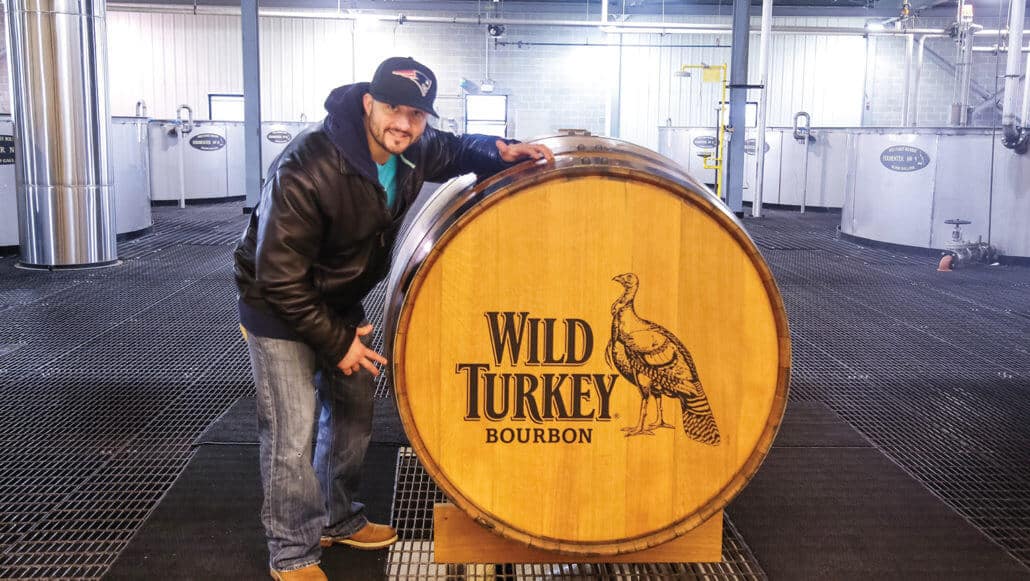
Anthony Zinani, General Manager of Level7, Jimmy Russell, Master Distiller of Wild Turkey and Dean Wendell, Corporate Food and Beverage Director of Concord Hospitality

After touring the storied distillery and getting a behind-the-scenes glimpse into the distillation process, the team gathered for a tasting in the aging cellar, a stately room that’s carved out of a hillside. To inform the tasting, the team first decided to create a sipping whiskey.

“You go over color profiles, flavor profiles, what you’re looking for, and mimic that to best of your ability,” explains Zinani. “So, for a sipping whiskey, you want something that’s rich, heavy-bodied and deep in color, something that can stand alone.”

The Maker’s Mark team guided the Raleigh contingent through a tasting of six different bourbons, each with a different style of barrel finish. By law, whiskey must be aged for four years in American oak barrels but can be “finished” in barrels made of different woods and with different toast (or char) levels, which impart additional flavors and characteristics. To combine multiple types of finishes in one barrel and achieve a specific flavor profile, distilleries add staves, the planks used to make barrels, to the finishing process. The Maker’s Mark Private Select program provides five different oak staves to choose from, including seared French cuvée, whose distinguishing flavors are oak and caramel or roasted French mocha, defined by its charred, maple and cocoa notes.

To help participants taste and learn to detect the subtle flavor notes in each style of finish, the Maker’s Mark team set out spices and chocolate to taste alongside the whiskey. Zinani likened the process to making perfume.

“When you crack open these barrels at ten in the morning they’re setting aside three different types of bourbon and three different ingredients and teaching you how to taste it, to breathe it in, so you get that maple, vanilla-y or dark coffee flavor,” he says. “It’s hard to really grasp that stuff if you’re not doing it every day. But the process is awesome.”

“We’d taste a little bit of each, blend it, swirl it in the beaker and taste it,” says Melvin. “We sat down as a team and asked [questions like] ‘What does it taste like?’, ‘What is the mouthfeel?,’ and ‘How does it finish?’ ‘Is it long or short?’ ‘Is it dry, too sweet or tannic?’”

After tasting, the Maker’s Mark team helped advise which staves to use to achieve the desired flavor profile. For example, if a bourbon tasted too tannic or dry, they’d pull back on the French mocha staves and increase the quantity of French cuvée staves to add sweetness and floral notes.

Once they landed on the formula—the specific combination of staves—the team headed for the barrel room where they emptied out a barrel of Maker’s 46, placed the staves inside the barrel and filled it back up with the bourbon to rest for another six to eight weeks. The resulting whiskey is a 120-proof bourbon with a deep amber hue, rounded sweetness and velvety mouthfeel.

“It almost looks viscous; it drinks how it looks,” says Zinani. “To me, it’s got a little bit of nutty flavor to it; it’s wicked rich, it’s sweet on the tongue and it’s got a great finish. Add an ice cube and a touch of water and the vanilla and burnt sugar comes out; it helps balance it out. It’s also excellent with a brandied cherry.” ■

Collaboration Nation

Collaboration Nation

Explore Raleigh’s unique craft beers brewed with community spirit.

In the last decade, Raleigh’s craft breweries have racked up national accolades and amassed legions of fans, both near and far. As the city’s culinary and craft beer scenes have grown, breweries and restaurateurs have looked at innovative ways to make their brews, drinks and food stand out. Cue the collaborations.

For local brewery owners especially, partnering with restaurants, coffee roasters and bakeries offer them opportunities to work with like-minded businesses, collaborate with friends and foster community, all in the name of crafting some seriously creative and sought-after flavors. We spoke with folks at four popular Raleigh breweries who shared how working with talented local coffee roasters, chefs and bakers create truly local, one-of-a-kind brews.

Be forewarned: some of these collaborations are only around for a limited time, so make sure to try them soon!

Crank Arm Brewing Company x The Cortez Seafood + Cocktail: Salty Spokes Smoked Oyster Stout

Adam Eckhardt, co-owner of Crank Arm Brewing Company, believes local beers made with local ingredients tell stories. With chef Oscar Diaz and owner Charlie Ibarra of The Cortez Seafood + Cocktail, Crank Arm has brewed its best story yet: a beer made with 100 percent North Carolina ingredients. The Salty Spokes, a smoked oyster stout, features malt sourced through Durham-based Epiphany Craft Malt; Lawton Points oysters harvested in the Newport River from Locals Seafood; hops from Pittsboro-based Farm Boy Farms; and yeast from White Labs Asheville. For this limited edition beer, 5 percent of the malt was smoked over pearwood, and a half bushel of oysters, added in whole during the last 15 minutes of the boiling process, imparts a trademark brininess, while the meat and shell’s calcium adds creaminess. “It’s got that smokiness and saltiness,” Eckhardt says. “There’s a liquid ham or bacon thing going on with that.”

Big Boss Brewing x Larry’s Beans: Honduras Coffee Lager

Founded in 2006, Big Boss Brewing has a long track record of local collaborations. “We’ve done things with restaurants, with local breweries and with local bands,” says Big Boss product manager Dave Rogers. “Whenever we get to do a collaboration, it just shows a mix of collaboration on every level: the concept, the product and how you present it afterwards.” One of Big Boss Brewing’s ongoing partnerships is with neighboring coffee roaster Larry’s Coffee. The brewing duo first collaborated on Aces & Ates, a strong winter stout infused with Ethiopian cold-pressed coffee. This month, Big Boss will release the Honduras Coffee Lager, a classic German-style lager infused with roasted and gently cracked Honduran coffee beans. The beans were selected during a coffee cupping at Larry’s Coffee, where a team tasted seven different kinds of brewed coffee. The Honduran beans were chosen for their nutty, fruity and smooth flavor to complement the light-style beer.

Brewery Bhavana x Boulted Bread: Boult Imperial Kvass

The team at Brewery Bhavana acknowledges that the craft beer industry is inherently collaborative. “Brewing with friends is a nice change of pace,” says Roxanne Bellamy, the brewery’s beer manager and storyteller. “There are new hands, minds and hearts to offer new perspective.” Last April, Bhavana’s head brewers Patrick Woodson and Brent Steffen worked with Josh Bellamy and Sam Kirkpatrick, co-founders of Boulted Bread, on Boult, a barrel-aged imperial kvass made with Boulted’s baked Nordic rye bread. To brew the kvass, they wet, mashed, then pureed the bread and aged the resulting wort for six months in wine barrels with Brewery Bhavana’s house yeast culture and Boulted’s sourdough starter. “It’s just chock-full of Raleigh’s wild yeast strains,” Roxanne Bellamy says. “Also, it’s delicious—mildly sour with a nice, smooth, grain-like backbone. Kvass is an Eastern European fermented beverage, usually under one percent alcohol, like kombucha, but ours is 6 percent, so we call it an ‘imperial kvass.’ It’s one of the most beautiful beers we’ve made so far.”

Trophy Brewing x Slingshot Co.: Upcoming Cascara Tea-Infused Brew

Trophy’s brewers collaborated with Jenny and Jonathan Bonchak of the coffee company Slingshot Co. to brew Slingshot, a best-selling winter coffee porter infused with Slingshot cold-brew. Trophy brewer Chris Powers says that the coffee lends notes of citrus and dark cherry to round out the dark beer’s flavor. Trophy’s next collaboration with Slingshot will feature a different kind of coffee product: cascara tea. “Cascara is the cherry on the outside of a coffee bean, but it’s got a much lighter, fruitier flavor with a cherry tobacco note to it,” Powers explains. “We reached out to [Slingshot] because we wanted to work through it with someone coming at it from a coffee background.” The beer style hasn’t been finalized, but they’re experimenting with using Slingshot cascara in an imperial stout, in which the cherry tobacco notes add a nuanced brightness to the dark style beer, or a Belgian Tripel, where its fruitiness plays off the ale’s malty sweetness.


Bar Bites

Bar Bites

Raleigh restaurants are raising the bar on bar snacks.

“Small plates” have gone from buzz words to standard menu fare, but an even smaller plate is making its presence known: the bar snack. Restaurants around Raleigh are stepping up their bar games by offering a separate food menu; this not only means better bar dining options, but it also gives diners the chance to experience a chef’s cooking style or try a more upscale restaurant without the expense or to-do.

“I think we are alienating a certain demographic that has the desire to come to a more well-rounded restaurant like ours and be able to experience it in a more casual manner and not have a reservation or get dressed up,” says chef de cuisine Jake Wood of 18 Seaboard, which offers small plates, raw options and shareables, in addition to entrees, in hopes of appealing to everyone.

From fine-dining gems to ramen shops to steakhouses, these three restaurant bars are putting as much emphasis on their bar snacks as they are on drinks. Stop in soon for a bit of snappy snacking.

18 Seaboard

18 Seaboard’s bar snack menu showcases chef-owner Jason Smith’s refined Southern cuisine and penchant for impeccably sourced ingredients executed with chef de cuisine Jake Wood’s creative flair. Highlights include barbecue popcorn, where Geechie Boy Mill indigo blue kernels are popped in bacon fat, tossed with a Maui sweet onion barbecue dry rub and finished with Sea Love Sea Salt Co.’s sea salt and crumbled country ham; duck BBQ buns, featuring warm bao stuffed with duck confit and finished with Alabama white barbecue sauce, micro chervil and puffed farro piccolo, another heirloom grain from Geechie Boy Mill; and broiled N.C. Core Sounders oysters topped with house made pimento cheese and prosciutto. Fuel your snack party with either the strawberry-rhubarb sangria, punched up with strawberry vodka, or a blood orange margarita, bolstered with blood orange rind syrup.

Mandolin

Jason Wolonick

With its rich wood tones, clean lines and mason jar-lined shelves, Mandolin feels like the chic-est farmhouse ever, which is fitting as the menu features ingredients from chef-owner Sean Fowler’s farm. The farm-to-table vibes extend to the bar too, with a menu that marries Fowler’s fine dining finesse and creative riffs on Southern cuisine, including a bar-setting charcuterie board with silky chicken liver pâté and head cheese, plus pickled components such as celery or fermented cucamelons. Pair it with The Farmer’s Daughter, a spring-ready gin fizz crafted with a strawberry-beet shrub. The mix-and-match bar plates menu is also a highlight (and a steal)—$15 gets you a craft beer (try Lynwood Brewing Concern’s Czech Yourself pilsner), and either a main dish, such as the pimento cheese bacon burger, or two sides including hand cut French fries showered with duck fat and malt vinegar powders and airy pork rinds with a side of ranch dressing, which gets a tangy umami hit from smoked, fermented collard stems.


Sullivan’s Steakhouse

Sullivan’s Steakhouse

Sullivan’s Steakhouse is best known for its Flinstonian bone-in steaks and seafood-inspired fare, but its new bar menu offers a bite-size taste of the steakhouse experience. Try the truffle steak tartare, where chopped raw beef redolent of earthy truffles is piled onto challah toast rounds and topped with a one-two crunch of cornichons and pickled shallots. Or try the tuna poke shooters, served atop English cucumber rounds arranged on a dramatic pink salt block. Pair these with the Fig Rosemary Smash, where Rémy Martin VSOP Cognac mingles with lemon and herbal Bittermens Scarborough bitters, garnished with a fresh rosemary sprig and spoonful of fig preserves. Take advantage of $7 shared bar bites, signature cocktails and select wines during happy hour Thursdays and Sundays from 4:30 p.m. until close.

The Mighty Microgreen

The Mighty Microgreen

Microgreens take root in the City of Oaks.

AS THE PLANT-BASED diet trend gains traction, greens are commanding more real estate on restaurant menus and plates, but there’s a tiny yet mighty green that’s vying for more of the spot- light: the microgreen. Not to be confused with sprouts, microgreens are the fi rst true leaves of a vegetable or herb. Often used to give plates a pop of color, some of Raleigh’s top chefs are giving microgreens their due, treating the intensely- fl avored leaves and stems as a stand-alone ingredient that enhance dishes’ fl avors and textures. Locally, it’s all thanks to Tami Purdue.

Purdue, who traded in her career in intellectual property to grow microgreens out of an abandoned shipping container, is the founder of Sweet Peas Urban Gardens, which grows more than 55 varieties of microgreens. It’s not as crazy as it sounds. Through her volunteer work with Inter-Faith Food Shuttle, Purdue learned how to grow microgreens at a workshop led by urban agriculture pioneer Will Allen. Allen promoted microgreens as both a solution to food insecurity as well as a small farm business model, with the caveat that, to be profitable, growers had to sell to chefs. Purdue was so inspired that she immediately drafted a business plan and planted her first microgreen: arugula. During the summer of 2014, Purdue experimented with growing diff erent varieties while analyzing small farm business plans. By the end of the season, she gave up her day job to become a microgreen farmer.

Purdue continued growing microgreens out of her Raleigh residence and brought her fi rst harvest—arugula, pea shoots, a spicy mix with radish, arugula and mustard greens, a mild mix with broccoli, cabbage and kohlrabi, and micro cilantro and basil—to the Wake Forest Farmers Market. Chef Lotah Fields from Farm Table Kitchen & Bar was so ec- static to fi nd microgreens that he bought everything. “That’s what got me inspired that I could do this and that there was a little bit of a market for it,” Purdue says.

INDOOR GROWING SPACES

18 Seaboard’s ribeye with Agrodolce, collard spatial, squid ink aioli and Sweet Pea’s sunflower shoots.

Over the next year, Purdue sold to more restaurants through Raleigh City Farm, where she met Ben Greene, a NC State University graduate whose master’s degree thesis and subsequent business, the Farmery, developed indoor farming technology that converted abandoned shipping containers into indoor growing spaces. “I said, ‘I want one,’” says Purdue. “I looked at the data about how much could be grown in it and it was fi ve times what we were growing in my house.”

The 40-foot grow box’s efficient space and controlled environment allowed Purdue to consistently produce fresh microgreens, much to the delight of local chefs. Her prime location just outside downtown meant that chefs could easily pick up—or sometimes literally pick—their orders. Though Purdue had to relocate to Hillsborough late last year, she will return to Raleigh with two additional grow box installations, one at the Transfer Co. food hall, opening this summer, and one at Rebus Works, where she also sells at their Saturday market. While Purdue has seen more interest in microgreens among consumers—likely due to their purported health benefi ts, as a recent study shows that microgreens pack four to 40 times more nutrients than their fully-grown counterparts— chefs remain her best customers.

RESTAURANT REQUESTS

Four years later, Farm Table Kitchen & Bar is still a loyal customer. Chef Jerome Zimmer uses microgreens to add dimension to everything from fi sh to roasted vegetables, and even had Purdue specially grow micro caraway for a recent Triangle Wine Experience dinner. Its toasty rye notes complemented the rye bread served with a pork pâté and pulled together a branzino dish plated

Farm Table’s Salmon Piperade with onions, peppers, roasted tomato, grilled fennel, chorizo, melted leeks and herbs

with a Russian dressing. Another custom request came from chef Patrick Colley at Caroli- na Country Club, who used slightly bitter pumpkin microgreens to balance the sweetness of a butternut squash bisque. “They [also have] a very thick leaf so they added a subtle texture to the soup along with the pumpkin seeds,” Colley says. “I know this may sound a little strange, but I also felt like they added a certain element of umami to the dish.”

Instead of topping Pharmacy Café’s grilled halloumi sandwich with ho-hum mesclun, chef Patrick Cowden pulls in Sweet Peas’ spicy mix, a blend of cilantro, radish, arugula and mustard microgreens with nuanced peper notes. Bowden has also experimented with microgreens in vinaigrettes, where micro herbs like sorrel yield a bright, refined flavor without the astringency. At Raleigh institution Vinnie’s Steak House, chef Tom Armstrong incorporates microgreens into weekly specials and is particularly into micro herbs. “Right now, we’

Olive tapenade, pickled red onion, slow roasted tomato, lemon-rosemary aioli & spicy mixed greens on baguette

re doing beef carpaccio and we’re using chervil on that,” he says. “I thought about doing fried parsley leaves, but micro chervil has a fresher, cleaner flavor. It’s like a better version of parsley. It brings a mild herbaceousness to the other flavors, like capers, horseradish and egg yolk.” And, at 18 Seaboard, chef Jake Wood also uses microgreens to elevate meaty fare, relying on micro garlic to deliver a pronounced chive flavor and snappy texture to beef carpaccio, and nutty-sweet sunflower shoots to offset the richness of a rib eye. Purdue enjoys working with chefs and seeing her microgreens shine in their creations, but as part of her mission to spread the microgreens love, Purdue donates Sweet Peas’ market leftovers to A Place at the Table, a pay-what-you-can café where chef Aaron Stienessen uses sunflower shoots and pea shoots to deliver fresh crunch to sandwiches and salads.

Shuck, Slurp & Sip: Savoring Raleigh’s Oyster Bars

Shuck, Slurp & Sip: Savoring Raleigh’s Oyster Bars

No matter how you shuck it, oysters are polarizing. For all those who consider raw oysters a delicacy, just as many are turned off by slurping a live sea creature from its shell. But the tide is shifting, and oysters are getting more love now than ever before.

Partly, it’s because raw bars are trendy—oysters on the half shell are all over restaurant menus and Instagram feeds. Another reason is because oysters are safe to eat year-round. Yet another is likely because the average oyster eater is getting younger, which syncs with Raleigh’s booming population growth as jobs in tech and research sectors attract young working professionals.

“When you combine the availability of local, fresh and sustainably-harvested oysters with the rapidly growing food trend of raw bars, it creates a niche growth area for restaurants,” says Lin Peterson, co-founder of Raleigh-based Locals Seafood, which sources North Carolina seafood—including wild and cultivated oysters—exclusively. And, with modern, commercial oyster farming and refrigeration methods, you can forget the rule about eating them only in months containing “r,” though it still applies to wild oysters.

In Raleigh, 42nd Street Oyster Bar, founded in 1987, was first on the scene and traditionally catered to the legislative crowd. Though the restaurant remains true to those roots, executive chef Joe Rohrer is glad to see places like St. Roch Fine Oysters + Bar and The Cortez Seafood + Cocktail opening. All three now cater to a shifting demographic of discerning diners with diverse palates.

“When I moved here, downtown was a ghost town,” Rohrer says. “There were a couple of dive bars and that was it. Now you can eat at a different restaurant downtown every day for months and find something good and unique.”

Indeed, Raleigh is cementing a reputation for its vibrant culinary scene, appearing on list after list of top places for foodies.

“Now, we can specialize in North Carolina oysters and showcase the sea-to-table recognition that Raleigh deserves,” says Oscar Diaz, executive chef at the Cortez.

So, what makes North Carolina oysters so special? It’s our merroir, or marine environment.

“A lot of people don’t know that all Atlantic coast oysters are the same species—Eastern,” says Locals’ Peterson. “Just like wines can be made with the same variety of grapes, [oysters] take on different flavors depending on where they’re grown.”

As filter feeders, oysters absorb what’s in their environment and salinity; vegetation and water temperature can all affect how they taste. Oysters grown closer to the ocean taste saltier, whereas those harvested from river beds are less briny. If a certain strain of algae is growing nearby, oysters can taste oniony, like wild ramps; if it’s a particular blue algae bloom, oysters can develop green grills and a truffle-like taste, as with prized Cedar Island Selects.

Whether you already love them or are bivalve-curious, there’s no better time to find oysters locally. Here’s where, when and how to enjoy them and what to sip while you slurp.

42nd Street Oyster Bar

When Rohrer started at 42nd Street a decade ago, North Carolina oysters were scarce. Now, he can choose from a dozen cultivated varieties, including sweet, buttery Chadwick Creeks, or Carolina Pearls, briny upfront with a sweet finish. Rohrer’s favorite wild oysters include briny-but-buttery Stump Sounds and Lucky Suckers, whose sweet finish make them perfect for oyster newbies. (If raw oysters aren’t your thing, order steamed Virginia oysters.) A bone-dry white wine is a classic pairing or try a North Carolina craft beer, such as the citrusy Foothills Jade IPA. Enjoy $1 oysters during happy hour Monday through Friday from 5—7 p.m. at the bar and in the cocktail lounge.

St. Roch Fine Oysters + Bar

Growing up in New Orleans, owner and chef Sunny Gerhart always loved oysters but since he opened his own restaurant, he’s developed an affinity for North Carolina bivalves. His favorite? The Wild Pony, small and meaty with a beautiful, elongated shell. Roasted oysters are available too, a nod to Gerhart’s NOLA roots. Get them “collar’d,” with smoky collards, Tasso ham and chili flakes; “pimento’d,” with smoked pimento cheese and pickled jalapenos; or “BBQ’d,” with cayenne, butter and fresh herbs. Champagne is a sure bet, as is the crisp Muscadet. Oysters are $1 all night Tuesdays and every day from 5—6 p.m.

The Cortez Seafood + Cocktail

Diaz created the type of place he’d want to hang out post-shift, with oysters, rosé and ceviche. The Cortez offers a rotating roster of three North Carolina oysters, including medium-briny Pamlico Bounties and super briny Core Sounders. If you’re new to raw oysters, Diaz recommends trying your first with Tabasco. We’re convinced the rosé mignonette will convert anyone into an oyster lover. Or, try the “all dressed up” option, topped with finely diced bell peppers, cucumber and serrano peppers, and doused with lime juice, hot sauce and ceviche juice. Pair with the sparkling Lamberti Rosé. Get $1 oysters Tuesday through Sunday from 5—6 p.m. ■

Glossary

Locals Seafood’s Lin Peterson shares the lingo you need to order, slurp and savor oysters.

Brininess/Salinity: How salty the oyster tastes/how salty the water is where the oyster was harvested

Cup: Refers to the size and depth of the shell, indicating where or how the oyster was grown

Finish: The residual taste of the oyster, revealing additional flavors and clues to its merroir

Liquor: The naturally-occurring liquid (mostly sea water) surrounding the oyster meat inside the shell, expressing brininess

Merroir: Coined from terroir—a wine term used to describe how environment affects taste—for the marine environment. Water, nutrients, salinity, climate and ocean conditions all affect an oyster’s taste and texture

Mignonette:
A condiment made of minced raw shallots, vinegar and pepper, served with raw oysters to cut brininess

Naked:
An oyster eaten
without accompaniments

On-the-Half Shell: Oysters which have been shucked (removed from their shell) and served raw on one half of the shell on a bed of crushed ice; typically sold by the half dozen or dozen