


Pecan Day

Pecan Day

For five decades, southwest Raleigh’s NC Farmers Market has offered seasonable, Carolina-sourced produce, straight from the growers themselves. Throughout the year, the stock lining the edges of the open air market building shifts with the harvests. Spring brings mushrooms and greens, and summer ushers in berry season. But fall is the time of truly classic North Carolina comfort food, including the reigning king of the autumnal dessert table: the pecan pie.

Exactly how one should pronounce “pecan” varies by person. Some say PEA-can, others say peh-KAHN; peakahn and peh-cuhn are in the mix, too. The only consensus is that there is no consensus, but however you pronounce the word, it can’t be denied that the smooth, brown tree nuts are a significant part of the local agricultural scene.

According to the North Carolina Pecan Growers Association, the Tarheel State produces three to five million pounds of pecans per year, grown across approximately 2,000 acres. Despite being a part of the Native American diet long before Europeans arrived on the country’s shores—and being a noted favorite of George Washington—pecan pie as we know it didn’t arrive on our plates until the 1930s. The rising popularity of Karo Syrup, and a recipe for pecan pie printed onto every can, meant that the pecan (and its sweet baked progeny) would be here to stay. With its impact and flavor firmly established, the farmer’s market dedicates a full day—November 30—to pecans every year. 

“It’s definitely one of the staples of the holiday season,” says Monica Wood, a farmer’s market event organizer.

But pecans aren’t the only fall treat to be found at the farmer’s market, on Pecan Day or any other day in autumn. Every kind of apple is available, often after they’ve been hauled directly from our mountain orchards.

“I like something a bit tart, nice and crisp, with a little sweet,” a customer says across a barricade of apples.

“You’ll want to try the Staymans,” the seller replies. The Staymans are too tangy. Does he have anything just a tad sweeter?

“Try the Cameo, just down the row.”

The back and forth continues, the taste and texture of apples chronicled as a connoisseur would muse on fine wines, while yellow jackets sneak into the sample containers for a taste of their own. Down the row of vendors, you find apple butter, approximately 20 varieties of apples, and legendary cider by the individual bottle, quart, or gallon.

In addition to apples, there are enough pumpkins, hay, Indian corn, sunflowers and gourds to fill the lower building. While old timers make sales from the comfort of their lawn chairs, their younger counterparts rearrange the rainbow colored stock. From palm-sized Jack Be Littles and Baby Boos to bold, warty, bluish gourds, to a creamy, smooth, two-person-to-lift Ghost pumpkin—and everything in between—you’ll find produce, and enough of it, to satisfy any and all baking and decorating needs.

Occasionally, the smell of brown sugar and comfort food wafts over from the market shops. That’s where you can find more in the way of fall’s finished products: candied nuts, caramel corn, spicy pumpkin bread, out-of-this-world pumpkin whoopie pies and (of course) pecan pies in all of their varieties.

If you visit the market on Pecan Day, the State Farmer’s Market Restaurant will provide samples of pecan treats, as well as recipes for your own creations. Official festivities last from 11 a.m. to 1, but the vendors?

You’ll always find them selling their wares, rain or shine.
Incredible Eggs

Incredible Eggs

Bagged lunches, an enthusiastic troupe of children and a teacher repeating her instructions a dozen times. Those are the images most of us conjure up when we think of a field trip. But for the team that works behind the glass walls at the paleontology lab at the North Carolina Museum of Natural Sciences, ‘field trip’ translates to ‘expedition.’ It means long days in long weeks far from home (or civilization, for that matter), sweeping vistas, scanning, chiseling, and discovery.

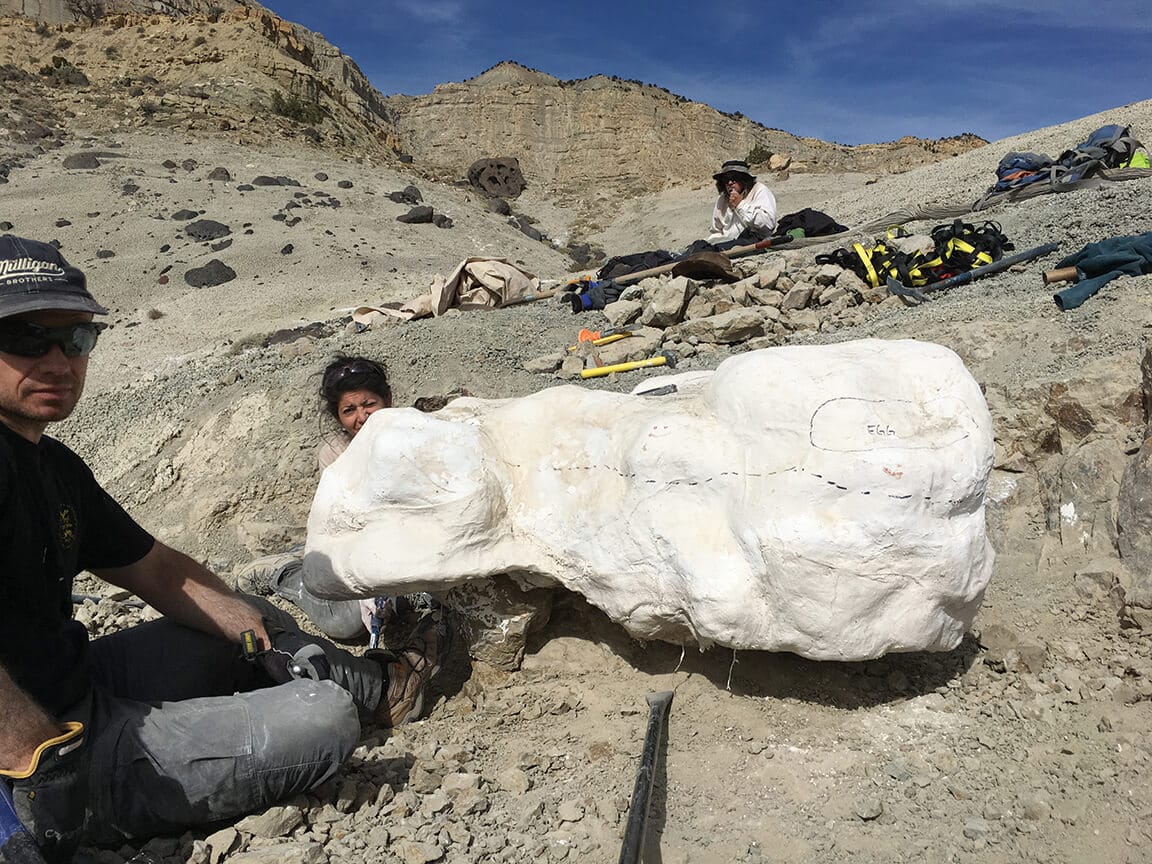
Central Utah, 2016—as a last push at the end of a hot day, an expedition team led by the museum’s head paleontologist, Lindsay Zanno, decided to scour one last ridge. The team’s efforts were rewarded: paleontologist Terry “Bucky” Gates found pieces of eggshell, which turned out to be a clutch of football-length eggs from a late Cretaceous creature called an oviraptorosaur; imagine a 15-foot tall chicken-meets-dinosaur, and you’ve got the picture. Although fragmentary oviraptorosaur eggs have been found in the United States, this is the first time an intact clutch has been uncovered here.

Preparing the nest of eggs for collection required weeks of work, culminating in lifting it off the desert cliffs by helicopter—surrounding sediments, protective plaster jacket, and all—and then driving it back to the Triangle and the lab that serves as home base. Lab operations manager and paleontology prep veteran Lisa Herzog has participated in the expeditions for years, and says that, after weeks in the field, the team unloads the fossils, then takes a day off to regroup. It’s a nice break at first, but, after 24 hours to bask in AC, WiFi and spare time, Herzog says there’s an irresistible itch to get back in the lab to start work on the new specimens.

Chief fossil preparator Aaron Giterman cut into the plaster encasing the eggs. On smaller items, scissors are sufficient, but for this 1,400 pound mass, he used a saw. The lab offers as much order as the field does volatility; every drawer is labeled, each tool has its place. After assessing and shoring up the stability of the specimen, the next step for a preparator is to clear the surrounding rock away using either a needle-like tool or a miniature jackhammer. It’s a task that requires precision and patience in abundance.

“People think that working on fossils is going to be really awesome and cool and exciting,” Herzog says. “And then they do it, and they’re like, ‘This is really boring’. It’s not for everyone.”

Herzog came to the the natural sciences museum following more than a decade of work at the Field Museum in Chicago, bringing with her a range of experience and dedication to the best practices in the realm of paleo prep. In the case of the oviraptorosaur nest, there is a wealth of information to be gathered about a still mysterious species, making care and consistency of paramount importance.

“Sometimes what we discover about animals is in the minute details,” Herzog explains.

The data is hidden in the sediments surrounding the nest, in the shape and texture of the eggs themselves, in the way the eggs were laid in a neat semicircle and in the context of the original site. With so much to uncover and study, Herzog estimates that work on the nest will continue for the next five years, at least. Gitterman, Herzog, Zanno, and other volunteers and colleagues in their own labs across the world will conduct the work in its usual quiet, equally unglamorous and significant way.     

As the work goes on, the eggs are front and center for any curious guest that cares to see. Next time you visit the museum, peer through the paleontology lab windows and get a good look for yourself at this piece of history in the midst of its revelation. Who knows—maybe the field-tripping kid next to you will be the paleontologist who makes the next big discovery. ■

Fancy Feet

Fancy Feet

It’s long been a basic human impulse to beautify and personalize commonplace things, from ancient cave drawings and pottery to modern-day mugs and jewelry. Here in Raleigh, Mike Phillips and his business, Sir Castle Teees, carries on that tradition by customizing items most of us wear every day: shoes.

Starting with a base of top-shelf sneakers, Phillips and his team paint a broad spectrum of de-signs, art covering everything from simple, Pollock-esque abstracts, to custom drawings, to his true masterpiece: designs that change color almost instantly when exposed to sunlight, water or heat.


Above, the shoe before adding heat and the shoe after heat.

The shoe getting heat added.

The shoe after heat has been added.

The shoe after heat has been added.

The business, planted in the middle of Raleigh on South Street, is just three doors down from the barber shop Phillips’ father has owned and operated for years. Inside, shelves are lined with shoes marching in different directions, broken up by a flat-screen TV used for display, back-ground noise, video games, or whatever the moment calls for. Across from the door is a black-board wall, with constantly changing chalk murals—one week a shark, the next, a dinosaur. In front of the mural sits a desk, scattered with ongoing work.

Comfortably seated behind the desk is Ed Peebles, sealing a shoe’s pristine white structure with masking tape to keep the paint in place. He works deftly at a task he explains is at once crucial and tedious, pressing the tape down with paint-caked nails.

Along with operations manager Ulysses Watkins, fluorescent post-it notes and invoice sheets help keep track of upcoming orders. Customers can order shoes online or in person, have them customized in their preferred style, size and exact design, and get them shipped within two weeks.

Phillips has a fashionably-clad foot in both the artistic and business sides of Sir Castle Teees, easily bouncing from design to marketing strategy to neighborhood concerns and back again in the same minute. In 2013, he started painting shoes as a way to express his individuality. Tired of seeing an unoriginal, unofficial uniform at school, he came to a conclusion: “I cannot continue to be spending my hard-earned money just to look like everyone else.”

Using an Instagram handle he picked out of the air after thinking for about five seconds, Phillips started posting photos of his work. The customers came in droves. By 2014, he had saved enough money to open the store, and hired Peebles and Watkins to help with the work. These days, they’ll customize anything customers bring in—coolers, luggage, even toothbrushes—but the majority of the orders are shoes.

Footwear trends guide what kinds of shoes the team selects to customize. Currently, the bulk of the work is composed of Adidas, Nikes and Vans. Being savvy enough to ride the waves of public taste has brought the business success, and Phillips credits the constant one-upmanship of the online space with pushing him to his more innovative creations, such as using paint that changes color.

In addition to customizing, the team meets fans’ needs by offering unaltered and gently used shoes. Their painting methods have evolved as they’ve racked up more customers; a few years back, Peebles and Phillips reluctantly gave up their hand-painting process in order to master airbrushing, a more efficient and cleaner technique.

Phillips has big ambitions, with plans to open another store in Miami, as well as potential locations out west. But, at 24, he can already look back and be proud. With more than 200,000 followers on Instagram, his business is bigger and stronger than anyone could have imagined starting out.

“I’m very proud of everyone here,” Phillips says, making a circular motion with his finger towards Peebles and Watkins, a trio that interacts like siblings, with inside jokes as a shorthand between them, the results of years spent working together each day. “Everyone plays their part to help the ship move.”

That sense of belonging doesn’t end with the team and the shoes. It touches every person who visits the shop, goes out the door, and extends to the city at large. Phillips is quick to give back, keeping a supply of shoes on hand for those in need, and visiting schools to speak about business, materialism and money management. Being a meaningful part of the community has been a priority for Phillips since day one, and he’s dedicated to the symbiotic relationship with the city that gave him the space for his craft. sircastletees.com