A look at how local artists and arts organizations are faring in the midst of a global pandemic.
Luke Miller Buchanan does not live an idle lifestyle. He’s worked at Poole’s Diner since it opened in 2007, teaches art at William Peace University and is admired locally for his artwork, including several prominent murals covering walls around town. All three careers took a hit simultaneously with the emergence of COVID-19.
“I’ve worked since I was 16 and being out of work was a completely weird experience for me,” says Buchanan. “The first week felt like a snow day but then a realization set in that I need to switch things up and adapt to not go insane.”
Buchanan’s shared studio was shut down but his landlord suspended rent payments for all of the artists. While Buchanan admits being an artist isn’t something you only do in a studio, he says it’s nice to have all of his tools and supplies in one place when he wants to create.
Luke Miller Buchanan
“Home is where I come at the end of the day and shifting gears to be productive in the space I use for winding down was difficult,” Buchanan says.
Buchanan recently completed a mural for Ponysaurus Brewing Company in Durham and Poole’s owner Ashley Christensen commissioned him to create an oak tree mural outside of neighboring Poole’side Pies.
“The bottom half of the circle is a root structure and the roots turn into a list of downtown restaurants that I thought were important,” says Buchanan. “The idea [is] that this great city is fed by these small businesses.”
Poole’s is now running curbside service and Buchanan is back in the studio working on projects, along with doing odd jobs that don’t involve being around a lot of other people.
“Being an artist has been one of the jobs that can still be effective,” says Buchanan. “I try to stay positive.”
Buchanan is just one of many members of Raleigh’s arts community affected by the pandemic. The nonprofit arts advocacy group Americans for the Arts reports a national economic impact of $8.4 billion to date, a figure that’s rising by the day based on survey feedback from more than 120,000 arts and cultural organizations in the United States. North Carolina’s financial impact to date is over $50 million, with a median impact of $18,000 per organization.
“Artistic organizations facing this crisis are forced to face the existing crisis that they’ve been treading water for a long time,” says Elizabeth Doran, president and CEO of Raleigh-based North Carolina Theatre. “Yes, the pandemic is a crisis, but we were already managing an impossible future financially. We are a labor-heavy industry. Our costs go up and our revenues aren’t keeping up with that. That’s been happening for decades.”
Elizabeth Doran
NC Theatre only covers 75 percent of its expenses with ticket sales and depended on donations even before productions were halted. Because of the stress that creates for arts administrators, diversity and inclusion have not been prioritized, creating a crisis of homogeneity with audiences fading away or aging out.
“You don’t want to make diversity a challenge, you want to make it an obsession,” says Doran. “We’ve worked hard since 2017 to build on diversity and inclusion. The Black Lives Matter movement changes it to something you need to be obsessed with really fast.”
Doran says as bad as a pandemic is, it’s exciting to pause and take the time and headspace to address problems and how they are interrelated.
“We can’t get out of the pandemic if we don’t address our business problems and we can’t address our business problems if we don’t address diversity and inclusion,” says Doran. “Cash flow was the water we were treading in. The water has been drained away and we see things revealed.”
Sherri Holmes, founder and director of the Triangle Friends of African American Arts (Triangle FAAA), which was founded in 2014, has been working to broaden awareness of African American arts. Through her organization, Holmes has engaged people with events that feature Black arts and artists, including visual arts, dance, concerts, opera and more.
Sherri Holmes
“The arts can be really powerful and can help us get closer to where we need to be, which is not a one and done thing,” says Holmes. “If we could figure out a way to be excited for everybody, celebrate everybody, that’s what makes this world. We’re all in this together and we can all rise together, have good lives and wonderful experiences together.”
Holmes says her organization was just getting into a groove and making a difference when the pandemic hit; now, her meet-up page is silent because events have been cancelled or postponed. It will take time for things to get up and running again, but Holmes says she is optimistic that once they do, she will continue making headway.
“Diversity is not lost through not only what [artists] put on stage, but also what they put into the audience,” Holmes says.
Structurally, big changes are likely as 2020 rounds out.
According to Brandon Cordrey, director of Raleigh’s Visual Art Exchange, a hub, gallery and supportive outlet for local artists, the “layer cake” of 2020 may result in some art organizations closing, but also a convergence of others.
“Between COVID shutting everyone down and engagement and activism this year bringing people out into the streets, there is an interesting push and pull in art right now,” says Cordrey. “It’s important that we have some sort of space for supporting them. Now, people are consuming and looking to Black artists and that’s important and I hope it continues.”
Brandon Cordrey
Cordrey says ultimately an artists’ job is to metabolize current events and explain them to future generations. This year offered much to digest.
“A lot of artists are thinking about their role in their community,” Cordrey continues. “Artists take all of this free time to think and create work out of it. There’s a reason we had such an explosion of arts after the Great Depression. People had a lot to say at the end.”
Zalman Raffael, CEO of Carolina Ballet, finds himself, the company and other arts organizations in a strange place.
“Of course, we’re the last thing on the list,” he says of reopening and funding. “Without these organizations, what is your city, what is your state? You would have almost a generation of artists that wouldn’t be able to practice. Dancers come in every year and retire every year.”
When Carolina Ballet closed in March, the hope was it would only have to cancel remaining performances of “A Celebration of Female Choreographers,” a production already underway. As the weeks went on, the ballet kept readjusting, managing to pay dancers through the ends of their contracts. Now, productions have been postponed and dancers, who have been taking classes in their bedrooms and bathrooms, will return with precautions in place.
“It’s nerve wracking to bring the dancers back,” says Raffael. “We’re doing it in a way we hope will keep everyone safe. I’m trying to avoid scheduling things with [dancers working in pairs] for as long as I can.”
Raffael plans to create a virtual ballet experience for patrons and sponsors to get a glimpse into the first nine weeks of rehearsals, allowing them to remain engaged safely.
Zalman Raffael
“We feel it’s important to try to have offerings,” says Raffael of the formal virtual experiences. “Dancers are young and need to be in the studio and not taking classes in their bedroom. We would like to offer the public an intimate view into that and something to hold onto with the ballet.”
Raffael has 11 new dancers joining the company, many of whom have never been to Raleigh, including a young woman from Dresden, Germany. To keep patrons involved and engage new supporters, Raffael says it’s important to show the ballet as it really is. He wants to be able to transition back into the theater and honor tickets when it is safe, so the company is rehearsing in hopes the doors will open soon. Raffael is waiting until the last minute to make a decision on whether to cancel the company’s annual performance of “The Nutcracker.”
“We went from a $6 million organization to a $3 million organization,” says Raffael. “We’ve been re-forecasting everything and working to put something together that is artistic, as well as offering employment in a safe way.”
Like Carolina Ballet, the North Carolina Museum of Art is offering virtual experiences when possible, bringing visitors in the only way it can.
In May, the NCMA hosted a virtual screening of the documentary series “Afripedia,” drawing attendees from 11 countries on six continents. Coming up, the museum’s virtual event offerings include Slow Art Appreciation events, a virtual version of its first-ever Sculpture Race, a sunflower photography workshop and more.
“The reach of digital events is incredible and makes our programming accessible across our state and around the world,” says Director Valerie Hillings. “Our staff has been actively producing digital content to keep our community connected to the People’s Collection, even as the gallery doors are closed.”
Valerie Hillings
Hillings notes that the museum’s ongoing newsletter series, NCMA Recommends, connects visitors both local and international to their favorite works of art such as Thomas Sayre’s “Gyre” and Stacy Lynn Waddell’s “The Gulf Stream.” The newsletters often include music, food and film recommendations as well as family activities and art lessons.
But, Hillings says, when she’s in the galleries without visitors, there’s a lifeblood that seems to be missing. In recent weeks, some staff have returned to the museum to ready it for welcoming visitors back.
“We talk about how our campus is an intersection of art, nature and people,” says Hillings. “Our visitors and members bring our collection to life as they reflect on and talk about these great works. Our art handlers are installing new works of art, our conservation team is preparing for special exhibitions ‘Good as Gold: Fashioning Senegalese Jewelry’ and ‘Leonardo Drew: Making Chaos Legible.’ And our member and visitor experience team have worked out how we’ll safely allow visitors back into the galleries.”
Eric Woodall, NC Theatre’s artistic director, says the challenges wrought by the pandemic have forced artists and arts advocates to find new ways to continue to serve their communities, as socially distanced performances wouldn’t be financially viable.
Eric Woodall
“A lot of theaters in our area, as well as all over the country, are trying to branch out and do things virtually,” says Woodall. “We started a series called ‘Star Gazing’ where we take a look back at some of the amazing stars who have appeared in our shows. We highlight them through archival videos and photos to give people at home something to watch, get excited about and remain hopeful.”
“Hope” is the word that best captures the common feeling weaving through the Triangle’s arts organizations and keeping creativity alive, says Woodall and others.
“We are trying to see when we are able to open up again and are able to perform live theater, and what will that look like,” Woodall says. “I do have a strong belief that live theater will come back with a vengeance, but I think it’s going to be a while before it looks and feels like what it used to look and feel like. The fact that they are changing the rules of baseball shows that everyone has to be in a place of adaption and flexibility.”
Aid for the Arts
While groups like Americans for the Arts are working toward funding for arts organizations nationally, including lobbying Congress to include money for the arts in COVID relief bills, locally, the NC Artist Relief fund, launched on March 14 and managed by VAE Raleigh, has sent $200,496.50 to 681 artists living in 198 cities and towns across North Carolina.
“Art is very much a consumer style and without consumers, people can’t pay their light bill,” says VAE’s Cordrey. “This has brought home to a lot of people that art isn’t a hobby and highlights that there are problems in ways we support artists.”
So far, North Carolina artists have reported a total of $2,532,842 in losses to the NC Artist Relief Fund and the fund has had to pause in accepting new applications. There is a waitlist available for those in need.
Eligible artists who live in Chatham, Harnett, Johnston, Lee or Wake counties can also apply for Artists Support Grants for up to $1,500 by October 1. These grants support the visual arts, performing arts, literary arts and interdisciplinary arts.
The community can also help by making donations, absorbing the cost of pre-purchased tickets instead of asking for refunds, advocating for continued federal support, subscribing to programming and even wearing a mask that says ‘I Support the Arts’ for continued safety during the pandemic.
“We are relying on donors and sponsorship and patrons making contributions,” says NC Theatre’s Woodall. “All of the performing arts need that support, which is difficult, because this is a hard time for everyone. Other businesses will be able to open up long before the performing arts.”
As businesses and borders begin to reopen, many of us are asking ourselves the same question: “Just because we can go out, does it mean we should?”
A pandemic is a head game. We don’t quite trust the safety of our environment anymore, but we also yearn for normal routines; the grocery store can be the one destination enticing us out of our homes only for so long.
According to a recent CNN poll, just 49 percent of Americans feel comfortable returning to their routines. It is up to us, and the businesses to which we venture, to create a ‘new normal,’ one that makes us all feel safe.
In Raleigh, businesses are doing what they can to achieve that goal, including sanitizing surfaces, offering masks to guests and requiring staff to wear masks and gloves and checking their temperatures before each shift.
“I don’t know anyone who’s not being cautious at this point,” says Trey Bailey, the CEO of Bailey’s Fine Jewelry, about venturing back out. “All of our jewelry is being disinfected and we put out cleaner at each jewelry bay. There’s a lot of change for people operating.”
Sanitation station at Bailey’s | Photo by RDP3 Photography
Bailey says he understands his business meets a specific purpose. If someone is thinking about jewelry as a gift or if they need a piece repaired, they’ll don a mask and brave the elements, so to speak. Crowds are not an issue, especially in his 11,000-square-foot Cameron Village store, so there is a perceptible element of security in social distancing. Jewelry is also tactile. Whether a piece costs $50 or $5,000, people like to touch what they’re considering buying.
“We didn’t know what was going to happen,” says Bailey, who reports a record May in sales and says he is experiencing “very good” June traffic. “We were prepared for half of our business to be virtual appointments and that’s not the case. It’s more like 5 to 10 percent. Some older clients are asking what’s new by Facetime. That definitely wasn’t happening pre-COVID.”
But that balance of wanting to get back to a normal routine while still being cautious is real, an internal battle waging in us between what are known as explicit and implicit behaviors.
“As we’ve been spending time at home, people have been explicitly saying they are ‘trapped’ or ‘stuck’ and desperately want to go out and do fun things,” says Stacy Wood, a marketing professor in NC State’s Poole College of Management. “But, implicitly, they’ve been developing good attitudes toward their new home activities—comfy pajamas, adventures in baking, time for hobbies and movies and books, connection with family, video calls with friends—and to the convenience of staying home; no traffic, no organizing, no getting dressed up, no bother.”
So when it comes right down to the decision about going out to a restaurant one night, our implicit attitudes creep in. People may think that it would be great to go out but then find themselves dragging their feet. Part of that, Wood says, is because we’ve become more aware of how germs are spread.
“For those who find this new knowledge hard to ignore, activities with few ‘touch-points’ will seem more attractive,” Wood says. “Businesses, like arcades, where patrons move around and touch the same points, will have to give people some level of control like having wipes they can use to wipe down buttons. Stores may have to change their layouts to make people feel able to move out of crowded sections easily. This will be tricky for retailers; having less dense product layouts can increase costs and decrease margins.”
For Raleigh resident Maggie McDonald, it’s not quite time to leisurely browse the racks of her favorite stores.
“I’m comfortable in a normal shopping routine as long as employers and other customers are adhering to guidelines,” McDonald says. “I like being at stores when they open and I wear gloves and a mask. If it’s crowded at all, I leave. I’m definitely shopping online more, though it feels wasteful with so much cardboard and emissions with every package.”
McDonald says she feels caution is important and wants to take time to make sure she and her family of four are safe when they do decide to get back into a normal routine.
“I’ll go back to stores, but probably not until there’s a vaccine and enough people have had it to make it work properly,” McDonald says. “I can’t tell you how many things I’ve had to return.”
Nafkot Ethiopian Restaurant continues the legacy of the longstanding Abyssinia in Mission Valley.
Zenebe Wolde always dreamed of opening a restaurant. When he drove a taxi years ago and people asked where he was from, he told them Ethiopia. The next topic of discussion to come up was always Ethiopian cuisine, and how different and delicious it is.
“My wife already did catering within the Ethiopian community and people in our community encouraged us to open a restaurant,” says Wolde of Nafkot Ethiopian Restaurant. Nafkot opened in October and took over the space of Abyssinia Ethiopian Restaurant in the Mission Valley shopping center after the longstanding restaurant’s owners decided to get out of the business. The space has undergone a complete remodel and is decorated with African pottery and artwork and a safari mural covering one wall.
“We had been saying for years that it wasn’t the right time to open because Raleigh wasn’t ready for cultural food,” Wolde continues. “But in the last few years, we’ve seen a lot of international restaurants open up.”
Traditional and innovative dishes comprise the menu, accompanied by injera bread, made from gluten-free teff, and Ethiopian drinks including coffee and two imported beers. Meat dishes range from tender chopped prime beef to chicken sautéed with rosemary, onion and green peppers. The extensive vegetarian menu, which ranges from lentil and chickpea to steamed vegetable dishes, is also completely vegan to comply with religious fasting days when nothing from an animal is eaten. The relaxed atmosphere and cultural touches create a sense of warmth and welcome to visitors, whether they’re familiar or unacquainted with the cuisine.
“You have to be comfortable eating with your hands,” says Raleigh resident Memory Lynh Pham of Nafkot. “I had friends who had never experienced Ethiopian [cuisine], so I had to guide them through using your hands.”
Pham, who moved to Raleigh in 2008 from San Jose, spent five years looking for good Ethiopian food after her favorite restaurant, Queen of Sheba in Chapel Hill, closed. When she found Nafkot, Pham knew she was in luck.
“Any good Ethiopian restaurant knows you want some more injera, the unleavened bread,” says Pham. “A good place will give it to you, no questions. Nafkot is like this. I don’t know another Ethiopian restaurant in this area that is that welcoming and open.”
A welcoming and open atmosphere is what Wolde strives to create. From a coffee ceremony to communal eating, Nafkot offers a different culinary experience from what we typically experience in the United States.
“It’s not only the food, it’s the fun of people coming together and eating with their hands,” says Wolde. “If you go out to dinner as a family of four or five, each person gets an individual plate and an individual dining experience. Ethiopian restaurants allow you to eat together. Even if you order different food, we’re going to bring it to you on one big plate so you can share it.”
Pham says she hopes more people in the Triangle discover Nafkot and find the same love for Ethiopian cuisine that she has cultivated.
“They made me feel at home because they understood I loved the food,” says Pham. “If you’re open, they welcome your curiosity with open arms. And it’s the best food you’ve had.”
Angus Barn’s 60th anniversary celebration this year will look different from birthdays past.
There won’t be the crowds, the bands, the explosion of paraphernalia. Instead, there will be a smaller, quieter gathering, if allowed, with loyal customers celebrating what they love most about the Angus Barn—its sense of family.
“[It] will be low-key, not to say we still couldn’t throw a party later,” says owner Van Eure, whose father, Thad Eure, co-founded Angus Barn along with Charles Winston in 1960. “We’ll have some kind of gift or memento for our guests. It won’t be the big blowout, but that’s okay.”
Eure will post pictures and memories to social media celebrating Angus Barn’s legacy for everyone to enjoy; she realizes it’s not the same but says she still feels like everyone will be able to celebrate in their own way.
“Instead of being sad we can’t do a big thing, I’m grateful our restaurant will still be okay for our 60th,” Eure says. “It’s priceless for me that we are just able to be here. I’m thankful we have a place to come to that has survived [so much].”
Angus Barn, like other restaurants, has had to adjust to a different way of operating. Curbside service is its new normal, running every day from 4 to 8 p.m. with a limited menu. Restaurant staff works to include personal touches such as cheese and crackers and the traditional apples.
“We tried to include little things they would have normally gotten with their meal,” Eure says. “If it is a birthday, we give them a birthday cake. We tape candles on the outside of the [container]. We’ve gotten better and better at to-go, we’re really good at it now.”
While curbside service isn’t a money maker for Angus Barn, it is a way to serve the public and keep employees inspired and coming to work.
“We sent out an email and asked who felt comfortable coming in and 100 people signed up to do anything we needed,” Eure says. “I mean they are on their hands and knees scrubbing floors and walls. They cared about the restaurant so much that they wanted to help get it ready for opening.”
It’s this attitude that has created the “Angus Barn family.” Since the dining room closed, Eure says the employees were first priority. From making a big dinner for workers to pick up to share with their families to making sure managers spoke to each employee to verify they were doing OK, Eure is passionate about her relationship with all 356 people she employs.
“I didn’t want a single person to be struggling and we didn’t know it,” Eure says. “We did find several in pretty desperate need and we were able to take care of them, whether medication or a visit or something else. Without these employees that have been here for us, we’re nothing.”
Angus Barn
In this way, the apple doesn’t fall far from the Eure tree. Thad Eure taught his daughter how to hire good workers and, in turn, to listen to what they have to say. He also taught her to take care of them in times of trouble. In fact, when Angus Barn burned down in 1964, all but three returned to work upon its reopening. Eure recalls watching the fire and its aftermath.
“I reach back into my mind to remember how my parents handled it,” she says. “The first thing I watched my dad do was to put out lights so they could work through the night to rebuild. He wasn’t sitting there crying and putting his head down. The first concern was about employees. The next concern is about the guests.”
Eure says she understands that when she reopens, things will have to change. Crowds of people can’t wait in the lounge so guests waiting in their cars for tables will likely have to be summoned by pagers. Partitions are up already and half of the tables have already been removed from every dining room. Sadly, children will no longer be allowed into the kitchen to make ice cream sundaes.
“Everything is completely opposite from how we’re used to operating,” Eure says. “It’s going to be a mindset change. We’re still going to be doing to-go because we can only open at [limited] capacity and a lot of people may not feel comfortable coming in for dinner yet.”
Moving forward will be gradual, especially with the uncertainty around rules related to the pandemic. But Eure and her staff have taken the highs and lows of 60 years in the business for strength and inspiration.
While closed to the public, the Angus Barn has undergone a renovation to replace old floors and fixtures. As she was cleaning out one of the Angus Barn attics recently, Eure found a treasure trove from the past, items her parents had stored up there for decades she otherwise would never have known about, including a whole box of her mother’s recipes.
Eure says she plans to share some items on social media for the 60th anniversary. She admits she can only sort through two boxes a day because of the emotion involved.
“[My mom] and my dad were the ones who put together Angus Barn sauces, dressings and desserts and I found all of her recipes,” Eure says. “One of the chefs and I thought we’d start making one [dish] a week for her, and during our 60th year, have a wine cellar dinner with all of Alice Eure’s recipes. That’s been great.”
With the coronavirus here to stay for the foreseeable future, we break down mask etiquette that will help keep us all safe.
Raleigh teenagers Dylan and Connor Clark have gotten ahead of the curve in terms of one of the biggest changes we all can expect in our daily lives in the coming months: wearing masks.
The brothers, both students at Cardinal Gibbons High School, launched CopperSAFE, a mask company that consists of copper-infused specialty fabric that are lightweight, breathable, reusable and worn around the neck. Copper is a naturally occurring antimicrobial, self-sanitizing element and the masks comport with CDC guidelines advising people to wear cloth face coverings in public settings where social distancing is difficult to maintain.
“When out in public, we recognize the lack of proper facial coverings available to most people,” says Dylan, 14, CopperSAFE’s chief executive officer. “We were seeing people agitated with the masks they were wearing and wanted to come up with something easier, smarter and more comfortable.”
Connor, 16, the company’s chief marketing officer, says CopperSAFE wants to offer a variety of mask sizes to fit wearers of all ages.
“When we first launched our website, we had 13 and under and adult,” Connor says. “We recently got an email from a grandmother who has a heart valve problem saying the mask was too small and too tight for her, so we made a mask for bigger people. We hope to help as many people as possible and our goal is to put a CopperSAFE mask around the neck of every American.”
CopperSAFE masks now come in three sizes and are made exclusively in North Carolina; they have already shipped to half of the 50 states.
To Mask or Not to Mask
There are differing opinions about mask wearing but medical professionals by and large side with the CDC. With myths and misinformation floating around, the dos and don’ts of wearing a mask can get confusing.
“This is an era of constant access to ‘news,’ where articles are debunked rather quickly and there is a lot of misinformation out there,” says Jessica Dixon, an infection prevention specialist at WakeMed. “The CDC guidance is what we should follow. If they say wear a mask when you’re close to people, then wear a mask when you’re close to people. This is not an airborne disease, but a disease spread by droplets. I have to get my secretions from my eyes, nose or mouth into your eyes, nose or mouth.”
Basically, if you are in an outdoor setting where you can’t social distance from people, then you should wear a mask. If you are walking down the street in your neighborhood, then no.
“You need to use some common sense,” says Dixon. “Walking by somebody isn’t significantly dangerous, but if you’re hanging out with somebody, like in the pre-COVID world of concerts, then it might make sense to wear a mask. It’s not necessary when walking your dog.”
Dixon also highlights that the mask is there not to protect you from anyone else but to protect people from you.
“It’s what the CDC calls source control,” says Dixon. “If the droplets from your mouth and nose can’t come out and get on anything, you can’t get anybody sick. If I keep something between my nose and mouth and your nose and mouth, that is containing secretions.”
As to wearing a mask habitually, Dixon says there are certain protocols to follow. First and foremost, wash your hands before putting it on and after taking it off. Hold the mask by its ear loops if it has them, or ties. If you have a surgical mask, place the white side in with the colored side out. The white side absorbs liquid while the colored side repels it. Also, make sure the mask covers both your nose and mouth. If your mask gets wet, you need to change it because it’s not going to be as efficient of a barrier anymore.
“As much as we’ve been telling to people to wear masks, I don’t think we’ve done enough of telling people about hand hygiene and how to handle them,” says Dixon. “Masks are the best thing we have combined with social distancing to prevent transmission at the moment, but they don’t help if you don’t do it right. I cannot overemphasize the importance of hand hygiene. All of the masks in the world won’t do anything if you don’t keep your hands clean.”
Picking Your Mask
N95 masks are the most effective for keeping out particles but the CDC doesn’t recommend them for use by the general public; instead, N95 masks should be reserved for health care workers and medical first responders, as they continue to be in short supply.
Surgical masks are lightweight and disposable. They are not very effective in keeping particles out but help block large droplets from the wearer when they cough or sneeze. Each mask should be discarded after every use and should not be re-worn.
There are different degrees of surgical masks and what you can order online may not be the same quality that you would find in the hospital.
“Anything that you purchase that doesn’t have ASTM (American Society for Testing and Materials) levels on it, I would treat just like a cloth face covering,” says Dixon. “These have multiple layers, but they can’t make any claims about protection, about filtration and fluid prevention. It’s impossible to judge the quality.”
Cloth face coverings don’t hold the same protection as surgical masks, but can still be effective as long as they are continuously laundered.
Making Your Own Mask
Even if you don’t know how to sew, you can make your own mask. Just check out YouTube and there are instructions of how to make masks using sheets, shirts and bandanas. If you can sew, there are more patterns and options available, with and without elastic since elastic is difficult to come by right now. Here’s how to make a mask using pillow cases:
No-Sew Pillowcase Masks
Materials: pillowcase, scissors, four hair ties.
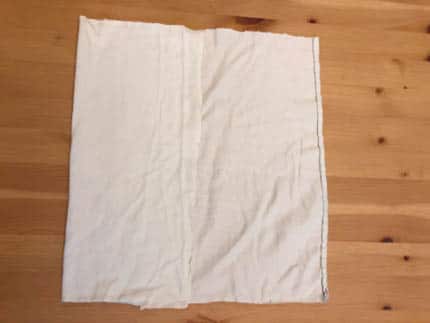
Step One: Cut through each fold and up the center to make four pieces.
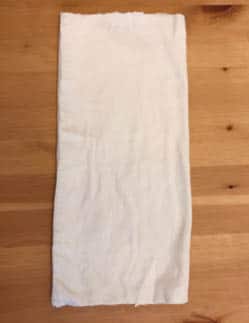
Step Two: Fold the bottom third up and the top third down. If you are using a patterned pillowcase, the pattern should be on the outside.
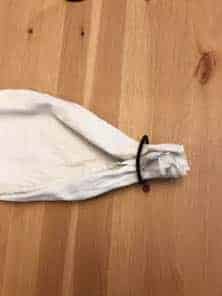
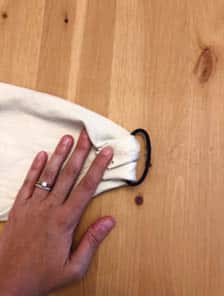
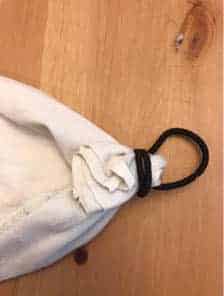
Step Three: Pinch the end and add one hair tie, fold the fabric over it and secure with a second hair tie. Repeat on the other side.
Do this with the three other pieces and you’ll have four masks.
Buying a Mask
Of course, if you aren’t the type of person to DIY, or if you just want a product better than what you could craft, there are many options for purchasing a cloth mask. From locals making masks from their homes to fashion designers adding some flair, there are different avenues you can explore.