Clothing collab changes lives one outfit at a time.
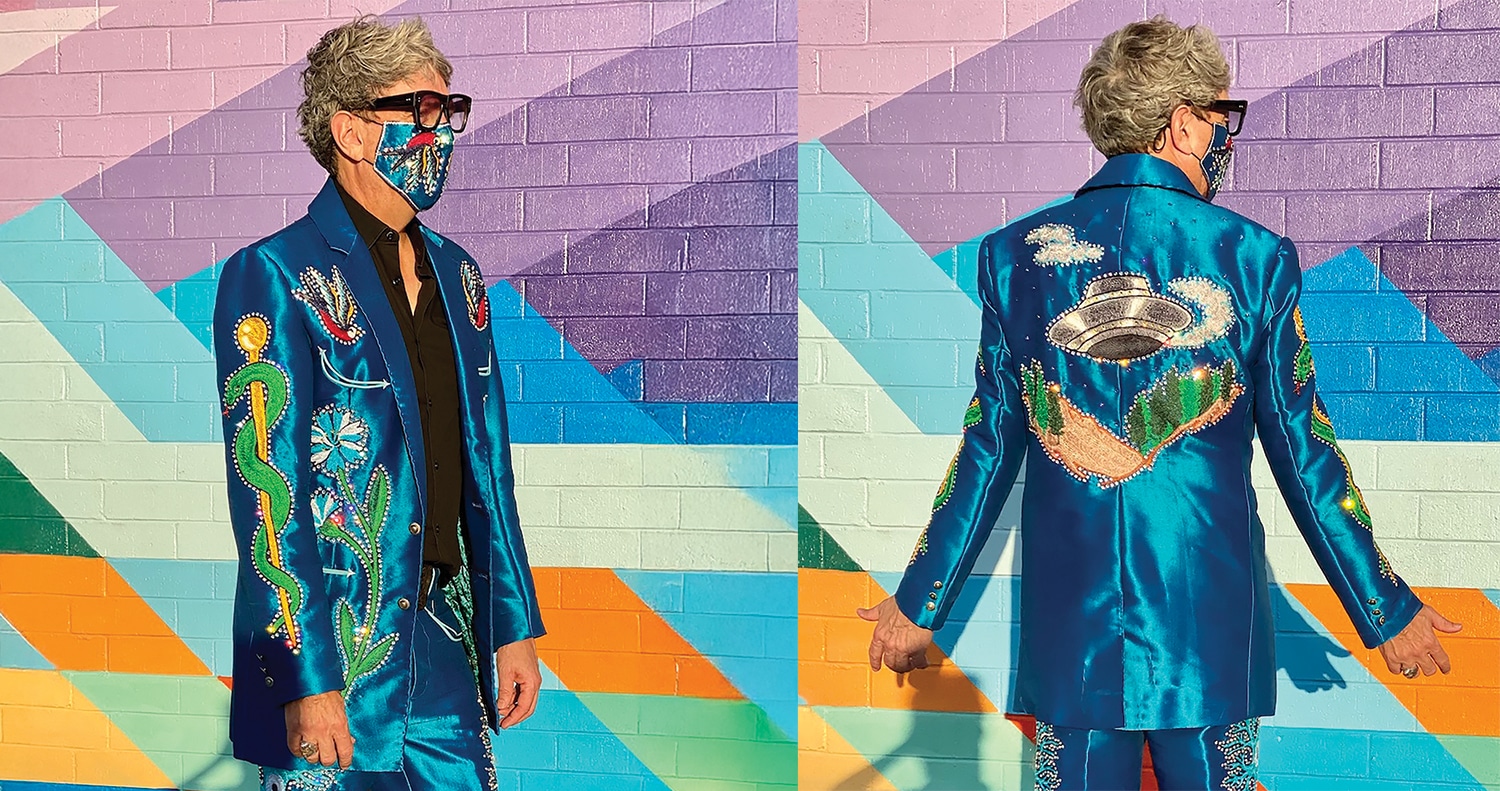
Fashion is for everyone—and no one embodies that notion more than Dr. Richard Bedlack. Known for his funky threads and cutting-edge Amyotrophic Lateral Sclerosis research, the Duke ALS Clinic founder/director is weaving his passion for fashion to inspire and connect with his patients.
Fashion isn’t always functional. As ALS progresses, mobility and dexterity become limited, making everyday tasks like getting dressed more challenging. In recognition of ALS Awareness Month, we chat with Bedlack about his seamless blend of science and style, the importance of hope, and his partnership with NC State design students to create accessible clothing for those living with ALS.
Photo courtesy of Dr. Richard Bedlack
Photo courtesy of Dr. Richard Bedlack
► How has fashion shaped your patient connections? As a kid, I realized bright, fun clothing is like a suit of armor, allowing me to retain my positive energy no matter what the day brings. I also noticed it rubs off on others, making them smile. ALS is a very difficult disease, with most patients experiencing rapidly progressive disability and shortened survival. Despite 100 years of research, we still don’t have enough effective treatments. I’ve come to believe hope is a treatment—studies have shown, when faced with a disease, more hopeful people tend to do better medically. Fashion is part of my approach to hope boosting (I call [it] “stitching strength,” and I have a movie coming out about it soon). Fun clothing helps me stay more positive and resilient in my work as an ALS doctor, and it’s something my patients look forward to seeing too. It creates a great first impression.
► From lab to lookbook: How has ALS research shaped your style?Just as I’ve found unique ways to incorporate fashion into my work, I’ve also found ways to incorporate my work into the clothing I wear. My collection includes a custom suit from Jerry Lee Atwood, who designed for Post Malone and Orville Peck. The suit is covered in various symbols representing lessons I’ve learned from people living with ALS. I also have a blazer from Manuel Cuevas, who designed for Johnny Cash, Elvis Presley and Lady Gaga—among many other rock stars. This one is covered in symbols representing families who’ve helped me on my quest to end ALS.
► Hurdles in making truly inclusive garb? Getting mainstream designers to understand why this topic is important. We believe a designer who starts making clothing that is both stylish and adaptive is going to tap into a huge market. While there are only about 30,000 people living with ALS in the U.S. (300K worldwide), there are tens of millions with a variety of disabilities who are likely looking for cool clothing that is adaptive.
► What sparked the NC State design collab? I try to get to know my patients in and out of the clinic. Over the past few years, I’ve met some who share my love for fashion. But as their ALS progressed and their mobility decreased, it became harder—and eventually impossible—for them to wear the clothes they loved. I thought, here’s something ALS shouldn’t be able to take away. I reached out to the fashion school at NC State and eventually got connected to Sam Pearce, assistant professor of the practice at Wilson College of Textiles, who also has a longstanding interest in making fashion more adaptive. We set up Zoom meetings with people living with ALS so students could better understand their style preferences and new challenges in wearing their favorite clothes.
► Ripple effects of this collab? People living with ALS told me they felt ‘seen.’ They were able to wear stylish clothing made with them in mind. The students in the program have also said they found making cool clothing that is also adaptive to be easier than expected. My hope is as they go out into the workforce for different labels, they’ll carry what they learned with them.
► How has your research shifted your perspective on ALS? I’ve come to understand the power of hope. I now consider it as more than an emotion or a coping strategy. I’ve become very interested in outliers—people who do exceptionally well with ALS. Some remain very functional more than 10 years into it—and a small number even recover lost motor functions. My Duke team has recently discovered clues for explaining these in the gut microbiome and in the genes. We plan to launch new trials based on these clues later this year.
► The untold truth about ALS?It doesn’t have to define a person. We’re all so much more than the illnesses we might have. The best parts of us needn’t be touched (and can even be strengthened) in any illness: our kindness, compassion, creativity and humor.
On your mark, get set, run to raise money for ALS research at this year’s 11th annual Sola Hot Mini 5K.
Lace up your sneakers and get ready to run for a great cause! Sola Coffee is hosting its 11th annual Sola Hot Mini 5K on Saturday, Sept. 14. After late Sola owner Jeanne Luther was diagnosed with ALS in 2018, the cafe shifted its fundraising efforts to raise money for ALS, which presently does not have a cure. This year marks the third race without Jeanne, and “we want to continue to honor her legacy by blowing it out every year,” says Sally Leonard, Jeanne’s daughter.
All proceeds from the event are directed through the Team Drea Foundation to Duke ALS Clinic, Team Chris Combs/Project ALS, The ALS Association North Carolina Chapter and the ALS Therapy Development Institute to help further research efforts to end the progressive degenerative disease that destroys neurons controlling voluntary and involuntary muscles.
Last year’s race saw 1,008 participants, while 2022’s raised $161,000 alone—and in the last five years, it’s raised over $625,000 to help find a cure. The race begins at Sola Coffee Café at 8:30am and winds through the surrounding neighborhoods, finishing back at the coffee shop—where you can, and should, order some of Sola’s signature hot minis to celebrate a run well done.
Andrea Lytle Peet, president and founder of the Team Dream Foundation, says, “When I was diagnosed with ALS seven years ago, I pledged to spend the rest of my life raising money for research to put an end to the cruelty of this disease. Before you die, ALS steals your voice, your breath, your ability to move—and you are powerless to stop it. I have been lucky to have slow progression, but I hate watching my friends go through it. John and Jeanne are some of the kindest, most genuine people you will ever meet. They built Sola to be more than a coffee shop, and it is beautiful and heartwarming to witness how the Sola community has come together to support them. They have turned their struggle into something positive that will help others. I am honored to be a part of it.”
ALS isn’t an incurable disease, it is an underfunded one, and events like the Sola Hot Mini 5K are vital to aiding research. For those who are unable to participate in this year’s race, there are also plenty of ops to volunteer, fundraise or donate what you can. For more info and to register click here.
Drumroll, please 🥁! Pop-Up Shops on Martin Street’s newest tenants Art by SRG and Needle & Thread Co. are primed for all your style needs—from upcycled clothing and band tees galore to artwork simply celebrating the beauty of being human. How on point. @artbysrg; @needlethreadco
“Self-care, I’m treatin’ me right.” Take a hint from Mac Miller and indulge at DTR’s The Self Care Marketplace, a one-stop shop for goodies that’ll make ya feel, well, good—from yoga gear and homemade goods to soaps and teas.@theselfcaremarketplacenc
Add this one to your Goodreads list. Follow Raleighite Andrea Lytle Peet’s journey via her inspirational book, Hope Fights Back, as she learns to live her life to the fullest with ALS. YGG! @go_on_be_brave
Home decor ops just keep getting bed-er (see what we did there). … Find NC-basedFairfield Chairdebuting its Camille Collection, which flaunts classically designed beds, nightstands and dressers. Sweet dreams, indeed! @fairfieldchair
Start every month with an “aww!” when you glance at Perfectly Imperfect Pups’ first-ever Triangle Dogs of the Year Calendar feting paws-itively perfect pups—with proceeds benefiting high-risk and special needs dogs. Paws for applause! @pipsrescue
Walk, walk, fashion baby. Raleigh Denim Workshopmade an appearance on the runway at New York Fashion Week, showcasing its upcycled and reworked denim with playful touches. How jean-ius (!). @raleighworkshop
Raleigh Denim Photo by Giles Clement courtesy of Raleigh Denim Workshop; The Self Care Marketplace place photo by Kimberly Thigpen; Triangle Dogs of the Year Calendar photo by Five Freedoms Photography; remaining photos courtesy of brands
Help your Triangle neighbors out this April via Global Volunteer Month.
They say not all heroes wear capes—but volunteers are definitely a saving grace. If you’re looking to do some good yourself, Global Volunteer Month is this month and there are a plethora of local volunteer opps to take advantage of throughout April—and beyond. Here, we give you some ways you can make a difference in our fair city while helping make a positive impact on the community. A win-win!
These shoes were made for walking—to defeat ALS! Sign up to participate in the walk (April 15) as an individual or with a team, or donate to the cause. All fundraising for the event will help provide education, support groups and access to care for those living with ALS. Walk on!
For those with a green thumb or a genuine love for nature, check out Raleigh City Farm’s weekly Wine + Weeds volunteer opp. Not only will you be contributing to the farm’s growth (literally and figuratively) by mulching, weeding, harvesting and distributing produce, but you’ll also get to raise a compostable glass of wine to a job well done. We’ll cheers to that.
Beyond sipping gin for a good cause all month at our participating bar partners, please join us every Tuesday in April at 5pm for gin pop-up parties! Last year, Raleigh Magazine, in conjunction with our friends and partners, raised a whopping $16,000 toward the cause! Let’s up the ante!
Host and partner bars will donate 15% of every gin drink sold during April and at our pop-up events to our team! And if you don’t like gin, that’s OK… come hangout with us! In addition to feel-good fun, there will be ALS raffles and top-notch prizes! And if you can’t make it out but still want to contribute to our team, please donate here any time in April—100% of donations go directly to ALS NC Chapter.
Most people don’t know what ALS (Amyotrophic Lateral Sclerosis, aka Lou Gehrig’s disease) is or what it looks like until it touches their own family or friends.This month marks the one year anniversary of our staff being rocked by three simultaneous ALS passings in less than two weeks.
Please join us in our efforts to fight for future families for a cure against this cruel disease, as fundraising “drives bold and urgent innovation as we march together toward a treatment and ultimately a cure for ALS,” reads the association’s website.
In an effort to raise funds for research, treatments and family support services for those living with ALS, the North Carolina chapter of The ALS Association is also hosting a Triangle Walk on Saturday, April 23 for those wishing to participate.
DRINK WITH US TO FIGHT ALS!
WHEN: Tuesdays in April (5th, 12th, 19th, 26th), 5pm
MORE BAR PARTNERS: —Corpse Reviver in Durham will donate $2 of every gin and tonic purchased during April.
—Aunty Betty’s Gin & Absinthe Bar is also donating 15% of every gin drink ordered in April.
HOW TO DONATE:
—If donating to our team is more your speed, do so here—100% of donations go directly to ALS NC Chapter. We are raising funds the entire month of April.
ALS By the Numbers
ALS is 100% fatal. It can happen to any of us without warning. Incurable and progressive, the neurodegenerative disease affects nerve cells in the brain and spinal cord, causing muscle weakness that leads to paralysis across all parts of the body. And the unfortunate fact is, chances are, someone you know or love will die from ALS.
100% fatal.
80% of cases begin between the ages of 40 and 70.
5,000+ people in the U.S. are diagnosed with ALS each year.
30,000: The estimated number of Americans who may have the disease at any given time
2 to 5 years: The life expectancy an ALS patient averages from the time of diagnosis
$200,000 per year: The average cost of care for ALS