Slicing onto the scene, Pizzeria Toro promises to be your next ’za obsesh when it fires up next summer at Seaboard Station.
Courtesy of Pizzeria Toro
Having already amassed a cult following, the uberpopular Bull City wood-fired pizza place is sliding its signature pies into an ever-fitting former trucking company garage that’s part industrial grit, part open-air chill—and soon to be home for their neighborhood hangout alongside upcoming The Common Market.
Bright, high and airy, the space screamed Toro to the team: raw, open and ready for bar-and-pizza-joint energy. “We’ve always been really picky about where to put another Toro,” says chef/partner Gray Brooks of the pizzeria’s sophomore effort after over a dozen years in Durham—“but when this opportunity came up, it just felt right.”
Helmed by Gray, who cut his teeth in fine dining, alongside Seattle-bred hospitalitarians Jay Owens and partner + wife Cara Stacy, Toro Jr. is the byproduct of the trio’s MO of marrying thoughtful service, elevated eats and casual vibes. That philosophy shows in every aspect of their Durham success and selects—from classic margherita and pepperoni pies to seasonal creations crowned with locally sourced ingredients, all blistered and charred to perfection.
Long lauded by local foodies, critics and national outlets as one of Durham’s top ’za destinations, the team looks to bring that same winning recipe to Raleigh. “Operating a restaurant outside of Durham is going to be a new challenge for us—one that we’re really excited about,” shares Brooks. “We’ve always loved the food scene here—so many talented chefs and great staffs. And we’re stoked to be a small part of it. I think we’ll fit in pretty well.”
They say youth is wasted on the young—well, they can have it. Turns out the future is 50—and it’s super bright.
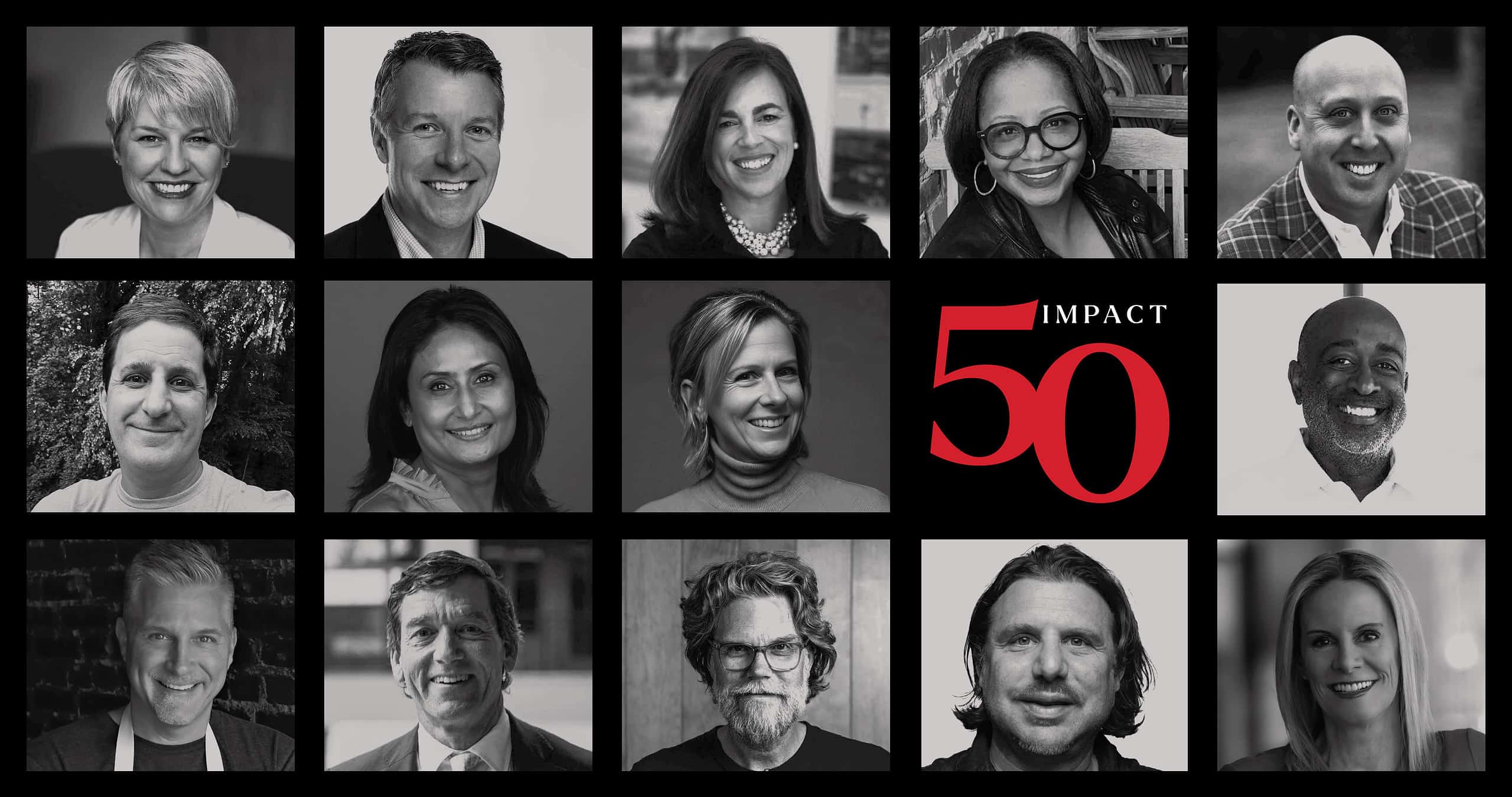
Enter Raleigh Magazine’s Impact 50 finalists—people who have spent their lives getting to this pivotal decade when their star is shining brightest… and proving success has no age limit. “I don’t think success is a lightning-bolt moment,” says finalist and veteran TV reporter Amanda Lamb—“it’s doing what you love, and, hopefully, making a difference in other peoples’ lives.”
Profoundly shaping minds, matters and spaces, our decorated Impact 50 finalists have wielded influence—and wisdom—of great scale. Running the gamut from founders to creators to entrepreneurs, this celebrated cast has parlayed their success into infinite impact—from their voice to their vision—across every facet of Raleigh.
“Success is not an end goal—it looks different in every season of life,” emphasizes finalist and communications executive McGavock Henderson Edwards. … “Life is ever-changing, and we have this awesome opportunity to always be learning, always be growing, setting new goals, and doing the hard work to achieve them. In my opinion, it’s the little everyday wins that add up to a successful life.”
As many discovered on their paths to success, it’s about the journey, not the destination. And, clearly, they have arrived. At the top of their game, this lot of forward-thinking local 50-somethings serve as proof positive that 50s is the moment: The age of enlightenment. The age of disruptors. The age of peak performance.
Mike Smith CEO | Kane Realty Corp. Smith’s impact on Raleigh is evident—as seen by the many Kane buildings and developments throughout the city. Beyond North Hills, Smoky Hollow, Platform and The Dillon, the master planner is shaping an ever-growing portfolio—including the highly anticipated North Hills Innovation District. But if you ask the Wake Forest University alum, he would say the biggest influence he has isn’t those developments, but the 250+ real estate developer’s employees “who are engaged throughout Raleigh as passionate citizens, parents, volunteers, coaches and cheerleaders.” As he asserts, success is about perspective. “You could look around and see what you don’t have,” he adds, “or embrace the friends/family/place that you are in the middle of and help make that a bit better.”
Best advice: Hire for character. Worst advice: Hire for the résumé. Unless you’re building rocket ships, most of what we do can be learned—but who you are sets you apart more than what you did. Love most about Raleigh: Best of the big-city life while still feeling like a community Thing you’d tell your 20-year-old self now: It’s a journey, not a destination.
Michele Weathers Executive Producer | Raleigh Little Theatre “The arts has intersections for everyone,” says Weathers. “Tell me what you value and I will find them.” And find them she has as an ever-impactful arts maven who took the helm as RLT executive producer in August after 30 years in live performing arts. Having spent most of her career in the Triangle—sans a trio of artful sojourns in New York, Massachusetts and Virginia—the NC-bred Meredith alum has always found her way home to a city committed to arts for all—one that allows her to sprinkle her acquired knowledge and do what she loves at a high level. “Everyone is on their own journey,” she says. “Try to see your life as a circle and not a straight line”—or in the case of an artist, a blank canvas with unlimited possibilities.
You in three words: Kind, competent, loyal Who you want to meet—dead or alive: Tina Turner Memorable advice: ‘If you do your part, the world will meet you there’ is both the best and worst advice I’ve ever received. Fave Raleigh restaurant: Madre—great service, food and vibe Thing you’d tell your 20-year-old self NOW: No one is looking at you. Try facing out instead of in.
Donald Thompson Co-Founder & CEO | The Diversity Movement: A Workplace Options Company They say you never stop learning, and Thompson is a firm believer in that. The Louisiana-born, Greenville, NC-bred self-described competitive learner’s openness to new things and zero fear of failing has led him to make a mark on Raleigh in many ways, not just in terms of The Diversity Movement—though no small feat—but with the thousands of jobs he’s created over the years in NC as an angel investor. Not to mention the myriad boards he serves on—think TowneBank or the North Carolina State Computer Science Strategic advisory boards—and startups he works with. “Giving back in terms of your time, your knowledge and your treasure is super-important for leaders to do,” he emphasizes. “And I try to emulate the behavior I would expect of leaders.” And quite the leader he has proven to be.
MO: Win with the cards you’re dealt. Hobby: The Canes games are crazy exciting! Worst advice: Fake it till you make it—that’s one of the dumbest things I’ve ever heard. You can be yourself and realize what you’re bringing to the table is enough at that moment as long as you’re willing to learn to do and be more. What you know about success you wish you’d known before 50: Your network is your net worth.
Michael Haley SVP, Greater Raleigh Chamber of Commerce Executive Director, Wake County Economic Development This NC native likes to say Raleigh is a community of “what’s next”—the next great idea, great company, great innovation. And it’s safe to say he has played a huge role in forging the future of our city. Haley’s leadership is, in a word, transformational. An absolute trailblazer when it comes to business recruitment, retention, expansion and talent development in one of the fastest-growing cities in the nation, he has led such epic wins as Apple, Fujifilm Diosynth Biotechnologies, Gilead Life Sciences, Audemars Piguet and Pendo, among many others—not to mention assisted in 880 small and minority businesses. The takeaway? $4.5+ billion in private investment and 10,000+ jobs over the last five years alone. With an eye toward advocacy, supporting smart growth and economic mobility, the “competitive, passionate and faithful” UNC/ECU MPA grad has also been instrumental in revamping WCED talent-attraction initiative Work in the Triangle to reach broader audiences and provide greater accessibility to a “day in the life” in Raleigh. And as for what’s next? Approximately 8,000 acres in Wake County have been identified for future industrial site development to continue providing opportunities for investment and jobs
Fave Raleigh bar/restaurant: Players Retreat Love most about Raleigh: The variety: No matter what you like, what your interests are or where you are in life, you can find it in Raleigh. Go-to local retail spot: Kannon’s Clothing What you know about success you wish you’d known before 50: Success looks like what you make it and want it to be—don’t let other people tell you what success is.
Adrienne Cole President & CEO | Greater Raleigh Chamber of Commerce While the ever-humble Chamber’s collaborative leader has had an incredible impact on Wake County/Raleigh’s economic and community development in the seven years she’s held her position, she doesn’t take all the credit. “It is never about me,” she maintains, “but rather what we can do together.” To wit, the New Bern-native and Meredith College alum/Appalachian State University MPA has had her hands in several significant projects throughout the city, including PNC and Red Hat’s relocation to DTR, Campbell Law School’s move to Raleigh, and Bandwidth’s new HQ—in addition to bond referenda to support Wake County Public Schools, housing affordability, transportation and local parks. “Being able to work on important infrastructure projects, as well as with new and existing companies as they create jobs and investment in our city/county is a privilege,” she adds. And Raleighites get the pleasure of reaping the benefits.
You in three words: Hardworking, responsible, committed MO: You can fake sincerity, but you can’t fake showing up—so show up! Who you want to meet—dead or alive: Jane Goodall and Maya Angelou Hobbies: Walks at the NC Museum of Art, on the Raleigh greenway, or at Umstead or Dix parks. Love most about Raleigh: Its incredible people! I think this is a really special place full of optimism, creativity and intelligence.
Scott Crawford Chef/Owner | Crawford Hospitality Crawford isn’t just a chef or a restaurant owner, he’s a creator of “spaces that energize and transform neighborhoods in our city,” and experiences that bring people together (over memorable meals to boot). “Food, beverage and hospitality can be very powerful in creating community,” he says. The five-time James Beard Award semifinalist for Best Chef Southeas—not to mention his Crawford and Son restaurant is a 2024 semifinalist for Outstanding Hospitality—and visionary behind Crawford Hospitality (think also Jolie, Crawford Cookshop, and upcoming Brodeto, Sous Terre and Crawford Brothers Steakhouse) has largely contributed to the growth of Raleigh’s food and beverage scene, helping put the City of Oaks on the map while cultivating careers in hospitality for local and national talent. Which is fitting with the visionary, mentor and Healing Transitions board member’s MO: “Do the right things for the right reasons and allow the work to speak for itself.”
Go-to local retail spot: Edge of Urge Thing you’d tell your 20-year-old self now: How amazing sobriety is—and that through recovery you can have a life beyond your wildest dreams Fave Raleigh restaurant: Boulted Bread What you know about success you wish you’d known before 50: Success is not linear; it is a roller-coaster journey, and it feels nothing like you think it’s going to.
Will Alphin Founder/Owner, REdesign.build | Co-Founder, Foundation Raleigh-born and -bred, the sustainability-minded designer cares deeply about the City of Oaks—and is devoted to building her up through his environmentally aware full-service design and construction company. “The challenge is the reward,” emphasizes Alphin. “Invest in building your community, and that will yield the greatest return on any investment you could make.” A passionate visionary, he has remained steadfast to that MO since his days at NC State College of Design via “thoughtful, beautiful, value additive, sustainable design.” Beyond literally building up a greener Raleigh, Alphin’s iconic Foundation bar was the first with a mind toward sustainability on the local bar scene. And, above ground, the naturally creative problem-solver and leading-edge thinker and doer’s commitment to enriching the city can be seen in his work on the design and build of DTR’s first skate park and his role in getting funding passed to implement the long-awaited Bus Rapid Transit system.
Love most about Raleigh: Raleigh’s geographic location and capital-city function give it adjacency to such a wide spectrum of things, so at any time a random creative act is happening. Our motto should be: Keep Raleigh Random Hobbies: Hiking in Umstead State Park, van life travel Fave Raleigh restaurant: Raleigh Raw Best advice: Instead of putting energy into complaining, put energy into changing what you are complaining about.
Cheyanne Headen Community and DeEscalation Specialist & Assistant Manager | A Place at the Table “Is Ms. Cheyanne here?” It’s a question you’ll hear asked at APATT upward of 20 times per day—and a loud indication of her impact on our community. When it comes to finding a seat at the table, Headen’s mantra to “lead with love” ensures everyone is welcome, “prioritizing the humanity in each of our community members and recognizing that, regardless of circumstances, all of us just want to be seen and heard,” shares the NYC-bred, NC A&T master’s-holder. Through her position at APATT, the “compassionate, seasoned and determined” community-minded specialist is intentional in devoting time and resources to marginalized and underserved populations throughout the city—and takes pleasure in meeting Raleighites from all walks of life.
Who you want to meet—dead or alive: Michael Jackson What you know about success you wish you’d known before 50: Success is relative to our personal experiences, values and influences despite the ‘one-size-fits-all’ narrative society tries to impose. Fave Raleigh bar: Aunty Betty’s Thing you’d tell your 20-year-old self now: Be intentional about living each day as though it’s your last—and be sure to touch a lot of lives and have a lot of laughs along the way. And, girl, ride this thing called life until the wheels fall off!
Danny Rosin Co-Founder | Brand Fuel & Band Together “With a mix of optimism, empathy and rebellion, anything can happen.” So goes the MO for the self-dubbed “cosmic glue stick” who inspires nonprofits to collaborate more, invest in their leaders and realize their grandest entrepreneurial dreams—“and to have a lot of fun building and serving the community along the way,” he adds. The Portsmouth, Virginia-native, Norfolk Academy/UNC-grad is lauded as a cheerleader for anyone he meets and an all-star at everything he does, most notably through his work for Band Together. To date, the local volunteer-driven org has used the power of live music to donate over $12 million to 125 Triangle-area nonprofits—raising over $1 mill for housing accessibility in 2023 alone.
Best advice: When sh!t happens, shine. Who you want to meet—dead or alive: Patagonia founder Yvon Chouinard Fave Raleigh restaurant: A Place at the Table Go-to local retail spots: The Pour House Record Shop, Lucky Tree, The Raleigh Market Thing you’d tell your 20-year-old self now: Do not minimize those closest to you while you are maximizing yourself.
Amanda Lamb Journalist, podcaster + author |Founder, Stage Might Communications Journalist, author, podcaster, speaker, volunteer—you’d be hard-pressed to nail down just one qualifier for the multihyphenate—unless of course it’s “incredible human.” The award-winning media maven’s reach is limitless. Beyond thoughtful reporting on and to Raleigh across ~three decades at WRAL, the veteran TV reporter is committed to community: “I love my city,” she says, “and am invested in making it the best possible place to live.” An industry icon and founder of her 2018-born Stage Might Communications, Lamb uses her voice for good, frequently speaking on topics ranging from women’s empowerment to caregiving—plus pays it forward to the next gen of journos as an adjunct professor at Meredith College. And when she’s not otherwise emceeing a nonprofit event or volunteering at A Place at the Table and Designed for Joy or readying her next novel (No. 13 dropping this fall), she’s prepping her ever-apropos podcast Ageless, giving voice to—and pulling inspiration from—authentic and vulnerable journeys of transformative women over 50. Thus, her lifework makes a case for “ageless” indeed.
MO: Do what fuels your fire. Fave Raleigh restaurant: Gussie’s on Morgan Street—great food and cocktails, a friendly staff, and a feeling like you’re on Cheers. Thing you’d tell your 20-year-old self now: It’s going to be OK. Nothing that happens right now is going to have a huge impact on your life. You have a lot of growing left to do. Relax. Take your time. Just be 20.
McGavock Henderson Edwards Partner/SVP, Strategy and Client Service | E&V Strategic Communications Having dedicated her career to teaching others how to do inspiring work by investing in them wholly, the “proud Eastern NC girl” and UNCW Seahawk is known for being kind, generous and thoughtful. Possessing an uncanny ability to foster a nurturing environment, Edwards is the ideal example of “if you can see it, you can be it.” Beyond her lifework helping local leaders navigate challenges, change and growth to net positive results for the community, she exudes an unwavering dedication to nourishing the community via nonprofits such as Now Serving (providing 100K+ meals to the underserved in the Triangle to date), as well as initiatives like Women’s Leadership Conference, which seeks to drive conversations and actions that help others—especially young women—maximize their strengths, build their confidence and realize their full potential. “Contributing to my communities was modeled for me early on—both by my parents and professional mentors,” she says. “I try to make an impact through what I know best: helping develop future leaders, creating understanding across groups and serving our neighbors in need.”
You in three words: Thoughtful, nurturing, determined Best advice: Love many, trust few, and always paddle your own canoe. MO: Always be listening, always be learning. See a need, meet a need. Build bridges and connections. Pour into others. What you know about success you wish you’d known before 50: Success is not an end goal. … We have this awesome opportunity to always be learning, growing, setting new goals—and doing the hard work to achieve them. … It’s the little everyday wins that add up to a successful life.
Matt Smith VP of Development + Strategic Partnerships | Wake Tech Community College “Do you know Matt Smith?” … It’s a common question—and the answer is almost always a resounding yes. The consummate connector, convener and encourager, Smith’s impact cannot be confined to campus. By eliminating barriers to education—and thus opportunity—he has had an indelible impact on Wake Tech, the community college system, and, by extension, the broader community at large during his near-decade tenure at the largest NC and best-in-class community college. “Everyone deserves a chance to make their life better,” says the tireless NCSU alum who has also been instrumental in growing Wake Tech’s giving, building the WTCC Foundation and scholarship funds like Fostering Bright Futures, and leveraging significant partnerships with Hendrick and Lenovo—among others. “And I believe in the power of connection and collaboration.” When he’s not fostering friendships, cultivating change or tapping his vast network to curate action to ameliorate Raleigh, you can probably find him “crawling off a golf course with a rotten score” before heading to a live music show with friends—of which he has many. His passion is so palpable that it’s contagious—and if he had a superlative, it would have to be most liked, which is evident in his connector spirit and big love for Raleigh and its people.
Who you want to meet—dead or alive: Berry Gordy. The talent he assembled and guided is astonishing! Fave Raleigh restaurant: 42nd Street Oyster Bar—the history and significant conversations that have occurred there have shaped our city’s history. Thing you’d tell your 20-year-old self now: Always invest in relationships first. It’s much more important than chasing professional or financial success. If you are a loyal and passionate friend, everything will work out in the end.
Sonal Patel Owner | Woodhouse Spa North Hills As the owner of one of the fastest-growing—and award-winning—businesses in burgeoning North Hills, Patel is just beginning to reach the pinnacle of her career—proving that success indeed has no age limit. After an early stint in the sciences and entree into the business world by way of franchising a Dunkin’ Donuts, the compassionate India-born innovator is dedicated to the well-being of the community both by providing a holistic self-care sanctuary and by partnering with impactful local organizations such as women-empowering Dress for Success. Proving a commitment to the nonprofit, Woodhouse serves as a proud sponsor of its annual Modeling Success fashion show benefit and has served as speaker at its International Women’s month luncheon. Dedicated to female empowerment in work and in life, Patel is a champion of reaching back and pulling forward—and quick to attribute her own accomplishments to the women in her life who have inspired and propelled her journey.
Best advice: Trust the journey and embrace challenges as opportunities for growth. Who you want to meet—dead or alive: Maya Angelou—for her wisdom and inspiration Fave Raleigh restaurants: Trophy Brewing, Brewery Bhavana What you know about success you wish you’d known before 50: Success is not defined by age, but by perseverance, dedication and continuous learning.
Stephen Mangano Entrepreneur |Health Care Executive | TeamHealth Ask Mangano what he loves most about Raleigh, and he’ll tell you: “community, community, community.” Fitting for an innovative entrepreneur and health care professional with an MO of “creating an impact through empowering people and bringing creativity to companies and communities.” While his “day job” has enabled him to develop behavioral health solutions for community-based and national organizations to help solve the nation’s mental health crisis, the New York-bred, UNC MBA has spent his two-plus decades here harnessing our community’s creative soul to bring projects like Skate Raleigh’s Conlon Family Skatepark to fruition or working with the city to launch Pullen Place to bring enhanced food options to Pullen Park. It’s the kind of large-scale impact that comes from truly trusting the process—and precisely what he bestows on his 18YO son, Adrian, with whom he dreamed up and ultimately founded the skate park. “Your path will be your path and where you will be is exactly where you are supposed to be.”
What you know about success you wish you’d known before 50: Trust the process. … There is more time than you think—and a mix of patience and persistence can serve you well. Go-to local retail spot: Endless Grind has been such a great supporter of Skate Raleigh—and it’s literally the clubhouse for the skate community. Best advice: Trust your gut; when things don’t feel right they probably are not. Fave Raleigh bars: Well, of course, The Loose Mangoose [Mangano’s backyard boxcar bar], Foundation and Dram & Draught
In an ideal world, chef Kenny Gilbert would be putting the finishing touches on his new north Raleigh restaurant Cut & Gather. Instead, he’s cooking $10 meals in a friend’s restaurant kitchen, supporting his community while keeping tabs on construction of the new spot. “The pizza oven is installed, the smoker is created and shipping soon and tables are being built,” Gilbert says. “It’s fair to say we will open 30 to 45 days after the state reopens.” Gilbert says he’s relieved his newest project isn’t dependent on income from other restaurants to open, meaning he’s free to keep moving forward with his plans.
We spoke to Gilbert about Cut & Gather’s menu and the dishes he’s enjoyed cooking throughout his life and career. Here are the stories and memories behind some of his favorites.
Cocktail: “Hey Y’all” “One of my favorite cocktails is called ‘Hey Y’all!’ Clean and refreshing with a beautiful rosy color, it’s a great way to introduce moonshine. It’s made with Ole Smoky strawberry moonshine with muddled strawberries, lemon juice, simple syrup and topped with Prosecco, served in a mason jar. You won’t be able to just have one.”
Dish: Fried Chicken “My 24-hour brined fried chicken is always a crowd pleaser. Every stage is important and yes, it does brine for 24 hours; it is seasoned, double dredged and then fried. Afterwards, it is tossed with oil and more seasoning. Every bite is flavorful. I’ve served it to Oprah during the holidays. She really enjoys the sweetness of the honey and the spice from the hot sauce along with crispiness. It’s magical.” The fried chicken is served on a classic Belgium Pearl sugar waffle layered with kumquat marmalade, orange blossom honey butter and a side of Fernandina Beach hot sauce.
Appetizer: Cornbread “Skillet cornbread was the first quick bread I ever made. It celebrates the South. I grew up in Cleveland; my mom was from St. Augustine, Florida so she didn’t cook like other families up north. She used Alaga cane syrup on toast and on lots of other stuff and it’s the syrup I prefer. Alaga is one of the oldest sugarcane farms in the country. It’s located on the border of Alabama and Georgia, hence the name Alaga (Ala + GA).” Skillet cornbread is served with jalapeño cheddar drop biscuits, apple jam, Alaga cane syrup butter and house pickled vegetables.
Dish: Ramen “My Southern Ramen is a very unique preparation. I cooked in Osaka, Japan back in the late ‘90s. There are five main parts to ramen: Dashi, tare, fat, noodles and garnish. I start off by making a smoked ham hock dashi that I call ‘Mothers Milk.’ This is the foundation of this delicious ramen. It takes 12 hours to make it. I find it a great merging of my travels and training plus my Southern roots. I have great memories of debating with my father if I could have the smoked ham hock out of the greens pot. This dish is inspired by those times in my life.”
Dessert: S’Mores “I love S’mores, everything about them reminds me of being a being a Boy Scout, building forts, being a kid. This dish is the adult version of S’mores, with ginger snap cookies—my favorite cookie, especially with a big glass of milk. I could make marshmallows, but why? I love the nostalgia of mini marshmallows that we all remember as a kid. This dish brings back memories of making S’mores during the holidays when my father would be cooking barbecue.” Bittersweet chocolate creme brûlée layered with crushed gingersnap cookies with toasted mini-marshmallows.
When people think of French cuisine, they think of nice restaurants, impeccable service and high-end fare. When Indian food comes to mind, many of us think of a folded-up takeout menu with red cartoon chilies to indicate spiciness.
Chef Floyd Cardoz—an Indian-born, New York-based culinary icon—had a problem with how the Western world perceives Indian food; he also had the dream, talent and gumption to alter this perception.
In late March, the 59-year-old died tragically from coronavirus, but his life’s work remains intact: Cardoz’s vision lives on in the hearts and knife-wielding hands of his contemporaries and peers. His influence is so far-reaching, you can even experience it right here in the Triangle.
I was fortunate to befriend Cardoz following an introduction from a fellow culinary enthusiast. I had watched him winning “Top Chef Masters” and was eager to get into the kitchen with him. He graciously let me tag along as an extra set of hands at a charity dinner. Less than a year later, I became his line cook in Manhattan.
Chef Floyd was more than a great teacher. He taught his cooks to celebrate food at the intersection of culture, history, science and art. He taught us to be thoughtful—even under pressure—to honor our farmers by honoring our ingredients and to treat the dishwasher with the same respect as we’d treat the chef.
Cardoz asserted that Indian food is a powerful voice in global cuisine, the facets of which are infinitely applicable. Although he was classically trained in French cuisine, Cardoz became famous for applying his knowledge and passion for Indian food to the freshest local ingredients.
Raleigh’s own James Beard award-nominated chef, Cheetie Kumar, shares Cardoz’s penchant for celebrating local ingredients as well as his Indian roots. Although most local restaurant-goers consider Garland—Kumar’s outstanding downtown Raleigh restaurant—an Indian restaurant, Kumar defines it as “seasonal-Southern.” She utilizes flavors and techniques from India and Asia, and she likens the cornucopia of North Carolina agriculture to what her parents used to pick up at the markets in Punjab, but her work is entirely in the context of where she is.
Kumar recalls Cardoz’s influence on her from the inception of her cooking career.
“There was permission in [what Cardoz was able to accomplish],” she says. “Every time you see somebody echo something you’ve thought about, and you thought you were the only one thinking, it gives you a sense of confidence and affirmation.” Kumar paused. “It was the same feeling I would get if I saw a woman playing guitar on stage and slaying,” she continues. “I’d be like, ‘Yeah! We can do this!’”
Executive chef Jason Lawless of Durham’s Parizade spent his early career in Manhattan working under some of the country’s best chefs. Although he currently cooks Mediterranean food, the lessons he learned from Cardoz enrich his kitchen life daily.
“His influence is more than a certain dish,” Lawless says. “It’s technique and layering flavor, with sugar, acid and spices. I remember him telling me, something that makes a chef special is adding [hot] chili. Even if you don’t taste the chili, if it’s there, it will bring a dish to a higher level. Most chefs don’t realize that.”
Chef Floyd taught his cooks to use spice almost like salt—to enhance the flavor of the ingredients without overwhelming them. People already do this, to an extent, by adding salt and pepper to food. Chef Floyd encouraged us to refine this habit by diversifying the heat, using chili oils and finely minced fresh peppers instead of (or in addition to) black pepper. This philosophy, like many others he taught, extended far beyond Indian food into everyday cooking.
Cardoz was also a pioneer as an elite chef in the way he lived outside the kitchen.
Chef Eric Gabrynowicz, culinary vice president for the Tupelo Honey restaurant group, recalls his early years under Cardoz.
“Floyd would come into the restaurant early in the morning, work a lunch service, go to the gym for an hour, come back. He’d never throw it in anyone else’s face that he’s taking care of himself, but he was, and you always saw it. When you respect someone so much through food and through your passion and you see the other things they’re doing to keep their mental health and their family life intact—I didn’t realize until later how much that shaped me as a person. Floyd knew to never sacrifice any of the important things and he made sure we were all taken care of the same way.”
Floyd Cardoz is survived by his two sons, Peter and Justin, and his wife, Barkha—as well as by hundreds of people who were lucky to call him “chef” or “friend.” Cardoz also leaves behind a living mission to elevate Indian food to the stratospheres where it belongs and the dozens of beneficiaries of his mentorship who will pass on his uncompromising love of food—and life—to generations of cooks to come.
I’m 28 years old, which means most of my friends are getting their own places and making adult decisions. I also cook for a living, which means my friends’ adult decisions often include asking me what kind of knives they should buy.
For many, knife shopping is surprisingly intimidating. Sets range from unsettlingly cheap to unattainably expensive and knife jargon can be elusive.
Forged or stamped blades? What kind of material? What the hell is a bolster? Should I just buy Cutco knives from my neighbor’s son and call it a day?
These are all valid inquiries—except for the last one. Cutco knives only seem sharp because, on a microscopic level, they’re serrated like bread knives. But due to shoddy materials and poor craftsmanship, they deteriorate quickly. Within months, Cutco buyers are left with a set of knives that cut like spoons and an un-communicated (yet palpable) resentment towards the neighbor’s son who supplied them.
It’s not just Cutco—I dislike knife sets as a concept. Picture all the knives in your knife block. Now, picture the knives you use regularly. You probably chose a traditional chef’s knife, possibly a santoku (a chef’s knife of Japanese design) and a serrated bread knife.
So why pay for a set of knives if you only really need two or three?
My advice: don’t spend a small fortune on a set. Instead, hand-pick the knives you’ll actually use. Buying knives individually allows you to curate a set tailored to your own preferences. Once a chef’s knife is chosen, the rest of your set will fall into place.
Photo by Lydia Santogade, Food Seen
Buying a Chef’s Knife
The salespeople at Williams-Sonoma will tell you that pricier knives with forged blades—those that undergo complex processes to replicate old-school blacksmithing—are universally better than their stamped counterparts, which are punched out of a sheet of metal, like a cookie cutter, then sharpened to finish.
While there’s value in the beauty and craftsmanship of a forged knife, technology has come a long way in bringing the performance of affordable stamped knives up to par. Truth is, you can get a good knife at any budget—just do your homework. Read reviews and look for words like high carbon that indicate the hardness of the steel (the harder the better). Also, never buy a knife with a full bolster, which is a thick junction between the handle and the blade that extends down to the heel. This makes the heel impossible to sharpen and renders the knife useless over time. I like a half bolster.
Finally, buy a knife that sparks joy. A knife you love is a knife you’ll use and take care of, and that’s what really matters.
Owning a Chef’s Knife
You can’t judge a book by its cover, but you can judge a cook by his knife—and how he keeps it. Here’s how to start.
1. Holding your knife
If you didn’t know that there’s a correct way to hold a knife, you probably hold your knife wrong. To hold it correctly, put your middle finger under the bolster and loosely pinch the top of the blade between your thumb and your index finger. The pinch grip provides unparalleled control. It may seem awkward at first, but soon, the knife will feel like a natural extension of your hand.
2. Using your knife
Your non-knife-wielding hand should employ the claw technique to hold the food and feed it to the knife. So long as your fingertips are bent back behind your knuckles, your knife is safe to work right up against your hand. This means more cutting and fewer trips to the ER.
As you tackle new recipes, challenge yourself to learn basic cutting skills on Google and YouTube. Recipe calls for diced onion? There’s a method for that. If you keep researching and practicing, you’ll be surprised by how quickly you build your repertoire. It’s not a lot of work for stark, lasting improvements.
3. Cleaning and storing
Never—I repeat—never put your knife in the dishwasher. When you’re finished using it, gently wipe your knife clean with a wet towel or sponge, dry immediately and put it away. Store the knife in anything that’s made to store knives—do not let it lie unprotected in a drawer.
4. Honing and sharpening
If you watch cooking shows, you’ve likely seen chefs swiping their knives down a metal rod that’s misleadingly sold in knife sets as a “sharpening steel.” On a microscopic level, the edge of a sharp knife gets bent through regular use. When the edge bends, the knife feels dull—no matter how sharp it is. Honing the knife on a steel restores the edge and makes the knife feel sharp again. Chefs’ techniques on the honing steel vary, so look it up and choose a method that feels safe and effective to you.
Over months of regular use, knives lose their edges completely and become dull. Because of the extra force required to use them, dull knives are actually more dangerous than sharp ones, so when the cutting gets tough, Google “how” or “where to sharpen knives” and get it done.
5. Enjoy the process
Cooking is impossible to master—even the best chefs are still figuring it out—so just respect the fundamentals, be creative and have fun.
In this new series, local chef Bobby McFarland offers tips on how to cook like the pros. Currently the lead culinary consultant at The Kitchen Raleigh, McFarland loves eating pomegranate, cheese and all things pork. His culinary hero is Alton Brown.