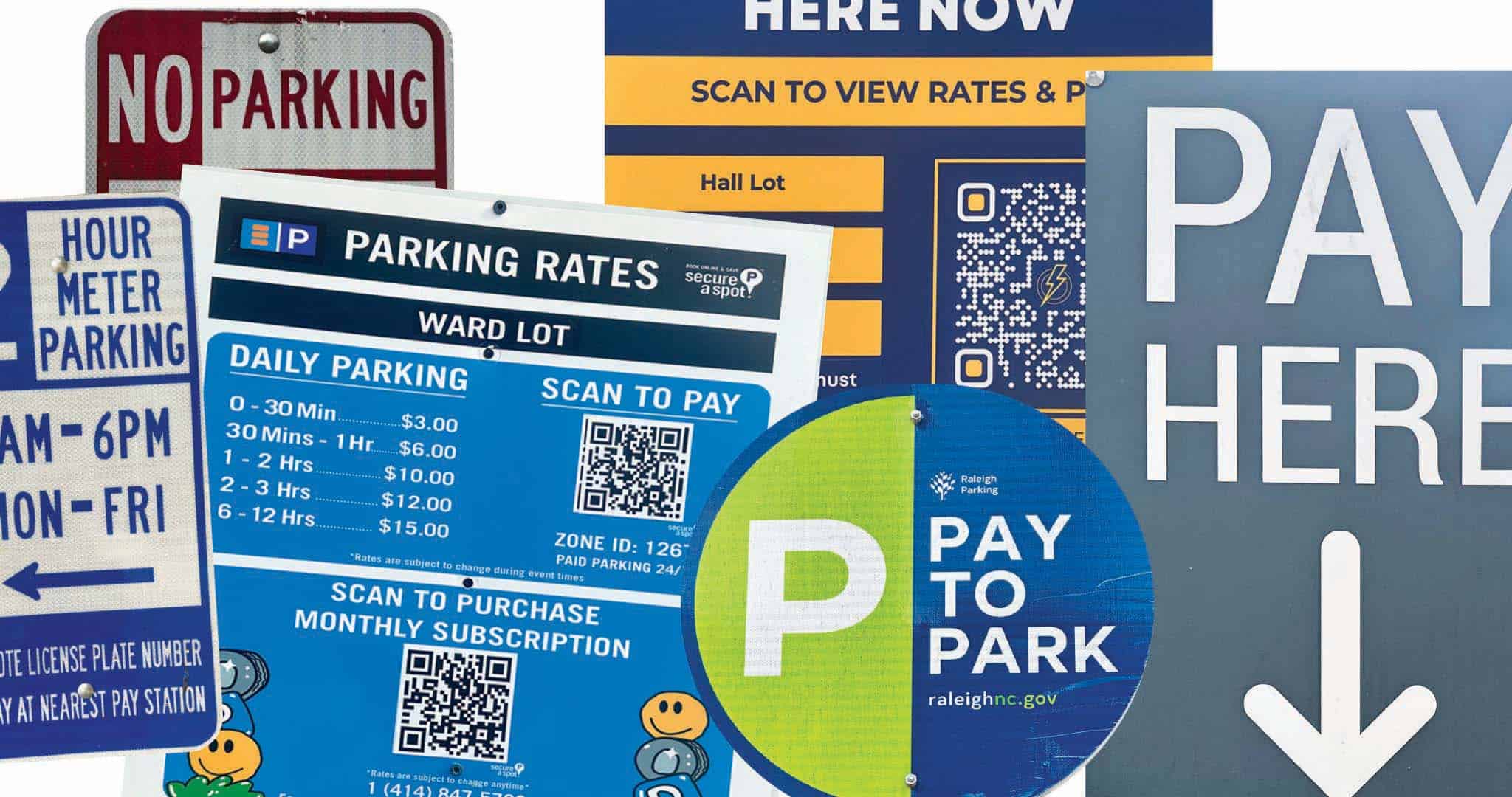
The hottest topic in Raleigh right now? Downtown parking—and how much it’s going to cost you.
Last month, the City scaled back on its aggressive March-proposed rate increases thanks to community pushback, introducing a more modest proposal (see below) that preserves popular and impactful programs while still generating revenue for deck maintenance and upgrades.
“We advocated for changes to the original proposal because any adjustments to rates and hours must be carefully considered and studied for their potential effects on Downtown’s economy,” maintains DRA.
Following concerns from businesses, residents and other stakeholders about potential impacts, updated recommendations keep several key programs in place, including free two-hour weekday parking (which would become permanent in five city-owned decks), the free Small Business Downtown Parking Relief program, and nonevent deck and on-street enforcement hours—meaning free weekends and nights after 7pm.
“Parking is a service… and it’s crucial to supporting the vitality of Downtown,” said Transportation Assistant Director Kenneth Ritchie in an April virtual town hall meeting. “It’s one of the first things people experience when coming Downtown, and one of the last.”
In an effort to better the overall DTR experience, the City plans to reinvest parking revenue into replacing on-street meters, enhancing the ambassador program + pedestrian safety efforts, adding micromobility corrals, and deck maintenance.
Next up: a comprehensive parking study examining everything from how many assets the city should retain to strategies for phased rate increases, updated tech and future expansion of the on-street parking program—with results expected mid- to late-2027. The City is also gauging interest in selling the Wilmington Street deck.
The bottom line is “parking matters a lot to Downtown,” says DRA President & CEO Bill King. While DTR is reasonably transit-rich, walkable and bikeable, access to parking remains critical for businesses to thrive. “We appreciate the City listening and helping, and feel this has gotten to a much better place,” he adds.
The revised changes are scheduled for a vote in June as part of the FY27 City budget, with implementation targeted as early as Aug. 1. Until then, your voice still matters. Make yours heard by reaching out to City Council at [email protected].
New City-Recommended Parking Changes
Nonevent garages: $3/hour + $21/day max
Event garages (including Cabarrus Street deck): $4/hour + $24/day max
Like a virtual corn maze, maneuvering Raleigh’s ever-growing amount of DTR lots and apps can be overwhelming—but how did we get here? And how do we navigate it?
Ask any Raleigh resident their feelings on going Downtown and you’ll hear the same narrative: Figuring out where and how to park and pay is the worst. Read: an overwhelming maze of public and private parking options people would sooner skip than solve—especially given the costly consequences.
You know the drill. You’re endlessly circling for a street spot before giving up and pulling into a private lot, where you’re forced to find or download yet another parking app to then get gouged for $20—only to return some five minutes late to a ticket upward of ~$125. Such scenarios are playing out across DTR on the daily, prompting residents and visitors to weigh venturing Downtown—where every lot is a puzzle of rates and rules—against alternative live-work-play districts dishing plenty of free parking (think North Hills, Village District, Fenton—though those areas can come with their own lot battles and endless hunts).
So, how did we get here? A quick refresh: Longtime Raleighites may remember the infamous McLaurin Parking monopoly. Rolling out their empire in 1948 on South Salisbury Street behind the Sir Walter Hotel, the McLaurin family was the name in NC parking for 70 years—managing both public and private parking locally, including a city contract of 8,000+ parking spots.
Fast-forward to 2017 when the McLaurins sold their parking conglomerate off to The Car Park of Boise, Idaho. From there, enter the swath of parking management czars we love to loathe today—including Secure Parking, ParkMobile and more. And, with them, the exorbitant rates and fines—aka the measly ~$18 private parking violation from 2015 has septupled to up to $125, with hourly rates currently clocking in at $6+.
Despite the melee, DTR’s popularity peaked this summer, seeing its highest post-pandemic monthly foot traffic. Still, parking accessibility remains a hot-button topic to keep Downtown thriving—and the exorbitant fees, fines and frustration have yielded new efforts to curb the parking fluster.
One idea currently being kicked around includes making the first two hours of public parking free in city-owned garages. “The matter is still under consideration,” explains Parking Superintendent John M. Wynn.
And contrary to public perception, Downtown is actually overflowing with available parking options. “Current supply of parking, particularly off-street, is plentiful and more than meets current demand,” says Rob Murray, communications analyst for the City of Raleigh Transportation Department. And as “private developers are including parking to support their projects, the City of Raleigh does not anticipate building new parking.”
And they shouldn’t. Almost one-third of DTR is off-street parking, easily overshadowing the national average of 16%. So, ultimately, it’s a matter of education and accessibility—from knowing where to park for cheap to navigating the sea of parking apps.
Private vs. Public Lots
The cardinal rule for Downtown parking: Always opt for street and city deck parking. For starters, there’s the convenience. Street parking can be paid on-the-go via the Passport Parking app, and these spots, as well as city-owned parking garages and lots, are cheaper by the hour—not to mention city citation fines start at just $15 if paid immediately. It’s in your best interest to handle city-issued tickets promptly to ward off escalating fines and the boot—which the City can enforce once any vehicle racks up three 90-plus-day-old unpaid citations.
Private lots, alternatively, are infamous for pricey parking, camera-tracking cars and sky-high fines. Beware of multimanaged lots boasting confusing signage with a riddle of QR codes. While they arelegally required to specify which spots are which, it’s your job to figure it out based on your colored wheel stop (aka that concrete block at your front tires).
The lack of legislation involved with private lots has its pros and cons. While it means repercussions for unpaid citations are harder to enforce, it also means lots can charge any amount they wish for hourly parking and violations—and there are few laws defending you when a problem arises. In fact, certain law firms won’t even touch private parking tickets.
And because the number of citations issued is so high, parking ticket scams are more common in private parking lots—especially ones using QR codes to collect payment. Pro tip: If a ticket requires payment via reloadable debit card or wire transfer like Cash App, Zelle or Venmo, it’s a fraud. Always visit the website listed before paying to confirm it’s legit.
Beyond scam alerts, navigating the private lot violations is often overwhelming, including receiving aggressive letters in the mail threatening to impound or immobilize your car a mere 60 days post-ticket. (Don’t forget: Your plate is tied to your home address—and they will find you.) While the parking company cannot hunt down your car and tow it from just anywhere, they can legally tow or boot your vehicle the next time you park in that lot or another lot they manage. While these arguable scare tactics prove obnoxious and stress-inducing, private lots are private property—and if you break the contract (aka the terms and conditions you opted to skip over) the companies are legally permitted to defend themselves—even if it feels predatory.
According to The Car Park VP of Marketing Cory Collins, who manages several private and public lots in Raleigh, violations are not given a flat rate—but based on the offense. “We believe strongly in the importance of keeping an ADA parking space available for those who need it,” explains Collins, “so the violation for parking in an ADA space will be more than for expired time.”
Although The Car Park doesn’t use a collections agency, they, like all other private lots, reserve the right to. “The majority of our revenue comes from folks paying for parking, not parking violations,” adds Collins. “Enforcement is about keeping parking accessible and fair. … Most people choose to do the right thing and pay the violation if they owe it. We’re often lenient and work with folks when there’s a reasonable mistake that’s led to the violation.”
Pro Tips:
Ensure the parking spot color correlates with the color on the sign you scanned.
Verify how long you paid to park in the lot
Camera recordings mean mailed tickets if you try to play the system.
Don’t pull into a private lot at all if you don’t plan to park there
How Raleigh Stacks Up
Fun fact: Relative to other comparably sized cities, the City of Raleigh’s fine is extremely low, starting at just $15—and only charges for Downtown street parking from 8am to 6pm. Meanwhile, cities like Nashville and Kansas City charge to park on the street around the clock, and Sacramento charges $62.50 for parking violations. Ultimately, pricing, fees and location are parking problems that any healthy, thriving metropolis must tackle. So how have other cities handled these growing pains?
What Not to Do:
Pricing based on location. Like Raleigh, New York City uses an app so drivers can pay for parking “in a New York minute”—but, unlike the City of Oaks, metered parking can cost up to $13/hour. Hence, most New Yorkers opt for public transit.
Privatizing more parking. After the infamous $1 billion deal in the midst of the 2008 financial crisis giving private firm control of all metered spots and pricing, Chicago must now buy or rent street spots back if they want to build a bike lane or host a street fair.
Require parking minimums.Atlanta aimed to tackle parking problems via minimums to ensure enough spots for all. Instead, many lots sit vacant on the busiest nights, thus driving up the cost of living, creating heat islands and resulting in lost city revenue.
Best Practices:
Progressive pricing. To increase parking turnover, Austin’s on-street parking is adjusted by the hour—first two hours, $2 each; third hour, $1; each subsequent hour, +$0.50 more than the last—with an hourly maximum of $5.
Collaborative parking.Houston’s Community parking plan expands curb parking, allowing permitted residents and employees to park in metered spots, plus nonpermitted visitors for up to three hours.
Extensive research. In response to the higher demand for parking in its two main districts, Charlotte is slated to implement infrastructure changes based on the research from its 139-page strategic parking plan including studies of 15+ other cities.
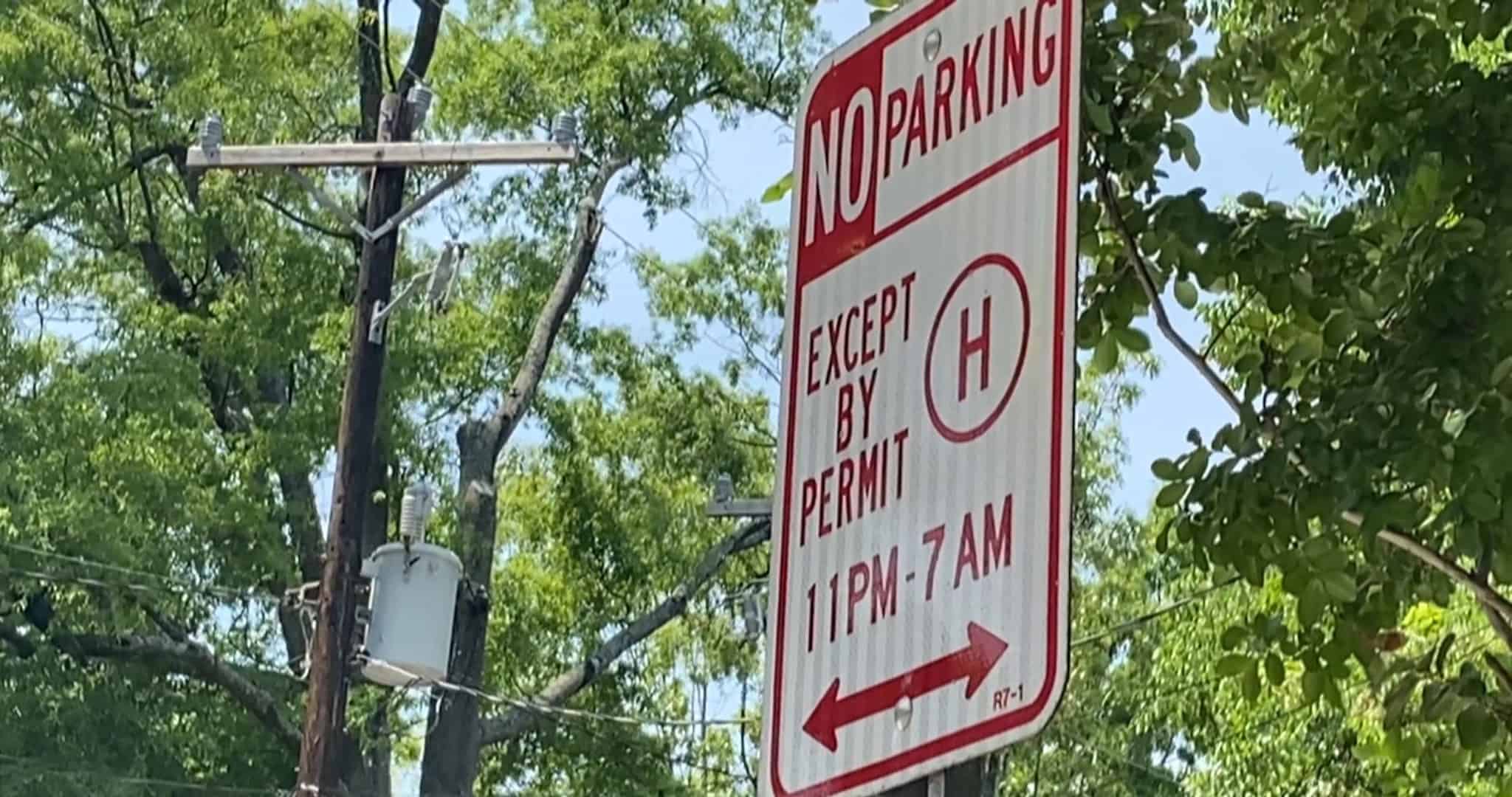
If you thought parking was a problem on Glenwood South before—wait for it. The city recently approved resident-only parking zones on several blocks both on and directly off of Glenwood Avenue. The 800 & 900 blocks of Glenwood (near Peace Street), and the 500 blocks of side streets Cleveland and Tilden are now Residential “H” Permit Zones (Devereux Street is already H Zone)—and residents will have to apply for permits. The move comes after many residents of the bustling district complained to the city about not being able to find parking near their own homes (not to mention disturbances like noise, trash, etc.). With the new rule, nonresidents will no longer be allowed to park in these zones from 11pm to 7am on any day. Given Glenwood South’s recent surge in popularity—arguably surpassing its prepandemic status—and its void of parking possibilities, the new zoning will either just push the problem down the street, or worse, detract would-be Glenwood South-goers and negatively impact businesses in the borough. And with the potential to make area parking even less plentiful, city leaders voted in March to eliminate parking minimums for new developments, regardless of size (as previously allotted). But, hey, there’s always still Uber…