Who Is Gen Beta?
Welcome to the world, Generation Beta.
The newest generation is here, and the race to understand them starts now. Born between 2025 and 2039, the newly debuted Generation Beta will make up 16% of the global population by 2035, the majority of whom will live to see the 22nd century. And—cue the existential crisis—these newbies are the offspring of on-the-cusp millennials and Gen Z.
Born to the first parents to come of age with social media, Gen Beta will be the first to live with AI from the jump. Coming online, so to speak, in the aftermath of the universe-meets-metaverse collision, they’ll never know a life where the digital and physical aren’t seamlessly intertwined. Unlike generations past, AI and hyper-realistic virtual realities will be fully embedded in their world—from early childhood education and entertainment to health care, careers and beyond.
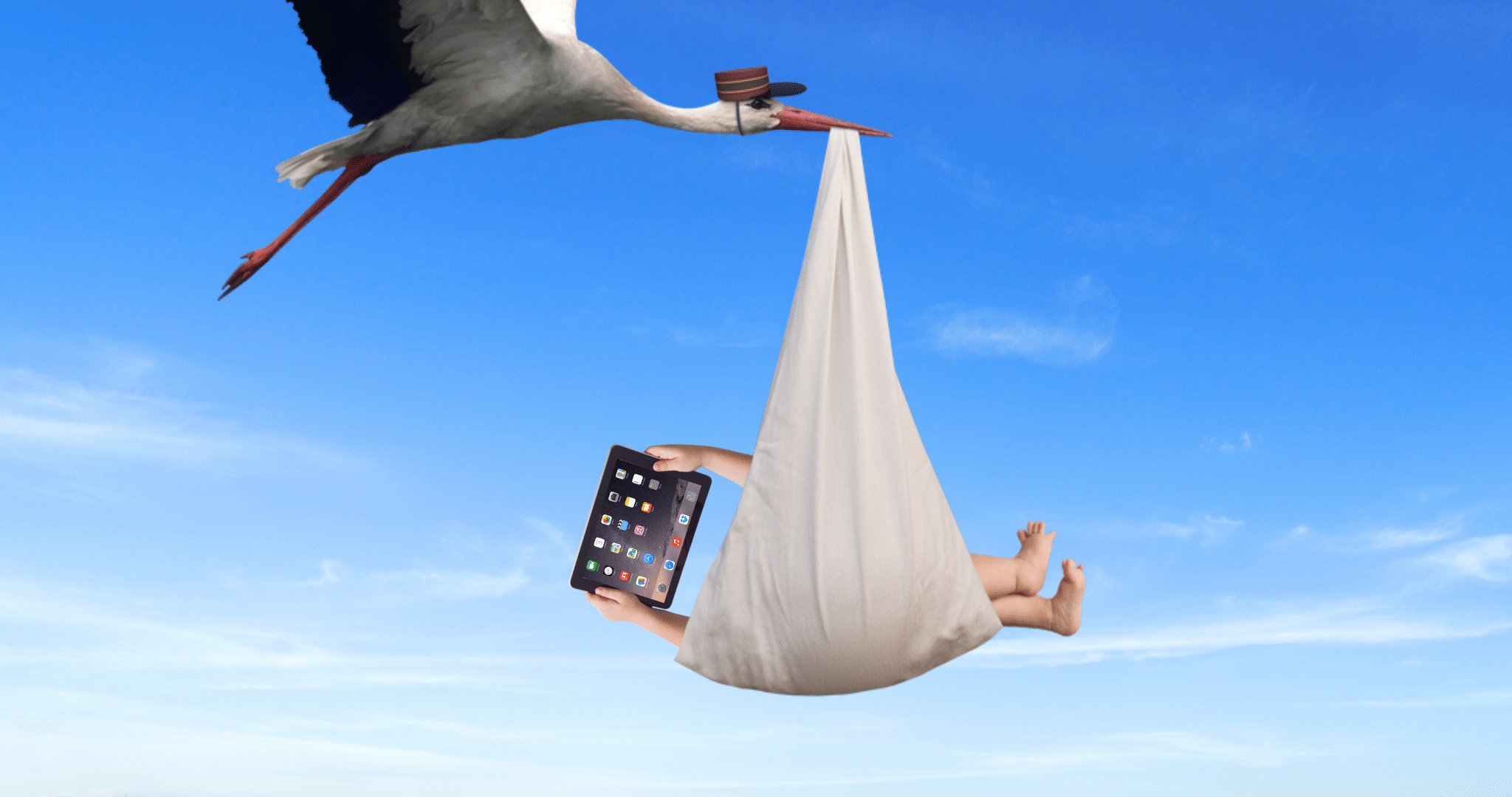
As we know, the relationship between children and technology is hotly debated. Even before Gen Beta’s birth, tech has played a controversial but prominent role in parenting. Now, having grown up with tech themselves—and in not-so-subtle rebellion to the Gen Alpha “iPad kids” screen-deep start—Beta’s parents are expected to flip the script, with Gen Z parents placing a stronger emphasis on limiting screen time than generations before them.
How it will play out is yet to be seen, but many Zoomers, burned by the digital downsides of their own tech-heavy upbringings, have (ironically) taken to social media to vow against posting their children to their own socials or selling out to screens to control them—even more ironic given the tech nod embedded in “beta.” As documented on TikTok, Gen Z has zero interest in parenting the kind of child who throws a screaming-fit in a restaurant because their iPad battery hit zero.
Social analyst and demographer Mark McCrindle—famed for naming the past three gens—backs up the likelihood of an antiscreen sentiment from the most tech-savvy generation of parents yet. “Gen Z sees the benefits of technology and screen time,” he emphasizes. “But, equally, they see the downsides of it and are pushing back on technology and the age at which their children access and engage with it.” Add to that, Beta will also be the first born entirely postpandemic, so when they learn about COVID in school, it won’t even necessarily be taught as a contemporary event.
Taken together, and despite their parents’ pledges, Gen Beta can’t not live in a tech-drenched AI-riddled postpandemic world. As such, Beta babies are predicted to have careers requiring far less face-to-face interaction. What’s more, 86% of Americans think many of these careers are yet to be invented.
To be fair, every generation tends to get a bad rap once they become public nuisances, hauling sticky iPads with them everywhere—and certainly once they enter the workforce. But Generation Beta’s moniker alone is already considered an insult. While the name simply follows the structure of the Greek alphabet, pop culture links “beta” to weakness and submission—especially following “alpha.”
And if this new gen are truly “beta,” it won’t bode well for their ability to tackle the many hurdles ahead. Amid climate changes, global population shifts, increasingly frequent disasters and rapid urbanization, McCrindle predicts sustainability will be “not just a preference, but an expectation” as they are brought up in a world grappling with major societal and environmental challenges.
While Betas have their parents to thank for pushing sustainability to the forefront, they will take on a “sink or sustainably swim” mindset, thanks to this perfect storm they are set to inherit from the world. That said, researchers have their fingers crossed these societal roadblocks will result in a generation of globally minded and community-focused individuals. And the rest of us should cross our fingers as well—as the majority of Beta sets foot into society and into the next century, the fate of this changing world will rest on their shoulders.