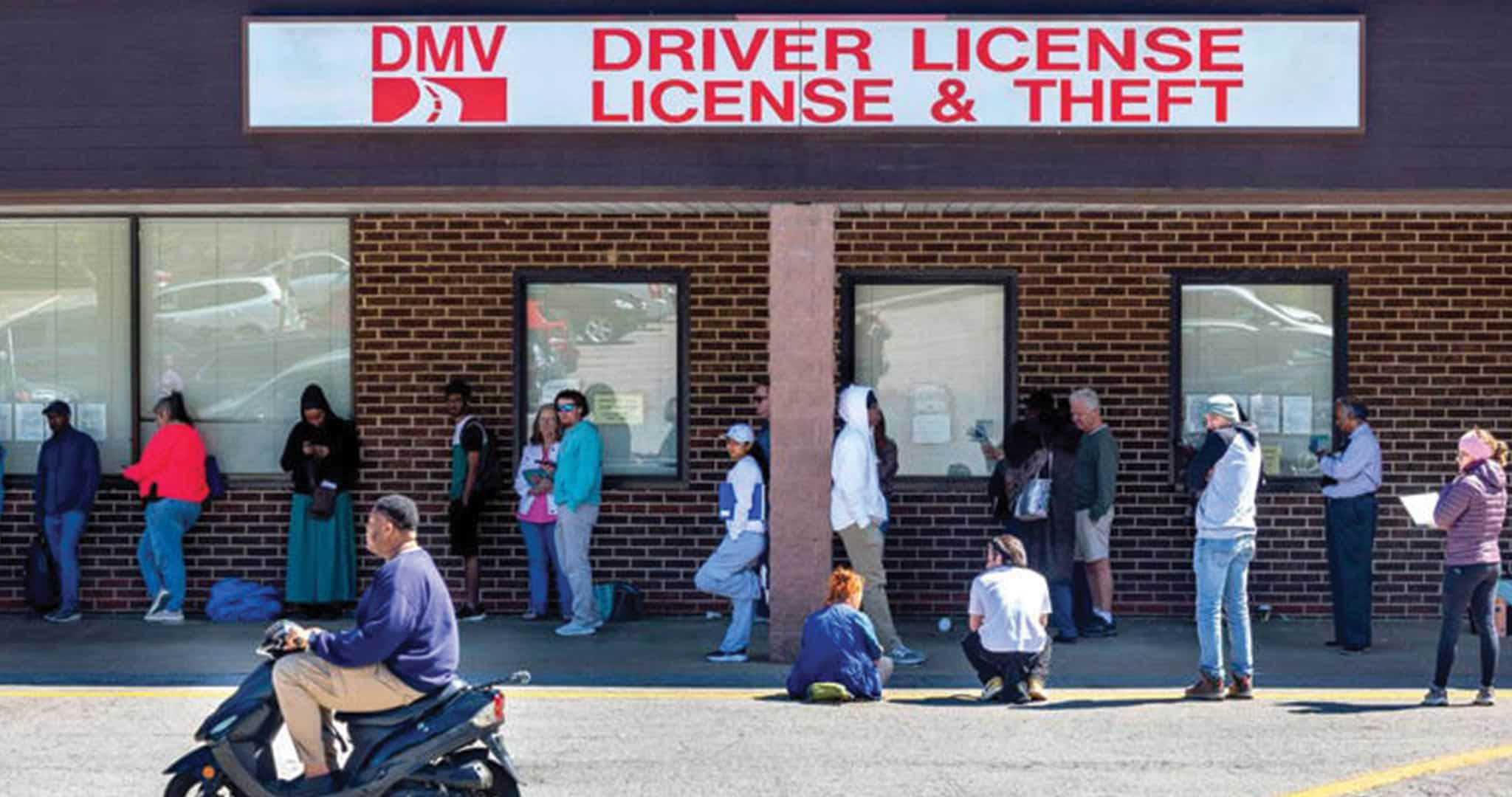
NC DMV audits call out failures and proposal fixes.
DMV frustrations just got receipts: Two audits released in August validate long-standing concerns, prompting NC State Auditor Dave Boliek to recommend splitting the DMV from the Department of Transportation entirely.
Giving new context to the department’s well-documented challenges, the audits found the average DMV visit clocks in at one hour and 15 minutes, and ~13% taking over two-and-a-half hours. And to try to sidestep those waits, nearly half skip their local office for a farther one.
Boliek emphasized that the economic toll of such inefficiencies—including missed work and school days—calls for immediate intervention. So, what exactly would a DMV/DOT breakup fix?
The audit cites “structural challenges” tied to the DMV’s current status as a DOT division: no financial autonomy, little say in statewide decisions and a lack of performance tracking.
“DOT needs the DMV, not the other way around,” said Boliek, noting that while the DMV reins in 30% of NCDOT revenue, it receives just 3% of that funding in return.
Despite NC’s population growing by 2.5 mill over the last 15 years, the state has only added 52 license examiner positions—160 still sit vacant.* Boliek proposed the General Assembly add 40 more examiners and introduce market-based salaries to combat chronic staffing shortages and employee burnout.
Meanwhile, a new law signed by Gov. Josh Stein suspends the expiration of Class C driver’s licenses, allowing them to remain valid for driving purposes for up to two years post-expiration date. That said, the law does not address ID requirements for air travel, alcohol purchases or loan applications—meaning a haul to the DMV may still be in your future.
Here’s which vetoes the NC Legislature overturned last week.
Since stepping into the role in January, Gov. Josh Stein has vetoed 14 bills—and last week, the General Assembly successfully overturned eight of them. Republicans control the General Assembly, but still needed to flip at least one Democratic vote to successfully override a veto.
In case you need a refresh on NC politics: Three-fifths of both the House and the Senate are required to override a veto. Senate Republicans meet the threshold as long as all members are present thanks to their 30-20 supermajority. House Republicans are one vote short of a supermajority, sitting at a 71-49 advantage on party lines.
Despite the lack of a supermajority in the House, Stein’s remaining vetoes aren’t out of the woods yet. If House Republicans can’t convince any Democrats to flip their votes, House Speaker Destin Hall has the ability to put the bills on the back burner until one or more Democrats are absent (aka a “veto garage”)—as well as call a vote on the vetoed bills any time between now and the end of the session in 2026.
Some of Stein’s remaining vetoes have been overridden in the Senate, but have yet to be called on in the House. Until then, here’s the eight vetoed bills that were overturned in both chambers—and are now law.
The Power Bill Reduction Act This law kills an interim CO2 emissions reduction goal for Duke Energy. The initial bill was focused on making it easier to rebuild homes in floodplains amid the aftermath of Helene, but was stripped of its former language.
Prevent Sexual Exploitation/Women and Minors The bill began as a bipartisan act to enforce consent measures for pornographic websites, but shifted to include controversial measures recognizing only two genders (male and female) under law, require schools to give parents the ability to restrict what students can read in the classroom, and create a database of every school’s library.
Personal Privacy Protection Act This law prevents state agencies from collecting or disclosing nonprofit donor information, and imposes penalties on officials who do so.
Charter School Changes Although critics say it weakens school accountability, this override will redelegate certain charter school responsibilities from the State Board of Education (governor-appointed) to the Charter School Review Board (legislature-appointed).