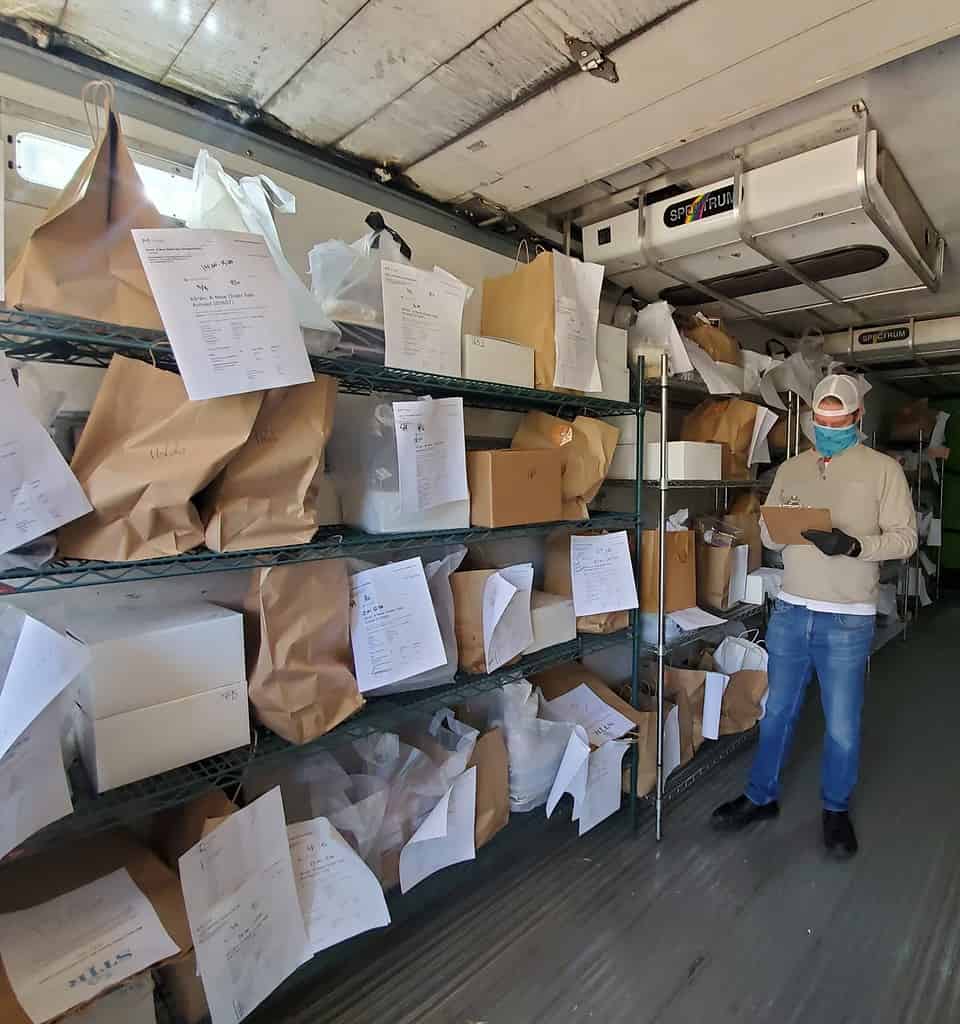
Surplus food marketplace Too Good To Go launching in Raleigh
Heads up: This isn’t too good to be true (!). Combating the ever-rising issue of food waste and cost of quality food is Too Good To Go, a surplus food marketplace launching in Raleigh and Durham June 5.
Operating on a win-win-win business model (“for people, profit and the planet”), the certified B Corp social impact company connects consumers with food from restaurants that would otherwise be thrown away, in turn helping businesses unlock revenue from their surplus. As they say, one man’s trash is another man’s treasure!
According to Too Good To Go Senior PR Manager Sarah Soteroff, upward of 40% of made food goes to waste in America, with the country’s annual food waste contributing to about 10% of carbon emissions. On top of the environmental impacts, it tightens costs for businesses and consumers, wasting about $2,000 a year per person.
The platform’s goal is to mitigate those detrimental-to-the-Earth issues—NTM selling food items at around a third of the retail cost. Since its founding in 2016, Too Good To Go has saved 300+ million meals from going to waste, and that footprint is expanding with its Raleigh/Durham launch.
Consumers receive that surplus in the form of surprise bags, which vary daily but can include dairy, baked goods, produce, prepared meals and packaged goods. “It’s harder for food-selling businesses in tight margins to make money,” says Soteroff, “so if there’s a way for them to regain some revenue by selling this discounted food, it’s a huge bonus. We get that food into the hands of people who want it without it going to waste.”
For her part, partnering with Too Good to Go was an easy choice for Little Barb’s owner Barb Nigro, who says the marketplace’s goals aligned with the bakery’s existing sustainable initiatives—think “low waste eats” bags and baking in small batches to reduce waste.
“We first focus on not having a ton of surplus for bags, but if we do, it’s great to have Too Good To Go’s help,” explains Nigro. Little Barb’s bags aren’t a constant, but they normally feature bready items like scones or cheddar bacon biscuits, and treats not up to the bakery’s normal standards, which again helps recover loss.
Tepuy Donuts owner Alejandro Contreras also says Too Good To Go has been helpful in reducing waste. “People have been very responsive to it, it’s been working,” he says. “It’s been a win-win for everyone.”
The squeeze is real—but despite astronomical price increases, Raleigh remains one of the most affordable major metros in the U.S.
Feeling a war on your wallet? Who isn’t. If you can’t shake the feeling that “cash rules everything around me,” it’s because, well, it has been for a while now. But in a world where no matter how much you make, it has cost more to do (or have) less for a few years now, the good news is, your dollars go further in Raleigh.
But the squeeze is no doubt real. U.S. inflation peaked at 9.1% in its stratospheric ascent in June 2022, reaching the highest level since 1981—even outpacing wages from April 2021 through this spring—with no sector unaffected… and leaving us nowhere to hide (hey, skyrocketing home prices, utilities and dinner tabs). School meals soared a staggering 300+% over the previous year in January 2023, as housing, staples and everyday needs also spiked.
While we felt the heat turn up on burning budgets in Raleigh, turns out our fair city remains relatively affordable. Especially now, as inflation eases—holding steady at 3.7%—Raleighites are starting to feel relief at the pumps, the grocer and in a cooling housing market. In a side-by-side comparison to a handful of major U.S. metros, Raleigh proves why she is still the best place to live.
Raleigh on the Rise
Inflation is no joke—and spiraling costs in most sectors can make it feel like living in Raleigh is becoming unaffordable. While costs are no doubt rising across the board—with housing jumping ~$150K in the last four years alone—Raleigh remains a very affordable place to live across all categories in a cost-of-living comparison. In essence, “there’s a reason we consistently show up in those Best Places to Live lists, with a regional cost-of-living index below the national average,” per Work in the Triangle data. But seeing is believing. So we tapped Work in the Triangle’s super-cool online interactive tool that allows you to compare cost of living in a handful of metros known for migrating or serving as comparison to our City of Oaks.
How Cost of Living Stacks Up
Boston
Chicago
Philadelphia
Manhattan
Austin
$100K Annual Salary
Will go 34% further in the Triangle
Will go 15% further in the Triangle
Your salary will go just as far
Will go 57% further in the Triangle
Your salary will go just as far
Groceries
13% less in the Triangle
10% less in the Triangle
14% less in the Triangle
22% less in the Triangle
Cost about the same
Housing
55% less in the Triangle
32% less in the Triangle
Cost about the same
80% less in the Triangle
13% less in the Triangle
Avg. Home Price
$935,580
$550,943
$437,562
$2,559,715
$506,117
Avg. Apartment Rent
$3,826
$2,944
$1,594
$4,773
$1,843
Utilities
20% less in the Triangle
9% more in the Triangle
7% less in the Triangle
Cost about the same
9% more in the Triangle
Transportation
26% less in the Triangle
18% less in the Triangle
12% less in the Triangle
18% less in the Triangle
6% more in the Triangle
Health care
7% less in the Triangle
You won’t notice a difference
You may pay a bit more in the Triangle
You won’t notice a difference
You may pay a bit more in the Triangle
Misc. (salon, vet, movies)
20% less in the Triangle
Cost about the same
Cost about the same
27% less in the Triangle
Cost about the same
Raleigh vs. National Average
Avg. home price : $423,402 vs. $469,810
Avg. Apartment rent: $1,706 vs. $1,440
Gas: $3.81 vs. $3.80
Phone: $185.16 vs. $192.26
Total energy: $196.32 vs. $185.44
Doctor visit: $134.79vs. $129.92
Veterinarian Visit: $51.52 vs. $62.73
Housing and Living Numbers Breakdown
Population Growth: 529,550; 17% growth 2011–2021
⬆️ 3.8% South Atlantic region (eight states and DC) recorded the highest annual increase in consumer prices YoY as of end of September
$455K: 2023 Wake County median home price, ↓ $9,750 decrease over year prior
Food Finance
Remember when a carton of eggs outpaced a gallon of gas? And never mind what people will pay for Sriracha. But despite that behemoth bump, menu prices started outpacing supermarket staples this spring—and while both are trending downward, food away from home rose 6% year-over-year from September 2022 to 2023, compared to only 2.4% during the same time frame for groceries (the smallest 12-month gain since December 2021). Here in Raleigh, regional menu price growth also continued to slightly outpace national growth.
“Restaurant margins are much leaner than people believe,” says Amber Moshakos, president of LM Restaurants, who owns and operates such local gems as Vidrio, Taverna Agora, a’Verde and Carolina Ale House, and a scad of restaurants in Wilmington and Florida. “We focus on being efficient and smart in all areas of our business—from labor costs to costs of goods to overhead. We work on the controllables of the business. Utilities, paper goods, laundry and such are good ways we watch the overall business while not constantly adjusting price.”
As people start to pull back on dining out or make less expensive food choices, says Witek Marketing President Trish Witek, who works with numerous popular Triangle sup spots, restaurateurs “are aware of these cost thresholds and are doing everything they can to minimize menu increases. But at the same time, they have to pass on those continuously increasing costs to stay in business.”
While you may have seen price increases at some spots, other restaurateurs prefer to eat the costs instead of passing the burden to their patrons. “No restaurant can really raise prices to cover true costs of business,” maintains Moshakos. “We focus on hospitality and creating a great experience so guests will come back.”
One way she says LM offsets rising expenses is by actually increasing guest visits. “The main focus for us is to keep our quality standards high,” she says. “We cannot shortchange the guest experience.” That said, if increases are applied, restaurants will try to do so in the most guest-friendly way possible, like spreading the price increase in smaller increments across myriad menu sections so it is less impactful, she says.
“[People experience] sticker shock—but they don’t realize how much labor goes into the free chips and salsa you might expect on the table.” —Cheetie Kumar, Ajja
“Inflation impacts everybody,” Ajja owner Cheetie Kumar said in a recent Bloomberg interview. “We absorb all those costs, but we can only absorb so much because our margins are already so thin.” And while some item prices (like eggs) may be going back down, others are going up—so it’s always fluctuating, she says, noting that we’ll never see the prepandemic prices on staples like cooking oil again. And local restaurants are not in a position to negotiate pricing.
4 Most Common Staples Restaurants Order Most
Cooking oil: “Almost tripled in cost—the price is coming back down a little, but nowhere near where we used to be.”
Dairy (milk, butter, sour cream, etc.): “Dairy is still high and continues to fluctuate—at one point double market costs.”
French fries: “French fries remain high, as do eggs. … We don’t anticipate seeing a change in fry costs until the next crop.”
Eggs: “Eggs are also a staple. Last year was at the highest market due to bird flu. We have now seen egg prices come back down, but we aren’t back to original prices yet.”
“You can’t have a menu without these staples, so we have to sharpen our pencil on how to carry the costs without making unreasonable price increases. We can’t overprice ourselves.” —LM President Amber Moshakos
“Swipe life,” meet swipe fees. Using a credit card at restaurants and bars could cost you as service charges for credit-card use become common practice in cities like New York—and Raleigh isn’t far behind. Locally we’re seeing fees at places like The Piper’s Tavern (3.5%), Ladyfingers (3%) and Dram & Draught (2.5%), among others—with more considering the fee for 2024.
~$502 Million The staggering amount Mastercard and Visa plan to hike swiping fees on restaurants and other businesses over the coming months
While credit card fees already rank as the third highest cost for U.S. restaurants, some experts simply see it as the cost of doing business and maintain those processing fees should not be passed on to patrons. “Penalizing them for paying in a way you accept but do not prefer seems to me to be a very ungracious policy,” hospitality professor Jonathan Deutsch, PhD, told Restaurant Business.
Other insiders see the fees as a life vest for the industry. “Credit card companies continue to chip away at what has become a very narrow profit window for the hospitality industry,” says a local industry insider, bemoaning swiping fees as a last resort against slim margins and charges handed down by credit card companies. “We need to try to recoup fees where we can. So it’s not a matter of if, but when.”
“I say who, I say when, I say…” how much. Suddenly Julia Roberts’ dramatic 1990 outburst pushing against paying clients in Pretty Woman feels very relevant today for tipping. … “Tipflation” is a trending term this year, burning up the media circuit, social channels and brunch talk as we navigate the changing rules for tipping and tipping fatigue in the wake of pressure to tip on, well, everything. The takeaway? While some local businesses like Layered Croissanterie require a tip to order—in this case, online—arguably the best part about tipping is the choice. In our chat with a cadre of Raleigh cafe, bar and restaurant owners this year, 20% remained the average suggestion for tipping on bites and beverages, with 30% encouraged for exceptional service.
What Raleighites Make & Do for a Living
Got talent? In spades, actually. Raleigh ranks as the No. 1 place for business and careers for a reason. As one of the most highly sought-after cities in the country touting some of the most educated professionals, Raleigh is a dynamic economic hub with businesses stacking up among some of the world’s biggest. Driven by skyrocketing growth in population, a diverse pipeline of talent, outstanding quality of life and low business operating expenses, Raleigh rates as a top place for business with a slew of corporate headquarters, and technology and life science companies in the area.
10 Fastest-Growing Occupations Across Wake County
OCCUPATIONS HOURLY SALARY
Laborers and freight, stock, and material movers, hand $15.92
Software developers $62.46
Registered nurses $37.34
Home health and personal care aides $13.54
General and operations managers $51.00
Cooks, restaurant $15.30
Waiters and servers $11.05
Stockers and order fillers $14.95
Market research analysts and marketing specialists $33.72
Heavy and tractor-trailer truck drivers $22.88
MAJOR EMPLOYERS
Advance Auto Parts
Bandwidth
Gilead Life Sciences
Martin Marietta
Merz Therapeutics
Pendo
Red Hat
Wages
According to the Economic Policy Institute, in July 2022 at the peak of inflation, the federal minimum wage was worth less than any time since February 1956 when the federal minimum wage was 75 cents per hour—or $7.19 in June 2022 dollars. And July 2021 had marked the longest stretch of time without a federal minimum wage increase since Congress first established the wage in 1938.
30 States & DC Have Higher Than Federal Minimum Wage
$20 Minimum wage for fast-food workers in California— highest in U.S.
Life$tyle Look
How much it costs to live in Raleigh with a certain lifestyle
Do you ever look at a house or a car or a grocery cart and wonder how much it costs to live that way? Who doesn’t. While everyone’s lifestyle is unique, we took a snapshot of a half-dozen-ish real-life Raleighites to see how much they spend monthly to maintain it.
North Raleigh Wellness Guru Monthly budget $3,000
27-year-old single post-grad rocking a job and a side hustle for extra $$, rents an apartment in central North Raleigh that has utilities and internet bundled in rent, and would rather eat ramen than give up the gym membership, but shops to survive at Harris Teeter and eats out twice a week. Drives a paid-off old Prius and travels quarterly on the cheap, and—the linchpin here—charges everything on their credit card and never pays it off in full to keep up the lifestyle.
53-year-old marrieds-with-no-children living in a four-bedroom paid-off home in Central Raleigh with one paid-off car that rolls out only when necessary. They prefer walking and biking everywhere, keep a beautiful lawn, shop at Walmart, travel and eat out infrequently—but always budget tea at Ladyfingers—and are wealthy on account of spending only what is necessary.
Midtown Marrieds Monthly budget $8,500
47-year-old married mother of two public school-attending tweens living in a 3-BR dual-income home in Midtown who lives for lattes and leg day at the gym, shops at Wegmans and Target, drives a Volvo and rocks two car payments (her husband has an Audi), travels three times a year, orders in twice per week, and goes out to eat ~once per month.
Downtown Dude Monthly budget $4,700
40-year-old single professional living in a 1-BR high-rise in DTR, who loves shopping and live music, eats out most of the time, scores pantry staples at Publix (but who needs groceries?), and travels quarterly.
West Raleigh Dog Mom Monthly budget $6,300
45-year-old single professional living in a 3-BR townhome in West Raleigh with a fur child and an Acura SUV on lease who spends more than she should on Amazon, happy hours and the veterinarian, scores fresh produce from Hungry Harvest and pantry staples from Target and Food Lion, orders in and eats out ~twice per week, and plans more trips than she actually takes.
Budding Brood Monthly budget $9,325
34-year-old married real estate agent, mother of three tots under the age of 5, living in a three-bedroom two-income single-family home in Northeast Raleigh, who spends her budget on Costco groceries, childcare and gas toting the family team back and forth to daycare, Saturday soccer, and activities with friends in their Honda Odyssey and Toyota Camry. Eats more McDonald’s than she cares to mention, dreams of date night and one day traveling again.
North Raleigh Near Empty-Nesters Monthly budget $9,550
62-year-old New York transplant near-empty-nesters with one kid in college and one nearing graduation, with one stable income and an affinity for New York prices. They spend their money on tuition, plenty of auto expenses, lawn care and takeout, shop at Publix and travel monthly (mostly to see their child).
Shutterstock; Sources: U.S. Bureau of Labor Statistics; Work in the Triangle; Wake County Register of Deeds, U.S. Census Bureau, EMSI estimates; US. Census Bureau, ESRi forecasts; Raleigh – (LAUS) – Dec. 2027; Redfin; EPI. All data as of press time
WEB EXCLUSIVE Restaurants might have closed their dining rooms but purveyors and farmers still need to sell their food to someone–and, obviously, we all still need to eat. The solution? kō•än’s new ko•mmunity Hub, spearheaded by kō•än chef Drew Smith, Tabletop Media Group founder Kristen Baughman Taber and Jenn Rice, a local journalist and brand consultant.
Inspired by Carrboro United, a multi-weekly community hub led by chef Kevin Callaghan of Acme that has been successful in Carrboro since its launch in late March, the goal of ko•mmunity Hub is to “bridge the gap between the purveyor and the public,” says Smith. Through the hub, Smith can continue buying products from purveyors to sell to the community. “Our mission is to help small businesses, local farmers and purveyors keep afloat during these hard times by uniting the community together at kō•än—and directly funneling money back into our food and beverage community.”
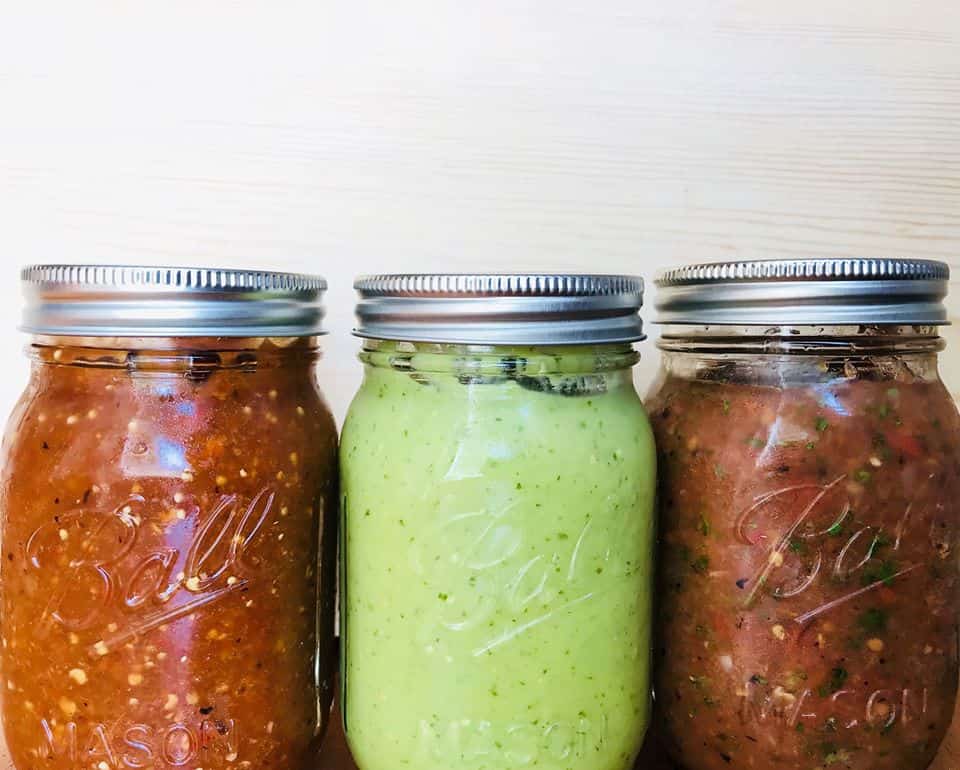
Smith says to think of ko•mmunity Hub like a more specialized farmers market, with an elevated feel and more items available other than just produce. Confirmed purveyors include Botanist and Barrel, Slingshot Coffee Company and Sugar and Spice Kitchen. Many of these products will be available in CSA (community-supported agriculture)-style boxes, including a picnic box with two ciders from Botanist and Barrel and two cheeses from Boxcarr Handmade Cheese and a homemade salsa duo box with chips for snacking from Mama’s Salsa. G&D Produce in Norlina, NC is also offering a produce box that will change weekly depending on what’s available. Other local farmers will contribute to the boxes as well, so customers can expect anything from mushrooms to strawberries to honey.
Lettuce from G&D Produce
“In a normal setting you’d usually subscribe and get a box a month or every two weeks,” Rice explains. “But here, we’re looking to tie together farm produce and products into one box from different farms in the area.”
ko•mmunity Hub will also feature meal kits from Triangle-area restaurants and beyond. Whiskey Kitchen is offering a chicken and broccoli casserole that feeds six to eight people; Baba Ghannouj Mediterranean Buffet in Durham is offering a “Greek Night” kit consisting of chicken kebabs, lamb and beef gyros, rice, pita bread, hummus, tzatziki and baklava; and Under the Oak in Smithfield is offering a three-course meal kit for two, including chef Blake Gotliffe’s homemade charcuterie and a dessert from his wife, Megan, a pastry chef. Smith says the hub provides an exciting opportunity for folks like the Gotliffes because it’s one of the only channels that’s currently available to get their products to Raleigh consumers.
Having so many products in one location is convenient and safe as it limits the amount of time people are out of their houses shopping in different stores. And, where else can you get a meal from Wye Hill, a cold brew from Slingshot and specialized groceries like curry, cookie dough and granola from kō•än? “I don’t know any other concept where you can get so many different things in one place,” says Smith. “If you wanted to get all these things you’d have to go to three or four stores in one day.”
Photos from day one of kō•än’s ko•mmunity Hub | Photos courtesy of Tabletop Media Group
Smith hopes that, instead of running to Harris Teeter or other chain grocery stores, people will turn to ko•mmunity Hub for products from these local farmers and purveyors. It’s also possible that, with food shortages predicted in the near future, people will have to rely on more local suppliers anyway.
Smith, Baughman Taber and Rice say they will continue to reach out to more local farmers, purveyors and restaurants to get them to participate in the program as well. “We’re all pretty excited about this,” Smith says. “We can’t wait to see it come to fruition and help the people that need it most right now.”
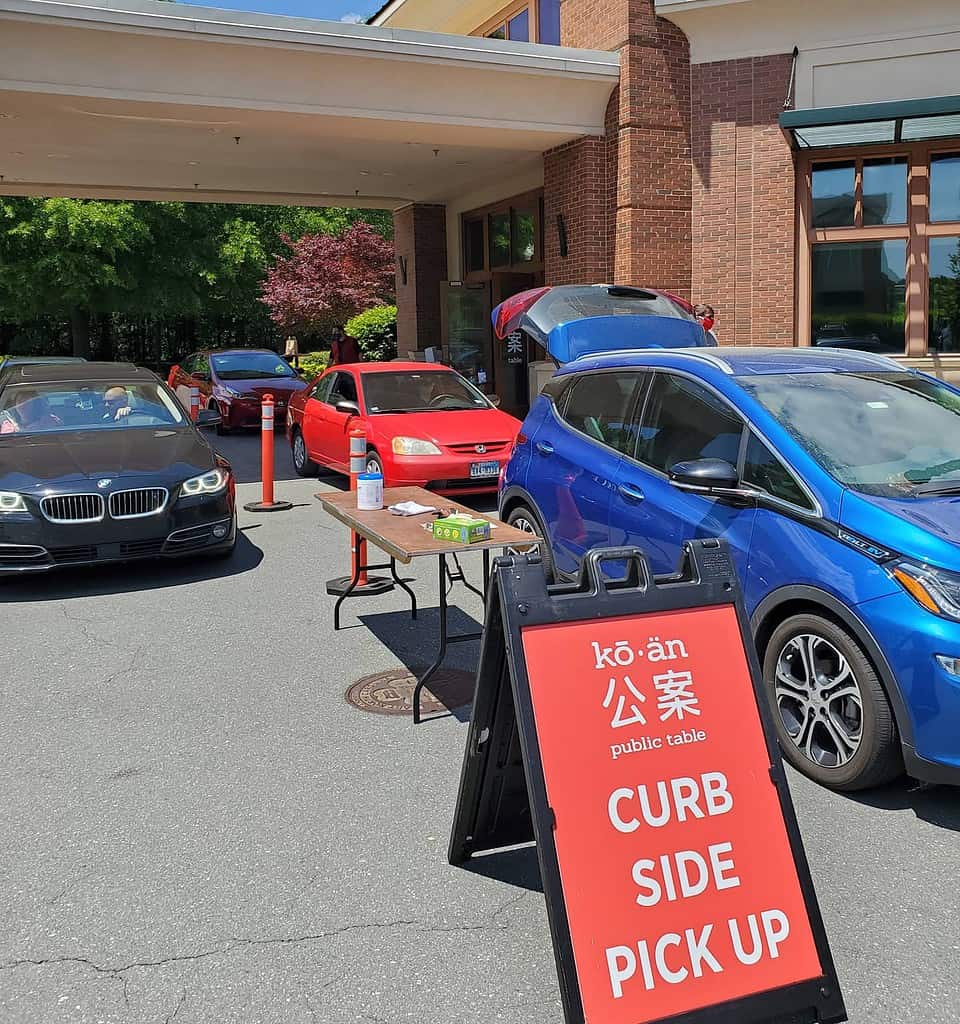
ko•mmunity Hub’s first pickup day is this Saturday, May 9 at kō•än from 12 p.m. to 8 p.m. Orders must be placed by Thursday at 3 p.m. in order to give partners and chefs time to create the meals and boxes ordered. Place your order at koancary.com/kommunity-hub.
When Kroger announced last month it was closing all its Triangle stores and laying off 1,500 workers, the news hit hard. Fans of the Cincinnati-based chain cited its convenience, friendly service and affordability. Local Tweeters called the move “devastating,” “emotionally agonizing,” “a modern day tragedy.”
Hyperbole aside, Kroger spokespeople say the decision came because the Raleigh-Durham grocery store market has become too competitive. But the news was also surprising to many here in Wake County, who have watched as Wegmans after Publix, Lidl after Aldi, ubiquitous Food Lion after omnipresent Harris Teeter, have opened—or announced plans to open—more and more locations, all over the map, at an aggressive pace.
So which is it? Too competitive already, or not yet competitive enough?
David Livingston, a Wisconsin-based supermarket analyst, said the East Coast is experiencing “an all out attack from Wegmans from the north, Publix from the south, Amazon from the clouds and Lidl in the middle” in the pages of the News and Observer. He predicted even more closures—500 from New Jersey to Key West—along the Eastern Seaboard, with Food Lion and Fresh Market particularly at risk. With all the new players, plus super centers such as Target and Wal-Mart, wholesalers including Costco and Sam’s and of course, online retailers like Amazon, it’s hard to predict how the grocery store wars will shake out in one of the nation’s fastest-growing areas. But local Kroger fans, perhaps, can take comfort in the fact that a well-curated local icon, and an affordable alternative—Kroger subsidiary Harris Teeter and Food Lion—will take over nine of 14 current Kroger locations. And, maybe, prices will drop across the board as stores vie to compete in such a saturated and unpredictable landscape. At least, a shopper can dream.
Here’s a look at the grocery stores we already have here in Raleigh, as well as what’s on the horizon.