This article is being updated as additional information is released.
UPDATE Nov. 28: Pro-immigrant group Siembra NC reported ICE is deploying 50 agents to Raleigh and the surrounding areas Dec. 1 for a monthlong operation.
***
“They went into the building where people were working, being productive members of society, pulled them out, put them in handcuffs and drove away,” says Cary resident Pamela Hoile. “It’s not giving anyone due process.”
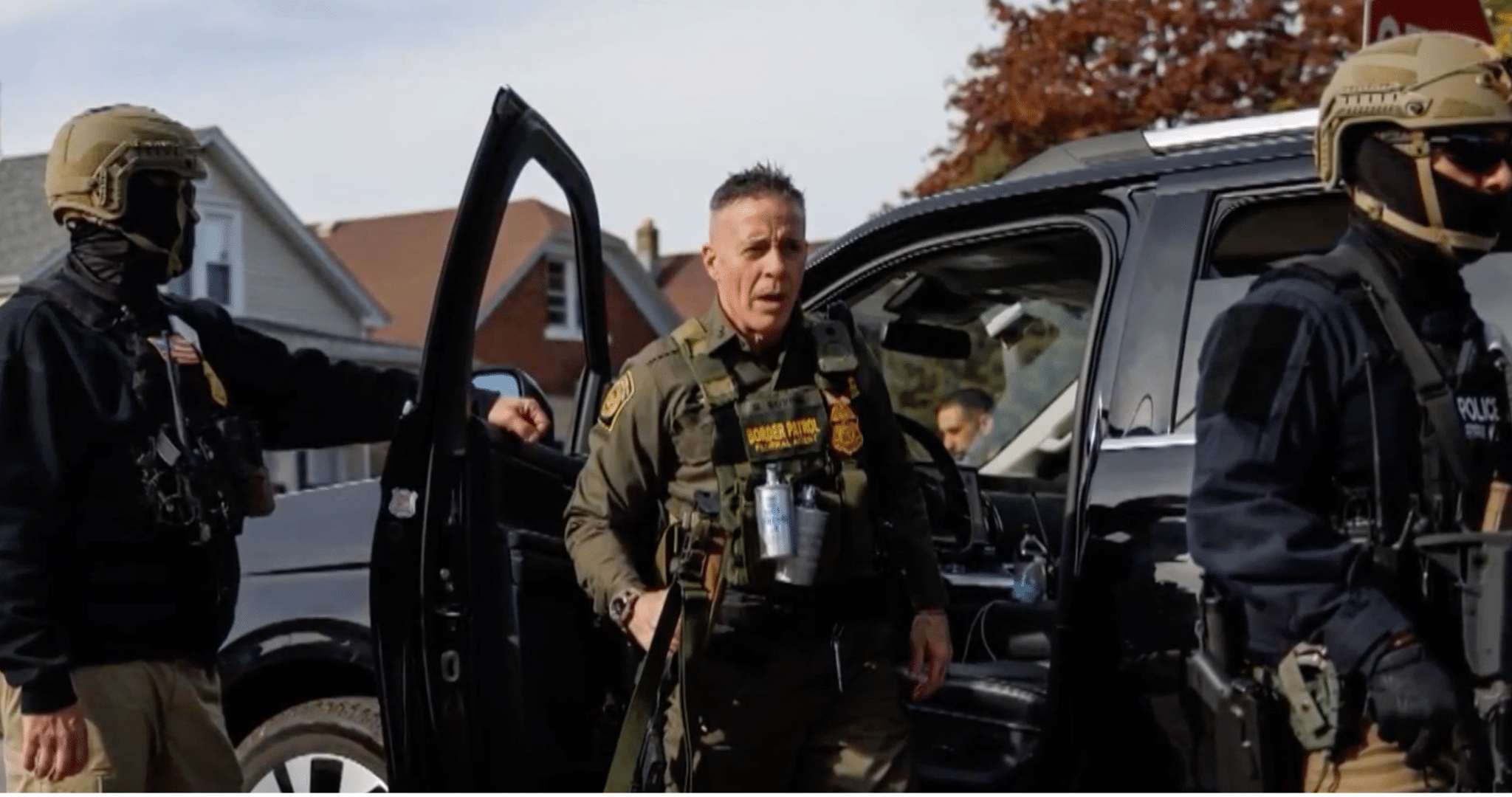
Her account captures the fear that swept across Wake County Nov. 18 when Customs and Border Protection moved in with little warning—disrupting school days, shuttering businesses and grinding daily routines to a halt. The terror extended far beyond undocumented residents. With uncertain immigration policies and tactics perceived by many as racially targeted, entire communities shut their doors and stayed inside.
While the exact number of detainees from initial raids is unavailable,* locals witnessed agents making arrests. Hoile witnessed four men taken from a construction site. After spotting an all-black SUV with tinted windows and Texas plates, she followed it as a second vehicle joined, and both pulled into the site, where she says the men were detained. “I call them ‘kidnappings,’” she tells RM.
Across the county, sightings mounted—from Southeast Raleigh to a Cary Home Depot—and pro-immigrant group Siembra NC confirmed at least 20 sightings within the first 24 hours. While unofficial reports claimed the Raleigh raids wrapped up after a day, agent sightings continued, and the sudden appearance of an ICE HQ in Cary* further fueled anxiety as the city slowed across all major sectors.
“As immigrants, our reality is now masked vigilantes with no respect for human rights or the law,” Mala Pata owner Angela Salamanca tells RM. “What do you do with that? That is terrorism.”
Mala Pata quickly announced limited capacity for the week, with Salamanca saying they won’t fully reopen until their staff feel safe coming to work. The restaurateur stressed the importance of talking with impacted communities—not taking away their agency by assuming what they need.
The fear even touched workers with legal status. “I think it’s messed up that people come here, work and try to give their families a better life, and are then being taken,” says a local construction worker, noting many colleagues stayed home for days despite having documentation or DACA status. “I understand it for those with violent criminal backgrounds, but it’s messed up so many have to worry about even walking outside of their house.”
Nowhere was the disruption more visible than in Wake County Schools. A staggering 19,471 students—or 1 in 9—were marked absent the day after CBP operations began. At one local elementary school, an ESL teacher tells RM more than half of her students were out. Officials expect lower attendance to persist as long as CBP does.
Legally, public schools must remain accessible to all children regardless of immigration status under Plyler v. Doe, and Wake County Public School System says it doesn’t track student immigration status and will seek legal counsel before granting any law enforcement access to campuses.
“One thing we want to do is express to our parents that students have a right to be at school,” said Superintendent Robert Taylor in a statement.
The fear gripping the city—and the county—stands in stark contrast to statements from DHS, which maintained their focus is on removing “criminal aliens.” Gov. Josh Stein called on the agency to focus precisely on that: “Stop targeting people simply going about their lives because of the color of their skin,” he admonished. Meanwhile, Mayor Janet Cowell strongly urged Raleighites to remain peaceful amid the pandemonium.
Raleigh heeded her call—and showed up. Peaceful protests formed almost immediately, with a clear message: “We aren’t going anywhere,” as one activist says.
“We didn’t ask for this presence,” says Cowell. With DHS refusing to discuss future operations, uncertainty lingers—regardless of whether ICE returns to Raleigh. For now, fear remains the constant, and communities across the state—and nation—are bracing for what comes next.
Here’s which vetoes the NC Legislature overturned last week.
Since stepping into the role in January, Gov. Josh Stein has vetoed 14 bills—and last week, the General Assembly successfully overturned eight of them. Republicans control the General Assembly, but still needed to flip at least one Democratic vote to successfully override a veto.
In case you need a refresh on NC politics: Three-fifths of both the House and the Senate are required to override a veto. Senate Republicans meet the threshold as long as all members are present thanks to their 30-20 supermajority. House Republicans are one vote short of a supermajority, sitting at a 71-49 advantage on party lines.
Despite the lack of a supermajority in the House, Stein’s remaining vetoes aren’t out of the woods yet. If House Republicans can’t convince any Democrats to flip their votes, House Speaker Destin Hall has the ability to put the bills on the back burner until one or more Democrats are absent (aka a “veto garage”)—as well as call a vote on the vetoed bills any time between now and the end of the session in 2026.
Some of Stein’s remaining vetoes have been overridden in the Senate, but have yet to be called on in the House. Until then, here’s the eight vetoed bills that were overturned in both chambers—and are now law.
The Power Bill Reduction Act This law kills an interim CO2 emissions reduction goal for Duke Energy. The initial bill was focused on making it easier to rebuild homes in floodplains amid the aftermath of Helene, but was stripped of its former language.
Prevent Sexual Exploitation/Women and Minors The bill began as a bipartisan act to enforce consent measures for pornographic websites, but shifted to include controversial measures recognizing only two genders (male and female) under law, require schools to give parents the ability to restrict what students can read in the classroom, and create a database of every school’s library.
Personal Privacy Protection Act This law prevents state agencies from collecting or disclosing nonprofit donor information, and imposes penalties on officials who do so.
Charter School Changes Although critics say it weakens school accountability, this override will redelegate certain charter school responsibilities from the State Board of Education (governor-appointed) to the Charter School Review Board (legislature-appointed).
WEB EXCLUSIVE Raleigh ice skating—NYC style. We’re getting major Big Apple vibes from this open-air DTR ice skating rink at Red Hat offering skyline views and a winter wonderland state of mind.
Let’s break the ice. Raleigh’s very own Rockefeller-esque ice skating rink is opening this Saturday, Nov. 20, at Red Hat Amphitheater in DTR, and as the chill master himself—Ice Cube, of course—would say, it “ain’t got no haters.” So if you were daydreaming of ice skating scenes a la Serendipity, Home Alone 2 and Elf, you’re in luck.
Figure-eight your way into the holidays with your eyes on the sky—quite literally, as the natural, open-air ice rink offers stunning views of the Raleigh skyline. Presented by UNC Health, THE RINK runs through Jan. 1, with special programming planned throughout—think a vendor village hosted by Shop Local Raleigh on Nov. 27 and DRA’s First Friday collab on Dec. 3.
“We’re thrilled to bring some festive holiday spirit to downtown Raleigh this year,” says Kerry Painter, director/GM of Raleigh Convention and Performing Arts Complex. “This is the perfect opportunity to start a new holiday tradition as Red Hat Amphitheater is transformed into a dazzling winter wonderland.”
Fun for everyone, this big city in a small city ice rink is a must-do this season. Have an ice day! redhatamphitheater.com/the-rink
In the middle of a blazing hot North Carolina summer, ice is indispensable. And while most of us are content to buy it by the bagful, STIR, a restaurant, oyster bar and cocktail bar in North Hills, is taking ice to the next level. STIR offers a unique collection of craft cocktails featuring seven styles of hand carved artisanal ice; each carving style is used specifically for different drinks. Two-inch rocks star in Old Fashioneds, long rocks fit perfectly in cocktails served in Collins glasses and spheres are saved for pours of fine whiskey and bourbon.
Spherical ice demo
STIR’s ice is made in-house and is never shipped in. The ice program begins with a 300-pound block of ice, frozen from the bottom up in a three-day process in order to push out all the oxygen and impurities. A giant crane then carries the large block to a bandsaw, which cuts the ice down into smaller pieces that are then either shaved, crushed or shaped into varying-sized cubes. STIR’s servers also perform a tableside demo for drinks served with the spherical ice: they place a large ice cube into an aluminum press with a spherical mold. The aluminum immediately starts to bring out the cold, slowly melting the cube into a sphere. Once the top of the press slides into place, gravity brings it down onto the ice cube until it meets the base. The result is a crystal clear piece of spherical ice that’s exquisitely translucent.
A bandsaw cuts the 300-lb. block of ice into cubes for cocktails.
“Everybody loves [the demo],” says Robert Werk, STIR’s chief operating manager. “I still like to see it, and I’ve seen it a lot.” Maybe the greatest thing about STIR’s ice is that it’s denser, allowing it to melt at the rate it needs to cool a drink without diluting it, meaning no more watered down cocktails (hallelujah!). The artisanal ice features in 14 housemade cocktails, including the Elderflower Sour, Broad Creek Special and Whiskey Bramble, which are listed on the menu alongside the style of ice that goes in them and the shape of glass they’re served in. “What goes into every craft cocktail?” asks Werk. “Ice. If you’re serious about craft cocktails, you want to be serious about ice.”