Look ma—we made it? You know you’ve leveled up as a metropolis when the rats start moving in. … Alas, Raleigh’s growth isn’t just measured in skyscrapers and restaurants—it’s critter-approved.
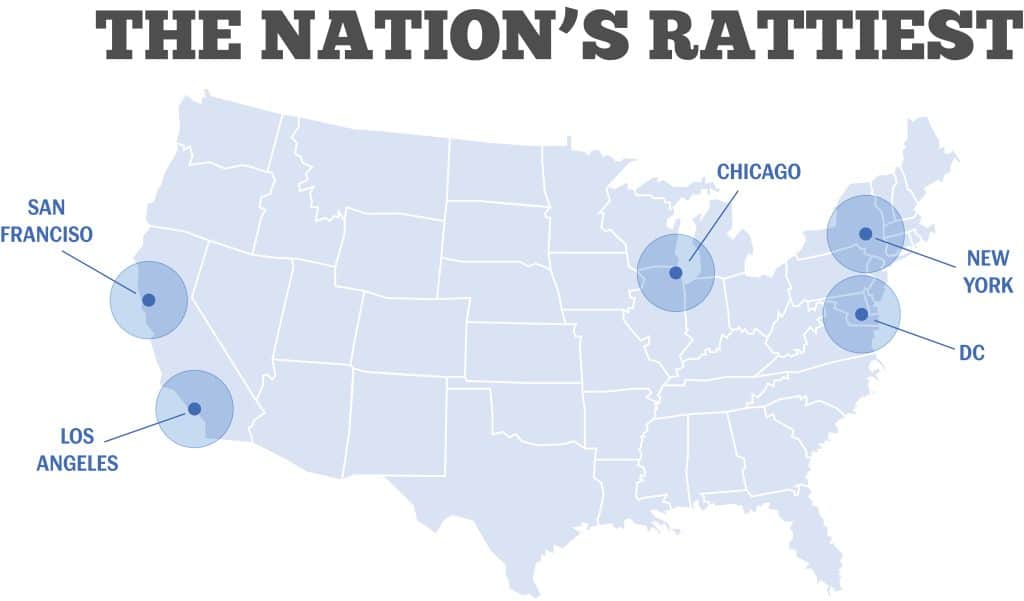
No stranger to the rat race—Raleigh’s held its place in the top 50 rattiest U.S. cities for over seven years running, with Orkin ranking it 28th last year. (Yes, really.)
While there’s no registry of rats roaming Raleigh, residents have told us the rodents are ramping up—with more of them out about, and apparently unafraid of being stepped on. Rat boxes can be spotted across DTR and citywide, unsurprising since urban growth typically brings more pests.
Despite the chatter, the City of Raleigh says they haven’t noticed a rodent spike. If—or when—the problem presents itself, Assistant City Manager Evan Raleigh suggests handling a vermin infestation like any other growing pain. “New development means more people creating trash,” maintains Raleigh. “We are making sure our resources are in line with the growing demands.”
Growing Pains
“The rats don’t run this city, we do.” So says former NYC Sanitation Commissioner Jessica Tisch on her vow to oust the rats—with battle efforts going as far as dispersing rat birth control, hiring a “rat czar” and hosting a vermin expert conference. NYC serves as a prime example of the downside of a glamorous, bustling city: If you want to live in an established metropolis, expect encounters with typical metropolis problems—more noise, more pollution and more pests.
Not that Raleigh should welcome said problems with a “we made it” attitude, but we can learn from more established metros and stay on top of so-far minor nuisances—before it comes to an all-out “war.” Even with more frequent rodent run-ins, it’s safe to say we are nowhere near needing to take notes on Tisch’s approach… yet.
So, as the not-so-ideal consequences of urban expansion continue to grow alongside us, fighting the good fight is essential to prevent anyone else—rats included—from running our fair city.
Are We Expecting? Fun fact: Female rats are ready to mate at five weeks old and can reproduce every three to four weeks—and litters can produce anywhere from five to 12 rat babies. Do the math and enter the cycle of vermin doom.
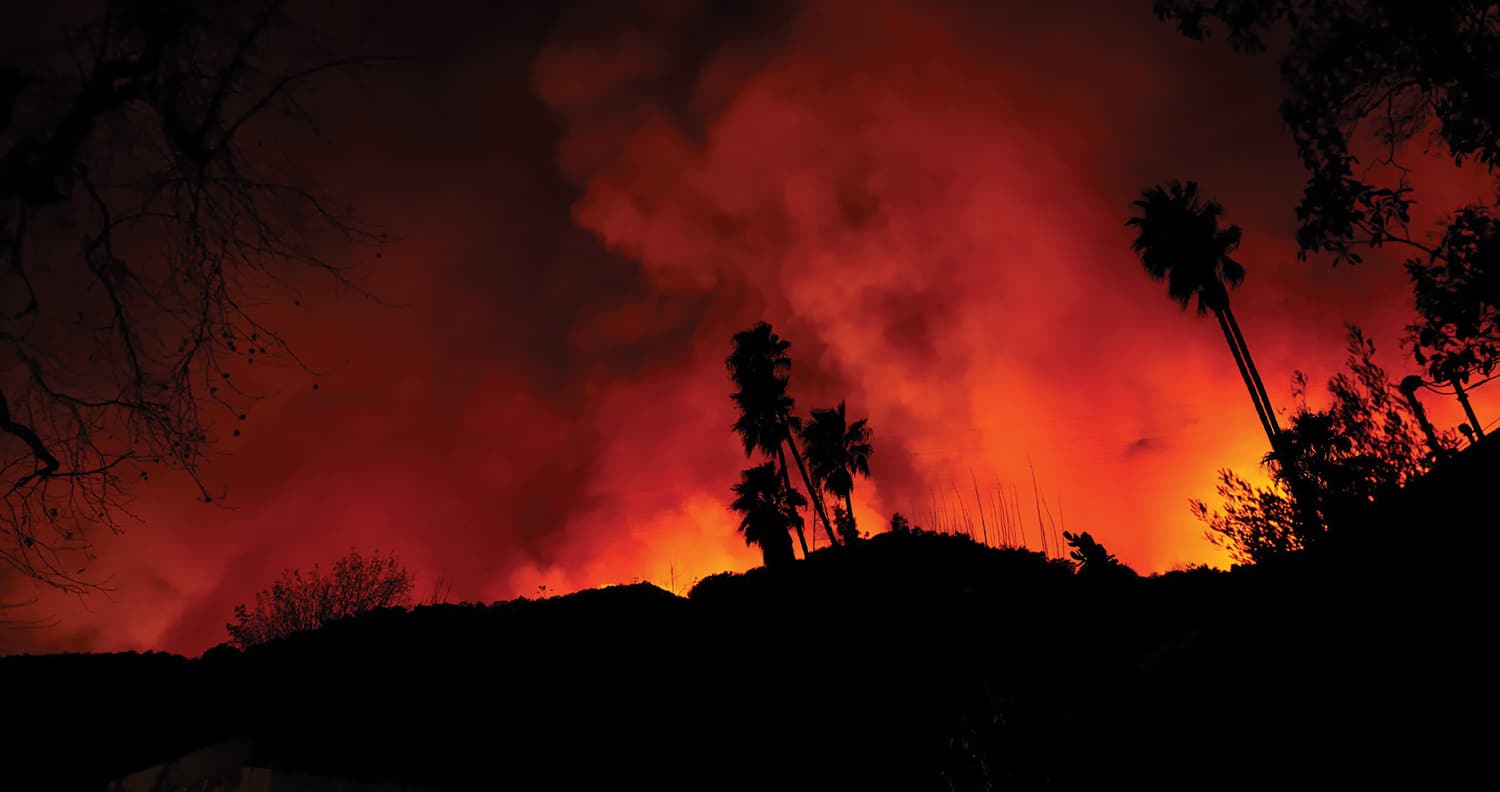
In a devastated LA County, thousands are without homes—and without any home insurance to cover their losses. Before fires burned over 10,000 structures, insurers decided against renewing thousands of home policies in areas they deemed to be at high risk for wildfires.
Case in point: Last March, Cali’s largest home insurer State Farm General announced they wouldn’t be renewing 72,000 home and condo policies upon expiration. Meanwhile, premiums in some neighborhoods more than quadrupled, and many who couldn’t get onto the California FAIR Plan (the state’s public insurance op) had to opt for no insurance at all.
Here in NC, as we’ve especially seen in the past year, we are no stranger to natural disasters.
Houses are falling into the ocean due to flooding in the Outer Banks. WNC still looks like a war zone after Helene demolished entire towns that may never fully recover. And every year, the coast must brace for hurricanes that are slowly but surely becoming more ferocious and catastrophic.
In the face of imminent calamity, we tapped NC Insurance Commissioner Mike Causey with pressing questions about the state of insurance amid natural disasters—and what’s stopping insurers from pulling the rug out from under NCers like they did in LA.
How did this happen in California? Could a massive insurance withdrawal like this happen in NC? No. Poor decisions in California’s leadership have allowed extreme environmentalists to override common sense fire safety in wooded areas. Additionally, repeated denial of insurance rate increases forced insurers to stop writing new business.
How do natural disasters affect premiums?They have long-term consequences in making insurance in those areas more risky and causing increases in rates. The solution to keeping costs down is to rebuild to more resilient standards that are stronger than code.
What risk-reducing measures can consumers take to keep their premiums low? Higher deductibles, fortified roofs and minimizing fire hazards
Where can residents find risk maps for their area? NC provides the Flood Risk Information System, containing digitally accessible flood hazard data, models, maps, risk assessments and reports that are database driven. This site also provides geospatial data, along with hydraulic and hydrologic models available for download and use. fris.nc.gov
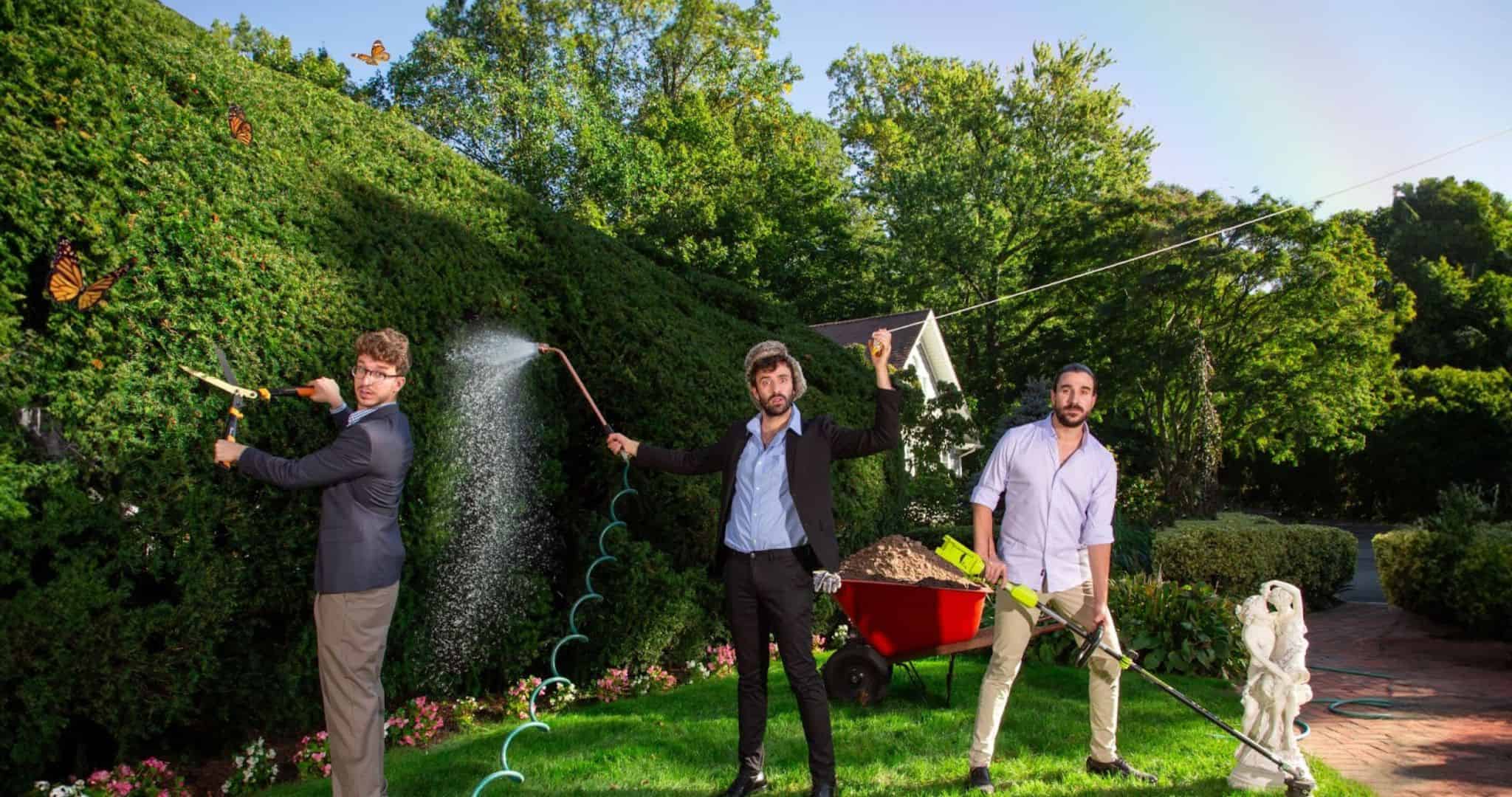
AJR speaks on inspirations, album art and Raleigh.
After gaining the spotlight with their 2014 hit “I’m Ready,” AJR has evolved their sound via the release of five more albums—and continues to snag spots on the Billboard Hot 100.
We caught up with two-thirds of the trio, Jack and Ryan Met, ahead of their Raleigh show for the intel on which artists inspired their sound, album art inspo and thoughts about their first-ever stadium tour. Come hang out!
Welcome back to Raleigh! What can we expect from your upcoming performance?
Ryan: Our favorite thing about being a band is touring. Our goal is to put something onstage that you’ve never seen before. That’s been the thesis statement of this whole thing: How can we combine Broadway storytelling, magical illusions and cinematic CGI to create something that will make people go, ‘What did I just see?’ For a long time, we had a shoestring budget and not a lot to play with. … This is the first tour we’ve ever done where we can confidently say everything we wanted onstage will be there.
Feelings about four months on tour?
Jack: It’s a lot—especially in a show so choreographed and complex. You can’t go on autopilot; you have to think about it every step of the way. It makes it more stressful, but [also] more fun. It’s cool to have those stakes—it makes touring less boring and monotonous.
Other than Madison Square Garden, what stops are you getting hype about in particular?
Ryan: LA, The Kia Forum is going to be really fun—that’s just a really iconic venue. Denver and Salt Lake City are always great [too].
Jack: And don’t forget about Raleigh!
What are your favorite songs to perform live?
Ryan: The new songs are always the most fun. ‘World’s Smallest Violin’ blew up for us recently on TikTok. Now, the fact that it’s so big gave [it] a new meaning—and it’s really surreal to play a song that was meant to be a deep cut. It was more for us to write a Broadway wacky song and not the most popular one off the album, so it’s cool. Very unexpected.
Any least fave songs to perform?
Ryan: We don’t not like the song but we don’t play ‘I’m Ready’ anymore. That was really fun—but it’s not us anymore.
Apart from your debut album, all your cover art is pretty similar. What’s the scoop on your new look—and why the change?
Ryan: All we had was that successful song (‘I’m Ready’) and that [was] it. We didn’t know anything about being a big band. We went on tour and no one showed up. We realized we hadn’t thought through what the band was [beyond] making catchy songs. [People] want something to connect to—and no one thought that about ‘I’m Ready.’ It’s like a background party song.
We started finding our lyrical voice, and with that came the album and art styles of the weird versions of ourselves in the world we’ve created. We recreated the lyrics, albums and songs to make sure we were being entirely us—and then people started showing up to the shows.
Which artists are your biggest inspirations?
Ryan: [Our] first love was The Beach Boys. I think we fell in love with the harmonies, emotion and ability to write songs about surfing and deep love songs about falling out of love. We base a lot of our sound on them. In a more modern sense, fun. [They] are a really big influence in terms of how theatrical and uncool they could be, [with songs that are] Broadway meets hip-hop. Fun. taught us to be ourselves and do what we really wanna do.
Go-to snack or way to wind down post-performance?
Ryan: Usually sushi. If you walked into the dressing room after the show, there would just be total silence and the sound of us chewing. The adrenaline wears off. We think of parts we can change tomorrow. But it’s pretty silent.
Do you have any advice for new aspiring creatives?
Jack: We’re always aspiring.
Ryan: Figuring out what you can say that no one else can say is a really daunting idea, but if you can figure out exactly the types of words that fit with your voice, that’s the key. A good example is our line in ‘Bang!’: ‘Put quinoa in my fridge.’ I truly can’t think of any other voice that could sing that and have it be a hit on radio other than Jack’s voice. I think there are a lot of things Jack can’t sing about that [other artists] can. That was a big thing, figuring out exactly what our unique sound is. If you can get to that, you’ll be successful.
Is there anything else you’d like to add?
Ryan: See you in Raleigh! It will be a great show.