Lucky for us, brewers are tapping into the buzzy seltzer market. Treat yo’ seltzer to these “truly” fresh 5 local suds this month.
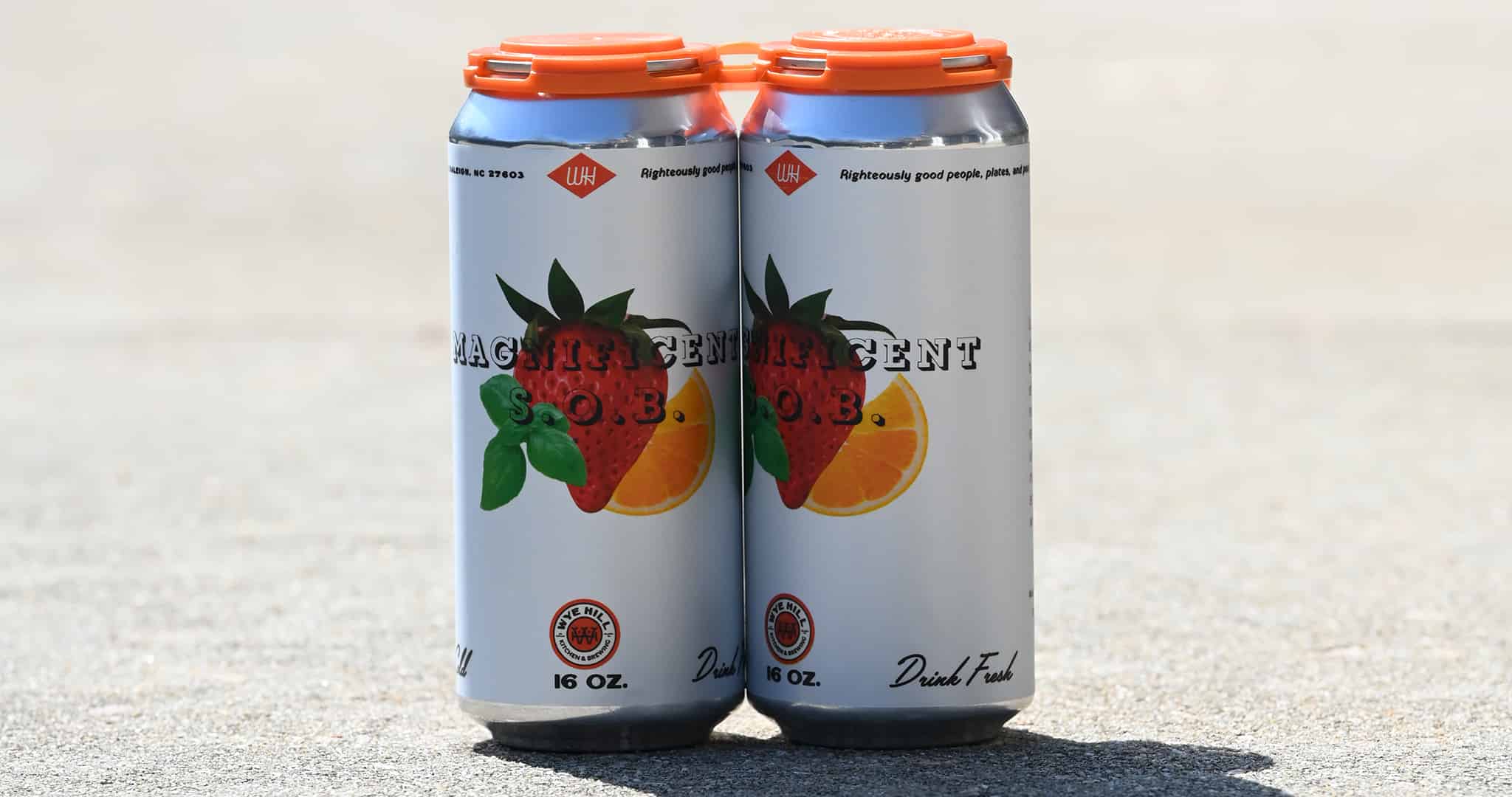
Magnificent S.O.B.
Wye Hill
Something a bit more sophisticated than the average boozy bubble water, this Magnificent S.O.B. (chill, it stands for strawberry, orange & basil) 5% ABV springtime slammer infused in-house with real fruit, herbs and spices is back in all its effervescent glory this April—and available for the first time in 16 oz. cans. Oh, yes we can! wyehill.com
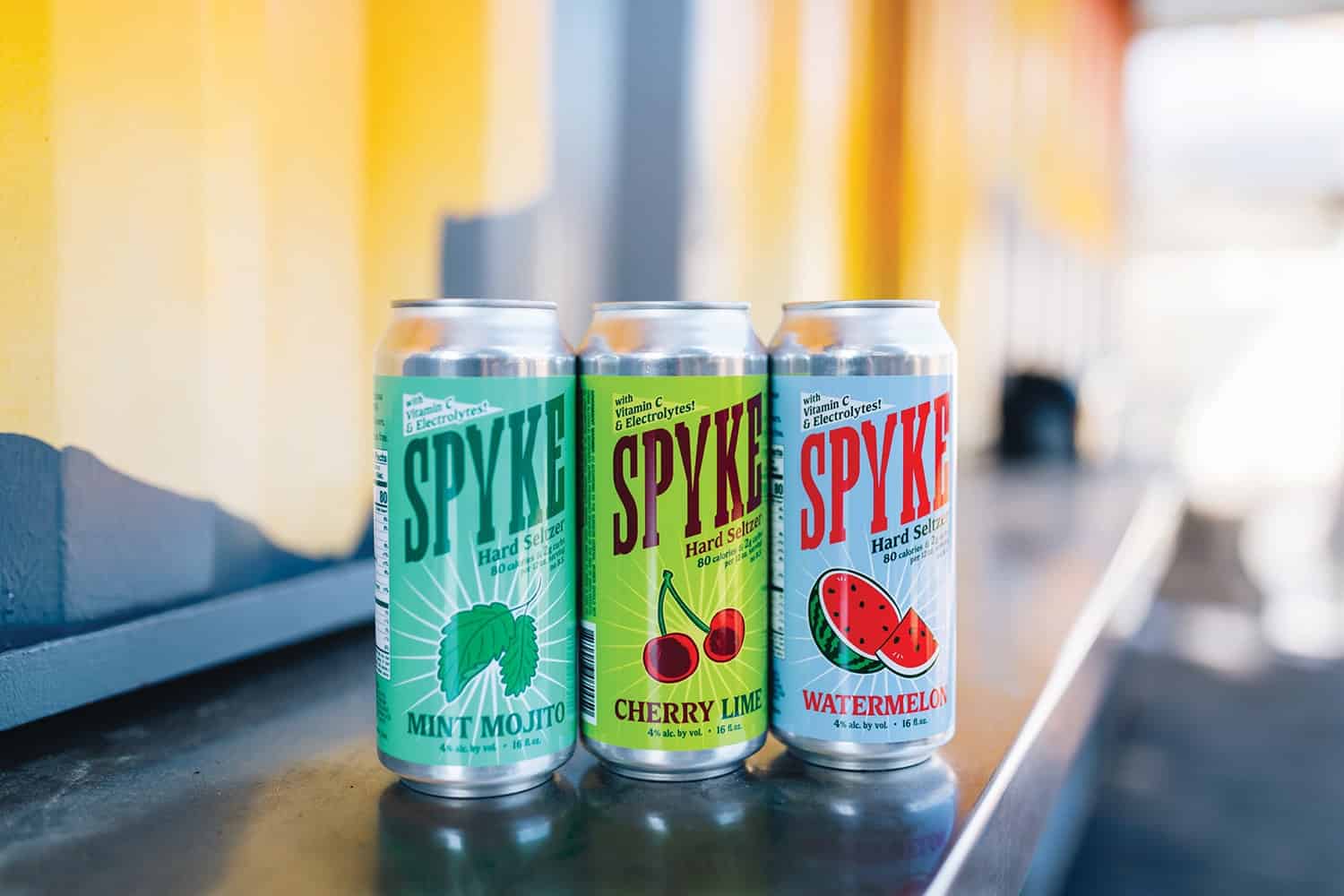
It’s love at first Spyke with Lonerider’s 80-cal, 2-carb, “no-BS” seltzer infused with vitamin C and electrolytes to help ward off the hangover in four flavors. (Our pick? We’ll be gettin’ “Watermelon” sugar high…). loneriderbeer.com
LBC Rotating Hard Seltzers
Lynnwood Brewing Concern
LBC is a go-to for sippin’ bubbly and feelin’ lovely (um, find us on that patio, see p. 44!) with its trio of rotating flavors on tap each month—think mango, grapefruit, pineapple, tangerine, lemon lime and more. Cheers! lynnwoodbrewing.beer
NC’s first Ranch Water lets you go classic with its Original iteration (agave, lime, tequila flavoring and smidge of salt) or kick it up a notch with the Jalapeno Pineapple—each weighing in at a cool 80 cals, 2g of carbs and 4% ABV… which is perf because we dare you to drink just one. ranchwaternc.com
“I got my toes in the water, ass in the sand, not a worry in the world, a cold seltzer in my hand.” Transport yourself straight to paradise with this 5% ABV light-as-air crisp 100-cal, 2-carb gluten-free seltzer craft-brewed in four all-natural flavors. rndbrewing.com
Spring? Oh, you mean patio drinking season? Yeah, we know her. Who can blame us for taking the warm weather as an excuse to day drink at a local brewery, bar or restaurant?!
Our latest spring obsession? Collabs from Triangle-area breweries. These local brewmasters are putting their genius beer know-how and skills together to create sip-worthy creations that warrant a drinking sesh in the sun. Get to know some of our fave local collaboration bevs below!
Hops heads, delight… This dry-hopped pale ale by these two popular Raleigh breweries just screams springtime—and begs to be drank alfresco with your crew. Five Points Connection is an ode to Lonerider’s recently opened Five Points location—as they joined the ranks of a bounty of breweries in that hoppy town center. Sip to find Philly sour yeast paired with fruity hops to deliver a light-bodied, aromatic brew for easy drinking (yes, please!). Find it on tap this season at all Lonerider Hideout locations, Lynnwood Brewing and in cans (come mid-April) at bottle shops in the Raleigh/Durham area.
Get ready for a doubleheader! Trophy Brewing has not one, but two collaboration beers on tap. A brew for all IPA drinkers—and we know there’s a lot of you—Oberlin Village is a refreshing and hoppy nod to the former Reconstruction-era Black settlement that thrived for years near Oberlin Road. And, fittingly, these sips will go down in history… as each glass or can—available at Trophy locations, bottle shops and select grocery stores—benefits Friends of Oberlin Village’s goal to honor and preserve local history.
With its second buzzworthy collab, Top of the Podium, Trophy joins 321 Coffee to produce some feel-good sips. (DTR-based 321 is dedicated to employing adults with intellectual and developmental disabilities.) The resulting coffee stout (shocker?)) offers up notes of dark caramel and toffee—perfect for anyone who likes a heavier beer with a little kick. Inside scoop: The name was created by combining the two businesses’ names! To wit, you’re likely to accept, say, a sports trophy (a nod to Trophy Brewing) at a plural podium with a first, second and third place platforms (incidentally also the numbers in 321 Coffee). The more you know!
Bonus: A percentage of sales from Top of the Podium will be donated to 321 Coffee. You can also find this brew at Trophy locations, bottle shops and select grocery stores.
In line with the opening of Scratch Kitchen’s new Downtown Cary location, the Apex-based restaurant will be releasing a ginger kettle sour with Bond Brothers (its soon-to-be neighbor!) in May. Knowing Bond Brothers and its excellent repertoire of beers, this new brew is going to be deliciously sour and is sure to pair perfectly with the food over at Scratch (the fan-fave firecracker shrimp is amazing!). We’re counting down the days until we can get our hands on a pint, which will be available at Bond Brothers and both Scratch Kitchen locations.
These Raleigh breweries are giving Truly and White Claw a run for their money with their own delicious versions of spiked seltzers.
In the world of canned alcohol products, spiked seltzer is arguably the best thing since, well, canned beer—especially for those who dislike beer in general or are gluten-intolerant. Brands like Truly and White Claw made low-cal (100 calories or less) spiked seltzer popular—and accessible—but now there are more options than ever to get your seltzer drink on and, lucky for us, Raleigh is ahead of the game.
Many of your favorite local breweries have started to brew their own spiked seltzers in a variety of unique and refreshing flavors that make it easier than ever to drink local. We highlight some of our favorite local options—and anticipate many more delicious spiked seltzers to come.
Lonerider Brewing Company 1626 Glenwood Ave.; 8816 Gulf Court | loneriderbeer.com Lonerider head brewer Joseph Wheeler brings his typical A-game to the award-winning brewery’s craft seltzers, adding electrolytes and vitamin C to the mix to give the seltzers a healthy boost (and hopefully help prevent those grueling hangovers). You’ll be hard-pressed to choose your fave from cherry lime, strawberry lemonade, mint mojito, watermelon and tropical flavors. But, luckily, you can sample through them all guilt-free—as they’re all less than 100 calories and gluten-free—available on draft and in 16-ounce cans at all locations. Come spring, we highly recommend sipping Lonerider’s seltzers on the patio of its new Five Points location—while snacking on pizza and wings, natch.
Wye Hill Kitchen & Brewing 201 S. Boylan Ave. | wyehill.com Wye Hill started serving its own housemade seltzers last summer to the joy of every Raleighite who frequents the brewery-restaurant’s patio for can’t-beat food, brews and views (guilty). Serving up another reason to frequent the hot spot, its flavor-forward and super-refreshing seltzers are born of a process involving fermenting a ton of fresh fruit in sugar and water; then adding additional flavor profiles like basil, mint and lime; and kegging it before carbonating. Wye Hill’s premiere seltzer, the Magnificent SOB, packs strawberries, orange zest and basil (nom nom!), and additional small- and large-batch seltzers include blackberry lime and a special Halloween-themed release called People Eater (cherry, coconut milk, pineapple and lime). No matter how you slice it—they’re all spooky good.
Lynnwood Brewing Concern 1053 E. Whitaker Mill Road | lynnwoodbrewing.beer Lynnwood’s director of brewing operations, Bill Gerds, is on a mission to create a spiked seltzer that’s similar to White Claw—as far as being clear and having no fermentation character. Gerds makes LBC’s seltzer by fermenting a dextrose solution with wine yeast that’s then filtered for clarity and run through a carbon filter to remove the color and fermentation character. Although LBC offers many of the same flavors as White Claw—think black cherry, tangerine, grapefruit and pineapple—Gerds’ housemade seltzers have less sugar and calories (winning!). Be on the lookout for LBC’s new mixed berry, fruit punch and lemon lime flavors coming soon. White Claw who?
Home-State Seltzers
Raleigh breweries aren’t the only ones ahead of the seltzer game. If you’re feelin’ frisky, road-trip it to Charlotte to check out Summit Seltzer—the first seltzer spot on the East Coast, specializing in both hard and nonalcoholic seltzers with fresh fruits. Otherwise, the next time you go on a seltzer run, show some local love and—instead of Truly or White Claw—grab some of these NC-made cans instead.
Bold Rock Hard Seltzer Bold Rock Hard Cider, Mills River Big-box grocery stores
Brizo NoDa Brewing Company, Charlotte Total Wine & More
Sercy Mother Earth Brewing and Spirits, Kinston Grocery stores, Weaver Street Market, Total Wine & More, House of Hops, Paddy O’Beers
Twisp Southern Hard Seltzer Created in partnership with Catawba Brewing Co., Morganton, Charlotte and Asheville Total Wine & More
Think beer is only green on St. Patrick’s Day? Beer is big business in Raleigh, and the industry is only growing. Turns out, we’re green year-round. And if you like to tip a pint, doing it here can save you some green, too. Raleigh is the 10th least expensive city in the nation for craft beer drinkers.
Let’s face it, our options for a good pint of beer in Raleigh are plentiful. In the last five years alone, breweries around the state have more than doubled from 45 to 133, ranking North Carolina 11th nationally in the number of existing breweries.And we’re 10th least expensive city for beer drinkers.
While the three major breweries (Oskar Blues, Sierra Nevada and New Belgium) chose the western part of the state, Raleigh’s expansion is right on its heels. Wake County houses 22 breweries, 11 of those in Raleigh, with more scheduled to open. A huge reason for this growth can be attributed to the Pop the Cap movement in 2005.
Taps at Flying Saucer
Popping the cap
On August 13, 2005, Governor Mike Easley signed House Bill 392, raising the alcohol cap from 6 percent to 15 percent. By doing so, hoppy IPAs and dark coffee stouts entered the market, allowing brewers to experiment and get creative with their products. Think of Lynwood Brewing Concern’s Once You Go Black IPA (7% ABV) and Raleigh Brewing Company’s “The Miller’s Toll Imperial Oatmeal Stout” (9.1% ABV), both of which have won awards in national competitions.
“Pop the Cap was a watershed moment,” said Mel Johnson, creator of ChaDoin, a new app designed to promote the breweries in North Carolina, particularly the NC Beer Trail. “Until you got the ABV (alcohol by volume) cap up, a lot of beers just weren’t available.”
According to popthecap.org, “This relic of Prohibition made it illegal to brew or sell one-third of the world’s beer styles, including gourmet Belgian ales, hoppy IPAs and intensely malty dopplebocks. Beers meant for sipping and savoring…nothing like the American light lagers that dominate North Carolina’s store shelves.”
Booming population
Alcohol by volume is not the only thing that has changed over the last 10 years. According to the U.S. Census Bureau, Raleigh’s population increased 59 percent from 2000 to 2014, bringing in businesses and patrons to appreciate them. This influx, a median age of 32.4, and America’s evolving tastes in both food and craft drinks, all combine for a prime market.
“I think we’re going to see a lot more expansion,” said BrewBoss Mark Doble of Aviator Brewing Company, Inc. “A lot of people talk about a bubble, but in the U.S. a lot of people are changing the way they eat and drink, and beer is a part of that. People are demanding a higher quality. A local brewery is like a local bakery. People can see the grain and how the beer is made. I think the time of TV dinners is over.”
So what makes one brewery successful over another?
One thing all local brewers can agree on is that the quality of their beer is the most important aspect of their success. In other words, it’s got to be good.
“There was a time when craft was ‘kool’ [sic] mostly in part as it provided an alternative to big brands,” said Shaluka Perera, vice president of sales and distribution at Nickelpoint Brewing Co., which opened in Five Points of April last year.
“Quality and consistency was secondary. Craft beer patrons have matured over the years and are now not only demanding alternative solutions but also quality and consistency. I believe breweries that can maintain these two elements will succeed.”
While the total number of breweries has gone up over the years, some of those were buyouts and replacements. Big Boss Brewery Company bought Edenton Brewery, naming itself after Edenton’s popular Big Boss IPA. Blackjack Brewing Company was open from April to September of last year before relocating to Wilmington for personal reasons. Lynwood Brewing Concern bought their equipment and took over their location. Hosanna Brewing in Fuquay-Varina closed its doors for unknown reasons in 2014, giving up that space to Lincoln Brewery.
Billions for North Carolina
There is no magical formula for a successful brewpub, though North Carolina seems to have found its way as it houses more craft breweries and brewpubs than any other state in the South. According to Margo Knight Metzger, Executive Director of NC Craft Brewers Guild, the annual economic impact of North Carolina-produced craft beer is estimated at $1.2 billion, which supports more than 10,000 jobs in the state and production is expected to increase dramatically over the next several years.
Beer in the Burbs
An “open” bar – White Street Brewing Company
Dino Radosta likes old buildings. A few years ago when he was considering some of Wake Forest’s downtown real estate, he kept coming back to the White Street building.
Somewhat of an eyesore, this pink stucco building had been a Chevy dealership in its heyday. Radosta wanted to buy it, but had no idea what to do with it, only that he wanted it to be a destination that would draw people downtown.
He considered a movie theater and a bowling alley and then thought, “Why not one of those brewery things?” remembers his wife, Tina Radosta.
Beer resonated with nearly everyone, and the brew scene hadn’t yet hit Wake Forest, a town with a seminary background. In 2012, the Radostas opened the doors to the White Street Brewing Co.
“We’re so proud of our impressive brewhouse—that it’s in full view for all to see,” says co-owner Tina Radosta. “No glass windows or walls to hide it.
From the taproom has exquisite wood accents and original exposed-brick walls, you can enjoy tasty brews, darts and great conversations.
Notable: When you visit White Street, you’ll notice there are no stools around the bar. Initially, the stools didn’t arrive in time for the grand opening. They asked guests to bring their own chairs, which was a huge success. Eventually the stools arrived but the Radostas found they cluttered up the space so they kept the bar “open.” whitestreetbrewing.com
All Woman – Bombshell Beer Co.
Established in 2012, Bombshell Beer Co. is the first 100-percent female-owned microbrewery in North Carolina, also in Holly Springs. According to founders Ellen Joyner, Michelle Miniutti and Jackie Hudspeth, craft beer is not just for guys.
There should be more female brewers; after all, it was once considered “woman’s work.” And a woman actually created the first beer recipe.
“The goddess, Ninkasi is recognized for creating the oldest beer recipe in existence, dating back some 3900 years. Until Medieval times, it was the woman’s job to brew beer for the household and laws of that time stated that the tools of brewing were solely the woman’s property. The role of men in brewing began to grow with the rise of monasteries during the Middle Ages. Until the age of “Enlightenment” and “Industrialization,” women represented seventy-eight percent of licensed brewers. From that period on, the role of women in brewing declined rapidly, which the founders of Bombshell say in jest, was the downfall of the art of brewing.” bombshellbeer.com
Buy the bottle at Bottle Rev 3
Not to be confused with the ABC Store, here you can taste, try and take it with you.
Raleigh didn’t used to have bottle shops. You could go to the ABC Store or the grocery store to buy libations and crack open the spoils at home. Or you could meet friends in a bar or restaurant to share a drink.
The modern day bottle shop is the go-between. A little bit bar and a little bit retail.
This month in our beer issue, we feature breweries and take a close look at the economic impact of businesses who make beer in-house. But we can’t ignore the industry’s natural offspring: the bottle shop.
Jon Seier opened Bottle Rev 3 in Raleigh about a year ago. Variety often distinguishes the bottle shop from a brewery. The bottle shop doesn’t brew, but stocks quite a bit. There are also 13 beers on tap to enjoy while you browse.
“We have over 625 varieties of beer that are sold by the can and bottle, 100+ wines, plus meads and ciders that can be bought to drink onsite or take home,” says Seier.
Seier said one of his biggest challenges is simply keeping track of what he orders and sells—and tasting it all. (Nice work if you can get it, we say).
Demand is high, and Seier says he’s been surprised at the breadth of his foot traffic.
“Stereotypically, one would think that our customer base is primarily men,” he says. “That is not true; we have an equal number of women enjoying our beer, and our customer base also spans many generations.
The biggest perk is free beer, but Seier enjoys the gathering aspect of it. “It’s great to create a casual, atmosphere to enjoy a glass of wine or beer, maybe have a meeting or finish the work day while enjoying a good beer—we also have Coke, coffees, local sodas—and then grab some great beer to take home.”
Style Guide:
Belgian Ale:
Belgium is the place for premium beer. Even when brewed in the states, you’ll find a fruity flavor and an aroma that you’ll smell before you even take a sip.
Pale Ale:
Hops is more concentrated here, tasting bitter to some, but refreshing in small sips.
Brown Ale:
Hops is reduced and the smell sweet and nutty; great for pairing with pork and strong cheeses like Asiago and White Cheddar.
Amber Ale:
Perceptible in malt and intense in hops, this rosy-hued brew, usually American, is fruity and solid.
Wheat Ale:
Wheat malt gives this ale a cloudy appearance but the color can range from pale to dark; the hop intensity varies depending on the brand. Heavy carbonation brings crispness.
India Pale Ale:
Loaded with hops, the aroma is herbal and powerful with a bitter kick to the tongue.
Porter:
Packed with nightly campfire flavor and a smoky aftertaste, it’s exceptionally sweet and malty (usually in the chocolate variety). Hops are well balanced.
Stout:
Seen as the original porter, these very dark beers are brewed with roasted barley infusing a smoky or burnt flavor (think coffee or chocolate). Mixing flavors like coffee and oatmeal add more bulk.
Imperial Stout:
Russian-inspired, this brew is very malty and has low carbonation. American and European breweries are experimenting with similar flavors.
Pilsner:
Originally from Czechoslovakia, the malt-and-hop harmony is balanced for a fresh floral flavor.
Bock:
Intensely German with barely any hop, the focus is all on the malt in this brew.
Dopplebock:
A serious winter beer with some serious alcohol content; it’s the stout of lagers, dark in color and high in malt.