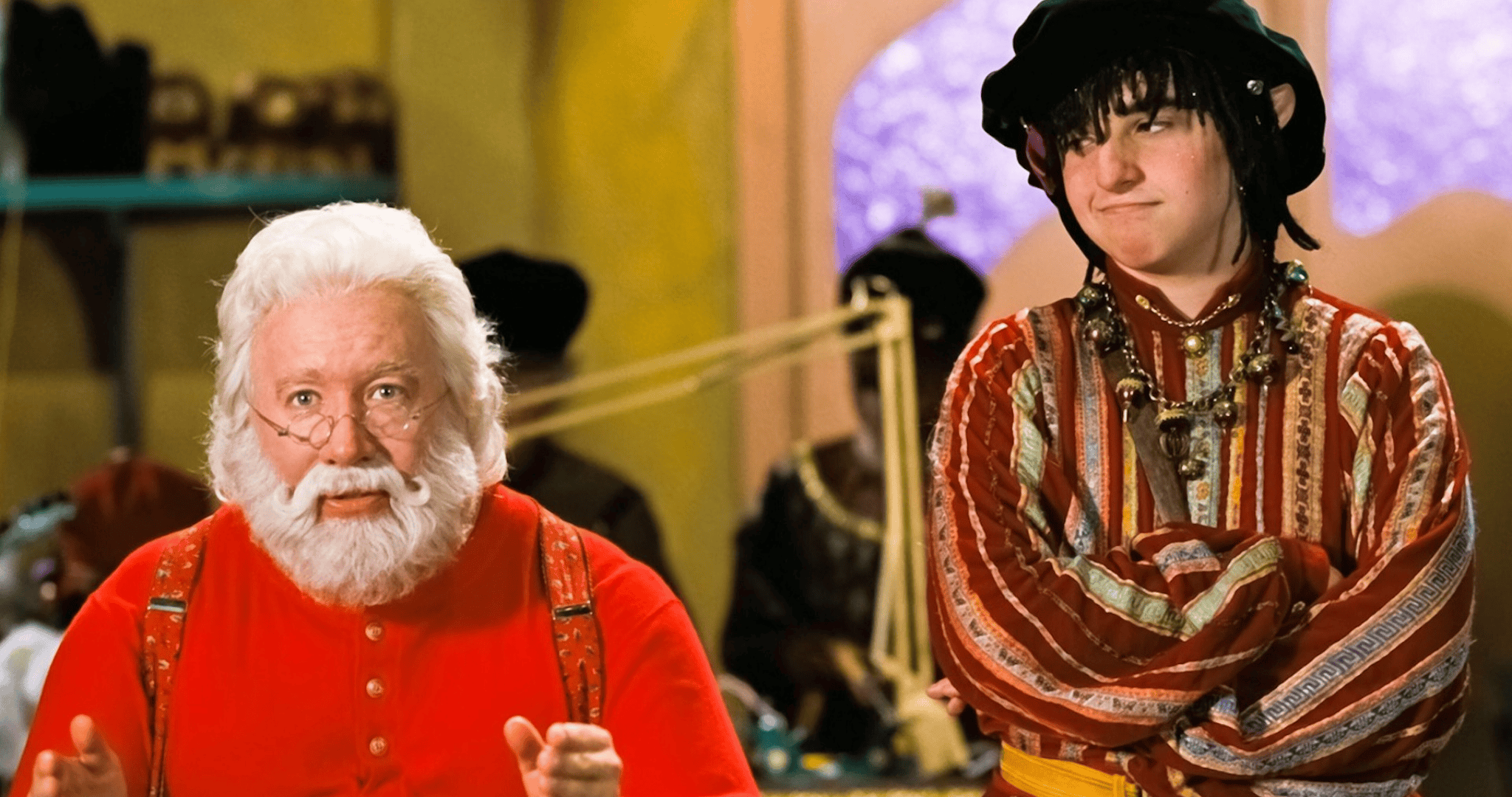
Movies like Home Alone, Elf, Christmas Vacation and The Santa Clause are staples in many households, but what if modern technology had been available? Could some character conundrums been avoided with the help of today’s gadgets?
Here’s how the latest tech could alter the plots of four timeless holiday movies. From tracking whereabouts to simplifying holiday preparations, these films would be much different in 2024.
1. Christmas Vacation: Streamlined Holiday Lights
Clark Griswold’s obsession with creating the ultimate Christmas light display is admirable; however, his efforts led to tangled cords and power outages. Today, Griswold’s outdoor decorating would have been a breeze with the right tools.
Using a Google Pixel smartphone and Wemo WiFi Smart Plugs, Griswold could have automated his display. Additionally, if Clark had fallen, a Google Pixel Watch 3 could have detected the impact and alerted emergency services, potentially preventing a major mishap.
2. Elf: Navigating New York City With Ease
Buddy certainly would have had a smoother trip to New York City and fixed Santa’s sleigh on time if he’d had the Apple gift bundle. With the iPhone 16 Pro, Buddy could have used Maps to navigate to The Big Apple, as well as utilized AI to search for an appropriate gift for his dad. Plus, with the Apple Watch, he could have had real-time notifications that Santa was heading for NYC and be aware of any changes to his route.
3. Home Alone: Tracking Kevin in Real Time
In Home Alone, Kevin McCallister’s parents forget him on their trip, leading to a series of frantic and comedic events. In 2024, with the Verizon Gizmo Watch 3, ranked the best smartwatch for kids by Forbes, Kevin’s mom could have monitored his location in real time via the Verizon Family App, saving her a lot of panic. With the Gizmo Watch, Kevin also could have immediately contacted his family, keeping everyone informed and safe.
4. The Santa Clause: Preventing Exhaustion
In The Santa Clause, Santa was exhausted after a long night of toy delivery. Tech could have helped him avoid that. With the Ultrahuman Ring AIR, Santa could’ve tracked his sleep index, cardio age and overall health to make sure he was in peak condition for the big night. This would have helped him prepare for his journey and feel well rested before, during and after.
The Takeaway: How Technology Could Have Improved Classic Holiday Films
In a world where smart devices can solve so many problems, many moments that have become part of holiday film lore would likely have been avoided in 2024.
As you settle in to watch these classic holiday films this season, it’s fun to imagine how technology could have transformed the plots. After all, who needs to face holiday chaos when the right tools are just a tap away? For more information on the latest tech gadgets featured in these scenarios, visit verizon.com/holidaymediahub or stop by a local Verizon store.
Like a virtual corn maze, maneuvering Raleigh’s ever-growing amount of DTR lots and apps can be overwhelming—but how did we get here? And how do we navigate it?
Ask any Raleigh resident their feelings on going Downtown and you’ll hear the same narrative: Figuring out where and how to park and pay is the worst. Read: an overwhelming maze of public and private parking options people would sooner skip than solve—especially given the costly consequences.
You know the drill. You’re endlessly circling for a street spot before giving up and pulling into a private lot, where you’re forced to find or download yet another parking app to then get gouged for $20—only to return some five minutes late to a ticket upward of ~$125. Such scenarios are playing out across DTR on the daily, prompting residents and visitors to weigh venturing Downtown—where every lot is a puzzle of rates and rules—against alternative live-work-play districts dishing plenty of free parking (think North Hills, Village District, Fenton—though those areas can come with their own lot battles and endless hunts).
So, how did we get here? A quick refresh: Longtime Raleighites may remember the infamous McLaurin Parking monopoly. Rolling out their empire in 1948 on South Salisbury Street behind the Sir Walter Hotel, the McLaurin family was the name in NC parking for 70 years—managing both public and private parking locally, including a city contract of 8,000+ parking spots.
Fast-forward to 2017 when the McLaurins sold their parking conglomerate off to The Car Park of Boise, Idaho. From there, enter the swath of parking management czars we love to loathe today—including Secure Parking, ParkMobile and more. And, with them, the exorbitant rates and fines—aka the measly ~$18 private parking violation from 2015 has septupled to up to $125, with hourly rates currently clocking in at $6+.
Despite the melee, DTR’s popularity peaked this summer, seeing its highest post-pandemic monthly foot traffic. Still, parking accessibility remains a hot-button topic to keep Downtown thriving—and the exorbitant fees, fines and frustration have yielded new efforts to curb the parking fluster.
One idea currently being kicked around includes making the first two hours of public parking free in city-owned garages. “The matter is still under consideration,” explains Parking Superintendent John M. Wynn.
And contrary to public perception, Downtown is actually overflowing with available parking options. “Current supply of parking, particularly off-street, is plentiful and more than meets current demand,” says Rob Murray, communications analyst for the City of Raleigh Transportation Department. And as “private developers are including parking to support their projects, the City of Raleigh does not anticipate building new parking.”
And they shouldn’t. Almost one-third of DTR is off-street parking, easily overshadowing the national average of 16%. So, ultimately, it’s a matter of education and accessibility—from knowing where to park for cheap to navigating the sea of parking apps.
Private vs. Public Lots
The cardinal rule for Downtown parking: Always opt for street and city deck parking. For starters, there’s the convenience. Street parking can be paid on-the-go via the Passport Parking app, and these spots, as well as city-owned parking garages and lots, are cheaper by the hour—not to mention city citation fines start at just $15 if paid immediately. It’s in your best interest to handle city-issued tickets promptly to ward off escalating fines and the boot—which the City can enforce once any vehicle racks up three 90-plus-day-old unpaid citations.
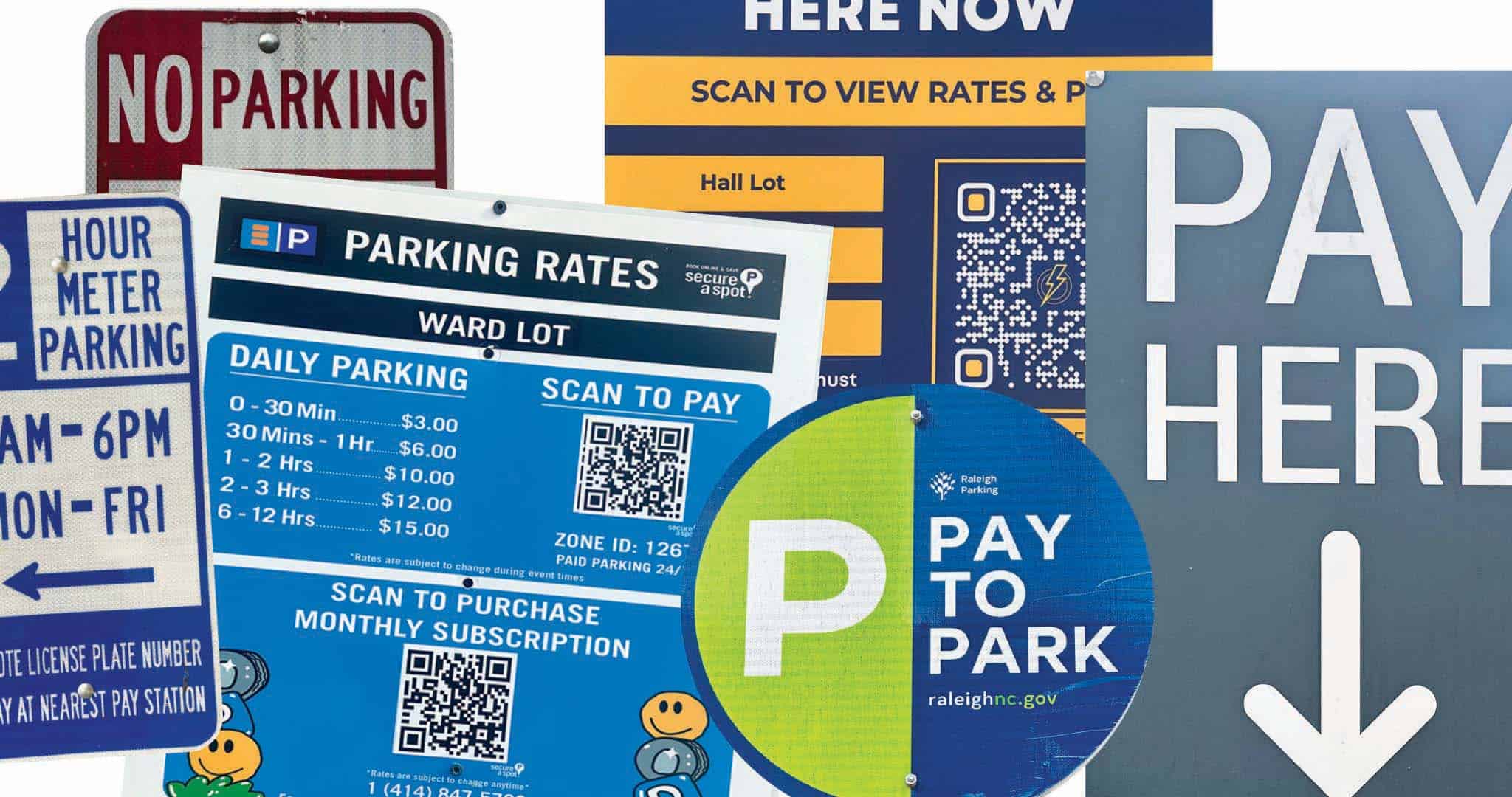
Private lots, alternatively, are infamous for pricey parking, camera-tracking cars and sky-high fines. Beware of multimanaged lots boasting confusing signage with a riddle of QR codes. While they arelegally required to specify which spots are which, it’s your job to figure it out based on your colored wheel stop (aka that concrete block at your front tires).
The lack of legislation involved with private lots has its pros and cons. While it means repercussions for unpaid citations are harder to enforce, it also means lots can charge any amount they wish for hourly parking and violations—and there are few laws defending you when a problem arises. In fact, certain law firms won’t even touch private parking tickets.
And because the number of citations issued is so high, parking ticket scams are more common in private parking lots—especially ones using QR codes to collect payment. Pro tip: If a ticket requires payment via reloadable debit card or wire transfer like Cash App, Zelle or Venmo, it’s a fraud. Always visit the website listed before paying to confirm it’s legit.
Beyond scam alerts, navigating the private lot violations is often overwhelming, including receiving aggressive letters in the mail threatening to impound or immobilize your car a mere 60 days post-ticket. (Don’t forget: Your plate is tied to your home address—and they will find you.) While the parking company cannot hunt down your car and tow it from just anywhere, they can legally tow or boot your vehicle the next time you park in that lot or another lot they manage. While these arguable scare tactics prove obnoxious and stress-inducing, private lots are private property—and if you break the contract (aka the terms and conditions you opted to skip over) the companies are legally permitted to defend themselves—even if it feels predatory.
According to The Car Park VP of Marketing Cory Collins, who manages several private and public lots in Raleigh, violations are not given a flat rate—but based on the offense. “We believe strongly in the importance of keeping an ADA parking space available for those who need it,” explains Collins, “so the violation for parking in an ADA space will be more than for expired time.”
Although The Car Park doesn’t use a collections agency, they, like all other private lots, reserve the right to. “The majority of our revenue comes from folks paying for parking, not parking violations,” adds Collins. “Enforcement is about keeping parking accessible and fair. … Most people choose to do the right thing and pay the violation if they owe it. We’re often lenient and work with folks when there’s a reasonable mistake that’s led to the violation.”
Pro Tips:
Ensure the parking spot color correlates with the color on the sign you scanned.
Verify how long you paid to park in the lot
Camera recordings mean mailed tickets if you try to play the system.
Don’t pull into a private lot at all if you don’t plan to park there
How Raleigh Stacks Up
Fun fact: Relative to other comparably sized cities, the City of Raleigh’s fine is extremely low, starting at just $15—and only charges for Downtown street parking from 8am to 6pm. Meanwhile, cities like Nashville and Kansas City charge to park on the street around the clock, and Sacramento charges $62.50 for parking violations. Ultimately, pricing, fees and location are parking problems that any healthy, thriving metropolis must tackle. So how have other cities handled these growing pains?
What Not to Do:
Pricing based on location. Like Raleigh, New York City uses an app so drivers can pay for parking “in a New York minute”—but, unlike the City of Oaks, metered parking can cost up to $13/hour. Hence, most New Yorkers opt for public transit.
Privatizing more parking. After the infamous $1 billion deal in the midst of the 2008 financial crisis giving private firm control of all metered spots and pricing, Chicago must now buy or rent street spots back if they want to build a bike lane or host a street fair.
Require parking minimums.Atlanta aimed to tackle parking problems via minimums to ensure enough spots for all. Instead, many lots sit vacant on the busiest nights, thus driving up the cost of living, creating heat islands and resulting in lost city revenue.
Best Practices:
Progressive pricing. To increase parking turnover, Austin’s on-street parking is adjusted by the hour—first two hours, $2 each; third hour, $1; each subsequent hour, +$0.50 more than the last—with an hourly maximum of $5.
Collaborative parking.Houston’s Community parking plan expands curb parking, allowing permitted residents and employees to park in metered spots, plus nonpermitted visitors for up to three hours.
Extensive research. In response to the higher demand for parking in its two main districts, Charlotte is slated to implement infrastructure changes based on the research from its 139-page strategic parking plan including studies of 15+ other cities.
When people think of French cuisine, they think of nice restaurants, impeccable service and high-end fare. When Indian food comes to mind, many of us think of a folded-up takeout menu with red cartoon chilies to indicate spiciness.
Chef Floyd Cardoz—an Indian-born, New York-based culinary icon—had a problem with how the Western world perceives Indian food; he also had the dream, talent and gumption to alter this perception.
In late March, the 59-year-old died tragically from coronavirus, but his life’s work remains intact: Cardoz’s vision lives on in the hearts and knife-wielding hands of his contemporaries and peers. His influence is so far-reaching, you can even experience it right here in the Triangle.
I was fortunate to befriend Cardoz following an introduction from a fellow culinary enthusiast. I had watched him winning “Top Chef Masters” and was eager to get into the kitchen with him. He graciously let me tag along as an extra set of hands at a charity dinner. Less than a year later, I became his line cook in Manhattan.
Chef Floyd was more than a great teacher. He taught his cooks to celebrate food at the intersection of culture, history, science and art. He taught us to be thoughtful—even under pressure—to honor our farmers by honoring our ingredients and to treat the dishwasher with the same respect as we’d treat the chef.
Cardoz asserted that Indian food is a powerful voice in global cuisine, the facets of which are infinitely applicable. Although he was classically trained in French cuisine, Cardoz became famous for applying his knowledge and passion for Indian food to the freshest local ingredients.
Raleigh’s own James Beard award-nominated chef, Cheetie Kumar, shares Cardoz’s penchant for celebrating local ingredients as well as his Indian roots. Although most local restaurant-goers consider Garland—Kumar’s outstanding downtown Raleigh restaurant—an Indian restaurant, Kumar defines it as “seasonal-Southern.” She utilizes flavors and techniques from India and Asia, and she likens the cornucopia of North Carolina agriculture to what her parents used to pick up at the markets in Punjab, but her work is entirely in the context of where she is.
Kumar recalls Cardoz’s influence on her from the inception of her cooking career.
“There was permission in [what Cardoz was able to accomplish],” she says. “Every time you see somebody echo something you’ve thought about, and you thought you were the only one thinking, it gives you a sense of confidence and affirmation.” Kumar paused. “It was the same feeling I would get if I saw a woman playing guitar on stage and slaying,” she continues. “I’d be like, ‘Yeah! We can do this!’”
Executive chef Jason Lawless of Durham’s Parizade spent his early career in Manhattan working under some of the country’s best chefs. Although he currently cooks Mediterranean food, the lessons he learned from Cardoz enrich his kitchen life daily.
“His influence is more than a certain dish,” Lawless says. “It’s technique and layering flavor, with sugar, acid and spices. I remember him telling me, something that makes a chef special is adding [hot] chili. Even if you don’t taste the chili, if it’s there, it will bring a dish to a higher level. Most chefs don’t realize that.”
Chef Floyd taught his cooks to use spice almost like salt—to enhance the flavor of the ingredients without overwhelming them. People already do this, to an extent, by adding salt and pepper to food. Chef Floyd encouraged us to refine this habit by diversifying the heat, using chili oils and finely minced fresh peppers instead of (or in addition to) black pepper. This philosophy, like many others he taught, extended far beyond Indian food into everyday cooking.
Cardoz was also a pioneer as an elite chef in the way he lived outside the kitchen.
Chef Eric Gabrynowicz, culinary vice president for the Tupelo Honey restaurant group, recalls his early years under Cardoz.
“Floyd would come into the restaurant early in the morning, work a lunch service, go to the gym for an hour, come back. He’d never throw it in anyone else’s face that he’s taking care of himself, but he was, and you always saw it. When you respect someone so much through food and through your passion and you see the other things they’re doing to keep their mental health and their family life intact—I didn’t realize until later how much that shaped me as a person. Floyd knew to never sacrifice any of the important things and he made sure we were all taken care of the same way.”
Floyd Cardoz is survived by his two sons, Peter and Justin, and his wife, Barkha—as well as by hundreds of people who were lucky to call him “chef” or “friend.” Cardoz also leaves behind a living mission to elevate Indian food to the stratospheres where it belongs and the dozens of beneficiaries of his mentorship who will pass on his uncompromising love of food—and life—to generations of cooks to come.