Dine for good via this fundraising dinner supporting hospitality workers seeking sobriety.
It’s easy to be distracted by the amazing food and drinks at local restaurants and bars—but those people serving you each have their own story, which may or may not involve personal struggles like addiction. Enter Ben’s Friends, a 501(c)(3) nonprofit supporting hospitality workers seeking sobriety that’s kicking off its national fundraising tour with a dinner at DTR’s Oak Steakhouse June 2.
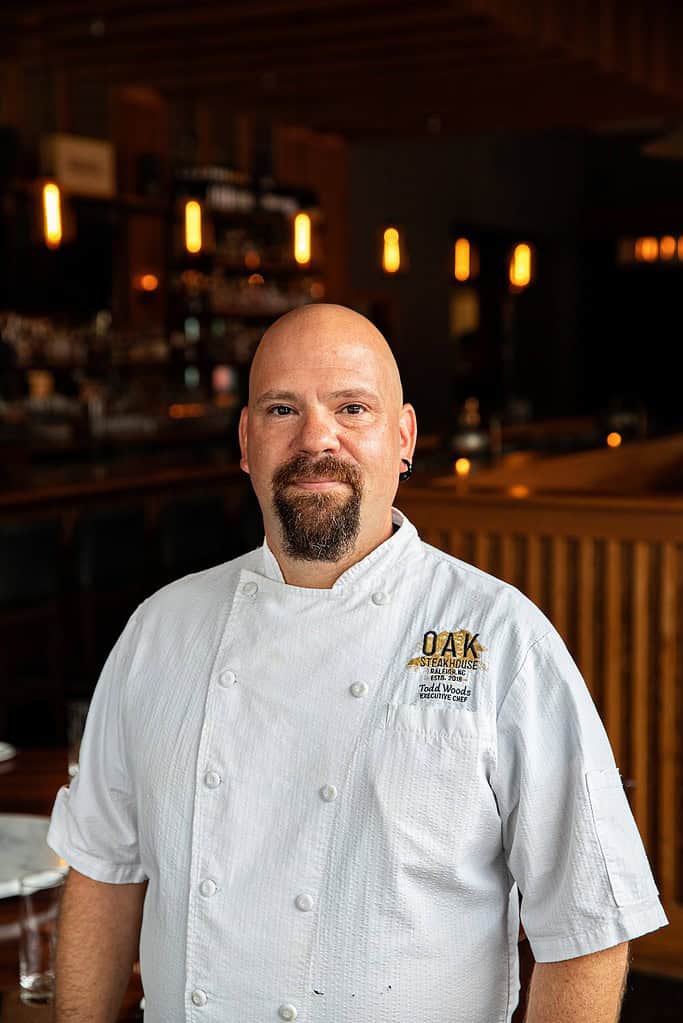
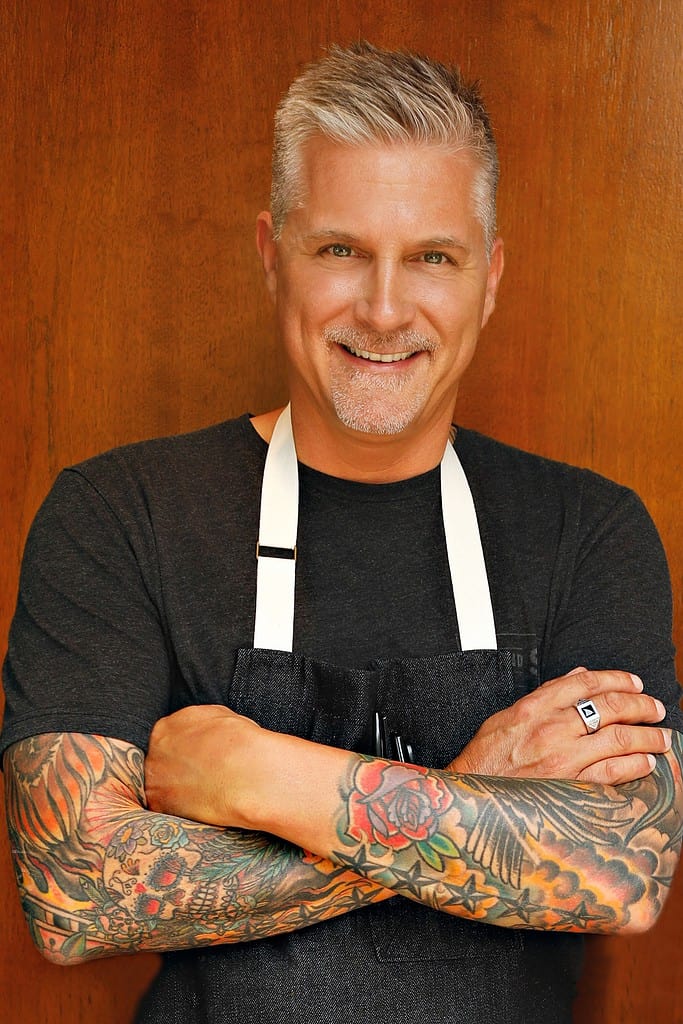
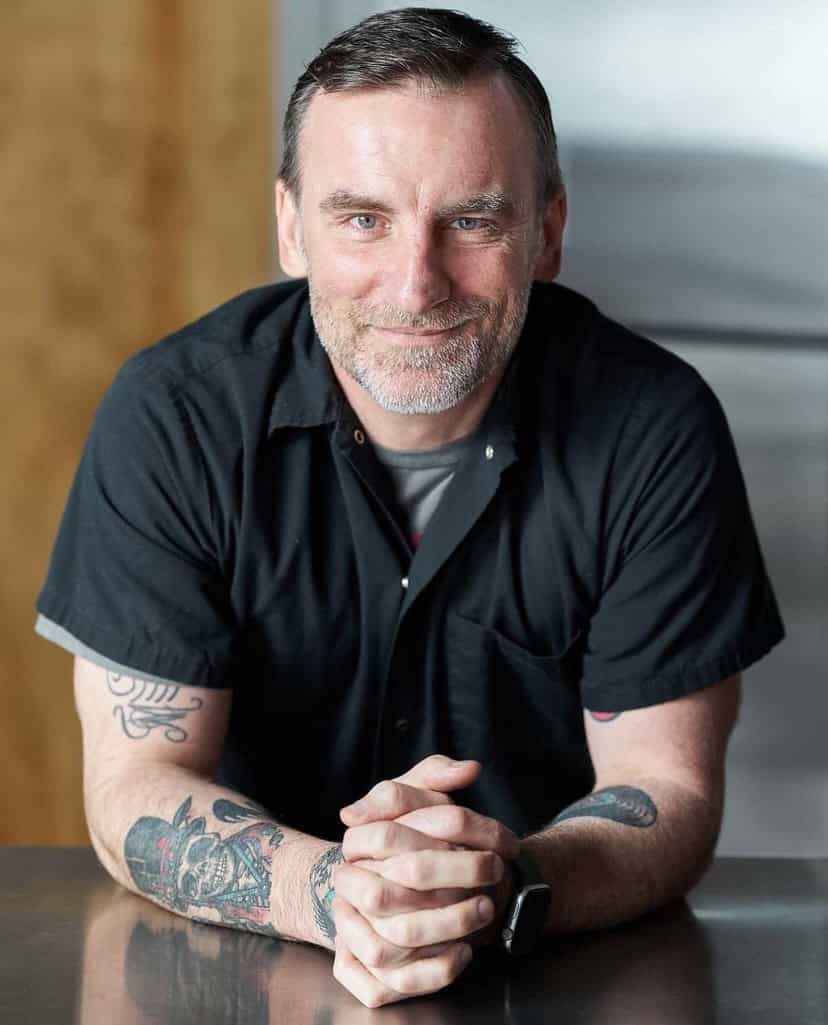
Todd Woods | Photo by Andrew CebulkaScott Crawford | Photo by Jessica CrawfordSam Diminich | Photo by Amanda Loren Studios
Rewinding back to 2016, Ben’s Friends was founded by restaurateur Steve Palmer (of Oak Steakhouse, O-Ku and Colletta fame locally) and restaurant vet Mickey Bakst after former chef Ben Murray took his own life following struggles with alcoholism.
“Ben’s Friends started because both myself and Steve were sick and tired of hearing about restaurant employees losing their lives to addiction or destroying their careers because of it,” says Bakst. “Each time we got together, we shared another story of someone in the industry affected by addiction. We figured if we could create a community of sober restaurant people, many would join us.”
And join them they did, as the org now boasts groups in ~20 cities, including Charlotte, Asheville, Chicago, Richmond, Austin, Charleston and more—not to mention general nationwide meetings held on Zoom daily, plus separate Zoom meetings for men and women on Wednesday nights.
When it came to the fundraising dinner tour, the duo chose Raleigh as the first stop because of Palmer’s restaurants here and his friendship with sober chef Crawford.
“I love supporting my recovery community, especially Ben’s Friends,” says Crawford. “They are making a tremendous impact, offering help and hope to so many in our industry who are suffering from alcoholism and addiction.” Supporting sobriety and our state’s best culinary talent? Sounds like a win-win. opentable.com
Say “bonjour” to Colletta’s just-announced executive chef, Oscar Gnapi! Hailing from Paris, Gnapi will join Indigo Road Hospitality Group’s Italian restaurant at Fenton (slated to open later this summer!) and bring with him 20-plus years of esteemed experience—with stints at restaurants and hotels in Paris, Italy, London, California, Chapel Hill and Cary——covering a diverse range of cuisines.
Photo by Miranda Mounts
“I was raised in Paris with a very large family and am from a culture where cooking was as valued as breathing air,” says Gnapi. For as long as he remembers, Gnapi has pursued the culinary arts. He boasts a degree in the culinary arts from the CEFAA in Villepinte, France, and formal training via an internship in Italy. Following his schooling, Gnapi worked across Europe at five-star hotels including George V in Paris and Le Meridien and SoHo House in London, and has worked with such renowned chefs as Michel Rostang, Daniel Boulud, Bruno Loubet, Pascal Even and Jean-Pierre Gagnaire, to name a few.
Gnapi came to North Carolina in 2007 to serve as the executive sous-chef on the opening team of An: New World Cuisine for three years, before serving as executive chef of La Residence in Chapel Hill in 2017 and at the Unscripted Hotel in 2018. Now, he’s bringing his knowledge of traditional European and Italian cuisine to Colletta.
Translating to “collection” in Italian, Colletta—which will be Indigo Road Hospitality Group’s third Triangle restaurant (joining DTR’s O-Ku and Oak Steakhouse)—will feature a compilation of dining experiences, with a focus on Italian-American dishes. Think pasta scratch-made in-house daily, antipasti, pizza and more, plus a “for the table” dining option curated for a family-style experience.
“I have such a love and appreciation for the culinary arts and have been lucky enough to learn from some of the most talented chefs of our time,” says Gnapi. “I’m excited to deliver a memorable experience at Colletta—a meal any Nonna would enjoy!” Bon appétit!
It’s late afternoon on a weekday at Raleigh’s new, Japanese cuisine focused restaurant O-Ku Sushi, located on the first floor of the Dillon building in downtown’s Warehouse District.
Servers and sushi bar staff, clad in telltale black uniforms, busy themselves with side work and bar prep in the warm, wood-toned dining room, replete with tall windows and funky modern light fixtures. Back in the kitchen, chefs are gearing up for what promises to be another long dinner shift. In many restaurants, the front of the house is the front, the back of the house is the back, and nary the twain shall meet. But at O-Ku, every day, this division is decidedly, deliberately discouraged by a tradition that’s not just reserved for the restaurant’s customers— the simple act of breaking bread.
O-Ku executive chef Richard Fong is running vats of broth, plates of chicken and beef, deep bowls filled with soba noodles, fried dumplings, veggies and bean sprouts, plus spoons, chopsticks and dinnerware, out to a long dining room table that serves as a buffet for the roughly two dozen staffers who have come in to work. Soon, everyone’s lined up single-file, holding their bowls, chattering and bobbing along to Michael Jackson songs, excited, clearly, to enjoy another “family meal” with their coworkers.
“At a lot of restaurants, you’ll see the front of the house and the back of the house don’t really speak to each other like they do here,” Fong says. “This way, everybody gets to know each other, gets a little closer, just like at home, having dinner with your family.”
It can be hard thinking up new ideas of ways to feed everyone before diving into work, Fong acknowledges. With a budget of $50 per day, he’s responsible for meals five days a week, while servers and other staff pitch in and buy and prepare meals for the other two. They’ve had Asian food aplenty, but also Italian dishes, tacos, shawarma, chicken fingers and sandwiches. Everyone seems to agree, the extra effort is worth it for the sense of camaraderie it fosters.
“We all need each other to be successful, so this is one of the best ways to bridge that [front and back] divide,” says Robert Locke, O-Ku’s general manager. “It helps you realize, these are a bunch of people just like you, they do stuff outside of here, they have hobbies and passions and kids. It just helps you connect.”
The concept of eating a family meal before work isn’t unheard of in the restaurant industry.
Raleigh restaurateurs, including Scott Crawford and Ashley Christensen, do similar things with their staffs, and there are even cookbooks available that describe family meals at the nation’s well-known restaurants. But, certainly, few places are so ambitious as to make it a point for their workers to eat together every day of the week. At O-Ku, it’s a tradition that’s become important enough that when the restaurant made the move to start serving lunch in January, it decided to close its doors between 2 and
5 p.m. so that the family meal time could be preserved.
“It’s just baked into the cake of what we do,” Locke says. “It’s part of who we are.”
The Indigo Road Restaurant Group, O-Ku’s Charleston-based parent company, places a premium on taking care of its employees in both small and big ways, says founder and managing partner Steve Palmer. The group, which owns 20 different restaurants in six cities in the Southeast, brings a creative approach to making hospitality jobs attractive to its current and prospective employees.
Along with the family meals, Indigo Road restaurants, including The Oak Steakhouse, slated to open in Raleigh this year, offer their employees services such as free culinary school training, mental health counseling, and even an interest-free loan when they’re ready to make a down payment on a house.
“We believe that if we take care of our workers, they’ll take care of our customers,” Palmer says.
It’s been a winning strategy so far. In an industry where the numbers of service and hospitality workers in the national market have recently been declining due to factors such as long hours, high stress and low pay, Indigo Road has grown, and rapidly, since its inception in 2009.
Chefs, especially, are allowed a large amount of creative freedom in devising menus. Each of the five O-Ku locations—in Charleston, Atlanta, Charlotte, Washington, D.C. and Raleigh—are all designed differently, with different menus, features and specialities according to the chefs’ individual talents. It’s not hard to see, then, why getting a free meal each day before a shift is an attractive option to would-be workers, especially in a restaurant market like Raleigh’s, where the labor pool is limited and competition for talented, reliable workers is near constant.
“We all work in this industry, and believe breaking bread with people is important,” Locke says. “People can cook at home but they come out for an experience. It’s really important for us to do that with each, other too.”