Seven local nonprofits. One shared mission: putting your dollars to work before a setback becomes homelessness.
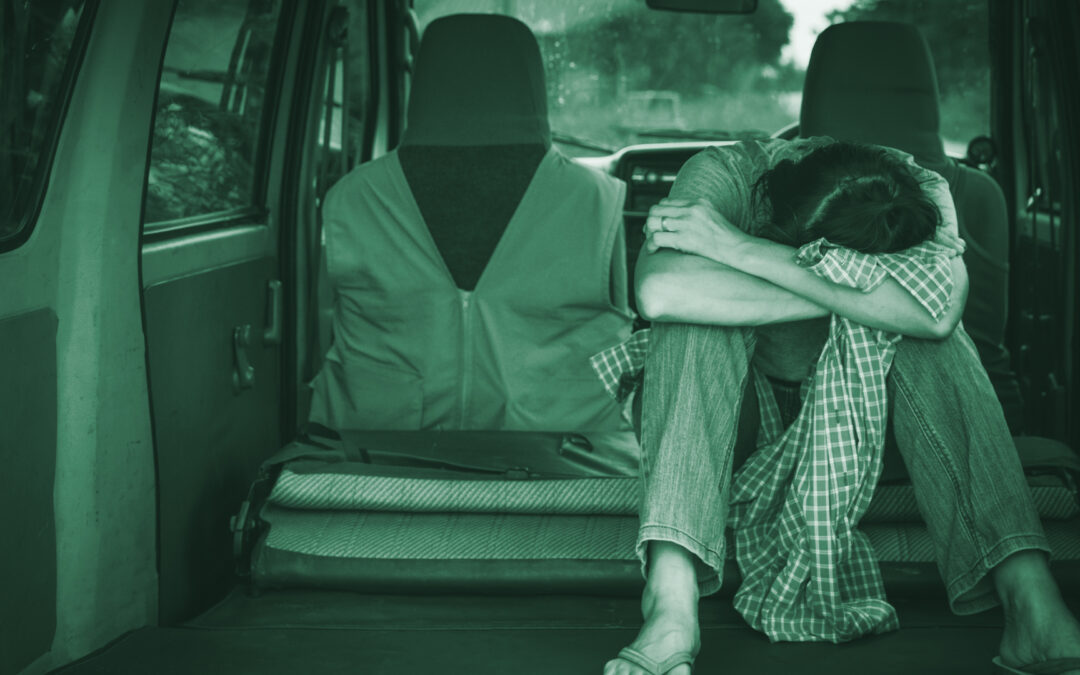
A parked car was never supposed to be home. But that’s exactly where one local mother and her two children found themselves after a divorce upended their lives. Bouncing between their car, emergency shelters and, when she could afford it, hotel rooms, she kept working—and saving—determined to secure a permanent home for her family.
And she almost did. The apartment was within reach. The monthly rent was manageable. But the thousands of dollars required upfront to actually move in weren’t. After everything she’d done right, $3,000 stood between her children sleeping in a car and sleeping in beds of their own.
Her story is far from unusual. So many of Wake County’s housing-insecure neighbors aren’t who you might imagine. They’re working parents, professionals and families who were making it—until suddenly they weren’t. An illness. An injury. A divorce. An unexpected death in the family. One ordinary setback that becomes another, and in a flash, the stability they spent years building begins to unravel.
That’s precisely what RM’s Give Raleigh, in partnership with Pinnacle Financial Partners, was designed to interrupt. The annual 40-day giving campaign raises funds for Cooper Charitable Foundation, which puts those dollars to work through seven local nonprofits helping neighbors stay—or become—safely housed.
For this single mother, that nonprofit was Oak City Cares. A $3,000 Cooper Charitable Foundation grant covered the move-in costs, finally allowing her family to trade nights in parking lots for a permanent home. Today, her children have a safe place to sleep, study and grow—and their mother can focus on raising them instead of wondering where they’ll spend the night.
Ten bucks didn’t pay that $3,000. Neither did $20 or $100. But your $10 was never meant to do it alone. Add it to ours. And your neighbor’s. Your mom’s. Your dad’s. Then add Pinnacle Financial Partners’ dollar-for-dollar match of the first $10,000 raised. That’s what Give Raleigh does. That’s how $10 becomes something much bigger.
Last year, those gifts became $118K+ through Give Raleigh—money Cooper Charitable Foundation put into the hands of those seven local nonprofits that know exactly where a few dollars at exactly the right moment can change the trajectory of someone’s life.
A deposit gets paid. A bed gets delivered. A car gets repaired. A student stays in school. A mother stays housed. That’s the $10 difference. That’s what happens when Raleigh gives together.
Meet the Mission
Seven ways your gift can help keep a Wake County neighbor moving forward.
Family Promise of the Triangle | 1993 Home is more than an address. Family Promise helps families move from cars, motels and borrowed couches into permanent housing through prevention, emergency shelter, rapid rehousing and ongoing support.
The Green Chair Project | 2010 Four walls don’t make a home—a bed, table and chair do. The Green Chair Project transforms empty apartments into homes by providing furniture and essentials for families rebuilding after homelessness, crisis or disaster.
Oak City Cares | 2019 Finding support shouldn’t be harder than asking for it. Oak City Cares connects neighbors with housing, employment, health care, meals and other essential services through Wake County’s one-stop hub for homelessness resources.
Wake Tech Fostering Bright Futures | 2009 You can’t put a price on education—until you can. FBF removes financial barriers through tuition assistance, stipends and wraparound support, helping former foster youth stay in school, earn degrees and build independent futures.
Healing Transitions | 2001 Recovery isn’t a straight line. Healing Transitions provides free peer-based recovery services—from emergency shelter and detox to long-term support—giving people as many chances as it takes to rebuild their lives.
The Carying Place | 1993 Sometimes preventing homelessness is as simple as helping a family through one difficult season. The Carying Place combines short-term housing, financial education and personalized support to help hardworking families achieve lasting stability.
The Women’s Center of Wake County | 1977 Everyone deserves a safe place to begin again. Wake County’s only day shelter for single women provides meals, showers, housing support, case management and life-skills programming to help women move from crisis to stability.
How a missed paycheck, a broken car or one unexpected bill can lead to homelessness—and how Give Raleigh is working to interrupt that story.
She clocks out at 4pm—which means she’s already too late. Too late for the only emergency shelter in Wake County where mothers can stay with their children. So instead, she pulls up in a parking lot for another night at “home” in her car.
But she doesn’t have the life you probably imagine. She has a job. Her child has daycare. She did everything she was told to—and still, it wasn’t enough.
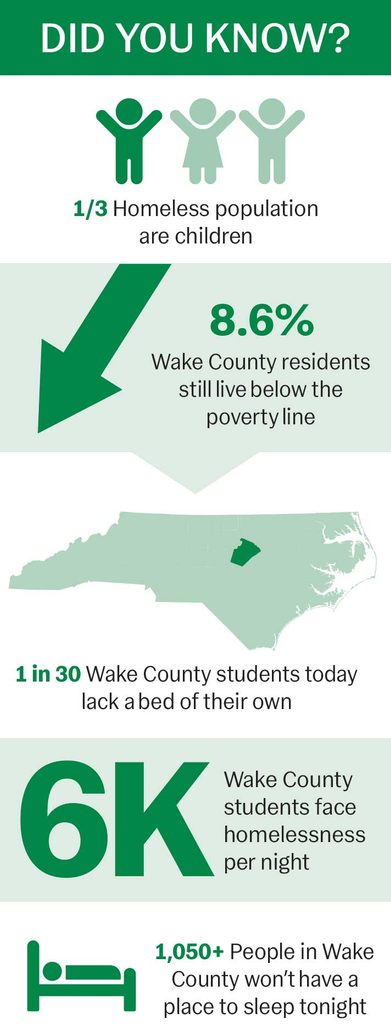
It sounds like an anomaly—but in Raleigh, it’s anything but. Across Wake County, more than 1,000 people are sleeping outdoors or staying in emergency shelters—and the daily waiting list for a bed alone is 120 deep. Behind those numbers are stories—not of people who gave up, but of people who have run out of options: a parent paying $90/night for a motel, a family sleeping in their car, someone choosing between fixing a transmission or paying rent, a domestic violence survivor starting over, a professional who just got wiped out by unexpected hospital bills.
The often-overlooked reality is, most people don’t become homeless because of one catastrophic event. They get there one ordinary setback at a time. The crisis isn’t always losing a home—it’s having no one to solve a small problem before it becomes a devastating one.
That’s where RM’s fourth-annual Give Raleigh comes in. Returning focus to housing insecurity this year, the 40-day giving campaign rallies support for boots-on-the-ground organizations working to keep small setbacks from becoming permanent ones. Kicking off Sept. 1, Raleigh Magazine, in partnership with Pinnacle Financial Partners—which will match the first $10,000—will raise funds for Cooper Charitable Foundation, supporting seven local nonprofits helping keep Wake County families housed, safe and stable.
If you’ve ever moved, you already understand the barrier. Making rent often isn’t the biggest hurdle—it’s coming up with the security and utility deposits, first month’s rent, application fees, and furnishings—all at once. For families already living paycheck to paycheck, those upfront costs can be impossible. Give Raleigh exists to bridge that gap, through locals giving as little as $10 to make a difference.
Efforts like Wake County’s Wake at Home initiative are making meaningful progress moving people from encampments into permanent housing. But local nonprofits say preventing homelessness before it begins remains one of the greatest unmet needs.
Last year, Give Raleighraised $118,180 to help these seven local nonprofits intervene before temporary setbacks became permanent—creating substantial impact in the fight against homelessness. This year, we’re doubling down. Because Give Raleigh isn’t about charity. It’s about intervention. It’s the difference between “I lost my apartment” and “I’m sleeping in my car.”
Meet the Mission
Homelessness is less about who someone is, and more about what happened to them. Last year’s $118K+ raised through Give Raleigh enabled Cooper Charitable Foundation to support seven local nonprofits helping neighbors move from housing insecurity to stability. Meet the missions—and just four of the many families whose stories changed because someone chose to give.
Family Promise of the Triangle | 1993 Home is more than an address. Family Promise helps families move from cars, motels and borrowed couches into permanent housing through prevention, emergency shelter, rapid rehousing and ongoing support.
The Green Chair Project | 2010 Four walls don’t make a home—a bed, table and chair do. The Green Chair Project transforms empty apartments into homes by providing furniture and essentials for families rebuilding after homelessness, crisis or disaster.
Oak City Cares | 2019 Finding support shouldn’t be harder than asking for it. Oak City Cares connects neighbors with housing, employment, health care, meals and other essential services through Wake County’s one-stop hub for homelessness resources.
Wake Tech Fostering Bright Futures | 2009 You can’t put a price on education—until you can. FBF removes financial barriers through tuition assistance, stipends and wraparound support, helping former foster youth stay in school, earn degrees and build independent futures.
Healing Transitions | 2001 Recovery isn’t a straight line. Healing Transitions provides free peer-based recovery services—from emergency shelter and detox to long-term support—giving people as many chances as it takes to rebuild their lives.
The Carying Place | 1993 Sometimes preventing homelessness is as simple as helping a family through one difficult season. The Carying Place combines short-term housing, financial education and personalized support to help hardworking families achieve lasting stability.
The Women’s Center of Wake County | 1977 Everyone deserves a safe place to begin again. Wake County’s only day shelter for single women provides meals, showers, housing support, case management and life-skills programming to help women move from crisis to stability.
Real People, Real Impact
Where Every Dollar Goes
The Green Chair Project $20K granted 136 people supported 72 beds/cribs provided for children 47 households received Essential Home Furnishings Package
If it can happen to Tristan, it can happen to anyone. Earning $85K+ a year with a job, apartment, car and beloved pup Lacy by her side, it was a sudden migraine on an otherwise ordinary workday that brought it all crashing down. After leaving work sick, Tristan blacked out behind the wheel and crashed into a median—and in the aftermath, lost her job, car, apartment and even her dog. “I never knew from one day to the next if I was going to live or die,” she recalls. But with help from The Women’s Center, including Cooper Charitable Foundation funding for her first month’s rent, application fee and security deposit, Tristan found her footing—and a new apartment. Then The Green Chair Project stepped in to turn those four walls into a home, furnishing the space where she was finally reunited with Lacy. Today, she’s not just back on her feet—she’s engaged to her childhood sweetheart and volunteers twice a week at The Women’s Center, helping other women find their way forward. “None of this would’ve happened if it wasn’t for all of you,” she says.
Oak City Cares ~$43.4K granted 35 households helped 35 deposits and move-in costs covered for families moving into stable housing
A parked car was never supposed to be home. But that’s exactly where a local mother and her two children found themselves after a divorce upended their lives. Bouncing between their car, emergency shelters and, when they could afford it, hotel-hopping, she worked tirelessly to save enough for a place of their own. Even then, the upfront move-in costs remained out of reach. Until a $3K Give Raleigh grant through Cooper Charitable Foundation and Oak City Cares changed that—finally unlocking the front door to a permanent home. Today, her children have the stability every child deserves: a safe place to sleep, study and grow. And one mother can finally spend her energy raising her children instead of wondering where they’ll sleep—all because someone chose to give.
The Carying Place ~$7.5K granted 3 families supported Paid emergency funds for transportation issues
For a local preschool teacher and single mother of three, an unexpected car repair to the tune of several thousand dollars threatened to undo years of hard-won financial stability. A 2021 graduate of The Carying Place, she had a stable home, full-time employment and even an emergency fund—until the unexpected expense far exceeded that safety net. Rather than forcing her to choose between reliable transportation and wiping out her savings, support through Give Raleigh and Cooper Charitable Foundation helped cover the necessary repairs. But the impact went far beyond fixing a car: She could still get to work, and support her children and keep her family moving forward—all while protecting the progress she’d worked so hard to achieve.
Family Promise of the Triangle $20K granted 12 people (5 families) helped 4 rental arrears that kept families from being evicted 1 family received security deposit and first month’s rent for permanent housing
Finding a home was only half the battle. After successfully transitioning into permanent housing, a local mother of two thought the hardest days were behind her. Then complications from Stage 5 kidney disease forced her to take a leave of absence from work, leaving her unable to keep up with rent. Just when everything she’d rebuilt was at risk of slipping away, Family Promise—through Give Raleigh and Cooper Charitable Foundation—helped keep her family safely housed. Today, she’s back at work, receiving in-home dialysis and can spend her energy focusing on her health and her family instead of fear and instability.
There’s still time to give to our annual Give Raleigh campaign.
Let me weave you a tale. A Raleigh professional—just like you and me—left work early one day with a migraine. Vision blurred, she swerved into a median—totaling her car, crippling her ability to work, and ultimately costing her job and home.
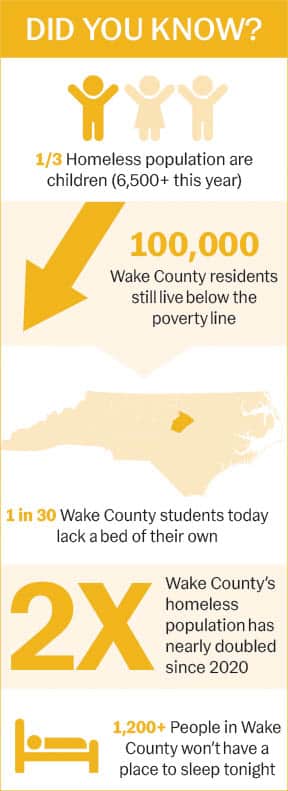
Just one of our 1,200 neighbors without a safe place to sleep, hers is the real face of homelessness. “I never knew from one day to the next if I was going to live or die,” she said. Homelessness isn’t a headline—it’s human: Your child’s teacher. A local fireman. The grocery cashier down the street. Your favorite Uber driver. These are the couch surfing, car-sleeping and motel-hopping neighbors who make up the local homeless population—nearly doubled since 2020 alone.
If you’ve ever moved, you get it. The struggle isn’t the monthly payment—it’s the upfront costs: security deposits, first month’s rent, down payments, application fees. Through Give Raleigh, Cooper Charitable Foundation grants remove those barriers via seven local nonprofits that help families, foster youth, women in crisis and those in recovery move from uncertainty into stability. For them, these grants aren’t charity—they’re a fresh start.
“We can’t just be out there for ourselves,” said CCF Executive Director Mary-Ann Baldwin. “We have to work together.” … So, please. Don’t just flip the page. Swap today’s latte for $10—or multiples of 10, if you can—by Nov. 10 at giveraleigh.com.
Bonus: TowneBank/Towne Insurance will match the first $10K, so your gift goes twice as far. Together, we can make sure no one has to wonder where they’ll sleep tonight.giveraleigh.com
Guide Your Giving
CCF’s small grants mean big impact. Support the organization that hits home by picking from these seven CCF partners at giveraleigh.com.
Equips families facing homelessness, crisis or disaster with the essentials to rebuild their lives Furnishings • appliances • cookware • household essentials + decor
Empowers former foster youth to earn degrees, launch careers and build independent lives Tuition • fees • stipend • mentorship • comprehensive support system • integral life skills • financial guidance
One-stop shop connecting individuals and families at risk to housing, employment and health resources Coordinated care • meals • showers • laundry • public computers + phones • urgent medical services • public + mental health services • youth assessments
Provides single women and their families a day shelter to prevent and end homelessness Meals • laundry • showers • clothing • basic needs • primary + behavioral health care • counseling • day storage • housing support • instructional and enrichment workshops • case management
“Our vision is to ensure that everyone has a chance for a better life. Safe and stable housing is key. Working together, we can help those in need access stable housing. Your generosity makes a difference.” —COOPER CHARITABLE FOUNDATION
Housing vulnerability is easily the biggest issue facing our city—and this year, our annual Give Raleigh campaign is dedicated to the cause, launching Oct. 1 in partnership with the Cooper Charitable Foundation and TowneBank + Towne Insurance. Join us for the official kickoff event at Birdie’s Barroom & Kitchen Thursday, Oct. 2, from 5–7pm in an effort to help secure safe, stable homes for neighbors. Tickets for the kickoff event are on sale now to benefit the Give Raleigh campaign. The evening will also include food, beverages, live music from Adam Lee Decker, and an online auction with some super exciting prizes (!). Cooper Charitable Foundation serves housing stability grants to the following, which touch housing vulnerability across all demographics and needs:
Over 1,200 people in Wake County won’t have a place to sleep tonight. That number isn’t just a statistic—it’s a father, a single mother, a young adult trying to finish school, a hungry child, a neighbor or colleague, a family facing a fight for stability.
The solution is simpler—and closer—than many realize: The biggest barrier to housing isn’t monthly rent. It’s upfront costs like security deposits or first and last month’s rent. “There is housing around us. It’s just not always affordable,” says CCF founder and namesake John Cooper. CCF Housing Stability Grants remove those barriers, providing bridge funding that turns the impossible into a reality.
Ranging from $531–$5,500, these grants give people solid footing and a fresh start—empowering seven local organizations to deliver life-changing support at every stage of need. From assisting the unsheltered through Oak City Cares to offering women safety, stability and basic needs at The Women’s Center to helping children and families access permanent housing and support services through Family Promise of the Triangle, the reach is wide. Grants also fund addiction-recovery housing via Healing Transitions, help foster youths transition to living on their own through Wake Tech’s Fostering Bright Futures program, provide essential home furnishings to people coming out of homelessness or crisis through The Green Chair Project, and give working families in Cary short-term housing and services through The Carying Place—because “a couch is not a bed. A car is not a dwelling. A hotel is not a home.”
Recently, 10 such grants helped 21 people move into stable housing: A 76-year-old woman who has bounced from shelters to her car to the DTR streets for 10 years; a 34-year-old overcoming addiction; and a 73-year-old who suffered liver failure and cares for her daughter and granddaughter. All of them can afford their monthly rent—what they needed was the security deposit leg up.
The simple reality: Homelessness isn’t just a headline—it’s a human being. These people have faces. They have names. They have stories. “I never knew from one day to the next if I was going to live or die,” says a local who, after leaving work with a pounding migraine, drove into a median—an accident that cost her both her job and apartment. “The Cooper Foundation paid my first month’s rent, application fee and security deposit—they help you with every single thing you need to get back on your feet,” she says from the comfort of the furnished home she now shares with her “guardian angel” pup, Lacy.
These are just a few of the very real examples of how, together, our dollars amount to very real results. This year, Give Raleigh isn’t just about giving hope—it’s about giving security and a fresh start. In honor of Raleigh Magazine’s 10th anniversary, we’re calling on our loyal readers and community to give $10—or multiples of $10.
With your generosity, whether a Hamilton or hundreds, we can continue transforming lives across Wake County, one stable home at a time—and thanks to TowneBank/Towne Insurance’s generous match of the first $10,000, every single dollar you give has double the impact. Please give whatever you can, even $10—because every dollar counts, and because no one should have to wonder where they’ll sleep tonight. Through Nov. 10, giveraleigh.com
“My grandmother’s unconditional love is the most precious gift anyone has ever given me. So, I started the foundation to honor her, to continue her tradition of helping others.” —John Cooper
Heart of the Story
For CCF founder John Cooper, the fight against housing insecurity is deeply personal. Growing up in a modest home, he witnessed firsthand the weight of financial strain—and how easily stability could slip away. His mother juggled multiple jobs while enduring domestic violence, and his grandmother lived on a meager fixed income—yet provided the stability that allowed him to pursue college and build a career. After his grandmother passed, Cooper sought a way to honor her, founding the Cooper Charitable Foundation to ensure others wouldn’t have to face the same uncertainty alone. “She provided a lot of stability for me in a childhood that was often chaotic,” he recalls. Through CCF, he is turning his own story into a lifeline for others, breaking down barriers so everyone has the chance—and the ability—to find not just shelter, but dignity and hope.
Guide Your Giving
CCF’s small grants mean big impact. Support the organization that hits home by picking your partner from these seven CCF partners at giveraleigh.com.
Family homelessness is often hidden. Instead of street corners, many families are in cars, motels or couch surfing—struggling quietly under the weight of shame and stigma. Yet families with children make up nearly a third of the homeless population. That’s where Family Promise steps in, providing prevention, emergency shelter, rapid rehousing, transitional housing and aftercare programs since 1993 to help families move into safe, affordable, permanent homes. Because every child deserves more than a car seat or a couch to call home. familypromiseofthetriangle.org
A home is more than four walls and a concrete slab—it’s a bed to sleep in and a table to gather around. But in booming Wake County—one of the fastest growing counties in the nation—nearly 100,000 residents still live below the poverty line, unable to afford basic household furnishings. The Green Chair Project bridges that gap—providing beds, tables and essentials that transform empty rooms into homes since 2010 for families overcoming homelessness, crisis or disaster to reclaim stability and dignity. thegreenchair.org
Addiction touches us all: a parent, partner, friend—even ourselves. And it rarely looks the way we expect. “Always open, always free, always everyone, always another chance, always community”—with special emphasis on the homeless, uninsured and underserved—Healing Transitions has been connecting with people on their terms since 2001 with innovative, on-demand, peer-based recovery services: from emergency shelter and nonmedical detox to long-term support and sustained sobriety, rekindling a person’s ability to return to a meaningful, productive life. Because recovery often takes many tries, they believe in unlimited chances—until someone wakes up sober, employed and hopeful again. healing-transitions.org
Every night, hundreds of Wake County neighbors face the uncertainty of sleeping outside. Oak City Cares meets people where they are, offering meals, showers, laundry, coordinated care and—most importantly—hope. As the central hub for homelessness services in Wake County, they have been bringing together nonprofits and county agencies under one roof since 2019, helping individuals and families navigate housing, employment, health and hunger. By coordinating care in one DTR location, the “one-stop-shop for individuals and families at risk” works to make homelessness rare, brief and nonrecurring. oakcitycares.org
A young adult aging out of foster care often faces the world alone. Covering tuition and fees, plus stipend, Fostering Bright Futures helps students focus on college classes instead of where to sleep at night, in turn decreasing the number of dropouts among foster youth. Since 2009, supported by the Wake Tech Foundation and numerous community partners, the program serves a comprehensive support system that removes barriers to education and independence by providing integral life skills and financial guidance—empowering former foster youth to earn degrees; pursue careers; and build stable, self-sufficient futures. waketech.edu
Imagine a woman finally tucking her children into a warm bed, knowing tomorrow won’t be another fight for survival. For single women escaping homelessness, every day is a battle for safety and stability. The Women’s Center of Wake County provides housing support, counseling and life skills that turn fear into hope, survival and self-determination. As Wake County’s only day shelter for single women, TWC has been serving meals, showers, laundry, health care connections, case management and more since 1977—creating a pathway from crisis to security and transformation. wcwc.org
When you think of homelessness, do you imagine teachers, firemen, grocery cashiers or your favorite Uber/Amazon driver? Wake County’s homeless population has nearly doubled since 2020, with over 6,500 children experiencing homelessness—and their parents are people just like these. That’s where The Carying Place comes in—empowering hardworking families through short-term housing, life skills training and wraparound support to build financial literacy, housing stability and the tools necessary for lasting independence since 1993. Because “a couch is not a bed, a car is not a dwelling and a hotel is not a home.” thecaryingplace.org