Dining with the Wolfs

Dining with the Wolfs

Capital Club 16 is a labor of love and a peek into the past


Passing through the curtained vestibule of Capital Club 16 is like stepping back in time to yesteryear, a golden age, the good old days. Soaring ceilings, dark wood, antique paintings and expansive windows lend the space on the ground floor of the historic, Art Deco-style Capital Club building a classic feel; it’s a timelessness that’s reflected in the restaurant’s menu, which brims with hearty but refined fare.

Owners Jake and Shannon Wolf opened the downtown eatery the better part of a decade ago with an old-fashioned aesthetic and a perennial desire to feed their community.

“Building something from the ground up, having it be worth its weight and creating an energy, creating a vibe, creating a place where people can come hang on a special occasion…and seeing it take off and become what it’s become, is rewarding,” says Jake Wolf, who is also the executive chef.

Photo by Jason Wolonick

Guests come for the food, a mix of traditional American and European dishes with a German influence, and often leave as friends.

“We’ve met so many people who came in as customers and now they’re good friends of ours,” says Shannon Wolf, who runs the back end and plans the restaurant’s many events.

This summer, the co-working community HQ Raleigh expanded into the Capital Club building’s top five floors, giving the space a makeover and a shot of enthusiasm with HQ members adding to Capital Club 16’s already lively business.

“We’re excited that the building has this new life and energy,” Shannon says. “You can tell that they all love being here.”

Jake and Shannon first met growing up together in Southern Pines. They went their separate ways, he to culinary school at The Culinary Institute of America at Hyde Park, and she to the University of North Carolina at Chapel Hill and then to Furman University in South Carolina before earning a master’s degree in writing from the University of North Carolina at Charlotte.
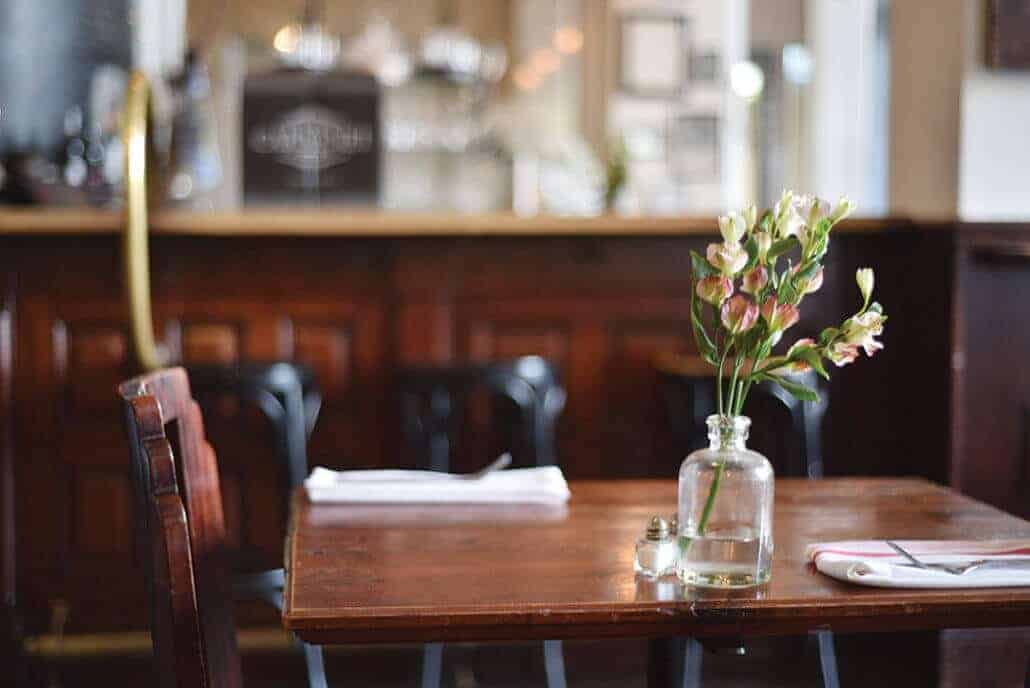
Photo by Jason Wolonick

Ten years later, they reconnected. By then, Jake was an experienced chef with stints in Atlanta, Telluride, Boston, and at a destination hotel in Schwendi, Germany. Shannon was living in New York City, working as a writer and producer on shows for networks, including Oxygen, Discovery and CBS. Jake moved to the Big Apple to be with Shannon, but when she became pregnant with their son, they moved back to North Carolina with their dog Tiny, a Brussels Griffon they call the “queen of the house.” They decided to open their own place.

“We looked at other areas, other towns, but we really liked the energy here in Raleigh,” Jake says. “There was a lot of restaurant activity going on (at the time) and we liked downtown.”

The couple’s restaurant vision shifted as they toured various listings but when they viewed the space at the corner of Martin and Salisbury Streets, they knew exactly what they wanted Capital Club 16 to be.

“We just fell in love with it,” says Jake. “We were still living in New York when we signed the lease so then we had a really fun time going around New York City trying to figure out some decor items that would fit in this place.”

They chose furnishings with history: Art Deco chairs from the now defunct Horn and Hardart automat, a restaurant with banks of coin-operated compartments filled with single-serve sandwiches and pies; tables built from salvaged North Carolina-milled heart pine lumber; a bar top crafted of wood once used to build docks along the Neuse River; and a bar and backbar made from reclaimed wood from the famous Lüchow’s Restaurant, a onetime mainstay in New York City that remained open for a century.

The couple decorated the walls sparingly, with family paintings and meaningful mementos, and they carried the heirloom idea through to the menu. The kitchen offers legacy recipes, such as Jake’s grandmother’s sausage gravy—a popular dish for Sunday brunch—as well as sausages and dumplings he learned to make in Germany.

The menu also offers seasonal and locally-sourced produce from area farms, including Raleigh City Farm, Laurel Branch Gardens and Farmers’ Collective, plus regionally-raised meats, sausages from Weeping Radish and Carolina coast seafood from Locals Seafood.

Photo by Jason Wolonick

Dishes are eclectic, with a mix of carnivore and vegetarian fare. Items like the Farmer’s Veggie and Rice Bowl and The Sparrow sandwich with Carolina Moon brie, provolone, spinach, apples, caramelized onion and sunflower seeds share billing with the Bavarian Sausage Platter and the Rahmschnitzel. The brunch menu boasts favorites like the Steak and Eggs, a full English breakfast and Challah Bread French Toast with bourbon syrup and a cheese grit cake.

Capital Club’s drink menu is well-curated, with local and European beers, wines and classic cocktails, including the Old Fashioned and the Dark and Stormy. It’s no wonder the restaurant hops on the weekends, with busy dinners and bustling Saturday and Sunday brunches.

“What we do here is what we would do at home, what we’ve always done,” says Jake. “It’s a very comfortable feel, a culmination of different places that I’ve cooked and the food that I like to eat, and the food that Shannon likes to eat…We’re very happy here, and it’s a fun thing to be able to work for yourself and with your partner, and I wouldn’t want to change any of it.” ■

Sushi For Good

Sushi For Good

It may sound like a dream come true… and it sort of is! Cowfish Sushi Burger Bar is introducing sushi for a good cause benefitting the Ronald McDonald House of Durham and Wake until March 31.

Every time you order “The Roll That Love Built,” $2 goes to helping keep families close to their children while they are in the hospital.

“We wanted The Roll That Love Built to be extra-special,” said The Cowfish Director of Marketing and Guest Relations Jennifer Brantley. “Our goal was to make this roll stand out. We hope all our sushi-loving guests will order TRTLB, as we’ve been calling it, before the end of March – and that they’ll love it so much the first time, they’ll return and order it again. When it’s gone, it’s gone for good.

The TRTLB is created with crispy shrimp tempura and kani wrapped in seaweed and rice, topped with raw tuna, hamachi (Japanese amberjack), eel sauce and tobiko (flying fish roe).
thecowfish.com

Shuck, Slurp & Sip: Savoring Raleigh’s Oyster Bars

Shuck, Slurp & Sip: Savoring Raleigh’s Oyster Bars

No matter how you shuck it, oysters are polarizing. For all those who consider raw oysters a delicacy, just as many are turned off by slurping a live sea creature from its shell. But the tide is shifting, and oysters are getting more love now than ever before.

Partly, it’s because raw bars are trendy—oysters on the half shell are all over restaurant menus and Instagram feeds. Another reason is because oysters are safe to eat year-round. Yet another is likely because the average oyster eater is getting younger, which syncs with Raleigh’s booming population growth as jobs in tech and research sectors attract young working professionals.

“When you combine the availability of local, fresh and sustainably-harvested oysters with the rapidly growing food trend of raw bars, it creates a niche growth area for restaurants,” says Lin Peterson, co-founder of Raleigh-based Locals Seafood, which sources North Carolina seafood—including wild and cultivated oysters—exclusively. And, with modern, commercial oyster farming and refrigeration methods, you can forget the rule about eating them only in months containing “r,” though it still applies to wild oysters.

In Raleigh, 42nd Street Oyster Bar, founded in 1987, was first on the scene and traditionally catered to the legislative crowd. Though the restaurant remains true to those roots, executive chef Joe Rohrer is glad to see places like St. Roch Fine Oysters + Bar and The Cortez Seafood + Cocktail opening. All three now cater to a shifting demographic of discerning diners with diverse palates.

“When I moved here, downtown was a ghost town,” Rohrer says. “There were a couple of dive bars and that was it. Now you can eat at a different restaurant downtown every day for months and find something good and unique.”

Indeed, Raleigh is cementing a reputation for its vibrant culinary scene, appearing on list after list of top places for foodies.

“Now, we can specialize in North Carolina oysters and showcase the sea-to-table recognition that Raleigh deserves,” says Oscar Diaz, executive chef at the Cortez.

So, what makes North Carolina oysters so special? It’s our merroir, or marine environment.

“A lot of people don’t know that all Atlantic coast oysters are the same species—Eastern,” says Locals’ Peterson. “Just like wines can be made with the same variety of grapes, [oysters] take on different flavors depending on where they’re grown.”

As filter feeders, oysters absorb what’s in their environment and salinity; vegetation and water temperature can all affect how they taste. Oysters grown closer to the ocean taste saltier, whereas those harvested from river beds are less briny. If a certain strain of algae is growing nearby, oysters can taste oniony, like wild ramps; if it’s a particular blue algae bloom, oysters can develop green grills and a truffle-like taste, as with prized Cedar Island Selects.

Whether you already love them or are bivalve-curious, there’s no better time to find oysters locally. Here’s where, when and how to enjoy them and what to sip while you slurp.

42nd Street Oyster Bar

When Rohrer started at 42nd Street a decade ago, North Carolina oysters were scarce. Now, he can choose from a dozen cultivated varieties, including sweet, buttery Chadwick Creeks, or Carolina Pearls, briny upfront with a sweet finish. Rohrer’s favorite wild oysters include briny-but-buttery Stump Sounds and Lucky Suckers, whose sweet finish make them perfect for oyster newbies. (If raw oysters aren’t your thing, order steamed Virginia oysters.) A bone-dry white wine is a classic pairing or try a North Carolina craft beer, such as the citrusy Foothills Jade IPA. Enjoy $1 oysters during happy hour Monday through Friday from 5—7 p.m. at the bar and in the cocktail lounge.

St. Roch Fine Oysters + Bar

Growing up in New Orleans, owner and chef Sunny Gerhart always loved oysters but since he opened his own restaurant, he’s developed an affinity for North Carolina bivalves. His favorite? The Wild Pony, small and meaty with a beautiful, elongated shell. Roasted oysters are available too, a nod to Gerhart’s NOLA roots. Get them “collar’d,” with smoky collards, Tasso ham and chili flakes; “pimento’d,” with smoked pimento cheese and pickled jalapenos; or “BBQ’d,” with cayenne, butter and fresh herbs. Champagne is a sure bet, as is the crisp Muscadet. Oysters are $1 all night Tuesdays and every day from 5—6 p.m.

The Cortez Seafood + Cocktail

Diaz created the type of place he’d want to hang out post-shift, with oysters, rosé and ceviche. The Cortez offers a rotating roster of three North Carolina oysters, including medium-briny Pamlico Bounties and super briny Core Sounders. If you’re new to raw oysters, Diaz recommends trying your first with Tabasco. We’re convinced the rosé mignonette will convert anyone into an oyster lover. Or, try the “all dressed up” option, topped with finely diced bell peppers, cucumber and serrano peppers, and doused with lime juice, hot sauce and ceviche juice. Pair with the sparkling Lamberti Rosé. Get $1 oysters Tuesday through Sunday from 5—6 p.m. ■

Glossary

Locals Seafood’s Lin Peterson shares the lingo you need to order, slurp and savor oysters.

Brininess/Salinity: How salty the oyster tastes/how salty the water is where the oyster was harvested

Cup: Refers to the size and depth of the shell, indicating where or how the oyster was grown

Finish: The residual taste of the oyster, revealing additional flavors and clues to its merroir

Liquor: The naturally-occurring liquid (mostly sea water) surrounding the oyster meat inside the shell, expressing brininess

Merroir: Coined from terroir—a wine term used to describe how environment affects taste—for the marine environment. Water, nutrients, salinity, climate and ocean conditions all affect an oyster’s taste and texture

Mignonette:
A condiment made of minced raw shallots, vinegar and pepper, served with raw oysters to cut brininess

Naked:
An oyster eaten
without accompaniments

On-the-Half Shell: Oysters which have been shucked (removed from their shell) and served raw on one half of the shell on a bed of crushed ice; typically sold by the half dozen or dozen

Water Woes

Water Woes

I love Raleigh restaurants. I really really do. But one thing I do not love is when they set the table with teeny-tiny water glasses. I drink a lot of water. A LOT. When I’m seated at a table at any one of our fine establishments and discover a precious 6 oz. glass, I experience a feeling of annoyance mixed with panic; I am immediately concerned that there’s simply no way my server will be able to keep up with my water consumption. Recently at a local restaurant, I found myself in this situation so I proactively requested that my server might consider leaving the water pitcher on the table. When she informed me that she would need to go ask the manager, I was dismayed. She returned with apologies and said she would be unable to leave the bottle, with no further explanation. I was stunned. This establishment was not so fancy that the water would detract from a fine-dining experience. My husband even pointed out that the French-bistro-looking bottles with the little rubber stoppers begged to be set out on the tables. To her credit, our server did a great job of refilling my glass, but honestly, it seemed a needless hassle for her run herself ragged just to keep me hydrated. So if you’re not going to allow your customers to self-serve, please consider giving them bigger water glasses. Your thirsty patrons will thank you for it.

– Ele Roberts

The Restaurant Guru

The Restaurant Guru

Dear Restaurant Guru,

Last Tuesday, my husband and I went to dinner. We were seated immediately by the hostess. She gave us menus but we waited and waited and no one came to the table. It was over 15 minutes before anyone came to the table to speak to us or offer to get us a drink. It seemed like a very long time to us… we thought of leaving. How do you know when you’ve waited too long? What should we do next time?

Dear Waiting4Waiters,

I feel for you. There’s a lesson I give to my new hosts during training: “Pacing is the most important key to our success. If you seat everyone at once, the kitchen gets backed up, the servers get frazzled and the guests get left alone.”

Just because there are open tables in the restaurant doesn’t mean they all need to be seated. Each night is unique and should be treated as such. Sometimes a large party is running 30 minutes late and an unusual amount of walk-ins (people without reservations) drop in.

A guest would rather wait to be seated for 30 minutes, than be seated and left alone for 10 minutes. We (the restaurant and the guest) haven’t completely entered our dining contract until you have been seated. Once your butt hits wood, it’s game-on… or at least it should be.

There’s no good reason that you waited so long. I’m sure the place was busy and the server sections may have changed.

Either way, it was a communication breakdown. Give them another try.

— Max Trujillo

Host of the NC F&B Podcast.