Not-so-fun fact: Fashion has a waste problem. Beyond contributing ~10% of global carbon emissions, the industry dumps 92 million tons of discarded clothing in landfills each year. And if current production cycles continue, those emissions are only expected to rise.
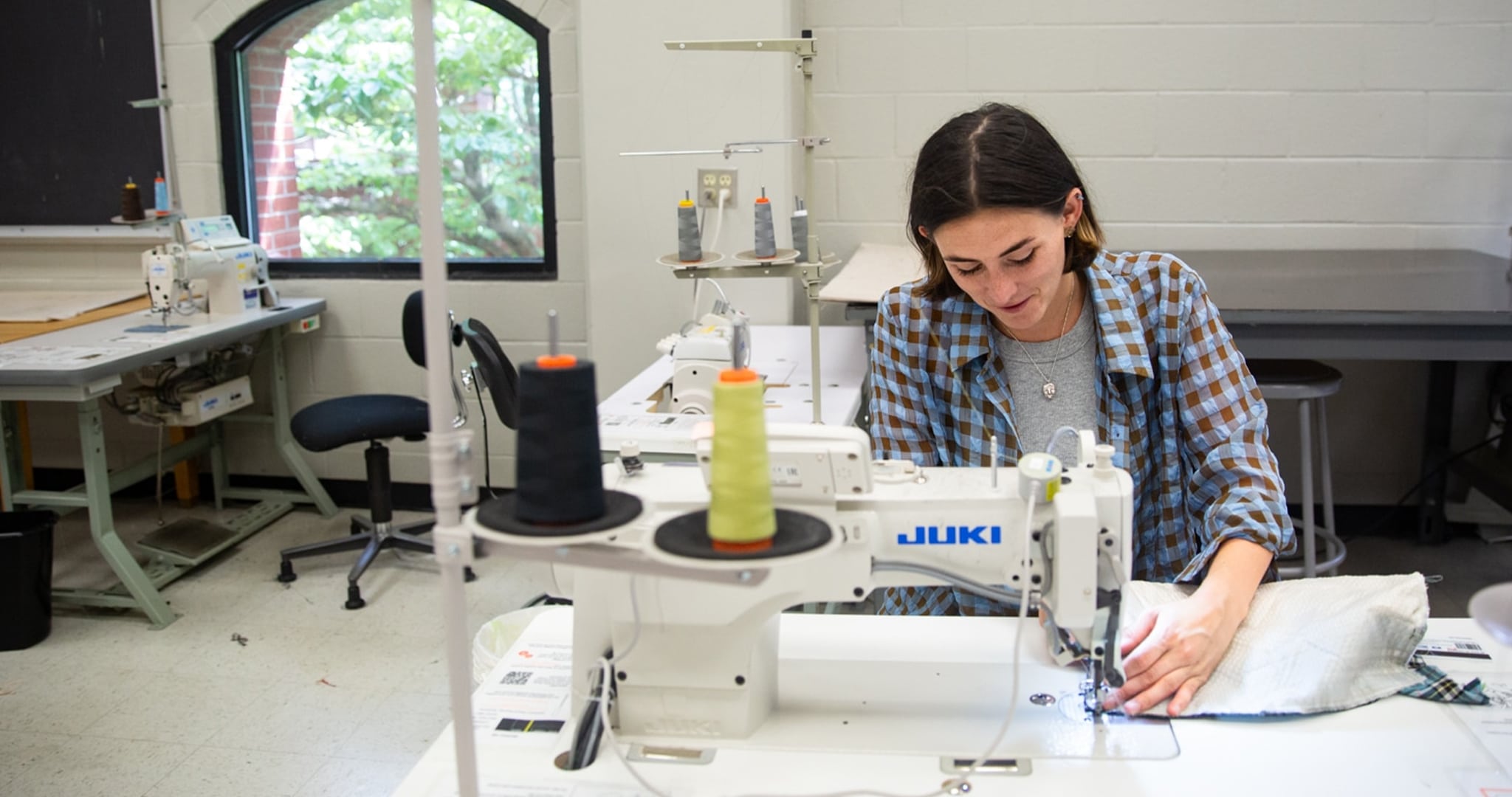
But don’t panic yet. There are ways to cut down on waste while still looking style-savvy—and give Mother Nature a boost in the process. We chatted up local seamstress Madeleine Lyon—founder of Raleigh repair-and-renew shop Mend Mother—about her mending mission, the easiest DIY repairs and the perks of fixing it, not ditching it.
Inspo behind your mending mission? There are two primary motivators. First, I love working with my hands. Second, I’ve worked in fashion and textiles since 2015 and became frustrated with the planned obsolescence within the industry. We aren’t designing and making clothes to last.
Fave technique to hide wear & tear? While I love loud, visible, decorative repairs, some of the most satisfying projects are when I can fix something discreetly. My favorite right now is repairing a hole in a garment by secretly stealing fabric from elsewhere on the silhouette to have a nearly invisible repair.
Fashion-forward tips to dress sustainably? I’ve given up fast fashion and shop mostly secondhand—shopping with intention on sites like Depop, Poshmark and The RealReal. I’m also trying to purchase clothes made of natural fibers like cotton, linen, wool, and some regenerated cellulose fabrics like viscose or bamboo. If I’m shopping new, it’s something high quality or from a small brand with strong ethical values and transparency.
Easiest alteration to DIY? Hemming! Everyone can hem their own pants—even without a sewing machine. The easiest way to get started is by undoing the hem so you can see how it was constructed. Deconstructing a thrifted garment or something you don’t care about can give context.
Let’s talk clothing swaps. Many swaps I attend are just heaps of clothes and not super-organized. As much as I love the hunt, piles of clothes aren’t always the most appealing way to refresh your wardrobe. With this in mind, for my first clothing swap event in LA, I picked up clothes from people’s homes, sorted them and priced them, then rented tables, racks and hangers to merchandise everything so it felt more like a market than a grab-bin situation.
It’s a different take on what a ‘swap’ can look like. Fifty to 80% of garments donated to large nonprofits never make it on the shop floor and are often exported to the Global South. Experimenting with ways to directly recirculate garments within my own community is a worthy effort.
*Responses have been lightly edited for length and clarity.
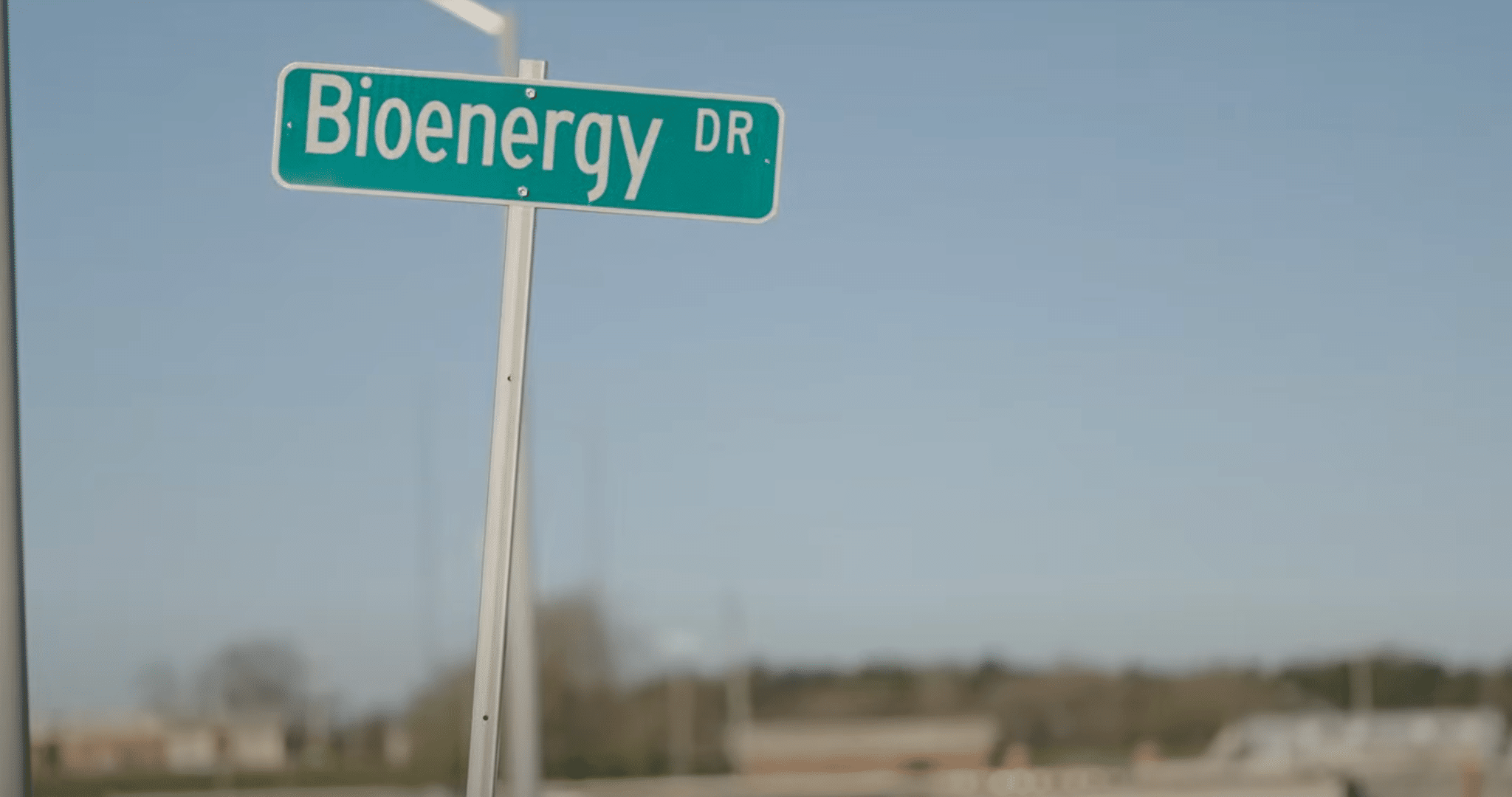
With last week’s ribbon-cutting for the Bioenergy Recovery Project, Raleigh joins a small but savvy group of cities turning waste into public transit fuel—and, yes, we mean human waste. The move has been years in the making, sparked back in 2019 when the city greenlit an ambitious goal of cutting community-wide greenhouse gas emissions by 80% by 2050.
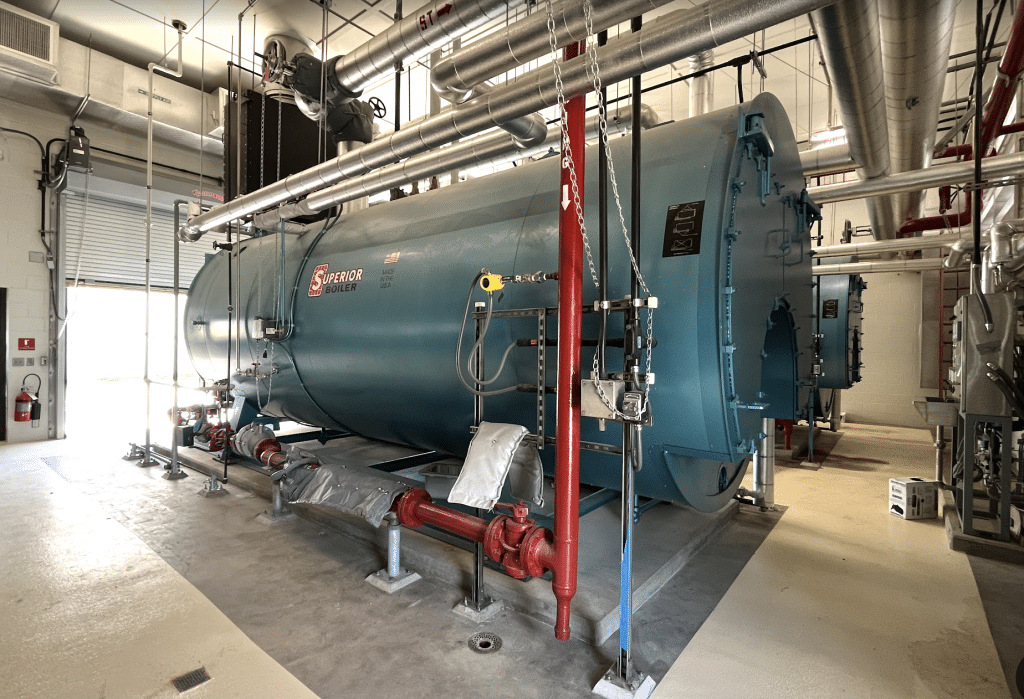
At the same time, the city was also staring down another challenge: The equipment treating biosolids at the Neuse River Resource Recovery Facility—where the Bioenergy Recovery Project now operates—was due for a facelift.
This got the city thinking bigger—and greener. Raleigh Water Assistant Director Erika Bailey recalls in a written statement how her department worked on identifying “not only a solution to effectively manage our biosolids for the long-term, but also one that would provide environmental resiliency, producing a high-quality product to support beneficial reuse of the biosolids.”
They found the solution in an advanced anaerobic digestion process—aka a process speeding along the bacterial breakdown of waste—and the driver behind the Bioenergy Recovery Project. From there, the biogas gets upgraded into renewable natural gas, which now fuels more than 70 GoRaleigh buses.
City of Raleigh Communications Department
Bailey said getting the system running took significant planning. The Neuse River treatment plant couldn’t just stop processing, meaning the city had to get creative with the install.
Not to mention producing renewable natural gas is pretty new to NC. “With this project, we have been charting new territory and working closely with our stakeholders to understand requirements associated with renewable natural gas production,” notes Bailey.
Over a decade later, though, and all their efforts have paid off. Per the city’s numbers, the Bioenergy Recovery Project is not just a step toward their sustainability goal, but a stride estimated to slash citywide greenhouse gas emissions by 11%.
And Raleighites are giving it two green thumbs up. “It… is very tangible in that you see the GoRaleigh buses around town as a regular reminder that we are taking our waste and turning it into a valuable resource that is fueling the GoRaleigh buses,” says Bailey. “It means the community is helping to contribute to fueling the buses with every flush!”
As Ridgewood Shopping Center gets a fresh face-lift, one local creative is also decking it out with a brand-new work of art. Enter Charlotte-born, Raleigh-based Denise Hughes’ two towering oak tree silhouettes now “growing on the walls” beside Whole Foods and Drift—with a third set to sprout this fall.
An homage to the City of Oaks’ nickname and natural beauty, the brushstrokes also depict curious animals—think raccoons, birds, rabbits and dogs—as a “celebration of our shared roots, where nature and community intertwine,” says the artist, who worked alongside architects and in collaboration with studio mate artist Autumn Cobeland and photographer Simon Griffiths earlier this summer to breathe new life into the established spot.
“The shopping center has been a landmark in Raleigh for almost 75 years, long before the city’s major growth took place,” she adds, “so bringing the center ‘back to its roots’ was the sensible choice.”
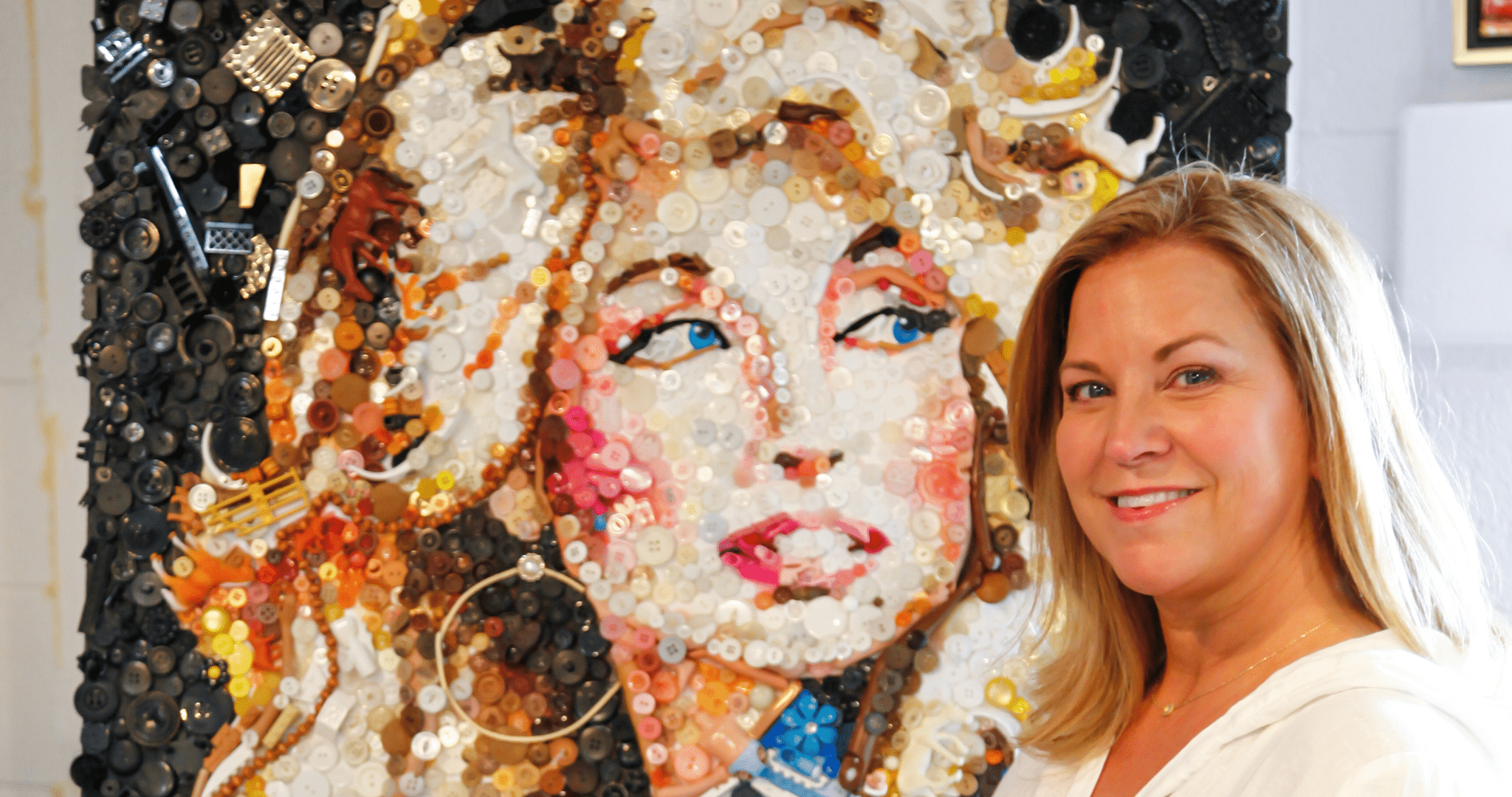
And it’s not the first time Hughes has left her mark around town. Calling Raleigh her forever home for almost 30 years, the multidisciplinary artist specializes in murals, oil painting and even underwater swim painting—plus upcycled assemblages that put her passion of taking garbage to gallery at the forefront. “My love of art lies with sustainability,” she emphasizes.
After discovering a devastating video about microplastics in our oceans, the artist took it upon herself to draft a program, take it to schools and let the community in on her junk-to-genius effort. “In today’s throwaway culture, I feel it’s even more important to realize the effects on our planet and oceans,” asserts Hughes, “and to emphasize that all of us can do our part to keep it clean.”
One such green-minded piece, made entirely out of upcycled plastic, is a large-scale portrait of Dolly Parton—one of Hughes’ favorite musicians. Working, ahem, “9 to 5” during the pandemic, she fabricated the Dolly artwork from her kids’ old toys and a mountain of buttons. Although the music legend famously abstains from purchasing self-portraits, she made an exception for this one—Legos, Barbie limbs and all—which now hangs in the foyer of her Nashville mansion.
Proving that almost any item can be made into a vibrant work of art, Hughes continues to deliver her strokes of genius across Raleigh—and beyond. Color us impressed. denisehughes.com
The newest generation is here, and the race to understand them starts now. Born between 2025 and 2039, the newly debuted Generation Beta will make up 16% of the global population by 2035, the majority of whom will live to see the 22nd century. And—cue the existential crisis—these newbies are the offspring of on-the-cusp millennials and Gen Z.
Born to the first parents to come of age with social media, Gen Beta will be the first to live with AI from the jump. Coming online, so to speak, in the aftermath of the universe-meets-metaverse collision, they’ll never know a life where the digital and physical aren’t seamlessly intertwined. Unlike generations past, AI and hyper-realistic virtual realities will be fully embedded in their world—from early childhood education and entertainment to health care, careers and beyond.
As we know, the relationship between children and technology is hotly debated. Even before Gen Beta’s birth, tech has played a controversial but prominent role in parenting. Now, having grown up with tech themselves—and in not-so-subtle rebellion to the Gen Alpha “iPad kids” screen-deep start—Beta’s parents are expected to flip the script, with Gen Z parents placing a stronger emphasis on limiting screen time than generations before them.
How it will play out is yet to be seen, but many Zoomers, burned by the digital downsides of their own tech-heavy upbringings, have (ironically) taken to social media to vow against posting their children to their own socials or selling out to screens to control them—even more ironic given the tech nod embedded in “beta.” As documented on TikTok, Gen Z has zero interest in parenting the kind of child who throws a screaming-fit in a restaurant because their iPad battery hit zero.
Social analyst and demographer Mark McCrindle—famed for naming the past three gens—backs up the likelihood of an antiscreen sentiment from the most tech-savvy generation of parents yet. “Gen Z sees the benefits of technology and screen time,” he emphasizes. “But, equally, they see the downsides of it and are pushing back on technology and the age at which their children access and engage with it.” Add to that, Beta will also be the first born entirely postpandemic, so when they learn about COVID in school, it won’t even necessarily be taught as a contemporary event.
Taken together, and despite their parents’ pledges, Gen Beta can’t not live in a tech-drenched AI-riddled postpandemic world. As such, Beta babies are predicted to have careers requiring far less face-to-face interaction. What’s more, 86% of Americans think many of these careers are yet to be invented.
To be fair, every generation tends to get a bad rap once they become public nuisances, hauling sticky iPads with them everywhere—and certainly once they enter the workforce. But Generation Beta’s moniker alone is already considered an insult. While the name simply follows the structure of the Greek alphabet, pop culture links “beta” to weakness and submission—especially following “alpha.”
And if this new gen are truly “beta,” it won’t bode well for their ability to tackle the many hurdles ahead. Amid climate changes, global population shifts, increasingly frequent disasters and rapid urbanization, McCrindle predicts sustainability will be “not just a preference, but an expectation” as they are brought up in a world grappling with major societal and environmental challenges.
While Betas have their parents to thank for pushing sustainability to the forefront, they will take on a “sink or sustainably swim” mindset, thanks to this perfect storm they are set to inherit from the world. That said, researchers have their fingers crossed these societal roadblocks will result in a generation of globally minded and community-focused individuals. And the rest of us should cross our fingers as well—as the majority of Beta sets foot into society and into the next century, the fate of this changing world will rest on their shoulders.
This Earth Month, invest in your community—and the environment.
When it comes to recycling, there’s no question about whether items like paper, cardboard, plastic and the like are recyclable. But when it comes to things like plastic film, Styrofoam, paint, batteries and light bulbs, confusion abounds over how you should dispose of them. Enter The ReCollective, the Triangle’s first hard-to-recycle pickup service.
Launched in fall 2022 by Bryce Brooks and Kevin Younge, two eco-friendly Triangle residents with a passion of simplifying waste and reducing climate change, The ReCollective makes recycling easy, accessible and transparent while taking waste off your hands and creating something new out of it.
Filling the gaps left by traditional curbside programs, the concept has since expanded to serve 600 households/month across the Triangle—diverting the equivalent of 1 million plastic bags’ worth of plastic film from landfills and waterways (!). To boot, in 2023, The ReCollective expanded to offer organics collection—including food scraps and compostable waste—and introduced a partnership with Toward Zero Waste that makes composting more accessible and affordable.
“We are passionate about helping bring awareness to the community about the environmental challenges we face,” says Younge. Adds Brooks, “The Triangle is a special area that is so ready for circular community solutions that are affordable, accessible and have a positive impact for everyone here.”
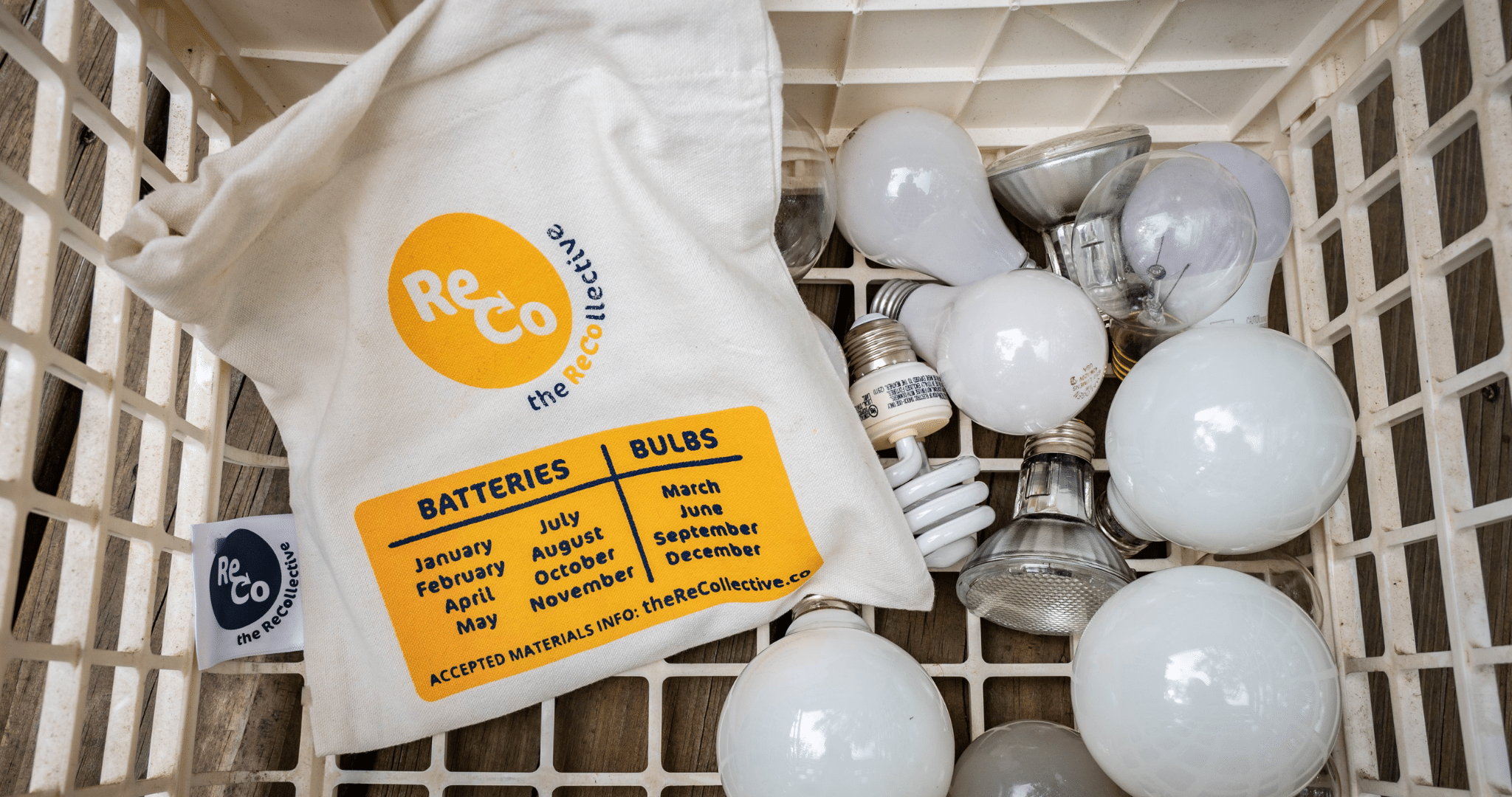
The ReCollective’s pickup service is super-convenient—and you don’t even have to leave your house to use it. Collection bag kits containing four labeled canvas bags, a separate plastic bag for Styrofoam, and a waterproof bag are dropped off at your home before your scheduled pickup day. Simply leave the bags on your porch and a ReCollective crew member will swing by to collect them.
The sustainable service then takes materials and passes them on to local businesses and organizations that recycle or reuse them in a creative way—think art pieces or products like deck boards. Reduce, reuse, recycle in action!
The best part? Getting rid of those nonrecyclables costs about the same price as a Netflix subscription or getting a couple drinks at a local bar. So why not put your money toward something that’ll help better the environment—and the world?