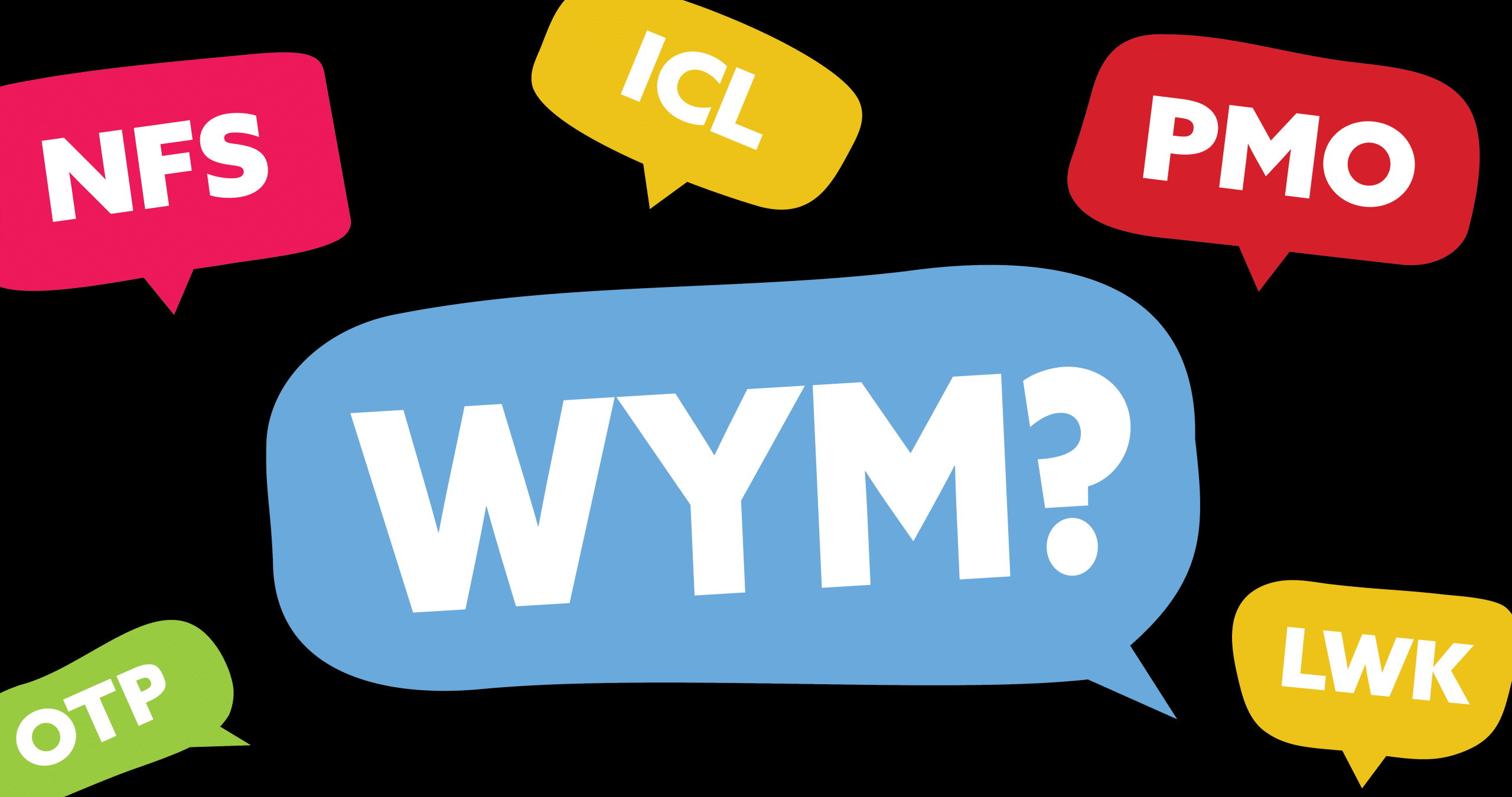
IYKYK—we’ve all been the recipient of a confidently sent text with a seemingly niche abbreviation that just leaves you confused. Don’t worry, you aren’t old. Text jargon evolves rapidly and multiplies constantly—so even the most chronically online still get stumped.
Taking word woes into its own hands, online tool Unscrambler used an analysis of Google search data to find the top six text abbreviations stumping NCers and compiled them into a mini lingo dictionary.
But before you verse yourself and start letting these fly, take caution. There’s a reason you maybe shouldn’t opt for “rly” over “really” when, say, texting your boss. A study shows abbreviations can come off as insincere to recipients, making them less inclined to reply—a sentiment felt across all age groups.
While this doesn’t mean you have to cut the time-saving talk entirely, just know what you’re actually saying in text lingo—and keep in mind who’s on the other screen.
Ready to crack open a cold one? We sleuthed out where it’s legal to booze on the beach.
Get your toes in the water and butt in the sand—but dodge the pricey ticket and check if a cold beer is allowed in your hand. The prime coastline blesses NC beach bums with sandy destination ops aplenty, but if whether or not you can indulge in spirited decisions takes priority when taking your pick, we did the research for you. The main rule of thumb? Pass on glass, as it’s not allowed on most NC beaches. Cheers to no fines, a sun-kissed summer and a beach buzz!
This month, he is your man. Singer-songwriter and rapperTeddy Swims is rolling into Red Hat Amp May 17 on his I’ve Tried Everything But Therapy tour to take a hammer to your heart (!) with a signature genre-blending combo of soul, country, rap and pop. So, bring your worries and woes and prepare to unleash them amid mellow and moody music under the shimmer wall. What more can we say?! Turn the page for more May events to fill your up cal. ticketmaster.com
The newest generation is here, and the race to understand them starts now. Born between 2025 and 2039, the newly debuted Generation Beta will make up 16% of the global population by 2035, the majority of whom will live to see the 22nd century. And—cue the existential crisis—these newbies are the offspring of on-the-cusp millennials and Gen Z.
Born to the first parents to come of age with social media, Gen Beta will be the first to live with AI from the jump. Coming online, so to speak, in the aftermath of the universe-meets-metaverse collision, they’ll never know a life where the digital and physical aren’t seamlessly intertwined. Unlike generations past, AI and hyper-realistic virtual realities will be fully embedded in their world—from early childhood education and entertainment to health care, careers and beyond.
As we know, the relationship between children and technology is hotly debated. Even before Gen Beta’s birth, tech has played a controversial but prominent role in parenting. Now, having grown up with tech themselves—and in not-so-subtle rebellion to the Gen Alpha “iPad kids” screen-deep start—Beta’s parents are expected to flip the script, with Gen Z parents placing a stronger emphasis on limiting screen time than generations before them.
How it will play out is yet to be seen, but many Zoomers, burned by the digital downsides of their own tech-heavy upbringings, have (ironically) taken to social media to vow against posting their children to their own socials or selling out to screens to control them—even more ironic given the tech nod embedded in “beta.” As documented on TikTok, Gen Z has zero interest in parenting the kind of child who throws a screaming-fit in a restaurant because their iPad battery hit zero.
Social analyst and demographer Mark McCrindle—famed for naming the past three gens—backs up the likelihood of an antiscreen sentiment from the most tech-savvy generation of parents yet. “Gen Z sees the benefits of technology and screen time,” he emphasizes. “But, equally, they see the downsides of it and are pushing back on technology and the age at which their children access and engage with it.” Add to that, Beta will also be the first born entirely postpandemic, so when they learn about COVID in school, it won’t even necessarily be taught as a contemporary event.
Taken together, and despite their parents’ pledges, Gen Beta can’t not live in a tech-drenched AI-riddled postpandemic world. As such, Beta babies are predicted to have careers requiring far less face-to-face interaction. What’s more, 86% of Americans think many of these careers are yet to be invented.
To be fair, every generation tends to get a bad rap once they become public nuisances, hauling sticky iPads with them everywhere—and certainly once they enter the workforce. But Generation Beta’s moniker alone is already considered an insult. While the name simply follows the structure of the Greek alphabet, pop culture links “beta” to weakness and submission—especially following “alpha.”
And if this new gen are truly “beta,” it won’t bode well for their ability to tackle the many hurdles ahead. Amid climate changes, global population shifts, increasingly frequent disasters and rapid urbanization, McCrindle predicts sustainability will be “not just a preference, but an expectation” as they are brought up in a world grappling with major societal and environmental challenges.
While Betas have their parents to thank for pushing sustainability to the forefront, they will take on a “sink or sustainably swim” mindset, thanks to this perfect storm they are set to inherit from the world. That said, researchers have their fingers crossed these societal roadblocks will result in a generation of globally minded and community-focused individuals. And the rest of us should cross our fingers as well—as the majority of Beta sets foot into society and into the next century, the fate of this changing world will rest on their shoulders.
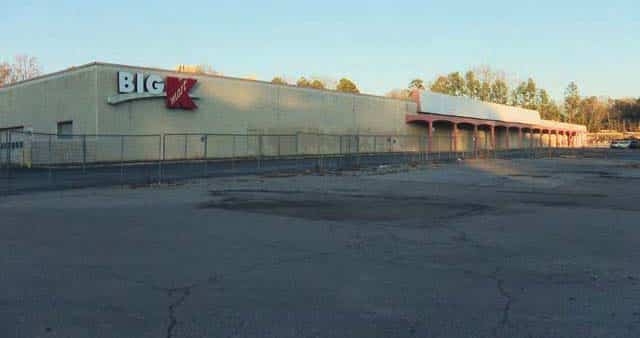
CityPlat plans to transform the former Kmart department store into a live, work, play concept.
The eyesore that has long plagued West Raleigh is finally getting new life—and, as such, all the recent surrounding urban development can finally start to come together. After sitting empty since 2018, the locally loathed former Kmart building on Western Boulevard that grates on eyes as far as from the Beltline has been scooped up by CityPlat, with plans for a live, work, play concept—think similar to Kane Realty’s mixed-use North Hills Main District.
Photo courtesy of WRAL
“This is a legacy project for us,” says CityPlat investment leader G Patel of the last major site left on the Beltline. “This is a very large undertaking for our firm. We’ve had our eyes on this site for many years, and it finally aligned to where we can take this project on and feel comfortable with it.”
The prominent location of the site will lend itself to the project becoming a family-forward flagship destination, with the firm “being cognizant about how to make the impact and the changes the site needs.” Building out the 12.08-acre property in phases, CityPlat plans to upgrade the property from the ground up—exterior, landscaping, utilities, parking—to repurpose the existing 117,000-square-foot structure.
Rendering by Redline Design Group, courtesy of CityPlat
Rendering by Redline Design Group, courtesy of CityPlat
And—as Beltline regulars may have noticed—construction is already well underway. After officially breaking ground in January, the dated Kmart building was completely gutted. Now, CityPlat is whiteboxing spaces for future tenants. Taking notice of where Raleighites want to be and what they want to be doing, the firm aims their focus on fitness facilities, sports and recreation concepts (hey, pickleball courts!), and entertainment spaces to activate a fam-friendly lifestyle.
Upping the accessibility factor, the development will flow seamlessly with public transit via easy access to a future bus rapid transit line—a major perk once living spaces round out the mixed-use ecosystem. “That is years down the road,” notes Patel. “It’s definitely a BRT overlay, so having density there would be ideal for the site.”
Garnering residents and visitors to the complex will eventually link local districts and even suburbs. “It’s a great connector—you have the university right there, you have Lenovo’s resurgence and the Blue Ridge Corridor, and then the connectivity between Cary and Raleigh,” emphasizes Patel, who has been heading local entrepreneurship endeavors since 2006. “It’s just such a great hub to activate that.” And West Raleigh is poised for a new destination.