
by Heidi Reid | Sep 4, 2024 | 2024, Buzz, September 2024
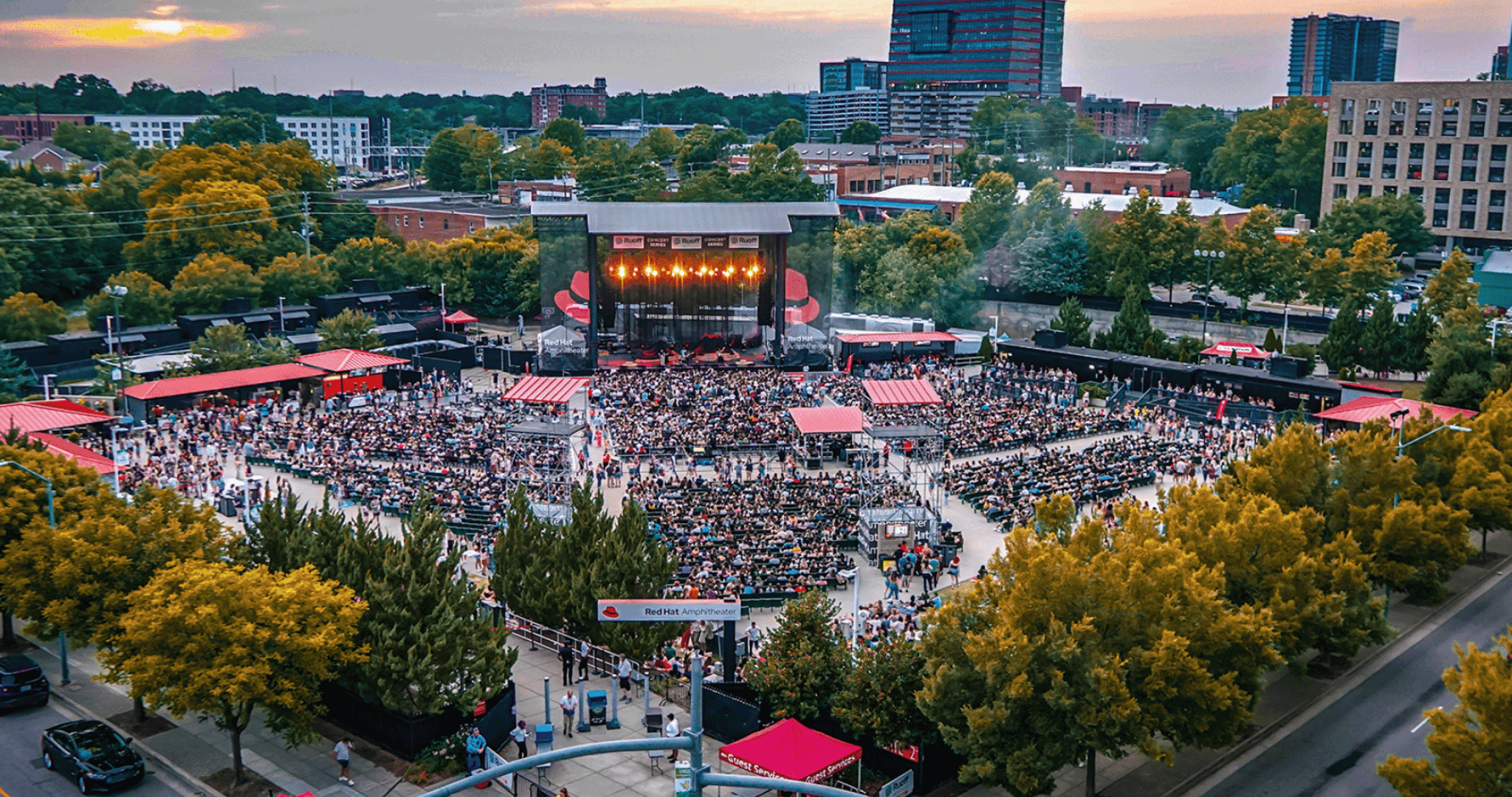
We asked all sitting members of Raleigh City Council—and other candidates vying for a seat—whether they stand with the expansion of Red Hat Amp.
With the vote deciding Red Hat Amphitheater’s fate in less than a month, we tapped Raleigh City Council candidates—plus the sitting Council members who are all up for reelection—on whether they think the venue should remain Downtown or be moved elsewhere (for example, Dix Park).
Although only the current council members will have any say in the vote, other candidates’ take on the amphitheater’s location can give insight on their knowledge of Raleigh and priorities within the city. And, ICYMI, Red Hat Amp cannot be left where it is—it must be either moved one block and expanded or demolished for good.
Mayoral Candidates
Janet Cowell
Red Hat [Amp] should stay Downtown. It helps make Downtown a regional destination for arts and culture and supports local businesses at a time when they urgently need it. In exchange for the negative externalities of closing a street, we should preserve pedestrian, bicycle and vehicular throughways while mitigating the impact of street closure on Heritage Park and insulating residents from service loading docks.
Paul Fitts
Leave it where it is.
Eugene Myrick
I am not in favor of moving Red Hat Amphitheater to Dix Park. While the amphitheater is a beloved venue, relocating it would have significant and far-reaching consequences that outweigh the potential benefits. Moving the amphitheater would negatively impact local businesses that have long benefited from its Downtown location. The foot traffic and economic activity generated by events at Red Hat Amphitheater support our small businesses, which are the backbone of our local economy. Disrupting this ecosystem could lead to closures and lost livelihoods for many who rely on this steady stream of patrons.
Terrance Ruth
The location of Red Hat Amphitheater should be determined by what best serves the community’s needs and enhances the cultural vibrancy of Raleigh. Keeping it Downtown supports local businesses and maintains the city’s cultural hub. However, moving it to Dix Park could offer unique opportunities, but the fragile nature of our Downtown requires the city’s full attention. I would advocate for extensive community input before making a decision.
James Shaughnessy IV
I am in favor of keeping Red Hat Amphitheater Downtown. It’s become a cultural staple in the area and plays a vital role in supporting local businesses by driving foot traffic and generating economic activity. Its presence Downtown is beneficial both for the economy and the cultural vibrancy of the city.
At-large Candidates
James Bledsoe
No. Red Hat [Amp] needs to stay where it is. Moving a large property like that to expand a Convention Center that isn’t full when events are held is just asking to hurt Downtown. Many businesses rely on foot traffic from the events. Moving Red Hat [Amp] during an already financially stressed Downtown Raleigh is just going to break a lot of businesses’ backs.
Joshua Bradley
I am of the opinion that it can stay where it is. The Convention Center does not need to expand. The planned move would close South Street and negatively impact Heritage Park, which is one of the few public housing complexes in the City.
Stormie Forte (I)
Yes, I am in favor of the Red Hat Amphitheater expansion, while understanding the concerns regarding a closure of a small portion of [South Street]. Within the budget allocated for the project, the current plan is the only option available to keep the amphitheater Downtown. The City of Raleigh staff are working with the NC Department of Transportation to create a solution that will allow continued connectivity to the Downtown area from South Street. I have had the opportunity to speak with many owners of local small businesses regarding the negative economic impact of losing the amphitheater Downtown. I want to support initiatives that will help these establishments not only survive, but thrive. Red Hat Amphitheater has over 50 shows scheduled this season and eight weeks for the ice rink. Many Raleigh residents and guests from out of town enjoy coming Downtown for these events, and contribute significantly to the viability of surrounding businesses. It is important for the owners and their employees that these opportunities continue to create foot traffic in these spaces.
Jonathan Melton (I)
Yes, and I want the city to work with NCDOT on reestablishing some connection for the portion of South Street that is closed, and to add bicycle and pedestrian improvements too. This project can be a win-win for all interested stakeholders.
Reeves Peeler
I want to see the amphitheater stay Downtown.
Robert Steele
I am in favor of the Red Hat Amphitheater staying Downtown.
District A Candidates
Mary Black (I)
Neutral. I think the role of councilors is to weigh the multiple factors within in any case. I’m eager to hear from the city about the multiple factors that are at play with regard to impact to traffic, Heritage Park redevelopment and businesses.
Whitney Hill
I am in favor of seeing Red Hat [Amp] staying where it is and keeping Dawson Street a straight shot through Downtown. No one has shown me the cost profit analysis of doubling the size of the Civic Center. If they have [it], I would love to see it. To me, this is the real issue. Are the citizens at large really benefiting from the Civic Center Expansion?
Mitchell Silver
I am in favor of keeping Red Hat Amphitheater Downtown and would encourage City Council to explore and make public all available options, including those that keep South Street open.
District B Candidates
Jennifer McCollum
Yes, I am in favor of Red Hat Amphitheater staying Downtown.
Megan Patton (I)
With roughly a month until the vote regarding the street closure, I am still in the information-gathering phase. This decision impacts several constituencies in a variety of ways. From Heritage Park to Downtown businesses, from Boylan Heights to the larger Raleigh community, I’m committed to hearing all the voices. No decision that the Council faces is ever as simple as it seems. I’m working hard to make sure we get as many wins for as many stakeholders as possible.
District C Candidates
Corey Branch (I)
I’m in favor of keeping Red Hat Amphitheater Downtown.
DaQuanta Copeland
Yes, I support the Red Hat Amphitheater staying Downtown.
Tomara DeCosta
It should remain Downtown, as local businesses depend on the foot traffic it generates.
Daniel Grant-King
No response as of press time.
Jared Ollison
If Red Hat is to be expanded, I think it would be a good idea to consider moving it to Dix Park.
Tolulope Omokaiye
I am in favor of the Red Hat Amphitheater remaining Downtown.
Portia Rochelle
In favor of [Red Hat Amp] staying Downtown
District D Candidates
Jane Harrison (I)
I’m committed to Red Hat Amphitheater remaining Downtown and anticipate it to be moved one block south to make room for the Convention Center expansion. It has significant economic spillover impacts on local businesses like Berkeley Cafe, Videri Chocolate Factory, and Neptunes, just to name a few. It’s a beloved community asset—essential for vibrancy and safety Downtown.
Residents and business owners also have legitimate concerns about the loss of vehicular access on South Street. Unfortunately, closing the street is a prerequisite to expansion of the Convention Center and the Red Hat [Amp] relocation. I’ve spent a great deal of time with city staff and impacted neighbors to examine the plans and identify opportunities to mitigate potential negative impacts. City staff is working with the NC Department of Transportation to develop a new route which would connect just south of South Street heading west to east. The City is also conducting a traffic-impact analysis to evaluate impacts. An additional community engagement opportunity will be held prior to any City Council decision.
District E Candidates
John Cerqueira
Red Hat should absolutely stay Downtown at a scale that continues attracting the types of shows we have been fortunate to host in the past. I do look forward to the potential of a music venue at Dix Park at what is planned to be a scale closer to what we have at the NC Museum of Art.
Christina Jones (I)
No response as of press time.
by Heidi Reid | Aug 28, 2024 | 2024, Buzz, July 2024/August 2024
We tap Raleigh Convention Center’s executive director Kerry Painter for answers to lingering questions surrounding Red Hat Amp’s proposed expansion.
ICYMI, the future of Red Hat Amphitheater is at stake.
While it was initially intended to be a temporary venue, the City has long planned to move and update the amphitheater to sustain the amount of traffic it attracts. The planned expansion would accommodate ~1,000 more seats and a larger loading dock and backstage area, as well as increased concessions—and the only “cost” of that expansion is the closure of one block of South Street, a road that sees just one-third of the traffic it was built for.
As the Sept. 17 City Council vote grows closer, confusion surrounding what will actually happen to the amphitheater mounts—as well as rumors about why different infrastructure decisions were made.
Here, we cut to the chase, tapping Raleigh Convention Center and Performing Arts Complex Executive Director Kerry Painter —who has also run venues in Tulsa, Ontario, Niagara Falls and Slidell—to clear the air on lingering questions.
What happens to Red Hat Amp if they do not vote to pass the South Street closure?
We cannot build the amphitheater and it will likely be lost.
What will happen if the vote is tied?
If the vote is tied, then the motion fails. The project does not have support to advance, and we lose the amp.
If the closure does not pass, is there an alternative plan in the works to save the amphitheater and keep music Downtown?
No. There is no other Downtown location available to us that meets the requirements for a viable venue within our given budget.
When and why did the proposed street closure switch from Lenoir Street to South Street?
The amphitheater and what it needs to be viable does not fit on Lenoir and the lot of land we own. It left us with approximately 4,500 seats instead of the 6,000 minimum and was over budget. It didn’t provide the operational needs and safety needs as well as artist spaces necessary. By incorporating South Street, we also have the ability to tap into another plot of land owned by NCDOT, which then makes enough space for the new design and its needs.
How much traffic is there on South Street compared to Lenoir?
South Street sees approximately 3,300 cars a day, and Lenoir Street [sees] 2,250. These streets are each designed to accommodate 10,000 cars a day.
People are saying there must be an ulterior motive behind the South Street closure. Is anyone benefiting from the switch?
No one is benefiting from the design except the audience, who will still have access to a fantastic annual concert lineup. We are not displacing any homes or businesses by closing this block, and no one is getting paid or benefiting from this closure.
How does the closure of the block of South Street affect the Chavis-Dix Strollway?
We have incorporated the Strollway concept into our design, making it a catalyst for the design and construction to begin. I see it as a huge win! We will be investing significant dollars to this effort and, coupled with the federal dollars already committed, this will almost double the Strollway budget and launch the concept into reality. This is an excellent opportunity to work with engaged strollway advocates on design and other features of the path.
Many are concerned the proposed plans have no room for public opinion. Why did the convention center opt to not take public input?
This is a purpose-built venue. It has many parameters that it must meet in order for it to successfully host concerts, satisfy artist needs and provide a safe experience for guests. The exercise to this point has been one of math—fitting the geometric shape necessary on the land we have. We’re making sure the direction of sound is appropriate for a quality experience, studying sightlines and viewing angles that’s necessary from each direction, and adding in the next layers such as restrooms, industry standard concessions, artist needs, etc. It is really a ‘fit the spaces into the site’ exercise which doesn’t provide an opportunity for creativity from the community. We do intend to seek out public engagement on elements where we have more flexibility, specifically the strollway design.
If the relocated amphitheater is built, will any seats be covered to provide shade and protect from inclement weather?
Yes, some seats will be covered and a greater number than now. The final number is still to be determined. As an additional plus, the new Capital Square condo directly behind us shades the new location much earlier in the day than the old location.
How many employees does it take to run a show at the amphitheater? What happens to those employees should the amphitheater get demolished?
Live Nation uses approximately 130 people per evening, Sodexo uses approximately 70–80 per evening for food and beverage, and the City also has approximately six. Several staff [have] professions like schoolteachers, police wives and others who need a supplemental second income. Sadly, those positions would be gone with the cancellations of a show season. When we build the ice rink, we use people daily for a solid eight weeks, and those jobs would also be gone at a seasonal time when people are looking for extra spending money.
How is this another “DPAC moment,” and what potential impact will another loss like that have on the city?
DPAC was born out of a failure to make a deal at our performing arts center years ago. The promoter built their own theater and booked the shows they owned there. We have never seen a Nederlander show at our venue since. It was a true pivot point where Raleigh lost a touring theater.
Now, we have an amphitheater that draws people Downtown to see top artists. Without a venue this size, concerts will skip Raleigh and perform in other cities like Wilmington and Charlotte only. Again, Durham is paying attention and has proposed an amphitheater in its tourism plan. If we lose an entertainment draw this time, we know the economic impact is likely catastrophic to our Downtown, where businesses see a 20 to 50% uptick on show days—therefore, it’s a risk for the whole city.
*Answers have been lightly edited for length and clarity.
by Heidi Reid | Aug 27, 2024 | Do, September 2024
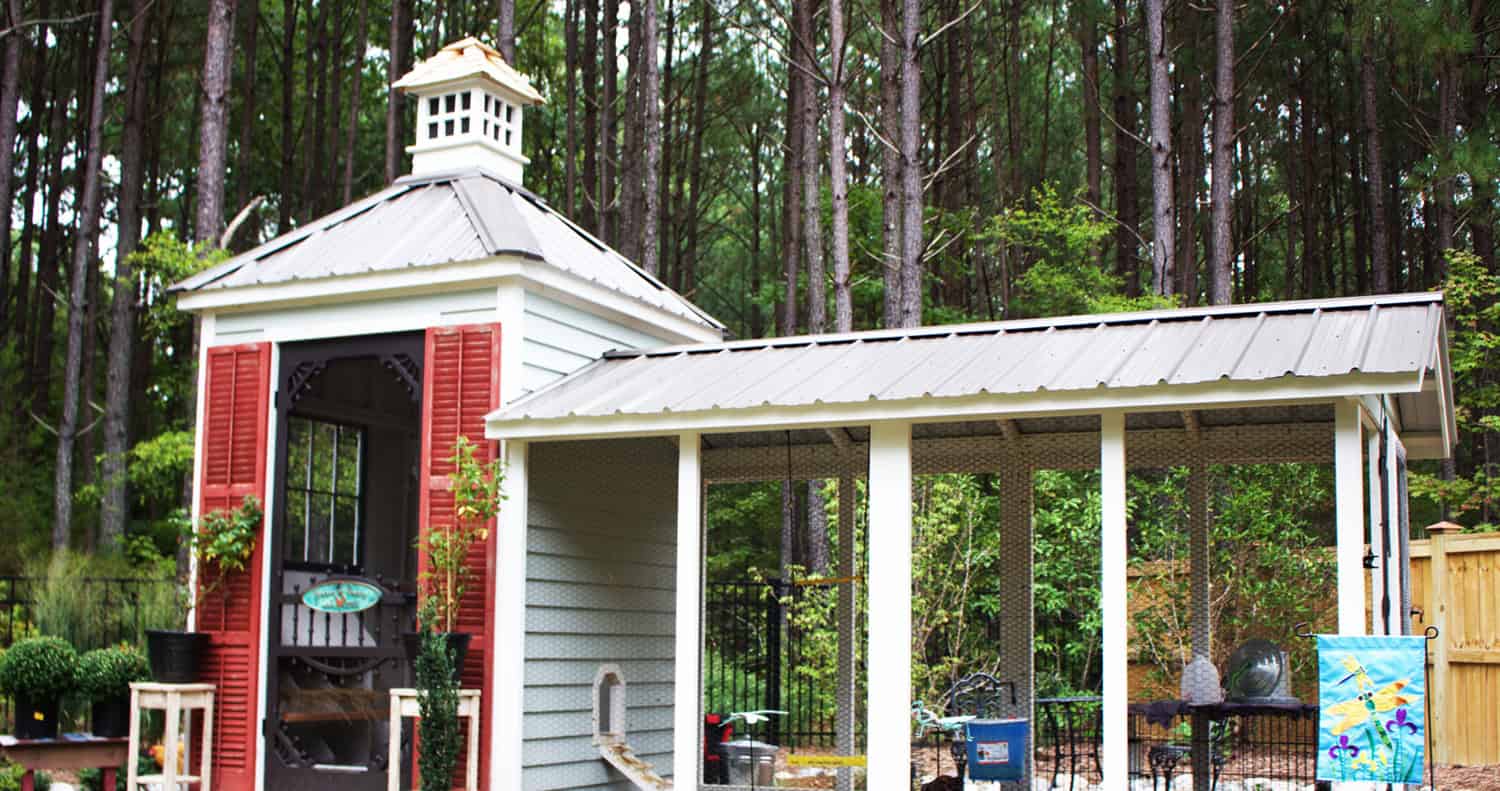
Carolina Coops is hatching new horizons with its sustainable chicken coops.
The only thing better than fresh eggs is farm fresh eggs in your backyard—and Carolina Coops is bringing that luxury to city dwellers.
The Creedmoor-based coop biz was hatched by founder Matt DuBoise, who combined his love of construction and a grade-school project involving the care of chickens to offer custom-built and design-orientated (think Joanna Gaines-esque) coops—and his brand has since gone global.
Each coop is crafted to fit the specific needs of both the flock and the owner—especially crucial for those living in city limits with confined space. And, yes, the City of Raleigh *does* allow residents to house chickens, dependent on land mass.
“That is a big deal because customers don’t always know where the best place is for a coop,” says Kelly Alley, the brand’s PR and marketing specialist. “Coops have to be completely level in order to ensure the integrity stays intact.”
Alley adds that any coop will work for a first-time flock, but notes many customers need a bigger coop than they may think because of “chicken math.”
“It’s a real thing,” says Alley. “Which coop you choose is going to depend on how many chickens you have. Everyone says they’ll start with a few—and next thing you know, they have eight because they can’t stop getting them.”
And first-timers shouldn’t shy away. “Anyone can have chickens. It’s incredibly easy—and that’s why we’re doing everything we can to educate.” Talk about flocking together. carolinacoops.com
by Heidi Reid | Aug 27, 2024 | 2024, Buzz, September 2024
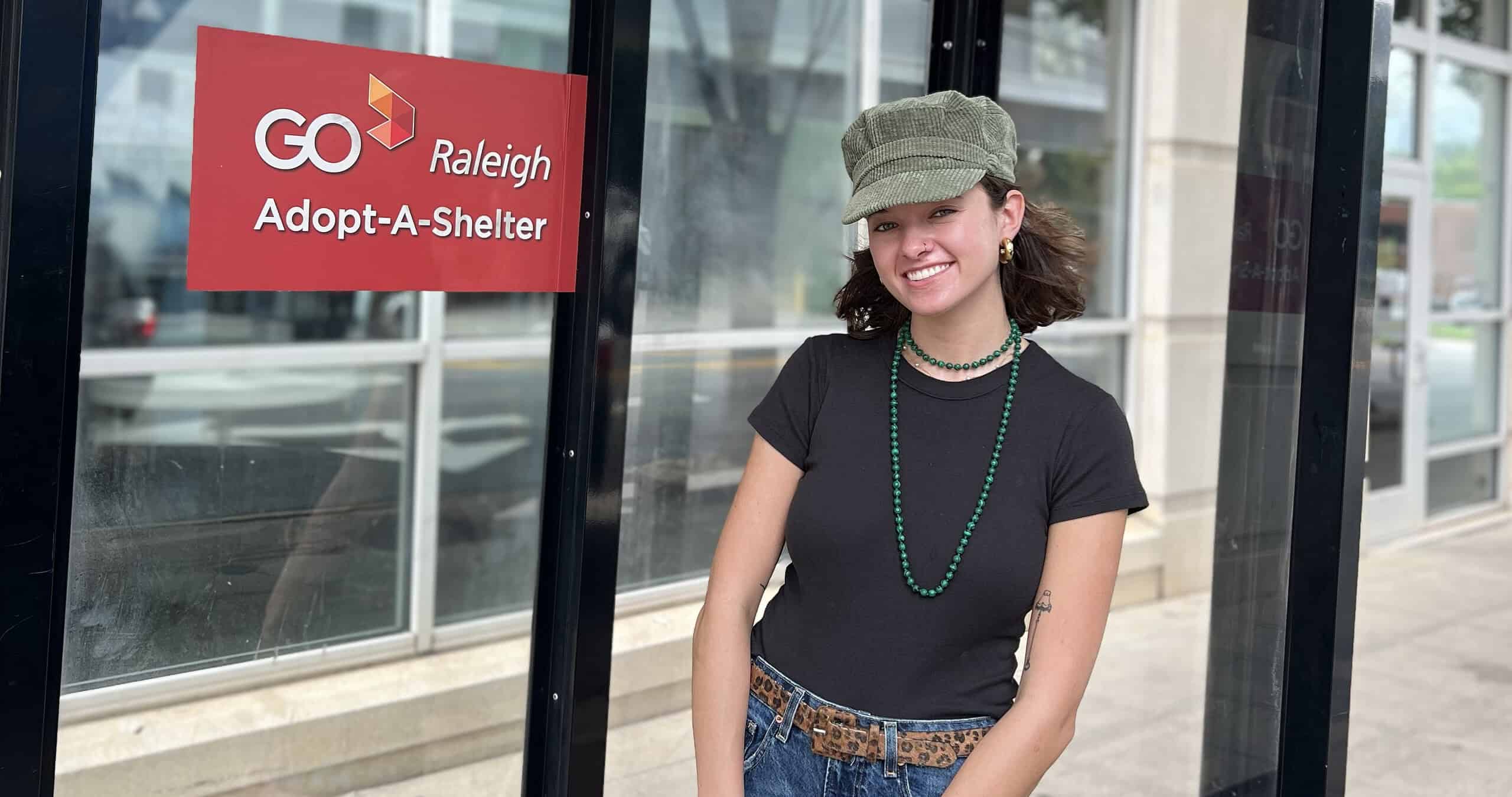
I took the bus everywhere for a month—here’s how it went.
Turns out, Raleigh’s public transit system isn’t as bad as you may think. It’s not what I would have expected after encountering the sights and smells of various bus stops I’ve trekked by in the past, but my forced four-week stint on public transit proved otherwise.
I wouldn’t go as far as to call it a civic masterpiece, but the GoRaleigh system is like most cities’ public transit service—somewhat efficient, a little gross, but will reliably transport you. And it’s far better than many transit services in much bigger cities (looking at you, LA).
From the jump, the majority of common stereotypes of public transit I expected to encounter weren’t a problem—namely, the buses aren’t overwhelmingly crowded; pickpocketing isn’t an issue; and drivers follow the rules of the road. Beyond these cliches, GoRaleigh actually has a wealth of pros.
Compared to complaints about GoTriangle—you may recall our coverage last summer re: its constant cancellations and no shows—GoRaleigh exceeded my expectations. Of my 51 total bus rides, I only experienced one no-show, and all other 50 came within ~five minutes of their scheduled time—though I acknowledge a no-show or extra five minutes may be more of a casualty for riders with less flexibility.
To be fair, five minutes late is *technically* on time in public-transit speak, where on time is typically defined as no more than one minute early or five minutes late. Plus delays are obviously part of any mode of transit, and the top public transit systems in the U.S. still experience them frequently—for example, the F line in NYC is delayed 30% of the time. That said, these delays could possibly be offset by more frequent buses—specifically in less urban areas—but is a hard sell during the multimillion budget deficit Raleigh transit is facing.
That assumed inconvenience led me to initially plan to only take the bus to work, but after seeing how easy the system was to navigate, I took it everywhere—occasionally, I even opted to hop on the bus and ride to bars over ordering a $10 Uber. This wealth (!) of knowledge was hacked by savvy transit users long before me—according to the American Public Transit Association, bus riders save an average of $1,100 a month and are 10 times safer per mile than those who drive an automobile—not to mention I never had to worry about parking.
But let’s be real—there are definitely aspects that need improving. Buses can be very gross. In a 2023 GoRaleigh survey, frequent riders cited cleanliness as an issue—and I concur. White jeans and open-toed shoes were temporarily retired after I noted the amount of dirt on the floor, and, after my second ride, I opted to stand rather than sit after grazing a damp seat. While the grime isn’t ideal, public transit is *public* after all and won’t ever be perfectly spotless—and GoRaleigh is still one of the cleaner transit services I’ve experienced.
Those surveyed also cited personal safety as a concern—but I never felt in danger on the bus. The bus stops, though, were definitely a little sketchy, and I briefly considered walking home once when a fellow passenger waiting for the bus started yelling and hitting surrounding objects with a leather belt. Ultimately, though, both on and off the bus, if you make a point to stay out of others’ way and mind your own business (read: no staring), you’re less likely to be bothered.
So, after a month of riding the bus, I settled on the conclusion that anyone who refuses to ride is—to be frank—being dramatic. Public transit cannot and does not cater to each individual, rather every individual must make it work for them.
How to Get Started:
- Download Transit, or just use the public transit option on Apple Maps
- Start with a short, easy-to-navigate ride—save the day trip for later.
- Zip up your purse and keep any baggage out of the aisles.
- Mind your own business and stay out of the way of other passengers.
- Wear comfy, closed toed shoes. If you’re wearing light-colored clothing, don’t sit.
- Carry pepper spray, just in case.
- Say thank you to your drivers!
by Heidi Reid | Aug 27, 2024 | 2024, September 2024, Stuff
Where to shop, stretch, sweat and more around Raleigh this fall.
These clothes were made for walking—and running, biking and relaxing. Enter Free People Movement’s recently opened Village District storefront boasting colorful active ’fits perf for moving about. @fpmovement
Discount designer clothes and accessories? Say less. Shop till you (nearly) drop and rack up chic deals at Nordstrom Rack’s Triangle Town Place location slated to open in October. @nordstromrack
Calling all homebodies! Take care of your bod—and namaste locally—at Homebody Yoga’s cozy flagship studio opening on the ground floor of Platform apartments in West End by early 2025. @homebodync
A new canopy color is dotting the NC coastline. See: Shibumi Shade’s new “Sunset” Pink & Orange canopy that’s brightening up the beach and its sea of blue and teal tents. @shibumishade
Step aside, lottery tickets—there’s a new way to become a millionaire. Treasure Game$, a nationwide skill-based treasure-hunting game has launched in NC and awards more than just the thrill of the hunt (read: $$$) to winners. @treasuregames.fun
Revamp your wardrobe from the same old attire to something new—or new to you—via Same Old Same Old Vintage, a newly bowed secondhand store on Fayetteville Street that’ll have you serving retro *lewks*. @shopsosovintage
Have a dress code to sport—whether wedding, fancy dinner or anything in between? Formal clothing rental biz TrenLend will be expanding to a second location at Makers Alley in North Hills Innovation District this fall—and is celebrating with a release of an exclusive collection of dresses to impress. @trenlend
Take a cue from Mac Miller and treat yourself right. Sweat one out and cool back down at SweatHouz, Seaboard Station’s newly opened infrared sauna + cold plunge studio. @sweathouzHotties do Pilates. Level up your body and stretch your mind (aka reform yourself) at Club Pilates’ 12th Triangle location coming to Seaboard Station later this year. @clubpilates_downtownraleigh



