Shakespeare Bares All

Shakespeare Bares All

Bare Theatre of Raleigh prides itself on productions that are, well, bare. There is little to no set and costuming is minimal. This summer the troop will present Shakespeare’s “Two Gentlemen of Verona” in free, ‘theatre in the round’ shows at parks and public areas throughout the Triangle.

We sat down with Director G. Todd Buker and actors Sarah Leone, Dustin Britt, Courtney Christison and Rebecca Jones.

Todd, tell me about your goal for this production.

Buker: Bare Theatre always tries to do something different. With this one, the goal is to break down the barriers that seem to be around theatre. What we’ve found over the years is that if an audience is new to Shakespeare, they’re surprised at how much they understand and how much they can relate to it.

What drew you to audition for “Two Gentlemen?”

Rebecca: Shakespeare is so timeless that every time I read it, I feel connected to over 400 years of history, to 400 years of people who have enjoyed it, who have learned something from it.

Sarah: I acted in Shakespeare [productions] in Connecticut for about 15 years, but this is my first production with Bare. I really liked the accessibility because that’s the key. When Shakespeare was writing, it was accessible.

Courtney: The fact that all around the world they are doing celebrations of the 400th anniversary of Shakespeare’s birth. Being part of a Shakespeare production right now makes me feel tied to the world in that celebration.

This production is a modern and urbanized take. What does that mean?

Buker: We’re doing it as hipsters. (all laugh) Really, one of the many things I love about Shakespeare is that you can pick up so many of his plays and put them down in any time period, any setting—some might be more bizarre choices than others. Our setting is going to be modern, urban areas so I thought let’s just costume it that way. It all goes back to being accessible.

Buker: It’s a play anybody can relate to because it’s falling in and out of love and jealousy and there’s betrayal, all this stuff that we all know.

Courtney: I’d like to add that this show is hilarious.

Dustin: Yes, and it’s some of the dirtiest Shakesperean humor I’ve ever seen on the page. It’s very raunchy. It’s like he wrote this for drunken frat boys.

Sarah: There are some lines that I didn’t even pick up on until I read it through more times like, “The shoe with the hole in it is my mother.” (all laugh) I mean, OH MY GAWD! And I was saying it so innocently!

Buker: It’s just the right amount of subversive. We can do this and people would say, ‘I didn’t see anything objectionable.’ But somebody in the audience is going to catch it.

Sarah: It’s a delayed reaction and then, “Boom!”

Dustin: And kids will not know any better. They’ll just love we have a dog in the show.

Tell me about performing in the round. Do you interact with the audience?

Buker: Yes. This has its roots in Shakespeare’s company. His plays would’ve been performed in the afternoon without the spotlights and effects we have now. It’s a whole different experience. The darkness of a theater kind of lets the audience shrink back; with this, they are talking to you.

Dustin: It’s always going to be different. You don’t know what kind of reaction you’ll get. You don’t know who will be standing in front of you. It’s going to keep us on our toes.

Is there fear with…

Courtney: YES! It’s terrifying. But, as an actor, you want to do things that scare you. I thought, “Oh my gosh, I don’t have a stage between me and these people are watching me.”

What should people expect when coming to the play?

Buker: The unexpected? Is that too cheesy? (all laugh) It’s a very fast, very energetic show. At times this play is hilarious, then it’s very serious, then it’s heartbreaking and you’ve got this poor girl who can’t get a break and her guy gives back her ring…

Dustin: I think this is one that high school age and college age [audience] can really relate to because it has the common themes of dating and…

Rebecca: First love and heartbreak…

Dustin: Yes, first love, heartbreak…

Sarah: Dog farts…

Dustin: Dog farts… I think this one is going to be particularly accessible to younger teenagers.

Jones: At the beginning of Shakespeare in Love, “Two Gentlemen” is the play and they’re treating it like a sitcom. This is not high prose. This is fun.

Buker: The modern education system has kind of trained people to not like Shakespeare. Forcing kids to read Shakespeare is about as dull as it gets when you’re 16. It needs to be shown. That’s why we do this.

Celebrating Families of all Kinds

Celebrating Families of all Kinds

The Green Monkey sits humbly at the edge of a Hillsborough roundabout where it has watched the world change immensely for the LGBTQ community over the last decade. It is a specialty bar, a gift shop, an art gallery and it is where James Miller, Executive Director of the LGBT Center of Raleigh, chooses to discuss OUT! Raleigh, a family-friendly LGBT festival.

“This is where it all began,” Miller says with an arm sweep to encompass the bar as well as the owner, Rusty Sutton, who was one of the three founders of OUT! Raleigh in 2011.

Though that was only five years ago, when Sutton shares stories of getting the festival started, it sounds like he is spinning yarn about decades long past.

Opening Doors

“We were told, ‘You’ll never get this thing off the ground.’ We had doors closed in our faces,” Sutton says.

Though we might expect this kind of pushback from certain segments of our society, given the current political climate, Sutton says there was even pushback from within the LGBT community at first. Because the aim was to do something different, organizers of OUT! were asked not to use the word, “Pride.” It turned out to be a blessing, according to Sutton, as they were able to grow the movement in another way that embraced the whole city.

“The name OUT! Raleigh wasn’t confining. We could take it as far as we wanted to and encompass the entire community. We wanted it to be more family centered, so many people during that time, they just considered gay to be sexual. We were trying to take sex out of the equation and let them see that we had families,” Sutton says.

He gets emotional as he thinks of how far things have come and of the businesses and people that supported them when it was all still an idea. The 2011 festival welcomed 6,000 attendees. Last year over 30,000 people flooded Fayetteville Street to enjoy a festival filled with entertainment, games and great food. This year looks to grow even further.

OUT!’s grand sponsor, Workplace Options, was there from the start and continues to support the festival today.

“At Workplace Options, the nature of our business is to support the individual needs of each person regardless of what they believe. OUT! Raleigh was about celebrating the authenticity of every human being in the city. It has grown because of its extraordinarily positive statement. We are incredibly proud to be a sponsor,” says Alan King, President and Chief Operating Office at Workplace Options.

Raising Awareness, Raising Support

OUT! Raleigh serves as a fundraiser for the LGBT Center of Raleigh which facilitates more than 20 programs ranging from education and support to advocacy. Though a festival run for and by the center, Miller emphasizes that everyone is invited.

“We use it not only as a fundraiser, but as a friend-raiser. We like the friend-raising part because visibility is something that’s paramount to what we do at the center. Especially for this [LGBT] community that has so often been marginalized,” says Miller.

“We call it OUT! Raleigh for a reason. This isn’t leather-daddies in boas and strippers. This is about family, two lesbians walking hand in hand with their children. [The family aspect] is something that is very important for us to show. The media likes to show off the colorful and ‘flamboyant’ side, [but] this is real life,” he adds.

The free-admission family festival will be held Saturday, May 7 from 11 a.m.-6 p.m.

Why I use the word, “Queer”

By James Miller, Executive Director of LGBT Center of Raleigh.

It is an interesting generational divide. We tag the divide right around the age of 37. When you’re older than 37, the word “queer” is derogatory. It was used to keep you down and keep you in place. The youth and young adults are reclaiming the word to not only reclaim the word as power but also as an umbrella term because they don’t feel the need to segregate themselves. Just because you’re a lesbian, that doesn’t mean you’re not gay. Queer is the entire LGBT community. It’s really this umbrella word that gives us flexibility, especially in trans communities because LGB is sexual, T is gender. I consider myself a queer man. We have a program at the [LGBT] Center focusing on elders and they absolutely detest hearing it come out of my mouth. I appreciate that because they have that open conversation with me, but the youth really use it as a reclaiming of the idea that they can be whatever they want.

Public Facilities Fiasco

Public Facilities Fiasco

How choosing a bathroom divided a state and kept Bruce away

Over the last few months, a drama has played out in the legislative hallways and social media pages so wrought with turns, twists and rising stakes that it reads like a made-for-TV drama. But sadly the impact isn’t fictional. The saga over House Bill 2 is affecting the state financially, impacting jobs, threatening economic expansion and keeping entertainers and businesses away.

A report from the Center for American Progress estimated that the North Carolina economy could potentially lose over $550 million in private sector activity through 2018.

Within weeks of the March 23rd special session of the General Assembly, where House Bill 2 was introduced, passed and signed, nearly immediately, by Governor McCrory, five groups cancelled their conventions in the Wake County Region. As of mid-April, 16 more considered themselves “on the fence.” The Greater Raleigh Convention and Visitors Bureau revealed that the cancellations had already tallied up to more than $700,000 in losses to local economic investment.

The headlines just kept on coming: Pay-Pal cancels plans to build in Charlotte, Springsteen cancels Greensboro show, Deutsche Bank withdraws plans to expand in Cary.

Most recently the NBA announced that though it did not have immediate plans to relocate the 2017 NBA All-Star Game, despite calls to do so, they did see the bill as “problematic,” and said that they were hoping to help effect change by working with local elected officials. However, the possibility of pulling the multi-million dollar event lingers, a potential economic loss of about $100 million.

Activist groups who accuse the bill of writing discrimination into the law, businesses who are losing money and cities who see their own power diminished within the wording of the legislation ask the question: how did North Carolina get here?

Why North Carolina, Why Now?

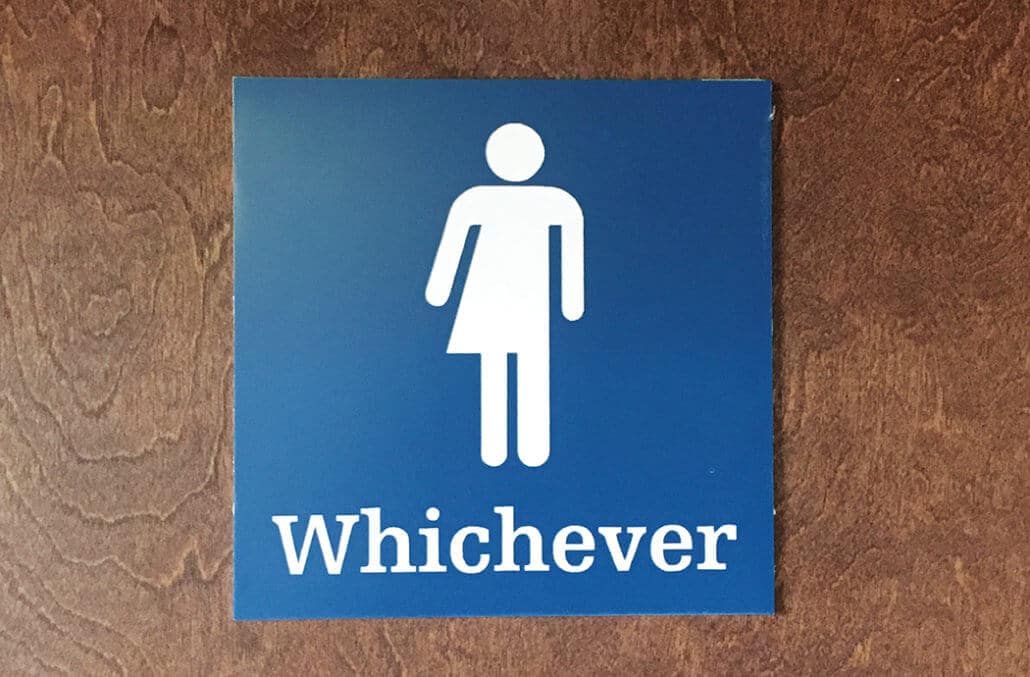
House Bill 2, dubbed the bathroom bill, was passed in response to a portion of a Charlotte Ordinance that would allow transgender people to use a bathroom based upon their gender identity or gender expression without discrimination.

Houston, Texas recently took that same issue to the voters and it was defeated by 61 percent of the vote after opponents used the slogan, “No men in the women’s bathroom.” However, the Houston effort was localized to one city, while North Carolina’s actions as a state created bigger waves and bigger headlines.

Prior to the vote in Charlotte, Governor McCrory sent a letter promising: “This action of allowing a person with male anatomy, for example, to use a female restroom or locker room will most likely cause immediate State legislative intervention which I would support as Governor.”

However, the legislative intervention that was taken reached well beyond the stalls of the restroom.

Part II of the bill titled “Statewide Consistency in Laws Related to Employment and Contracting” took away cities and municipalities’ rights to enact more diverse discrimination laws and higher minimum wages. While Part III titled “Protection of Rights in Employment and Public Accommodations” effectively ended the right for anyone to sue in state courts for wrongful termination based on discrimination.

Both the lightning fast passage of the bill as well as the shocking scope brought North Carolina into immediate national focus. Governors from New York, Washington and Vermont banned non-essential travel. Late night hosts Seth Meyers and Stephen Colbert got weeks worth of material and of course the economic backlash started.

“I’ve listened to the people of North Carolina.”

On April 12, Governor McCrory released a video to announce an executive order that would roll back several segments of House Bill 2. The Executive Order aims to expand LGBT protections and returns the power to sue in state courts in cases of termination based on discrimination.

“Based on this feedback, I’m taking action to affirm our state’s commitment to privacy and equality,” McCrory says.

But it’s not enough according to the North Carolina Democratic Party Executive Director Kimberly Reynolds.

“I don’t think he went far enough in that executive order,” she says. “In my opinion, if there is not a full repeal of that legislation, you have not gone far enough. Anything short of a full repeal is smoke and mirrors.”

LGBT advocates agree. “The executive order does nothing to alleviate the concerns of the LGBT community. The protections appear to be toothless,” says Executive Director of Equality NC Chris Sgro.

However, the actions taken in the executive order seem to be in line with a WRAL poll taken amidst the controversy with the majority of North Carolinians not in favor of HB2, but “on the bathroom provision, 56 percent said they somewhat agree or strongly agree that transgender people should use the bathroom that matches the gender listed on their birth certificates, not one that aligns with their gender identity.” ››

Executive Director for the North Carolina Republican Party, Dallas Woodhouse echoes that sentiment in defending the ‘privacy’ portion of the bill.

“The Governor was forced to tackle a difficult issue, but the most important priority was to maintain longstanding bathroom policies of safety, security and privacy. Parents in North Carolina should not have to worry about grown men waltzing into young girls locker-rooms, and now because of Republican action, they don’t,” he says.

Another one bites the dust

Nationally, however, reaction remains strong. Entertainers, such as Ani DiFranco and Cirque du Soleil, continue to cancel events even after the executive order was announced. With the state continuing to face economic pressures, is there a possibility for a repeal?

“We need to repeal this bill,” says the NCDP’s Reynolds. “Governor McCrory passed a bill that was discriminatory and, at the end of the day, has turned into a job killer and a national embarrassment for our state.”

But she’s doesn’t think it will happen anytime soon though democrats plan to introduce a bill to repeal House Bill 2 on the first day of the next legislative session.

“I don’t see a desire on [the Republican] side to overturn or repeal or make changes to it. It would require political courage on their part, which I don’t think they have,” she says.

Instead, she has her eyes set on November: “It’s going to require going to the polls in November and electing people that’ll stand up for things that they care about and support—and that’s repealing this bill.”

Timeline of events

March 2, 2015 Charlotte introduces an ordinance to allow transgender use of restrooms or locker rooms of their gender identity or expression. It fails 6-5.

 November 3, 2015 Houston, TX puts a similar measure to voters and the measure is defeated by 61%.

Feb. 22, 2016 Charlotte City Ordinance re-introduces Public and Private Facilities Ordinance. The ordinance passes 7-4.

March 23, After Governor McCrory refused to do so, Lt. Gov. Dan Forest and NC Speaker Tim Moore convene a special session of congress to write and pass House Bill 2.

March 23-24, National media and pundits pick up on the story, highlighting measures beyond the bathroom ordinance.

March 25, The office of the Governor releases a Myths vs Facts sheet about House Bill 2 to correct ‘false reports.’
April 1, The day the original Charlotte Ordinance would have been enacted.

April 5, PayPal announces it will not be building in CLT due to HB2.

April 8, Bruce Springsteen cancels Greensboro show.

April 8, The Greater Raleigh Convention and Visitors Bureau releases a statement citing losses of more than $700,000 in economic investment.

April 12, Governor McCrory releases a video press release to accompany an executive order that rolls back several pieces of HB2.

 April 12 Deutsche Bank halts plans to add 250 jobs in Cary.

April 15, NBA announces it is keeping the all-star game in Charlotte but finds HB2, “problematic.”

April 25, North Carolina General Assembly convenes.

It’s Personal

“Cirque du Soleil strongly believes in diversity and equality for every individual and is opposed to discrimination in any form. The new HB2 legislation passed in North Carolina is an important regression to ensuring human rights for all. We therefore choose to cancel our scheduled performances of… TORUK – Avatar in Raleigh (June 22-26).”—Press release dated April 15, 2016

There have been many big headlines regarding House Bill 2 and the related economic fallout, but for this reporter at Raleigh Magazine, the announcement from Cirque du Soleil was personal.

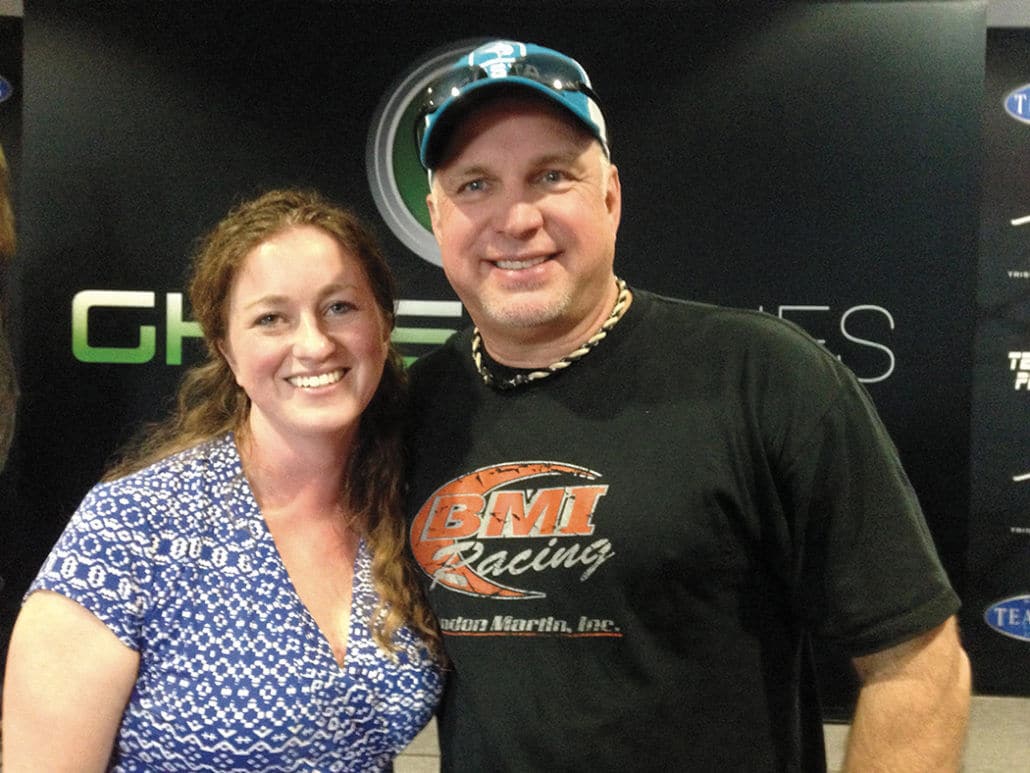
As much as Carrie Bradshaw glamorized the title “Writing Cannot Buy Me a Closet Full of Louboutins,” every now and again, there are perks. Last month, I had the opportunity to report on and meet Garth Brooks. This month, I was assigned to go on my first paid travel assignment. I was being flown to an advance showing of TORUK – Avatar to write a piece for the Raleigh Cirque du Soleil show. My editor simply sent me the press release quoted above with a frown emoji.

Thanks, House Bill 2.

Gender Identity vs. Gender Expression

The reason Charlotte’s Ordinance was considered too progressive by conservatives was in part because that both gender identity and gender expression were included. Gender Identity is what we typically think of when talking about transgender. It is internal. The person, despite being born with opposing anatomy, knows that they are the other gender and wants to be treated as such. Gender Expression is external, simply how you present yourself, formerly called transvestite or cross-dresser.

Should entertainers boycott North Carolina?

There seems to be two schools of thought amongst entertainers as they decide whether or not to perform in the state. Musicians and groups like Bruce Springsteen, Ringo Starr, Bryan Adams and Pearl Jam along with productions such as Cirque du Soleil and Wicked have cancelled their performances refusing to set foot in North Carolina in hopes that frustrated fans will put pressure on local legislators.

Others including comedian Joel McHale (who wore a homemade LGBTQ t-shirt at his recent performance in Durham) and singers Cindy Lauper, Jimmy Buffett and Mumford & Sons have opted to use their fame as a platform to advocate for change, donating proceeds to local LGBTQ organizations.

But which strategy is most effective? You tell us. Send us a tweet @raleighsmag

Why North Carolina?

Governor McCrory called the backlash against North Carolina, “hypocritical,” citing the ordinance that failed in Houston less than a year ago that did not result in national media and boycotts. So why was North Carolina found so guilty in the public trial?

Here, are three big reasons:

The Process
The state legislature convened a special session, often called an emergency session to deal with this measure, prompting mockery that which bathrooms people use is more important than poverty or education issues.

The Overreach of HB2
While many expected the portion which overturned the bathroom ordinance, the House Bill extended and expanded to take away the right to sue for wrongful termination in state courts, a move that many saw as an overreach, a claim that may be supported by the fact that Governor McCrory asked congress to repeal that part of House Bill 2 in his executive order.

Politics

This is an election year and the added drama that our Governor will be facing Attorney General, Roy Cooper, who has refused to defend the state in a lawsuit brought over HB2, increases the political stakes on all sides. Moreover, in light of the recent Amendment 1 and a switch to a Republican led congress in North Carolina, (prompting Moral Monday marches) Democrats and Progressives who largely oppose House Bill 2 have strong, active and well organized coalitions in North Carolina. These groups were able to quickly come together in their opposition, almost immediately releasing statements, organizing protests and contacting national outlets.

Garth & Trisha in Raleigh

Garth & Trisha in Raleigh

From his start at Raleigh’s Longbranch to his recent three-day arena show last month, Garth Brooks is at superstar status—and a genuinely nice guy.

Garth Brooks strolls down the hall toward the press conference wearing jeans and a T-shirt with his phone held out in front of him in ‘selfie’ posture. He’s doing a live feed for the Facebook Live adventure he had just launched the day before coming to Raleigh.

He’s joking with Trisha Yearwood, his wife of 10 years, as he pivots his back to the reporters to include them all in the shot.

“You guys are on Facebook Live right now, just FYI,” Yearwood calls to us.

He shifts the focus to the roomful of reporters waving like friends being videoed at a tailgate.

“Because we’re on Facebook Live, they’re going to be very nice to me,” he says to the cyber-fans watching him.

The reporters laugh appreciatively. Brooks completely owns the room, and he’s barely stepped inside.

From putting the Longbranch on the map to proving that Raleigh is a town that can support a three-night arena appearance, Garth’s mark on Raleigh is indelible.

Full Circle

Moments before the grand entrance to the press conference, a reporter sitting in the back is shifting in her seat. She says she might be too nervous to ask a question. “I was at the Longbranch the first time he was there, and I’ve been a fan ever since,” she says.

The Longbranch had humble roots but grew to be a crucial rung for country artists as they climbed to super-stardom.

Fred Wilburn, owner of the Longbranch gave credit to Brooks in a 2007 CMT interview. “He (Brooks) really started us off. He’s the best entertainer I’ve ever seen. That guy put us on the track for getting other big stars.”

Brooks humbly gives the credit back. “Talk about full circle,” he said at the press conference. “Raleigh means the beginning for us. Longbranch took us in and booked us when no one else was.”

“What it’s all about”

Humility hallmarks the 30-minute reporter Q&A. No matter what is asked, Brooks circles it back to an artist that inspired him, the fans that keep him going or, most often, to his wife.

From her role as Mary in Fox’s The Passion: Live to her cooking show on the Food Network, Trisha’s Southern Kitchen, Yearwood is as busy as Brooks.

As she pauses to answer a question about a new cookbook, Brooks interrupts, “She is the most beautiful woman I have ever seen.” He raises his hand toward Trisha who is wearing jeans and a shimmering grey sweater. “Sorry, go ahead, but isn’t she beautiful?”

The reporters are putty. We see her through his eyes. She joyfully soaks up the praise of a man she clearly adores. This is the kind of marriage that isn’t supposed to exist between superstars, especially not superstars who have been together for a decade.

“This is what it’s all about,” Brooks says. “I got to raise my daughters, be there for every practice, every school event, and now I get to tour with the love of my life.”

The Concert that Connects

Thousands in Raleigh turned out to see Garth Brooks at the PNC Arena March 11-13.

“He makes the audience feel special, engaged and connected,” says Megan Lumley, director of practice management for Rex Express Cares. Prior to the Raleigh show, she’d already been to three shows on Garth’s Man Against the Machine tour and was looking forward to sitting in the third row opening night in Raleigh with a sign that read, “I’m celebrating my birthday with you, Garth.”

At the press conference, Brooks recorded a birthday greeting for Lumley. “Hi Miss Megan, Happy Birthday to you. Third row, I’ll be looking for you, I’ll be the one in the hat.”

Lumley watched the recording: “OK, I can die now.”

But that moment paled in comparison when, true to his word, during Thunder Rolls, Brooks looked for her and said, “Happy Birthday, Megan.”

The End  of Drowning?

The End of Drowning?

Drowning is the top killer for children under the age of 5, and those statistics haven’t budged for decades.

Looking into the eyes of another devastated mom, Dr. Graham Snyder often has to deliver the heartbreaking news as a pediatric emergency room physician. A child was right there swimming, splashing, playing; then, they weren’t.

When Snyder and his colleague, Dr. Courtney Mann, realized we’re still using the same methods to prevent drowning that we did in the 14th century, they asked a simple question: Was there a way to incorporate technology to keep kids safe?

A local camp provided insight.

SEAL SwimSafe

SEAL SwimSafe

Snyder noticed that kids at the YMCA wore necklace swimming bands, used to help both the lifeguards and swimmers know the swimmer’s restrictions based on the band color. Black is for the most advanced swimmers.

“If they are already wearing swimming bands, can we build a smarter band? One that knows when a child has been submerged too long? One that allows kids to do what they want to do—splash, dive, be at the bottom of the pool—but can tell when a child is not having fun anymore?” Snyder wondered.

Snyder and Mann developed the SEAL SwimSafe system, which will be used by North Carolina YMCAs this summer, says A.E. Finley YMCA’s aquatics director, Jeff Little.

It’s a neck band the swimmer wears that contains a radio transmitter that can detect how long the device has been submerged underwater. If under too long, an alarm sounds and a light from the band itself begins to flash.

The band is attached to a hub on the pool deck that also sets off an alarm to let you know that someone is in trouble.

If a child slips underwater, not only will an alarm sound alerting the entire pool that someone is submerged, but the light flashing will lead to a rescue seconds later, as opposed to minutes—the difference between life and death.

“SEAL SwimSafe bands will add an extra layer of safety for our swimmers,” says Little. “If all of our testing matches what we have seen so far, we hope to add this extra layer of protection and awareness to all of our swim programs.”