Slicing onto the scene, Pizzeria Toro promises to be your next ’za obsesh when it fires up next summer at Seaboard Station.
Courtesy of Pizzeria Toro
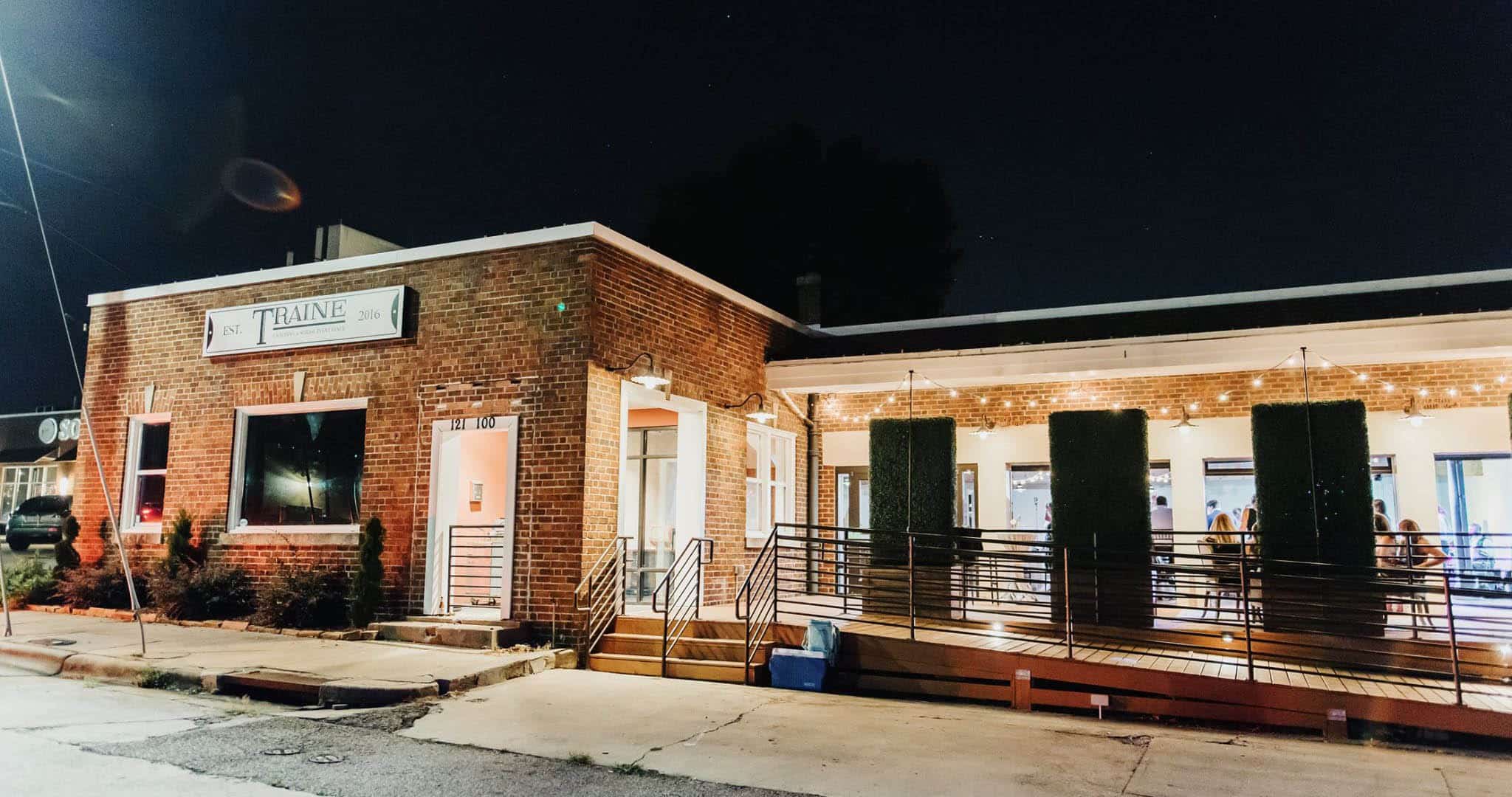
Having already amassed a cult following, the uberpopular Bull City wood-fired pizza place is sliding its signature pies into an ever-fitting former trucking company garage that’s part industrial grit, part open-air chill—and soon to be home for their neighborhood hangout alongside upcoming The Common Market.
Bright, high and airy, the space screamed Toro to the team: raw, open and ready for bar-and-pizza-joint energy. “We’ve always been really picky about where to put another Toro,” says chef/partner Gray Brooks of the pizzeria’s sophomore effort after over a dozen years in Durham—“but when this opportunity came up, it just felt right.”
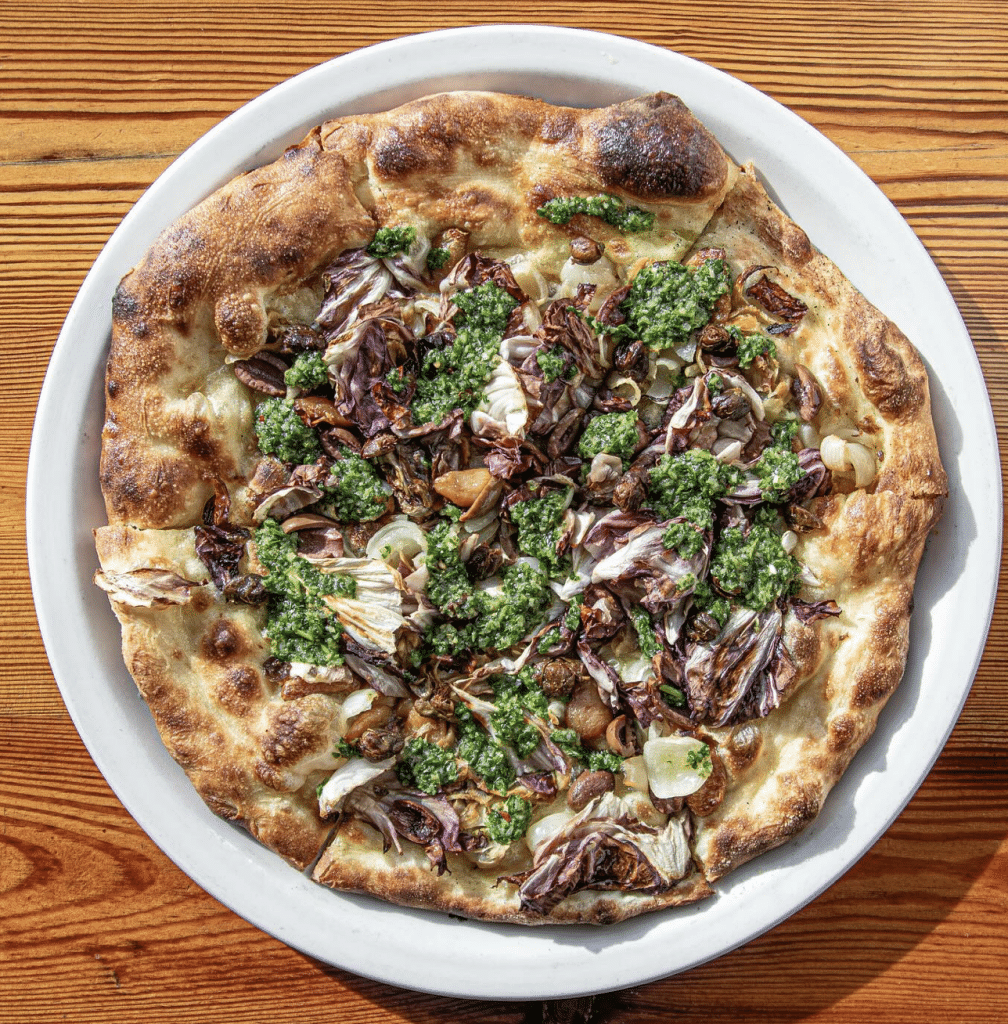
Helmed by Gray, who cut his teeth in fine dining, alongside Seattle-bred hospitalitarians Jay Owens and partner + wife Cara Stacy, Toro Jr. is the byproduct of the trio’s MO of marrying thoughtful service, elevated eats and casual vibes. That philosophy shows in every aspect of their Durham success and selects—from classic margherita and pepperoni pies to seasonal creations crowned with locally sourced ingredients, all blistered and charred to perfection.
Long lauded by local foodies, critics and national outlets as one of Durham’s top ’za destinations, the team looks to bring that same winning recipe to Raleigh. “Operating a restaurant outside of Durham is going to be a new challenge for us—one that we’re really excited about,” shares Brooks. “We’ve always loved the food scene here—so many talented chefs and great staffs. And we’re stoked to be a small part of it. I think we’ll fit in pretty well.”
After sitting empty for two-plus years, the much-buzzed-about Sawmill Tap Room is finally getting new life.
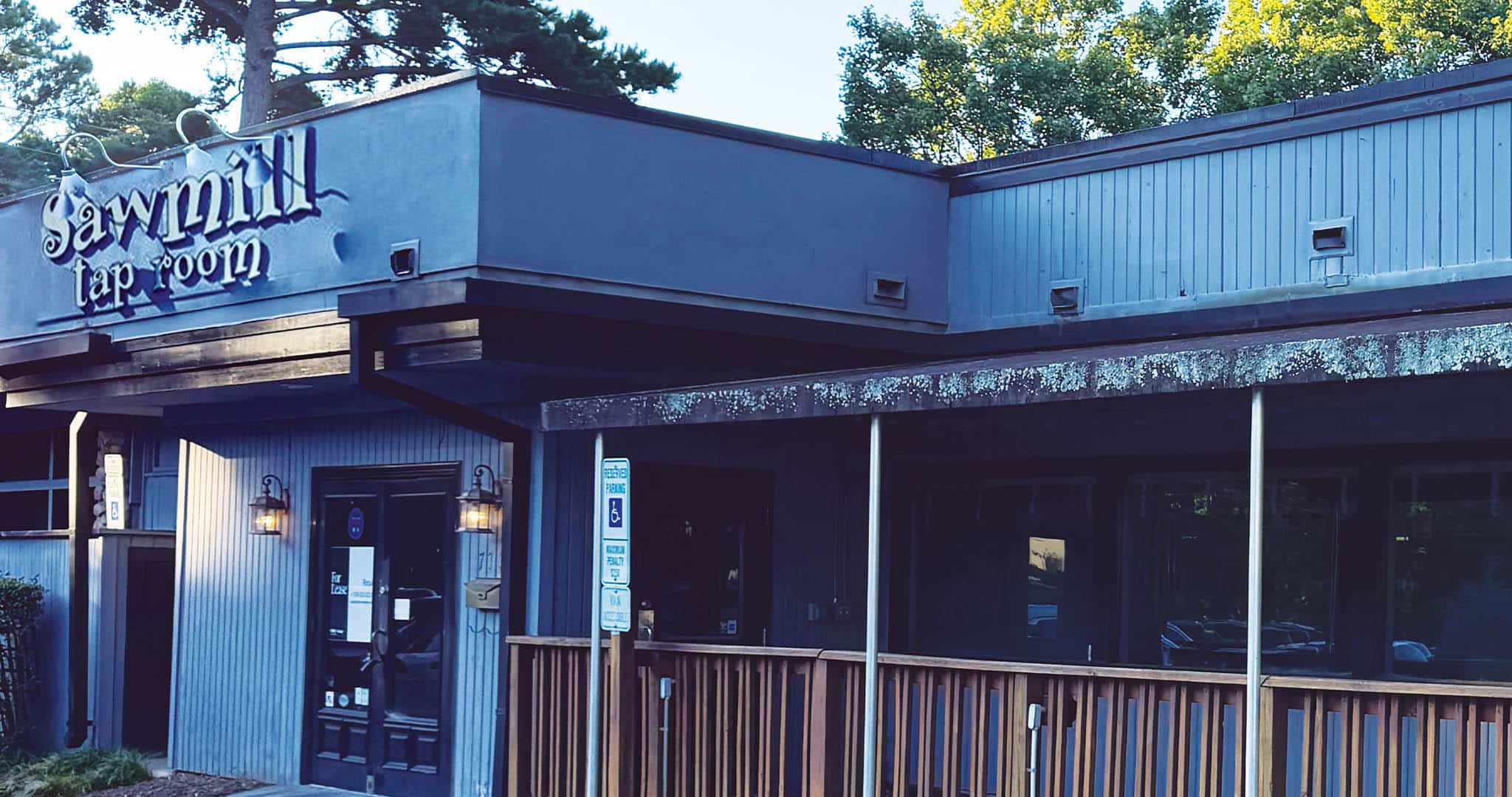
It’s time for swine. Longleaf Swine, that is. The ’cue crew is set to take over the long-buzzed-about—and long-defunct—former Sawmill Tap Room space, piggybacking on its DTR cred and the Tap Room’s uberpopular North Raleigh location with a second helping next fall.
In talks since February, the team has officially inked the deal, thanks to the efforts of Elm Partners continued efforts to save Raleigh’s soul one building at a time: “We’re really just trying to put good people in good places,” says Elm Managing Partner Nick Wilson. “That’s the most important thing to us.”
And so they have—finally putting an end to the ~two-and-a-half year vacancy, and perhaps easing the collective frustration over why the nearly 25-year North Raleigh staple was pushed out, only to sit empty. (The CliffsNotes catchup: Owners were left “shocked and heartbroken” after the landlord reportedly declined to renew their lease amid ~$1 million interior reno demands they couldn’t take on—forcing them to shutter in May 2023.) Ironically, it’s Tap Room’s distinct character that’s sparked the loudest lament.
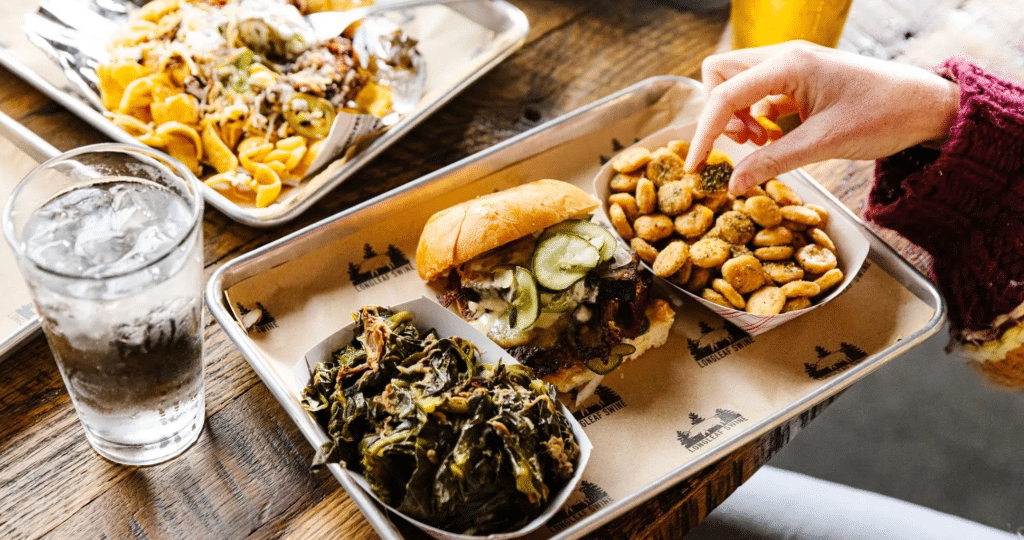
Courtesy of Longleaf Swine
Now, turning over a new leaf, Longleaf is primed to rewrite the story—bringing its big, bold barbecue and bevs to a grander stage, as the larger footprint gives the cult-fave pitmasters room to expand their reach. “It’s a chance for us to serve more of Raleigh in a larger way,” says Longleaf owner/operator Adam Cunningham. The new hub will also house their catering ops—making it a one-stop for smoke, spice and everything in between.
Leading up to the debut, expect a full gut and glow-up courtesy of style architect Dustin Slemp (of Dose Yoga and Olivero design fame), complete with a total reno to resurrect the landmark with Longleaf’s signature trays, sandos, shareables, sides and “wings & things”—not to mention its range of local to less-local beers, seltzers, wine and spirits. And calling the whole crew to the “pigpen,” there’s plenty to feed the “little piggies,” plus weekly specials (Noodle Night! Fish Fryday!) to keep the fam coming back for more.
All told, it’s not just a new locale—it’s a bold second act. Longleaf Swine is set to do the Tap Room legacy proud by turning up the heat, raising the stakes and (figuratively) setting North Raleigh aflame.
Inside Raleigh’s rising wave of hypertargeted, convincing scams
Forget unknown numbers. Today’s scams look like your bank, the DMV, even your boss—until one click costs you everything.
And they’re good at it. Hacks are sending hypertargeted, eerily convincing messages that look legit, but are designed to steal your personal info (and fast). Posing as everything from the post office to a job recruiter, fraud has entered the chat—literally.
One common scheme involves a text posing as the NCDMV, demanding immediate pay for a bogus unpaid parking ticket, or risk losing your license and driving privileges for 30 days. While the text reads legit, a quick Google reveals the NCDMV will never text or email you.
A similar smishing scam impersonates NC Quick Pass, threatening steep penalties for unpaid tolls. But just like the DMV, Quick Pass will never request payments via text. And neither will the IRS—which is not going to message you for personal or financial info for you to receive a refund or stimulus check.
But it’s not all petty phishing. Raleigh Police confirm a far more chilling text is circulating locally via graphic, menacing messages from a “cartel” or “criminal org” threatening dismemberment or death unless money is sent immediately.
Your inbox isn’t any safer. Fraudsters are firing off fake emails disguised as official notices from Apple, PayPal, Amazon, Instagram, streaming services, you name it—anything to bait you into clicking. The branding is spot-on, the links look clean and the consequences sound urgent.
One local tells RM that during a recent job search, he was inundated with messages from supposed recruiters referencing jobs he’d “applied for” asking him to “reply YES” to connect. Easy enough to buy when you’re blasting out résumés, but it was just a phishing ploy dressed in HR speak.
And, of course, there’s still the phone. Grifter “credit card agents” are on the hack to verify your card number or CVV, citing phony charges or suspicious activity. Another Raleighite tells RM she was half-duped when a scammer convinced her that her card had been compromised, then pushed for bank login and other account credentials under the guise of “securing” them. Luckily, red flags went up and she hit pause before complying—then canceled her now-compromised card on the spot.
Bottom line: Impersonators are everywhere—and they’re after more than cheap thrills. These scammers are savvy. They’re skilled. And they’re trained to trick you. No matter which scam you stumble into—text, email, call, fake job offer—don’t let humility slow you down. If they get you, it’s not a reflection of how careless you are. It’s proof of how manipulative and convincing they are. Stay calm. Act fast…and keep reading for simple, practical tips on how to protect yourself before—or when—the next message hits.
Raleigh’s restaurant scene burns bright—and often burns out.
Standing in the five-hourlong line for one last meal at 42nd St. Oyster Bar—just hours before the nearly century-old seafood and steak institution shuttered for good—it’s never been more clear how deeply these restaurant relics matter to Raleighites, woven into the very fabric and identity of her DNA. And, yet, in a city fueled by growth, change and a constant craving for what’s next, restaurants here often feel more like moments than legacies—sizzling with what’s new while struggling to sustain what lasts.
Still very much a city on the rise, Raleigh’s dining culture reflects that forward momentum: dynamic, experimental and shaped by waves of newcomers. We celebrate restaurant launches with fanfare, flock to the next big thing and, before long, wonder whatever happened to that place we loved. But what we lack is a true celebration of the kind of deep, generational legacies you travel to the likes of New York, New Orleans or even Charleston just to experience.
In these seasoned cities, the community rallies to protect its culinary keepsakes. They’re more than just spots to sample the latest trending dish, ’Gram the newest spritz iteration or tick off a bucket list—and they do so much more than fill seats: fostering lasting connections, serving as the backdrop for stories passed down through generations, and giving locals a sense of belonging that far outlasts the latest trends and headlines, never mind enticing tourists to travel just for a taste. They’re spaces where community roots run deep and identity takes shape, serving as living archives of a city’s evolving story—especially in the face of urban redevelopment and corporatization.
The truth is, these places don’t endure on sentiment alone. If we want to keep them, we have to show up—for more than just the farewell tour. That means choosing the comfort of the familiar over the novelty of the new every now and then, booking the table before it’s too late.
Much like the revered Depression-era fish market-turned-seafood haven 42nd Street, many beloved institutions have faced the same fate—pushed out by rising rents that trade the past for progress. Layer in shifting demographics, mounting development pressure, soaring food costs and evolving tastes, and it’s no wonder we’ve recently lost a wave of mainstays—David’s Dumplings, Mandolin and Mofu Shoppe, among others. That’s the crux of the issue: It’s hard to establish a landmark when the literal ground beneath you is constantly shifting—especially without the support of the very community you’re built to feed.
Juli Leonard
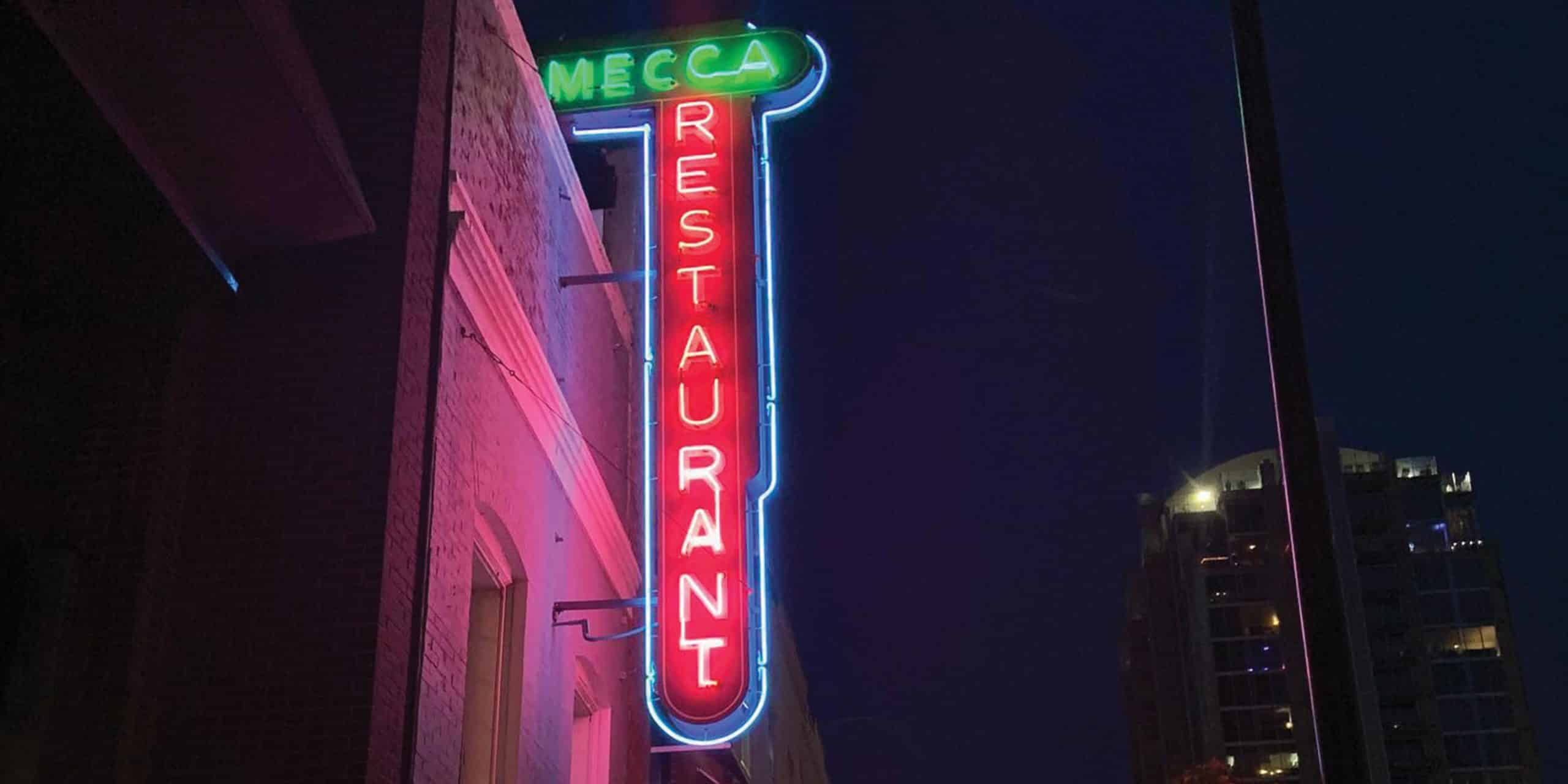
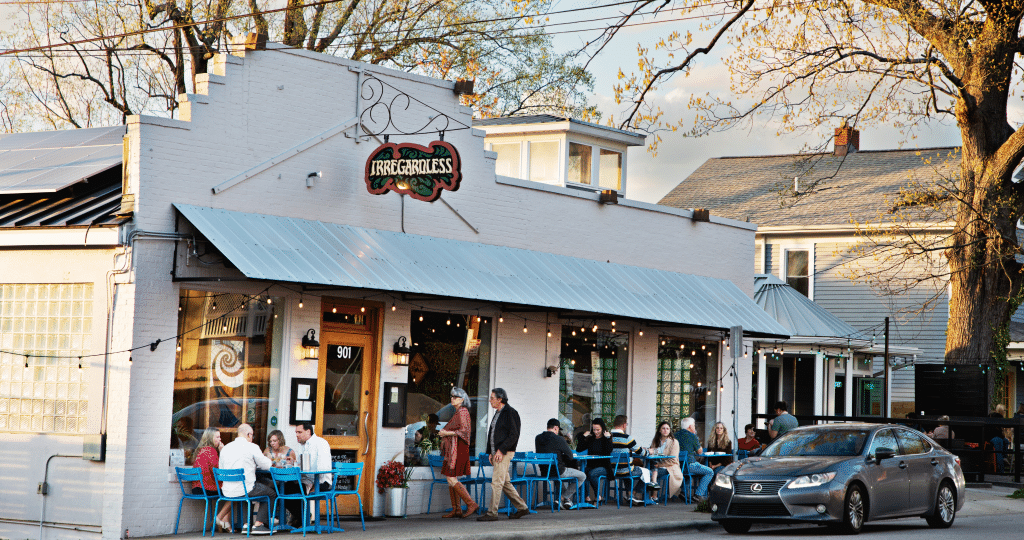
So in a city where the landscape can shift as quickly as the foodie trends, Raleigh restaurants are forced to constantly reinvent themselves to stay alive. But, rarely, a space finds a way to endure without sacrificing its soul. Salvations like Irregardless and Mecca Restaurant prove that preservation rooted in intention can have staying power. In both cases, change of ownership was a deliberate act—a commitment that affirms these aren’t just restaurants, but relics of Raleigh’s soul, sustained by community support and able to serve another set of decades to safeguard the city’s history, recipes and rituals otherwise lost in the churn of development and gentrification.
We’ve witnessed more than our fair share of outward grief and nostalgia for beloved haunts throwing in the towel—yet not enough bookings while they’re open to help them survive. As a result, Raleighites can just about count on one hand the number of eateries that have eclipsed the half-century mark.
Sure, legacy takes time—as do concepts that have legs for decades to come. Multi-Beard-celebrated places like Poole’s (2007) and Crawford and Son (2016) are pillars in their own right that show no signs of slowing—and are the exact kinds of anchors identity can be built on. Perhaps we’re beginning to see the signs of battle-tested fixtures, chefs planting roots, and a community that truly values both trend and tradition.
And, just maybe, Raleigh’s moment-over-legacy mindset isn’t a flaw—but a chapter. A potentially short-sighted one, if we don’t learn to invest in longevity as much as we do in novelty. As our city matures, we may finally be ready to champion not just what’s next, but what lasts. Now, as Raleigh Magazine turns the page on a new decade, we’re more committed than ever to doing our part to extend that narrative—by telling more stories that celebrate staying power and encouraging our community to support it, seat by seat, meal by meal.
Raleigh Anchors
Going strong for 30+ years, these are exceptions in a sea of short-lived concepts or long-loved losses.
Fine dining, now dressed down for your everyday appetite.
“It’s not complicated,” muses East End Bistrot mastermind William D’Auvray. “It’s elevated.” And, now—it’s for everyone.
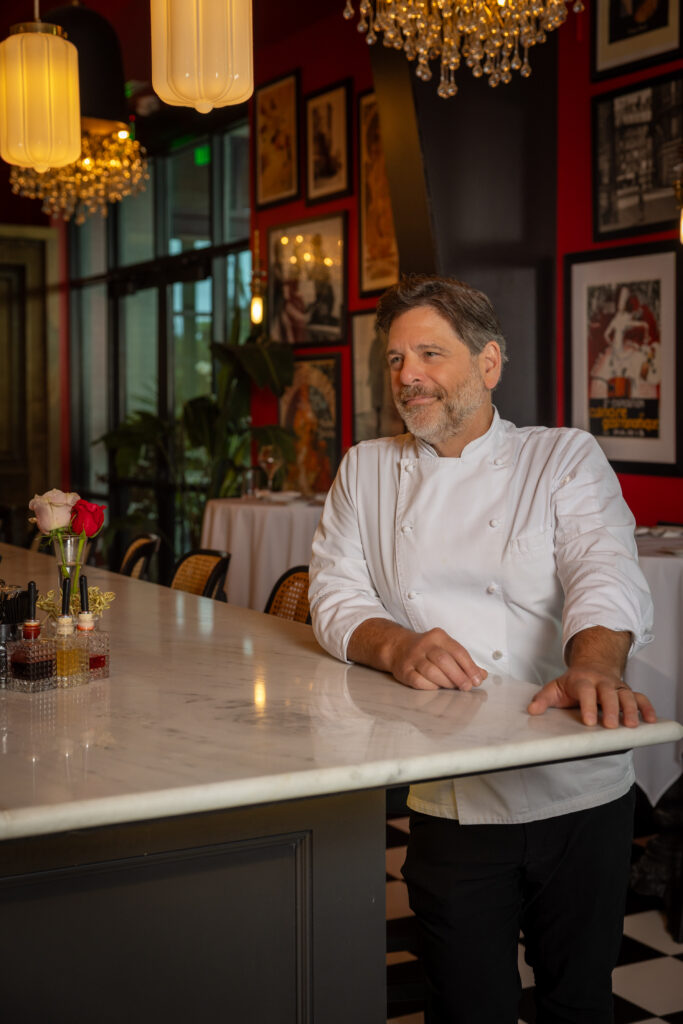
Less chophouse and formal, more whimsical and comfortable, D’Auvray is loosening the collar at East End—from the price point to the mood to the menu. Now taking the reins as managing partner, the executive chef behind the cult-favorite Giorgios Hospitality Group concept since day one has shifted the focus, infusing true “bistro” energy into East End Bistrot.
It’s a sign of the times—and how people want to eat now. And the shift playfully, poetically and thoughtfully answers the call for a dining experience that is at once polished and accessible. No longer just a special-occasion splurge, it’s serving drop-in delicacy with a range of refined yet unpretentious offerings.
Having staged under some of the world’s most celebrated chefs, D’Auvray is among the early champions of marrying classic French techniques with Japanese and broader Asian influences—long before “fusion” became a (dirty) buzzword. Now, he’s bringing that finesse to the forefront—not by abandoning what works, but by expanding its soul: preserving the space’s signature sophistication while lowering barriers and creating a space where finesse and friendliness coexist.
Forrest Mason Media
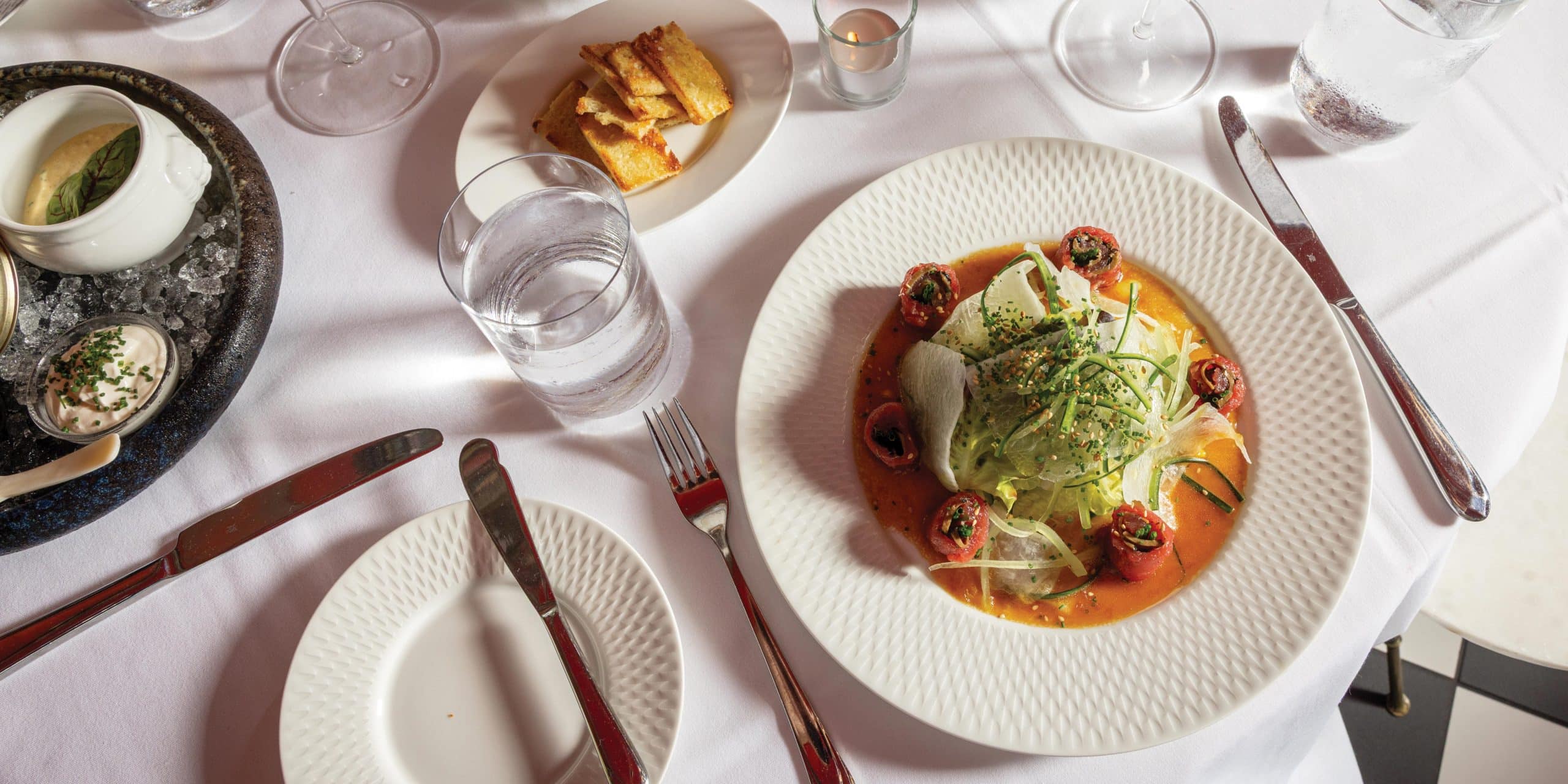
There’s brilliance in the balance: like a citrus-bright sashimi salad kissed with lemon-lime white shoyu, or the genre-redefining black grouper goujonettes with fine herbes–laced tarter that will make you rethink every other iteration. Or the once “secret” East End burger now proudly anchoring a tight list of mains and a pair of Dover sole or Côte de Boeuf “Classiques” for those still craving the full fine-dining hit. The OG bible-size wine book remains on request, but a streamlined by-the-glass list is more spontaneous and seamless.
That nuanced shift plays throughout: sleek black-and-white bistro napkins replacing fine-dining formality, more relaxed glassware and bud vases, Sinatra swapped for upbeat tracks. The lush Champagne terrace is, too, a more accessible ticket, with every dish ringing in under $15—a transportive escape without the splurge. And come September, a buzzy brunch joins the lineup.
All told, it’s a refined-meets-relaxed choose-your-own-adventure culinary unicorn. Terrace or sidewalk seat, lingering dinner or solo nightcap—fit for whether you’re dropping in on a whim or dressing to the nines for a special occasion—Raleigh’s most dazzling dining stage and culinary-theater backdrop still beckons.
More than a business move, it’s personal. For D’Auvray—whose whole pedigree is built on inflecting one cuisine with another—the evolution is about cooking more like himself: less steakhouse, more style. Less formality, more feeling. Less about making a reservation, more about making it a habit.
And in that, East End Bistrot isn’t just serving dinner—it’s rewriting the fine-dining script for Raleigh. One bistro dish at a time. eastendbistrotraleigh.com