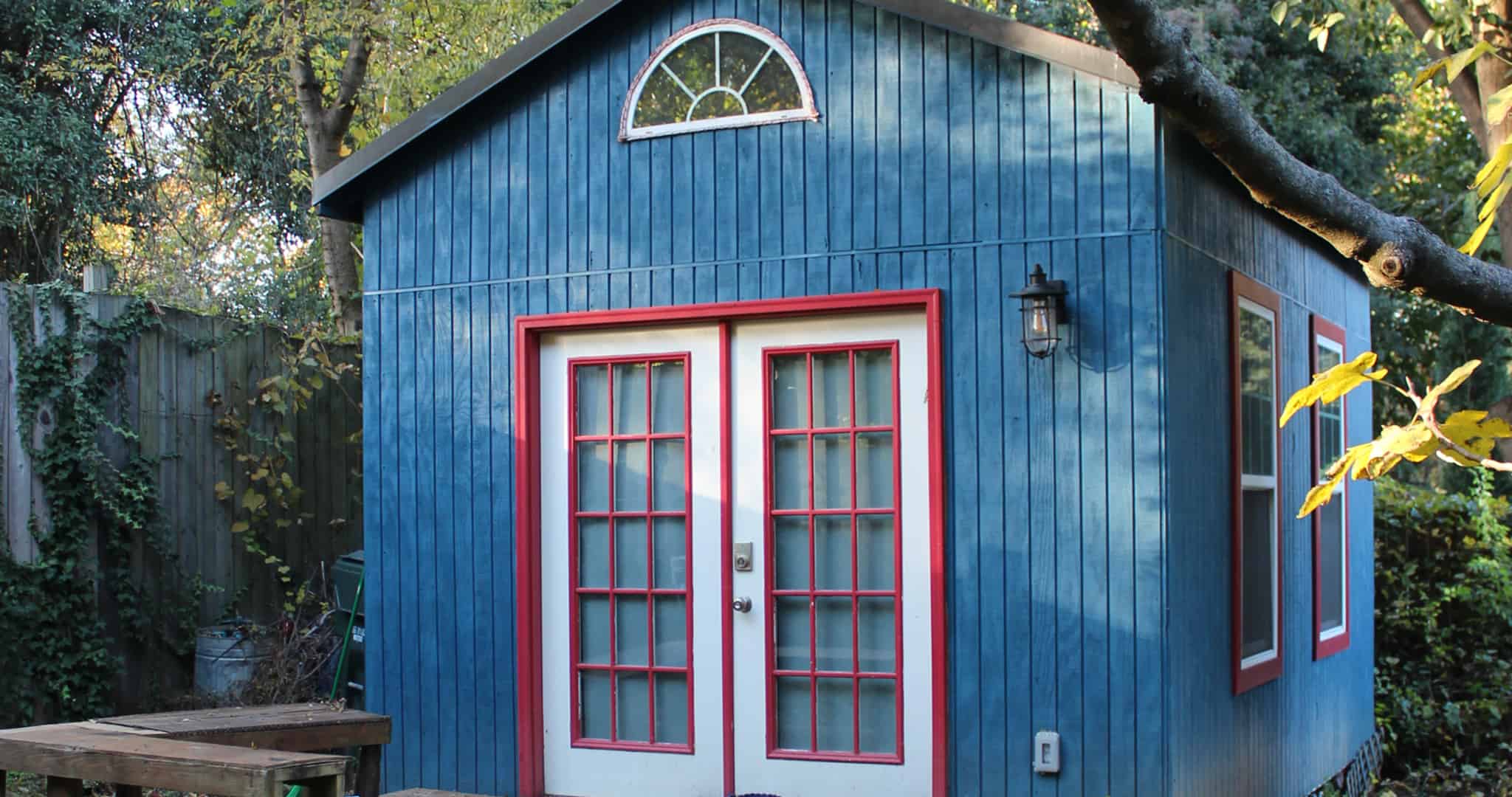
How small is affordable in Raleigh? A new law regarding tiny homes could address Raleigh’s affordable housing shortage.
Big houses are big business right now with nary a home to spare—and the housing market is setting price records monthly. Enter the potential game changer: tiny living.
Now, joining the popular pocket-size living craze, the City of Oaks may be seeing more tiny houses, thanks to recommended zoning rule changes that would allow for the construction of tiny homes—meaning sub-600 square feet. (City Council will hear public input on Dec. 7.)
So are tiny homes the future of Raleigh real estate? Well, as these residences are typically half the cost of a standard house—if not more—it would certainly come as good news for those struggling to afford a home in Raleigh’s current market, providing locals with a cheaper (albeit smaller) option when it comes to housing.
But Tiny Homes Raleigh owner Dexter Tillet isn’t convinced. “I don’t think it’s going to be the future,” he says, “but I think there’s going to be space for it. A lot of people really value it. I think it’s just gonna give Raleigh citizens more options, and that’s what we really want.” Tillet adds that, if you look at cities across the country with similar growth as Raleigh—like Portland, Oregon, where he lived for about a year—almost every house has a tiny house addition. It’s just one way in which city officials can handle the density and growth that Raleigh is facing.
Besides price, smaller spaces are also attractive in that many people aren’t looking for huge living spaces right now. During the pandemic, we saw people make a mass exodus for the burbs and bigger spaces—because quarantine and WFH—but since the world has reopened again (pause for applause), we’ve seen a rapid rewind, if not reversal, in that cultural shift. Now sick of their four walls, people want to mix and mingle… and just want a place to lay their heads—and spend their dollars on experiences.
But when it comes to tiny homes, functionality and outdoor space aren’t a compromise—in fact, it’s the most attractive aspect, according to Tillet. These small residences offer a little front yard, a backyard, plumbing and their own HVAC unit. “I think tiny homes give a really good option—especially for multifamily—for a different type of living,” he says.
And tiny living isn’t confined to tiny houses. Take Midtown’s newest development, Raleigh Iron Works, which is offering 430- to 865-square-foot micro, studio and one-bedroom units in its multifamily rental building that put an emphasis on amenities and location rather than square footage—providing yet another option for cheaper, smaller living. The developers say their goal in the design of these efficient floor plans is to provide right-size living to fit the needs of today’s renters.
So what’s next? If City Council approves the tiny homes changes, it would allow these petite pads to be built as standalone buildings or in tiny-home communities with shared open space. “So just like a housing development you would have for a subdivision for a neighborhood, it’s the same thing, but just a smaller footprint and more density,” explains Tillet. “It’s just a lot more people utilizing that land. So I think that’s what we have to do as a growing city, and one of the benefits of living in a tiny home is knowing what you want, knowing what you don’t want and kind of just simplifying your life.” After all, a simple life is a happy life.
$398,500 Median sales price of Wake County real estate
$209 million+ October real estate sales (of transactions worth $30+ million) in Wake County
17th Highest millennial homeownership rate in U.S.
$52,000 Average cost of a tiny home nationally in August
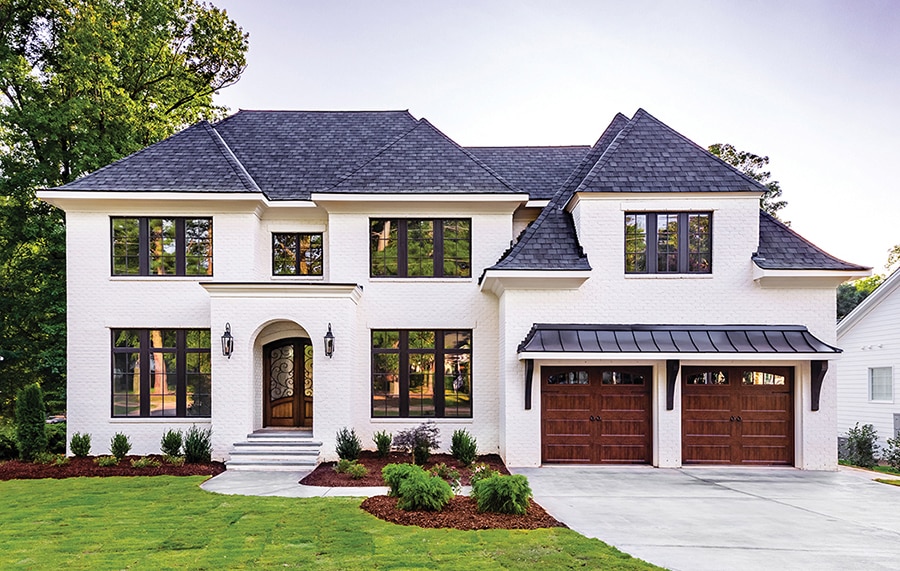
Unlike in the past, Raleigh residents are buying bigger homes with higher price tags. Luxury home sales have seen a boom in the last year, with more and more residents looking for more space and custom touches.
But why the change?
There are certain economic trends that have benefited luxury housing. According to the Triangle Area Residential Realty Report, in the last decade, the Triangle’s employed workforce has increased 31 percent, while the unemployment rate decreased from 9 percent to 3 percent and the median family income increased 30 percent. Those numbers give potential buyers more security when they’re deciding to purchase a more expensive home.
In fact, the Triangle’s luxury housing market with a closed listing price of $1 million-plus was up 31 percent in 2019, a significant boost by anyone’s standards. Even though the market’s “sweet spot” still remains in the $200- to $400,000 range, that doesn’t mean other areas of the market aren’t seeing growth.
“It’s really about what’s happened with stock equities and what’s happened with house prices locally and nationally,” says Stacey Anfindsen, a residential real estate appraiser and market analyst, who edits the Residential Realty Report. “The Dow Jones over the last decade is up something like 171 percent. The point behind that is that money isn’t sitting in people’s bank accounts. They are cashing it out and putting it into their houses. Anyone who bought a house post-recession is up. Most people will take their home equity when they sell a house and put it into their new house.”
Villa Park by Sam St. Clair
Often, luxury homes are a product of “moving up,” or upgrading current conditions.
“The higher price range is often connected to a move-up buy,” says Frank DeRonja, broker at Raleigh firm DeRonja Real Estate. “You are at a point in your life or your career when you might be moving on from a $500,000 house. You are comfortable with your financial situation and you go ahead and pull the trigger for that price range.”
With houses gaining equity and the national average for a 30-year fixed mortgage rate down from 5 percent to 3.7 percent, making the move no longer seems intimidating. There’s also the out-of-towner factor.
According to the U.S. Census Bureau, Wake County has received an influx of residents from areas around Seattle, San Francisco, Los Angeles, Phoenix, Boston, Chicago, New York and southern Florida, to name a few. Housing markets differ greatly from state to state and some residents may get more for their dollar here; perhaps, then, they’ll purchase a larger home with more bells and whistles or they’ll create one for themselves.
For Kimarie Ankenbrand, who moved here from Dallas on a whim following a job opportunity, custom building was the only way to go. Having previously renovated her two former homes in Dallas, Ankenbrand knew her style and what she wanted. She also had a neighborhood picked out here in Raleigh, but with low inventory and options that didn’t suit her, Ankenbrand decided custom building was better.
“After you’ve built a house once or twice and picked everything out yourself, it’s hard to go back,” says Ankenbrand, who currently is building in Country Club Hills inside the I-440 Beltline. “There were design elements we were seeing in Dallas that we weren’t seeing here. We were looking for something more modern and transitional instead of Southern and traditional.” With the planning process beginning in September of 2018 and on schedule to finish in May of this year, all in all it’s about an 18-month process.
Ankenbrand isn’t alone in her lean toward custom built houses. As the price point rises, more and more people want to pick the details, from layout to finishes to appliances.
“What I see is when folks custom build, you very often feel like this is your last time through,” says DeRonja. “You see people make decisions on things more expensive than if things were made for you. It’s amazing what is included in homes. Builders have gotten very smart with appliance packages, quality of materials and trim work. The details are where you see a lot of the differences.”
But custom homes aren’t the only homes in the luxury market. Some builders are going above and beyond to create spec homes (listings built without a buyer) at a much higher budget.
The most expensive finished spec home in Raleigh that sold in 2019 closed at a whopping $1.96 million. Created by Sam St. Clair in Villa Park, this sprawling property features everything from spray foam insulation to 7,000 square feet of pre-finished, engineered European oak flooring to fireplaces as tall at 16 feet covered in stone. Every bathroom even had custom tile designs taken all the way to the ceiling. In other words, the builder spared no expense.
“A spec house is very risky,” St. Clair says. “Most would think when building a spec, it’s important to find ways to save money so our invested costs aren’t as high. My view is completely opposite. I’d rather spend the extra money and make sure my house is everything the future owner could ever dream of. When designing the house especially in this price range, no detail can be overlooked. For example, how many people would notice a pot filler behind the range? I’m not sure, but I’d much rather buy an $800 pot filler and know that my house checks off that box.”
Waterstone Reserve by Kendall Custom Homes
The couple that ultimately bought the house had been looking for something in the neighborhood that was modern and new and that they could grow into; it took them five years to find their home. The husband, a young professional who didn’t want his name used, says that buying such a large home wasn’t his initial intention, but when he looked at comps in the market, they weren’t half the cost for half the house.
“We didn’t necessarily need this much square footage, but price per square foot and the size of the lot was a big factor,” he says. “In the surrounding areas, the houses were just a little bit less expensive but half the size. As far as the quality of the construction, I tip my hat to the builder. The entire house is brick. The floors are wood panel, all the top level appliances. My intentions are to be here for a long time. We wanted a gym in the basement and we are going to turn some of the rooms into other uses like a home theater. When we have kids they’ll have plenty of space to roam around and do their own thing.”
St. Clair isn’t the only builder getting creative and taking chances. Luis Torres with Kendall Custom Homes, who won gold during the 2019 Parade of Homes, was recently in South America looking for inspiration for upcoming builds.
“It’s a little risky to change things up, but that’s what makes a custom home,” says Torres, who’s award-winning home featured custom-made floating stairs. “Every time you see new builders come out and say this is a custom home, but you go look at it and it’s the same house down the street and there’s nothing really custom about it. Custom has been forgotten, anything can be custom. Of course you only have a little bit of margin to do that because price has to be in the game. You can’t customize everything or it won’t be affordable at some point. I get the joy of building it, they get the joy of living in it.”
Waterstone Reserve by Kendall Custom Homes
While large custom builds with custom cabinetry, dual master suites and thousands of square feet of living space are exciting to think about, they are not the new norm in the Raleigh market. Luxury housing has seen a large increase recently, with 2019 listings up 16 percent but it is still a niche market. The median average home listing price is still well below the luxury range at $340,000, according to Zillow. But in terms of custom homes, it has been harder and harder to find homes at the lower end of the spectrum. The rise in land value paired with the tearing down of cheaper homes has cut inventory severely inside the Beltline.
“So much ties back to inventory,” says DeRonja. “Building new construction closer to the city center, inevitably you might spend $400,000 on a house and lot to tear down, and that’s taking a $400,000 house out of the market for someone who wants to move into it. You may argue that a $400,000 house isn’t affordable, but you might also argue that in some parts of town that’s on the lower end.”
Raleigh’s come a long way. In the past 20 years, this erstwhile sleepy Southern capital has become a vibrant, bustling city, an emerging tech hub and a destination for transplants of all ages. It’s grown by nearly double and it’s topping lists for affordability, job opportunities, good schools and overall quality of life. That growth isn’t expected to slow any time soon. But where will the city be—and what will it look like—20 years in the future?
We went to the experts in the fields of demographics, housing, education, transportation and technology to give us a sense of what Raleigh will be like in 2038. Much will be different—think smart buildings, tiny homes, self-driving cars and first responder drones. On the other hand, much will remain the same; we’ll still ride buses and fly on airplanes, our children will still learn in traditional classrooms in Wake County’s public schools.
We’ll look quite a bit different and there will be a whole lot more of us; shifts in Raleigh’s demographics will mirror wider U.S. population trends, with more diversity in terms of race and ethnicity, family composition and age.
For all the changes, though, what makes Raleigh Raleigh—its talented and highly educated residents, its innovative spirit and its commitment to green, open spaces—will remain. The city’s future, as you’ll find in these pages, is economical and heterogenous, multi-modal and efficient, technological and bright. We hope to see you there.
Population predictions
In 20 years, Raleigh’s population will exceed 661,000 people living within the city limits. It’s an increase of more than 40 percent over our current population of 464,758, according to the most recent U.S. Census estimate. In keeping with national trends, this growing population will be older and more ethnically, racially and culturally diverse. Residents will be more educated than the national average and unemployment rates will be lower.
More Diversity
As America grows ever more diverse, so will Raleigh. From 2010 to 2014, the city’s Hispanic population increased from 7 to 12 percent; from 2010 to 2016, Wake County’s Asian population grew by 44 percent. This trend toward diversity will continue. In 2038, the nation will be just a few years shy of the projected majority-minority crossover, when the non-Hispanic white population will comprise less than 50 percent of the United States’ total population.
Movement to cities is also increasing, meaning Raleigh’s population will likely cross over sooner. In 2017, migration, largely from New York, New Jersey and Pennsylvania as well as internationally from India, China and Mexico, accounted for 68 percent of Wake County’s population growth. This push toward urban centers might mean better public transportation and increased development; strip malls and other low-functioning properties might be redesigned in favor of mixed-use developments, such as North Hills.
No Brain Drain
Forbes recently called Raleigh the second most educated city in the country, with persons over 25 holding high school diplomas at a rate of 90.9 percent and bachelors and advanced degrees at a rate of 49.2 percent. Graduates from the area’s top universities and technical schools tend to stay here, creating a talent pipeline for businesses. Raleigh’s proximity to the Research Triangle Park means the city will continue to attract leading companies and offer more opportunities for high-paying tech-related and pharmaceutical jobs.
Better Income Outlook
The percentage of Raleigh residents unemployed or living below the poverty line has fallen, a trend that shows no sign of stopping as major employers eye the Raleigh area for expansion. Encouraging statistics show that, from 2000 to 2014, unemployment in the city decreased from 7.8 percent to 4.6 percent as poverty dropped from 18.4 percent to 16.6 percent.
Older and Wiser
By 2038, more than one in five North Carolina residents will be aged 65 or older. Baby Boomers are a growing segment of Raleigh’s population, and a trend toward multi-generational living means housing built with that in mind.
— Cameron Walker
The Future of Housing
By Tracy Jones
There’s no doubt Raleigh’s housing market has changed over the last 20 years. Gentrification, mixed use developments, a continual rise in population and other factors have shaped our city into what it is today. But what about tomorrow?
With rising land costs forcing developers to “go downstream” to smaller cities nearby, the future of housing in Raleigh can seem a bit hazy. Dr. Robin Fran Abrams, professor of architecture at North Carolina State University, predicts a continuation of cookie cutter development projects with minimum investor risk, except at the highest end of the market.
Other changes in the market could prioritize economy over all else.
“We might see someone experiment with a ‘we work’ type of development given the number of university graduates and early-20s workers in the area, with shared kitchens kind of like dorms for Millennials post-graduation,” Abrams says. “There is interest in this form of housing among retirees, particularly those on limited incomes.”
Housing units will likely get smaller to remain affordable, and, because the average family size is shrinking, the demand for huge houses won’t be as great. There’s also the proliferation of the tiny house movement and the trend toward “less is more” downsizing to consider.
Mary Ann Meagher, an agent at Fonville Morisey Realty, has seen an uptick in requests for smaller, easier to maintain homes.
“I see it with both younger buyers and retirees,” Meagher says. “They’re more interested in quality rather than quantity. Along with buying smaller houses, many buyers are looking for the convenience of walkability, so we see buyers wanting to be closer to major amenities. This is challenging in our area as land is more and more scarce, forcing developers to move further out for large subdivisions or utilize infill land for smaller pop-up neighborhoods. Over time, the only way to increase living space in these popular areas it to build ‘up,’ with multi-story, multi-family buildings.”
If the city legalizes accessory dwelling units, also known as granny flats or backyard cottages, Raleigh will most likely see a growth in those—small, fully functional houses built in homeowners’ backyards—as well.
“This is an easy way to allow for multi-generational families to have their own space, yet be close for health care needs,” Meager says. “The ability to have an investment right in your backyard could gain momentum too, whether with VRBO or Airbnb type rentals, or longer-term tenants to help property owners pay their mortgages, fund vacations, or increase their savings.”
Generating onsite income might become a necessity for many residents if mortgage rates increase. If rates climb back into double digits, purchasing power will decrease dramatically. And if housing prices outpace income, we’ll see more people opting to rent instead of buy, as well as adult children living with their parents longer, according to Meagher.
In individual homes, common spaces will most likely grow; just look at the transformation of kitchens over the years, where a once secluded room is now open to the rest of the house, allowing families to interact from all angles. More space may be devoted to exercise, meditation or relaxation. And, as more people work from home, in-home offices may also become more popular.
Cross-purpose living space may become the norm as houses shrink. We could see laundry rooms move into kitchens and other rooms transform as needed, with tables that fold out of the way and Murphy Beds tucked into common areas, for example.
Ultimately, technology will undoubtedly play a role in our future homes. Smart houses and driverless cars will dictate how willing people will be to leave their homes for long and short periods.
“The ability to ‘manage’ your home from afar will become more and more important,” says Meagher. “People will want the efficiency and security of a controllable house. And I do think homeowners would be willing to live further away from conveniences and pay less for housing when driverless cars are more prolific.”
Future Times at Raleigh High
What will Raleigh schools look like in 20 years?
By Mandy Howard
In May of 2017, the Wake County Board of Education approved a 7-year building funding plan. The plan includes $2.191 billion for 18 projected new schools (11 elementary, 3 middle and 4 high schools) and major renovations to 16 existing schools (10 elementary, 4 middle and 2 high schools). Of course, if we’re trying to predict what the school landscape in Raleigh and Wake will be like in 20 years, we have to remember that local government plans build upon one another year after year and that their scope and timing are constantly subject to change.
Each year, the Wake County Public School System has to be prepared to update plans according to changes in population, budget, leadership and technology. These factors are just a few examples of the many variables school officials must consider in predicting the Raleigh school landscape for the next generation.
Christine Kushner, a member of the Wake County Board of Education, says this is why the school board and community must make plans but must also be willing to make adjustments.
“In 2014, a community task force adopted a visionary strategic plan for WCPSS, Vision 2020,” Kushner explains. “I would like us to update that plan in three- to five-year increments, continuously working for improvement.”
And though the board relies heavily upon population trend and household migration forecasts for budgeting and planning decisions, Dr. Terry Stoops, the director of education studies for the John Locke Foundation, a conservative think tank based in Raleigh, says it’s more complex than just predicting the numbers.
“Even the best data can’t capture the diversity of ideas, opinions and experiences that people bring with them,” Stoops says. “As the share of native-born North Carolinians continues to shrink, the educational landscape will be informed by out-of-towners who have different, and in some cases competing, ideas about schooling.”
Acknowledging that there is more that’s unknown than known, Stoops and Kushner agree that schools 20 years from now will most likely continue to integrate technology and online instruction as tools and educational resources. Outside of that, and despite current students predictions (see sidebar),
the experts agree that the overall model of the classroom will still be recognizable.
“I hope one consistent thing 20 years from now is that our classrooms will have skilled teachers engaging all students, and students who enjoy being at school and learning in up-to-date, welcoming school buildings,” Kushner continues. “Nothing can replace the need students have for relationships with gifted teachers.”
“The traditional model of public schooling has not changed for more than a century,” Stoops notes. “On the other hand, if, in 1988, I had speculated that cell phones would be a classroom management issue for teachers in 2018, I would have been told to go back to listening to Cheap Trick.”
What will Dorothea Dix Park look like in 2038? That’s what readers like you are deciding right now. The vision that the City of Raleigh, the master planning team and citizens throughout the Triangle and beyond are forming together is exciting and inspirational. For over a year now, huge numbers of diverse individuals have been participating in online and in-person planning activities to create Dorothea Dix Park as a place for everyone— a transformative public space for community, health and celebration that will enrich the quality of life in our city and state.
Adrian Benepe, the longtime New York City Parks commissioner and director of the Urban Parks for the Trust for Public Land, a national nonprofit, said recently “Dorothea Dix Park is the most important and exciting park project in America today.”
With that quote in mind, and as we all work together to shape what the park itself will look like, it’s pretty exciting to think about what our community can look like in 2038 because of Dorothea Dix Park.
• We, as a community, will have far better physical health than we do today—including fewer heart attacks, less obesity, longer lifespans and far fewer health inequalities across demographic and economic indicators.
• We will have far better mental health as a community—including lower stress levels, fewer mental health disorders and higher self-reported life satisfaction.
• We will have far better environmental health than we do today—including lower air temperatures, better air quality, a lower carbon footprint and better storm water management.
• We will have record levels of tourism dollars coming into and serving our community. Our region will have dramatically increased business retention and attraction. Companies will have dramatically increased talent retention and attraction. And the enormous economic impact generated by all this will benefit everyone.
• We will have far stronger community health—greater feelings of cohesiveness and empathy, greater safety, increased civic pride and much more. We will have effectively and intentionally managed the significant (inevitable) population growth of this 20-year period, ensuring a livable and sustainable region for everyone, for generations to come.
• Dorothea Dix Park will be touted as the ideal model of a new, world-class, community-focused urban park— a transformative public space that made its community and region healthier, wealthier, happier and more connected. A wing in the Raleigh Municipal Building will have a sampling of the many national and international awards that the project received. Other cities across the country will visit to learn how we did it.
All of this is what our community could look like in 20 years specifically because of Dorothea Dix Park.
If… If we have bold vision. If we choose to do something truly great. If we, as a community, rise to this unparalleled moment of opportunity.
Personally, I think we will. And I can’t wait.
Sean Malone is the President/CEO of the nonprofit Dorthea Dix Park Conservancy.
Raleigh in 20: Transportation
By Cameron Walker
As the first suburbs sprung up around Raleigh around the turn of the century, the local power company built a trolley system to carry workers to their jobs in town. The car ran straight up Glenwood Avenue, turned around at The Circle and trundled back downtown, with a stop at what was once the city’s very own amusement park. You can still ride a piece of this history, but it won’t get you anywhere—the park’s ancient carousel is now the star attraction at Pullen Park.
Raleigh is growing again, and our transit needs are ever evolving. With a 10-year, $2.3 billion transit plan in place, Wake County and its municipal governments are planning for a prosperous future in which we travel more broadly, share more communal commuting space and relinquish some control to artificial intelligence.
RDU
Raleigh-Durham International Airport (RDU) serves about 30,000 passengers every day on 400 daily flights to more than 55 destinations. Delta Air Lines counts the Triangle as one of three “focus cities”— mini-hubs for the airline—and plans to add more flights and destinations and renew some of its fleet here, replacing smaller jets with newer, larger aircraft.
RDU has drawn up a plan for the next 20 years, including expanding economy parking, rehabilitating taxiways and creating a ground transportation center for shuttles and other transportation providers to reduce congestion. Its most ambitious proposal is to replace and relocate the most heavily-used runway and use the extra space to add new gates and amenities to Terminal 2.
Over the past year, the airport has seen a 25 percent increase in international flights; just last year, 230,000 passengers traveled between RDU and Asia. As the area continues to add tech jobs, the airport may add direct flights to cities in China and India.
Wake County
The county predicts a surge in demand for transit in the next two decades. With funding and plans for light rail in limbo, local government is thinking of other ways to address traffic as we continue to add 60 people a day to our population. The transit plan proposes improving and expanding existing bus service, implementing commuter rail transit on 37 miles of extant railroad tracks, and putting into place bus rapid transit (BRT).
BRT works much like light rail, but instead of dedicated tracks, buses travel in exclusive bus lanes. GoTriangle, GoRaleigh and GoCary are planning a system with accessible stops and stations with roofs, platforms and kiosks along four lines fanning out from downtown Raleigh. Similar systems have been successfully implemented in growing cities around the world.
Future Transport
Raleigh’s transportation scheme is designed for a future based on current technology. But with the swift acceleration of transportation tech, the city might experience some growing pains as it tries to fold self-driving cars, personal rapid transit systems and more into its plan. The lightning-quick adoption of Uber and Lyft, LimeBike and Bird electric scooters show there is much potential for growth in the transportation space.
“Consider where we were with cell phones 20 years ago,” says Dr. Seth Hollar, an engineering professor at NC State and the co-founder of EcoPRT, which proposes an economical, autonomous rapid transit system that operates on a dedicated electric railway—similar to trams, but lighter, faster and more efficient. “I don’t think a whole lot of people pictured what we see today in terms of how much our phones can do for us.” Hollar predicts that, as the urban population grows, fewer people will own cars— perhaps even altering the cityscape as obsolete parking lots are replaced with residences or parks.
Hollar also envisions widespread use of autonomous vehicles, including delivery bots and self-driving buses and taxis. Recently, an Italian company built a full-scale working model of a new transportation concept a sort of Uber/bus hybrid. Via an app, you summon an autonomous electric pod to you, which then couples up with other modules in motion to get you to your destination.
As cell phones changed the way we communicate, emerging transportation technology has the potential to drastically change the way we get around in the future. We may not have self-piloting planes in 2038, but it’s a good bet that our transit will be cleaner, greener and leaner, making room for a growing population while eliminating most waste and human error.
Tech Talk
By Laura Drake, Ph.D.
Technologists and city planners in Raleigh have a vision for the future. They are leveraging the latest wave of information technology to make Raleigh into not only a smart city, but a model for other smart cities, too.A new category of technologies known as the Internet of Things (IoT) is leading the way.
IoT technology is a “system of systems” technology that works by embedding sensors and wireless connections into everyday objects and infrastructure, enabling them to exchange data with their physical surroundings. People will also share data with this infrastructure through some future successor to the smartphone.
With technology evolving so fast, and dominating so many other industries, the changes coming to Raleigh are likely to be “massive,” in the words of Tom Snyder, the executive director of RIoT (Raleigh IoT) Labs. “IoT will affect every market sector,” he says, and “Raleigh is in the front” of smart city development nationwide.
That’s because IoT development requires many different industries and disciplines to work together. “We’re not dominated by any industry,” Snyder continues. “We have a good balance of disciplines. Raleigh has uniqueness in that there’s a good balance in skill sets to deploy these solutions.”
By 2038, IoT will likely become the new normal. People won’t even call it that any more. It’ll just be the background of Raleigh’s urban life.
One of its biggest effects will be to get people back to living in a more “person to person” mode. Instead of “always having to look at a screen or an app to do anything,” Snyder says, “they can just enjoy their lives.”
In a smart city, everything around us will become a networked device. Cars, buildings, traffic signals, streetlights and delivery and first responder drones will all be able monitor one another’s real-time status over the network and automatically adjust their own activities based on incoming data.
For example, if an IoT roadway or building detects a car accident during rush hour, it will “notify” the network, which will dispatch an ambulance and automatically guide GPS-enabled connected cars carrying commuters through alternate routes to avoid the site.
Derrick Minor, the innovation and entrepreneurship manager at the City of Raleigh’s Office of Economic Development and Innovation predicts an increase in “smart buildings” around Raleigh. They will “help building owners cut costs by automating systems, such as when to turn off lights and AC,” and they will “troubleshoot systems before anyone has to think about troubleshooting,” he says. But he thinks transportation will likely be the first sector to see the new technology.
In addition to automating transportation, IoT offers a solution to the “first mile last mile” commuter problem, or how to move people easily and affordably between their homes and offices to transit stations and back again.
To this end, researchers at NC State are working on the design and deployment of a commuter pod called EcoPRT, which will debut as a way to shuttle students around campus. Tomorrow, it could be used all over Raleigh. This two-passenger, 500-pound smart pod is prominently featured in the city’s official SmartRaleigh traffic plan as a means of carrying large numbers of people across short distances easily and affordably, either on the ground or on elevated track.
The pods, as networked devices, will also be “roving data collectors,” connected to the city’s future IoT infrastructure, according to developer Seth Hollar, the associate director of the Engineering Entrepreneurs Program at NC State. Hollar says the pods will be equipped with sensors capable of sending data back and forth to the city.
“How we move around in the downtown area, it’s a great fit,” Hollar says.
Raleigh’s council still can’t reach a consensus on ADUs
In June, a diverse group of stakeholders sent a letter to Raleigh’s mayor and city council members asking them to approve an ordinance legalizing Accessory Dwelling Units (ADUs) for three years. It was the latest move in a struggle between proponents of ADUs, also called backyard cottages or granny flats, and a group of elected officials who see protecting neighborhood character as a high priority.
ADUs are a no-tax tool for the city to boost its stock of affordable housing, advocates say. They’re totally optional for homeowners, don’t cost citizens a dime, and they keep residents who might otherwise not be able to afford to live in the city—older adults, recent college graduates, service industry workers—connected with the community.
“We need this whole variety of tools to provide affordable housing, and this one should not be controversial,” says Karen Rindge, executive director of the nonprofit Wake Up Wake County, just one of the letter’s signatory groups alongside affordable housing developers, architects, builders, realtors and other advocates. “Why is it controversial when all the major cities in North Carolina allow [ADUs] and want to see more. What makes Raleigh different?”
As with short term rentals, the ADU issue has languished before the council for years, since the city effectively outlawed them when it overhauled its development code in 2013. Following citizen petitions, city staff crafted an ordinance to allow ADUs, regulating their height, setbacks, size, appearance and occupancy.
The groups who signed the June letter want the council to approve that ordinance absent other regulations for the three-year evaluation period. But the council has hesitated, instead debating ways to regulate ADUs so as to minimally impact neighborhoods in discussions at the council table and in the city’s Growth and Natural Resources Committee.
Council members’ concerns range from the practical—excess stormwater, what to do about parking for ADU occupants—to aesthetics and quality of life issues, including what materials ADUs can be built from, how noisy occupants will be, or whether homeowners can use ADUs for short term rentals. Some council members favor an Overlay District, a legislative tool that allows residents to decide whether ADUs should be allowed in their neighborhood.
“I would like to come up with the absolute simplest approval process known to mankind…to make this a minimal barrier to lots of neighborhoods that really want to to do this…[so they can] come forward in a mad rush to get their overlay,” said Councilmember Russ Stephenson at a June meeting of the Growth and Natural Resources Committee.
But the letter’s signatories, and other ADU proponents, see the proposed Overlay District as prohibitive to homeowners. Audrey Galloway, the associate state director of community outreach at the AARP, a national advocacy group for older adults, wants Raleigh to adopt the least restrictive ADU policies.
“If you’re piling one policy on top of another on top of another, to the point no one is ever going to build an ADU, that is not the least restrictive,” Galloway says. “We need to take into account what the community needs and how to provide it, and provide an atmosphere where, if someone wants to build, they can.”
In this way, Galloway says, the city can help address the need for more affordable housing for seniors. ADUs, after all, are nicknamed granny flats for a reason.
Private and public partnerships to address affordable housing
There’s no getting around it: with 56,000 working families in Wake County that can’t currently afford a place to live, Wake and Raleigh are experiencing a full-blown affordable housing crisis.
But, though the current landscape is bleak, last month offered some glimmers of hope that the region could be finding its footing on a path to ensuring that number doesn’t balloon to 150,000 families in the next two decades; creative, collaborative initiatives from the public, private and nonprofit sectors are and will continue to be key.
“We are well beyond the point where one organization or developer can solve this problem, hence the critical need for partnerships between Wake County government, our municipalities and not-for-profit developers such as Habitat for Humanity, DHIC and CASA,” said Jessica Holmes, chair of the Wake County Board of Commissioners, in an email to Raleigh Magazine.
Some of those partnerships are already in the works. The City of Raleigh made a commitment in 2016 to add 5,700 units to its affordable housing stock. This spring, the city council approved millions in funding for affordable housing at Hampton Springs, Walnut Trace, Oak Forest Pointe and Sumner Pointe, as well as $4.6 million to build 120 units at Beacon Ridge in southeast Raleigh and $3 million for 158 new units for elderly residents at downtown’s Sir Walter. Collectively, these projects will add more than 1,000 units to the city’s existing stock.
Some of the partnerships Holmes mentions, on the other hand, are in the early planning stages. Also last month, Wake County manager David Ellis unveiled a budget proposal that, via a nearly 1 cent increase in the property tax rate, will raise $15 million in five years to build 2,500 affordable homes and apartments, and meet a goal of ending homelessness among veterans by 2021. Commissioners are expected to vote to adopt the budget early this month.
While Holmes described the affordable housing budget proposal as “epic,” she says there’s even more that can be done to ensure enough affordable units are built. “Additionally, we must strategically engage for-profit developers, landlords, the business community and community leaders,” Holmes said.
To this point, two local private sector initiatives—one from Capital Bank and the other from Cary-based building products manufacturer PlyGem—are aimed at helping local residents maintain the homes they already live in, meet their current rents, or save for future homeownership.
Last month, Ply Gem donated building materials and partnered with Habitat for Humanity to provide new exteriors and energy efficient windows to five local homeowners. The project, part of Ply Gem’s national Home for Good program, was aimed at raising awareness of the need for affordable housing in the area. Linda Williams, a southeast Raleigh resident and one of the recipients of the remodel, said she had worried about losing her home of 20 years as it was becoming too much for her to maintain on a fixed income.
“This is where I raised my kids, where my grandson opens his Christmas gifts, where my mother had her 75th birthday party,” Williams said. “This is the place we all call home and a place I want to continue to call home for 20 more years.”
On the other side of town, Capital Bank (which recently merged with First Tennessee Bank) launched Hope Inside, a financial counseling service at its North Ridge location on Falls of Neuse, aimed at helping anyone who dreams of being a homeowner some day.
“The Capital Bank Hope Inside center provides free financial information to anyone in the community, whether they’re a customer or not,” says Laura Bunn, Capital Bank’s Triangle Market President. “We know educating people about budgeting, paying off debts and credit rating awareness helps individuals and families become more financially competent and meet their rent or be able to buy homes or start their own businesses.”
Bunn says the center, the first to open in the North Carolina market, will work in the coming months to generate awareness of the program and refer participants.
“These are excellent examples of corporations stepping up to address the need [for work around affordable housing],” says Holmes of the Ply Gem and Capital Bank Hope Inside initiatives. “Everyone should be concerned about affordable housing as supply and demand has resulted in ‘less’ house for more money at all levels across the country. From church leaders to business leaders, we all have a role to play.”