The secret sauce to a great city could rest in the Power of 10.
Think big. Think 10. Raleigh’s future isn’t just about streetscapes and skyscrapers—it’s about crafting places people actually want to be. And that doesn’t just happen. Enter the “Power of 10,” a simple yet transformative concept: Every city needs at least 10 destinations, and each destination needs at least 10 things to do.
Originated by the Project for Public Spaces (PPS), the framework reveals why cities like New York and Atlanta lure people in—and keep them coming back. Such is the philosophy behind Raleigh’s 2009 Comprehensive Plan, which directed 60% to 70% of new growth to eight growth centers focused along key urban and transit arteries like the Beltline and 540—think Midtown, West Raleigh and Village District—plus 15 multimodal corridors, extending the Power of 10 principle to shape a vibrant and connected city.
As former COR Chief Planning Officer and current City Council Member Mitchell Silver puts it: “If I come Downtown—as a senior couple, a single, a family—what are the options? You have restaurants—then what do you do? Places like New York… there’s so much to do, probably like a power of 100. That’s what makes those places exciting—people come back again and again. That’s the goal.”
Building on that foundation, new potential pockets now emerge as the Comprehensive Plan 2030 gears up to shape the city’s next chapter through 2050.
Placemaking in Action
As aspirational as it is practical, Raleigh’s growth framework already reflects this principle. The point isn’t just garden variety shopping, dining or strolling, notes Silver. The real magic is layering elements—rest, play, art, music, food, history, connection—so people linger, explore and return.
As such, applying the Power of 10 isn’t just theoretical. Standalone attractions like museums or parks serve as a great draw, but deliver “the power of two, maybe three, at best,” says Silver. “People come, look, maybe hit up the gift shop—and leave. The real challenge: What can you build around the museum or park?” The telltale sign—are there people there? And do they stay there?
He nods to Nash Square—lonely trees, empty walkways and angled parking that could morph into a vibrant hub where people actually want to linger. Even the strongest attractors can stumble without a complementary cast. Take Wilson’s Whirligig Park—a momentary magnet that, on its own, risks being forgettable, explains Silver. But with the upcoming Carolina sports and entertainment stadium and planned ~50-acre live-work-play mixed-use project, that fleeting draw evolves into a full, thriving ecosystem.
Looking to 2050
Given Raleigh’s demographic shift, the urgency for this approach grows sharper. The city is young: ~60% under age 40, and ~80% under 55. Yet, Silver warns, “the [older] minority is trying to drive planning decisions. We need young people to speak up.” Future growth hinges on creating these multidimensional hubs—places where people don’t just pass through but stay, engage and thrive.
Layer on a looming constraint: Raleigh is projected to run out of developable land within 20 years. Yet, the simple reality remains—people are coming. The city’s population boomeranged ~50%, adding roughly 200K residents in the last 20 years. “I called it Mayberry the Metro,” says Silver of the now more than 65 people relocating to Wake County every day. So it’s not a question of if—but how we manage it.
By honing in on our people-centered placemaking pockets—through public spaces, new mixed-use developments and urban design innovations—Raleigh can scale up its Power of 10. And in doing so—from blueprint to buzzworthy—transform a city of streets into a city of destinations.
Urban Growth Centers – 2009 Comprehensive Plan
Brier Creek
Crabtree
Downtown/Central Business District
Midtown/North Hills
New Bern/WakeMed
NE/Triangle Town Center
Village District/University area
West Raleigh
Potential Pockets for Urban Growth: 2030–2050
Capital Boulevard
City Market
City Plaza
Downtown South
Moore Square
Triangle Town Center (reimagined)
WakeMed Corridor (BRT)
Warehouse District
Emerged Naturally – Raleigh Iron Works
Raleigh Iron Works
A game changer for East Raleigh—and key connector between Downtown and Midtown—Raleigh Iron Works is a work-stay-play hub on the former Peden Steel site. Breaking ground in fall 2021, Phase One boasts 200+ apartments, buzzy retail, and ambitious public art and maker/pop-up programming, anchored by standout F&B spots from Brodeto and Little Rey to St. Pierre and Ponysaurus Brewing—and, yes, that trademark slide bringing a playful touch that’s core Raleigh.
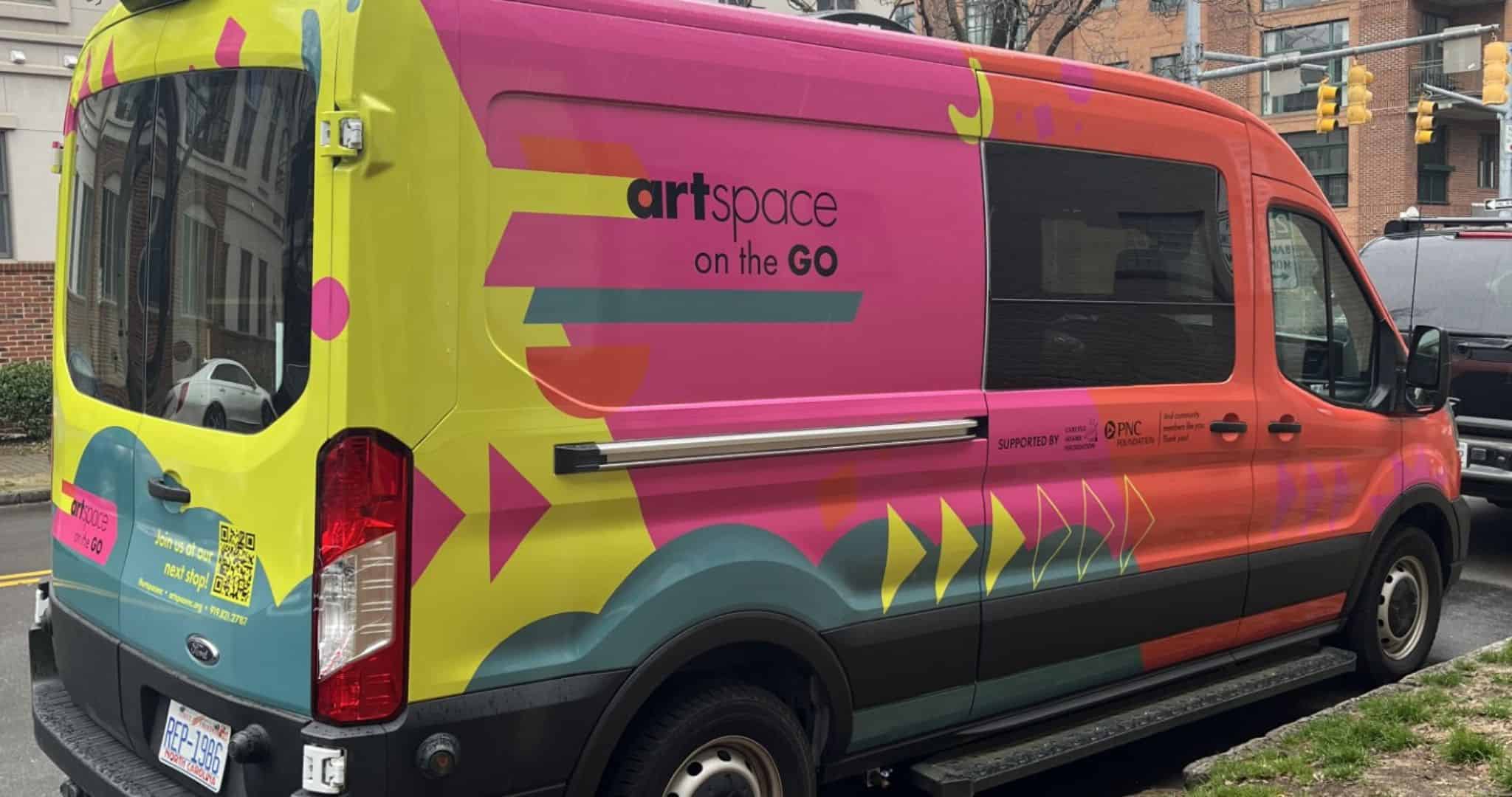
Artspace is on the move thanks to its new mobile art program.
Art hit the streets at high-speed March 1 with a colorful addition: Artspace on the Go. The DTR-based open-floor studio and creative space, known for using art to create positive impacts in the community since 1986, will be driving further into its mission via a mobile art program in the form of the newly debuted van.
The nonprofit visual arts center plans to wheel the magic of arts education directly to K-12 students in underserved neighborhoods across Wake County who haven’t been able to visit its Downtown hub—thus keeping art accessible to all.
“We want to give opportunities for [children] to express themselves, to learn about art and to hear from teaching artists in their own community,” says Director of Community Engagement David Moore. “The people who can’t get to us will be able to have the full Artspace experience with teaching artist exhibitions and learning more about arts education.”
Equipped with professional teaching artists and hands-on activities, Artspace on the Go will drop by community centers, libraries, after-school programs and Title 1 schools—giving families the chance to experience interactive art murals, Styrofoam printmaking, linocuts, visual slideshows of current exhibitions and more.
“Art touches everything,” says Moore. “It’s a very important component of learning. We believe it’s important to make sure people have space to be creative and to have an imagination. If people can’t come to us, let’s go to their neighborhood.”
Artspace on the Go’s new journey has just rolled out—but it’s far from finished. The now on-the-move studio plans to stop by rural communities and local nursing homes—plus, look for it setting up shop at myriad festivals and community events to boot.
“In addition to helping us reach new communities, [the van] will help us grow awareness for our organization,” shares the community engagement director. “This is the first step to getting to know us better. If you want to come to Raleigh and get a taste of what our art scene is like, Artspace is the perfect place.” … Sounds like they’re only getting arted!
Sip + shop from local artists at these bars and restaurants.
Here’s a hot interior design tip for you: Support local artists (!). Not only is it easier on your wallet, but local art cultivates a sense of identity and community—NTM originality—that you won’t find in the wall art section of HomeGoods. Skipping the screenprints and sourcing Raleigh’s top creatives isn’t difficult, with many local restaurants, coffee shops and bars around the city electing to enhance their spaces with local art for purchase. Here, we dive into a ream of spots around Raleigh selling pieces to kick (st)art your locally curated collection.
Mandolin
Feeling crabby? Longtime server and bartender Luke Marion uses oil paint to depict seasonal ingredients from the kitchen at this soulful Southern restaurant. His Monet-esque style looks good enough to eat (!), adding a tasty addition to any room. mandolinraleigh.com
Foundation
This Downtown den is the perfect spot to post up for cocktails or the whiskey of the week while perusing myriad works by rotating local artists adding some color to the moody walls. Snag ’em to recreate the edgy Foundation atmosphere in your own home (’nuff said!). foundationnc.com
William & Company
Hi, Barbie! Curl up at Oakwood’s cozy cocktail bar boasting works of bright botany and the likes of stars such as Stevie Nicks, Maggot Robbie and Jimi Hendrix, created by the brilliant and gifted Cassie Ott—known for pieces accented by bold florals and familiar faces. @willcobar
Mitch’s Tavern
There’s no shortage of art at Hillsborough Street’s popular pub—think oversize old-timey paintings surrounding the bar and unique pieces perched above the booths. Fun fact: Much of the art features iconic Raleigh landmarks, including many of the ol’ tavern itself. mitchstavernraleigh.com
Cup A Joe
Don’t forget your beans—or your art. This iconic coffee spot highlights a different artist every three months, with local art dealer Rock Kershaw’s watercolor collection and a reproduction of Gustav Klimt’s The Kiss currently in the limelight. It’s brew-tiful stuff. cupajoe.com
Experience the creative world of LEGO via new Art of the Brick exhibition.
Creativity is just one brick away. … Raleigh is in for a special treat this month as the world-renowned Art of the Brick LEGO art exhibition arrives May 24 at Pleasant Valley Promenade (!)
The first-of-its-kind exhibition—which has already toured several cities and made CNN’s list of must-see exhibits—features 90+ incredible LEGO sculptures by artist Nathan Sawaya. A former corporate lawyer from NYC, Sawaya is the pioneering artist who successfully brought LEGO into the realm of art and has two bestsellers under his belt.
Now, Art of the Brick exclusively showcases LEGO as an art medium, with myriad works composed of LEGO bricks that have been diligently pieced together since 2002 (work hard, play hard, amirite?). Sculptures include an enormous T-Rex; intricately crafted human figures; and reimagined versions of some of the world’s most famous art masterpieces, including Van Gogh’s Starry Night and Da Vinci’s Mona Lisa.
The level of detail and creativity the “Brick Artist”—as he so aptly calls himself—brings to each sculpture is truly remarkable. … “We’ve been looking forward to bringing our tour to Raleigh for quite some time now and are excited to showcase our extensive collection of LEGO-inspired art installations and sculptures,” says Sawaya. “Designed to evoke fond childhood memories of play and creativity, this is the perfect opportunity to introduce Raleigh to my intricate works, which have been meticulously crafted to capture the imagination of all ages.” In addition to the LEGO sculptures, the exhibition—hosted by Exhibition Hub and Fever, the same team behind the successful Van Gogh: The Immersive Experience—also features an innovative multimedia collection produced in collaboration with award-winning photographer Dean West. The multimedia collection showcases Sawaya’s sculptures in a new light, combining them with West’s photography to create a unique and unforgettable experience for visitors. Imagination, meet reality.
For nearly a decade, contemporary painter Advait Kolarkar has enjoyed a level of global success that many artists spend their whole lives aspiring to. … And he’s only 9 years old.
From Feb. 24 to March 4, the young prodigy will appear live in Raleigh to show off his newest abstract paintings via Advait: Through the Lens exhibition at LaMantia Gallery—and you’ll have three chances to meet him through artist receptions March 3 and 4 (!).
“I love meeting people,” says Kolarkar. “I feel happy and proud they’re supporting and encouraging me to do more.”
Kolarkar, who began painting at the tender age of 8 months and had his first solo exhibition at age 2, has a vivid imagination that drives his love of being in his studio playing with colors. “I feel like there’s some beautiful force around me that takes me into a different world. In that magical world, everything is possible,” he adds.
Kolarkar’s compelling contemporary style is reminiscent of one of his favorite artists, Jackson Pollock. He also draws inspiration from Leonardo di Vinci. “Leonardo has done so many jobs—a painter, architect, inventor, lots more,” says Kolarkar.
In addition to showcasing his art in major cities around the globe, Kolarkar has won numerous awards, including the 2020 Global Child Prodigy Award; was the youngest TEDx speaker of India in November of 2022; and scored a feature in Disney’s diversity initiative, Reimagine Tomorrow.
Nonetheless, the artist doesn’t feel boxed in by these early days of success. He maintains he wants to do other things too, like be an inventor and a paleontologist. For now, though, you can find Kolarkar splitting much of his time between his studio and international art galleries—and you’ll be able to add some of his remarkable one-of-a-kind pieces to your art collection through his Raleigh exhibition. Clearly, this is just the beginning for this young artist taking the art world by storm.