Are Raleigh’s signage rules keeping things classy or killing creativity?
As Raleigh grows and evolves, so does the conversation around the city’s character—and what we want it to be.
When it comes to appearances, the writing’s on the wall—or hanging from it. Signage helps define the vibe of a district (think Asheville’s Biltmore Village or the French Quarter in New Orleans), but Raleigh’s sign identity isn’t clear.
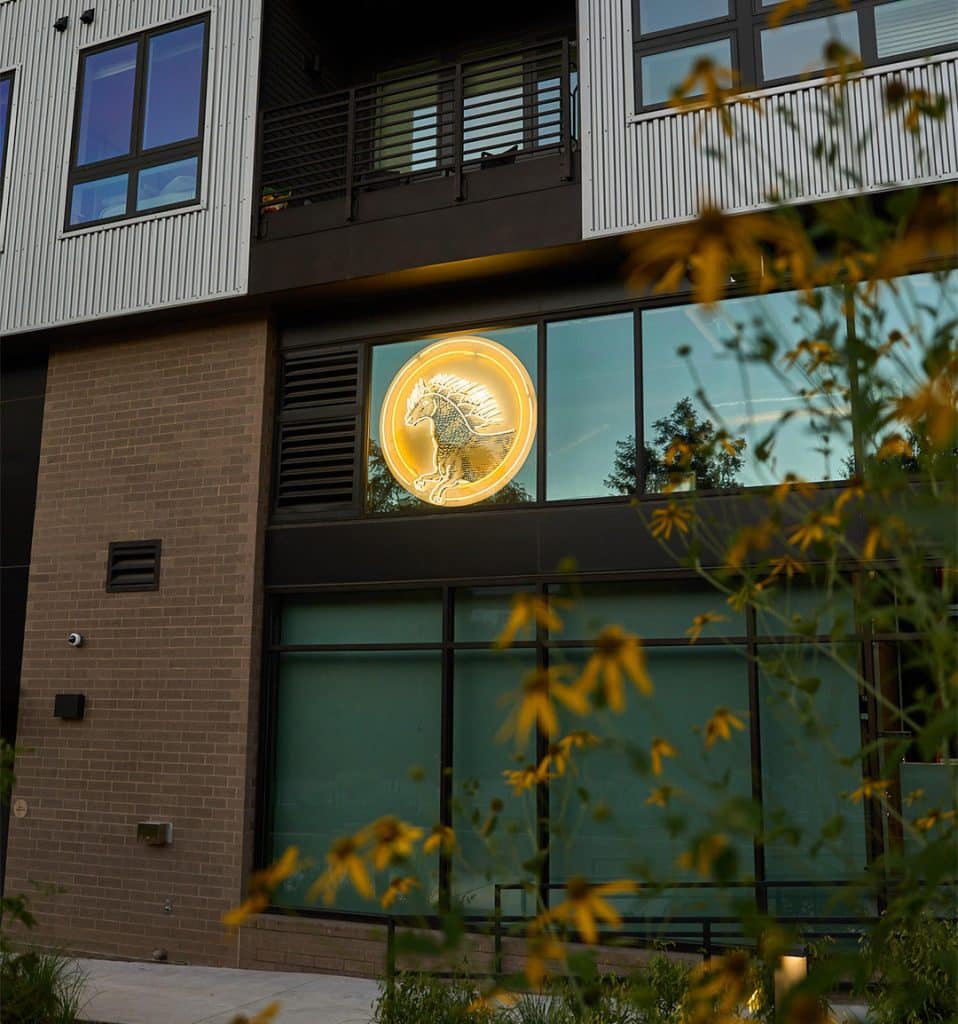
DTR’s handful of standout signs—namely the vintage neon glow coming from The Mecca, DECO and Parkside Restaurant, to name a few—add warmth, personality, and a little bit of buzz for locals and tourists alike. And, yet, they’re the exception—not the rule.
Raleigh’s signage is governed by a set of city regulations that dictate everything from size and color to whether a sign can blink, flash or glow. The result? A look that’s polished and professional, but perhaps a little too buttoned-up.
It begs the question: Are Raleigh’s signage restrictions keeping things tasteful and tidy, or are they shutting out creativity?
The Rulebook
Photo by Jared Haworth, courtesy of Lightship Neon
Raleigh’s restrictions date back to the late 1970s, rooted in a desire to preserve visual order as the city modernized. And while minor tweaks have been made over time, the framework remains largely the same, according to Justin Rametta, planning and zoning administrator for the City of Raleigh.
Per Rametta, the regulations focus on what can be controlled by the city: size, placement, lighting and materials. The message on the signs, however, can’t be regulated by the city due to free speech rights. “We can’t say very much about what’s on a sign, but we can say how big it is, what color it is and what type of sign it is—those sorts of things,” he says.
Digital signs, for instance, are largely restricted to Downtown—and even there, they’re tightly controlled to avoid visual clutter and the dreaded Vegas-effect. Elsewhere in the city, digital signs are mostly off-limits so as not to disturb residential areas.
Neon signs, while not outright banned, are reviewed on a case-by-case basis and are more likely to be approved when tied to historic businesses (see: Person Street’s Krispy Kreme). There’s no designated district in Raleigh that encourages creative or unconventional signage, but Rametta says ideas like that could be explored by city council.
Glowing Up
These city restrictions reflect an outdated bias against neon, says Jared Haworth, owner of locally based Lightship Neon, a relatively new neon shop that spun out from now-closed Glas—known for signs like DECO’s neon masterpiece.
“A lot of these kinds of regulations came about due to public pressure campaigns in the 1960s that were trying to demonize neon signage,” shares Haworth. “As new plastic fluorescent signs became popular, neon became associated with older or rundown businesses. It’s an undeserved reputation.”
Haworth’s signs are hand-built in Raleigh, and he sees neon not just as signage, but as visual art that contributes to a neighborhood’s personality. Case in point: Lightship Neon’s recently made sign for Mexican restaurant Little Rey in Raleigh Iron Works beckons visitors to the restaurant via hot-pink lettering and an eye-catching neon chicken. Due to the restaurant’s location inside of the district, some of the stricter signage regulations that would apply to street-facing businesses did not apply to this sign, maintains Haworth.
As far as a dedicated district with cool signage, Haworth is all for it. “It would be impressive for both people coming to visit and something visually impactful for locals,” he says. And he’s already workshopping plans to bring to city council in hopes of updating some of the city’s broader regulations.
So while Raleigh might not ever reach the signage legacy of places like New Orleans and Austin, a Downtown district with soulful signs could be in our future. They’re just one bright idea away.
Like a virtual corn maze, maneuvering Raleigh’s ever-growing amount of DTR lots and apps can be overwhelming—but how did we get here? And how do we navigate it?
Ask any Raleigh resident their feelings on going Downtown and you’ll hear the same narrative: Figuring out where and how to park and pay is the worst. Read: an overwhelming maze of public and private parking options people would sooner skip than solve—especially given the costly consequences.
You know the drill. You’re endlessly circling for a street spot before giving up and pulling into a private lot, where you’re forced to find or download yet another parking app to then get gouged for $20—only to return some five minutes late to a ticket upward of ~$125. Such scenarios are playing out across DTR on the daily, prompting residents and visitors to weigh venturing Downtown—where every lot is a puzzle of rates and rules—against alternative live-work-play districts dishing plenty of free parking (think North Hills, Village District, Fenton—though those areas can come with their own lot battles and endless hunts).
So, how did we get here? A quick refresh: Longtime Raleighites may remember the infamous McLaurin Parking monopoly. Rolling out their empire in 1948 on South Salisbury Street behind the Sir Walter Hotel, the McLaurin family was the name in NC parking for 70 years—managing both public and private parking locally, including a city contract of 8,000+ parking spots.
Fast-forward to 2017 when the McLaurins sold their parking conglomerate off to The Car Park of Boise, Idaho. From there, enter the swath of parking management czars we love to loathe today—including Secure Parking, ParkMobile and more. And, with them, the exorbitant rates and fines—aka the measly ~$18 private parking violation from 2015 has septupled to up to $125, with hourly rates currently clocking in at $6+.
Despite the melee, DTR’s popularity peaked this summer, seeing its highest post-pandemic monthly foot traffic. Still, parking accessibility remains a hot-button topic to keep Downtown thriving—and the exorbitant fees, fines and frustration have yielded new efforts to curb the parking fluster.
One idea currently being kicked around includes making the first two hours of public parking free in city-owned garages. “The matter is still under consideration,” explains Parking Superintendent John M. Wynn.
And contrary to public perception, Downtown is actually overflowing with available parking options. “Current supply of parking, particularly off-street, is plentiful and more than meets current demand,” says Rob Murray, communications analyst for the City of Raleigh Transportation Department. And as “private developers are including parking to support their projects, the City of Raleigh does not anticipate building new parking.”
And they shouldn’t. Almost one-third of DTR is off-street parking, easily overshadowing the national average of 16%. So, ultimately, it’s a matter of education and accessibility—from knowing where to park for cheap to navigating the sea of parking apps.
Private vs. Public Lots
The cardinal rule for Downtown parking: Always opt for street and city deck parking. For starters, there’s the convenience. Street parking can be paid on-the-go via the Passport Parking app, and these spots, as well as city-owned parking garages and lots, are cheaper by the hour—not to mention city citation fines start at just $15 if paid immediately. It’s in your best interest to handle city-issued tickets promptly to ward off escalating fines and the boot—which the City can enforce once any vehicle racks up three 90-plus-day-old unpaid citations.
Private lots, alternatively, are infamous for pricey parking, camera-tracking cars and sky-high fines. Beware of multimanaged lots boasting confusing signage with a riddle of QR codes. While they arelegally required to specify which spots are which, it’s your job to figure it out based on your colored wheel stop (aka that concrete block at your front tires).
The lack of legislation involved with private lots has its pros and cons. While it means repercussions for unpaid citations are harder to enforce, it also means lots can charge any amount they wish for hourly parking and violations—and there are few laws defending you when a problem arises. In fact, certain law firms won’t even touch private parking tickets.
And because the number of citations issued is so high, parking ticket scams are more common in private parking lots—especially ones using QR codes to collect payment. Pro tip: If a ticket requires payment via reloadable debit card or wire transfer like Cash App, Zelle or Venmo, it’s a fraud. Always visit the website listed before paying to confirm it’s legit.
Beyond scam alerts, navigating the private lot violations is often overwhelming, including receiving aggressive letters in the mail threatening to impound or immobilize your car a mere 60 days post-ticket. (Don’t forget: Your plate is tied to your home address—and they will find you.) While the parking company cannot hunt down your car and tow it from just anywhere, they can legally tow or boot your vehicle the next time you park in that lot or another lot they manage. While these arguable scare tactics prove obnoxious and stress-inducing, private lots are private property—and if you break the contract (aka the terms and conditions you opted to skip over) the companies are legally permitted to defend themselves—even if it feels predatory.
According to The Car Park VP of Marketing Cory Collins, who manages several private and public lots in Raleigh, violations are not given a flat rate—but based on the offense. “We believe strongly in the importance of keeping an ADA parking space available for those who need it,” explains Collins, “so the violation for parking in an ADA space will be more than for expired time.”
Although The Car Park doesn’t use a collections agency, they, like all other private lots, reserve the right to. “The majority of our revenue comes from folks paying for parking, not parking violations,” adds Collins. “Enforcement is about keeping parking accessible and fair. … Most people choose to do the right thing and pay the violation if they owe it. We’re often lenient and work with folks when there’s a reasonable mistake that’s led to the violation.”
Pro Tips:
Ensure the parking spot color correlates with the color on the sign you scanned.
Verify how long you paid to park in the lot
Camera recordings mean mailed tickets if you try to play the system.
Don’t pull into a private lot at all if you don’t plan to park there
How Raleigh Stacks Up
Fun fact: Relative to other comparably sized cities, the City of Raleigh’s fine is extremely low, starting at just $15—and only charges for Downtown street parking from 8am to 6pm. Meanwhile, cities like Nashville and Kansas City charge to park on the street around the clock, and Sacramento charges $62.50 for parking violations. Ultimately, pricing, fees and location are parking problems that any healthy, thriving metropolis must tackle. So how have other cities handled these growing pains?
What Not to Do:
Pricing based on location. Like Raleigh, New York City uses an app so drivers can pay for parking “in a New York minute”—but, unlike the City of Oaks, metered parking can cost up to $13/hour. Hence, most New Yorkers opt for public transit.
Privatizing more parking. After the infamous $1 billion deal in the midst of the 2008 financial crisis giving private firm control of all metered spots and pricing, Chicago must now buy or rent street spots back if they want to build a bike lane or host a street fair.
Require parking minimums.Atlanta aimed to tackle parking problems via minimums to ensure enough spots for all. Instead, many lots sit vacant on the busiest nights, thus driving up the cost of living, creating heat islands and resulting in lost city revenue.
Best Practices:
Progressive pricing. To increase parking turnover, Austin’s on-street parking is adjusted by the hour—first two hours, $2 each; third hour, $1; each subsequent hour, +$0.50 more than the last—with an hourly maximum of $5.
Collaborative parking.Houston’s Community parking plan expands curb parking, allowing permitted residents and employees to park in metered spots, plus nonpermitted visitors for up to three hours.
Extensive research. In response to the higher demand for parking in its two main districts, Charlotte is slated to implement infrastructure changes based on the research from its 139-page strategic parking plan including studies of 15+ other cities.
Your guide to the land of barbecue and live music.
Let me just start off by saying, this ain’t my first rodeo (!). I love Austin—it’s one of my favorite cities. In fact, if I didn’t absolutely adore Raleigh, I’d choose to live there (though, honestly, I don’t know if I could stand that scorching heat…).
Nevertheless, it’ll be easier than ever to pop over for a long weekend getaway thanks to Delta’s extra added flight to ATX taking off in April.
Similar to Raleigh in many ways, Austin and its “weirdness”—or quirkiness, if you prefer—is exactly what makes it so attractive. Each hip sector of the city boasts its own distinct vibe—from Sixth Street’s (aka the famous entertainment district) lively bar scene to South Congress Avenue’s kitschy shops and restaurants to East Austin’s diverse cuisine and culture.
NTM the Live Music Capital of the World is, well, a mecca for music lovers (see, namely, South by Southwest and ACL Fest that attract top talent every year) and food and bev fans alike, what with its ever-growing cast of sip and sup spots gaining national attention. In the same vein as our own City of Oaks, ATX is also home to a variety of green areas and outdoor activities.
A sister city of vibrance, entertainment, excitement and all around fun, Austin promises to be a weird—er, exhilarating—getaway. Here, a few spots to set the soundtrack of your trip.
Rowing Dock
DO
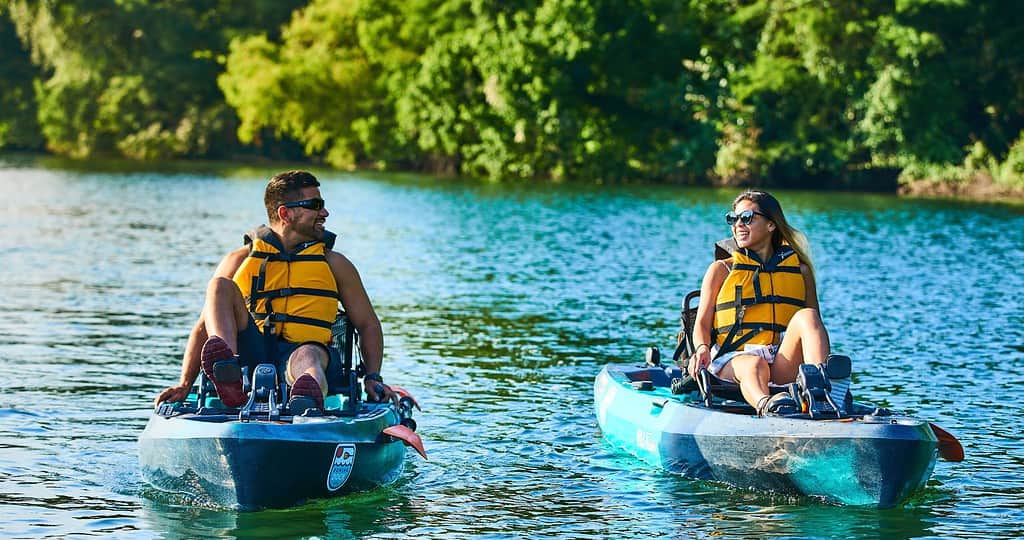
Rowing Dock Row, row, row yourself gently down Lady Bird Lake via kayak, pedal kayak, canoe or stand-up paddleboard rentals as you feast your eyes on Austin’s skyline—and get a pic for the ’Gram, natch. Relax and meander through the water, or BYO bait to try your luck at catching a fish or two. Bonus: You can even paddle with your pooch via canine-friendly SUPs. rowingdock.com
Barton Springs Pool Splish, splash! One of Austin’s crown jewels, this natural spring-fed watering hole remains at a cool 68–70 degrees, making it ideal for a year-round dip. Located within Zilker Park, its teal waters are surrounded by grassy embankments for those itching to soak up some rays, while various trees offer shade for when the sun becomes too unbearable (it’s bound to happen).austintexas.org
Bat Bridge Kayak Tour The 1.5 million Mexican free-tailed bat colony that emerges from under the Congress Avenue Bridge nightly is quite the sight to see—and even cooler from a POV on the water. Observe the natural wonder by kayak as your tour guide schools you on the nocturnal creatures, all while enjoying a beautiful Austin sunset and superior skyline views. #GoneBatty! lonestarkayaktours.com
EAT
Granny’s Tacos I could write an entire dissertation on Austin’s breakfast taco scene (So. Many. Great. Options.), but Granny’s Tacos might be my favorite. Served out of a simple food truck on East 7th and East Caesar Chavez streets, these bad boys are the real deal thanks to family recipes passed down by generations and scratchmade salsas, marinades and seasonings. My go-to is a bacon, egg and cheese brekkie taco, but the migas is also delicious. Taco ’bout a great way to start the day!grannystacosatx.com
Gabriela’s Downtown For immaculate brunch vibes, look no further than this happenin’ Mexican spot boasting locations in East and South Austin. Post up on the spacious outdoor patio and groove to the beat of a live DJ while chowing down on authentic fare (pro tip: Order the choriqueso) and sippin’ on elaborate drinks (see: the signature “Sparklers” served in a literal blender). It’s giving clubby Miami resort—and I’m here for it. @gabrielasdowntown
Terry Black’s Barbecue You can’t go to Austin without eating at Terry Black’s. Period. The inevitable long line is beyond worth it for the legendary Central Texas pit-smoked meats and housemade sides. For the full experience, order the melt-in-your-mouth brisket, juicy sausage, and creamy mac and cheese. But really the best way to do it is to bring a crew and try it all. terryblacksbbq.com
Ramen Tatsu-Ya It’s not all tacos and BBQ in Austin—the city’s ramen game is also strong, and one visit to this noodle haven touting five ATX locations is all the proof you need. The “Japanese soul food” spot is a collab between local chefs/DJs Tatsu Aikawa and Takuya Matsumoto—and you can bet their heart-warming bowls put that 10-cent grocery store ramen to shame.ramen-tatsuya.com
DRINK
Flat Track Coffee Roasters Rise and grind with a visit to this industrial biker-themed coffeehouse and cafe serving up all your fave coffee and espresso bevs made with freshly roasted beans and custom house blends. The cute and quaint patio is the ideal perch for enjoying a cuppa, along with baked goodies like croissants, cookies and kolaches. flattrackcoffee.com
Cosmic
Cosmic An escape within an escape, both Cosmic locations are nationally recognized wildlife habitats showcasing local art, music, purveyors and craft beer in a lush outdoor-focused setting. Backdropped by serene water features, flora and fauna, and various vibrant art, the all-day oasis makes for the perf gathering space to enjoy a coffee by day, or something a little stronger by night. cosmichospitalitygroup.com
Upstairs at Caroline Where my rooftop bar lovers at?! You could—and should—spend the whole afternoon whiling away at this “urban backyard party” above Caroline Restaurant offering comfy lounge spots, colorful picnic tables and games galore (think giant Jenga, foosball, cornhole and checkers) in a secluded yet funky AstroTurf-covered terrace. NTM refreshing drinks and snacks that are a perfect match for day (or night) drinking. carolinerestaurant.com
Low Down Lounge I’m a dive bar gal at heart (cheap drinks FTW!), and luckily Austin has no shortage of them. This retro-esque East Sixth drinking den has it all: decently priced cocktails, shots (they make a mean pickleback), beers and seltzers; pool; a hangworthy patio; and a plethora of pop-up events with food, music, comedy and more. The lowdown? No matter what’s going on, you can always expect a good time. lowdownlounge.com
We tapped top editors around the country for what’s hot right now—and what’s coming in 2024.
In almost every facet of life, what’s in fashion is cyclical (see: skinny brows, flare jeans, clear liquors…). But when it comes to our ever-evolving palates—flavors don’t just fall in and out of favor. What’s new and now seems to only sate our unending appetite for the next best thing for mere moments, leaving it hard to fathom what’s next. But, lucky for us, regions vary on their timing and fervor for the newest flavor… each trend-setting city teeming with critics—er, citizens—ready to deem the latest “it” factor or passing fad.
As we look ahead to the year to come, we know no one has a better vantage point into the looking glass than city mag editors. So, we tapped a handful of top brass around the country in cities we’re oft compared to or chasing to help us forecast what’s hot right now and what’s coming in 2024. And in my convos with these six foodie experts, one thing’s for certain—2024 is gonna be a vibe.
Retro classics: “One of Dallas’ hottest restaurants serves sole meunière, lamb Wellington, and lobster thermidor. We’re partying like it’s 1965.” Clubby Korean restaurants: “All-you-can-eat BBQ… and bottle service. Kimchi… and bouncers.” Beer-flavored beer: “After years of pushing various boundaries, Texas breweries are falling back in love with plain old light lagers, pilsners and pale ales.” Small business bonds: “Most unusual of all, a Dallas bakery recently issued small business bonds. Here’s an interview about it and the actual bond account.”
Photo by Carly Cooper
Atlanta —Carly Cooper, Writer & Editor Atlanta magazine
Headshot by Lia Picard
Influx of omakase: “Atlanta has seen an influx of omakase restaurants—from Omakase by Yun to Brush. Mujō and Hayakawa were even awarded one Michelin star for their offerings.” Vegan en vogue: “From plant-based burger enterprise Slutty Vegan to Latin-flavored La Semilla, vegan restaurants have burst onto the scene.” Modern Mexican: “Modern Mexican is taking Atlanta by storm with regional dishes like squash blossom quesadillas at Oaxaca, creative cocktails at Palo Santo, and seafood-forward fare at D Boca N Boca.”
Photo courtesy of Amar
Boston —Rachel Leah Blumenthal, Food Editor Boston magazine
Local seafood, global inspirations: “An increasing number of Greater Boston-area restaurants are showcasing global cuisines using our beautiful local products—like brilliant new Vietnamese cocktail bar The Eaves or new upscale Portuguese restaurant Amar. Ember-grilled Maine lobster with Azorean pineapple and preserved fennel, anyone?” Fine dining: “Special-occasion dining has taken a much more casual spin in recent years. Patrons—particularly young professionals—are excited to pay top dollar for incredible food in crowded, energetic restaurants with booming soundtracks; zero dress codes; service that’s friendly but far-removed from old-school fawning hospitality; and flavor-packed, hands-on small plates to be dug into with friends. Special-occasion dining has taken a much more casual spin in recent years. Take Lenox Sophia—one of the highest-ranking restaurants on our just-updated guide to Boston’s 50 best restaurants. You’ll pay upward of $100 per person for an elegant and expertly prepared prix fixe menu, but the vibe is casual, like you’re in chef-owner Shi Mei’s own home.” Dramatic cocktails: “We’re a little in danger of leaning too gimmicky on this front, but a lot of recent additions to Boston’s cocktail scene are carefully striking the right balance: Craft cocktails with fun, over-the-top presentations are having a big moment here right now. Secret passwords, plenty of things on fire, garnishes bigger than the drinking vessel, hair-related puns (see: Boston’s appropriately named Wig Shop)… sure!”
Tinned fish: “Move over, ceviche! Conservas have become the ‘it’ appetizer, with briny options popping up on menus— from hotel bars to hot restaurants.” Nonalcoholic scene has gotten huge: “There are NA drinks on every menu; tons of zero-proof brands based here; and Austin is home to the country’s first NA bar, Sans Bar.” Restaurant bathroom decor: “Featuring custom murals, neon signs and even disco balls, these eye-catching loos all but demand a selfie.” IG-worthy cocktails: Beyond ’Grammable ’tails, “speakeasies are everywhere, shrimp cocktail seems to be having a moment and burgers in general seem to be everywhere.”
Photo courtesy of Tuk Tuk
Chicago —Amy Cavanaugh, Dining Editor Chicago magazine
Hyper-regional fare: “We’re seeing new spots open focusing on hyper-regional cuisines, such as at Thattu, which serves the food of Kerala, and Tuk Tuk, which serves Isan fare.” Sober curious: “Low and no-alcohol drinks continue to grow in popularity, and we’ve especially been seeing nonalcoholic wines recently.” Affordable fine dining: “Chicago is known for its fine-dining scene, and the past couple of years more affordable tasting menus have sprung up. It’s a reaction to the pandemic and the issues that restaurants still face, and it makes luxe meals more approachable for diners.”
Photo courtesy of Gallery Armada
DC —Jessica Sidman, Food Editor Washingtonian
Maximalism is in: “The TikTok boom, increased prices and pent-up pandemic demand have all converged to make dining out feel more like an event. The result is over-the-top decor, plus dishes and drinks that come with a show.” Food halls gone fancy: “Food halls aren’t just glorified food courts anymore. They’re home to Michelin restaurants and high-end omakase menus, and they’re attracting talent from some of the city’s top restaurants. The Square and Love, Makoto—which both opened in 2023—are two prime examples.” French food wave: “Maybe because it’s a familiar cuisine in uncertain times. Maybe it’s just another example of a cyclical food trend. But the DC area has seen a lot of French restaurant openings over the past year—from the refined regional cooking at Petite Cerise to comforting bistro classics at Josephine.” Everything’s a vibe: “We’re seeing lots of restaurants that are more about the scene than what’s on the plate.” Service fees everywhere: “In 2022, DC residents voted to phase out the tipped wage system that allows restaurants to subsidize the base pay of servers and bartenders with gratuity from diners. To make up for increased labor costs, many restaurants have implemented mandatory service fees, which can range from 3 to 22%. That’s causing a lot of confusion among diners about tipping expectations.”
Zero Proof is building a community for Raleighites who want to drink less or ditch alcohol altogether.
Jacqueline Lee feared that if she quit drinking, her social life would end. “I have always been very social,” says Lee. “I love parties and getting to meet new people, but all of those events usually revolve around drinking or meeting at a bar.”
At 25, Lee didn’t know many people who were sober. Searching online, she couldn’t find a Raleigh community built around alcohol-free experiences outside of recovery and treatment programs. So she created one.
Launched in 2020, Zero Proof has already offered a staggering buffet of sober events, ranging from aerial yoga to drag shows. Hourlong hikes at Umstead also have proven popular. But she has also organized a series of alcohol-free concerts, dinners and even an outing at Boxcar Bar + Arcade.
“For years, I didn’t stop drinking because I didn’t know anyone my age who was sober,” says Lee. “When you stop drinking, it can feel really lonely, so anything I can do to provide an avenue for people to connect with other people who are experiencing the same thing is really worthwhile to me.”
Mocktails may be easier to find here recently, but Raleigh falls behind peer cities. Lee quickly discovered Charlotte’s alcohol-free Counterculture Club, while Austin brags the nonalcoholic Sans Bar. Lee may have initially felt like an outcast for ditching alcohol, but her efforts are actually making Raleigh more inclusive and current.
Zero Proof typically hosts three to four events each month, and the schedule is heavily influenced by participants. Some local businesses like Current Wellness are eager to partner with her, but it’s not always an easy sell. “It’s challenging when you’re trying to plan alcohol-free events because a lot of businesses don’t want to do it on Friday or Saturday since alcohol is such a revenue driver,” says Lee. But the Zero Proof trailblazer—whose main hustle is at a marketing firm—hasn’t let that stop her.
Zero Proof isn’t a support group, at least not in the classic sense. Instead, it attracts a wide net, including those who are sober curious or want to drink less. Most attendees are in their 20s or 30s. And that’s partially intentional; Zero Proof is open to all—but Lee, now 27, hopes to create a social community for young people like her that normalizes not drinking.
“I have countless new friends who are also sober,” Lee writes on Zero Proof’s website, “which makes me not feel so alone in a culture where alcohol is everywhere”—proof positive that Zero Proof’s spirited social options are filling a void for the spirit-free community. zeroproofraleigh.com