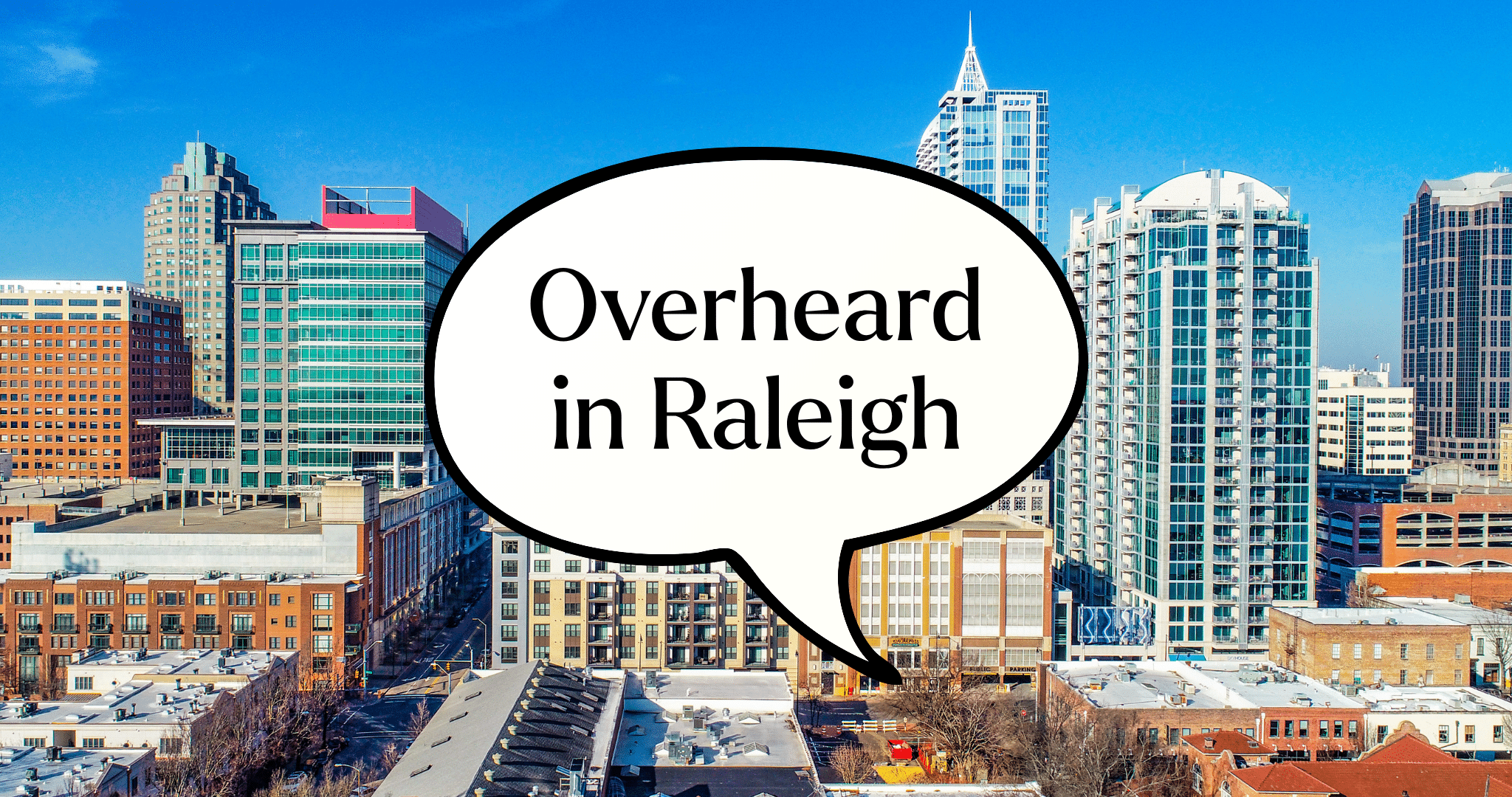
Size does matter—but not the way you think. In this case, downsizing can be the difference of housing affordability in a city teeming with growth.
It’s been five years since Raleigh entered her ADU era—and as a massive gamechanger for housing accessibility and versatility in an increasingly volatile housing market, it’s hard to fathom what all the hoopla was to get those accessory dwelling units approved. As it tends to go, you’d think Raleigh was teetering on the edge of ruin every time a new project hits the headlines. Remember? ADUs were going to destroy neighborhoods. The North Hills uprising—billed as a “logistical nightmare”—is now a well-oiled Midtown machine. And don’t even start on tower announcements.
Since then, for the most part, it’s been all praise, no problems. If anything, the biggest “problem” is people don’t seem to be aware they can do these backyard bungalows—and what a viable option they serve for adaptive living, from in-fill housing and reduced footprint to added Airbnb or rental income making room for your brood to bloom.
“There’s several options out there,” says Chuck Shomo, who is now sole owner of Tiny Homes Raleigh, which has already built about 10—with three more in progress—of Raleigh’s ~50 ADUs to date, running the gamut from investments to Airbnbs to granny flats. “It’s just getting that information out. I think ADUs are the future for Raleigh—and I see it tripling, quadrupling even, in the next few years.”
To be fair, according to local ADU’ers, the buildout can be a bit of a headache. In the case of ADU-savvy Travis Bailey, who, with his wife, is now putting the finishing touches on his long-delayed Boylan Heights backyard addition, it’s really about choosing the right builder. “We absolutely would do it again,” affirms the born- and raised-Raleighite. “But I would have gone with a smaller construction firm that would have been a lot more cost effective… and [for whom] the ADU could be their primary focus,” adds Bailey, who first learned more about these “perfect solutions” as a volunteer on Mayor Nancy McFarlane’s campaign in 2017 when ADU was a big buzzword.
Raleigh’s made it easier to say “yes” to ADUs via the fast-track program—“a big step forward,” says Shomo. Bailey echoes the sentiment: “It’s part of being a first adopter of anything,” he admits. “You’re going to face more headwinds and challenges with getting things done—and the hope is, for people down the line, the process will be more streamlined. I’m very hopeful it’s going to get faster and cheaper as more people do it.”
If stats are any indication, that time is nigh. While not every state is down to downsize, NC already ranks in the top five best states for tiny house living across a trio of key categories: third for tiny home builders/manufacturers and for Google search interest per capita, and fifth for number of tiny home communities—with Texas taking top cede nationally, according to Home Gnome’s extensive 50-state analysis.
The demand is real—and the potential? Only getting better. Just five years in, Raleigh’s ADU moment is less a niche experiment and more a quiet revolution. “Five years ago, the city was pretty tight-fisted—and even maybe when this ordinance first dropped,” surmises Shomo. “But it really did pave the way for this new era. Now, he muses, companies are shipping them all over the country, and they’re targeting Raleigh as a market. “ADUs are going great. They are definitely helping a lot of people. I think it’s the future.”
While early adopters took a few hits to smooth the road, the path ahead looks clearer—and more cost-effective—by the day. What started as a back-lot battle is now shaping the front lines of Raleigh’s housing future. Flip the page to scope six locals proving how small spaces make a big impact.
Photography by Sean Junqueira
VILLAGE VIBE Martin Streicher & Paige Tharrington
Purpose and parties collide in this Village District retro-chic dual-purpose addition. Talk-therapy office by day, party pad by night (or any time the mood strikes), the convertible corner-lot 550-square-foot space can easily shift to a one-bed, one-bath MIL suite, rental or Airbnb. Sparked by the demo of Paige’s St. Mary’s office to redevelopment, the couple pivoted from pricey buying options to building on-site. “We looked for something to buy Downtown or in Cameron Village—everything was crazy expensive or teardowns. So, we pursued building on our property,” says Martin. Fashioned by REdesign.build with adaptability in mind, the would-be foyer and soundproofed bedroom provide the perfect layout for a professional waiting area and client sessions—offset by a large vibey sun-washed “living room-slash-party room” that opens to a shared covered patio for carport parties. So: a midcentury-mod mood, a meeting room and a moment.
Photography by Sean Junqueira
BLOODWORTH BOOMERANG Thomas & Lisa Barrie
Dubbed the Barrie Guest House and built for housing flexibility in the heart of Mordecai edging the empty nesters’ circa-1907 historic-register home, this mod backyard retreat by Armature Design Build provided just that for the Barries’ boomerang son transitioning back from the Big Apple. “The prime motivation was to add one affordable unit to the Raleigh housing market—designed to be rented at a very affordable rate,” explains Thomas, an NCSU College of Design professor and nonpracticing architect (except on his family), who also serves as director of the Affordable Housing and Sustainable Communities Initiative (AH+SC) and WakeUP Wake County Board of Directorschair. Outfitted with full kitchen, living/dining area, sleeping loft and bonus 60-square-foot garden shed to boot, the beautifully appointed abode—with interiors and landscape by Lisa—was first used as a flex weekender guest house as the couple grew accustomed to it. Positioned with primo views of the backyard garden, best served from the porch perch, the fall 2023-completed 300-livable “square-footage poor and spatially rich” space, as Thomas puts it, ultimately served up a prime affordable—and independent—place for their 32-year-old son to land. Small in size, big on impact—this tiny build is a blueprint for flexible, future-ready living in Raleigh.
Photography by Sean Junqueira
THE ARTIST LOUNGE Reggie & Georgia Tardy
All function, all flair, no compromise—the wildly successful and versatile Artist Lounge sets the bar at Shaq height. A flex space with serious main-character energy, the nee-2021 artful oasis is a vibe—period. Carefully crafted to cater to creatives of every stripe via 600 square feet of adaptive interiors, tailored to fit any vision, the creative haven boasts private workspace and outdoor event-ready amenities to boot. “We had a vision, and linked up with Jeremy Hauch and Hauch Design Architecture,” says Reggie of the fateful find after he stumbled on Hauch’s card on a jobsite. “They came in and saw that vision,” delivering an intentional, innovative space for community. A muse with an alfresco fire feature and fully stocked mini fridge, the convertible Downtown art studio is offset from the couple’s Boylan Heights beaut of a home by heated saltwater pool and versatile entertaining space—think outdoor bar, multilayered seating, Astroturf stretch and electrical access for seamless F&B service. “We wanted to open the idea to all kinds of the community,” adds Reggie. A mood with a mission, it’s not just a space—it’s a statement.
Photography by Sean Junqueira
MAYVIEW MARVEL Matt Johnson & Carolyn DeVita
Purposeful meets party pad via The Hannah: a 320-square-foot vibey “desert”-set oasis situated behind an 80-year-old bungalow. Having forked over five grand on the dream design, Matt spent two years stuck in the search to bring it to life before “kind of kiboshing the whole thing,” he vents. “It was unbelievable—the quotes coming back were the price of a new house. It was just not palatable—and I’d given up.” That is, until he stumbled on the then “tiny little website for Tiny Homes Raleigh,” he recalls. “They saved my bacon.” One of the first Raleigh ADUs fashioned by THR and fast-tracked by the city, the casita has since logged some 130+ Airbnb stays to the tune of ~$2,500 per month—and, at this rate, will pay itself off in less than 10 years. When not booked, the dwelling doubles as entertaining space, a college-kid crash pad or, say, a reception-hosting hub for the newlyweds (true story) that easily converts to a granny flat down the line. “I didn’t get the ‘dream’ two-story ADU I wanted,” says Matt, “but I do have a really cool 300-square-foot space with a carport add-on and some interior customization that came in at a third of the price—so then I had the budget to build this dream space around it. It just took me finding that right person to help me bring this small slice of heaven to life.” So, The Hannah’s not just an ADU—she’s a vibe manifesto.
When your blossoming brood starts outgrowing the historic home you bought in 2016—and love—in a volatile housing market, an ADU presents the ideal solution. So instead of packing up, this Boylan Heights bunch leveled up. “We wouldn’t have been able to make our existing house work with our expanding family without this space,” says born-and-raised Raleighite Travis, who joined the Historic Development Commission to design progress that preserves history. “I joined the Commission to figure out how can we make developing in historic areas more permissible while also being respectful and keeping the historic nature intact.” Serving up responsibly designed flex office space for the professional remote/hybrid couple, the just-completed 800-square-foot convertible addition by REdesign.build is crafted to adapt as priorities shift from diapers to downtime—think large living room, kitchenette, laundry and half-floor loft, making it rent-, Airbnb- or even boomerang kid-ready. Future-proofed, family-first and firmly rooted, staying put never looked so forward-thinking.
Photography by Sean Junqueira
WYCLIFF WONDER Julie Augustyn & sons: Corey, Charles and Caiden Brady
She wasn’t house-hunting for an ADU-ready lot, but when Julie stumbled on this prime West Raleigh corner of opportunity in 2020 in sync with the ordinance, the writing was on the wall. The timing, the zoning, the bones—it all lined up. A seasoned commercial real estate pro and newly single mom, she foresaw the future for her family and scooped up the aging ’70s split-level reno opp with ADU potential. So goes the origin story for The Ellis—the sideyard-born Tiny Homes Raleigh model named for Julie’s late grandfather, now populating other pockets of the city to boot. “I was very happy with the process,” she says. “It works wonderfully for this corner and has been a beautiful addition—and I think it has added to our community.” Breaking ground on the prototype in May 2022, the 576-square-foot stunner now serves as an ideal fit for its long-term tenant seeking a simpler, smaller footprint. “I built with the intention of it being in-fill housing,” says the mother of twin teen and 7-year-old boys. “But I plan to live here—so I could see it being used as flex space by my family in the future.” So what started as a personal pivot is now a citywide model for living small and dreaming big.
» WHERE WE DRINK NOW Country: Whiskey Rose, Tin Roof NCSU: The Village Brewery: Trophy Dive: The Cardinal Party place: Cornerstone Tavern Irish: Hibernian Neighborhood: The Blind Barbour Local live-music dive: Lincoln Theatre
Finch’s courtesy of the News & Observer, NC Archives
» PLACES WE EAT NOW
Diner: Mecca Oysters: St. Roch Pizza: Trophy Italian: Vic’s New American: Crawford and Son Burgers: MoJoe’s Nostalgic: Poole’s Breakfast: Big Ed’s Sushi: Sono Chinese: Five Star Not local but loved: Barcelona Wine Bar 24 hours: Waffle House
Image by Jessica Crawford, courtesy of Crawford and Son
Goodnights may be moving—but it isn’t going anywhere.
The news of Goodnights Comedy Club’s closing resonated about as loudly as the Will Smith Oscars slap heard ’round the world. But if all goes according to plan, the curtain will never go down on Goodnights. In a sit-down interview with Raleigh Magazine, co-owner Brad Grossman revealed plans for the legendary laugh house’s new home—beginning temporarily in the now-defunct K&W Cafeteria space, and then moving permanently beneath Bargain Box as it resurrects the once bustling nightlife scene that was Underground Cameron Village—which was part of the appeal. “This was a big deciding factor when we chose Village District,” said Grossman, of family-owned and -operated Helium, who bought the comedy club in 2013. “I wanted to be close to Downtown, and I think being close to where the action was in the past is a nice throwback to that time”—and to bring life back to that area at night.
After first taking stage in K&W for 16 to 20 weeks (post permit approval—and nod to potential supply chain hiccups), Goodnights will take its new permanent position under what will now be—wait for it—instead of Bargain Box, a wraparound Shake Shack. Nestled beneath the uber-popular fast-casual spot will be about 11,000 square feet, with intentional low ceilings—and capped to hold 300 to 325 guests to maximize the comedy experience (for context, the OG space holds about 250). “You’ll feel intimate in the new space,” said Grossman. “The low ceilings will be a little bit lower than you experience them now—that’s what makes comedy work. We sit next to one another and you feel the vibration of the person next to you. It’s really a perfect environment.” By design, Helium is known for bringing local and stadium-size talent to intimate spaces. “We definitely go for vibe, and a lot of the touch points are important to us—the smells, the tastes, what you hear, what you see,” he said.
Goodnights will temporarily move to the closed K&W in Village District. (ITB Insider)Formerly Bargain Box, the new permanent location for Goodnights Comedy Club. (News & Observer)
The nearly 40-year-old local comedy juggernaut that has woven itself into the very fabric of Raleigh’s identity—hosting everyone from hordes of local rising talents to the likes of Ellen DeGeneres and Chris Rock—no doubt holds an iconic place in Raleigh’s comedy and nightlife scene. And as the lights go dark on Morgan Street for the final time at the end of July, Goodnights will turn the page to its future in the Village District—and pay homage to its history with specific design elements (think brick and a nod to the green room). “I have a love for the history of [Goodnights],” said Grossman, who takes both its past and future very personally. “Being in that old building, I’m very sensitive to it. It’s so important to the fabric of the business. While it’s sad, it’s also exciting at the same time when you get to build a club in the way that you think comedy should be experienced.” But this is bigger than a hallowed building and the big names who’ve passed through since its 1983 premiere. Now, at a time when the world is in peril and strife, comedy is more important than ever. “As emotional and sensitive as our country has been, I think comics are the ones who are gonna bring it back together,” said Grossman. “Comics are the ones who make us laugh at ourselves.” … So thankfully it’s not goodnight. goodnightscomedy.com
One of the most iconic aspects—and one of Grossman’s favorite components—of the OG Goodnights building is its original green room, situated in a removed elevator shaft with just a small couch and a little chair—and about 1,000 comedian signatures adorning the walls. “It’s a piece of art,” said Grossman. “I’ve been trying to figure out how to take that shaft. … I’m not sure I’m gonna be able to take it with me physically, but my plan is to get a photographer in there and do a 360 of it and then bring it to the space. There’s a lot of history in that green room.”
GHOSTLY TALES
“I’ve had a few managers there who don’t like to lock up on their own because they’ve heard noises. They have a video of a glass flying across the bar and there’s no one around. It’s pretty nuts. My team even has a name for her. We’re thinking about doing maybe a little seance, you know, burning some sage before we leave just to let her know, like, hey you’re gonna be fine—you should stay with the building.”
Ghost name: Esther
Listen for more behind-the-scenes conversations on how Raleigh Magazine got the scoop!
The relationship between a tenant and their commercial property management company can be complex in the best of times, but mix in a historic pandemic and enter a whole new level of complexity.
COVID-19 has undeniably pushed businesses to the brink—rendering them in desperate need of rent relief (not to mention copious amounts of hand sanitizer and masks). For local major shopping centers North Hills, Village District (formerly Cameron Village) and Crabtree Valley Mall, each property management company has approached rent relief and lease renewals on an individual basis. For some, the relationships deepened; for others, it was severed.
North Hills At Quail Ridge Books in North Hills, there were a few details from the onset of the pandemic that became game-changers. Amazon stopped shipping nonessential items, and Quail Ridge offered free shipping for its books and curbside pickup—garnering a whopping 3,000% surge in online sales. Additionally, its property management company, Kane Realty Corporation, stepped in and was flexible with its rent terms, offering a cushion of support while Quail Ridge waited for its PPP loan to come through. Quail Ridge Books manager Jason Jefferies credits this flexibility as crucial for the bookstore’s survival, as it allowed them to prioritize safety over commerce, giving them the ability to successfully navigate the past year-plus.
Stacey Buescher, director of operations for Kane Realty, found herself unexpectedly thrust into this new world as well. “It was a hope and a prayer,” she says about the early days of the pandemic. As a working mom of two, Buescher juggled everyone’s needs in a delicate balancing act that, in the beginning, looked more like triage. When the CDC released its COVID-safe recommendations, Kane Realty went to work to implement them. Hand-sanitizing stations went up; signage was ordered; air filters were upgraded; and foot-pulls were installed on the bathroom doors. Sinks that weren’t already touchless were replaced with touch-free ones, and—once the chill set in—outdoor heaters were sourced. The parking lot was also renumbered to ease customer curbside and pickup orders.
For Buescher, it was crucial to make sure people would still be able to shop at North Hills in a safe way to enable retailer survival. “At Christmas, I told my tenants, if y’all want me to dress as an elf and stand in front of your store, I will do it,” says Buescher. Now, over a year out from the start of the health crisis, it looks like life—and a sense of normalcy—is returning to North Hills.
Crabtree Valley Mall At Crabtree Valley Mall, Marketing and Business Development Director Melissa Timney says the five-year projected decrease in retail played out in rapid speed over a mere six months, resulting in a need for multichannel sales approaches (e.g. digital, social media, by phone, in-person) for national and small business tenants alike.
Timney and her team worked closely with stores at the mall to offer more contactless ways for customers to shop and expanded e-commerce options, including curbside pickup. Now, Timney says, they’re seeing stores invest in digital initiatives and place a bigger focus on personalization with sales and in-store specials, including VIP experiences during less busy times of the day. And to expedite the safe return of in-person shopping, Crabtree adjusted floor plans to make it easier for guests to maintain a safe social distance.
“Overall, we’ve seen stores at Crabtree meet customers where they are comfortable, with the understanding that this pandemic will pass,” says Timney. “With vaccines becoming more widely available, we are already seeing the positive effects at Crabtree, and that’s a good sign.” “It’s been an important reminder to—even during difficult global times—stay in a creative mindset, be nimble, and keep it fun to find joy in every day,” she adds. “It’s how we move forward.” And it’s safe to say that we’re all ready to move forward now.
Cameron Village For Village District, owned and operated by Regency Centers, the year has no doubt been a tumultuous one, dealing not only with pandemic-related closures, but also a historic name change.
While most tenants don’t want to talk about the specifics of their relief, (understandable given they are constantly in negotiations with their commercial property management companies and dependent on them for their spaces), with rent relief being negotiated on an individual level, it is difficult to pinpoint where talks fall through.
For Cheshire Cat Antique Gallery in Village District, the first month of the pandemic was difficult, to say the least. “I hate to say it,” says June Hastings, dealer and manager of the art gallery, “but we were pretty much left on our own with this. After we asked, Village District allowed us a month’s stay on rent, but, while we were hoping they would forgive the month, we had to pay it back in increments.” For their part, Cheshire Cat shifted to selling its wares online and forgave a month’s rent for all 100-plus vendors.
Village District’s Crunch Fitness is proud they were able to keep its management staff paid throughout the pandemic; however, being closed for seven months impacted them severely. “At the time, we were hoping that it would just be a month. … It turned into months upon months,” reflects Crunch Fitness manager Emily Muirbrook. “For us, we did not receive any support as far as our lease.”
Seeing the writing on the wall, mainstay K&W Cafeteria closed down its super-popular Village District location, recognizing that, for its core customer base, dining out would not look the same for a long time. “We had a long and productive relationship with Regency,” K&W’s Dax Allred shares, noting that, at the time, it was early enough in the pandemic that they hadn’t had conversations with Regency Centers about rent relief.
On the other end of the spectrum, decadelong tenant Cantina 18 was able to find a way to partner with Regency Centers to help its business survive, expanding its outdoor space and awning, and installing permanent heating fixtures. This is not to say Cantina’s year wasn’t full of struggle. “I worked in New York City when 9/11 hit and parlayed that experience,” says owner Jason Smith. When restrictions were implemented last March, “we closed for only one day,” adds Smith, “then reopened for curbside,” but staff had to be reduced down to 20 to 25% percent.
While the full effect is yet to be seen, some pandemic trends will stay with us. “Many trends for 2021 are going to be a direct result of how businesses had to stay operational during the pandemic,” says Eric Davidson, senior manager of communications at Regency Centers. “Digital efforts are going to still be extremely important to reaching a customer, as is prioritizing health and safety. We’ve actually seen a lot of continued momentum for merchants and physical retail space.”
Ultimately, the pandemic has been a learning experience for everyone… all of us forced to blindly navigate through the federal and local governments’ guidelines—though perhaps no one understands what it has meant to pivot and scrap to survive more than small business owners, forced to find ways to operate, pay their staff, and dealwith rent and leasing issues while their storefronts were closed. Let’s just hope that we all learned a thing or two and—in the horrific event that something like this happens again—we’ll be more prepared.