A recent raise got everyone talking about how our local government works—and why they earn what they do.
Few things have caused a stir in Raleigh quite like the announcement of the city manager’s pay raise at a December City Council meeting. The second-consecutive 10% pay increase raising Marchell Adams-David’s annual salary to $356,375 effective Jan. 1 (up from $323,978) effectively makes her the highest paid city manager in the Triangle—and second only statewide to Charlotte City Manager Marcus Jones.
That substantial raise—and income—has been the talk of the town all winter. Whether in the boardroom or at the bar, the banter was ubiquitous… sparking the repeated question: Why?
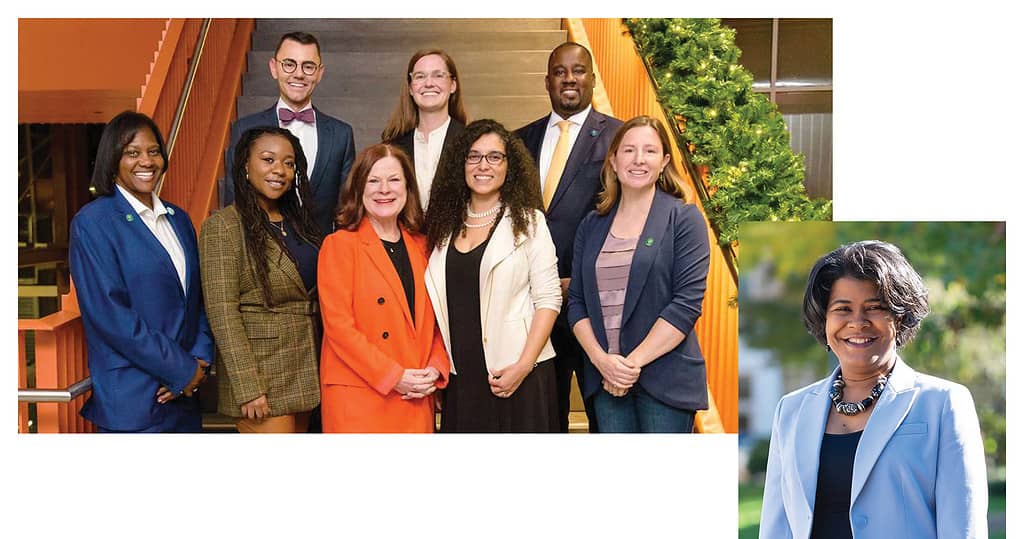
Pictured left: City Council; Pictured right: Marchell Adams-David
Why such a high salary?
Essentially, the City of Raleigh is the organization, and the Office of the City Manager is the administrative center, with the city manager at the helm. Thus, Adams-David executes and oversees the day-to-day operations of city government—think hirings, budget and beyond. In addition to coordinating and overseeing all City Department undertakings, supervising ~4,000 full-time city employees across those 20 departments, and proposing the city’s annual $1.3 billion budget to City Council, she serves as direct staff support for the mayor, City Council and committees, and as director of Raleigh’s future plans.
What does City Manager Adams-David do?
In short, Marchell Adams-David, who was appointed after serving ~6 1/2 years as assistant city manager, oversees a city of 472,540. Beyond her responsibilities to Raleigh’s nearly half-million population, her direct reports include four deputy/assistant managers who assist in research, public policy proposals, public program evaluation and direction of City Council, as well as a chief of administrative services, a chief of council services and, if approved in the budget, a new community relations analyst.
Why do city managers earn more than mayor/city council?
In North Carolina, according to the NC League of Municipalities, as dictated by General Charter, most municipalities—including Raleigh—are run in the form of council-manager, meaning the city manager is the chief policymaker, with city councils acting as the legislative body.
The city manager is thus the chief executive—similar to mayors in other major metropolitan areas, with one major caveat. She isn’t elected. Instead, the city manager is appointed as an administrator to implement the policies of the mayor-council, and execute and oversee the day-to-day operations of city government—think hirings, budget and beyond.
What does the mayor make?
According to the City of Raleigh, Raleigh Mayor Mary-Ann Baldwin earns an annual base income of $37,606 per the current adopted budget (FY23), up from a former $24,550 base. Implemented in December 2002, the boost was in accordance with a pay plan recommended by a September 2021 community study group as part of a concerted effort to increase mayor and council pay to full-time-worthy living wages.
The mayor pro-tem earns $33,203 and councilmembers $30,743, the latter up from an $18,021 base. As a point of note, these base salaries exclude additional compensation for car, technology, educational courses and other expenses. Insurance is also paid on their behalf.
According to the budget highlights in the FY24 Proposed Budget, “the City Council’s adopted budget includes personnel increases ($88,825) based on the new pay plan that was adopted by Council during the FY23 budget process,” as well as “benefit adjustments ($9,533) that account for increases in health care.”
City Manager Salaries
City Manager: $356,375 Deputy City Manager: $243,248 Asst. City Manager: $208,684 Asst. City Manager: $206,679 Asst. City Manager: $188,100
Prepare for an e-bike boom this fall as the city sets an incentive program in motion.
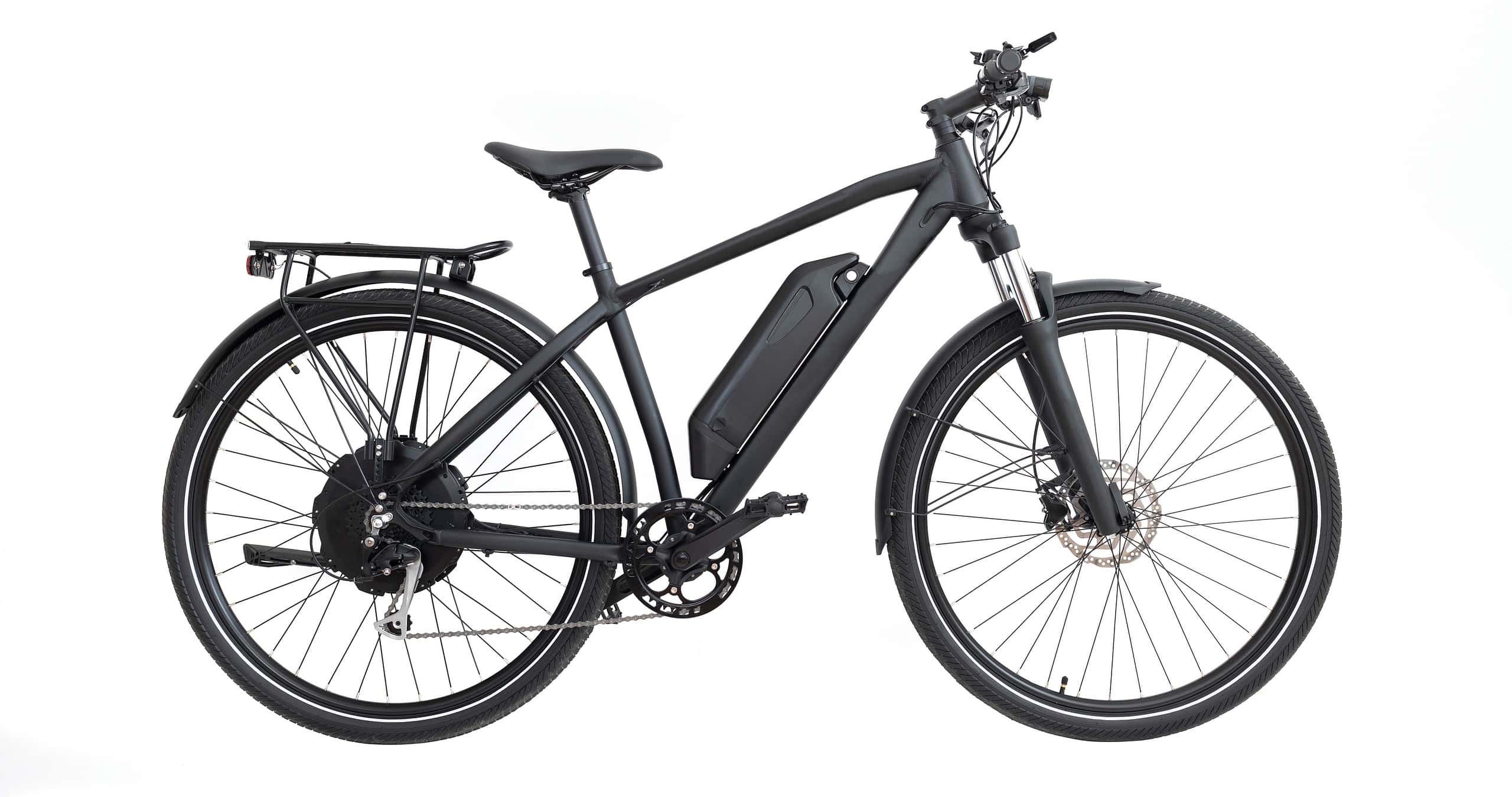
Raleigh really wants you to give battery-powered biking a go. This fall, the city will roll out a pilot program dubbed Ral-E-Bike that incentivizes the purchase of electric bicycles (aka e-bikes). The goal? To encourage more residents to adopt this innovative form of transportation in their day-to-day lives.
“There are some other cities that have already done this; I think the most prominent example is Denver,” City Council member Jonathan Melton says of the program, which is funded through a federal grant. “It’s something I’ve been wanting to replicate in Raleigh for a long time.”
It’s no secret electric rides—including e-bikes—have exploded in popularity recently, a trend that’s proving to be a game-changer for urban transit. The Department of Energy estimates e-bikes can replace most car trips, given that 75% of U.S. car trips are less than 10 miles.
“We know e-bikes are better for the environment,” explains Melton. “We know if we can give folks options it’s going to reduce traffic so the people who want to drive cars or need to drive cars have a more enjoyable experience… and it also increases equity and mobility for people who can’t afford a car or don’t want to have a car.”
Through the program, Raleighites 18 and older can apply for $500 vouchers to use toward e-bike purchases from participating retailers; those with lower incomes can qualify for $1,500 vouchers. The initial pilot will allow for 75 income-qualified vouchers and 75 standard vouchers to be made available, and recipients will be asked to participate in regular surveys about their e-bike use.
“I’m hoping this pilot is a great success [and] we can use some of the information we gather to implement a long-term permanent program,” Melton shares. “Overall, I just want to see a mode shift in Raleigh. I think we’re very car-dependent right now, [but] we have a lot of exciting stuff on the horizon.” E-bike to the future? Count us in. raleighnc.gov
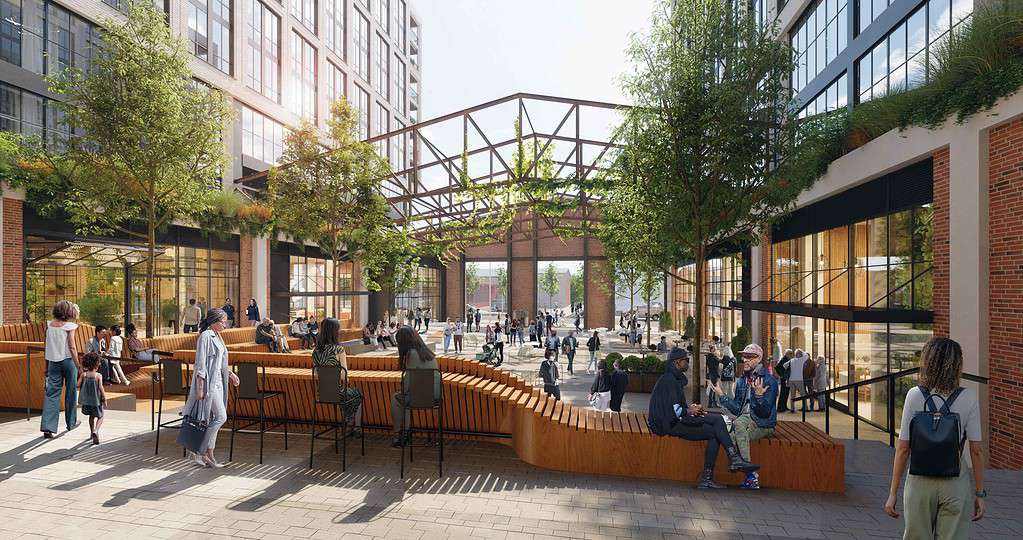
Shaw University preps for a new district—and with it, a new era for Downtown Raleigh.
is a type of symbiotic relationship where all species involved benefit from their interactions. The term also perfectly encapsulates the vision Shaw University President and CEO Dr. Paulette R. Dillard has for the forthcoming The ShawU District after the school’s rezoning was approved by the Raleigh City Council in June.
Dr. Paulette R. Dillard (Jennifer Robertson Photorpahy)
“It’s a district within Downtown Raleigh that gives the opportunity for separate entities to interact, support [and] make each other better,” she says of the project. “It gives the city the opportunity to experience African-American culture at its finest, while our students get an opportunity to participate in a diverse community that is a top city.” … Translation: It’s a win-win.
For Shaw, founded in 1865 and boasting the distinction of being the first historically Black institution of higher education in the South, location is everything. Its main campus occupies 26 acres on the southern border of Raleigh’s Downtown boundary—and the acquisition of this property is undeniably the school’s greatest endowment.
A desire among university leaders to leverage their real estate for long-term sustainability—one of the priorities agreed upon in their 2025 strategic plan—spurred talks of rezoning. And, so, the school engaged the Urban Land Institute in a land-use study in 2019 to begin exploring options for driving revenue and growth.
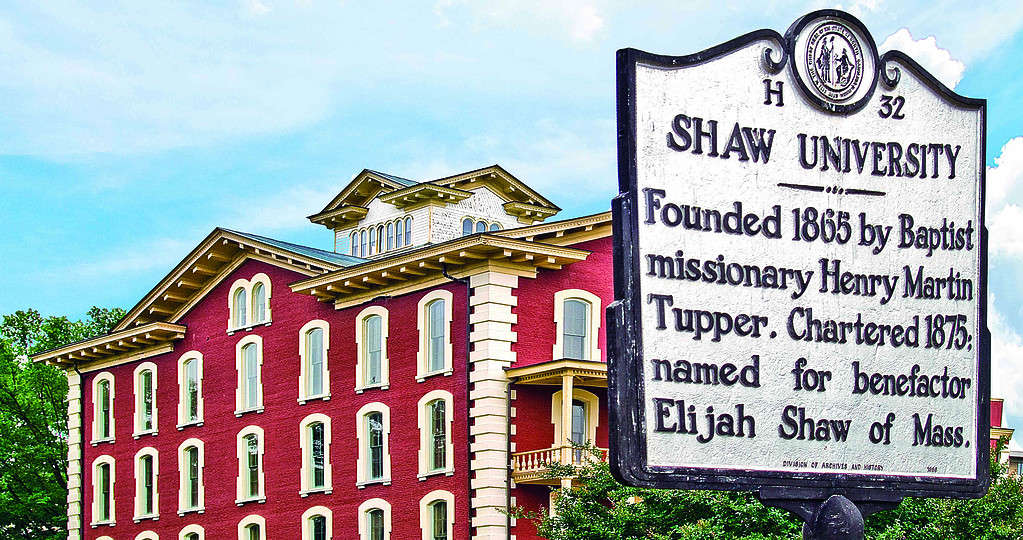
Shaw University
The university got the report back in February 2020, and a month later, the world shut down. But sheltering in place had its silver linings. “[It] gave me a little bit of time to actually think about what this really means when you think about the university, its value proposition and what is the ‘why’ for Shaw,” reveals Dillard, who, as the school’s 18th president, constantly walks a tightrope between progress and preservation. And she kept coming back to the same solution: location, location, location—“where you can walk to internships, you can walk to museums, you can eat anywhere,” she says. “You’ve got everything.”
That vision for student-community engagement echoes one we’ve seen play out with Campbell Law School’s move to open a DTR campus. Shaw students would likewise benefit from bridging that gap between campus and community. Proximity to the developing world-class Dix Park alone would benefit a wide swath of studies for such Shaw programs as computer science, accounting, recreation management, political science, marketing, communications and others, says Dillard.
So too would “spending time in internships or shadowing individuals in companies such as Red Hat, Cisco Banking, Raleigh Magazine, News & Observer and state government agencies,” she adds. “I refer to these arrangements as affording us expanded classrooms focused on practical applications,” she says, adding the intention to have young Shaw scholars pay it forward as well. “We also want students to work with public and private K-12 schools to tutor and mentor, and to engage in volunteerism to advance community engagement.”
Since the Urban Land Institute report recommended increasing density on campus via taller buildings to boost property value, Dillard and her team looked to other historically black colleges or universities (HBCUs) for inspiration, namely Howard University in DC, as they began to navigate the changes. Shaw’s real estate advisory firm, Hayat Brown, had also worked with Howard on 10 mixed-use commercial development projects on previously underutilized land, resulting in more than $1.4 billion in development and $200+ million to improve the university’s student housing portfolio.
If Dillard were to dream up a wish list of the kinds of mixed-use spaces Shaw might include: “I love The Dillon, and I would love to have a residential and retail complex—coffee shop, bookstore and sandwich shop.”
“Is it risky? Yes,” Dillard admits. “But the fact that Shaw is here was a risk.” Case in point: When the university broke barriers in 1882 by becoming the home of the first medical school in the U.S. to offer a four-year curriculum. And Dillard is confident Shaw can do it again. “Here is another whole new opportunity for Shaw as we rethink the higher education landscape,” she says. “We’ve got to do things differently.”
A lot of the angst around the rezoning, she says, “was many of our alumni and the community thought the vision was to make Shaw indistinguishable from the city and just have everybody over here and it’s no longer Shaw—but that is counter to the vision. If we don’t do what students need who actually use it, we’ll end up just being a placard on the pavement.”
Moving beyond the classroom doesn’t mean completely erasing the boundaries between college and city. Rather, Dillard hopes The ShawU District will reposition the two as neighbors who get along, collaborate and help each other thrive.
Shaw’s next step is to prepare the campus master plan, a guide that will “define the physical features of The ShawU District to support the university’s vision for a reimagined core campus with a physical, social and professional connection to Downtown Raleigh, but with its own distinct and recognizable The ShawU District identity,” explains Jay Brown, chairman and managing director of Hayat Brown.
To address that master plan, Dillard imagines what can go within that footprint and how it addresses lifelong learning and workforce development, in addition to how it meets the needs of the 21st century student who still wants to have a college experience. “How do you take the amazing resources that are already here—the performing arts center, the museum—and create this unique experience that can only be achieved at a small, private, flexible institution?”
Looking ahead, Dillard sees The ShawU District as an unparalleled destination for cultural enrichment and social acceptance. “I think about it especially around the polarizing issue of race and diversity,” she says. “I think having an HBCU is an opportunity to interact in this environment where it’s not political. I’m not doing DEI training; I’m just being your neighbor. … It’s an opportunity to experience it not in a combative way, and our students at the same time get to experience a diverse city.”
Dillard hopes Raleighites can begin to view The ShawU District as the first step toward reaching that mutualistic sweet spot. She paints a picture of an area where parents push their babies in strollers while music played by the Platinum Sound marching band drifts through the air. “We want to be an environment that shows that kind of thing can happen naturally,” she says. “You come, you feel comfortable; we go, we feel comfortable—because we’ve gotten to know each other. Because Raleigh has The ShawU District.”theshawudistrict.com
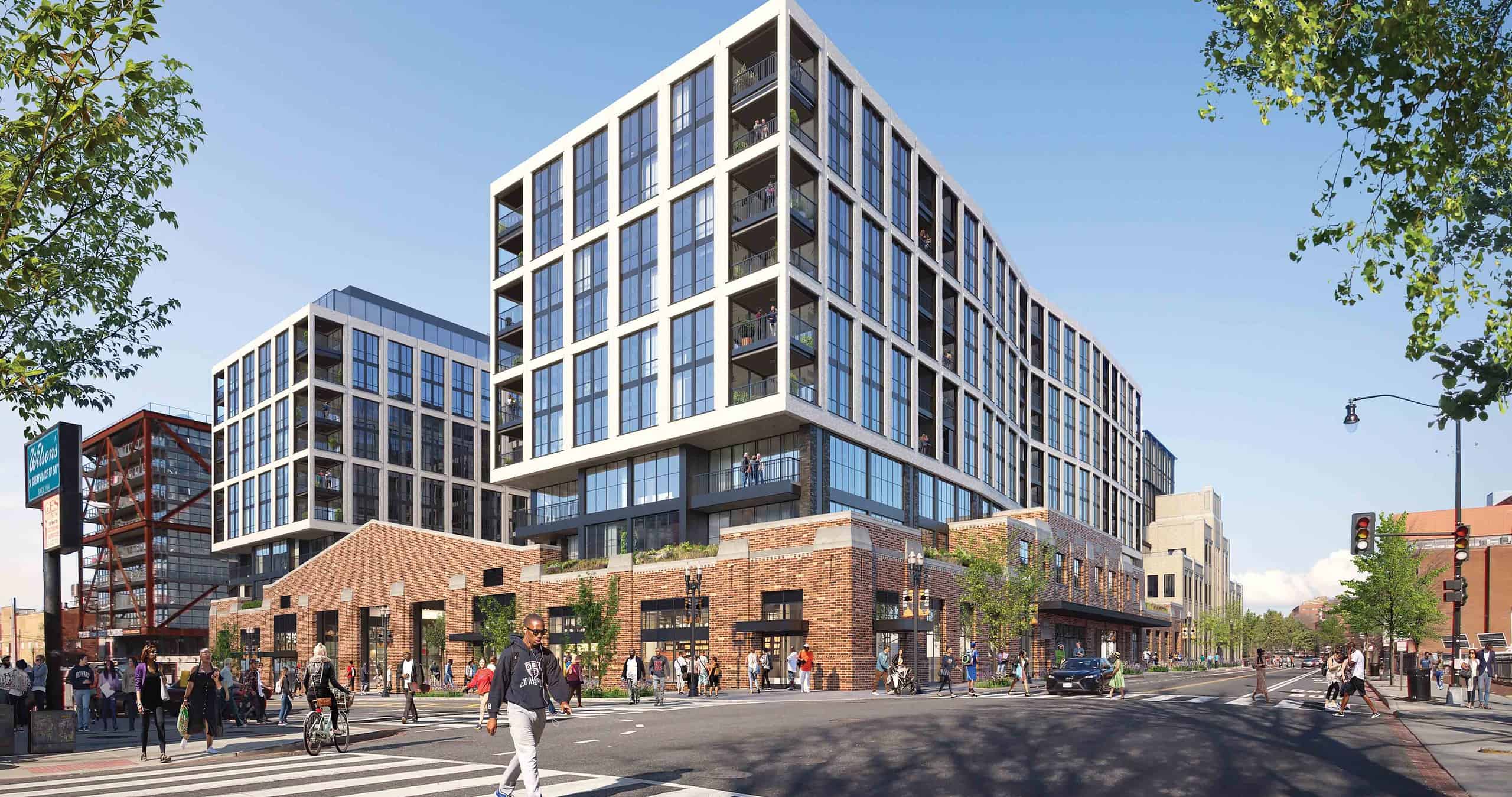
Howard University Bond Bread redevelopment, courtesy of Studios Architecture
We’re gonna stop you right there—if you’re taking a turn on red in Downtown Raleigh, that is. Raleigh City Council recently approved a change for no turns on red lights in the core of DTR, aka the area between Glenwood Avenue, Peace Street, East Street and MLK Jr. Boulevard. This transportation change comes amid many recent traffic updates to improve pedestrian safety—such as lowering the speed limit to 25 mph and removing dual turning movements—as part of the Downtown Pedestrian Safety Project in partnership with NCDOT. If you’re cruising around DTR, expect to see “No Turns on Red” signs going up starting this spring. Remember, only hit the gas on green… right? raleighnc.gov
Completion date By the end of April
Where Streets between Glenwood Avenue, Peace Street, East Street and MLK Jr. Boulevard
“And the south wind blew hard on that ragged old flag.” Johnny Cash’s famed lyric well encapsulates a rising movement for a new Raleigh flag—because “a great city deserves a great flag,” naturally. The MO behind the grassroots movement to bring “an iconic flag to Raleigh,” the move is part of a larger wave across the nation for cities to make their flags relevant—and hangworthy.
Why? Flashback to a 2015 TedTalk on “why city flags may be the ugliest thing you’ve never noticed.” Side note: Raise your hand if you knew Raleigh had a flag. Many of the smart, seasoned natives I polled did not. And, aye, there’s the rub.
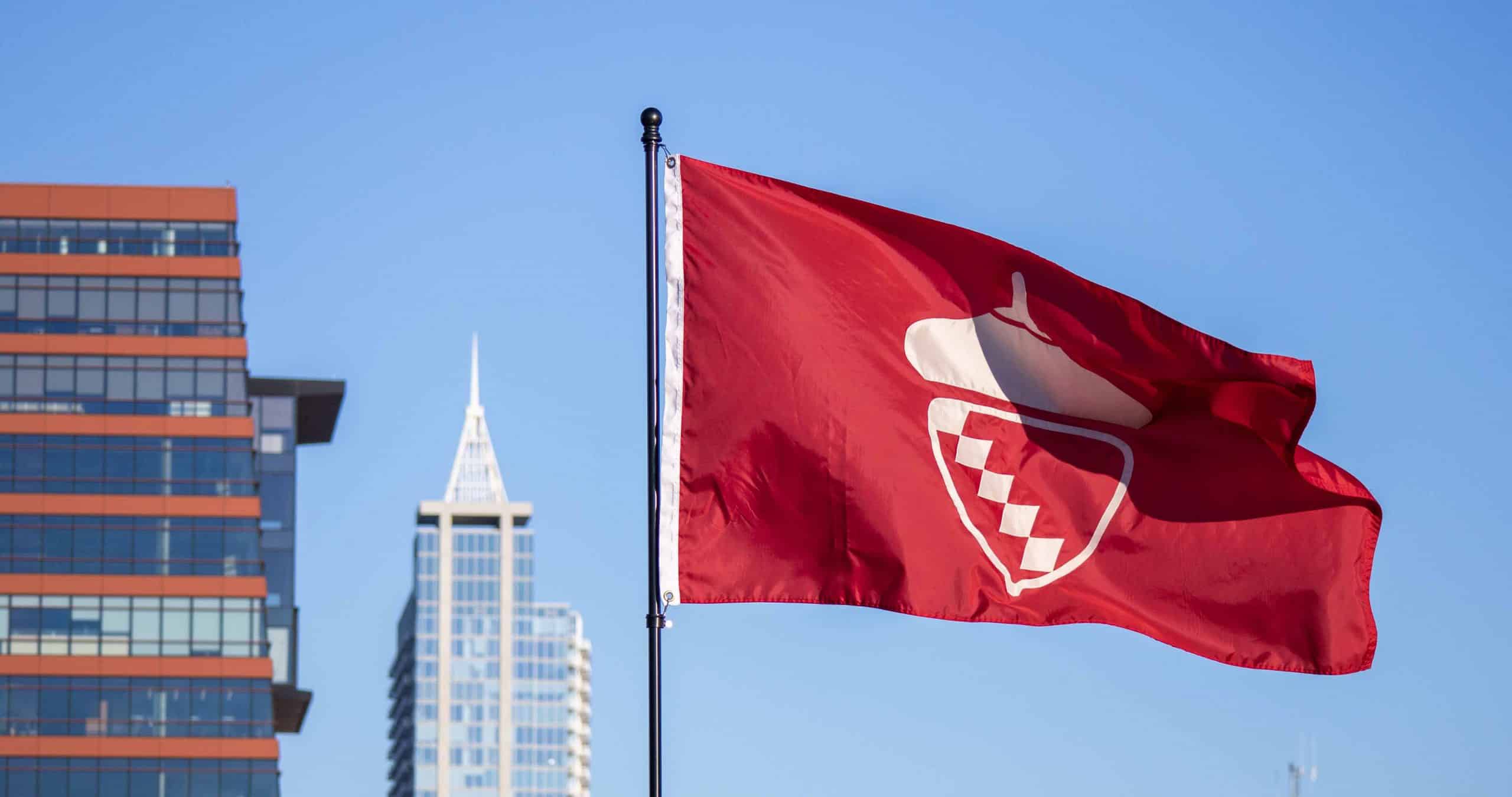
For reference, the two-sided original—est. in 1899 and sewed by Kate Denson (for the trivia buffs)—shows, on one side, an oak tree surrounded by oak leaves and acorns with the words “City of Raleigh North Carolina, Established 1792.” On the reverse, an antlered deer upon a red-and-silver twisted tress sits atop a section of Sir Walter Raleigh’s coat of arms, imagined as a red shield intersected by connecting silver “diamonds” above the words “Amore et Virtue” (or, in English, “By Love and Valor”). Sounds simple, right?
The details are too complex and difficult to produce, explains Brian Rineer, one of the Raleighites leading the charge, who emphasized the updated eye-catching emblem’s simplicity and relevance, while retaining the essence of the historic flag. A flag, at its core, is an emblem that provides a sense of identity—a unifying symbol, a visual expression of civic pride. The new flag, which sports those five diamonds in a simplified iconic Raleigh acorn design, “doesn’t completely turn its back on the past—but pays homage to the past, while also moving the city forward, just as the city has moved forward over the years,” says Raleighite Joanne Sullivan, who first saw the revamped flag flying in the wild at neighbor Roland Kays’ abode and thought, ‘This is really a cool flag.’ … There’s something about the red and the big acorn—it doesn’t take itself too seriously.”
Well connected—think campaign volunteering and serving on the Raleigh Arts Commission and Parks and Rec Bond initiative, etc.—Sullivan has since been instrumental in elevating the status of the flag and getting the word out in the community by providing connectivity (businesses, elected officials…).
“It represents Raleigh in a very joyful way,” she adds. “It’s not stodgy. It’s very catchy. … You have the acorn. You have the shoutout to Sir Walter Raleigh with the crest. I think it’s something every generation can identify with—and see something and feel connected to. It does a great job representing Raleigh.”
For the record, this isn’t the first attempt to reno the Raleigh flag. Arguably never widely adopted, the 120-plus-year-old flag’s potential new design was a hot topic some six-ish years ago when residents called for an upgraded emblem to better rep Raleigh, with ideas flying about Twitter and Reddit—and as a matter of City Council discussion—to no end. Fast-forward to idle time and brilliant minds a la pandemic, and a group of residents resolved to revive the initiative, hence the New Raleigh Flag campaign. And—so far—as the bottom-up convo continues, no snubs yet.
What happens next is anyone’s guess—but for now: “It’s a great symbol,” says Sullivan. “It’s very distinct. Whether official or unofficial, it does a great job representing and celebrating our city.” newraleighflag.com