Raleigh’s boutique fitness boom flexes its community muscle.
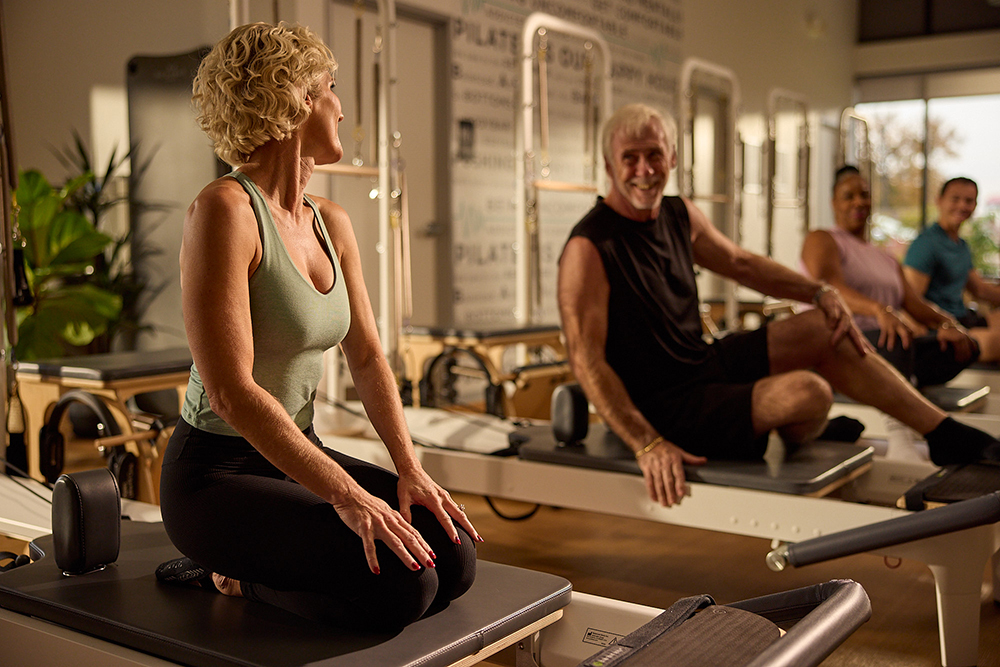
At some point, Raleigh entered its grip sock era—and it’s yet to show signs of slowing down.
A plethora of Pilates studios, strength concepts, yoga rooms and recovery-minded wellness spaces have been popping up across the city at the absurd frequency (and scale) of McDonald’s in its heyday. The result is a fitness scene that feels less like a collection of gyms and more like a lifestyle category of its own—one with founding memberships, dedicated waitlists, branded merch and very strong opinions.
The numbers back up the sweat. Downtown boasts around 23 fitness-related businesses, 15 of which have opened postpandemic, per Downtown Raleigh Alliance—while, nationally, service-oriented tenants like fitness studios, salons and spas leased more retail space than traditional retailers for the first time last year. Case in point: Across Kane Realty’s North Hills and DTR properties alone, five fitness concepts have opened or are under construction in the past two years.
But Raleigh’s boutique fitness boom isn’t just a retail stat. It’s a community in workout clothes. “People have very much vocalized they need more than just a workout,” says Jaye Johnston, owner of the forthcoming BODYBAR Pilates North Raleigh. “They want it to be their home.”
BODYBAR
For Johnston, opening in North Raleigh was personal. It’s where she and her family are rooted, and where she saw room for a reformer-based studio centered on movement, inclusivity and connection. Though not opening until later this summer, Johnston says BODYBAR’s founding members already span all ages, genders and fitness levels—a sign, she says, people are looking for something approachable and lasting.
That tracks with what Kane is seeing across its properties. “Fitness and wellness concepts naturally complement mixed-use environments because they support the way people want to live today—more connected, convenient and experience-driven,” says Kane Senior Marketing Manager Hannah Smith. To wit, she says North Hills’ Wellness Wednesdays series “has grown tremendously over the past two years and now sells out almost every week”—reflecting demand for wellness that feels social and accessible.
With JETSET Pilates locations in DTR, North Hills, Holly Springs and RTP (with a Durham location also on deck), owners Katie Meyers and Renee Aquilino see a similar pattern across the Triangle. Clients come for the reformer, they say, but “the workout is almost never the whole story.” Fitness fiends stay for the rhythm of it: the familiar instructor, the 6am regular, the class that fits into a packed life without feeling punishing.
That may be the real reason boutique fitness is finding such solid footing here. Raleigh is growing fast, and in a city full of new faces, new routines and new neighborhoods, people are looking for smaller places to feel known. These studios offer movement, but also ritual, recognition and a reason to show up.
As it turns out, the city’s newest third place might come with a reformer.
DTR’s highly anticipated development on the southern edge is making moves.
Part construction zone, part idea, part promise, Downtown South is finally back in the headlines—moving forward again following a pandemic-era pause.
Kane Realty Corporation has officially filed plans for the first phase of the long-discussed project, calling for 350 garden-style apartment units spread across eight three- to four-story residential buildings on 11 acres of South Saunders Street—complete with such high-end amenities as a clubhouse, pool, courtyards and surface parking. While the filing represents only a small portion of the project’s overall vision—see: a 20,000-seat stadium—it signals meaningful momentum for one of Raleigh’s most ambitious redevelopment efforts.
Originally unveiled in 2019, the $2+ billion mixed-use development spearheaded by Kane Realty founder John Kane and North Carolina FC and North Carolina Courage owner Steve Malik encompasses roughly 140 acres along the southern edge of DTR. The goal: transforming a largely industrial corridor into a dense, walkable urban district blending residential, office, retail, hospitality, entertainment and public green space.
Kane Realty
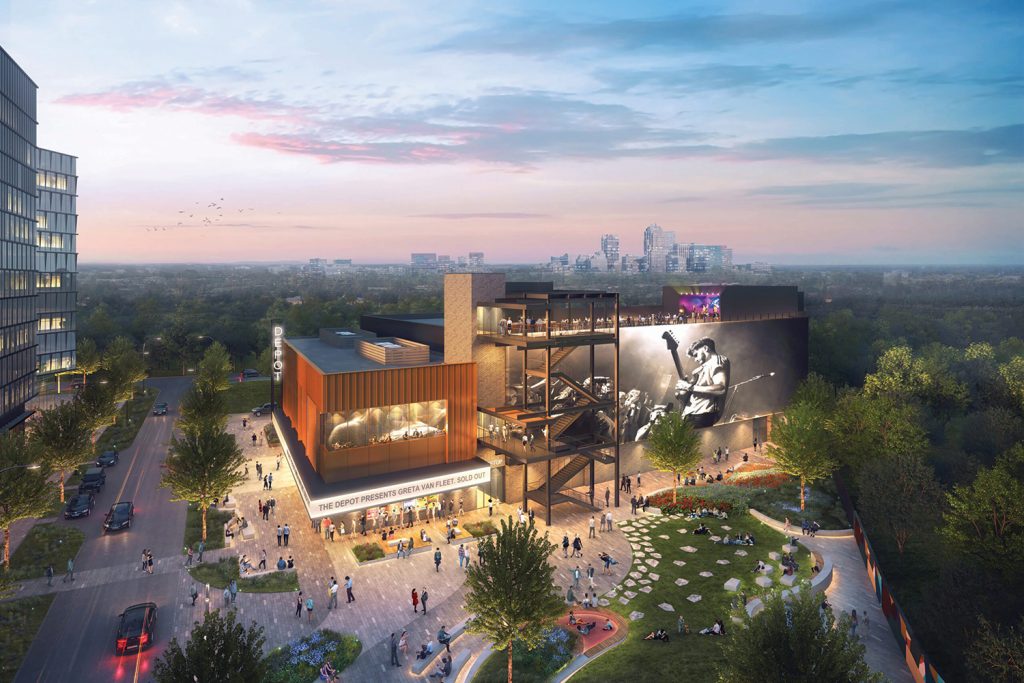
Ultimately, the long-term vision for Downtown South is to function as a southern gateway into Raleigh’s urban core—a destination where people can live, work, gather and connect. Additional plans for Phase 1 include 535,000 square feet of office space, 60,000 square feet of retail, ~1,000 multifamily units, a 3,500-seat concert venue and a 180-room hotel.
“As Raleigh continues to grow, we welcome additional locations of activity and density that expand the city’s urban footprint and create new opportunities for residents, visitors and businesses,” Downtown Raleigh Alliance President and CEO Bill King tells RM. “We’re encouraged by the ongoing conversations about Downtown South and believe that an entertainment district can be a valuable addition to Raleigh’s growing collection of urban destinations.”
For decades, the area surrounding South Saunders Street served as a working edge of Downtown, characterized by warehouses, industrial buildings, auto shops and commercial uses that supported the city’s growth behind the scenes. Today, longtime businesses continue operating alongside newer arrivals drawn by relatively affordable real estate and proximity to Downtown, while development interest continues creeping farther south.
But the transformation has not come without questions—and pushback. Residents in nearby Rochester Heights, one of Raleigh’s historically significant African American neighborhoods, have raised concerns over environmental impacts, displacement pressures, and the potential effects of large-scale redevelopment on surrounding communities. Those conversations remain part of the broader discussion as plans continue to evolve.
For now, much of the site still exists somewhere between blueprint and reality. Open parcels of land, active businesses, and future development footprints share the same landscape. Yet the latest filing suggests that after years of anticipation, Downtown South may finally be entering its next chapter.
“What’s most important is that Downtown South is well-connected to Downtown Raleigh and that the amenities in these neighborhoods complement each other,” stresses King. “That will help to create a more vibrant, accessible and economically resilient urban center that benefits the entire city.”
What remains clear is that Downtown South is being negotiated in real time—and will shape more than Raleigh’s skyline. As plans move forward, residents, business owners and developers alike will help redefine both the physical boundaries and cultural meaning of what Downtown can be.
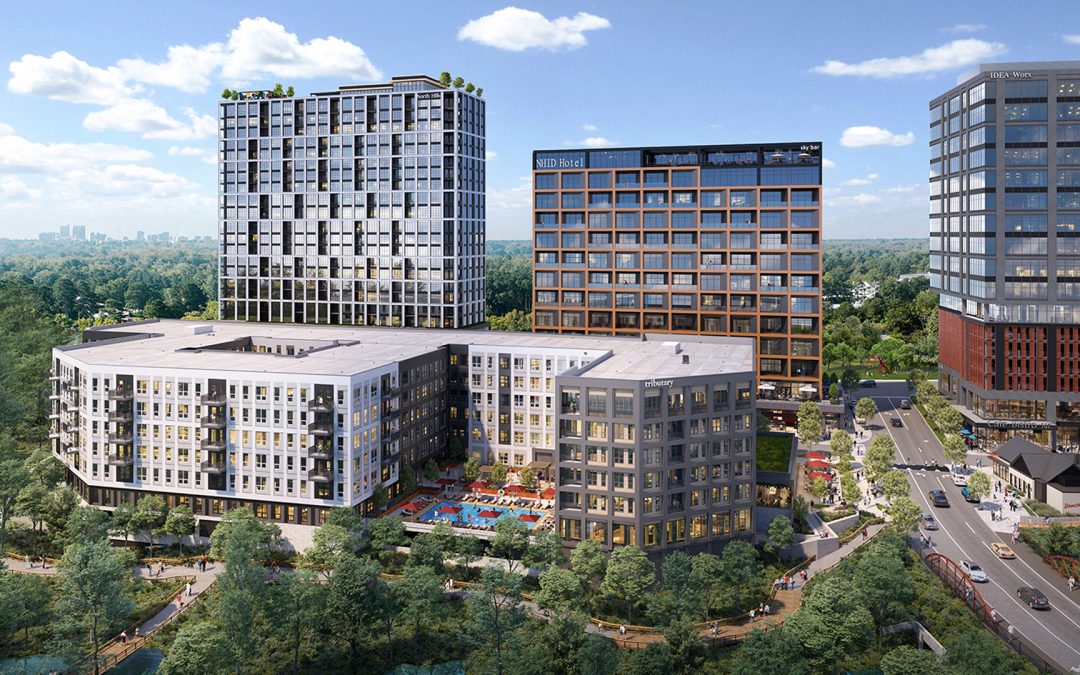
First up: 207-unit Veranda, bringing 55-plus housing to the district, followed by seven-story, 387-unit residential-retail newcomer Merit. Also fueling NHID’s bleisure (read: business + leisure) era is upcoming 20-story residential tower Vesper with rooftop pool and amenity deck; a 200-plus-key hotel with potential rooftop bar and street-level restaurant; and a new office tower with activated ground-level space. And with access front of mind, Kane is also eyeing a Church at North Hills Street extension, plus a car/pedestrian bridge connecting Navaho Drive—all designed to align with future greenway expansions and planned multimodal bridge over the Beltline.
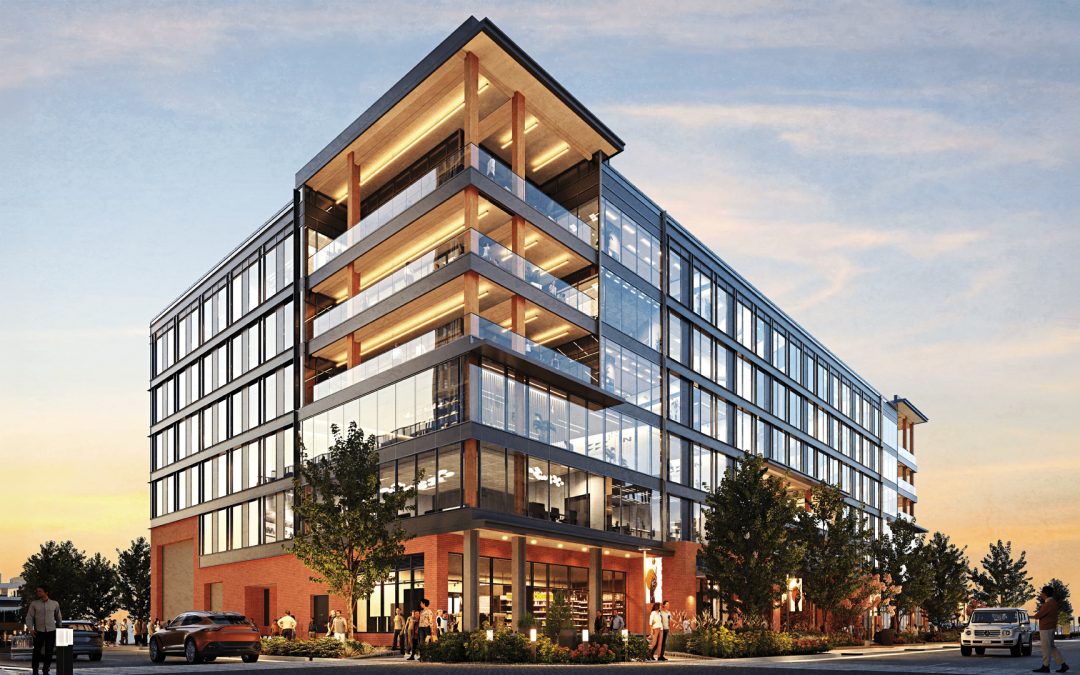
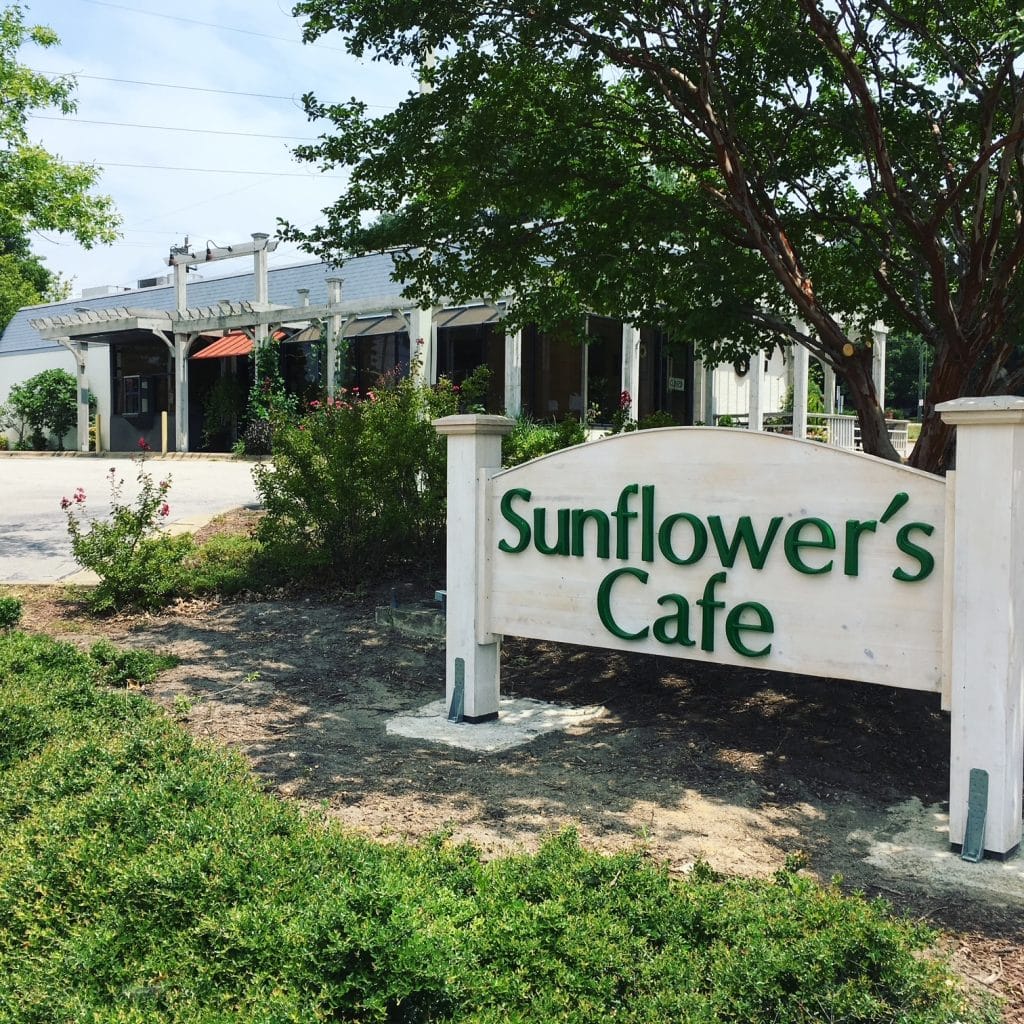
Don’t call it a comeback—they really were here for years. Raleigh’s about to blossom again as Sunflower’s Café makes its long-awaited return—this time to the burgeoning Rockway development on DTR’s southern edge.
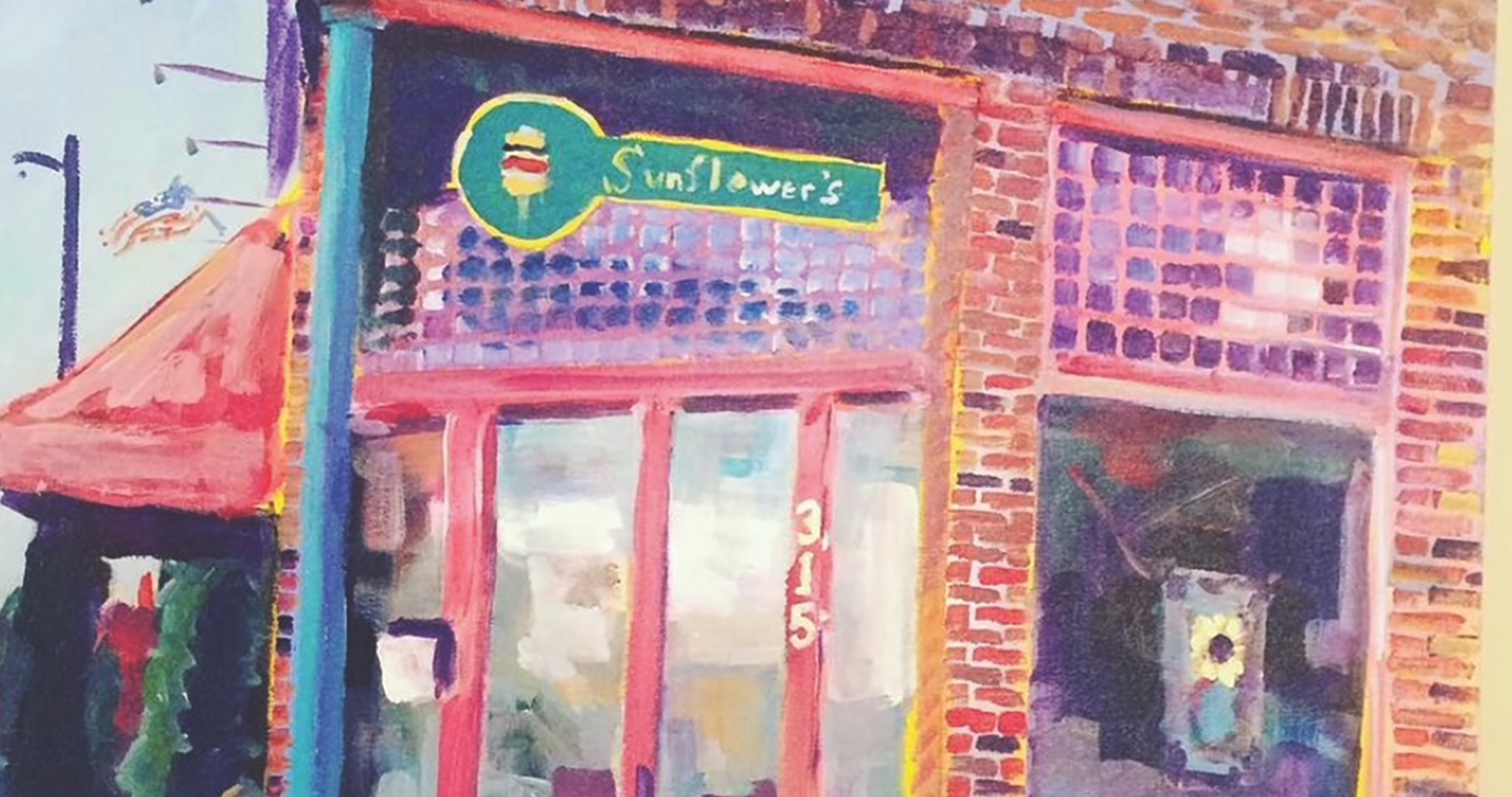
Before Downtown was packed with buzzy cocktail bars and chef-driven hot spots, Sunflower’s was theneighborhood anchor—a bright mom-and-pop sandwich shop known for its fresh salads, housemade desserts and cheerful yellow facade.
For 37 years, the cafe fed locals with steady warmth and simplicity before closing to much heartbreak in 2020, leaving a void for Raleighites craving an F&B scene that doesn’t sacrifice its roots in pursuit of the new.
Now, that sunflower is set to rebloom, slated to reopen in 2026 in Kane’s new work-stay-play community as the fourth announced tenant at The Row. Helmed by Quinn Ferebee—son of OG owners Deborah and Clay—the reimagined spot promises the same scratch goodness Raleigh remembers, paired with a mod twist: full bar, craft ’tails and late-night vibes where dining tables flip to pool tables.
“I’m excited to reintroduce an old Raleigh favorite to a new audience, as well as to those who enjoyed it for so many years in Downtown,” says Quinn. “I hope to honor my parents’ legacy and make it the best it can be.”
With its fresh start at The Row, Sunflower’s is poised to brighten the DTR landscape once again—proof that in Raleigh, even after the petals fall, the roots run deep.
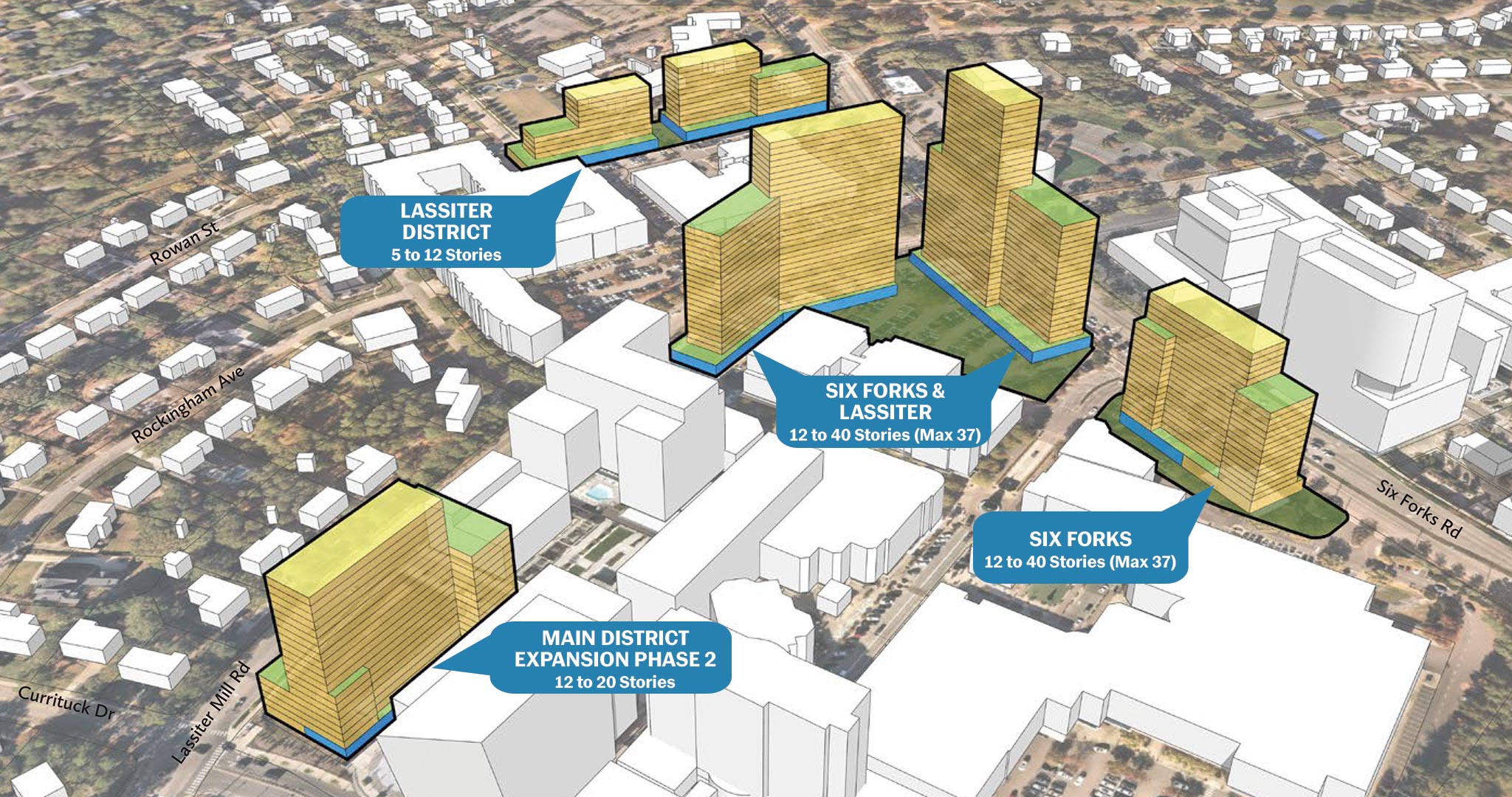
North Hills wants to grow again—but this time up, not out. In late August, Kane Realty submitted a rezoning request to City Council to allow taller buildings on five parcels in the Main and Lassiter districts. The proposed project wouldn’t increase how much can be built, but would make room for more open public space, pedestrian-friendly amenities, ground-floor activation and a more varied skyline.
“We’re changing the shape of what we’re zoning, not the scale,” emphasizes Kane Director of Development Kallie O’Haren Walker. Think of it like a glob of Play-Doh: You can form it tall and skinny or short and wide, but you’re still working with the same overall amount of Play-Doh.
The new request comes ~four years after Kane submitted a controversial rezoning in 2021 seeking approval for a 30-story tower at the intersection of Six Forks Road and I-440. That plan was ultimately withdrawn in 2023 amid City Council opposition and community pushback.
This time, Kane hopes a key distinction will shift the conversation: They’re not asking for more density or square footage (2,500 residential units and ~3M square feet are allowed)—just flexibility to reimagine how that same volume is shaped.
“Twenty-five years ago, we embarked on a mission to create a district in our city where people want to gather, everyday needs can be met, special occasions can be celebrated—where people can live, work, play and thrive,” recalls Kane Realty founder John Kane. “The last premier parcels in Raleigh’s Midtown deserve the best we can create with the appropriate balance of height, density and beautifully landscaped ground-level spaces.”
While specifics are still in flux, Walker envisions public gathering areas, ground-floor retail and restaurants, and opportunities for outdoor dining and activation. The additional height would also make space for outdoor amenities within the buildings themselves.
Still, this is a long game. “We have no imminent plans to start these projects,” she maintains. “This is [about] long-term planning and future flexibility—not immediate change.” With another community meeting set for sometime this fall, one thing is certain: North Hills is evolving—but exactly how it will take shape remains to be seen.
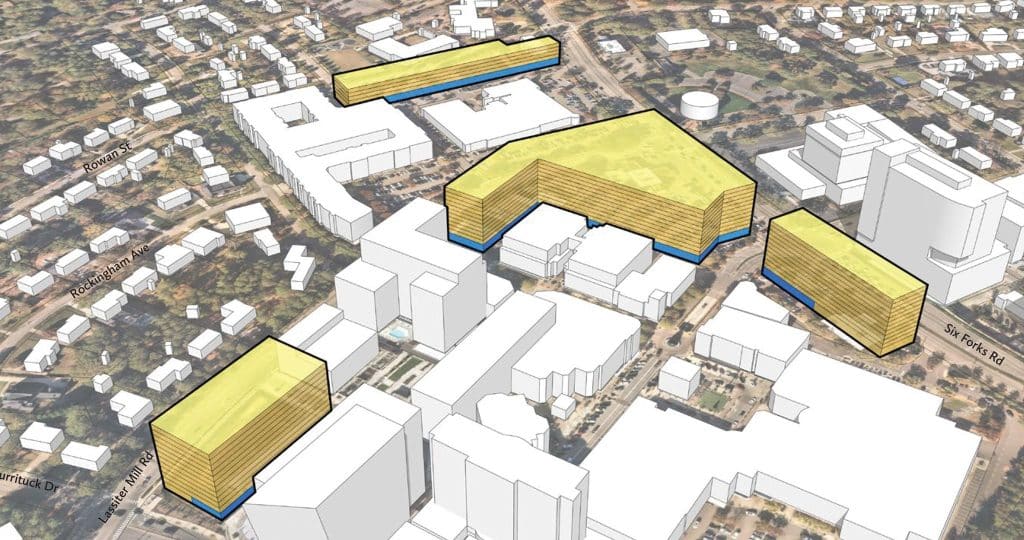
Current allowable height
5 Big Questions
Where will you park? Several of the proposed buildings would rid ground-level parking, but Walker assures each site will feature integrated decks—with the possibility of below-ground parking at the Lassiter District to boot. Phase 1 of Kane’s North Hills expansion added ~1,000 spaces, with the potential for a couple hundred more in this next phase.
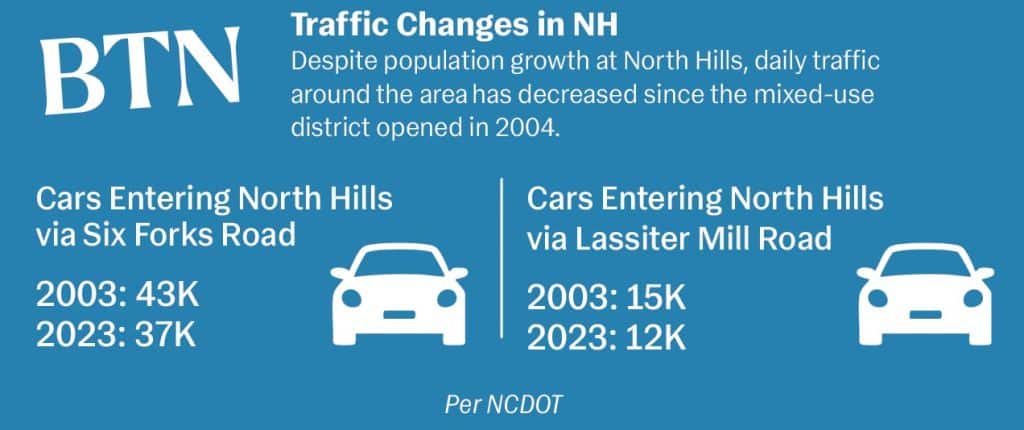
What about the traffic? Traffic concerns are clearly fueling much of the conversation—especially in light of City Council’s recent decision to scrap the Six Forks Road widening project. But Kane maintains that mixed-use destinations actually reduce vehicular traffic coming into the development: When daily needs and attractions are clustered, people drive less and bike or walk more—easing congestion, lowering emissions and boosting overall mobility. In addition, Kane is also proposing adding a dedicated right turn lane from Lassiter Mill Road onto Six Forks.
Pedestrians and bike plans? Improved pedestrian and bike connectivity is another key promise Kane tied to the rezoning request, including a proposed multiuse path from Lassiter Mill down to Six Forks in the direction of I-440—serving a safer, more accessible route.
Why go tall instead? While some nearby residents have expressed frustration—noting they “don’t want to look at just another big building”—Kane is already entitled to build under current zoning and density limits. In other words, buildings will go up either way—but, per Kane, taller buildings offer more flexibility to incorporate green features, both at the ground-level and on rooftops.
How will the public benefit? Kane’s team is working with the city to identify priorities that emerged during the last rezoning. “We want to have a lot of opportunities throughout this process to talk with city staff, council and the community as a whole to make sure the project can deliver meaningful public benefits,” says Walker. Among the possibilities: an upgrade to Fire Station 9 along Rowan Street.
What will happen to existing businesses? Current businesses on the affected sites—Wells Fargo, North State Bank, Exxon and Walgreens—will be invited to stay, with construction likely to start on vacant parcels first.